The journey to Belem, the birthplace of Portuguese exploration, begins with a little exploration of our own. The walk through Alfama had fewer mistakes and backtracks than our walk yesterday. We celebrate our progress. It is now time to conquer the bus system. We look for the 728 bus stop and with some assistance from a local are able to find the boarding area. Unlike the tram, the bus is spacious, clean, and comfortable. The ride is short and I am captivated by the riverfront parks along the way.

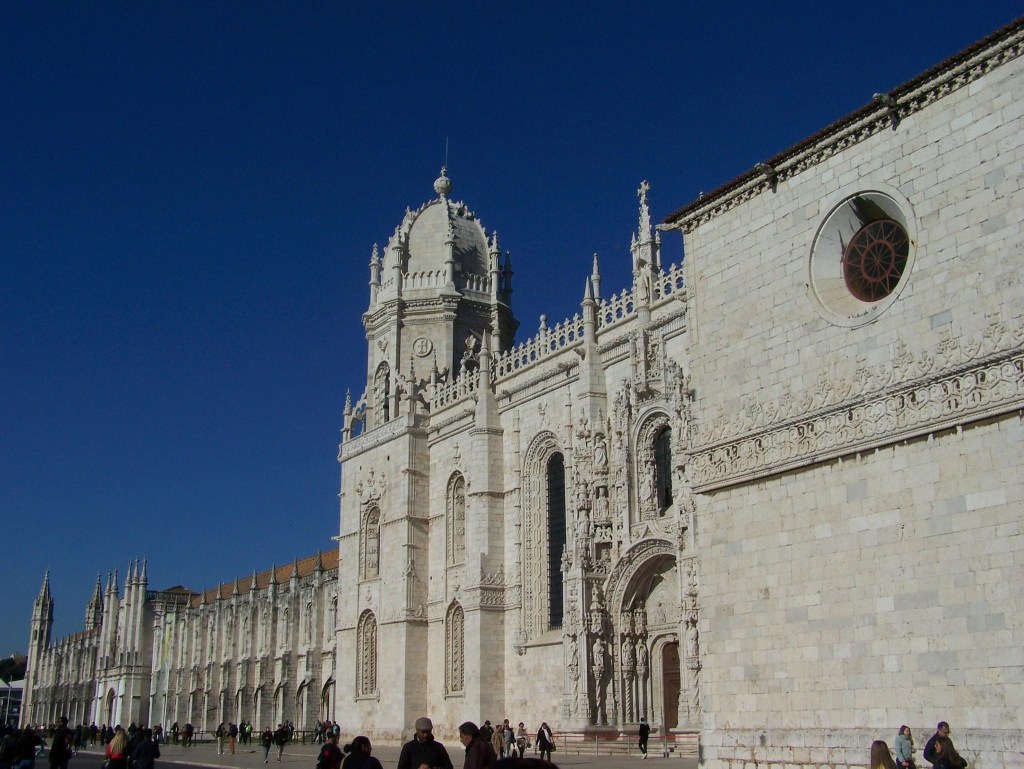
We are deposited just steps away from the Monsteiro Jeronimos, a massive monastery built in the early 1500’s. It is on the site where the Templar knights assisted the seafarers and near the docks where the explorers started their journeys into the unknown. There is already a line forming for entry. We run the gauntlet of people trying to sell us sunglasses and cheap jewelry as we try to figure out where to go. Eventually we are told that we have to walk down the block to buy tickets before we can get in line.

Tickets in hand, we wait. I ogle the intricate stone carvings. I learn that they are done in the Portuguese Manueline style. Once inside I feel as if I am in another time. The stones are cool beneath my feet. It is peaceful and calm. The tile work takes my breath away. Scenes from the Bible painted on endless tiles in blue and yellow and green fill up entire rooms. I take way to many pictures. I am reluctant to leave.

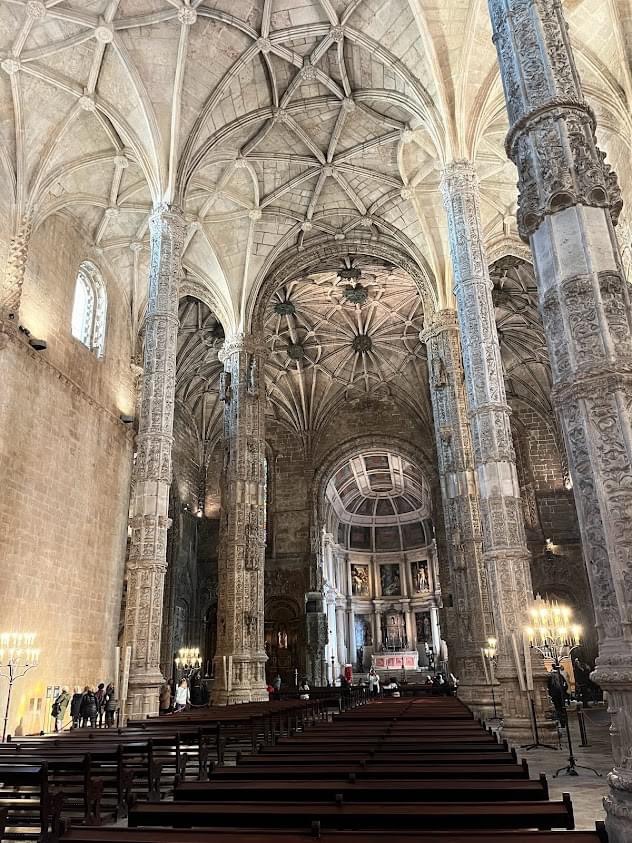
I am lured away by the promise of the Santa Maria chapel, the main church at the monastery. We wait in another line for our turn to enter. The soaring ceilings take my breath away. As we enter, I am drawn to the crypt of Luis Camoes a Portuguese poet. The large stained glass window casts prism of colorful light. As we approach the altar, I see the tombs of Kings and Queens resting on marble elephants. I sit for a minute and say a prayer, connected to the many who have worshipped here. I take a quick look in the sacristy where medieval art is on display.
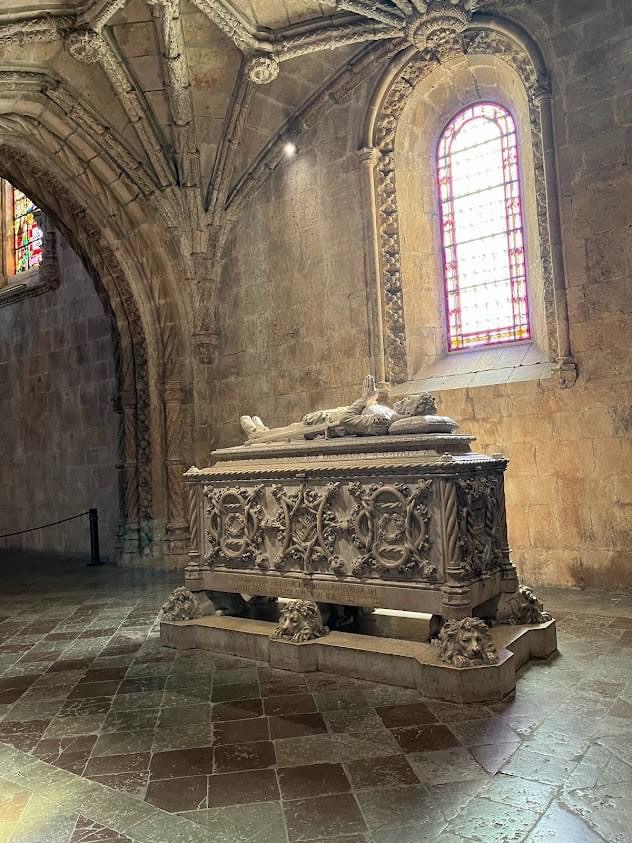
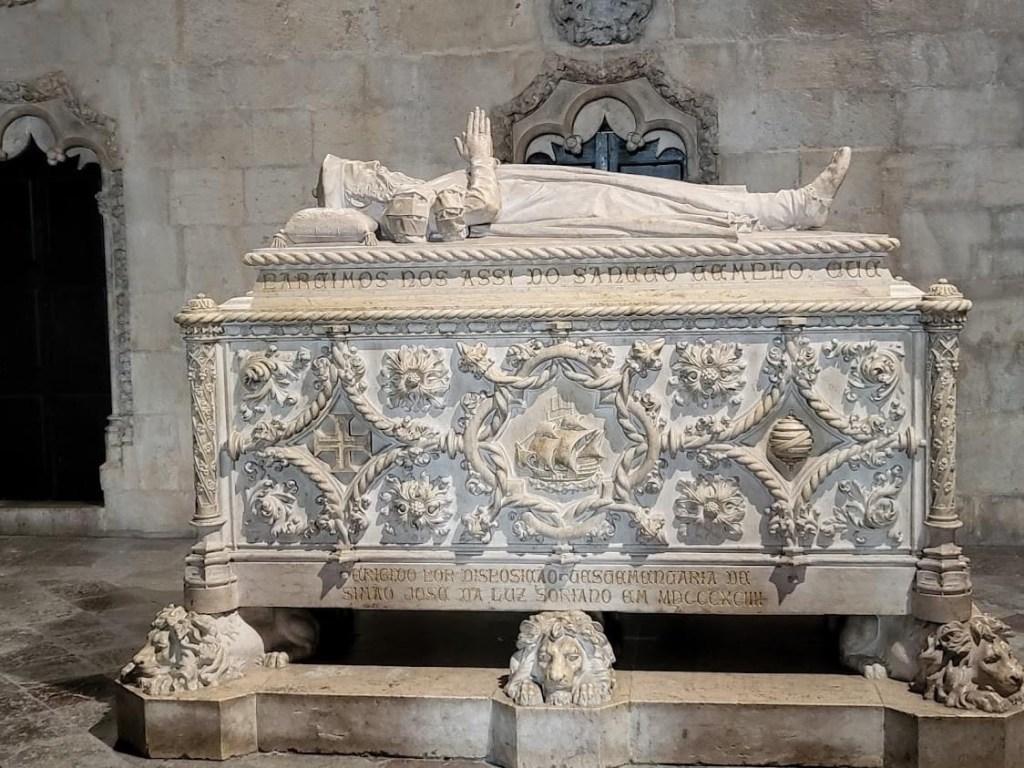
On the way out, we find the final resting place of Vasco de Gama. It may be our first de Gama sighting, but will not be our last. The national hero lies in state as a marble effigy. His spirit is alive and well throughout the nation in pictures and statues and verse.
After paying homage to Portugal’s great explorer, we walk down the street to the end of the monastery walls to enter the National Maritime museum. At the entrance we are greeted by an enormous statue of Henry the navigator. He is surrounded by countless explorers that sailed for glory of God and country.
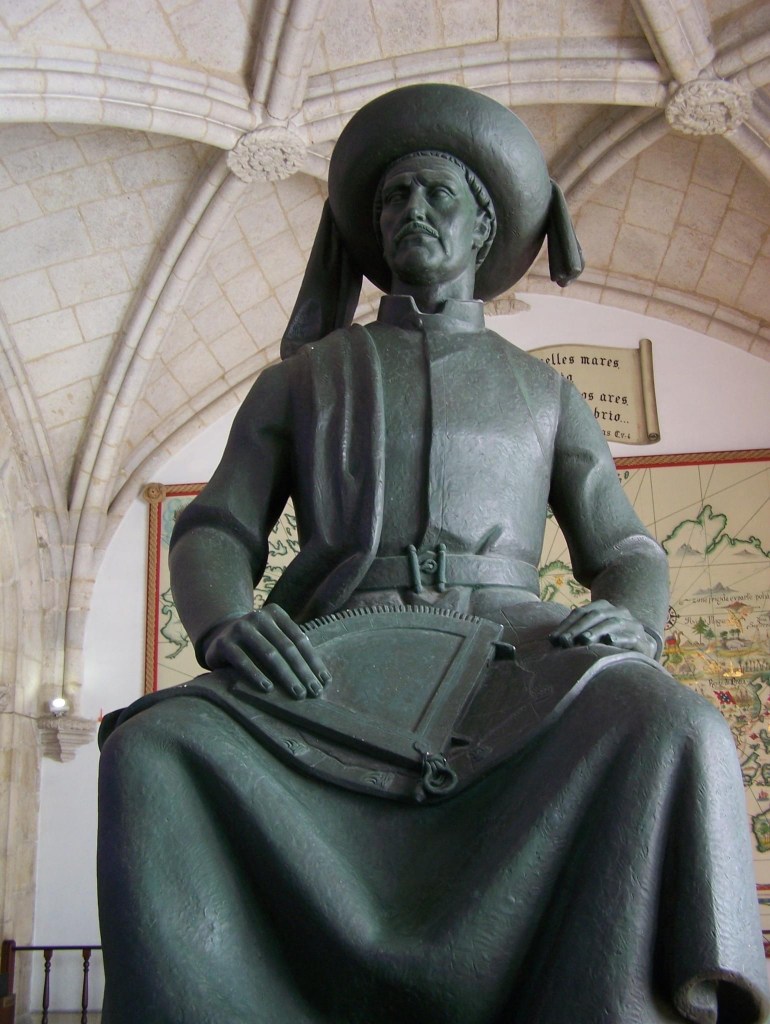
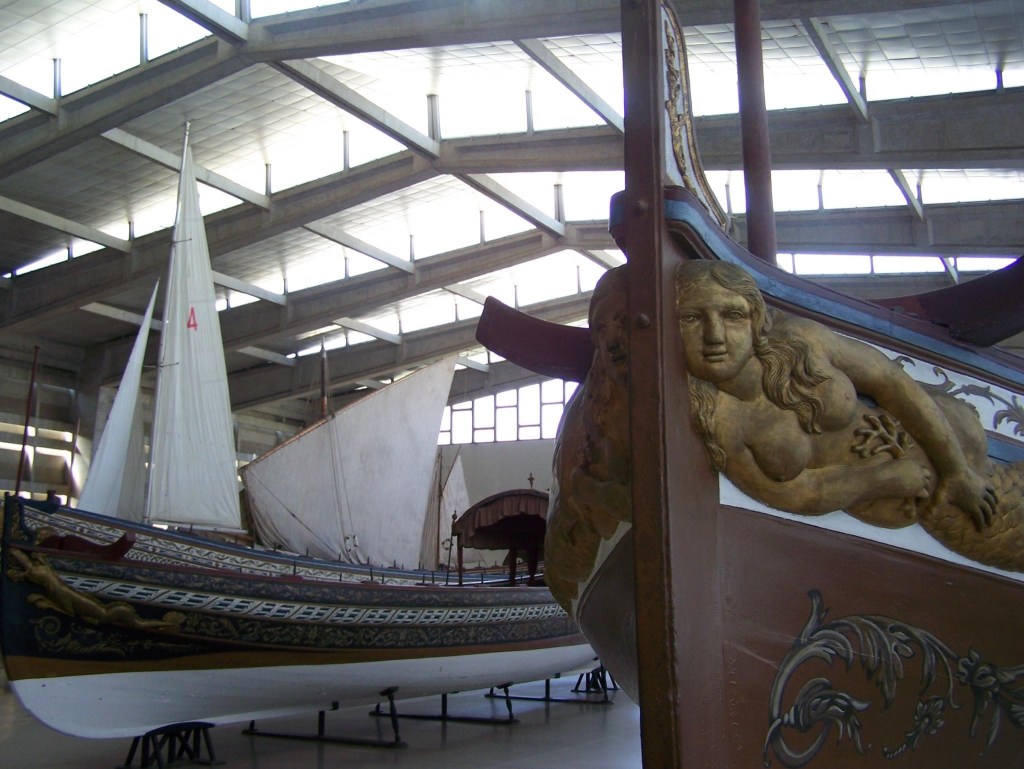
The museum is a sprawling collection of all things naval. Astrolabes and sextants from early ships. The wooden statue of the archangel Raphael taken from de Gama’s ship. Cartographers maps. Model ships. There is a large gallery for the Portuguese navy and another for the marines. You can explore the cabin of the kings yacht and early fishing boats. We wander in and out of galleries. The history is fascinating. After a quick walk across the courtyard we enter a large hangar filled with royal barges. I try to imagine life as it was when the King and his court would be rowed into Lisbon.
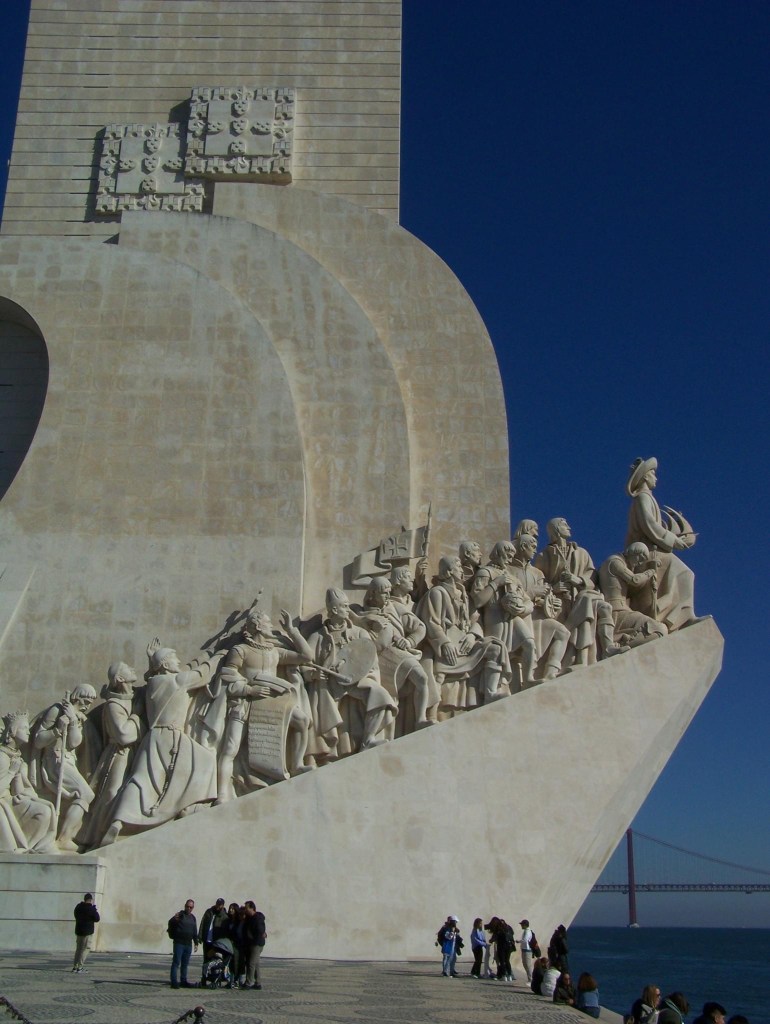
But we are hungry and it is already early afternoon so we walk toward the Docas de Belem. The waterfront is close, but how to get there? The garden is fenced off. The train tracks cut off any possibility of crossing the street. We walk back and forth for awhile until we notice stairs leading underground. A tunnel takes us under the trains and the highway. Suddenly Pedroas dos Decembrimentos looms ahead. The monument to the explorers is inspiring in size and detail. Prince Henry leads the navigators who changed the world. We circle the dock, trying not to be run over by electric scooters and bicycles. We eat lunch at the dockside restaurant and plan our return to Alfama.
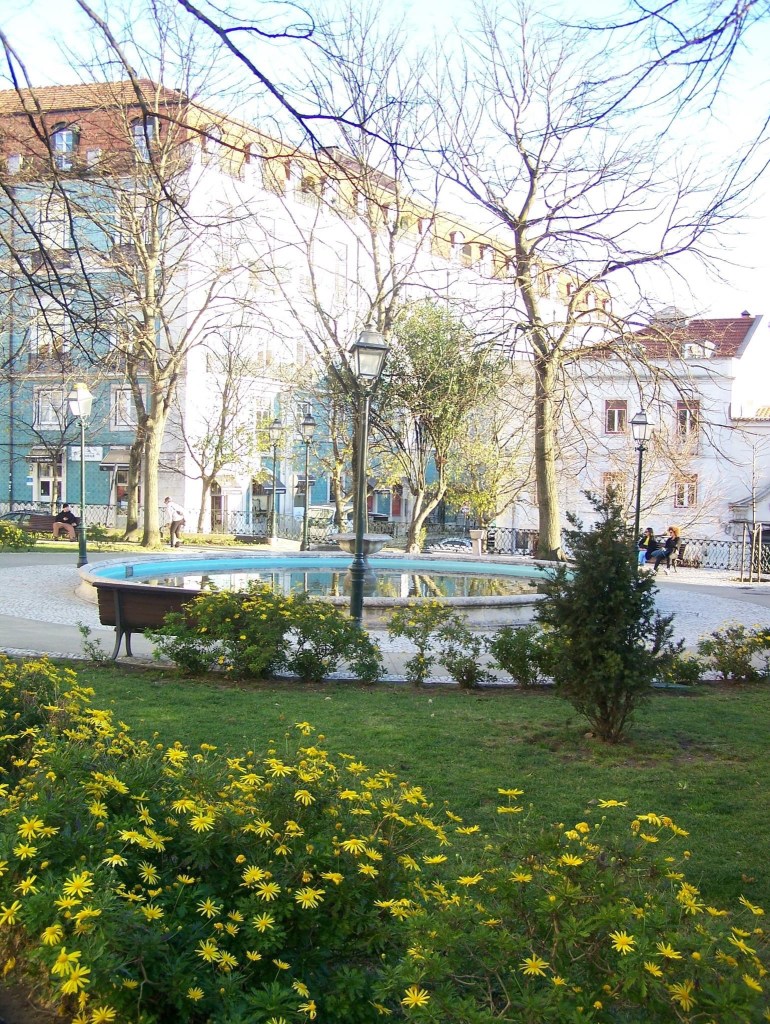
After the bus ride home, we decide to search for icecream. The five minute walk turns to ten as we walk up the steepest hill yet. But we are rewarded with Graca park. The park is lovely with children playing futbol and musicians strumming Fado. Mouriscos restaurant has set up chairs on the plaza and we order Sangria Branca. The citrus is crisp and refreshing. The music is mesmerizing. This is how life should be lived. Peaceful and slow.

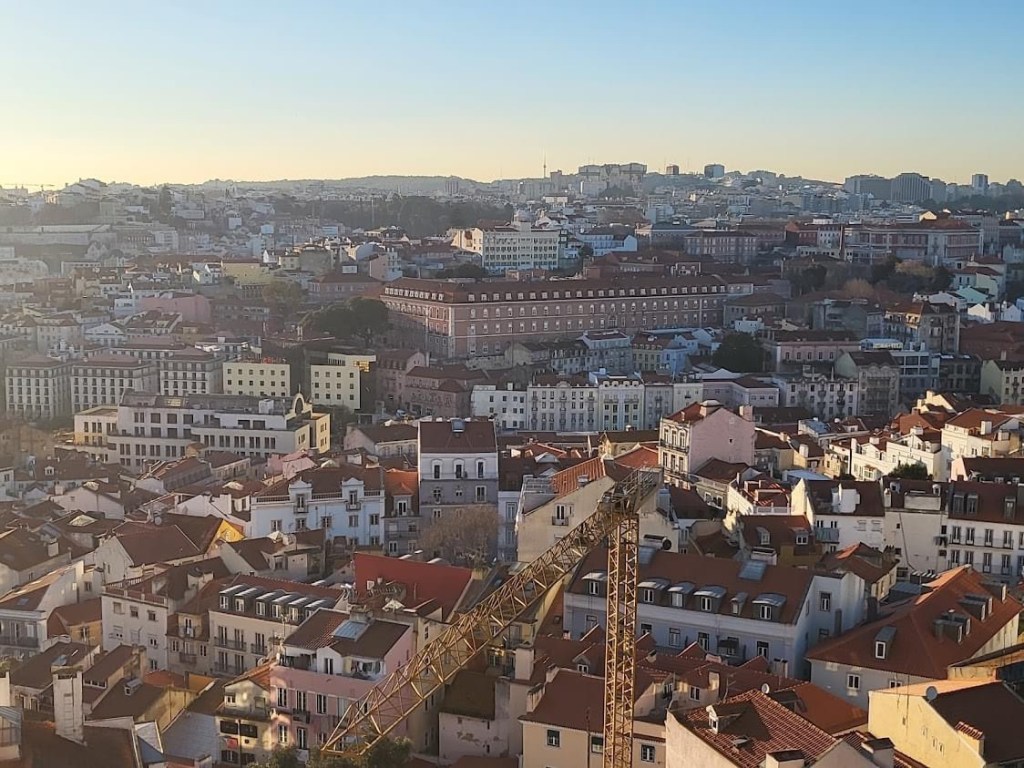
At sunset we walk over to the miradouro and take in the aerial view of Lisbon. I squeeze the hand of the one I love and feel that everything is right in my world.
 Prisoner of Hopes