
An afternoon visit to Sao Vicente seems to be a relaxing compliment to our morning visit to the market, so we trek back up the hill to the monastery. Tuk tuks line the area in front of the church and we carefully make our way to the entrance and pay the five euro fee. We are not sure what to expect. We step into an ancient cistern that collects rain water as a first stop before endless stairs.
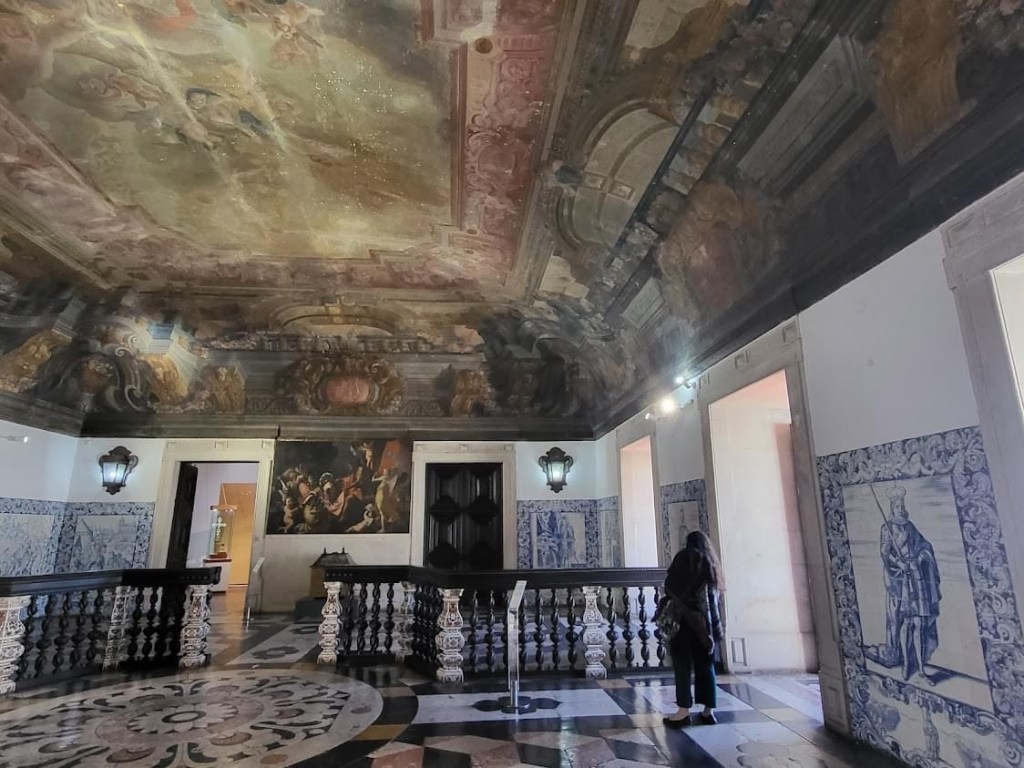
The entryway to the monastery is a thing of beauty. Ornate painted ceilings, mosaic floors, tile murals, and ceramic spindles compete for attention. I move slowly trying to take it all in. St. Vincent is the patron saint of Lisbon. I am told a monastery has been standing on this site since the 1100’s. You can feel the history in the room.

We stroll through simple inner courtyards and room after room displaying religious artifacts. All of the silver in Portugal must be in these endless cases. Each silver candlestick and crucifix is an overt display of wealth. We talk for a bit about the plight of the poor in an era when the church flaunted such wealth and power. The bishops of Lisbon clearly lived like a king.

When we enter the church, I am silenced. The archangels draw me to the altar. The side chapels have their own mysterious pull. A simple wooden carving of Christ catches my eye. It seems to say, ignore all the noise and come to me. So I do. I say a prayer of thanksgiving for my many blessings and I linger in the feeling of peace.
We visit the sacristy, where the priests dressed for services. It is awash in tile and paint. The ceiling is a work of art with the lamb of God looking down from above. We continue our slow progress through more rooms. We read about kings and queens, illegitimate children, power, and despair. There are centuries of history here in Sao Vincente de Fora/ St. Vincent Beyond the Walls; a monastery converted into a palace for the archbishops of Lisbon.
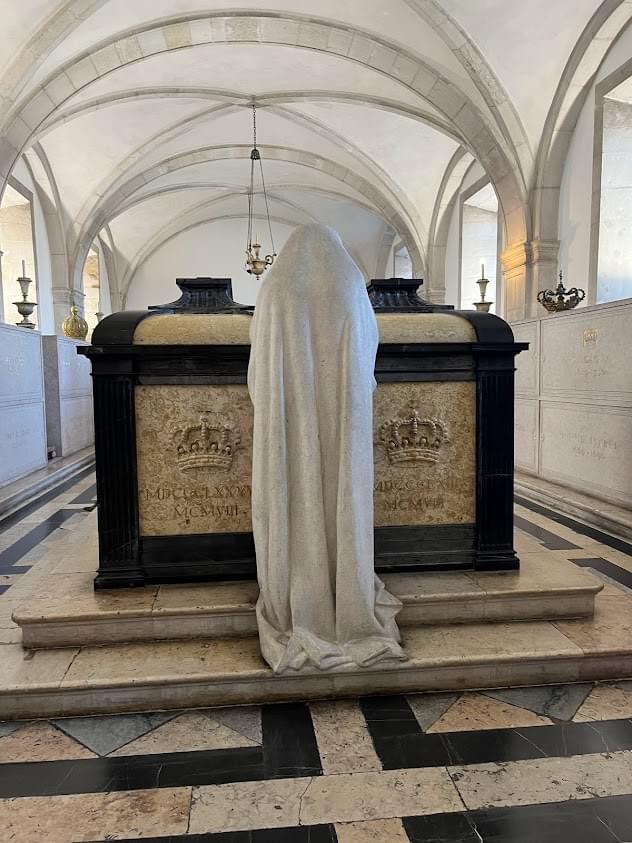
In what used to be the monks dining room, we encounter the tombs of the kings and queens of the house of Braganza. Symbols of crowns and scepters are everywhere. Marble mourners stand among the crypts. We wander the aisles unsure of the history of the Braganzas, but drawn by the imagery. Loud laughter seems out of place as a group of young girls bounce into the room. Sshhhh! Giggles and then they are gone.

Up stairs and down stairs, we trudge on. We walk through an entire floor of tiles that represent the French fables of La Fontaine. The tiles are beautiful. Panels display the accompanying fables. They are strange and dark. Perhaps they suffer from translation to Portuguese and then to English. I keep reading trying to figure out why the fables are popular. The tales do not improve as we go along, so we make an escape to the roof.
From the rooftop, Alfama lies at our feet. We peek into inner courtyards. My husband points out our apartment building and other sights along our street. I can see Graca and Santa Apalonia Station. The Vasco de Gama bridge is visible in the estuary. The most prominent building is the Panteao National. It stands like a fortress against the backdrop of sea and sky. We determine to visit as soon as we can bring ourselves to leave the rooftop and the sun. Eventually we make our way down endless steps and through additional courtyards to the exit. Sao Vicente is surprising and so much more than it appeared.
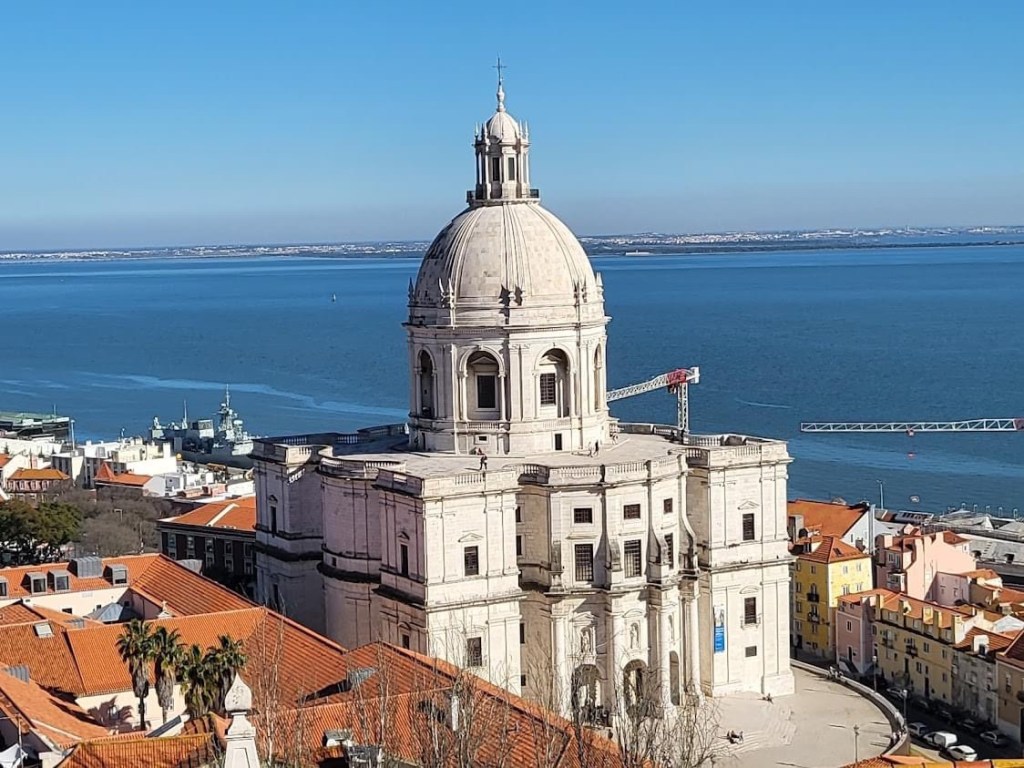
We rest for a moment in the courtyard before the massive national pantheon and watch the vendor selling drinks in pineapples. Children run and play. I find myself wishing that we had courtyards and pineapple carts at home. Everything feels so alive and vibrant.

Eventually we wander into the building. I tell the attendant that I want to purchase the multi-museum pass. She panics and says that it is for museums that are far away. I smile and ask for the multi-museum pass again. She says that we ldon’t have time to see them all. I ask how long they are valid. She says one month. I smile and ask for the multi-museum pass. She shrugs and goes to get someone to show her how to produce the tickets. Meanwhile we look around the inside of the Pantheon.
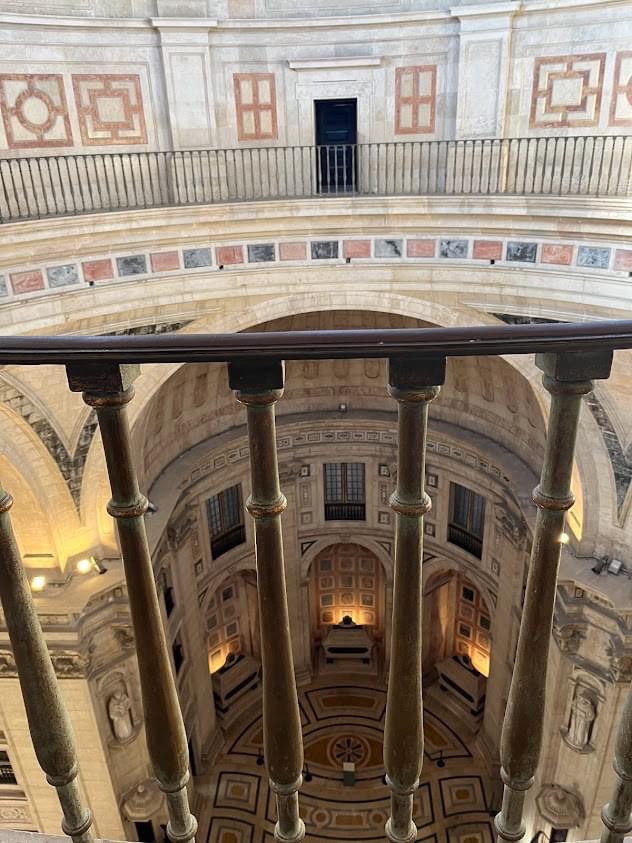
It feels like we are in a Dan Brown novel. Enormous domes overhead intersect with hidden nooks and crannies filled with tombs. Some are actually tombs and others are only empty shells. Presidents, futbol stars, singers, writers…Portuguese hero’s laid to rest in a place of honor. We climb hundreds of stairs to reach the roof. I walk around the inner dome and take a selfie looking down. It makes me dizzy and I back against the wall. It really is a long way down. Hundreds of more stairs headed down to ground level being us to Vasco de Gama. He isn’t really here. He is buried in Belem, but there could not be a National Pantheon without him. So a fake crypt ensures that de Gama takes his place in the hall of heroes. We pay our respects to de Gama again and exit.

We venture back into the streets of Alfama. Uphill sidewalks seem impossibly steep after the countless stairs we have climbed, but we press on. We find a quiet courtyard to sit and have an appetizer. As we sit we hear music drifting through the neighborhood. Fado, haunting and sweet. I look to my right and notice mannequins line the balconies of the building. A closer look, reveals an outdoor restaurant has appeared. Tables and umbrellas are set in what had been an empty courtyard earlier in the day. Night falls and we sit down at a table under the lights and umbrellas.
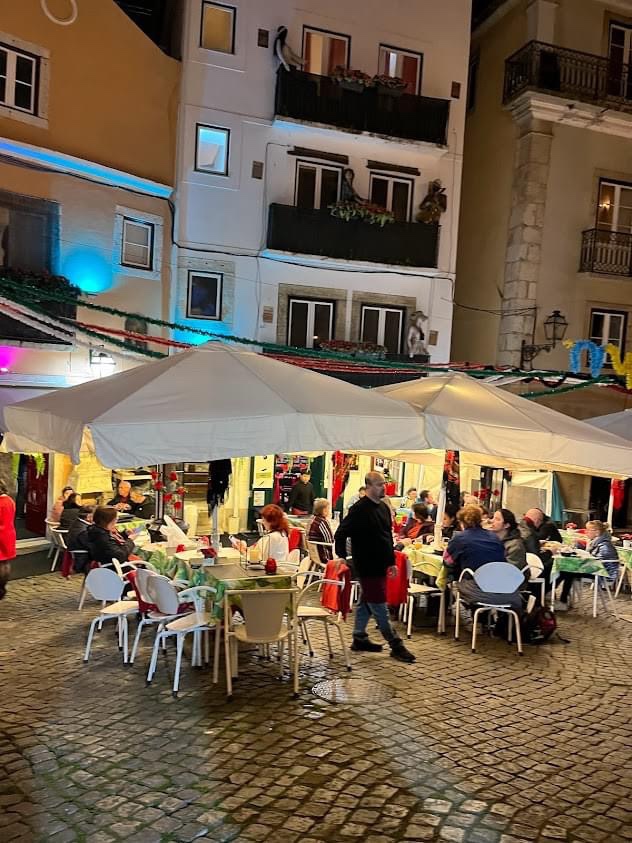
I order fish and green Sangria. Various family members take turns singing Fado. Furious guitar accompanies strong alto and baritone. Generations play and sing together. I am tired, but I don’t want to leave. I am full, but try the biscuit cake anyway. I have earned it. Besides, I know that I still have several hills and stairs to climb in order to reach my bed. Every street in Alfama is uphill at some point.

 Prisoner of Hopes