
Mafra Palace is enormous. I don’t actually have an adequate word to describe how big it is. King John V made a vow to build a monastery if his wife had a child. The building, now a UNESCO world heritage site, was built to honor the vow of hopes and prayers for Princess Barbara.
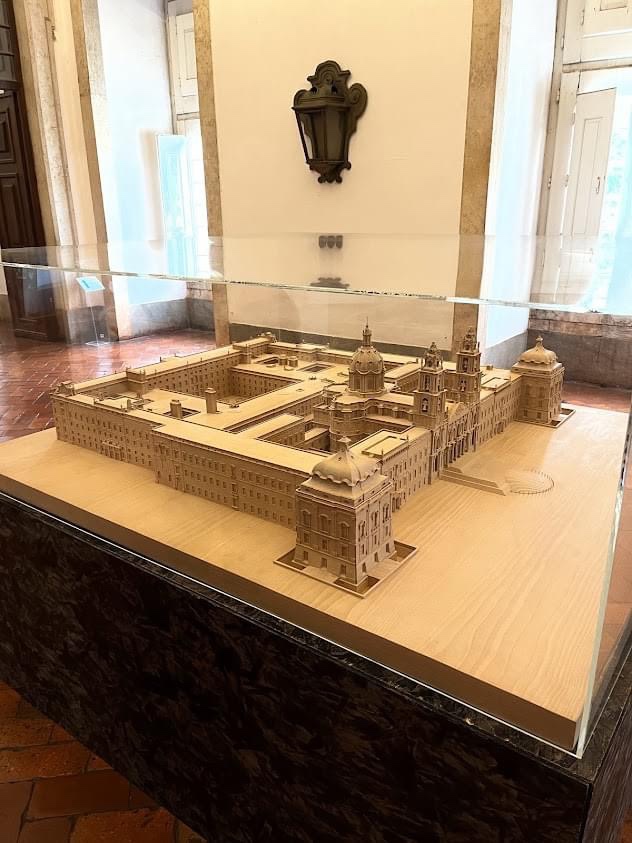
Construction began in 1717 for a small friary near the King’s hunting preserve and quickly turned into plans for a grand palace and monastery. It is now one of the grandest examples of Baroque architecture in Portugal and perhaps the world. It is so large that photographs can’t capture the scope of the building. Touring the building, I couldn’t even comprehend its shape. Only at the end of the tour, when I saw a scaled model, did I begin to understand the magnificence of the building.
After exiting the bus from Lisbon, we encountered the impressive front exterior of the building for the first time. We saw a sign at one corner that said tourist office, so we headed there. As we entered no one looked up. We were the only guests so we waited. After a time, I finally asked where we entered the palace. The response, “other side of stairs”. We left the tourism office with little information and without anyone looking up from their computer.
There are lots of stairs at Mafra. The interior stairs near us were blocked so we decided we needed to go outside and walk around the large stairs in the front of the building and then down the street to the far side of the building. We hoped we could find the ticket office, because the length of the building was daunting. However, having been in Portugal for several weeks we were good at the “hunt for the historic site ticket office” game. We scanned the building for doors and looked for people entering and exiting the building.
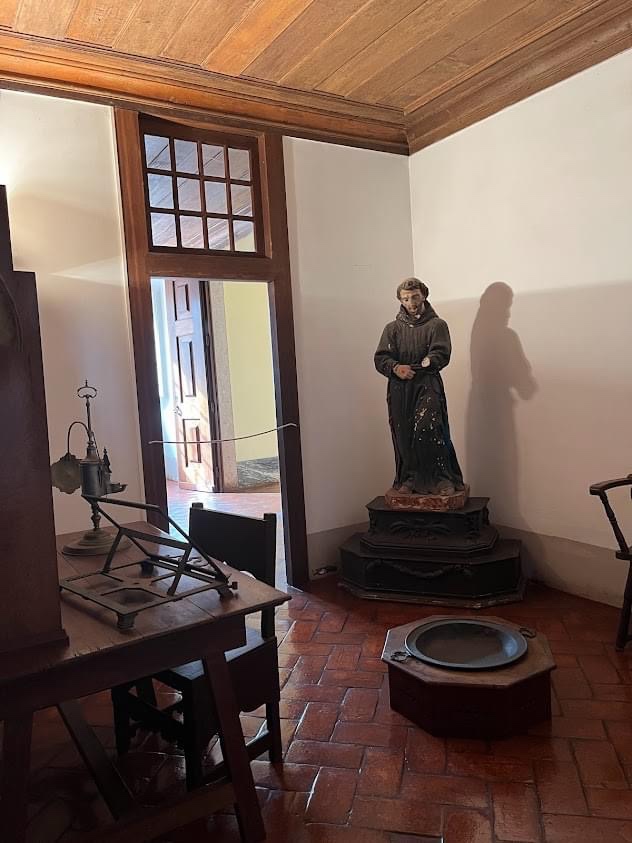
Success. With tickets in hand, we climbed the wide stairways to the upper floors of the palace. First, we encountered religious art exhibits. They were interesting, but we had been exposed to countless reliquaries, chalices, altarpieces, and vestments on this trip already. So we quickly perused until we entered the friary area of the building.

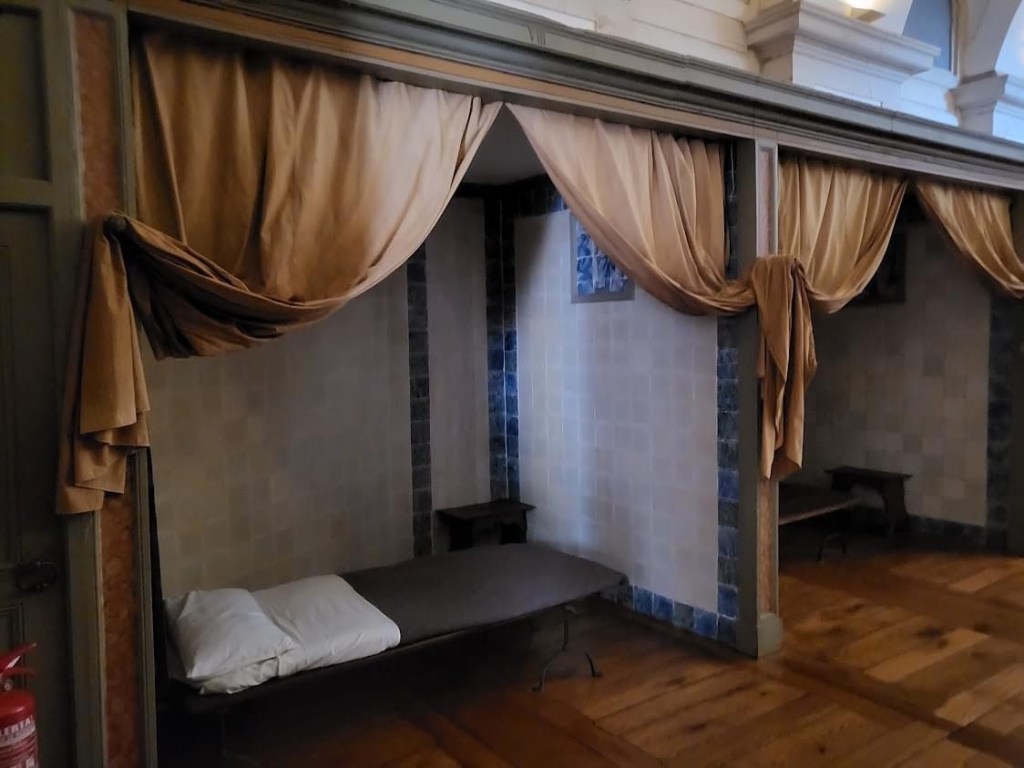
The cells contained book stands and candle shields and any number of inventions of interest. Perhaps most fascinating, was the Franciscan hospital. The ward had individual stalls divided by wooden walls and curtains for privacy of the patients. However, the beds could be pushed to the middle walkway in view of an elaborate altar for daily mass. It was not hard to imagine an army of friars tending the sick. Patients could leave through one of two doors; the one they came in or the one leading to the cemetery at the opposite end of the hospital corridor. The hopes and prayers of patients long forgotten seemed to echo in the large hospital chamber.
My imagination continued to concoct whispered hopes as we entered the reception and throne rooms. Elaborately painted walls and ceilings lent grandeur to the room. The only furniture, two simple thrones, clearly signaled that this was an audience room where you stated your business and moved along.

We walked through room after room. My husband, a former coach, declared that a track heat could be run down the long hallways. Grand rooms eventually gave way to more intimate living spaces, modernized by later Kings and Queens. Hunting trophies and billiard games occupied a wing used for amusements.

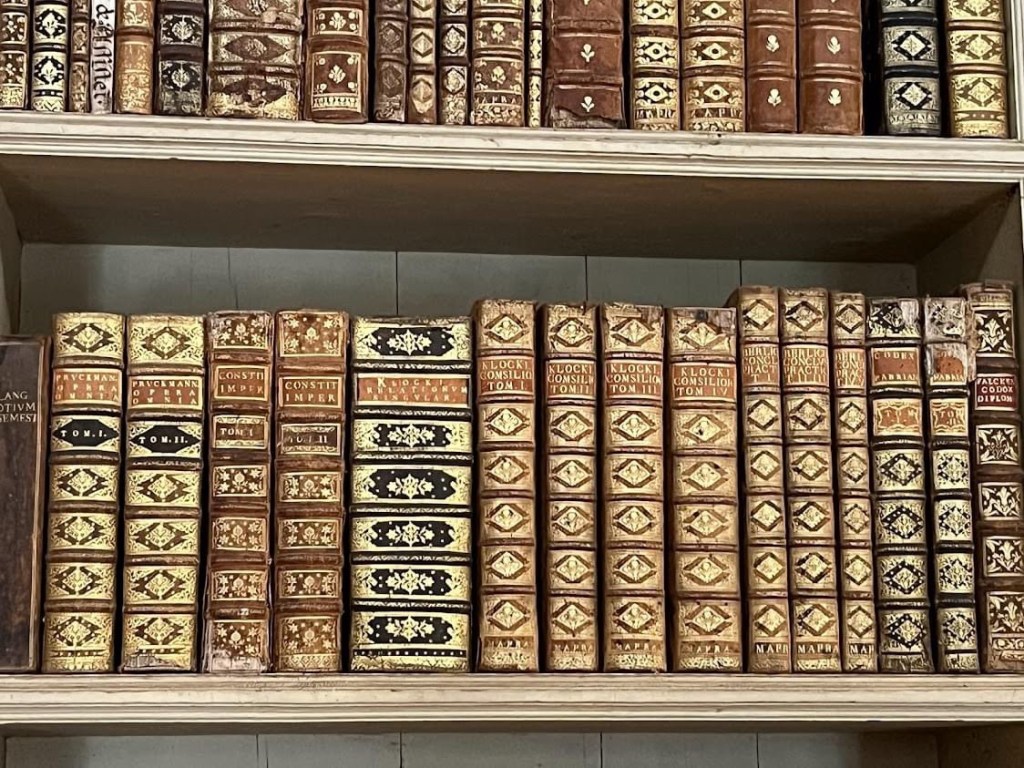
But for me, nothing compared to the library at Mafra. 36,000 books written from 1300 through 1700 were waiting. A repository of ancient knowledge, hopes, and prayers sat silently. They called to me. I almost ran through the corridor to them. My husband reminded me that they would still be there when we arrived down the long walk.
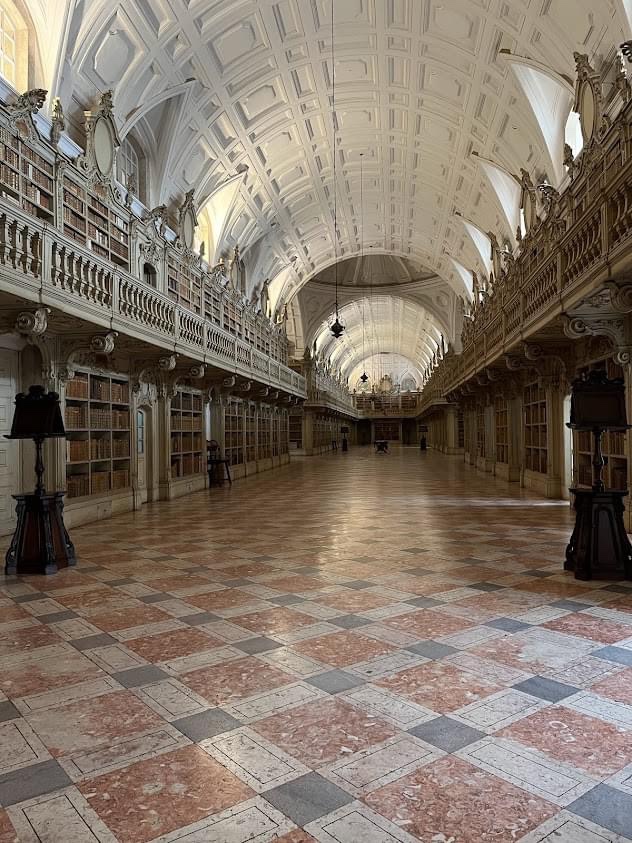
I love books. I love the way they look and the way that smell. These particular books were amazing. I wanted to touch them, to run my fingers down their spine and feel the leather and the embossed titles. Sadly, that was not allowed so I had to settle for admiring the beauty of the Rococo bookshelves. I read the titles out loud and imagined myself holding them. It was enough to know that I was standing the largest collection of medieval literature I am likely to ever encounter.
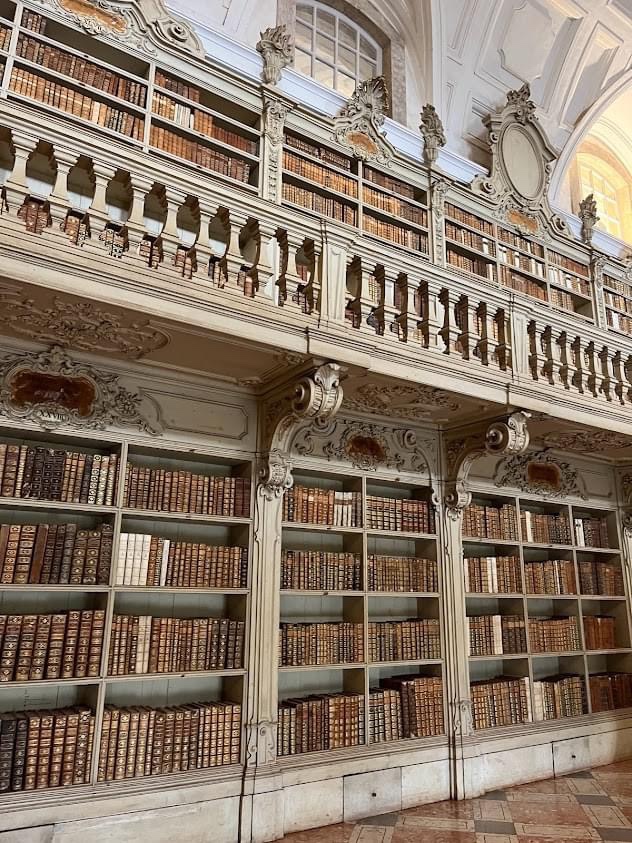
We were intrigued by the pristine condition of the books and were startled by the preservation technique. They library roof has tiny openings under the dome that allow bats to enter the library at night. They eat any bugs that would damage the books. Library workers cover the furniture before they leave and uncover it each morning, carefully cleaning any guano left behind. The system has worked for centuries. Bats are the libraries night watchmen, taking care of the priceless collection.
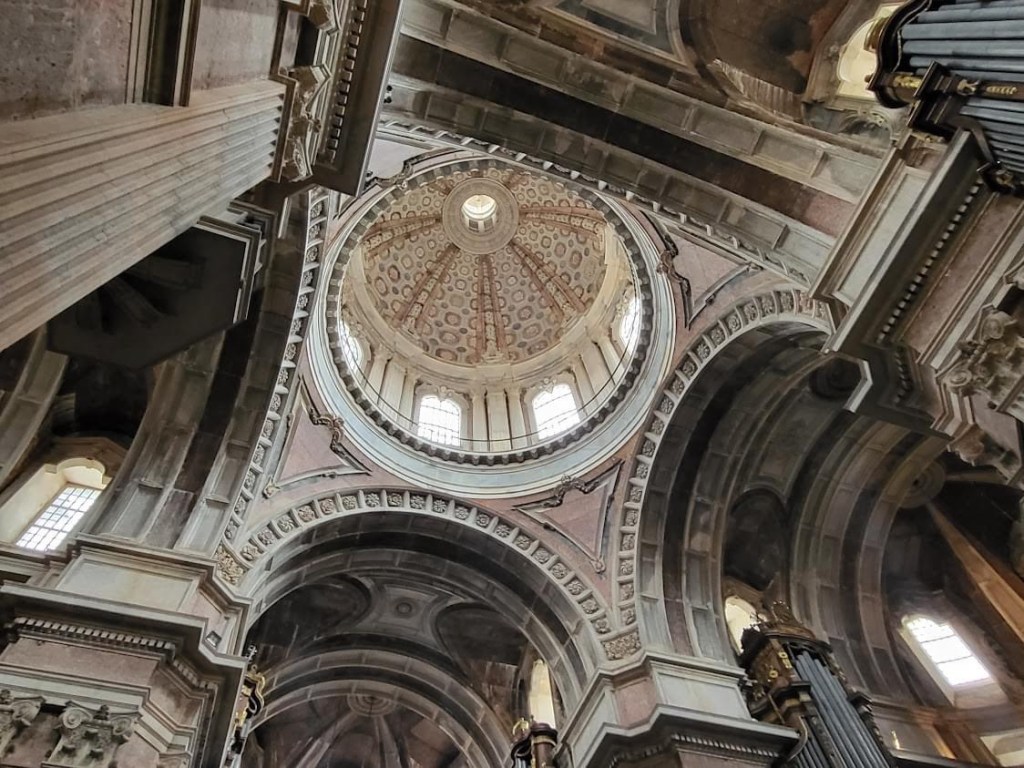
Not to be outdone by the library, the Basilica of Our Lady and St. Anthony takes center stage in the palace complex. An explosion of pink marble, the church is lined with the statues of saints. The cluster of arches and domes creates the feeling of a church in the round.
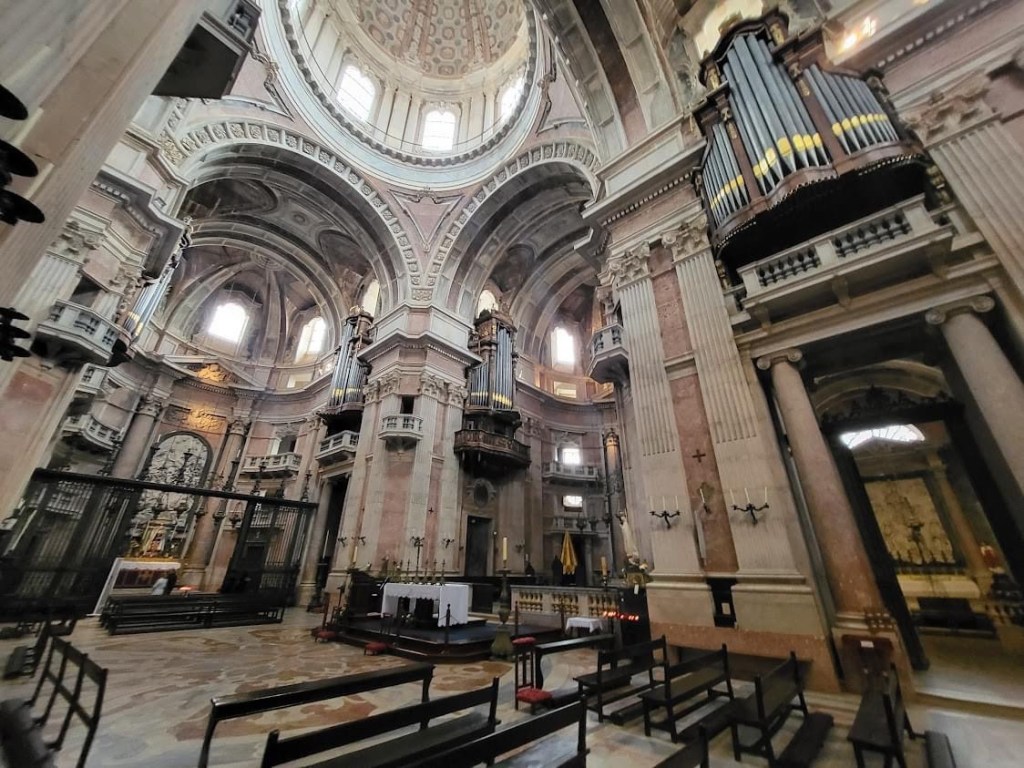
I visited each chapel and knave. Jealously, I inspected the massive pipe organ. What I wouldn’t give to play an old fashioned hymn or a little Bach on a pipe organ again. Sadly pipe organs are in short supply and not en vogue in American churches where drums and guitars reign. But I digress.
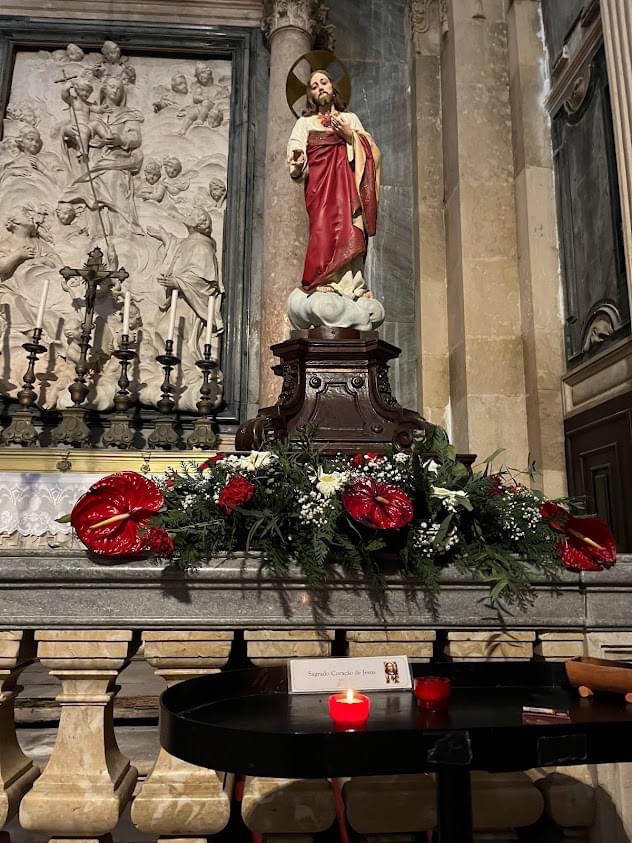
In a quiet corner chapel, I lit a candle and placed it by the Christ the Redeemer statue. I prayed a prayer of hope. A card translated in English contained a “prayer for peace”. Mafra was built out of a hopeful vow. As I stood there, I wished for a world where humans would seek to help each other and to serve each other. I thought of my friends in Ukraine, and I wished for a world where nations united in peaceful cooperation for the betterment of mankind instead of going to war over greed and power. I wished for the end of hunger and disease. I prayed for blessings on God’s people that we again understand what it means to Do Justice, Love Mercy, and Walk Humbly instead of weaponizing piety and manufacturing endless culture wars to prove imagined superiority. I hope and I pray for God’s grace. Mafra begins and ends with hope and a prayer.


One response to “Mafra,Built on a Hope and a Prayer: Travel Goals Portugal”
I am sure my son Daryl would love to visit the library at Mafra.
I’m going to forward a link to him to pique his interest 🙂
LikeLike