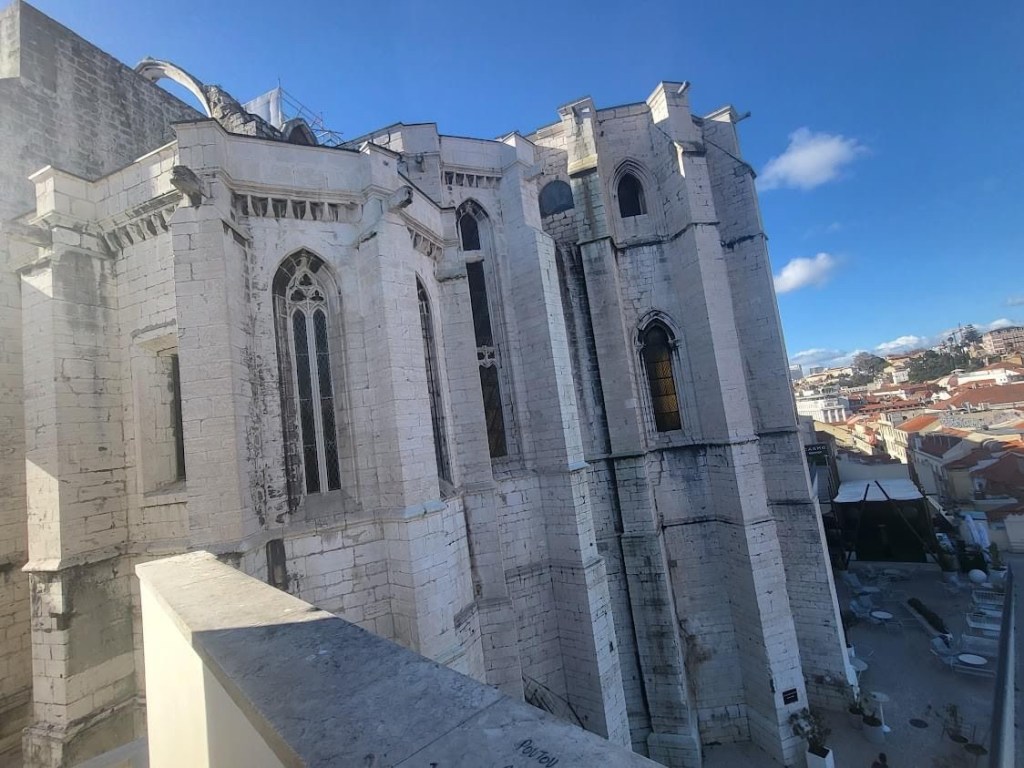
Templar knights…the very words evoke images of adventure and piety. The warrior priests who vow to take back and defend the holy land against the infidels are the stuff of legends. With my head full of images from books and film, we took the train to Tomar. Tomar was a city built as a Templar base in Portugal in the 1100’s at the start of the Crusades.
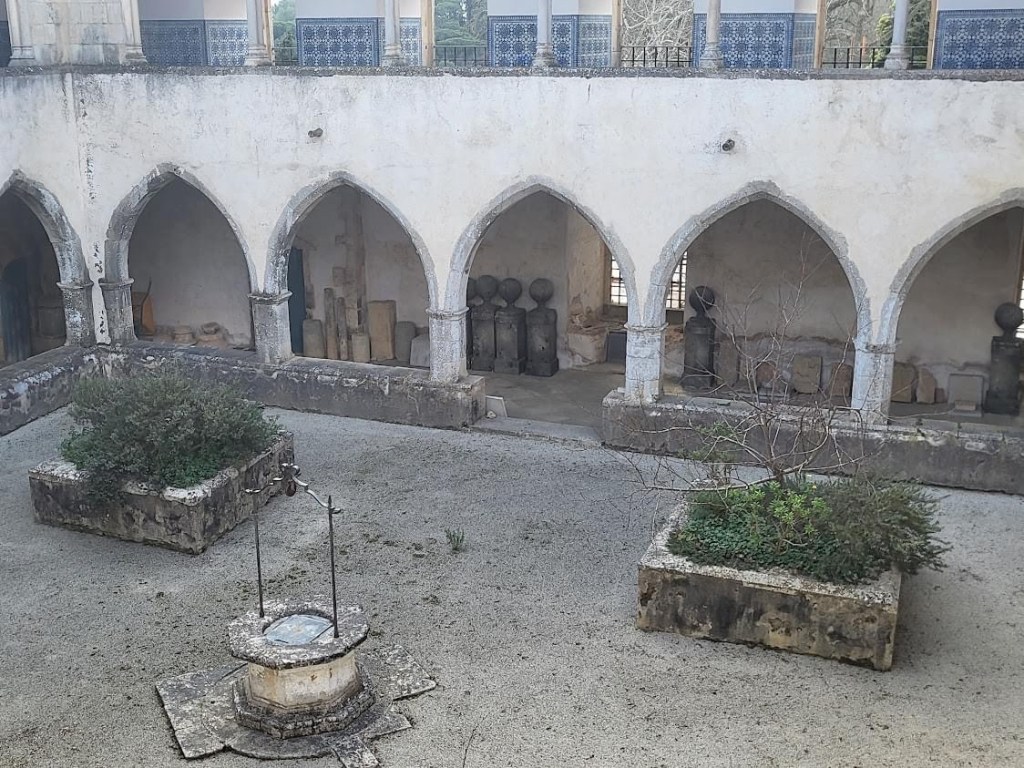
While the movies romanticize the Templars, in reality they existed to protect pilgrims to the Holy Land. Only about 10% of its members were knights. Their numbers included brothers who fed the poor and looked after lands while the owners set out for the holy land. Women were also part of the order (although I have never seen that in a movie).
The Convent de Christo in Tomar is huge, the size of a small city. The Templar order had deep roots in Portugal and throughout Europe. They cultivated close ties with the Catholic Church, royalty and the nobility. Over time, the services of the Templars expanded to hospitals and agriculture. Donations to the Templars rolled in as they established systems to help the poor and to reestablish communities in the Holy Land.
Templars invented the first checking system, where travelers could deposit money with the Templars in Portugal and present a letter of credit once in Jerusalem or Acre. This allowed travelers to have access to money without having to travel with large sums. Some consider the Templars the world’s first multinational corporation.
Through hard work, donations, and wise investments, the Templars became very, very wealthy. Even then, large stores of wealth provoked envy and greed. King Philip of France owed a tremendous debt to the Templars. Over time he began to circulate rumors that the Templars were immoral. He had Templar knights in France arrested and tortured so that they would make false confessions. He burned the Grand Master at the stake. Money over truth. Murder to cover crime.

Although the Pope agreed to the Templar’s innocence, he disbanded the Templars and divested their resources. The scandal was to great and too many people blindly followed the rumors. It seems that people love a good conspiracy theory, even in the Middle Ages.
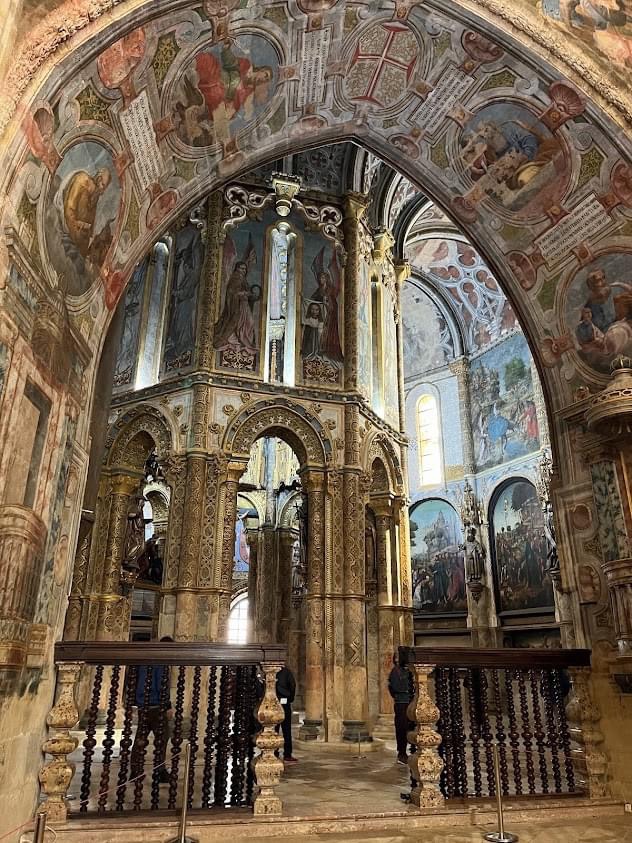
The unjust persecution happened in every country except Portugal. Instead, King Denis welcomed the disgraced and fugitive Templars and renamed them the Order of Christ. Tomar became a refuge, the epicenter of the regrouping. A new identity was created with the Pope’s blessing
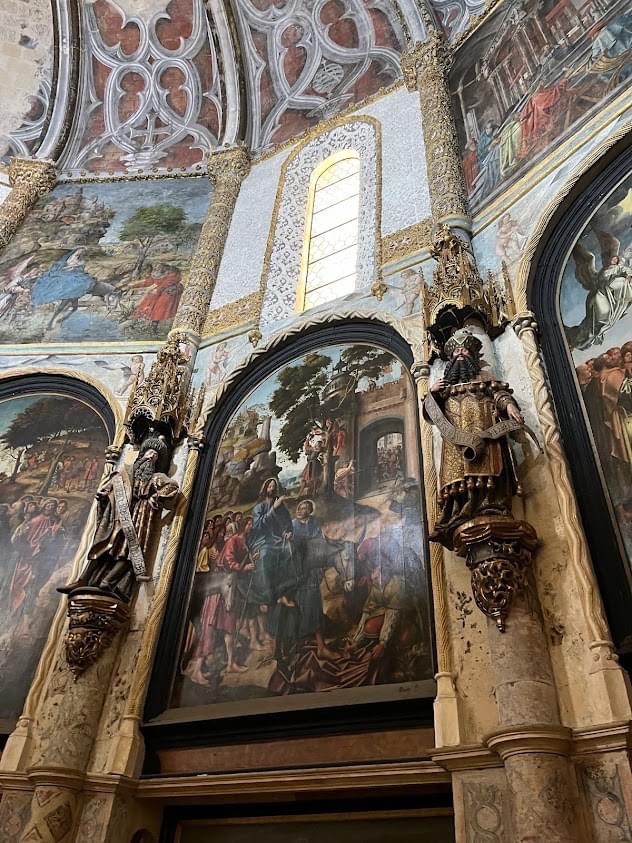
With some funds intact and a new name, the Order of Christ expanded the monastery at Tomar. A young Grand Master, Prince Henry the Navigator put the knowledge of the Templars to use. He began to accumulate all available knowledge to stage Portuguese exploration around the world. The safe transfer of funds and goods, the logistical travel expertise, navigation, mapping, financing, the building of outposts and missions, as well as countless other lessons learned in the Templar quest for the holy land were put to use for the glory of Portugal.

As exploration expanded, the Order of Christ assumed a place of honor in Portugal. Funds rolled in from the colonies and the Convent de Christo continued to expand. No expense was spared in the chapel. The round unique chapel is a truly exquisite masterpiece to the Glory of God.
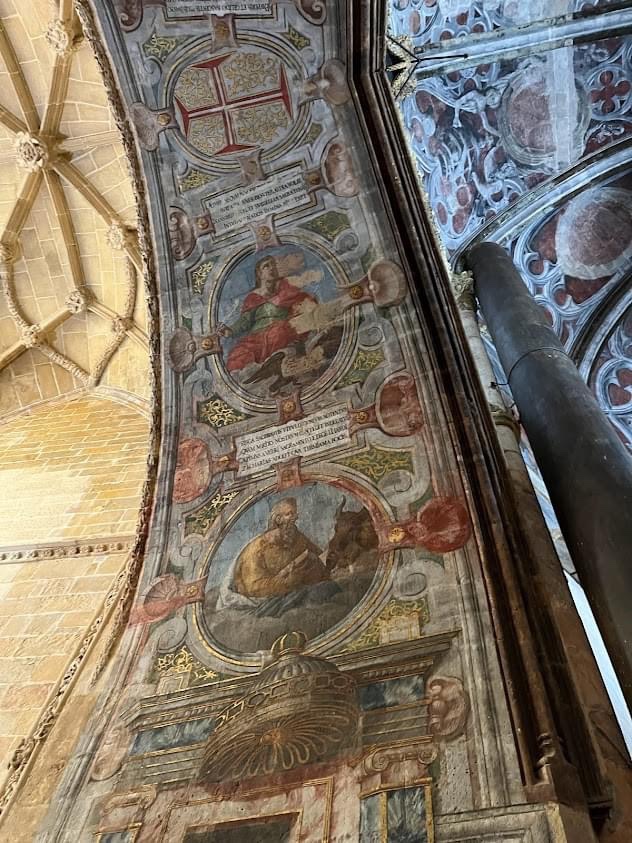
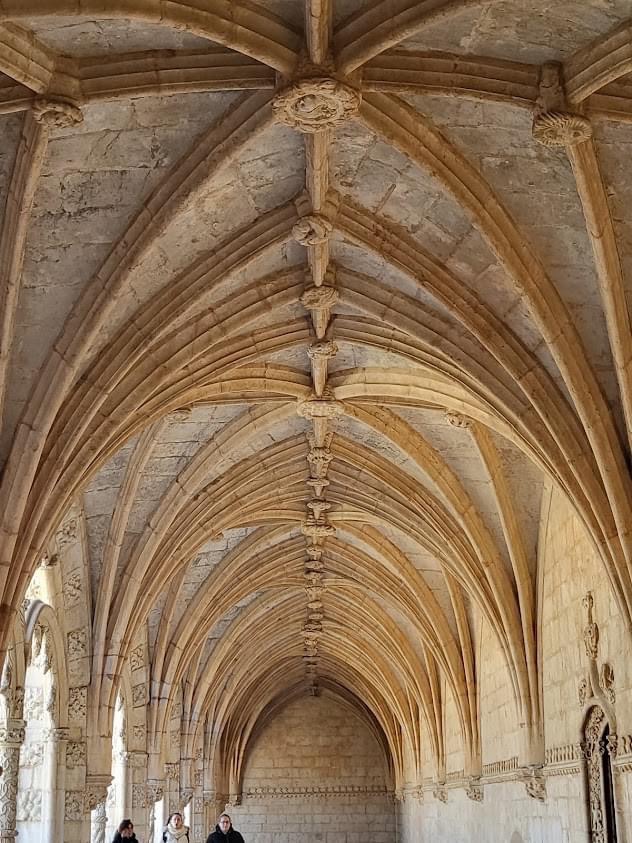
Archways, paintings, altars, and carvings overwhelm the senses. It is easy to imagine monks in silent prayer or chanting in the choir loft. We wandered around and around, under arches and golden ceilings. It was hard not to be overwhelmed by its ethereal beauty. Some historic places are oversold and do not live up to the hype. This was not one of those places. You can’t adequately put into words the visual impact of this holy place.
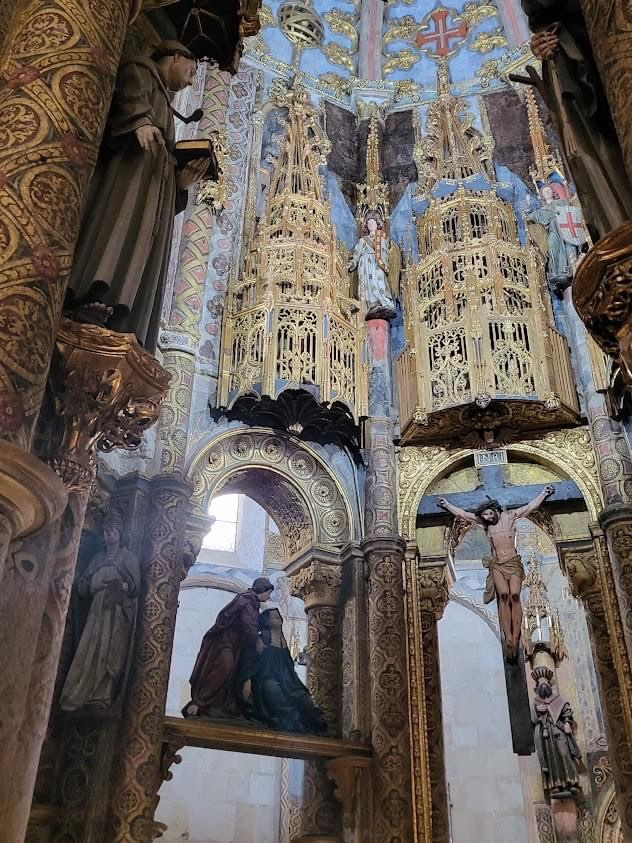
In the chapel, all decorations point toward the Christ. Mary is seen mourning Christ crucified. The apostles line the archways. Various saints occupy the alcoves. But Jesus reigns.
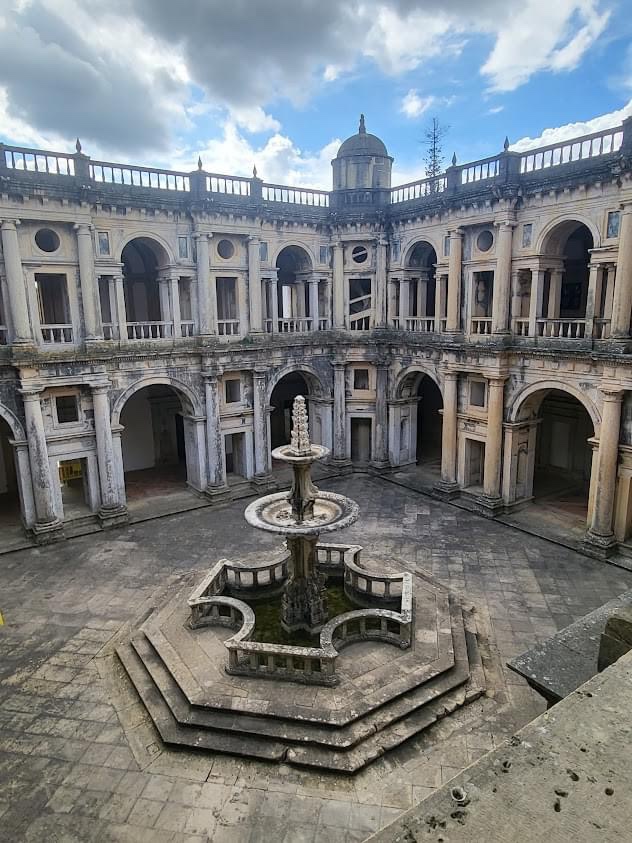
In this sanctuary in rural Portugal, the members of the Order prospered and grew as they served the Lord and the King of Portugal. Various Kings continued to expand the monastery. At its peak, it could house hundreds and support hundreds more. The entire region benefitted from the industrious Order of Christ.
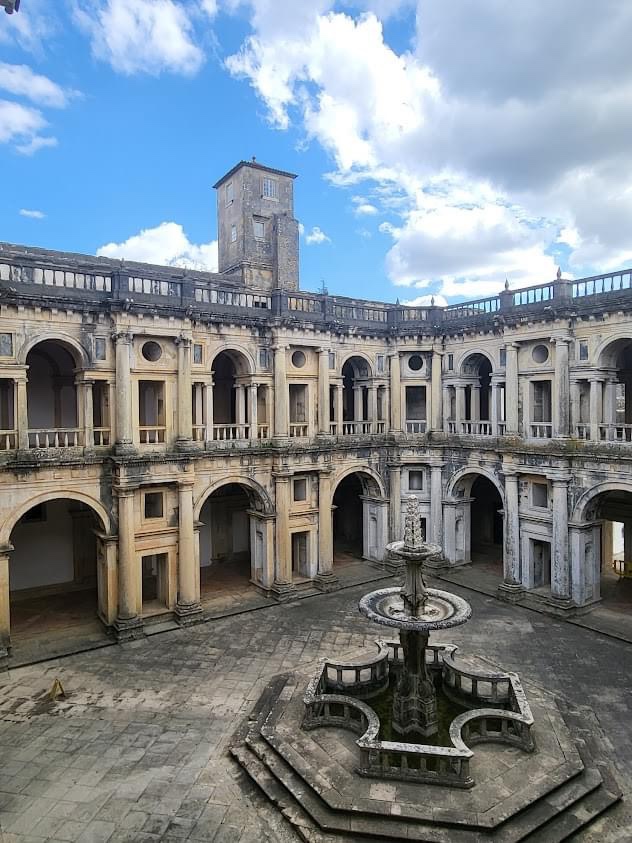
In present day, the Manualine architecture was stunning. It felt like a movie set. I half expected a knight or a monk with their bright Red Cross on a white tunic to appear in a secluded hallway. Walking into the individual cells, I was surprised. The rooms were larger than I expected. The monks here were clearly wealthy and well cared for, although they lived simply. Marble, tile, and hardwood construction was impressive. The building projects must have kept local craftsmen employed for decades.
Walking through the Convent de Christo was a step back in time. The cloisters are silent reminders of a glorious history. With the dawning of the Age of Exploration, The Order of Christ became defenders of Portugal. With outposts in Belem, Lisbon, and throughout Portugal the order defended the waterways and the ships coming and going from around the world.
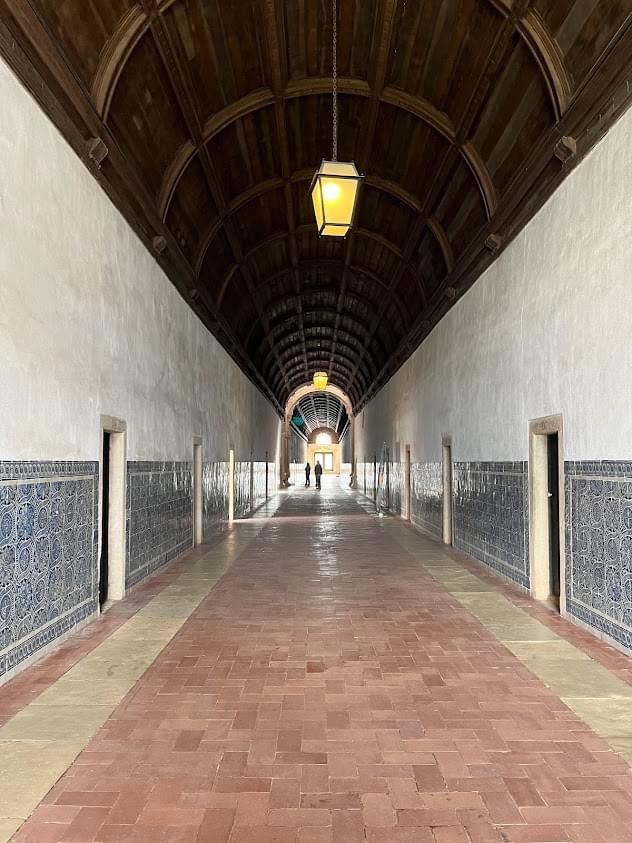
Despite the grandeur, there is simplicity within the Convent de Christo. While the altars to God are elaborate, the living quarters are beautifully simple and unassuming. You sense humility and a devotion. The hallways echo as you walk in a way that makes you attain to hear their secrets. It is peaceful in the long hallways.

In modern times, the religious order disbanded. As the government became more secular, so did the order. The buildings and grounds were too vast to be maintained without regular government and church income. Private citizens purchased the grounds. Several large areas were abandoned and turned to ruin. Today they are picturesque backdrops for photos among garden walkways.

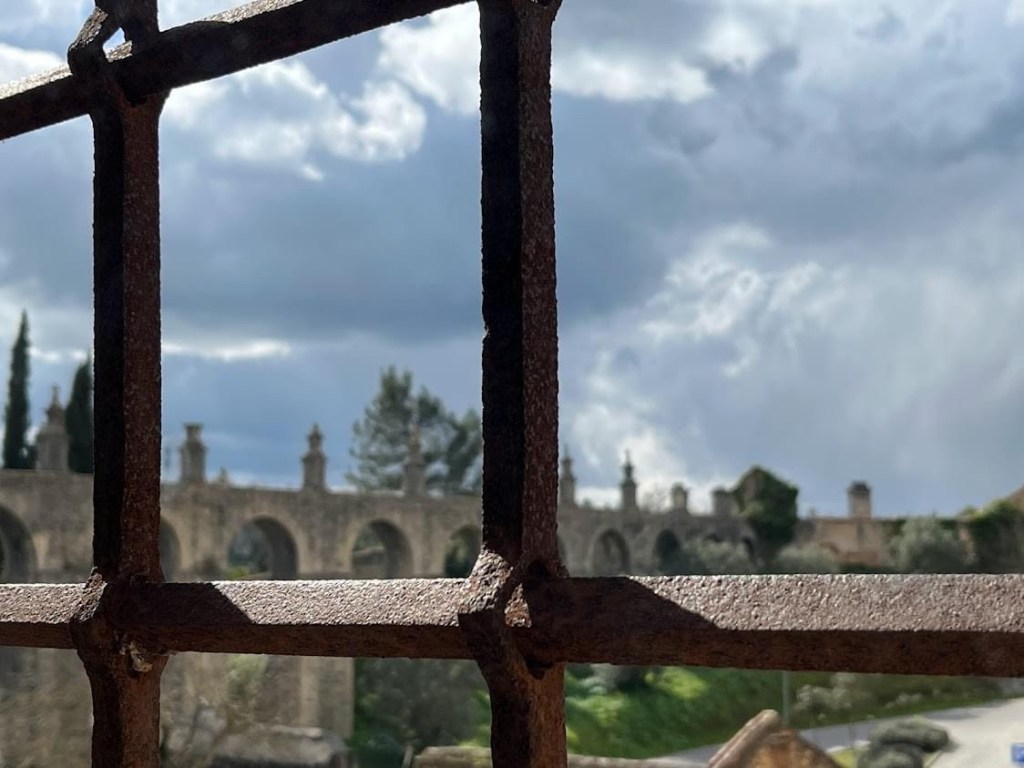
Empty and crumbling windows look over wooded parklands and agricultural fields. I wonder what a traveler encountering the enormous buildings in the 1400’s would think. I am overwhelmed at the enormity of the convent and two thirds of the structures are in ruins. Thankfully, the structures are now protected as an important historic site and under slow renovations.
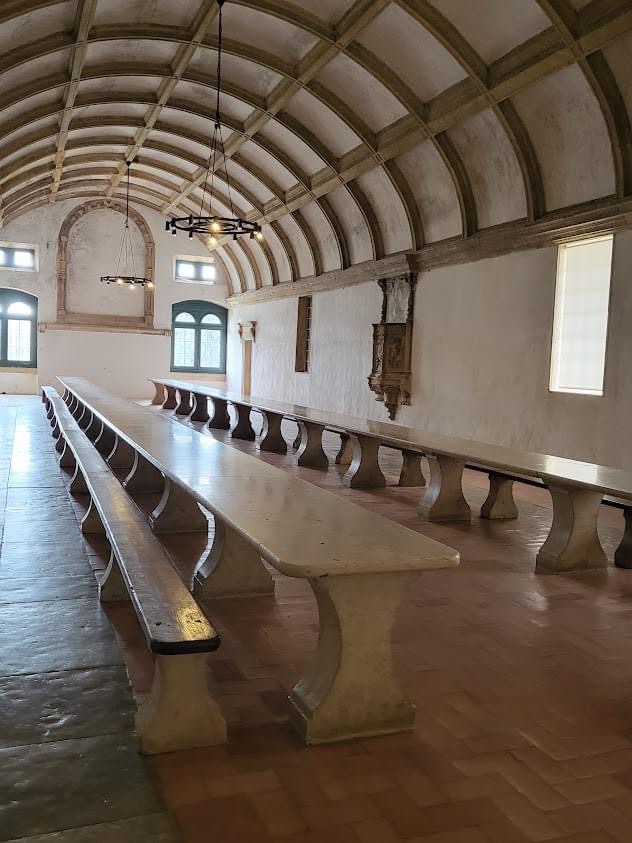
Inside the convent, areas like the large dining hall and attached kitchens have already been faithfully restored. It was not hard to imagine the grand master standing in the elevated lectern along the dining hall wall and delivering an address to the Order as they ate their dinner. (Okay, in full transparency, I stood at the lectern and gave an imaginary address. How could I not?)
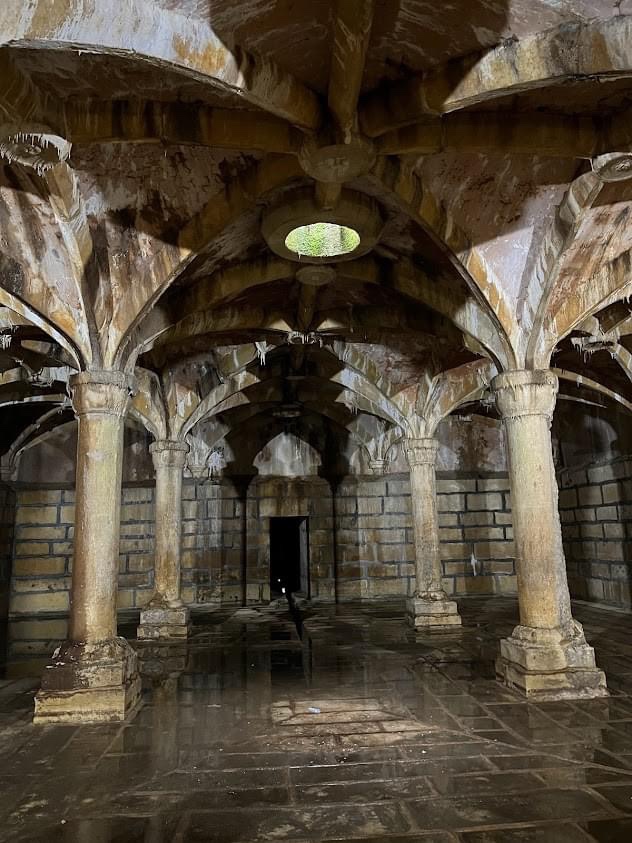
The cistern was a large and beautiful underground room, whose sole purpose was to collect rain water. It was damp and smelled of moss. I was amazed at the ingenuity. Medieval times may be referred to as the “dark ages” but people were no less brilliant. The cistern and the aqueduct were marvels of engineering that are still serving their purpose hundreds of years after construction.

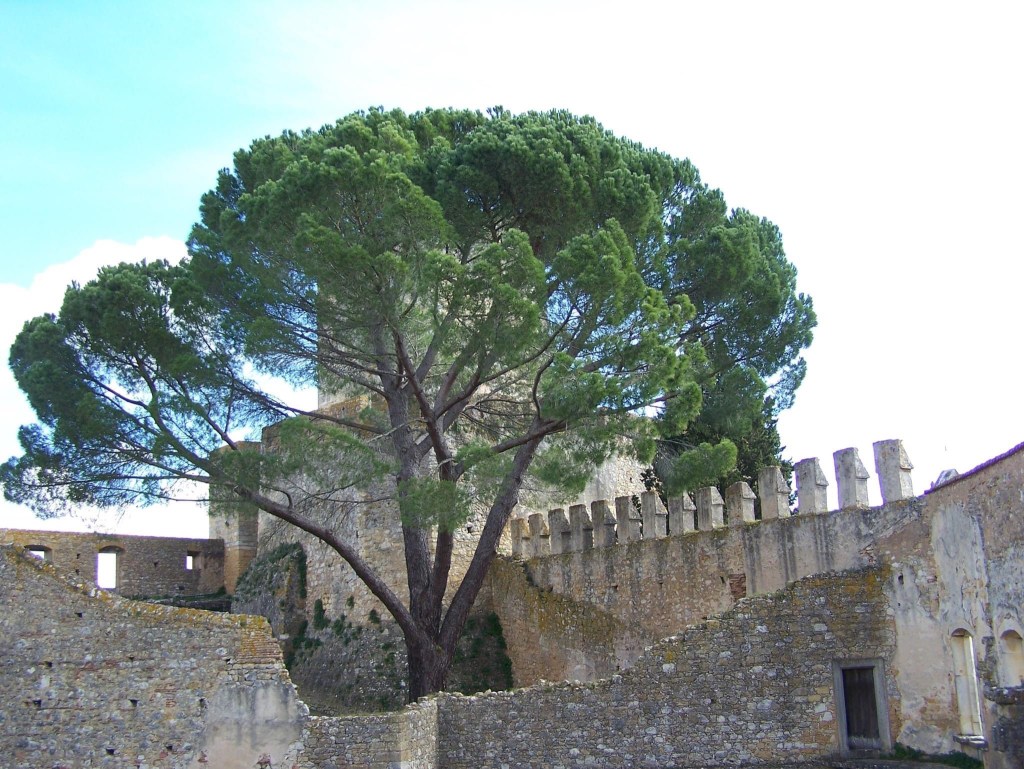
Once we had lingered at the convent as long as we could, we took a quick walk to the adjacent Castelo. The large and imposing castle was built on the side of a mountain. The location afforded beautiful views.
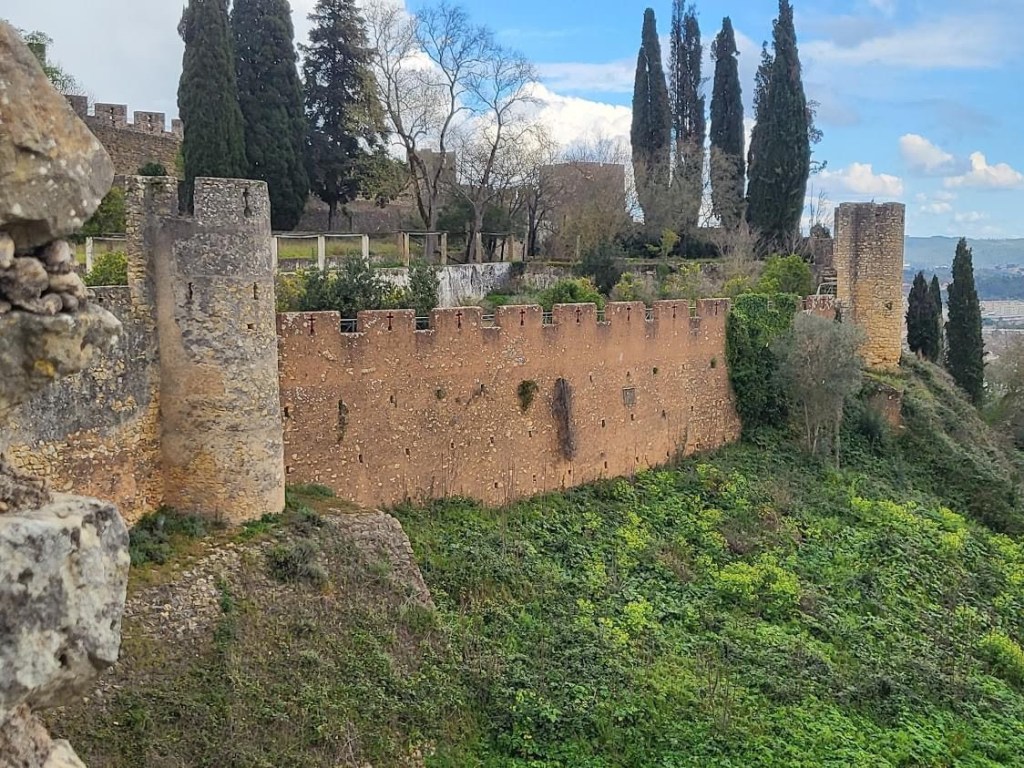
Looking down at the town from above, I realized why I was a little winded from the walk from the train station to the Convent. In my excitement at being in Tomar, I focused on the city streets and statues. I hadn’t noticed dramatic landscape surrounding the castle on the way up.
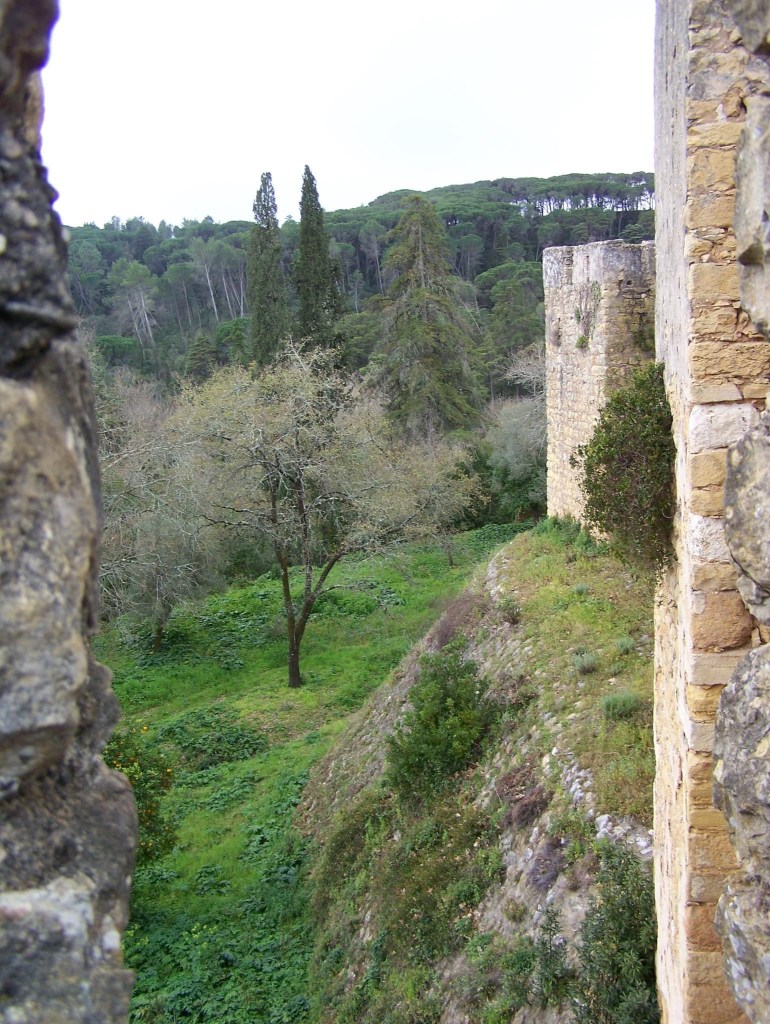
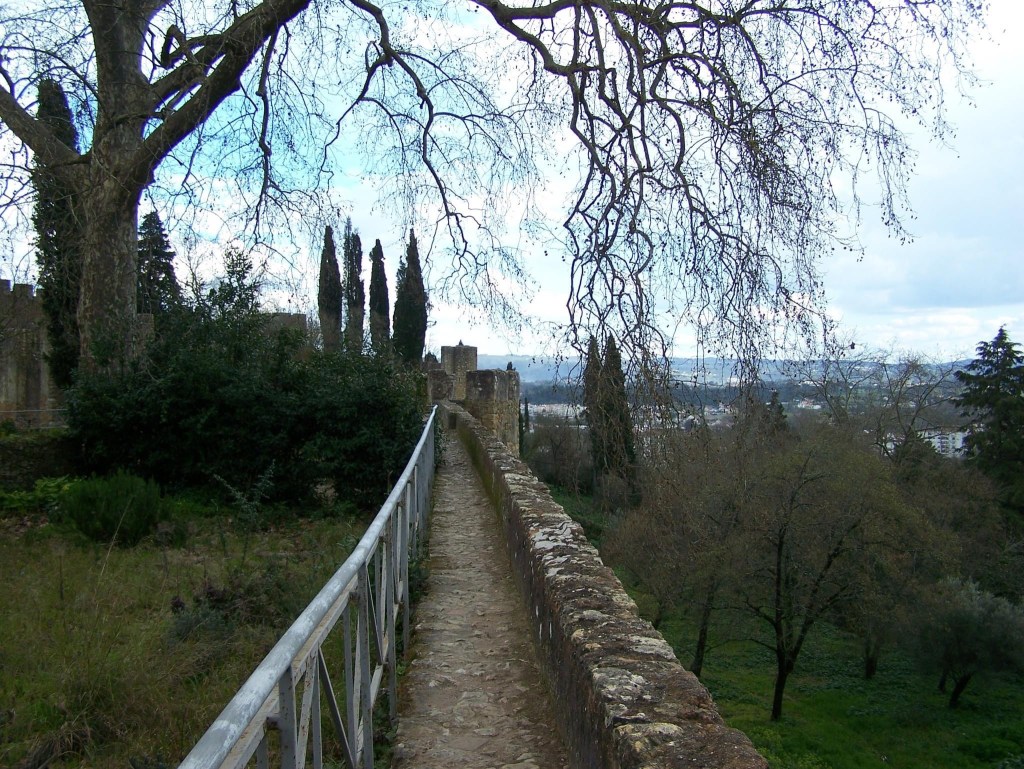
A walk along the castle walls gave us dramatic views of the fortifications and the former moat. Orange trees now grow inside the castle, the beautiful fruit always just out of reach. Outside the castle, the Convent de Christo’s parkland merges with forest. The view from along the castle walls was far reaching and beautiful. A wonderful place keep watch over the surrounding countryside. If under attack, defensive slots for watching the enemy or launching arrows were carved in the distinctive shape of the Templar cross.
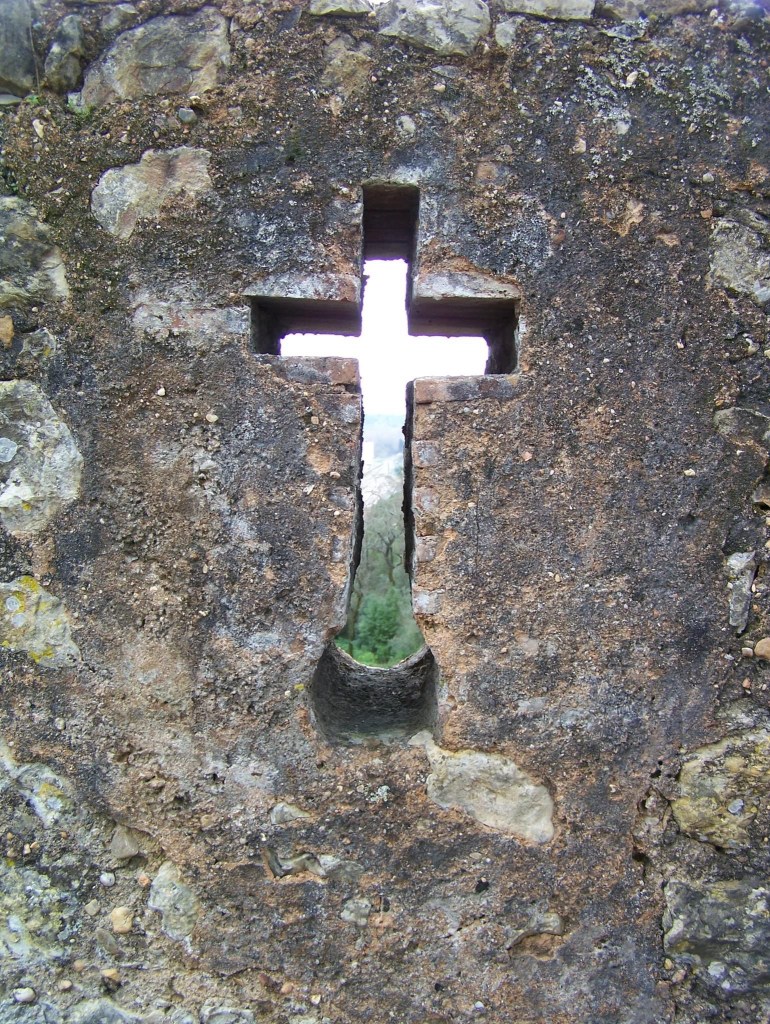
Strolling along the wall walk, I tried to imagine a time without the guard rails. I would probably fall to my own death by tripping on the stone steps. It is peaceful now, but what would hundreds of knights fending off invaders be like? The Castelo is solid and imposing. It served its protective purpose. Today it is a place where couples hold hands and tourists take photos of crumbling walls.
The Templar knights are long gone, but their legend remains. To be in this space, where reality supersedes my imagination was really special. Tomar exceeded my travel expectations. Just as the Order of Christ continued to evolve into its modern form, so has the city. Tomar proudly preserves its history and reminds us of the once great order of knights who reopened travel to the holy land and who ultimately helped expand travel worldwide with the age ofPortuguese exploration.

Perhaps that is why we were drawn to this place. Fellow travelers who dreamed of seeing the world. Individuals who lived in harmony with nature. People who lived simply and gave lavish thanks to God. Artists who shaped a breathtaking holy place. A community that looked after the poor. It is hard not idealize them. In searching for the Order of Christ, we found a community that was so much more than I imagined.
 Prisoner of Hopes