To be human is to be in relationship. All that we are, all that we think, all that we do has been shaped by our interactions with other people. Neuroscience confirms that the pathways in our brain are wired by interactions with others. Happiness is linked to personal interactions that produce endorphins. It is no secret that to function well, we need each other.
The U.S. was founded on the principle of the common good. “We the people…perfect…general welfare….”, etc. Our collective images of a good life in popular culture include strong relationships (think Friends, Cheers, Mayberry….even Virgin River). Deep down we all long for a place where everyone knows our name.
Relatively recently, our society has made a subtle yet sudden shift. I’d like to blame it on technology, but that would be too easy. Technology is often helpful and nothing is simple. In America today, we are isolated and we have bought into the myth of the self sufficient, rugged individual.
Technology has made it possible to work from home, shop from home, bank from home. You can go weeks without having meaningful interactions with anyone. You can shop in a store and check yourself out having no eye contact or verbal exchange. You can get your news online and only visit sites that agree with your point of view. In fact, social media algorithms will make sure that you see more and more of the thoughts and ideas that conform to your preferences.
We fool ourselves into thinking that our online interactions are filling our need for relationships, but neuroscience tells us it does not. It takes more and more online interaction to derive any sense of connection until we find ourselves in the doom loop of scrolling aimlessly and constantly, even in the presence of our human friends and family. We can’t help ourselves..it is part of our physiology to want more novelty. And so we gravitate to things that stimulate, shock, and anger. The algorithms feed the internal need.
All of this isolation isn’t healthy. It leads us to a state of detachment in which we disconnect our thoughts, wants and needs from those others. We no longer associate our actions with the impact they have on others. All that matters is how I feel and how it impacts me. Modern society reinforces this instant gratification by offering even more individualization. And so it goes.
Individualism runs deep. Travel has forced me to look closely at things I take for granted. Transportation in the U.S. is individualized and requires a car. At least where I live, it is impossible to exist without one. I get in my car by myself. I drive to where I want to go, past thousands of individual drivers. I park as close to the door as possible. I get out, I go in. When I am ready to go to the next stop at the end of the block, I restart the car and drive to the next parking lot. I never have to be outside if I don’t want to. In fact, I can’t walk (even if I wanted to) because there is no sidewalk or pedestrian walkway across the highway.
I am on my own, but if I am honest, I love the freedom of my car. I love the open road. But what happens if I can’t drive? Public transport isn’t even available until I get to the city. There it is unreliable. It has limited access and is considered somewhat unsafe. Why spend money to benefit people who can’t afford a car? Let’s build more roads and parking lots instead. Asphalt doesn’t have to be mowed and conveniently runs right up to the air conditioning (I am getting carried away with my thinly veiled sarcasm and digress).
After spending several months in other countries, I’m pretty sure we missed something. When I am abroad, I still have the option of driving myself, but I seldom choose to. Instead, I ride buses and trams and trains and ferries. I walk on sidewalks and through parks, squares, and other glorious public spaces.
I am connected. I see other families in my neighborhood and quickly make connections. I give up my seat for the elderly, because they can go anywhere in the city (or surrounding towns) without having to drive. Their independence and walking stamina inspire me. They are part of a bustling community and are seen and heard by their neighbors.
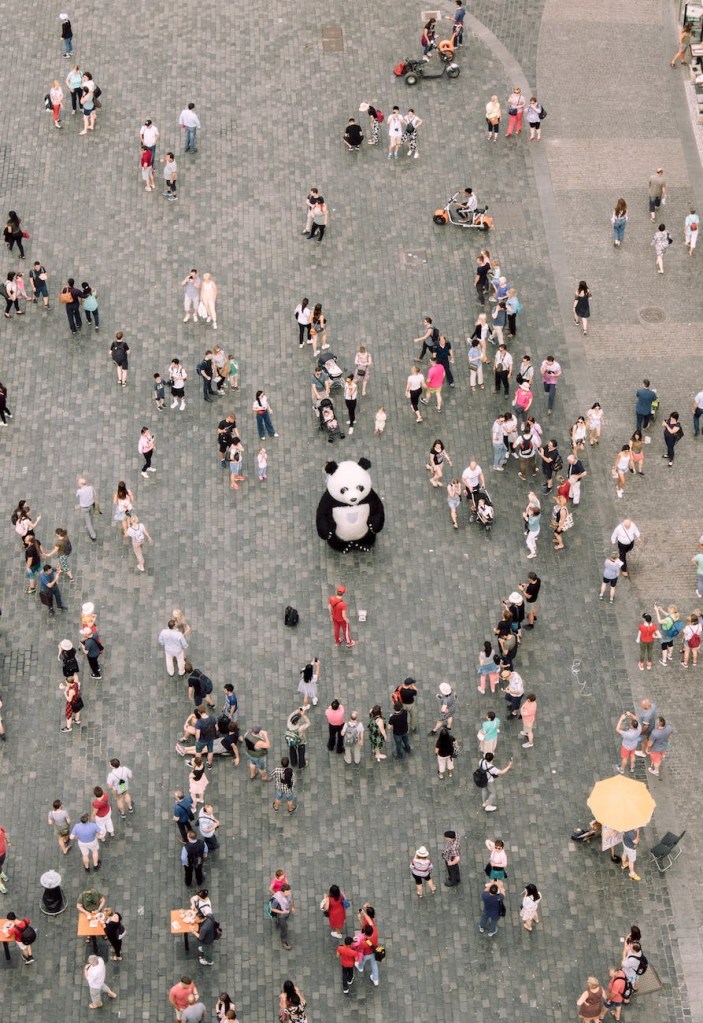
Virtually everyone is in better shape, because they regularly walk and spend time outdoors. Cities and town spend money on sidewalks, bike paths, walkways, parks, gardens, and public art. Because community, health, and the common good is critical to well being. Ironically, everyone has more choices and independent options because they are collectively valued.
Don’t get me wrong. I am blessed to be part of my very American community. But the more I learn about what it means to be human, the more I understand that we have some corrections to make. We need each other. We must invest in each other. The common good matters.
Do yourself a favor. Put down your device today. Take a walk. Visit a public space and have a conversation with a stranger. Your brain will thank you. If we all did the same, we could stop fuming at how divisive the country is and focus on becoming more connected. And maybe, just maybe, we would create public policy initiatives to benefit us all. Relationships matter.
 Prisoner of Hopes