Currency: the quality of being generally accepted or in use. The U.S. dollar (and also the Euro), as we were to find out, is the ultimate currency. ..at least in South America.
After arrival in any country, one of first stops we make is a bank or currency exchange. In recent years it has become easier to use an atm or credit cards than exchanging lots of cash. In fact, if we are staying in cities (or Iceland) there is almost no need for anything other than a credit card. We, however, I love the small shops and markets where cold, hard cash is essential.
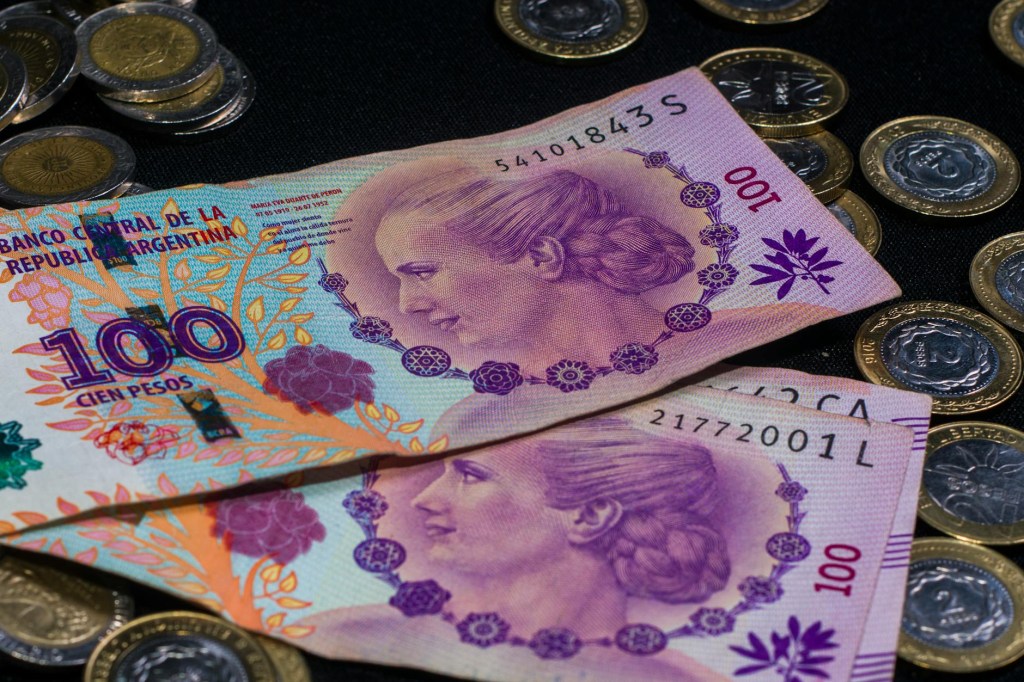
On our latest adventure through South America, we had a variety of experience with money. In Argentina, we raced to a money exchange and got there just before they were closing for the weekend. Without time to ponder the exchange rate we exchanged about $200. We handed the clerk four bills, figuring that it would be enough for the five days were in Argentina.
Much to our surprise, he handed us back two gigantic stacks of bills. Apparently $200 U.S. dollars is almost 200,000.00 Argentinian Pesos. Live and learn. I felt like a bank robbery had occurred as we left with bills stuffed in pockets and my travel bag. I am not sure I have ever held so much money. It was wrapped like it should be stacked in a briefcase.
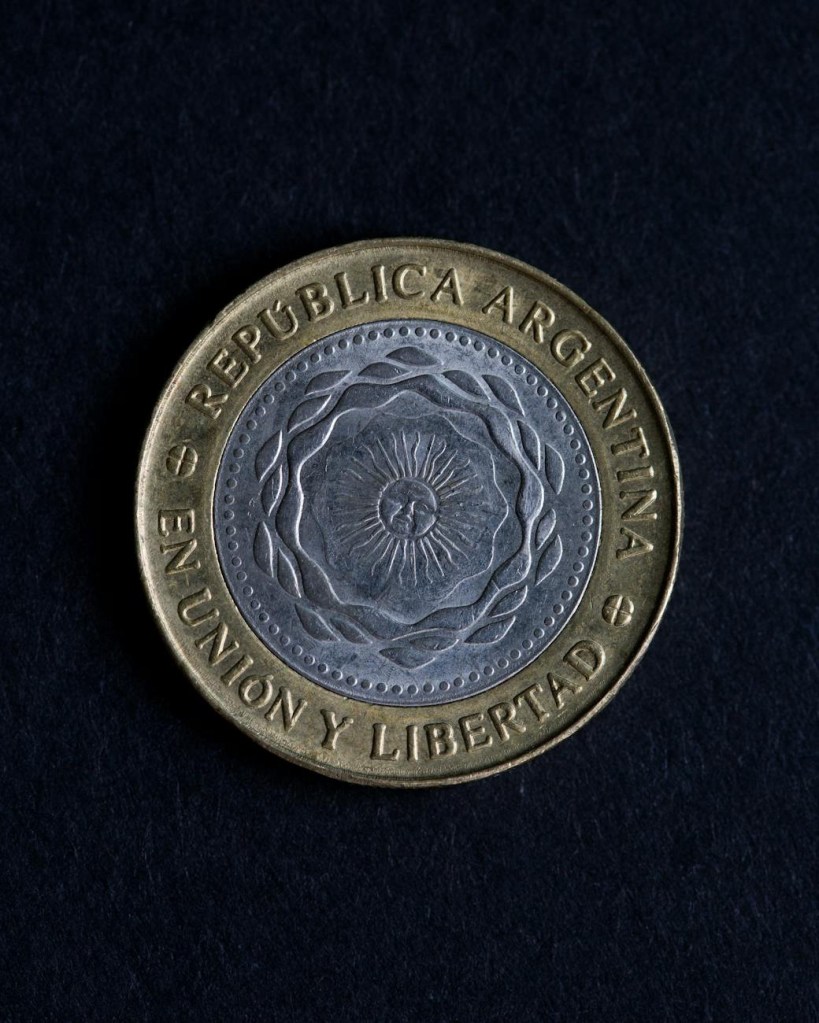
We did our best to spend it in open air markets, shops, and restaurants. It felt strange paying 10,000 for two glasses of fruit juice. We bought meals at Burger King with the total cost 16,0000. There were a few times where we used credit because we didn’t want to have to count out 60 bills. My husband, who always says he doesn’t like large bills was wishing for something larger than a 1,000 bill. So different than our normal.
While I was thankful for the exchange rate, I was painfully aware that I was blessed to be from a country with a thriving economy. Despite the complaints you see on social media, the U.S. dollar is strong. In Chile, we didn’t exchange for cash. They were clear that they didn’t want Argentinian money, but they happily took our U.S. dollars anywhere we went. It was almost preferable. If we had exact change great, if not we got change in Chilean pesos. Granted the change was always much less than the exchange rate, but at the low prices we encountered, I was always happy to give a little extra.
In the handcrafts markets, I always tried to give a little more when I could, in honor of their talents and the lost art of handcrafts. In a mall, somewhere in Chile, we used a credit card. After signing for the purchase, we were asked to produce a national id. Of course we didn’t have a Chilean national id. In broken Spanish, I tried to explain, while we offered a driver’s license. In the end, everyone was confused. But we left with sweatshirt and glasses in hand.
In Peru, we had already learned our lesson so we only exchanged a very small amount of money. Fifty dollars for two days. I bought museum entrances, icecream, soda, specialty chocolates, a pair of shoes, a hand carved ornament, a hand woven alpaca hat, and other trinkets. Seeing the high levels of poverty, I gave extra when I could. I was determined to give and I still couldn’t manage to spend it all.
I took several college level economics classes so in theory I understand valuation and market cycles. I can’t reconcile it in my head. At home people endlessly complain about inflation etc. Compared to the woman selling me a handbag made out of scraps, we live like kings. We have everything and can’t stop complaining. They have little and are generally joyful and thankful. There are deep lessons here that I am still internalizing.
In Ecuador, there is no need to exchange money. They use the U.S. dollar as their currency. Apparently their currency continued to devalue and they adopted ours for stability. I had no idea, but it made our small purchases quite convenient. According to the locals, they are very happy with the dollar and no longer worry about the value of their savings collapsing overnight.
The final stops of Panamá and Aruba were simple as they also widely accepted U.S. dollars. So convenient, even if the exchange rates were more even, I was secretly relieved. In these countries, prices were more in line with what I expected to pay and I felt less like a thief.
The moral of the story is that money is just paper unless it has value. The $20 I spent on a handmade necklace was much more valuable to the seller than it was to me. For them, $20.00 is a weeks wages. For me, it is often less than the cost of a meal.

The lesson is that money is a means to an end. Its value changes over time based on a variety of conditions. Greed is immoral. Humans can live and even thrive on less than I can imagine. Humans can also hoard more than they ever need while others go without. I was lucky to be born in a country with a stable currency. I hope to be more mindful of the blessing and live accordingly. To those whose only goal is more and more money…travel…meet people….get some perspective. I’m still hoping that compassion and cooperation gain currency.
 Prisoner of Hopes