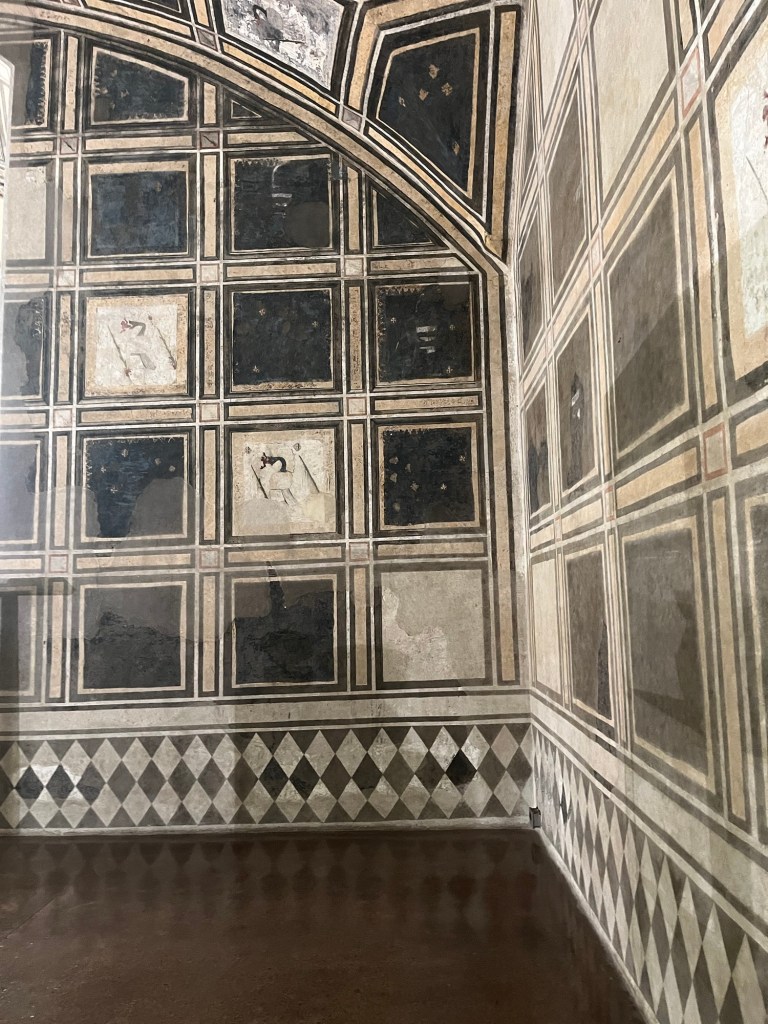
Today we venture to the Italian city of Pavia. Home to one of the world’s oldest universities, final resting place of St. Augustine, the Southern seat of the Dukes of Milan; Pavia has a long and interesting history. The Castello Visconteo di Pavia is our first stop. Built in 1360 by the Lord of Milan, the castle hosted Petrarch and other notable Italians. Lovingly restored by the city of Pavia, the castle is now home to a civic museum.
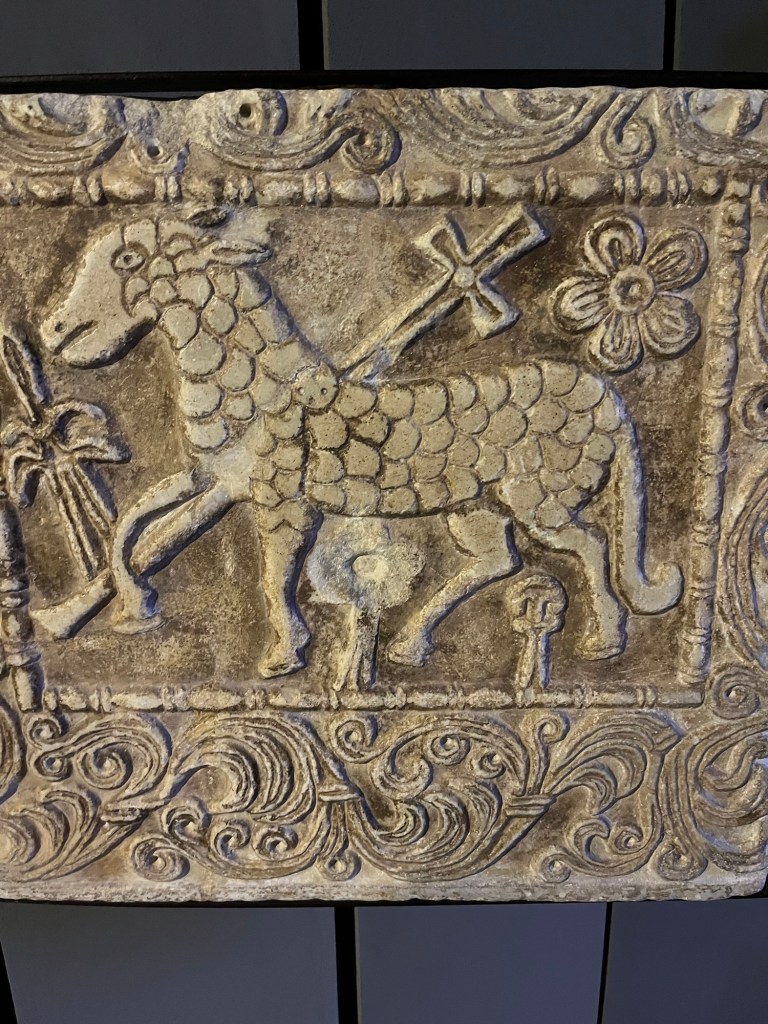
The bottom floor of the castle is full of broken statues and pottery. An ancient crematorium, fills an unusual exhibit space. I don’t know how to feel about standing next to the ovens and urns.
I love that the museum rescued pieces from the rubble of ancient churches and historic sites damaged by time and war. The best surprise is a wonderful fresco rescued from a demolished local church and preserved on a specially designed wooden frame. Walking under the half dome I experienced a rush of color. Paintings depicting the four “doctors” of the church jump out of the frame. Scholars recognized in a town of ancient scholars.

The second floor of the museum has an incredible collection of medieval and renaissance art. It also has random items, like a preserved ladies shoe from the 1300’s. I was left speechless at the colorful renderings of all aspects of life.

Another unexpected treasure is a portrait of Anne Boleyn done by an Italian artist hired during her lifetime. The portrait shines like a photograph, capturing a wistful looking young woman in an overly large white starched collar. More galleries continue with 1800’s portraits, landscapes, and even impressionist paintings.

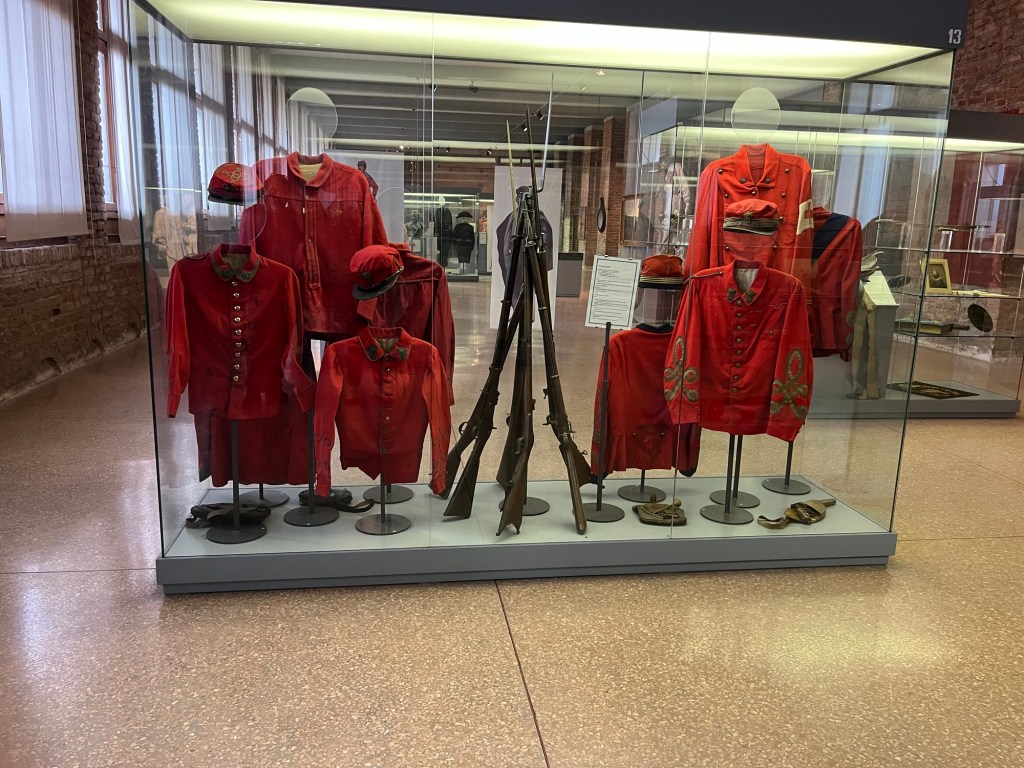
Finally, the upper attic floor is dedicated to the world wars and Risorgimento or the Italian reorganization. Pavia played a leading role in the movement. As a former history teacher, I am very interested in the artifacts, especially the “red shirts” that identified Garibaldi’s followers. They are even more vibrant than I had imagined.
When we have enough museum time, we venture over to take a peak at the university which sprawled across the town. We grab a slice of pizza on the walk back to the car. The local Gorgonzola is heaven, even if the slice was cold.
Just a few miles up the road, we stop at the Certosa di Pavia, a monastery. Founded in 1396 as a mausoleum for the dukes of Milan, it was built to rival Milan’s famous and publicly built duomo. Today, just as in prior centuries, it is the home of Carthusian monks who farm the surrounding land. They grow rice and keep bees.

We have trouble parking, as we followed the gps to a road we aren’t allowed to drive. We turn around and backtrack to a parking lot that is doubling as a small lake. Since the car didn’t sink, we park and walk to the impressive monastery that dominates the landscape. We queue to get a parking ticket from the machines distributing passes. It cost zero dollars!
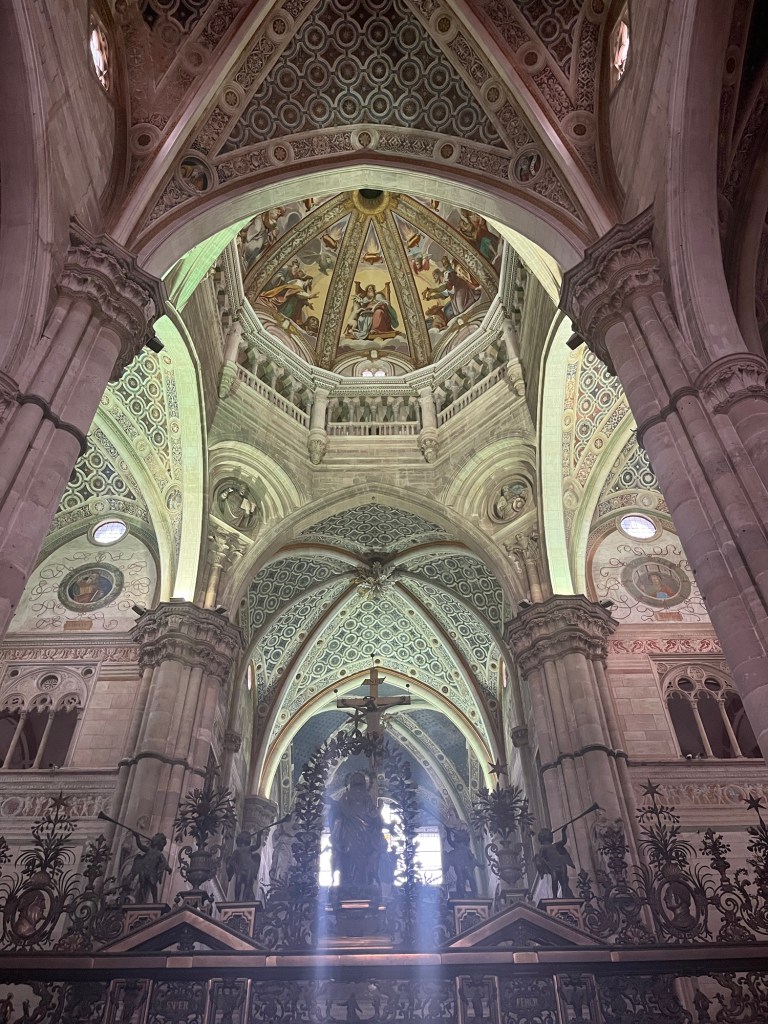
The sanctuary looks beautiful but the mausoleum and high altar are behind iron fences. We try to look into the dark side chapels and peer through the bars into the incredible interior. A security guard leans over and tells me a monk is coming and we can go in with him in a few minutes. At least, I am pretty sure that is what he said. Everyone only speaks Italian. I stand next to some grannies in wheel chairs who are eagerly waiting. They are very excited and I trust the judgment of grannies. They know stuff.

Sure enough, within minutes an elderly monk appears and the gates are opened. All fifty or so of the visitors are invited inside to follow him on a tour of the interior spaces. No matter that we can’t understand a word he says. We follow him into the sacred and restricted spaces. When the crowd smiles, we smile.
I try to stay to the fringes because I want to take advantage of the viewing opportunities. I also want to make sure that we aren’t asked any questions. After about an hour of understanding every third or fourth word, we finally end the tour in the residential quarters of early monks. Each small room is cozy and had a private garden.
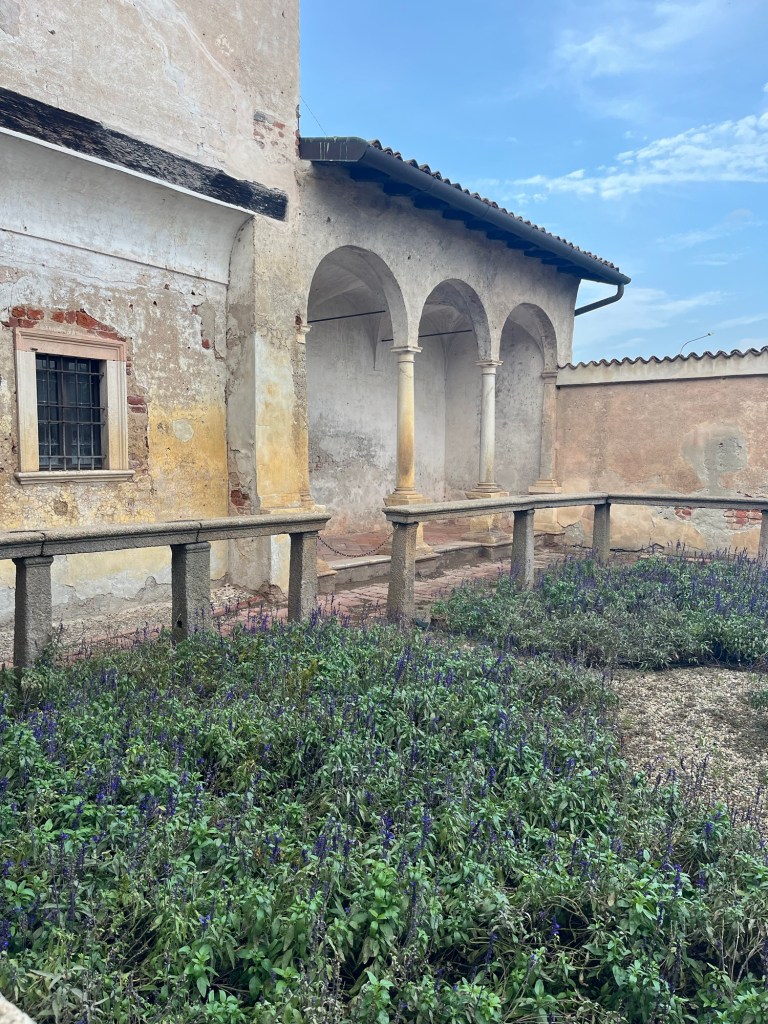
I understand the appeal of a simple life in a beautiful place. Caring for bees and rice fields, the monks were rich in contentment. We could all use a dose of that.
We visit their small shop and buy homemade soaps and candy. The hard candy is tasty with a soft center. It is a beautiful unexpected treat.

As we drive home, I reflect on the community pride and strong traditions evident in Pavia. The citizens sacrificed to restore their castle and turn it into a civic museum. They rescued fragments of art out of the rubble of war to honor their cultural roots. They celebrated learning and promised free university to those willing to study. They preserved ancient buildings, but modernized interiors without damaging the architectural integrity. The monks live a quiet existence of simplicity and splendor as they had for centuries. Food is prepared with fresh, local, and natural ingredients just as it has been forever. Americans have a lot to learn about tradition, civic pride and quality of life.

