So much discussion, attention, and emotion…. Immigration talk has flooded our media sources, emerging as an American campaign issue in 2016 and again in 2024. Let’s move beyond the rhetoric and attempt to understand the topic more deeply, starting with basic definitions.
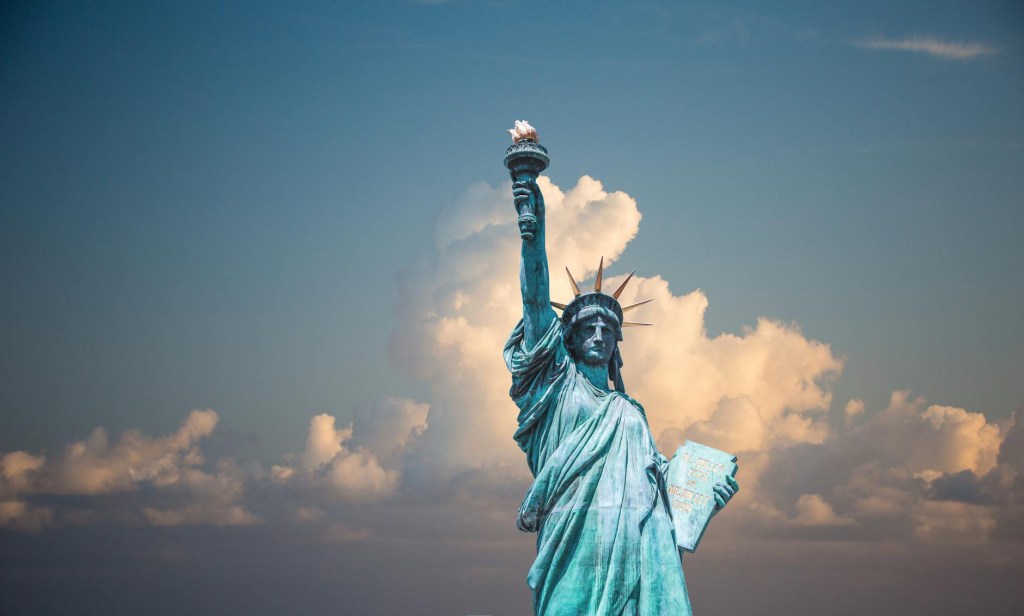
An immigrant is someone who moves permanently to live and work in a new country. Emigration is the act of leaving a country. In America, we use the term immigrant to refer to anyone coming here, but usually refer to Americans who have moved abroad as emigres. Another term, migrant, refers to someone who moves from place to place and may not have a final destination. Migrants often change locations for work, education, or family ties.
Economists and human geographers use the term push/pull factors to describe the factors that influence human movement around the globe. The determinate factors differ for each situation and are often experienced in unique combinations. Push factors are those factors that encourage individuals to leave certain areas of the world. They include war, famine, crime, lack of jobs, political unrest, natural disasters, poverty, and discrimination. Pull factors are reasons why individuals seek out the new place to live. They include jobs, family ties, schools, natural resources, religious freedom, political freedom, and positive climate.
It is estimated that there are about 117.3 displaced people world wide. The term for these individuals is refugee. They are displaced involuntarily because of violence, persecution, or calamity (often with no warning). They are unable to safely return home. As such, they have special protections under international law and various agencies. Official refugee status is jointly determined by United Nations designation and designations of the receiving countries.

Movement of people between countries is constant. Logistically, the U.S. receives about 110,000 non-citizens per day through official ports of entry. Over 105,000 are tourist or business visas. About 3,000 are green card holders (a green card designates legal permanent residency for non-citizens). Anywhere from 1,000 to 2,000 visitors each day do not have proper documentation for entry.
Individuals who enter without documentation may do so for many different reasons. Asylum seekers do not have official refugee status, but may seek protection from danger in their home country. They can seek protection in any country they choose, but must cross the border and apply directly within the country of destination. Yes, I said that correctly. They must appear without documentation in order to make their appeal within the country from which they seek asylum. Most are turned away because they do not meet the criteria. Only 4% of seekers of U.S. protection actually achieve asylum. It should be noted that it is not illegal to seek asylum.
It is a lengthy process to become a U.S. citizen. First individuals need to obtain a visa or asylum status. Then, they work to achieve permanent resident status. Finally, individuals may achieve U.S. citizenship. It is a process that may take years. Critics point out that the process itself may exacerbate the number of undocumented immigrants as visas expire before the process can be completed.

Discussion about immigration is often emotionally charged and confused by unintentional (and sometimes deliberate) use of language. The most misused word in any serious discussion of immigration is the word, illegal. Followed closely by the word alien. In the context of immigration, alien = non-citizen. Illegal- someone who committed a crime.
It may surprise you to know that simply being in the U.S. without documentation is not a crime. You will not be arrested for appearing without papers. It is considered a civil dispute and not a criminal offense. The penalty is simply be denied entry or deportation (removal).
To evade inspection (sneak in) is a misdemeanor. Those who return without permission after being deported once already, have then committed a crime . Most people do not enter illegally. They enter legally and then stay beyond the limits of their authorizing documents. Most encounters with undocumented entries occur at our Southern border (81%). 45% of all encounters occur in Texas. Undocumented entry can be dangerous for individuals, as routes in to the country occur in remote and dangerous areas. It is estimated that between 8,000 and 10,000 people have died making the attempt within the last 20 years.

Therefore illegal alien is not a legal term. Instead, criminal alien refers to individuals who have yet to achieve citizenship who have engaged in “aggravated felonies”. Ironically being simply undocumented (because it is not a crime) lack protections afforded by law such as Miranda rights, attorney representation, right of appeal, statute of limitations, and habeas corpus. Criminal aliens, because they have committed aggravated felonies do have protections under the law.
Studies show that immigrants are not likely to commit crimes and in fact are statistically less likely than native born Americans to engage in criminal activities. Public opinion, however rarely considers statistics. Anti-immigrant campaigns often portray immigration as a threat to national identity, as over running the country (an over estimation of the number of immigrants), or ethnic enclaves that will overtake an area. Often, they are portrayed as economic competition or drains on social systems (economic statistics generally do not support these characterizations). They can be portrayed as a risk for crime and public health (not statistically supported).
While none of the claims are empirically true, they can resonate with a population that is protective of its own identity. Insiders are often suspicious of outsiders. Individual instances of crime or job loss enter the public narrative in ways that capture the imagination. Polls reveal that education levels often influence perception, with those with lower education levels having the least favorable views.

A persistent claim is that “illegals” get federal benefits and that tax dollars shouldn’t support them. However, undocumented immigrants currently have no access except to emergency Medicaid. (There are programs in some states funded out of state budgets.) The reality is that undocumented workers make large contributions to both social security and Medicare despite the fact that they can never receive the benefits. They have a net zero impact on the federal budget according to federal data. Nativist arguments do not often fare well in light of data, but they do speak to individual fears and emotion.
To contextualize, the number of undocumented encounters in the U.S. in 1990 was estimated at 3.5 million a year. In 2008, it had risen to over 12 million. In 2016 and 2022, it hovered around 11 million. In 2024 it spiked upward to approximately 13 million. Just another chapter in our long history with immigration.

In 1790, the U.S. passed the Naturalization Act. It states that free “White” persons of good character were citizens if they lived here two years and swore allegiance to the Constitution. Any children under 21 became citizens automatically upon the oath of their parents.
By 1798, we were at war. Congress passed the controversial Alien and Sedition Act. It increased the residency requirement to 14 years and provided a provision to remove noncitizens of any country with which we were at war. It also provided a provision for deportation of individuals dangerous to peace and safety.
The Civil War brought its own set of citizenship challenges. Prior to the Civil War, immigration was not overseen by the federal government. Towns and regional areas policed themselves. But after the war, several states began to restrict citizenship through state laws. So the federal government enacted constitutional amendments and laws to ensure that individuals of African descent were afforded citizenship. This broadened and codified the citizenship process firmly under federal control.
In 1882 those arriving by ship had to pay a 50 cent tax to defer cost of screening. In the 1880s, the U.S. also passed laws to exclude Chinese from entry and to allow for deportation if already settled. The law authorized one year hard labor for Chinese found in the country without proper circumstances (eventually struck down).

The Immigration Act of 1891 authorized the office of immigration (part of the Department of the Treasury) to among other things open the Ellis Island inspection station. Individuals could be expelled for contagious diseases, a criminal record, polygamy, or ‘Lunacies and idiots’. It also became a misdemeanor to aid a person not entitled to enter.
1917 saw the creation of the Asiatic barred zone, disallowing any immigration from Asia and the Middle East except for exempt professionals. In 1921, the U.S. developed a quota system that would only allow 3% of persons of each nationality on the census. In 1924, it allowed 2% of the 1890 census (done to restrict Eastern European immigration).

In 1942, the Bracero agreement allowed Mexicans to enter as temporary farm workers with pay the same as U.S. citizens. And finally, Chinese exclusion ended. In 1945, the War Bride act extended citizenship to spouses and children of servicemen. In 1948, the Displaced Persons Act addressed the citizenship of over 200,000 people displaced by the Nazis. Harry Truman signed it reluctantly, stating that he was concerned that it was written to omit many Jewish immigrants.
In 1952 laws were consolidated and screening was done by staff at U.S. consulates. In 1953, 205,000 people fleeing ongoing persecution were added outside of official quotas. In 1962, Migration and Refugee assistance was passed to specifically assist Cuban refugees. And the Hart-Cellar Act of 1965 ended the quota system based on national origin and removed caps for people who had immediate relatives that were citizens.

The 1970’s saw refugee status for immigrants from Southeast Asia, but by 1976 laws again preferences immigration from the Western Hemisphere. The 1980s produced new processes for asylum seekers. By 1986, we had a 50% increase in border patrol officers and enacted business sanctions for hiring undocumented workers. But individuals living in the U.S. four years or working 90 days in farm labor could apply for permanent status. Aggregated felony was defined and codified as reason for deportation regardless of status.
In the 1990s the U.S. raised admission caps by 50% and eased restrictions on temporary workers. Laws were passed to restrict deportations based on politics. However in 1994, the attorney general was given the power to bypass the court proceedings and deport for smuggling and violent crime (drug smuggling).

In 1996, the focus quickly turned to anti-terrorism. Expedited removals, electronic verification systems, removal of government benefit eligibility, and detention centers were enacted. However, the U.S. eased restrictions for certain Haitian, Central American, and former Soviet immigrants. The Patriot Act of 2001 broaden terrorism exclusions and allowed closer monitoring of student visas.
In 2002, the Department of Homeland Security was created and all departments were centralized. In 2005 REAL ID, ensures that documentation was necessary for a driver’s license. In 2006, the secure fence act provided the authorization for border walls and increased check points on the southern border as a response to drug trafficking.

And so it goes. Humans seek a better life. Humans seek to protect a life they are comfortable with. As one critic recently wrote, developed countries happily compete to be the most unappealing to migrants. Areas facing depopulation or economic downturn compete to attract immigrants. The emotions and opinions run high. But at the end of the day, immigrants are simply people. Humans with hopes and dreams and rights. Immigrant, emigrant, migrant, asylum seeker, refugee, permanent resident alien, temporary alien, citizen. All people doing there best to make a way for themselves. And so the struggle will continue.
As an act of citizenship, challenge yourself to know the categories of individuals who might fall under the term illegal alien. Challenge yourself to look at each news report to identify the categories at play and notice what might be incorrectly reported. Challenge yourself to look at statistics and laws when you hear statements about immigrants such as “they shouldn’t get federal handouts”. Who is getting it? What are they getting? Is it part of a resettlement plan for refugees? The complexities matter. Civil society requires your critical thinking. Immigration will always be an issue worth talking about.
*sources include the U.S. Department of Homeland Security, the Cato Institute, Reuters, United Nations, USCIS
 Prisoner of Hopes