We aren’t sure what to expect at the Akershus Festning (Fortress). We walked by the large park/military complex when we first arrived in Oslo (two weeks ago). But it is much bigger than it appeared from our walk along the harbor. The walled fortress houses a castle, a resistance museum, a military museum, outdoor amphitheaters, military offices, horse paddocks, and barracks. Just walking the grounds will take some time.
We start at the welcome center. It is small, and has a few artifacts and a vr game. The attendant tells us the castle is closed. But, we can buy tickets directly at the military museums. Not off to a great start, we wander down the hill and over a bridge to the military museum. Along the way, I am fascinated by the statues and public art. We are not sure where the park ends and the military base begins. It is a strange mix of people out for a stroll and uniformed servicemen with guns. I figure we will eventually be confronted if we are not in the right area as we follow the gps across the festning.
When we reach a large building with cannons and military vehicles on display, we assume we have arrived. Past the few tanks outside, we entered the museum complex. The soldiers checking us in are friendly and warn that much of the museum will not have English. We have google translate at the ready.
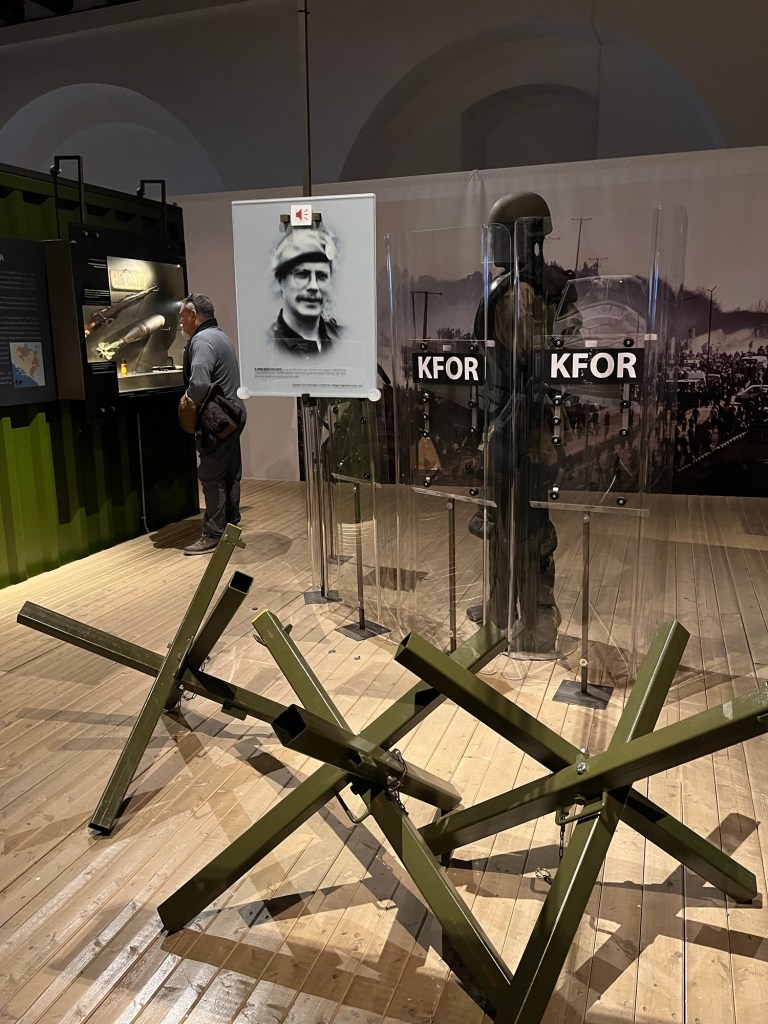
The first gallery is about NATO actions since WWII. It was a great reminder of the many times our Allies have supported U.S actions in Africa, Kuwait, Afghanistan, etc. Americans tend to dismiss or downplay allied contributions. It is useful to see the world through many perspectives. Having been in military museums in England, Portugal, and Australia, I have a different appreciation for NATO. I love museums that challenge my thinking, especially about topics I assume I know very well from an American perspective.
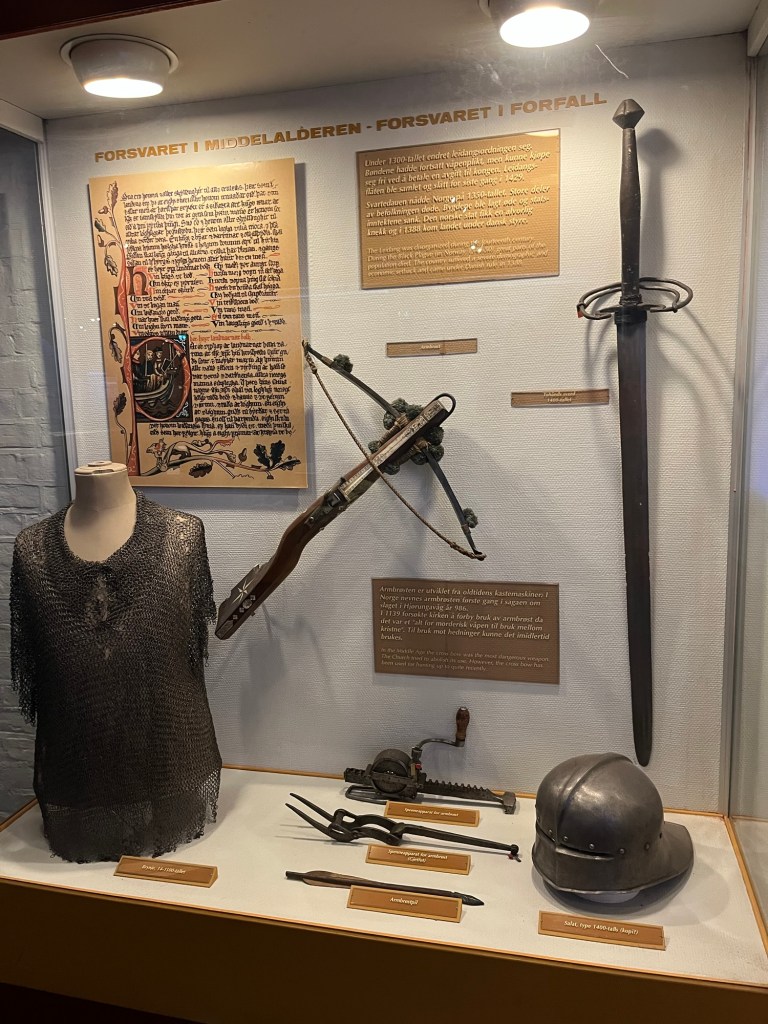
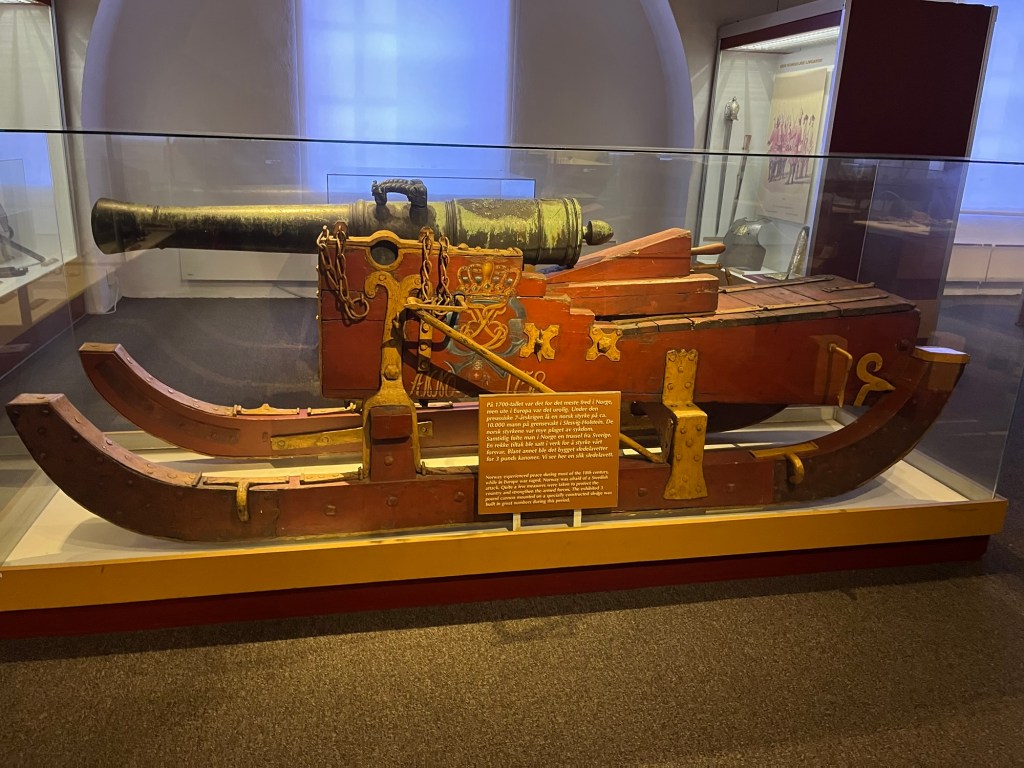
The museum is surprisingly large. The galleries follow a chronological timeline starting with Viking artifacts. Who doesn’t love a Viking sword? Medieval exhibits contain the usual swords, crossbows and simple cannons you find in other European museums, but they also include weapons from the armed ski patrols. There are sleds that pull military supplies and even a sled with mounted cannon. All necessary in snowy Norwegian mountain territory.
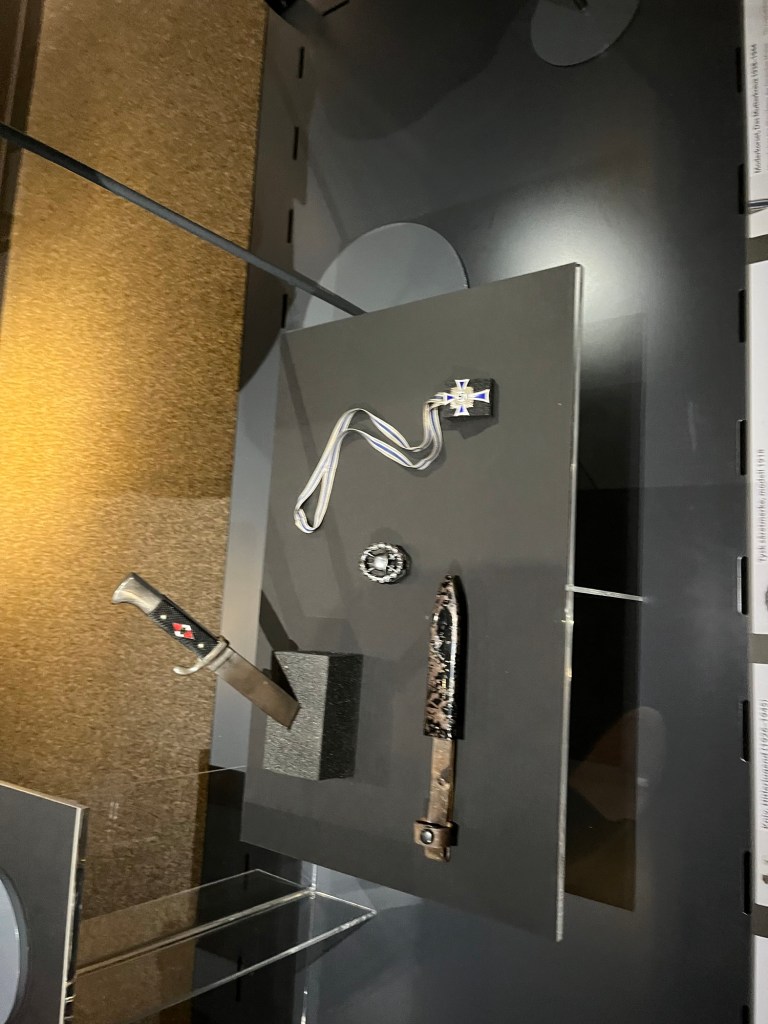
Because Norway was a Nazi occupied territory during WWII, there are multiple exhibits with artifacts from the occupation. I find myself both fascinated and horrified at the Norwegian lived experience during WWII. I realize that despite teaching history for many years, I was largely ignorant of events in Norway as the American narrative is almost exclusively from an American and British point of view.
I recoil viscerally as I encounter Nazi artifacts. Today, they don’t seem part of a distant past. They seem all to real and all to close. The photographs of children could be my parents. The young adults so horribly affected could be my grandparents. WWII had been a distant event to be taught. Today it seems recent and real. The faces looking back at me, look hauntingly contemporary. They insist I bear witness.
The museum takes several hours to complete. We find exhibits and artifacts from the Cold War era and an exhibit in recognition of the ongoing hostilities in Ukraine. The interpretive space uses video documentaries to illustrate the Russian aggression against civilians and war crimes violations. It was a moving reminder of the effort and sacrifices required to defend democracy in the face of autocratic aggression.
By the end of the museum, I am somber, tired, and hungry. In need of a break, we walk out of the park to a bakery for sandwiches and cake. I laugh as a picky American tourist grilled the counter attendant about what kind of cheese was on the sandwich. Without blinking, she replies , “yellow”. Amused and refreshed, we walk back up the hill into the fortress and make our way to the resistance museum.
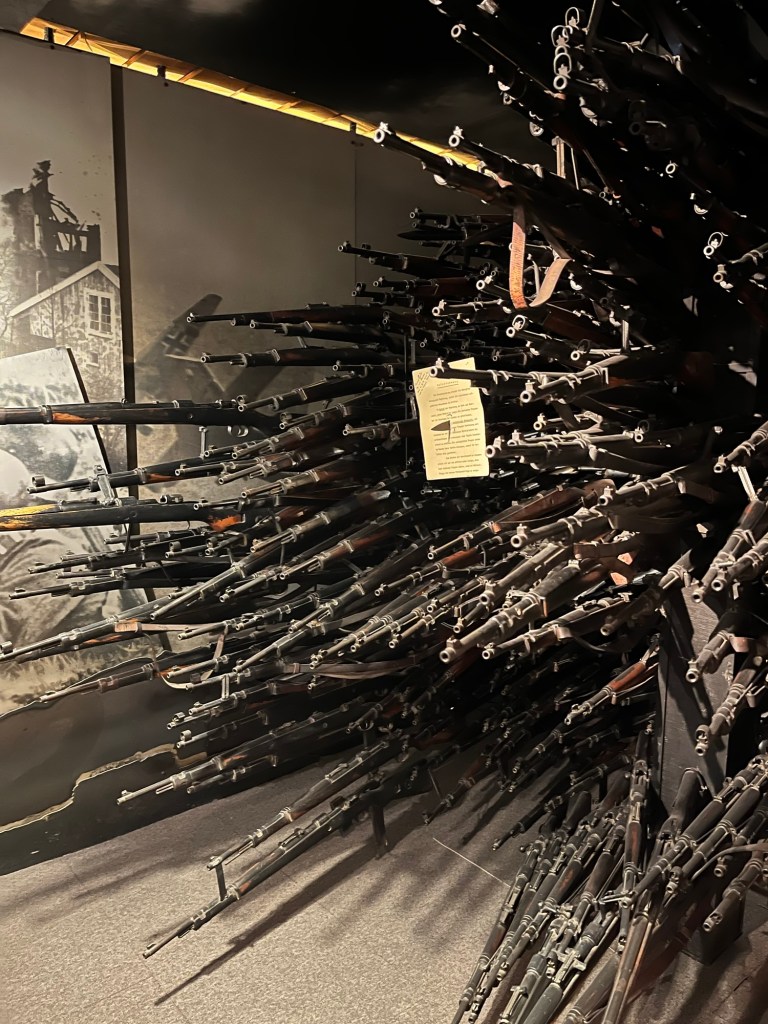
The first museum of the day was about the military and armed conflict. The resistance museum is dedicated to the personal resistance to facism and Nazism leading up to, during, and after WWII. The museum experience is emotional and evocative. As you enter the museum you are confronted with a barricade of dozens of rifles with the German ultimatum for surrender affixed to bayonets. The Nazi invaders made 14 demands which were all rejected by Norway. The Norwegian King was smuggled out of the country by boat to England to evade capture. The museum tells the story of the Norwegian people who remained and who resisted the occupation. They believed democracy was worth preserving and many paid with their lives.
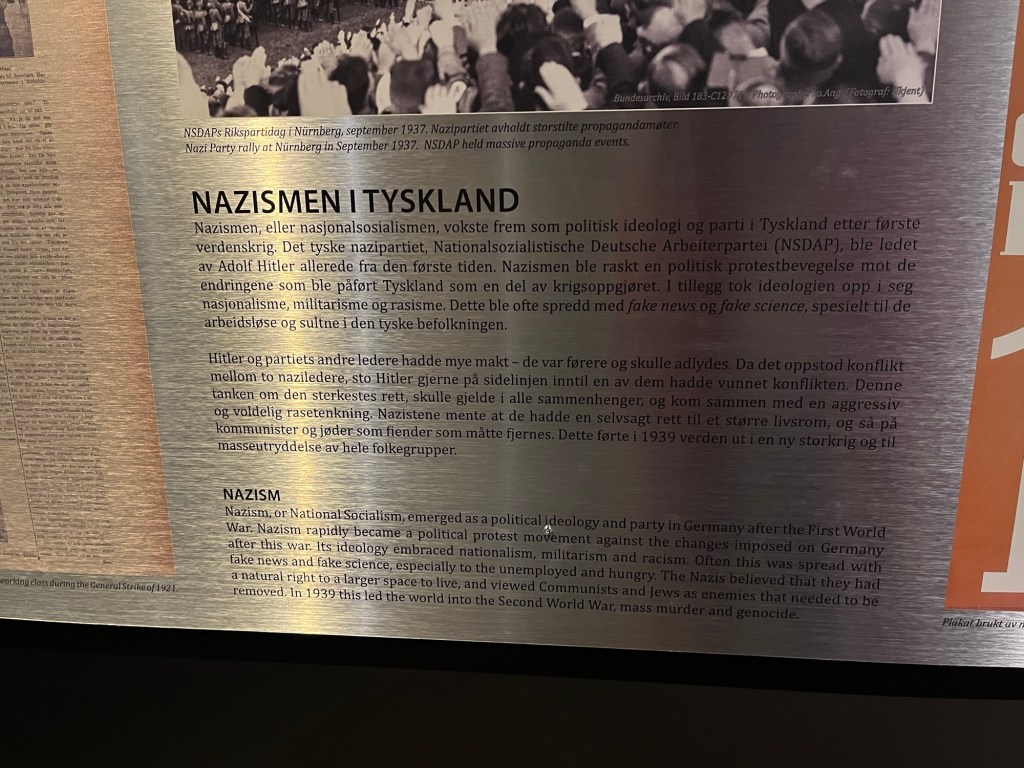
The museum defines Naziism as a political ideology that embraced nationalism, militarism, and racism. Panels describe how it spread with fake news and fake science…how messages were targeted to the unemployed and hungry. It showed many attempts to start a Nazi party in Norway and how the people resisted.
The citizens resisted. The teachers refused to teach Nazi sponsored curriculum that subverted history. They went to forced labor camps rather than teaching lies. Nazis created mandatory youth organizations (Hitler Youth) and weakened education requirements, in response.
When the Nazis took over the Lutheran Nidaros Cathedral and began giving directives to the local parishes, the clergy resigned. Many continued to serve their communities in parks and squares outside the official church. Sabotage was carried out in inventive ways. Underground newspapers sprang up. People died for their acts of resistance, but the others carried on.

A few rooms commemorate the abysmal treatment of the Norwegian Jews. I physically recoil at the accounts of imprisonment and almost wretch when I get to the display of cyanide canisters that were used to poison people in the showers. They just sit there, looking like an ordinary household cleaning product. A small round box of death. Small and unobtrusive in shades of red and blue. Evil in the prettiest packaging. What is wrong with people that this could ever be a product manufactured and sold?
Photos of shaves heads (meant to dehumanize) and striped prison uniforms hanging in the exhibit made me sad at the inhumanity and lack of empathy. Never again, they said after the liberation of the camps. Never again should be foremost for all of us. In my head I can’t stop comparing images of men with shaved heads sitting in cramped rows or in cramped cages in modern El Salvador. Different time. Different circumstances. But the similarities haunt me just the same. Who are we? What will we become? This museum asks us to decide if we will resist or collaborate with oppression…….

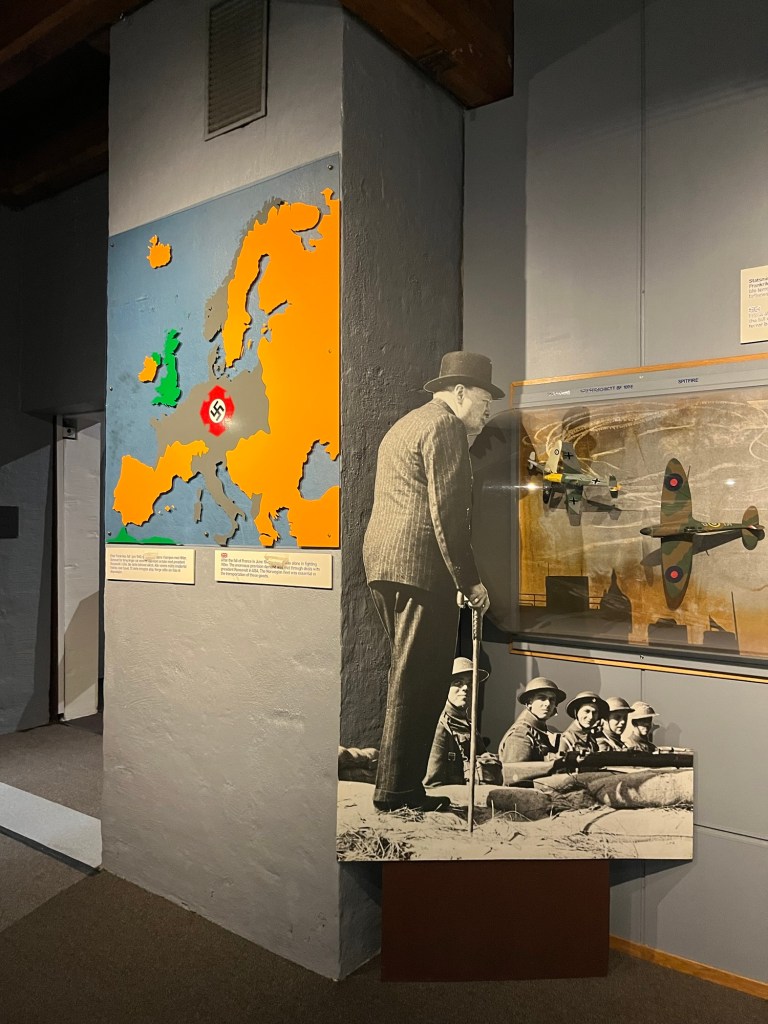
We end the exhibit once again learning about the importance of allies. The British, the Australians, the Americans and others who banded together are honored for their contributions. They were critical in the fight to overcome invasion. There are lessons here for all of us.
Outside the museum are the graves of three people executed by the Nazis. They were hung on this spot. Students, members of the White Rose, defenders of free speech, defenders of democracy. There are fresh flowers. The people remember. I bear witness. Never again.
 Prisoner of Hopes