
I love outdoor history museums. The Norsk folk center in Bygdoy did not disappoint. The Norwegian King had entire neighborhoods and farms and other random buildings moved to this park so that visitors can experience life across Norway. Sounds like my idea of fun.
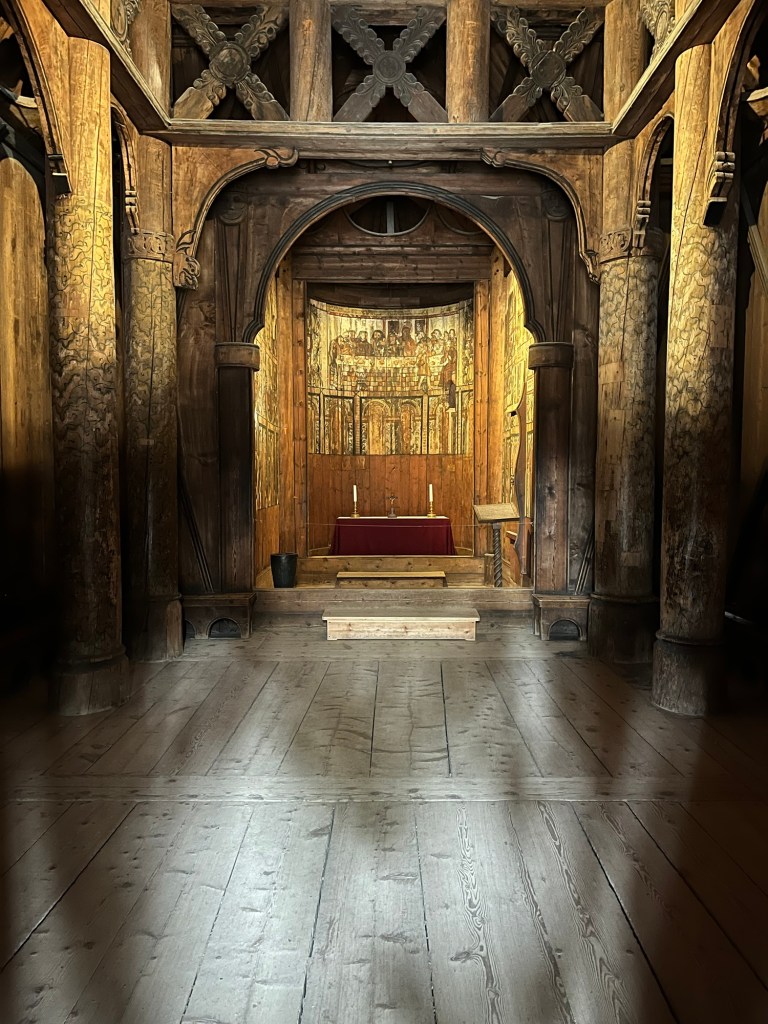
I am excited to arrive at the Stave church before any other visitors. To avoid the crowds we tried to get here early. The early start paid off. We are able to admire the dragon carvings and dark church interior undisturbed. Inside, a unique last supper scene carved in wood is the only adornment. Pillars and beams take up most of the space. Despite the exterior size, an interior gathering in this structure would be small and intimate. It is rustic and wonderful, everything I had hoped it would be.
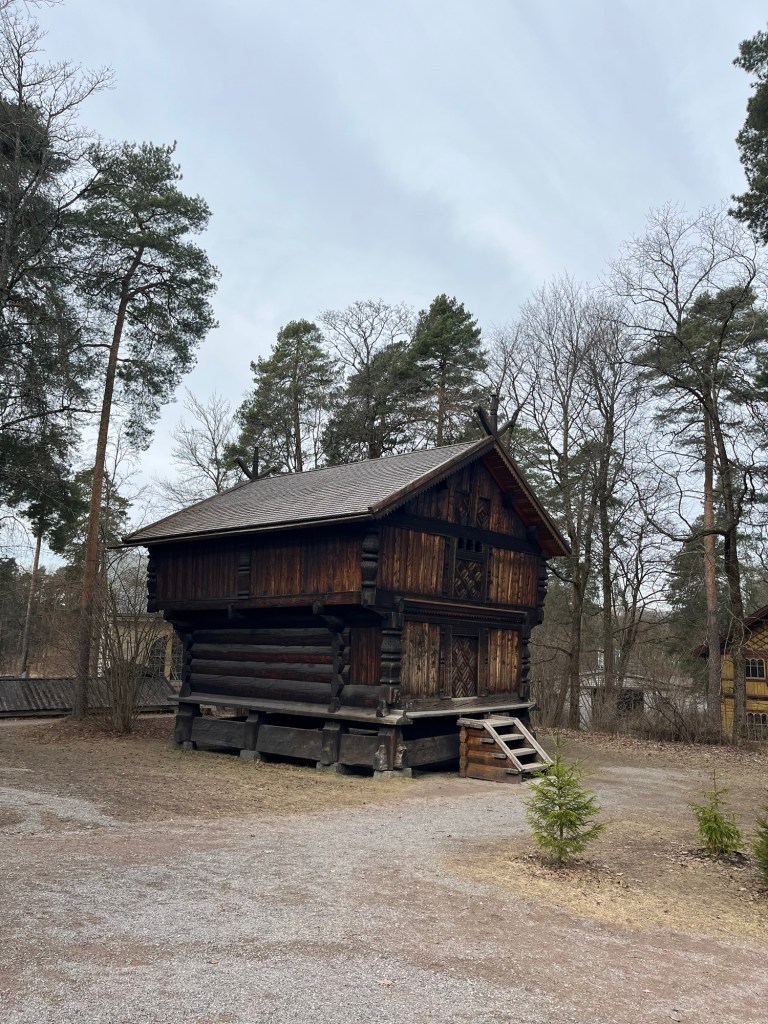
The storage house nearby, is also a great example of the craftsmanship of expert wood carvers. There are dozens of these multistory sheds or barns on the property. Farmer’s storehouses expertly carved in wood with slate or earthen roofs are literally everywhere. I can’t decide where to go next.
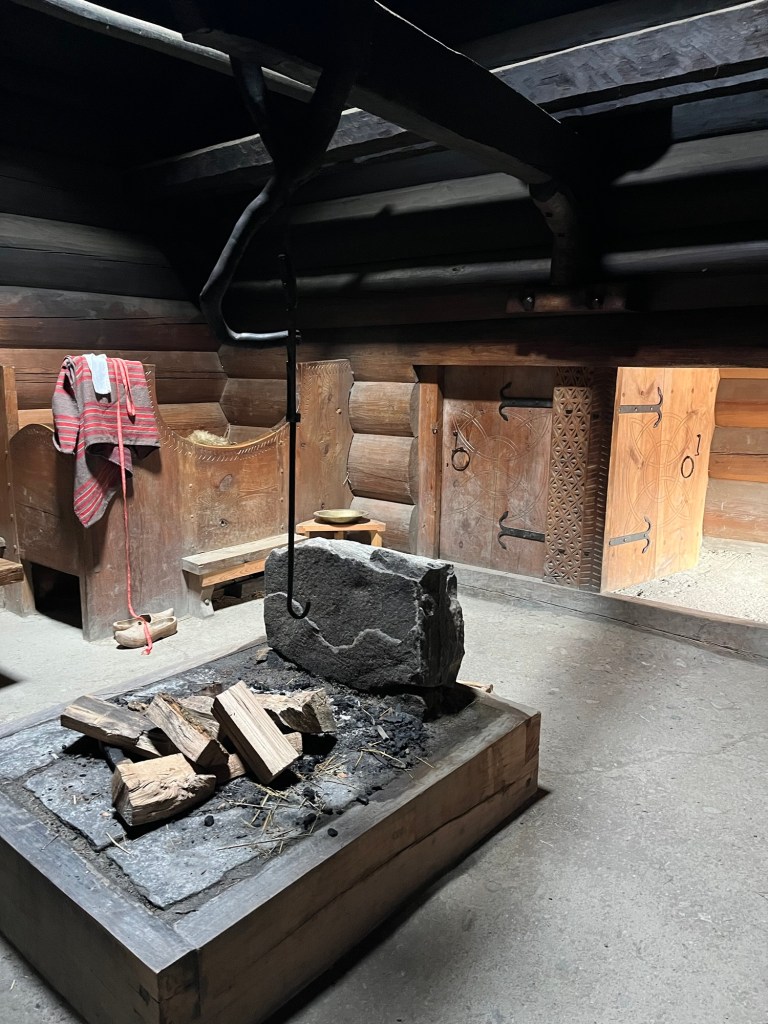
There are dozens of houses and farm buildings representing each region in Norway. While some are closed, most are open for exploration. This allows us to experience what a Viking cabin might feel like, complete with an open fire and beds in wooden stalls. There is nothing like stepping into history. The smell of the earth and fire evoke a reality that I hadn’t imagined.
We tour school houses, farm houses, coastal cabins, and apartment blocks. Ancient to modern Norway, traversed all in an afternoon.
The gathering of Norwegian architecture all in one place makes it is easy to see the evolution of carving and painted interiors. The farmhouse furniture is predominantly long benches and tables in open rooms. The city houses favor small rooms with small chairs tucked into snug corners. Space is expertly used for purpose.

After several hours of touring the houses and farmsteads, we walk through wonderful museum galleries filled with decorative arts. Ornate weapons, sleds, tapestries, chests, bowls, and other precious artifacts span across the centuries. I am intrigued by interactive timelines and information about each preserved artifact. Preservation is fascinating. How do they restore objects to this condition?

Exhausted after several hours of immersive history, we stop to have a sandwich in the cafe. Of course I want to peak in the shops, but as I was doing so I notice one final exhibit. They have an exact recreation of Norway’s first parliament (Storting). If there is a building type they forgot to include, I don’t know what it could be. Today I walked farms, barns, schools, manors, cabins, prefab houses, apartment blocks, churches, shops, and museums. This is truly a wonderful experience in Oslo. There is no better place to time travel through Norwegian life.


