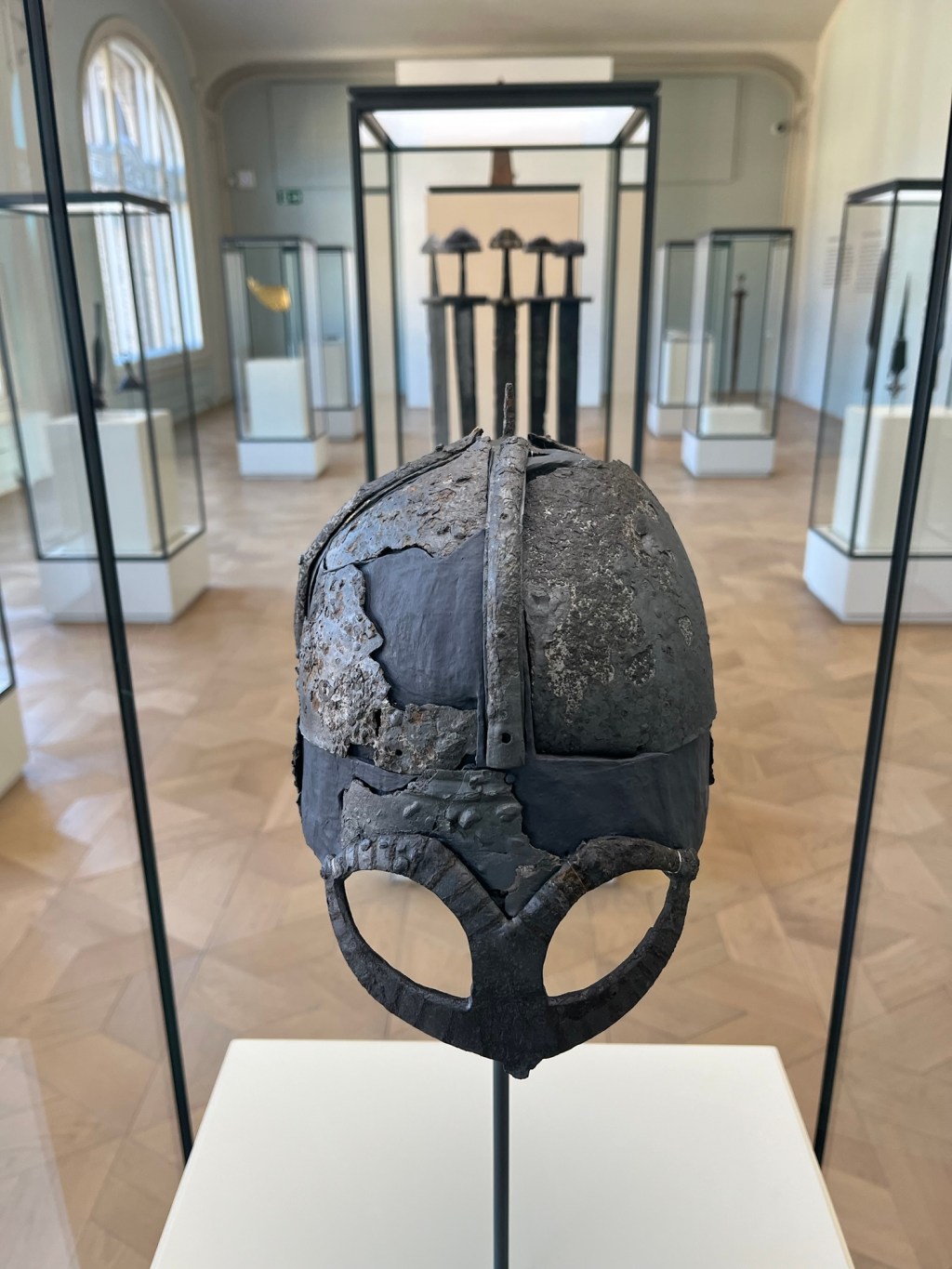
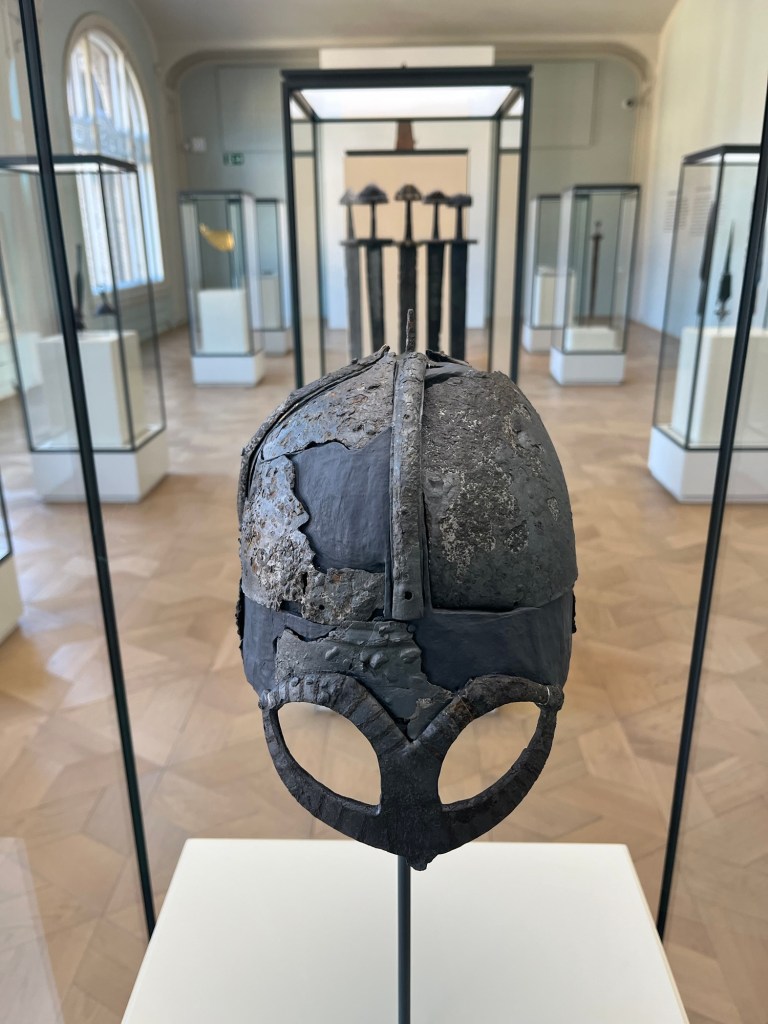
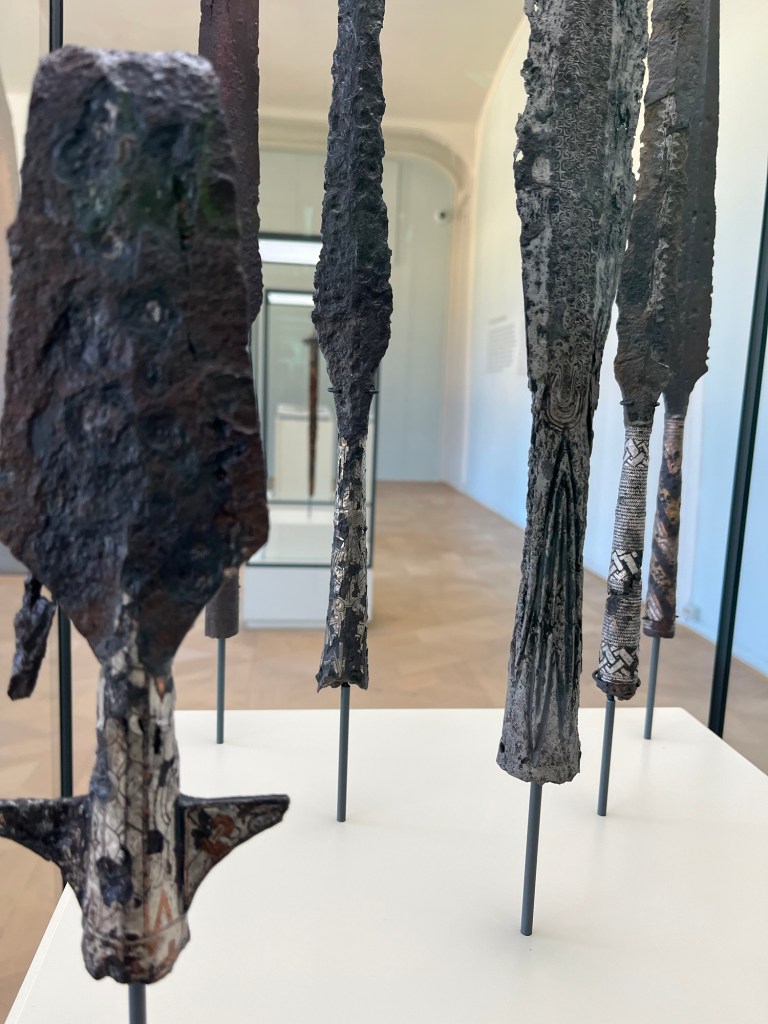
Travel brings many joys, but for me finding new (to me) and unexpected experiences is what it is all about. In the University of Oslo’s history museum, we encounter a lot of surprises. For example, did you know that Viking weapons were painted with bright enamel? The spear shafts were actually ornately patterned. I never knew that. I feel the same way I felt the day I discovered that Roman statues were brightly painted and not the plain dull stone we see today. Like someone let me in on a secret. You are welcome. Now you know it too.
Church architecture is also fascinating to me. Local artifacts shed light on my Christian faith as I compare my traditions to that of others. The Viking manuscript call Jesus the Head Chieftain from Galileeland. That translation is as valid as the medieval term “lord”. Which begs the deeper question, what does it actually mean to call Jesus Lord? Modern Christians miss much of the significance.
The only figure we see as much as Jesus in the wonderful wooden churches and museum exhibits is St. Olav. The Norwegian king and miracle worker was sainted in the 1100’s. Since then, he has made appearances in church decor across Norway. Less noticeable (than say Italian churches) is Mary. Perhaps it is because Norway followed the Lutherans away from the Catholic Church.
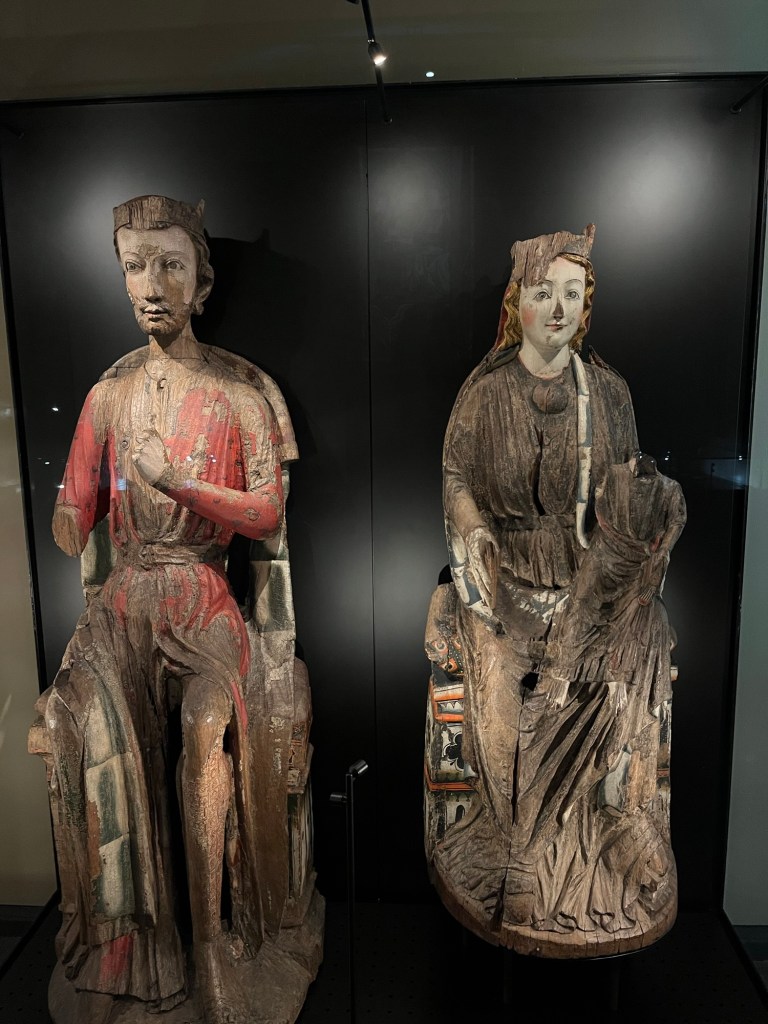
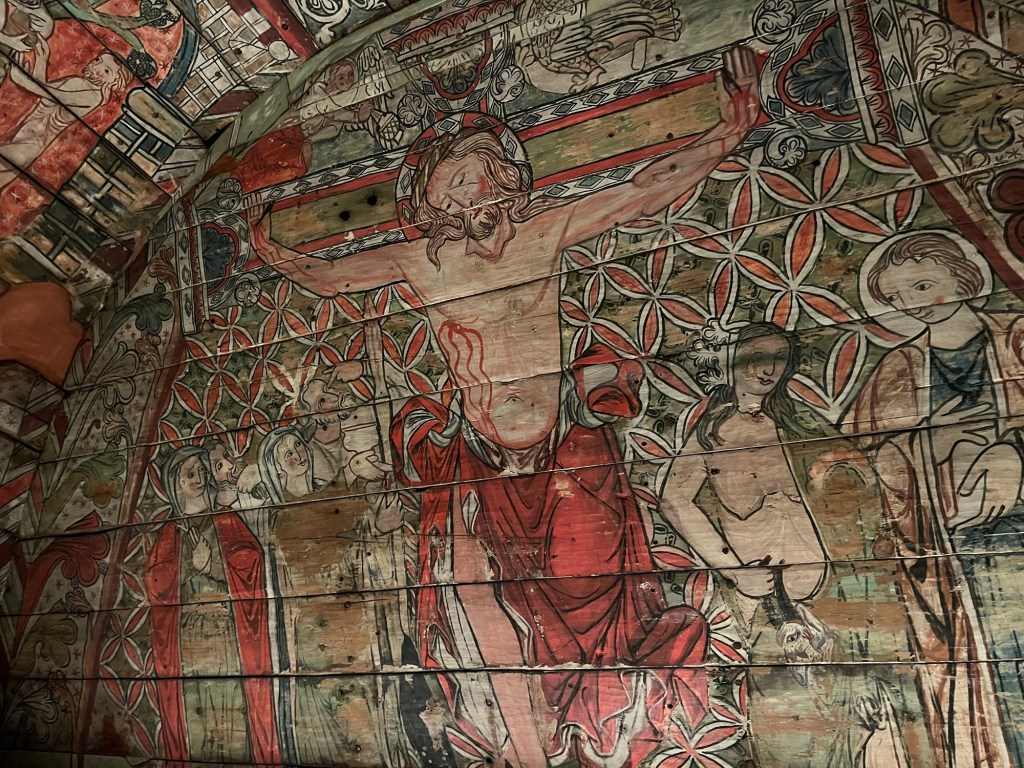
Wood is clearly the material of choice in this land of endless forest. I am surprised at how skillfully it is carved, inlaid, and painted. Viking art is primal yet sophisticated. It is earthy and raw and wonderful. I am drawn to it as I am drawn to the forest. I feel God in the forest and I am moved by the earthy simplicity of religious art.
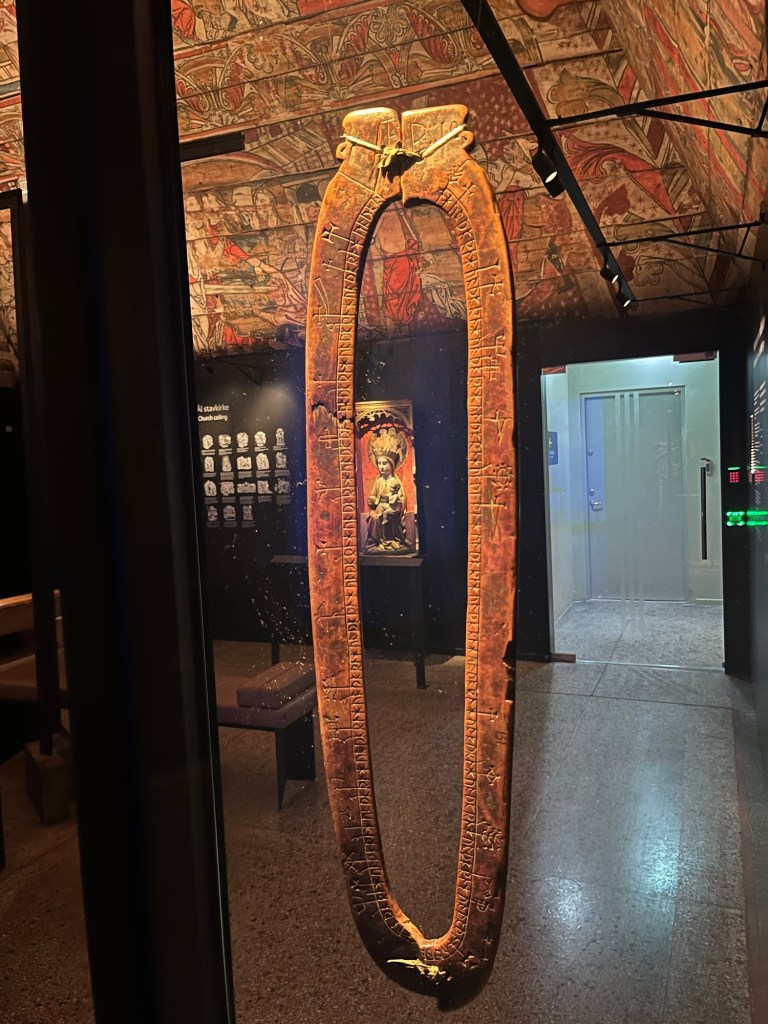
I see for the first time a primstav (sometimes called a runestav). It is a wooden perpetual calendar with markings for each day based on the phases of the moon. One half is days surrounding winter and the other records the summer days. Because they were farmers, the Vikings used the primstav to plan crops…. and raids probably. The primstav was widely in use in Norway until the mid 1600’s, replaced by what we know as calendars.
Across town, we visit the Bible Museum. I am very familiar with Biblical history and the museum frankly looks underwhelming. The admission is as much as the world class museum a few blocks away and the interior looks like a run down five and dime. I realize in that moment that I am now a museum snob.
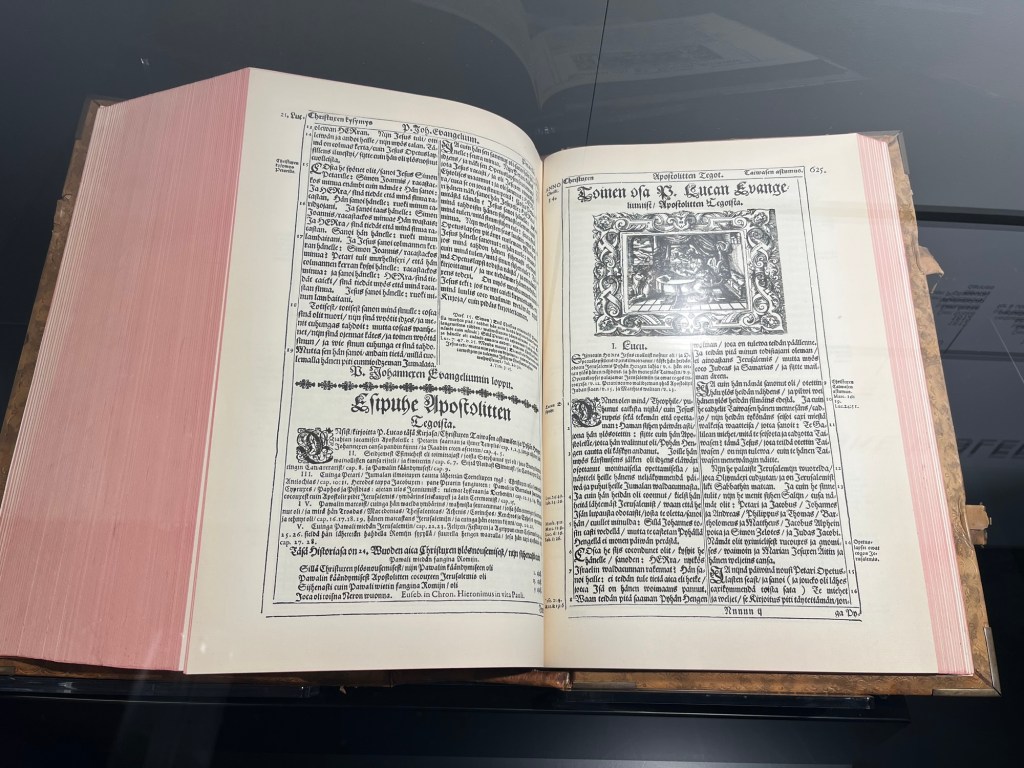
Except….. as I dutifully perused the dime store display cases I am excited, and getting more joyful by the second. There in front of me are pages from the original Gutenberg Bible. Papyrus from an earliest known copy of John. A First century Psalter. But my mind is blown by the Geneva Bible and others from the 1500 and 1600’s. They look so modern, so different than I imagined. When I taught about Calvin, and Moore I pictured archaic texts.
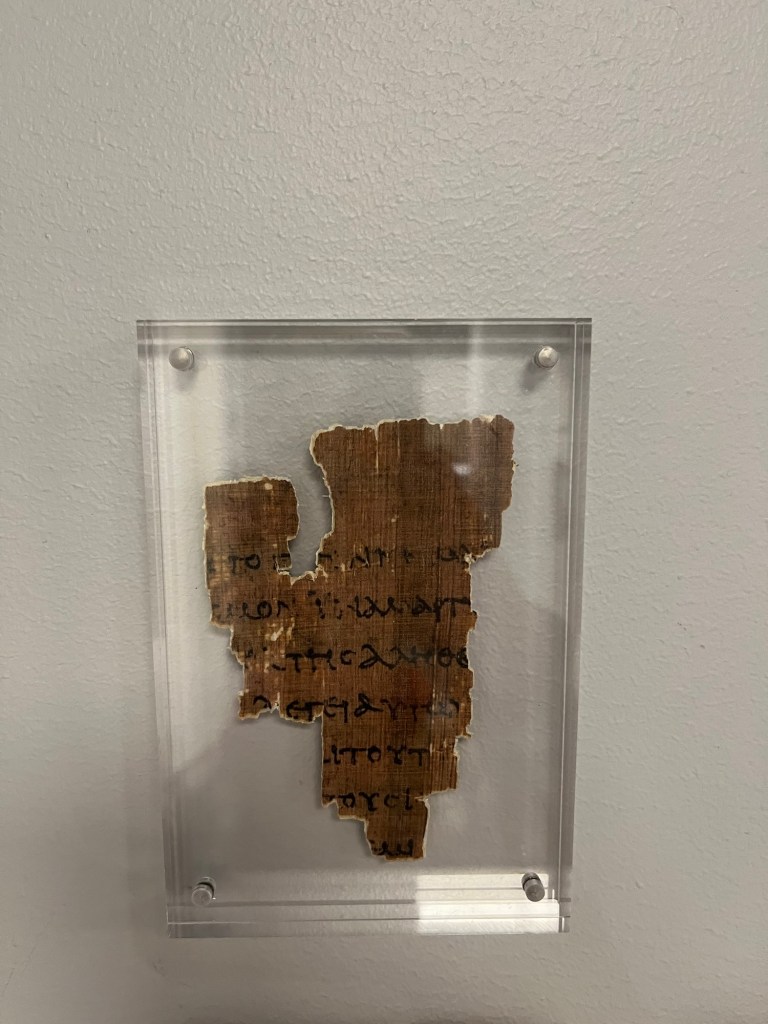
These books could be on any modern library shelf. Why do I picture the past as less than or other? Time and again I see that life was much more modern and history much more complex than we suppose. Pieces of the past lie in simple glass cases. Religious history within reach…..so much joy and sorrow caused by these books…. I take in my new ideas and ponder.
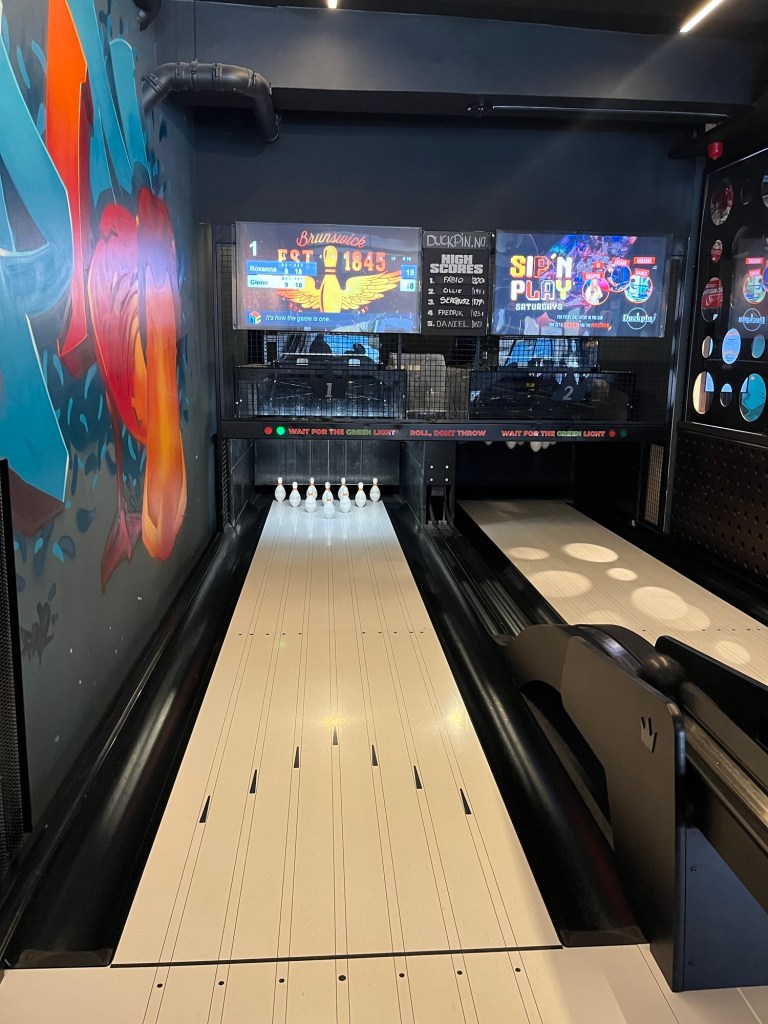
Not all travel encounters are educational. Some are just plain fun. After so many scholarly pursuits, we try duck pin bowling. It is another entirely new experience and I love it. The ball fits in my hand and is not heavy like a regular bowling ball. The pins are small and attached by wire. It is not a power game. The pins don’t fall as you would expect, so you need finesse. I try to spin the ball. It works… It is pure joy to find something new. Perhaps that is secret to childhood happiness, the joy of discovery.