We have been home for almost a month and Norway seems a distant memory. I finally have the photos digitally organized and labeled. My photo book has been ordered. I have even created a dvd slide show of our adventures. But what I have really done is stored memories that help us bridge a culture.

We travel to encounter places that are different than our lived experience. We hope to make the wider world more familiar. By the time we return from a month abroad, what seemed odd or exotic is suddenly familiar. My pictures remind me of those early encounters when the culture gap loomed as a chasm.
It usually happens as early as the airport. In Frankfurt, the coffee shop did not accept cash and my carefully saved euros from our last trip to Europe just stayed in my pocket. Then in Oslo, there was no customs and immigration check point. We just walked out the airport as if we were on a domestic flight.
That seemed odd. But I soon learned that in Norway there are grown men whose name is Odd. So you can’t say something is odd. For me, that was really confusing and a little funny. “Ask Odd” does have a nice ring to it. Oddly, none of the men named Odd seemed Odd. (I will stop with this now).
Sometimes things feel out of place. You can see the invisible rules, but you aren’t sure exactly what or why they are. At Norwegian bus stops people wait standing at least six feet away from another person in a straight line along the sidewalk. It is curious to see these long lines of people waiting quietly, not making eye contact knowing that in a few minutes they will be crowded inside the bus. Often they are seated or standing cramped together in tight spaces. Perhaps Norwegians fortify themselves in their personal space before being subjected to togetherness. Small talk in either setting is not encouraged. Younger people were a bit more talkative with each other. But virtually no one acknowledged strangers.

Unable to talk, as I stood in my own personal patch of sidewalk waiting for public transport, I noticed the men didn’t really spend too much time on grooming. Hair was often unkempt and did whatever it wanted without challenge. Long hair and Viking beards. Short hair sticking out in all directions. Frizzy mid length. Oddly a lot of people reminded me of Bernie Sanders.
I also, unfortunately, noticed that it was acceptable (and all too common) to hack up a lung while you waited and spit the contents directly onto the sidewalk, preferably to the edge of your six foot waiting zone….even if that put it into someone else’s zone. Disgusting.
I tried to distract myself by counting the unusually tall individuals that we regularly encountered. Six and seven foot tall humans with striking blue eyes and long blonde hair seemed to be everywhere. On public transport this left me looking at their armpits as I tried to hold onto the strap to keep from falling the tram rolled along. Beautiful people whose very appearance screamed Nordic. It was hard not to stare.
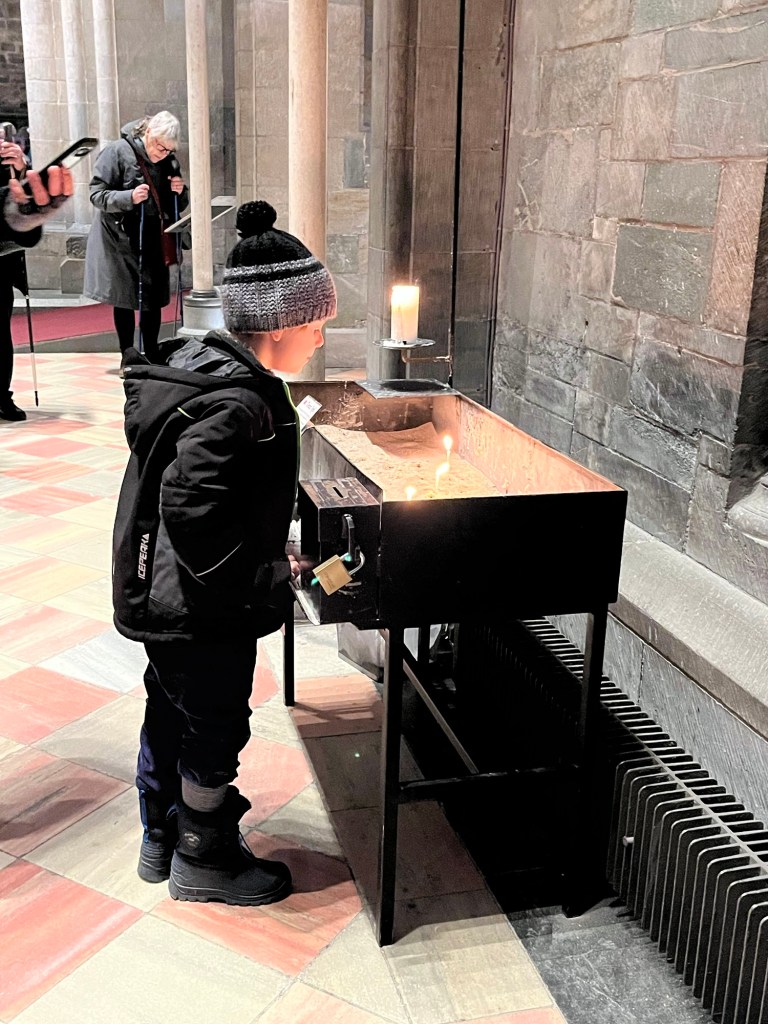
Beautiful people make beautiful babies and children were everywhere. Norwegian children seemed to do whatever they wanted, wherever they wanted without challenge and with minimal adult interference. It wasn’t that the children were ill behaved, they just seemed feral. (Of course, this may just be the universal new age of parenting.)
Perhaps this fierce independence comes from the Norwegian practice of bundling your child and putting them to sleep in their stroller and then leaving them outside for their nap. We encountered a number of babies parked on the sidewalk in 30 and 40 degree weather while a parent sat inside a coffee shop having a pastry. It seemed so strange to us. When I inquired a man responded “of course it is good for them. The air makes them healthier ….and who would want to take someone’s child? It is hard enough to raise your own.” Can’t argue with logic.
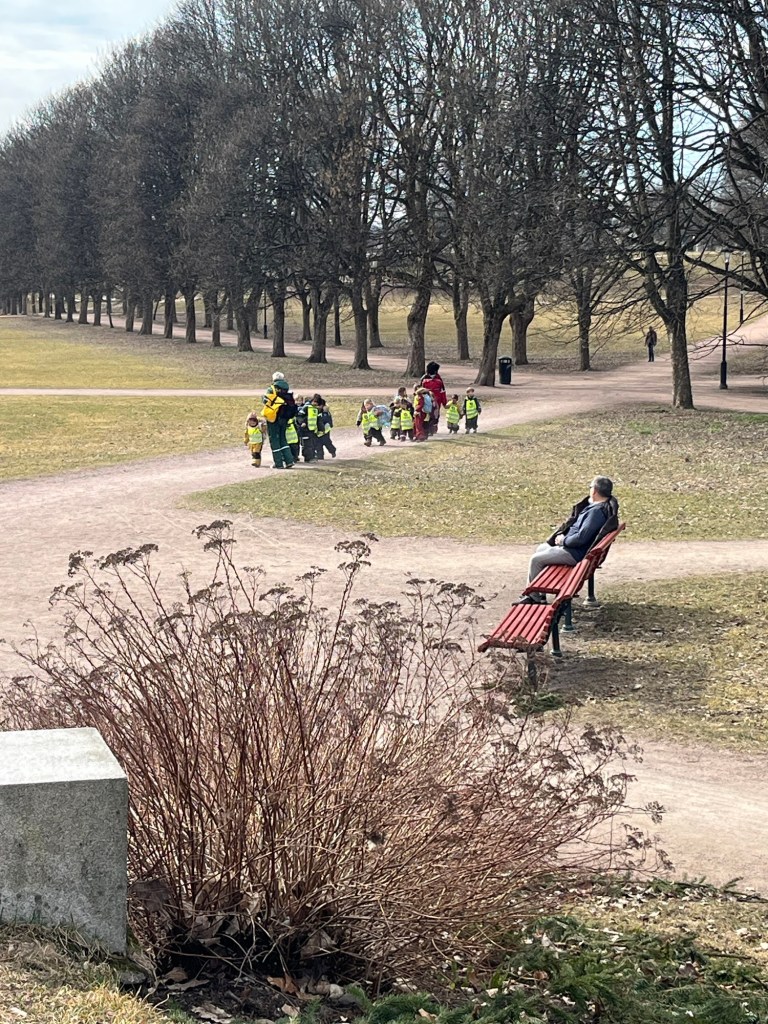
This outdoor obsession carried over into the daily life of school age children. The Norwegian school day was short compared to the U.S.. Every day we encountered students on field trips throughout the city. Preschool students filled the parks on their daily field trip. They would roam the grounds in their tiny yellow safety vests, climbing, running, and jumping. When it was time to go, they held hands and sang their way back to the tram or bus. Small children navigated the public transport alone on their way to or from school. High school students ignored their teachers and charted their own course to the field trip destinations. Once there, they determined whether to engage or to sit outside the venue. As a teacher, I was dismayed at what I perceived as lack of engagement. Norwegians likely have a different take on their field trip outcomes.
My biggest worry while we were out and about was finding a public toilet. Most fee based establishments had clean and free restrooms. Sometimes they were accessed with a key or keycard. But parks and outdoor venues had pay toilets. If you were lucky, they took coins. The worst (in my opinion)were credit card controlled toilets. I hated making a two dollar credit card purchase to use a toilet. In every situation where I had to pay to pee, there was no toilet paper.

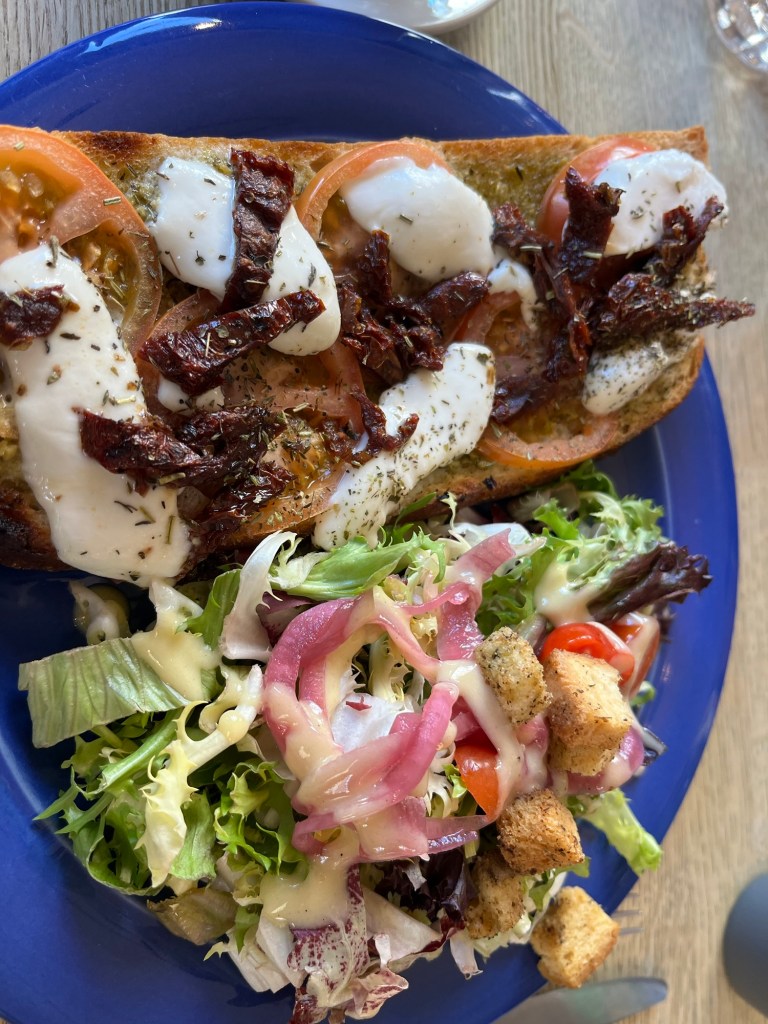
Culture shock also set in at the grocery store and restaurants. Food in Norway was very expensive. My eyes popped out of my head when I tried to buy a very small beef steak (smaller than my palm) and realized it would cost over forty dollars. So we adapted new eating habits with adjusted eating times, more bread, and less red meat. We discovered, however, that we love reindeer steak. We also learned the simple pleasure of an afternoon coffee and pastry break.
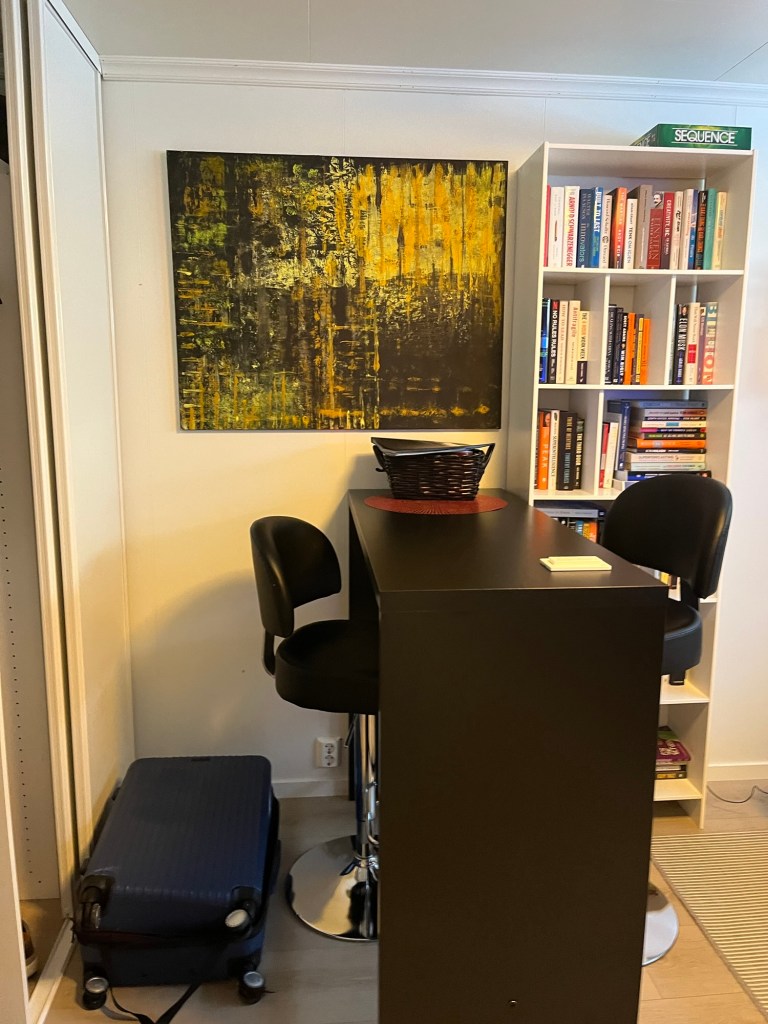
Life at home also presented some challenges. The apartment looked like an IKEA showroom. Space was carefully utilized. The kitchen was small but fully functional. The stove had a safety setting and would turn itself off if its conditions were violated. I had to learn some new tricks. Thankfully, the washer was a model I had mastered on a prior European Vacation. I did learn to use a closet dryer (a clothesline in a closet with a heating element in the floor). And we learned that wall vents (think dryer vent size holes) are cut high on the outside walls of each apartment to help circulate outside air. Outside air is cold when you are above the arctic circle. No matter, we were still instructed to open windows and refresh the apartment daily.

Our last apartment was located in Grunerlokka, a diverse neighborhood of Oslo. The street was lined with barber shops and middle eastern grocery stores and restaurants. One morning we arrived at the bus station as people were returning from the mosque. Hundreds of people in their Sunday best. Djellabas, burkas, fez, turbans, saris…..stark white to bright colored. People from many nations joined together in faith. An endless procession of people content in their world. I stood and I watched the greetings and hugs. The handshakes accompanied by stories and smiles evoked memories. This scene was so similar to scenes I experience every Sunday as the community gathers in our mid-western Christian church. I found myself smiling as I watched the interactions. I was comfortable because even though the religion and nationalities were very different, I recognized the ritual. Salam alaikum…..wa alilaikum salaam (peace be with you…..and also with you).
So many memories….so many things that seemed strange….so many things that helped us grow and rethink and relearn. In most cases, we learned to see the wisdom in the differences. We learned how history, resources, and tradition influence choice. We adapted. And we came home grateful and changed. Even when the culture gap seemed wide, we realized we are more alike than different. And that connection is empowering. When the culture gap seems wide, we need to build more bridges.
 Prisoner of Hopes