I like to dabble in family history. I have heard and sought out the stories where I could. Scots Irish traders settle in Appalachia and meet Cherokee women. English settlers meet somewhere along the way and mingle in one twisted tree. Some branches dry up as written record and oral traditions meet. I have traced roots to Tennessee and North Georgia Cherokee communities. I have visited graves in the Cotswolds and read records in Antrim, Wexford and Cork.
I have stood on docks and wondered if this is where someone took their last look of home. I walked sections of the trail of tears and wondered what it must be like to be forced from the forests and farms. I have read famine stories and heard of desperate ancestors stowing away on ships bound for America.
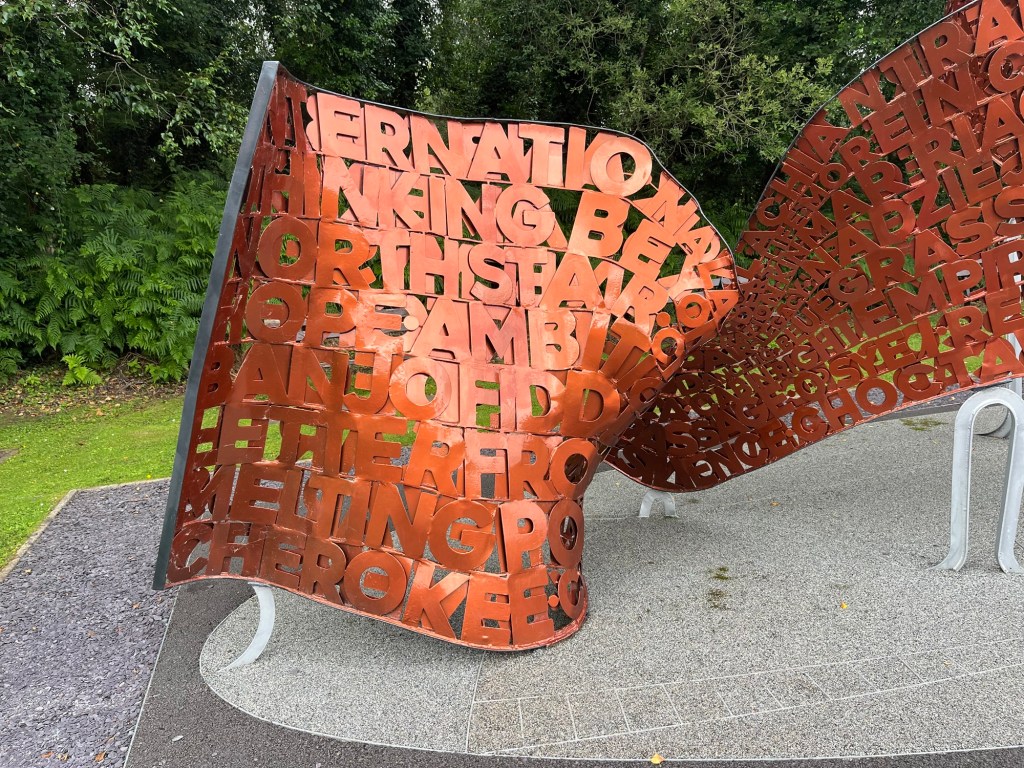
Today I stand in the parking lot of the Ulster American Folk Park in Omagh, Northern Ireland. The first thing I see is a bronze sculpture linking the Scots Irish community that immigrated from here to the Cherokee. I am intrigued. I thought I was visiting a living history farm and now I am confronted with my heritage.

The park is well kept and documents the immigration of countless Irish to the U.S.. The park centers around the boyhood home of Andrew Mellon. He grew up in modest means and immigrated with his family to America. There the family became ridiculously wealthy in the banking industry. He is atypical.
Most settler’s stories mirror my own family. Leave Ireland. Find similar land in Appalachia and try to farm. Move west. Try to farm. Find jobs as domestic help and day laborers. Work in mines and on the railroad. Find factory jobs and shop keeping positions. Work hard. Protect the family and educate yourself.
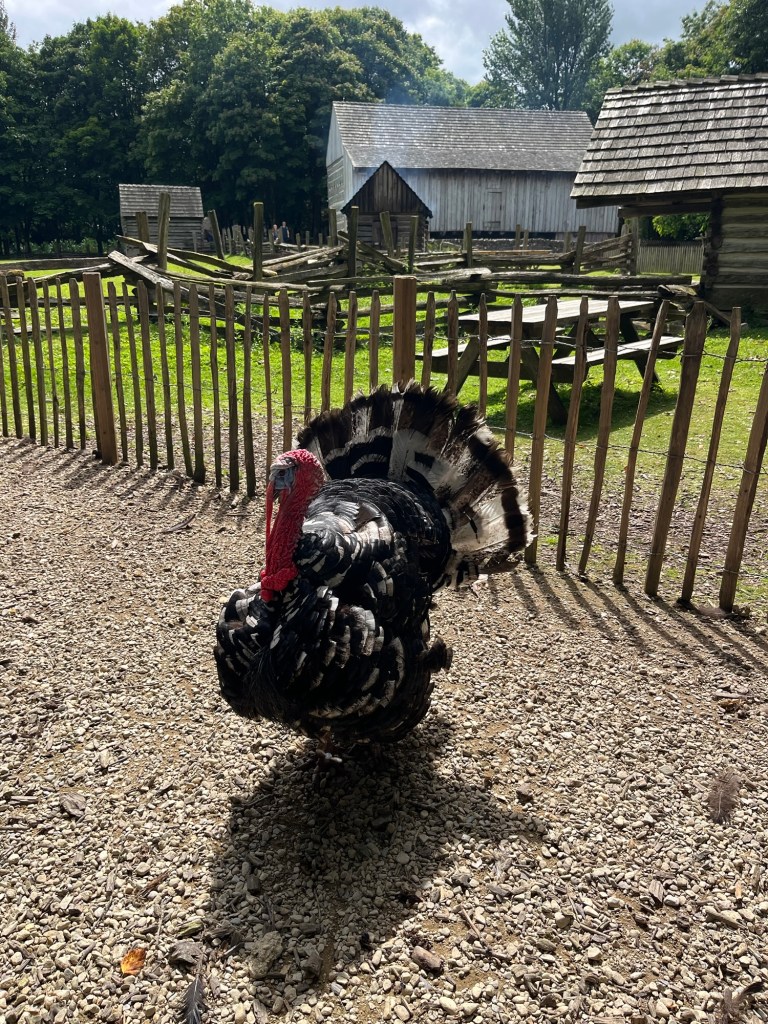
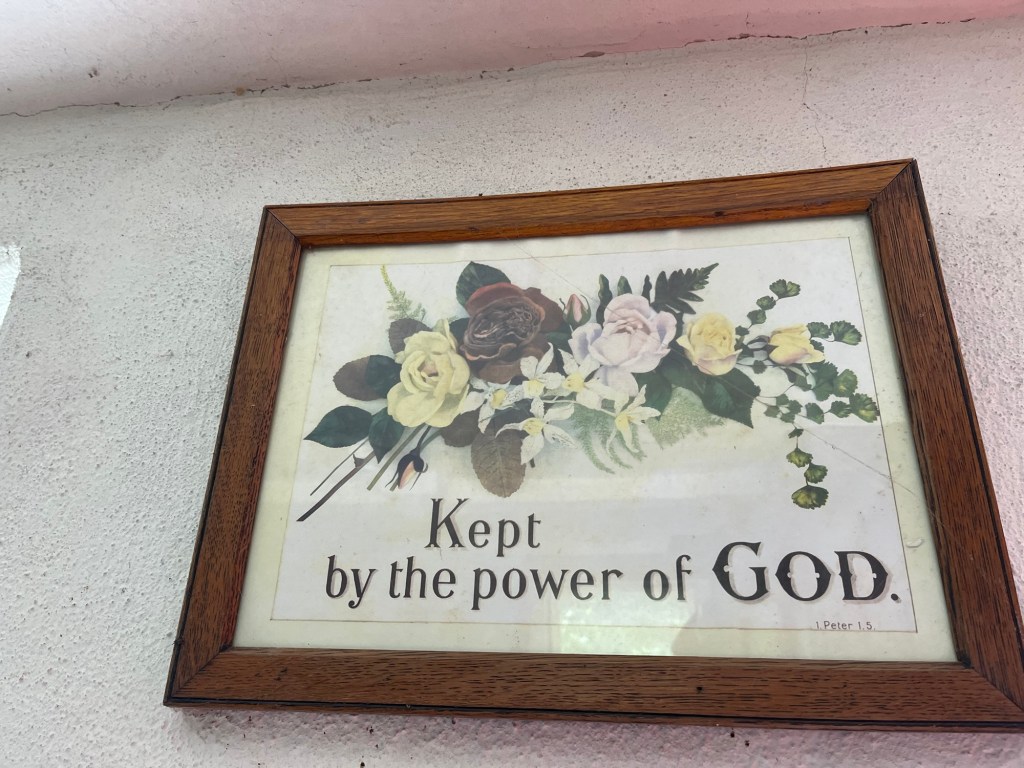
The park does a great job of grounding the immigrant’s experience. I first visit period Irish farms, cabins, churches and town. There is even soda bread fresh from the coals. (Pro tip: Never turn down freshly baked soda bread.) Donkeys beg for attention. Flax fields wave in the breeze. I think I would be content in this older way of life. Possibly hungry, but industrious, grounded and content.
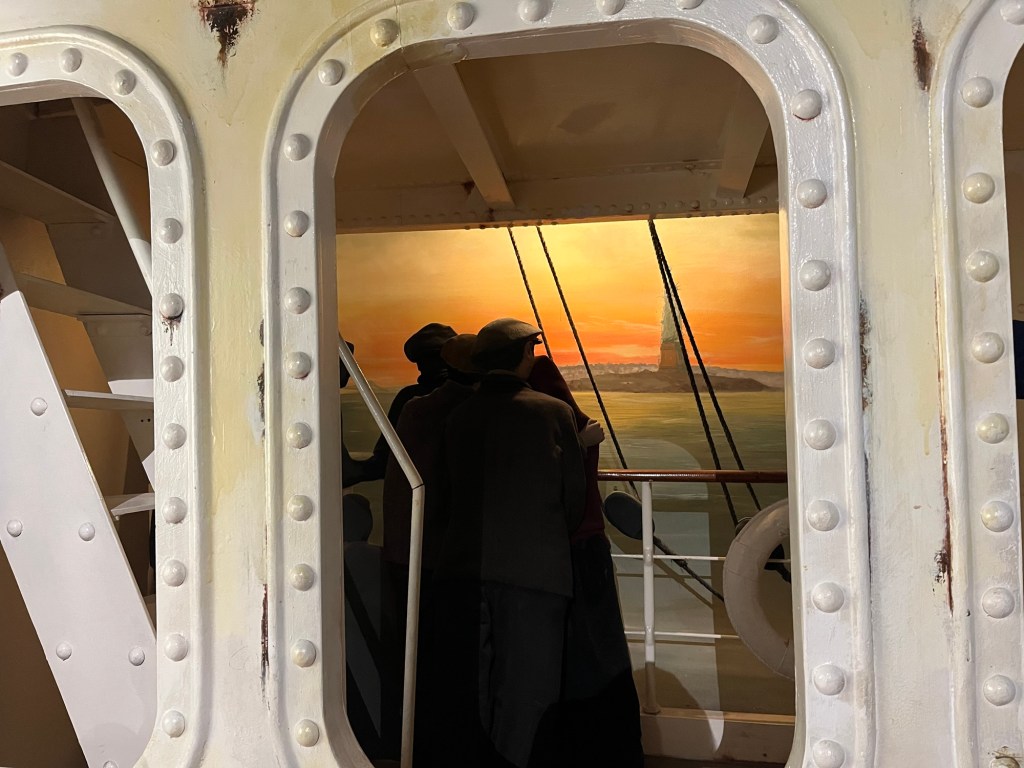
I exit the Irish town through a tunnel that leads me into an infamous coffin ship (there is also a replica of a steamer for comparison). When I leave the ship, I exit directly into a recreation of an American town. I am now in America and the remainder of the park has cabins and farms from the American countryside.
I have visited many country cabins and farm sites in Missouri, Arkansas, Tennessee, Kentucky, and Georgia. This history teacher loves a good living history site. Today I feel just like I am standing in Appalachia, even though I knew I am in Ulster. I could be somewhere in the Smokies by the look and feel of the place.
I am unexpectedly moved by this experience. As far as I know, no one related to me is connected to County Omagh. Yet the story told here could easily be my own family story. Old world meets new. New places, old traditions. Echoes and glimpses of things that stir family memories. Songs, words, smells, and artifacts. Origins. I am humbled. I am connected. I feel lost and found. Ireland is like for me sometimes. Some say memory is past down through generations. Today I feel a resounding echo of places I have never been yet have always known.

 Prisoner of Hopes