
We visit Lissadell house on a warm summer afternoon. The family home of the Gore-Booths, Lissadell sits outside of Sligo, Ireland. It is now owned and lived in by Irish attorneys who allow tours to offset the upkeep. The estate had a great location with both Ben Bulben and Knocknarea mountains in view as well as the beautiful sea.
As we enter the old stables, now a cafe/gift shop/ museum we encounter two older Irish men having tea. One was chatty. He followed me and clearly wanted to talk. I indulged him as we had plenty of time. In a very Irish way, we find out that they know the family we are renting from. This leads to family stories of business ventures and ancestors. They could have talked all day, but we had a house to visit.
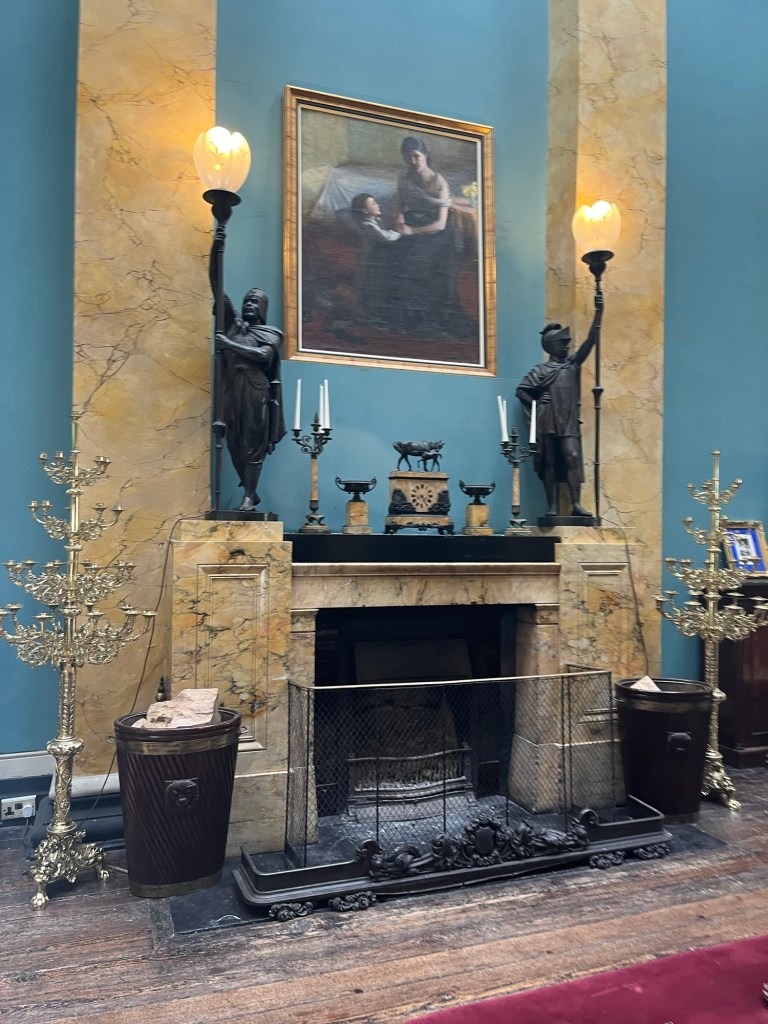
In the small museum, we learn about the Booth-Gore sisters, Constance and Eva. Their father was an Anglo-Protestant landlord who reportedly provided free food to tenants during the famine and was an arctic explorer. His daughters were forces of nature. They were friends of Yeats who memorialized them in verse. Eve went on to be involved in the women’s suffrage movement. Constance helped change a nation.

As I walk through the house and grounds, I see her artistic talent on display. She met her husband, Count Markievicz at a Paris art school. As an Irish socialite she turned heads. But her life changed as she began to meet Irish people who dreamed of freedom for their country. I look at paintings, drawings, and writing. There is no shortage of revolutionary material in the collection.
She went to meetings advocating Irish independence and actively campaigned against a young Winston Churchill. She was arrested for throwing stones at a painting of the king and queen and for speaking at rallies. She sold off possessions to feed the poor and ran operations to shield protestors from the police. I am learning that this woman was courageous and passionate about the Irish people.
She participated in the Easter Rising including the fighting at St. Stephen’s Green. She was tried and sentenced to death, but was given a reprieve because she was a woman. When told she said, “I do wish you lot had the decency to shoot me.”
Inside the house, I see the carvings she and her sister made on the woodwork. I imagine little girls full of dreams. Constance could not have dreamed she would one day be the first woman elected to British Parliament or that she would serve in the Irish government as a cabinet officer. And yet she made history. Not in a loud or self serving way, she served others.
She grew up in luxury, yet she lived for the people. At her death she had given her money away. She died in a ward among the poor where is “where she wanted to be.” A revolutionary countess indeed.
 Prisoner of Hopes