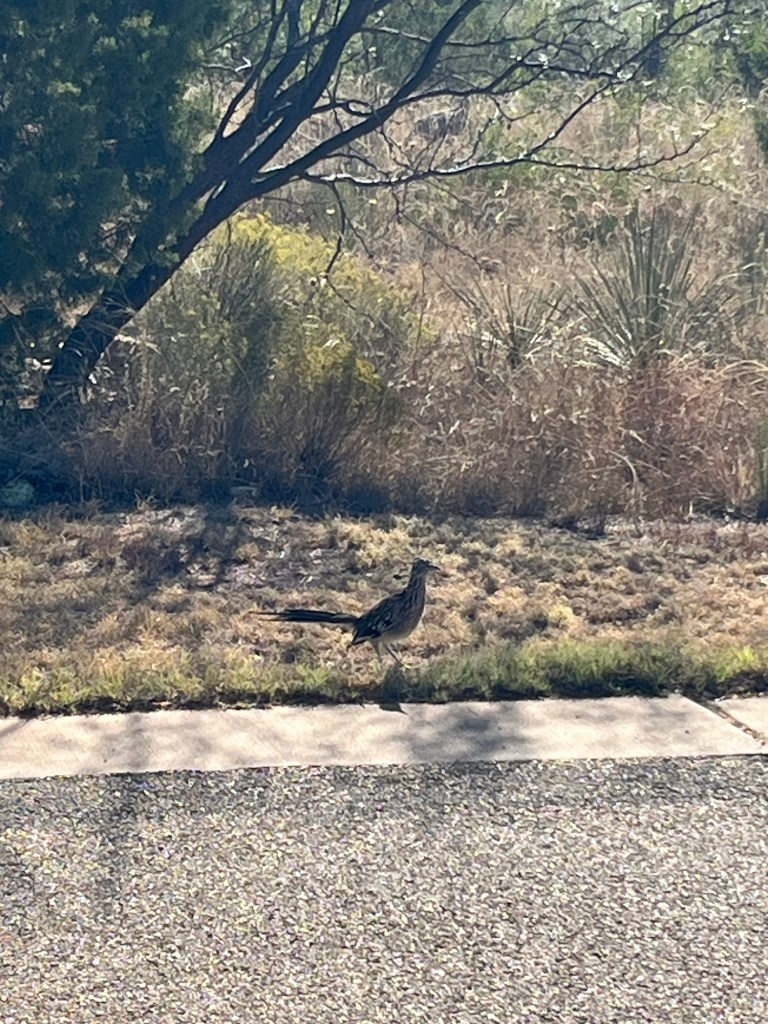
We are standing in Palo Duro Canyon. A roadrunner follows us around the parking lot. He assumes an assertive stance on the red dirt hill just off the sidewalk and challenges us to follow along the trail to the river. Of course I tag along. He is cute and I love to hike. It is only logical choice.
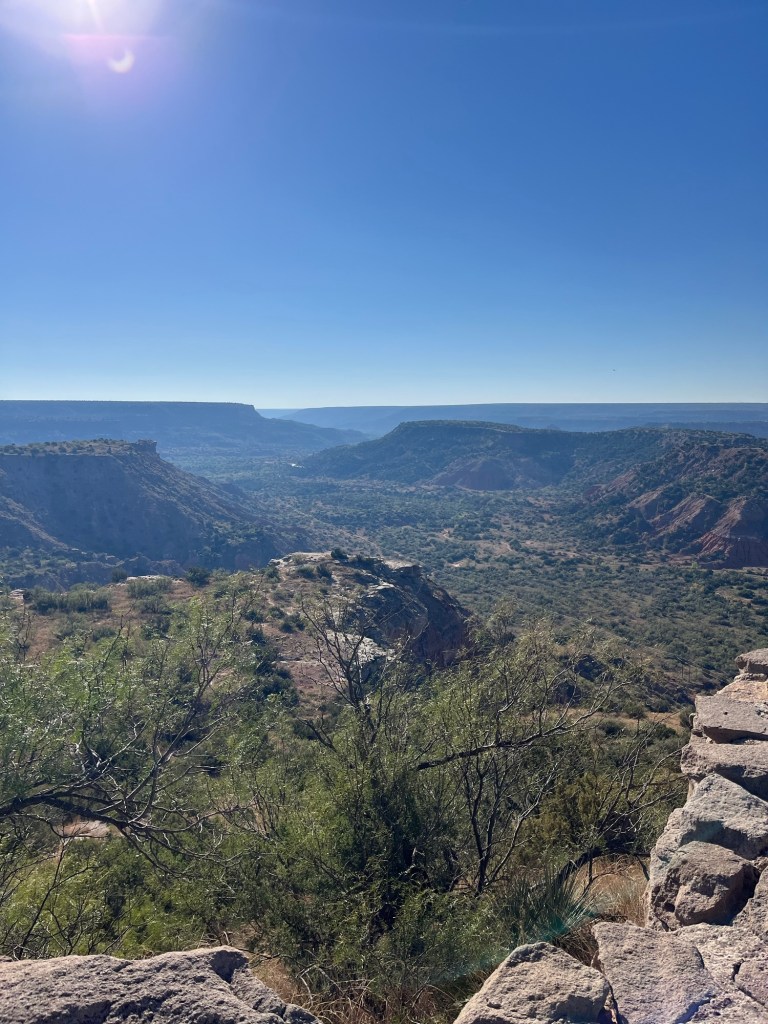
As we were driving here, I couldn’t comprehend how there could be a canyon ahead. The land is completely flat on approach. Nothing in sight. We literally didn’t see the canyon until we pulled into the parking lot of the visitor center. It looked as if we were just going down a small ramp and then wow! The view opened up and we were standing on the edge of a massive gorge. Such is the magic of Palo Duro canyon system, second only to the Grand Canyon. It is big, hidden, and has a rich history that captures imaginations.
I am reminded of this fact by an 85 year old man we meet as he drives his rv through the gorge. He asks if I will take his picture because he travels the canyon alone. He says he loves Westerns. Since reading about the canyon in Lonesome Dove, he felt he needed to come for himself. His wife wouldn’t come, but he is taking her back jewelry. I suggest turquoise or silver. We chat for a while as fellow travelers do as we looked deep into the canyon.
I am glad we are in our truck and not the rv as we make the steep descent into the canyon. I can’t help but wonder how our friend is doing in his old rv. But now that we are parked, the road runner calls. The visitor center looks far, far away. Our friend is on his own and I am here to hike.
I watch for snakes as we walk the dirt trail toward the river. There are a variety of birds, but the scenery is not appealing. We drive on. All hikes are good, but not all are inspiring.
Not too far down the road is a park store. Souvenirs, hats, sunscreen, and life saving water are readily available. They also sell a great burger and ice cream. So we have a relaxing lunch, buy a gallon of water (because signs everywhere warn to have a gallon with you), and talk with other tourists.
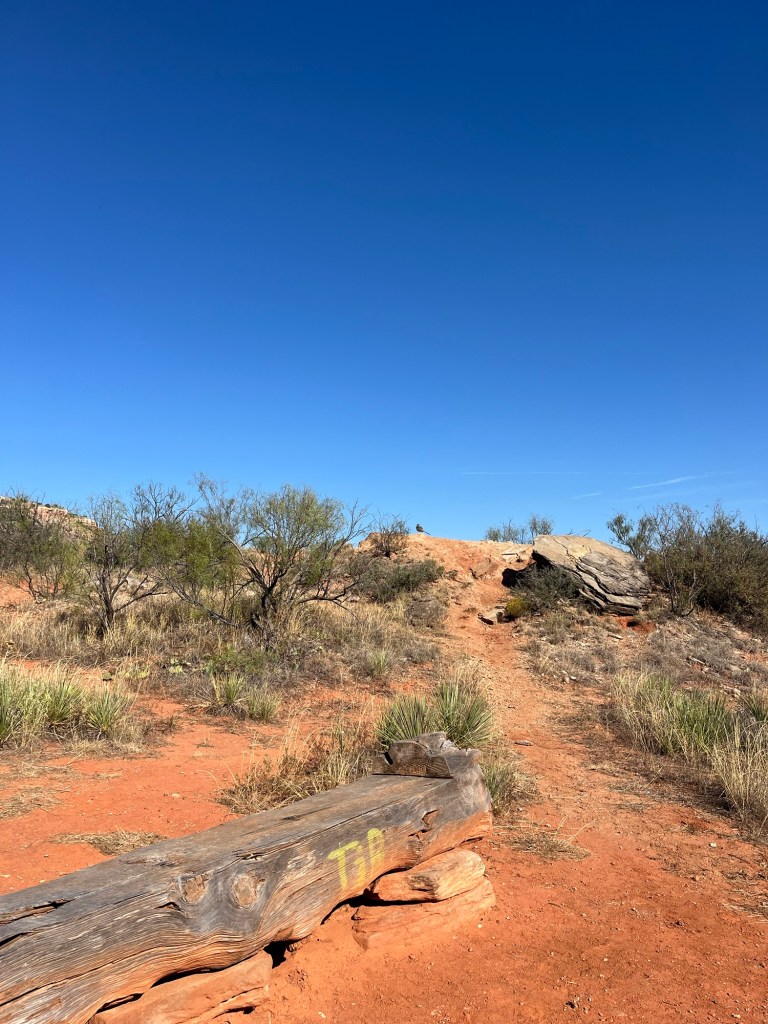
I am determined to hike the lighthouse trail. The parking lot is filled with signs talking about dangerous conditions, snakes, heat stroke, and trail hazards. Not exactly a glowing welcome, but I suppose forewarning is a good thing. A quarter mile in and the signs tell us how many people die annually on the trail. We are warned emergency services may not be available. There is a first aid station visible at the far end of the parking lot. It is closed.
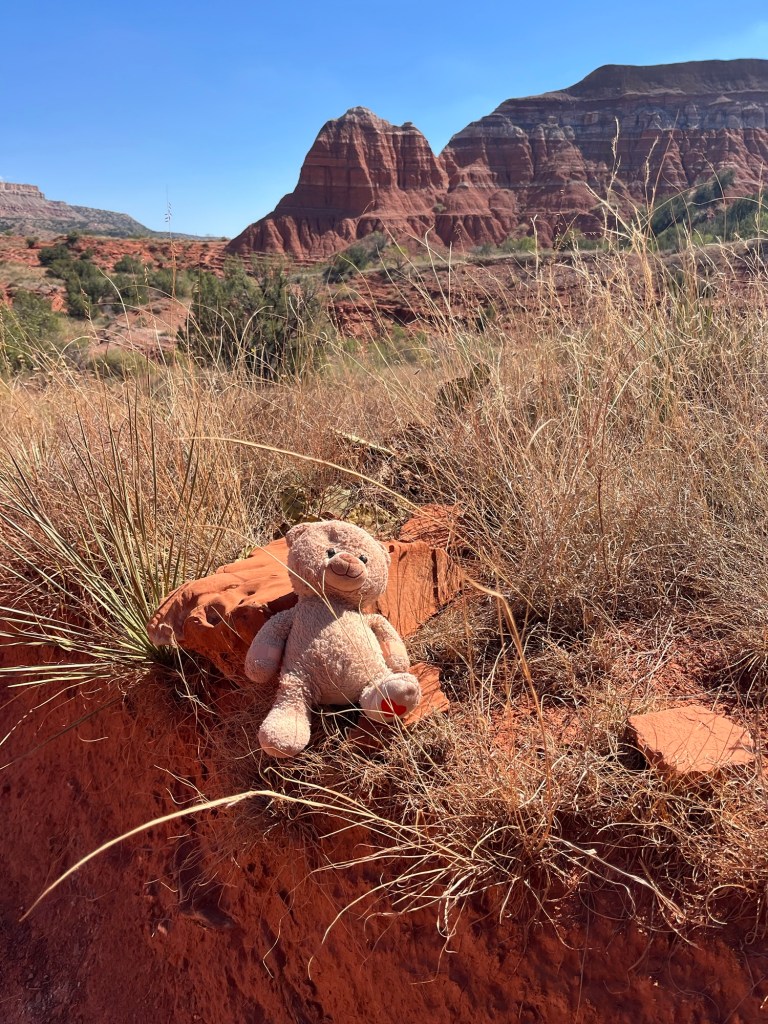
The trail is not rugged or scary in any way. It is a beautiful fall day in beautiful country. I see none of the hazards that we were warned of and none of the hazards I navigate on a forest hike. But it is late fall. The temperature is warm, not hot. Even so the sun beats down unrelentingly. There is little to no shade. In summer, it must be brutal. Today it is pleasantly warm.
I feel like I am in a movie as the canyon opens itself to us. There are not many other people on the trail and we walk alone for long stretches. I can’t help feel like I am ancient and moving through unspoiled earth. Each cave and crevice reminds me of the natives who made this home.
I think about the fact that for 10,000 years the canyon was inhabited by natives. In the 1870’s the U.S. military chased and killed the Indians who lived here as part of the “Indian Wars”. Within two years, wealthy men (cattle baron Charles Good Night and the infamous Black Jack Adair) had turned this land into a cattle ranch. Men who made fortunes upon the misfortunes others (in Ireland, England, and the U.S.), unsurprisingly made even more money by supplying the army (who helped them make this venture possible) with beef.
But the day is too beautiful to dwell on the deeds of ruthless men. Instead we walk on and enjoy the sunshine and the breeze. There is magic in the canyon. Texas did well to protect this land. And we are privileged to be in this moment drinking it in.
After our hike, we drive the remaining park road past rocks, streams, and canyon walls. The past seems close. Beauty and struggle. Heat that kills and also that gives life. Strangers who share food, hospitality and interests. Mistakes and malice cost lives. Signs point to some of the dangers past and present, much is unspoken. Mistakes and malice cost lives. T-shirts and mugs celebrate a culture destroyed. Mistakes and malice cost lives. It is a big, wonderful, beautiful, dangerous land. I’m glad we came. It is good to experience and remember.
 Prisoner of Hopes