-
Educating for Sanity: The Nation of Immigration
So much discussion, attention, and emotion…. Immigration talk has flooded our media sources, emerging as an American campaign issue in 2016 and again in 2024. Let’s move beyond the rhetoric and attempt to understand the topic more deeply, starting with basic definitions.
An immigrant is someone who moves permanently to live and work in a new country. Emigration is the act of leaving a country. In America, we use the term immigrant to refer to anyone coming here, but usually refer to Americans who have moved abroad as emigres. Another term, migrant, refers to someone who moves from place to place and may not have a final destination. Migrants often change locations for work, education, or family ties.
Economists and human geographers use the term push/pull factors to describe the factors that influence human movement around the globe. The determinate factors differ for each situation and are often experienced in unique combinations. Push factors are those factors that encourage individuals to leave certain areas of the world. They include war, famine, crime, lack of jobs, political unrest, natural disasters, poverty, and discrimination. Pull factors are reasons why individuals seek out the new place to live. They include jobs, family ties, schools, natural resources, religious freedom, political freedom, and positive climate.
It is estimated that there are about 117.3 displaced people world wide. The term for these individuals is refugee. They are displaced involuntarily because of violence, persecution, or calamity (often with no warning). They are unable to safely return home. As such, they have special protections under international law and various agencies. Official refugee status is jointly determined by United Nations designation and designations of the receiving countries.
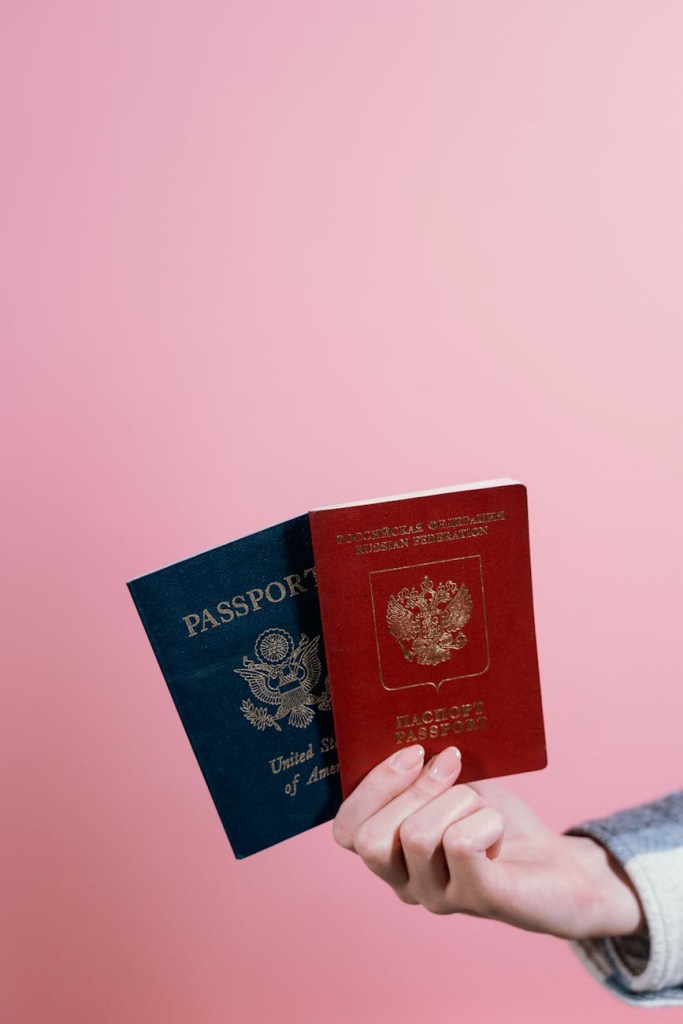
Movement of people between countries is constant. Logistically, the U.S. receives about 110,000 non-citizens per day through official ports of entry. Over 105,000 are tourist or business visas. About 3,000 are green card holders (a green card designates legal permanent residency for non-citizens). Anywhere from 1,000 to 2,000 visitors each day do not have proper documentation for entry.
Individuals who enter without documentation may do so for many different reasons. Asylum seekers do not have official refugee status, but may seek protection from danger in their home country. They can seek protection in any country they choose, but must cross the border and apply directly within the country of destination. Yes, I said that correctly. They must appear without documentation in order to make their appeal within the country from which they seek asylum. Most are turned away because they do not meet the criteria. Only 4% of seekers of U.S. protection actually achieve asylum. It should be noted that it is not illegal to seek asylum.
It is a lengthy process to become a U.S. citizen. First individuals need to obtain a visa or asylum status. Then, they work to achieve permanent resident status. Finally, individuals may achieve U.S. citizenship. It is a process that may take years. Critics point out that the process itself may exacerbate the number of undocumented immigrants as visas expire before the process can be completed.
Discussion about immigration is often emotionally charged and confused by unintentional (and sometimes deliberate) use of language. The most misused word in any serious discussion of immigration is the word, illegal. Followed closely by the word alien. In the context of immigration, alien = non-citizen. Illegal- someone who committed a crime.
It may surprise you to know that simply being in the U.S. without documentation is not a crime. You will not be arrested for appearing without papers. It is considered a civil dispute and not a criminal offense. The penalty is simply be denied entry or deportation (removal).
To evade inspection (sneak in) is a misdemeanor. Those who return without permission after being deported once already, have then committed a crime . Most people do not enter illegally. They enter legally and then stay beyond the limits of their authorizing documents. Most encounters with undocumented entries occur at our Southern border (81%). 45% of all encounters occur in Texas. Undocumented entry can be dangerous for individuals, as routes in to the country occur in remote and dangerous areas. It is estimated that between 8,000 and 10,000 people have died making the attempt within the last 20 years.

Therefore illegal alien is not a legal term. Instead, criminal alien refers to individuals who have yet to achieve citizenship who have engaged in “aggravated felonies”. Ironically being simply undocumented (because it is not a crime) lack protections afforded by law such as Miranda rights, attorney representation, right of appeal, statute of limitations, and habeas corpus. Criminal aliens, because they have committed aggravated felonies do have protections under the law.
Studies show that immigrants are not likely to commit crimes and in fact are statistically less likely than native born Americans to engage in criminal activities. Public opinion, however rarely considers statistics. Anti-immigrant campaigns often portray immigration as a threat to national identity, as over running the country (an over estimation of the number of immigrants), or ethnic enclaves that will overtake an area. Often, they are portrayed as economic competition or drains on social systems (economic statistics generally do not support these characterizations). They can be portrayed as a risk for crime and public health (not statistically supported).
While none of the claims are empirically true, they can resonate with a population that is protective of its own identity. Insiders are often suspicious of outsiders. Individual instances of crime or job loss enter the public narrative in ways that capture the imagination. Polls reveal that education levels often influence perception, with those with lower education levels having the least favorable views.

A persistent claim is that “illegals” get federal benefits and that tax dollars shouldn’t support them. However, undocumented immigrants currently have no access except to emergency Medicaid. (There are programs in some states funded out of state budgets.) The reality is that undocumented workers make large contributions to both social security and Medicare despite the fact that they can never receive the benefits. They have a net zero impact on the federal budget according to federal data. Nativist arguments do not often fare well in light of data, but they do speak to individual fears and emotion.
To contextualize, the number of undocumented encounters in the U.S. in 1990 was estimated at 3.5 million a year. In 2008, it had risen to over 12 million. In 2016 and 2022, it hovered around 11 million. In 2024 it spiked upward to approximately 13 million. Just another chapter in our long history with immigration.

In 1790, the U.S. passed the Naturalization Act. It states that free “White” persons of good character were citizens if they lived here two years and swore allegiance to the Constitution. Any children under 21 became citizens automatically upon the oath of their parents.
By 1798, we were at war. Congress passed the controversial Alien and Sedition Act. It increased the residency requirement to 14 years and provided a provision to remove noncitizens of any country with which we were at war. It also provided a provision for deportation of individuals dangerous to peace and safety.
The Civil War brought its own set of citizenship challenges. Prior to the Civil War, immigration was not overseen by the federal government. Towns and regional areas policed themselves. But after the war, several states began to restrict citizenship through state laws. So the federal government enacted constitutional amendments and laws to ensure that individuals of African descent were afforded citizenship. This broadened and codified the citizenship process firmly under federal control.
In 1882 those arriving by ship had to pay a 50 cent tax to defer cost of screening. In the 1880s, the U.S. also passed laws to exclude Chinese from entry and to allow for deportation if already settled. The law authorized one year hard labor for Chinese found in the country without proper circumstances (eventually struck down).
The Immigration Act of 1891 authorized the office of immigration (part of the Department of the Treasury) to among other things open the Ellis Island inspection station. Individuals could be expelled for contagious diseases, a criminal record, polygamy, or ‘Lunacies and idiots’. It also became a misdemeanor to aid a person not entitled to enter.
1917 saw the creation of the Asiatic barred zone, disallowing any immigration from Asia and the Middle East except for exempt professionals. In 1921, the U.S. developed a quota system that would only allow 3% of persons of each nationality on the census. In 1924, it allowed 2% of the 1890 census (done to restrict Eastern European immigration).

In 1942, the Bracero agreement allowed Mexicans to enter as temporary farm workers with pay the same as U.S. citizens. And finally, Chinese exclusion ended. In 1945, the War Bride act extended citizenship to spouses and children of servicemen. In 1948, the Displaced Persons Act addressed the citizenship of over 200,000 people displaced by the Nazis. Harry Truman signed it reluctantly, stating that he was concerned that it was written to omit many Jewish immigrants.
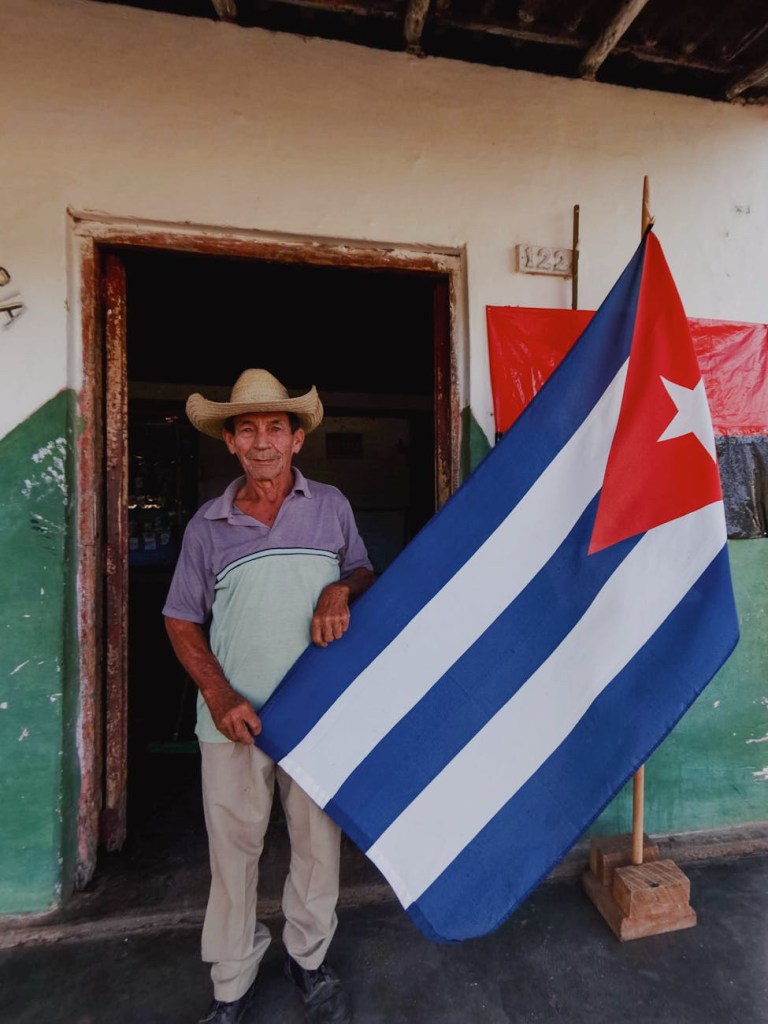
In 1952 laws were consolidated and screening was done by staff at U.S. consulates. In 1953, 205,000 people fleeing ongoing persecution were added outside of official quotas. In 1962, Migration and Refugee assistance was passed to specifically assist Cuban refugees. And the Hart-Cellar Act of 1965 ended the quota system based on national origin and removed caps for people who had immediate relatives that were citizens.
The 1970’s saw refugee status for immigrants from Southeast Asia, but by 1976 laws again preferences immigration from the Western Hemisphere. The 1980s produced new processes for asylum seekers. By 1986, we had a 50% increase in border patrol officers and enacted business sanctions for hiring undocumented workers. But individuals living in the U.S. four years or working 90 days in farm labor could apply for permanent status. Aggregated felony was defined and codified as reason for deportation regardless of status.
In the 1990s the U.S. raised admission caps by 50% and eased restrictions on temporary workers. Laws were passed to restrict deportations based on politics. However in 1994, the attorney general was given the power to bypass the court proceedings and deport for smuggling and violent crime (drug smuggling).

In 1996, the focus quickly turned to anti-terrorism. Expedited removals, electronic verification systems, removal of government benefit eligibility, and detention centers were enacted. However, the U.S. eased restrictions for certain Haitian, Central American, and former Soviet immigrants. The Patriot Act of 2001 broaden terrorism exclusions and allowed closer monitoring of student visas.
In 2002, the Department of Homeland Security was created and all departments were centralized. In 2005 REAL ID, ensures that documentation was necessary for a driver’s license. In 2006, the secure fence act provided the authorization for border walls and increased check points on the southern border as a response to drug trafficking.

And so it goes. Humans seek a better life. Humans seek to protect a life they are comfortable with. As one critic recently wrote, developed countries happily compete to be the most unappealing to migrants. Areas facing depopulation or economic downturn compete to attract immigrants. The emotions and opinions run high. But at the end of the day, immigrants are simply people. Humans with hopes and dreams and rights. Immigrant, emigrant, migrant, asylum seeker, refugee, permanent resident alien, temporary alien, citizen. All people doing there best to make a way for themselves. And so the struggle will continue.
As an act of citizenship, challenge yourself to know the categories of individuals who might fall under the term illegal alien. Challenge yourself to look at each news report to identify the categories at play and notice what might be incorrectly reported. Challenge yourself to look at statistics and laws when you hear statements about immigrants such as “they shouldn’t get federal handouts”. Who is getting it? What are they getting? Is it part of a resettlement plan for refugees? The complexities matter. Civil society requires your critical thinking. Immigration will always be an issue worth talking about.
*sources include the U.S. Department of Homeland Security, the Cato Institute, Reuters, United Nations, USCIS
-
My Toes Are Cold
As I sit and watch the snow outside my window, my toes are cold. But my coffee is warm. I have central heating in my house and a blanket on the arm of my chair. My toes are cold, but they don’t have to be.

Down the hall, I have a warm bed which I recently abandoned. I have a drawer full of socks and fleece lined slippers. I have wool tights which work miracles on the coldest of days. My toes are cold, but if I am really honest…I am just unwilling to move to fix the problem.
My toes are cold and it is easy to blame it on the arctic air outside. I can grumpily blame it on the builder of my family room, who did not install insulation under the house. I can gloomily count the days until winter is over…if I can just hang on until something changes…maybe someday my toes will be warm again.
My toes are cold. Perhaps my husband will bring me socks, or turn up the heat, or bring me a blanket. Someone else could ease my suffering. If only he would notice.

My toes are cold and this is getting ridiculous. I realize that I am blessed. I have abundant resources to meet my need. So much, that I could outfit any number of feet against the cold. But I would rather lay and think about how cold my toes are.
It is starting to sink in. It is up to me to protect my toes. They are not in danger of frostbite yet. Not unless the heater goes out. It is a strong safety net. I must be the one. I will use the resources I have to protect my toes. For now, I will put on the warm blanket. Later I will call to my husband (he is still asleep) and ask him to bring my socks. I selected him a long time ago to help me in times of need.
It has been a long week in America. My toes aren’t the only thing feeling the cold. The political climate has left me numb….but I don’t have to be. Now that my toes are warm, perhaps I should figure out how to use my resources to promote the “general welfare”.
-
Educating for Sanity: Information Warfare
Since the history of warfare began, military’s have sought to gain advantage over their opponents. This has been done through both physical and psychological attack. With the advent of the internet, opportunities for attack are infinite. Physically attacks (known as cyberattacks) can cripple a business or industry. But information wars are designed to destroy the psyche of a people in order to gain advantage. In an unclassified document of the U.S. army, information wars are said to be a low risk tool to destabilize your opponent. The military warned prior to 2016 that it would be easy for foreign governments, extremists, and criminal organizations to use information warfare more and more frequently.

An information war operation is used to gain advantage over an opponent by denying, exploiting, corrupting, or destroying information systems. It is the deliberate use and management of information and communication in pursuit of competitive advantage. The strategy is to manipulate trusted information and information sources of a “target” without the “target’s” awareness so that they will make decisions against their own interests. The targets themselves will begin to act and speak in the interests of the individuals conducting the information warfare.

A key strategy is virality. This tactic floods many sources at once to overwhelm information streams. Placing the same information in more than one location, creating a favorable algorithmic trend, seeding assurances that the information is valid, spreading disinformation, creating misinformation, and demoralizing or demonizing the opposition are all tools in the information war space. Operatives use these tools together to undermine factual information, create fictitious and favorable narratives, and to deny valid information to their opponents.
Attacks can come from many spaces at once, making it is hard to track or enforce penalties against bad actors. Once “targets” are compromised, they will begin to share and defend the seeded messages. Attempts to track and enforce are easily neutralized with claims of attack on right to privacy or free speech. The 0bama administration noted to members of the armed forces over 15 years ago that there was a mismatch between technical opportunities for information warfare and governmental laws and policies. This gap was a danger zone.

Information psyops use many strategies. The purpose is to deny (insist events in public record did not happen or deny access to known information), corrupt (introduce false data or altered data, degrade(delay access until the information is no longer useful or flood conflicting information so that it is hard to keep up or find a pattern) or destroy (eliminate information from the public space). Tactically, troll factories employ people to create fake profiles and post comments in line with the goals the combatant. Bots flood the social media streams with messages sent automatically to change algorithms. Fake news messages (both disinformation and misinformation) are created with the intent to mislead. Truth is not the goal. The goal is maintaining a position of power by controlling perception. It is in essence, cognitive warfare.
In this environment, speed is more important than truth. A constant barrage of deny, degrade, destroy, corrupt …leaves people exhausted. It undermines cohesion, leaving people bewildered. It turns old grievances into roiling unrest. It creates algorithms of “computational” propaganda that target segments of the population most drawn to the messages.
Journalists are often targets of the attacks, being sent information in hopes they spread the information to a broader audience. Journalists must diligently vet sources and corroborate information. Lazy or “friendly” journalists who report the latest “leads” without rigorous cross checking become tools or collaborators in the information war space. Winning in the information war space also relies on Big Tech to allow misinformation and disinformation or to remove content based guidelines and community standards from its platform.

Since the early days 2000’s, leaders warned against the targeting of civilian institutions instead of enemy combatants. As scary as that sounds, strategies have been studied and used by militaries and governments around the world with aggressive escalations in the last decade in the cyberspace arena.
In Ukraine (an emerging democracy) around 2010, oligarchs (many believe backed by Russia) used information war tactics to get lawfully elected. They then passed laws to benefit themselves, accused the legally elected head of state of corruption and triggered mass protests.
Russian used similar tactics to pave the way for the invasion of Ukraine. They used used their state news agency Pravda(Truth) to shape public thought to party objectives. A young Russian soldier was given a phone by Ukrainian townspeople to call his mother and let her know he was okay despite capture. He lamented that he was told that the Ukrainian people would be glad to see the Russian army because they were going to “liberate” Ukrainians who wanted to be Russian. He realized upon capture that popular perception is indeed sometimes not “Truth”.
The Taliban has conducted information wars since at least 2001. They target rural areas where they recruit young male members in mosques, using scripture and religious quotes to justify membership and action. They make targeted and disparaging comments about the opposition, claim to stamp out corruption, and take for themselves the moral high ground of protecting women’s rights.
Both Israel and Hamas have also engaged in the warfare for public opinion, using governmental, religious and student groups to carry out information wars. China aggressively engages in informational warfare both internally and externally, carefully curating narratives to suit political purpose. Both Russia and China have been cited for U.S. election interference. And of course North Korea is in its own league of information control.

So what are citizens to do when information warfare is at play within their own country? How do citizens cope when a government uses the strategy of deny, exploit, corrupt, or destroy to manipulate the perception of its own people?What to do when speed and popular opinion become more important to operatives than truth? How do people navigate the world of influencers and tech companies for hire? How do you react when people identify more with fake news than substantiated fact?
The populations most susceptible to information warfare are those who have the least experience (non-digital natives, youths, the isolated, and the uneducated). Unfortunately, we all must be alert in this brave new world of informational manipulation. As an act of citizenship promote digital literacy and commit to practicing digital literacy skills. Practice analytic thinking and cross check all sources outside usual algorithms (search stand out quotes and see where it is showing up). Break up algorithms to your news feeds by subscribing to many different sources and regularly share factual/balanced sources that may be different than those available on the feeds of others. As you notice information warfare tactics at play, ask yourself “who benefits?” and “what is the advantage of deny, corrupt, exploit, and destroy” strategies. Be a smart consumer of information to reduce your risk of becoming a “target” or unknowing “collaborator”. Finally, read up on information warfare and consider its connections to current events. Ask yourself, why would a group use such tactics on its own members?

* I used various documents from lectures and memos of the U.S. military branches and NATO as source material for this piece. Explanations and descriptions are simply a summary of training documents and educational prevention posts. All are publicly available from a simple search. Enter “information war” and read for yourself.
-
Educating for Sanity: Executive Order
The last few weeks have seen a flurry of executive orders. As the national debate rages about the appropriateness of the orders, it is important to understand what an executive order is and its limitations.

Executive orders are directives issued by the President to manage the federal government in its enforcement of laws. They derive from powers vested in the President according to Article II of the U.S. Constitution. They can also be issued as directives to manage the staff of the executive branch as they carry out their duties.
Executive orders began to be officially numbered and catalogued in 1907. Prior to that date, orders were simply known by the subject matter. Not all orders are published if they have no general applicability or legal effect. Additional memos and letters may also be issued less formally to various departments and staff. These communications are not considered executive orders.

Executive orders are not mentioned in the Constitution. But clearly, the President as head of the Executive Branch can direct the various departments in how to enforce the law or carry out executive constitutional powers. The ability is limited, according to the Supreme Court, to executive powers supported by Article II or Congressional statute.
Historically the use of executive powers has varied. George Washington had only one in the entire eight years he presided. He simply directed department heads to keep him regularly informed. John Adams had 1. Andrew Jackson had 12 including the infamous Indian removal act. Andrew Johnson averaged over 20 per year for a total of 79. U.S. Grant issued 217 as part of reconstruction after the Civil War. Teddy Roosevelt issued a whopping 1,081 and Wilson issued 1803. But the king of executive orders was FDR. Roosevelt issued on average 307 per year for a total of 3,721. Modern Presidents have been much more judicious in usage. Kennedy had 214. Johnson issued 325 mostly around Civil Rights legislation enforcement. Reagan had 381. Clinton 364. Bush 291 and Obama 276. Trump’s first term yielded 220 and Biden penned 162. In the first two weeks of Trump’s second term he has issued 53.
The only President to fail to issue an executive order was Harrison. It is important to note that most executive orders are proposed by heads of the federal agencies before they are issued by a President. Presidents can issue, amend, and revoke orders. Executive orders remain in force until they expire, are cancelled or revoked. While some may require Congressional approval most deal with enforcement of existing law or deal with emergencies.

Executive orders are subject to judicial review and may be overturned as illegal, not supported by existing statute, or unconstitutional. As a defense, Presidents are careful to specify which law or constitutional provision the executive order addresses. As a check on executive authority, Congress can also nullify or change executive orders by the passage of law. This is subject to veto and sets up the potential need to override an executive veto by a 2/3 vote. Congress can also refuse the funding needed to carry out an order.
Executive orders can be ceremonial or symbolic. Presidents cannot create new laws, but can use executive orders to signal policy priorities or political will. They may specify what action a President is willing to take to see that laws are faithfully executed.
Perhaps the most famous order issued by a President is the Emancipation Proclamation that freed slaves in states rebelling against the Union. Several other executive orders have been enacted as “war powers” of the commander in chief. Harry Truman tried to federalize steel mills during the Korean War, but lost when the Supreme Court ruled that he tried to make a law rather than enforcing or clarifying, Truman was more successful in using executive orders to desegregate the military. FDR infamously used executive order to set up Japanese internment camps. Eisenhower used executive order to send troops to Little Rock to integrate the public schools.
And so it goes. Each administration using its power to either protect rights or restrict based on their interpretation of law and priority within their jurisdiction. Ironically, one of the strongest critics of the use of executive order has been the Heritage Foundation (sponsor of Project 2025). They have charged former Presidents of using the action to “make laws” outside of Congress.
As an act of citizenship, pay attention to executive orders. Decide if the order is in regard to a power outlined in Article II. Decide if the order is in regard to the enforcement of a law already in federal statue. Decide if the order is an infringement on the responsibility of Congress to pass laws. Familiarize yourself with key judicial review opinions bounding executive reach in order to evaluate the scope of executive orders.
-
Education for Sanity: What is DEI?
You can’t turn on the news lately without someone saying DEI. Unfortunately, it is often used without context or even completely out of context. This leaves both those who have had a lot of training and experience in the field as well as those who haven’t had any scratching their heads in confusion. Let’s unpack the intent and origins of DEI.

DEI stands for diversity, equity, and inclusion.
➡️Diversity- the presence of differences in the human condition. (Such as age, sex, race, gender, national origin, ability, religion, national origin, citizenship, socioeconomic condition, housing status, language, political perspective, etc)
➡️Equity- the fair and just allocation of resource access and opportunities in a way that everyone has what they need to thrive in the environment, to contribute fully, and to be represented/have a voice.
➡️Inclusion- the practice of insuring that the full range of human diversity has equitable access and involvement in the community. This includes welcoming, supporting, respecting, and valuing diverse individuals for their unique contributions while ensuring none are excluded. It demands that everyone is treated with dignity and strives to create a culture of belonging for all.

To unpack further, let’s go back to the 1964 Civil Rights Act, specifically Title VII. This provision of law established the equal employment opportunity provision (EEO). The EEO states that everyone should have legal right to succeed and should not have to face discrimination at work. The federal government has since written a number of regulatory directives that businesses must follow to ensure that discrimination is minimized. For example, certain businesses and government agencies must file annualized reports to confirm characteristics of their workforce such as gender, race, etc. The EEO is the bedrock of all efforts to end workplace discrimination.
Affirmative action policies were first mentioned by John F. Kennedy, but were started by executive order under Lyndon Johnson in 1965. Affirmative action programs were specifically designed to correct deep seated past and present discrimination by giving preferential treatment to underrepresented groups using quotas and other legal methods. Affirmative action programs gave preferences to certain applicants over others. Affirmative action benefitted women and racial minorities among others by providing preference in college admission, hiring practices, and contracting. This remedial action was usually mandated by government policy and considered necessary to break the cycle of organized discrimination. It identified those not treated fairly based on their “protected class” as identified in law (such as age, race, sex, disability, religion, etc.) Affirmative action sought to level the playing field by removing systemic barriers that single individuals could not change by establishing quotas and using legal means including prosecution, fines, and penalties. (Affirmative action in college admissions was ended federally based on a Supreme Court ruling in 2023.)

But affirmative action is not synonymous with DEI. DEI efforts are much broader. It goes beyond a legalistic approach and seeks to create an inclusive environment of understanding and empathy. It is a long term commitment to communities by engaging all people. It is a voluntary effort by groups and businesses to understand and value the communities they serve and to create holistic change to benefit the entire community.
DEI first seeks to create awareness through dialogue and training where individuals encounter diverse perspectives. This exchange is to develop cultural competencies, to decrease unconscious bias, and recognize diverse perspectives as strengths of the community. The culture of belonging, empathy, and inclusion can strengthen partnership and deepen community cohesion. DEI is not about division. At its core, the goal is to foster environments where everyone is valued, has a voice, and has access to the resources they need to thrive.
So why then, do critics of DEI claim it fosters division rather than cohesion. Why do they say it stokes racial resentment? Why are naysayers publishing headlines that say DEI prioritizes physical characteristics over merit?
Much misunderstanding comes from awareness. According to Harvard University 1/3 of companies have engaged in training because they had to (a result of legal action due to a discrimination finding or lawsuit). Others have not participated in effective training but had read or heard about training out of context and jumped to their own conclusions. Others may have participated in ineffective or misguided DEI initiatives. Or perhaps they were forced to attend unwittingly.
Ensuring diversity, equity, and inclusion is hard work. Hearing the point of view of others is sometimes hard. Confronting your own bias is harder. Changing your practice from self-interest to one that benefits the greater good of the community may involve some sacrifice and temporary discomfort. But communities who can decide that all people matter, move into tactical DEI in which they move beyond compliance and use the processes to meet important shared goals. They realize that the work must be done by all in order to benefit all of us. (Perhaps the three musketeers were on to something). DEI is not a zero sum game. Ensuring the dignity, worth, productivity, and of all people does not diminish individuals. Integrated DEI is therefore a culture of inclusion not exclusion.
So the idea of banning DEI is puzzling. Using a broad term in specific directives creates lack of clarity. Are we actually banning affirmative action? That would require the dismantling of government regulation. Are we rescinding the civil rights act of 1964? That would require Congressional or Supreme Court action. Are we refusing to acknowledge differences in the human condition? Are we to deny that people may need different things in order to successful within the work environment and no longer providing accommodation? Do we refuse to ensure that everyone is treated with dignity and has a voice? Can the barriers removed through affirmative action be replaced? Is it no longer okay to talk about race or gender? Who benefits from such restrictions? All of these issues surface with a simplistic reference to the breadth of DEI.

For those that are in favor of removing government red tape, a conversation about how to guard against discrimination in the workplace without excessive reporting requirements and government oversight might be a conversation worth having. Layers of bureaucracy may no longer be necessary in some circumstances. Changing times may require new regulations. Compliance can sometimes feel overwhelming when too many directives are intersecting in ways that are difficult to manage. Removing quotas if parity has been achieved and maintained may be reasonable.
However prohibiting organizations from fully including all people or from discussing diverse perspectives is discriminatory. Suggesting that removing barriers to ensure that everyone has access to education and fair hiring practice is somehow anti- merit is illogical. A merit based system means that everyone has access to rise based on their ability. Therefore ensuring that people who have ability don’t face artificial barriers is imperative.
As an act of citizenship, understand the foundational role the Civil Rights Act of 1964 had in advancing the rights of women and black Americans in this country. Understand the important and sometimes controversial role that affirmative action plans had in breaking down entrenched barriers to advancement. Consider whether a reduction in government oversight of discrimination in employment, government, and education is ever warranted and under what conditions. And embrace the ideals of belonging, voice, and contribution for all Americans. We are stronger together and our diversity is our strength. One nation under God, indivisible…with liberty and justice for all.

-
Educating for Sanity: Epistemology
Ever wonder how two people can look at the same issue, the same facts (transcript, video tape, testimony, etc.) or have the same exact experience and come away with completely different views about what happened? For centuries, humans have been wrestling with the question, “how can we really know anything.” As a freshman college student , I was introduced to epistemology; the philosophical study of knowledge, including its nature, origin, and limits.

The class was difficult and at times esoteric, but it challenged me to consider multiple dimensions of the world unfolding around me by addressing central questions:
- What is knowledge? What types of knowledge are there, and how do we create them?
- How do we know things? What are the psychological processes that lead to knowledge, such as perception, memory, and reasoning
- What are the limits of knowledge? What can and can’t people know, and what are the bounds of what’s epistemically permissible?
- How do we justify truth claims? How do we determine if a belief is true, and what evidence supports it?
While the philosophical underpinnings of the nature of understanding may not sound particularly exciting, it is especially relevant to a society that can’t seem to agree on anything. First, let’s examine how we gain knowledge. While there are many different way to categorize how we “know things”, these simple divisions can help our immediate understanding:
➡️Perception (empirical evidence)-What can be observed through the five senses. Knowledge is derived from what you see, hear, touch, taste, smell, etc. (This approach is a basis for scientific reasoning.)
➡️Reason (analysis of data)- What can be inferred by aggregating evidence collected and comparing to an idea or hypothesis to draw conclusion. (This approach is the basis for scientific thinking).
➡️Memory (personal experience)- What can be derived from a person’s previous life encounters. Knowledge is derived from first hand physical and mental encounters stored in an individual’s long term memory. Collective memory occurs when a group of people agree on a shared narrative of the past. (This approach intersects history, psychology, and neuroscience.)
➡️Testimony (belief in others)- accepting an idea because a trusted source says it is true.
➡️Introspection (examination of thoughts, ideas, and mental states)- carefully considering personal emotions motives and state of mind in proximity to subject matter
➡️Intuition a belief or inclination to believe that arises almost immediately. Sometimes referred to as “common sense”
➡️Faith a belief in doctrine or the divine based on spiritual understanding rather than empirical proof
With all these ways of knowing, it is incredible that we ever agree on anything! It is important that we realize that humans use all of these methods, sometimes simultaneously to draw conclusions and assign meaning. Individuals should recognize which of the ways of knowing are at play in conversation.

Arguments often begin when individuals base their knowledge on different constructs. Several years ago, I attended a function in which a friend I had known for many years gave an impassioned speech against the common core standards. She ascribed bad intent to the creators and made a series of false charges about the content. Her church had hosted meetings and made claims against the standards movement and she was warning our group against the “danger” of changes to curriculum. I was in an awkward position, because I had been invited to the meeting in Washington D.C. where the Chief State Schools Officers and invited educators had set up the work groups for the standards development. I had first hand knowledge of the genesis, intent, and outcomes of the new standards. What she was saying and what she “knew” did not in anyway resemble the conversation and actions that actually took place in the room where the standards discussion started. My first hand knowledge was directly in conflict with her “trusted source” knowledge. I tried to calmly and kindly redirect her. She now had a dilemma. Her knowledge from a trusted source (church affiliation) was being contradicted by another trusted source (personal friend).

Cognitively, this dissonance can create feelings of uncertainty and anxiety. Individuals deal with this in a variety of ways. One strategy is to select a “way of knowing” to the exclusion of the others. Some scientists reject intuition and faith. Some faith leaders reject perception and reason. Sometimes we rely on personal experience and memory without understanding that our perceptual filters, (the way the brain creates and prunes its pathways) can have a profound impact on what is remembered. And so it goes. When confronted with these differences we can feel unsettled, dismissive, or even angry.
We would do well to consider that there are multiple ways of “knowing”. The next time you find yourself getting upset at someone who can’t seem to get on your page, try to look beyond their claims to understand their epistemological “lens”. This opens the doorway to conversation about “why” we think in certain ways and will hopefully lead to greater understanding. At the very least, it should help clarify your own basis of claim. This is a great step toward responsible, meaningful, active civic participation.
-
Educating for Sanity: Empathy
It has been a hard ten days. The turmoil in this country, the barrage of executive orders, the anger and accusation is exhausting. To be clear, I reject bigotry of all forms. I am saddened by the targeted attacks on public servants and the incivility on display by government officials. Most of all, I am disturbed by the absence of empathy.
I have spent my whole life as an educator. I taught government and history. Later on, in addition to overseeing curriculum for social sciences I also led school climate and character education initiatives, ensuring that school spaces were the very best environments to teach and learn. I have volunteered with a variety of organizations to help lift up humans in need.
So to say the current climate in America is disturbing to me is an understatement. Instead of wallowing in despair or engaging in unproductive arguments, I have decided to do what I have always done. Teach. Volunteer. Mr. Rogers told us “In times of trouble, look to the helpers”. I have come to realize that we must be the helpers. It is our time. Therefore, I will try to take a relevant topic and make it more accessible in a non-partisan , non-sectarian way.
Having said that, in the spirit of transparency you should know that politically I am a centrist and have been a registered member of both the republican and democratic parties at various times in my life. I have never been a single issue voter and I am not a loyalist to a party or individual. I take policy issues on their merit and compare them to deeply help American core values as embodied in the constitution. You should also know that I am a Christian who strives to follow the ethic of care modeled by Jesus. Therefore, a central concern for me is always the greater common good over narrow self interest. Perhaps that is why I find this particular time in our history so incredibly confusing. As an act of sanity, let’s reason and learn together. I want to start with the subject of empathy, which is noticeably lacking in our national discourse.

Empathy is commonly defined as being able to feel with someone; to be aware of and sensitive to their experiences and feelings. Empathy is an essential skill in forming and maintaining relationships. It helps build understanding and trust. Empathy starts with conceptually walking a mile in someone else’s shoes. This taking on the perspective of others and considering alternative interpretations of events and action can help us humanize each other, improve understanding, and take action for mutual benefit.
- Cognitive empathy. Cognitive empathy is the ability to understand how someone else feels and to work out what they might be thinking.
- Emotional empathy or Affective empathy. Emotional empathy refers to the ability to share another person’s emotions. This would mean when you see someone else who is sad, it makes you feel sad.
- Compassionate empathy or Empathic Concern. Compassionate empathy is when you take feelings to actions. It goes beyond understanding and relating to other people’s situations, and pushed an individual to do something.
All humans are capable of empathy, and a person’s capacity for empathy can increase or decrease based on habits. As children, stories help us consider the emotions and needs of the characters and become more aware of the expansive human condition. Likewise, listening to others perspectives and seeking to understand a point of view other than your own can lead to greater empathy. Spending time in unfamiliar communities or with people outside your circle can also improve your empathy.
Empathy is an emotion that helps us experience other people as fully human with thoughts, feelings and needs that may be different than our own. Being empathetic does not negate our own needs, but rather puts us in a common space where we can promote and protect the rights and needs for all.

When individuals lack empathy, (apathy) they may not realize that their actions can affect others. Worse, they may understand that their behavior impacts other people, but they may not feel remorseful about it. When individuals are apathetic they may act in selfish or vindictive ways without realizing or caring if that hurts others.
At the Nuremberg trials a psychologist said that “evil is the absence of empathy.”In 2016, former President George W. Bush said, “At our best, we practice empathy, imagining ourselves in the lives and circumstances of others. This is the bridge across our nation’s deepest divisions.” A few years later former President Barack Obama said, “The biggest deficit that we have in our society and in the world right now is an empathy deficit. We are in great need of people being able to stand in somebody else’s shoes and see the world through their eyes.”
They were not wrong. Today, we live in a deeply divided country where lack of empathy is on full display daily. The harm caused by the failure of individuals and our elected officials to see each other, to feel the fear and hope and need of the diverse communities of Americans, and to seek common good for all is evident. The question now is, do we have the courage to be empathetic? Do we have the fortitude as “we the people” to demand the common good for all people? Or, will we continue to silo in our echo chambers of social media and continue to ignore our fellow citizens?
Abandoning empathy has catastrophic results for a country. History tells us that when groups pursue extreme self interests and lose sight of the common good hunger, ignorance, poor health outcomes, income inequality, loss of liberty, genocide often follow ….the list goes on and on and quite frankly causes me anxiety as I think about it. Apathy tells us that “they” are not like me, therefore I don’t have to think about them. “They” are not like me so they don’t deserve my consideration. “They” are not like me so we will take what we can for ourselves. There is not enough to go around so I will make sure that I am on top and “they” will just have to deal with it. This, unchecked, sounds like America first, the rest of the world doesn’t count. America is only for “us” (insert your group of choice here)therefore our views are the only ones that really matter.
Lack of empathy also has a profound effect on individuals. It leads to miscommunication and misunderstanding as there is no attempt to understand perspective of others. In its worst form it exaggerates perspectives in order to belittle or discredit. It damages relationships as the lack of understanding makes it hard to connect. It is exhausting and demoralizing to be in distress and feel like no one cares or to have an important perspective but no voice. Especially is you are mocked, targeted, and belittled. (This crosses apathy and enters the territory of the bully or tyrant).

So what are we to do in the face of this empathy gap? Individuals should read widely and seek human connection. This does not mean to subject yourself to ridicule, targeted communication or incivility. Social media may not be the place to engage. As an example only: This week in light of the acceleration of immigration action, I have watched several videos of migrant workers to understand their stories and to understand their work contributions on a human level. I have looked at statistics for American immigration including crime statistics. I have familiarized myself with legal rights. I read the official policy statements of government officials. I have looked historically at ways Americans have gotten it right (usually bi-partisan) and the many ways we got it wrong in order to speak against past mistakes. I have talked with schools with high immigrant populations to listen and support leaders under a high amount of stress trying to do right by families. I read op Ed pieces from states that had been overwhelmed by immigrant populations that they felt ill-equipped to deal with. I also endured a ridiculous amount of propaganda and bigoted speech trying to get to facts and understanding of perspectives. It is not an easy exercise trying to cultivate an empathetic and reasoned response instead of an emotional reaction. We need better solutions. Immigration has long been a complex problem. Solutions are never easy. Democracy is always messy, but we must start from a place of empathy. And Americans have to work together along with the people who are most impacted to find systemic, humane solutions.
Politics is always the a combination of power and choice. The wise government seeks to hear many voices in order to understand how choices affect individuals. A good government seeks to use power to make choices that advance the greatest good. A just government acts with compassion to protect minority rights even as the majority rules.
Empathy matters. It is up to the people not only to speak, but to actively listen to one another. As an act of citizenship, find another citizen and spend time really listening to their needs (not their opinions about the “other”, but really listen to their hopes, their values, their experience). You may be surprised and you will be strengthening connection through empathy. You will also be strengthening the building blocks that ensure the common good.
-
It Is Messy Sometimes
Today, while waiting for a Dr.’s appointment, I saw a funeral notice and tribute for a former professor/ church leader. As I saw the texts of support and accolades, I was instead taken back to a major life lesson he delivered.

I was a freshman in college and enrolled in a psychology with professor “b”. I was doing well with straight “A”s first semester and a solid performance in second semester. Despite that I was called to the professors office for a “meeting”.
Memories are a bit fuzzy with specific details, but a remember him leaning over and touching my arm with a kindly smile. He told me we were meeting because he cared about me and he couldn’t help but notice that I was at the top of my class and outperforming my classmates. I said thanks, and that I had been working very hard.

What came next was a slap in the face. He gave me a pitying look and said that was why we were meeting. He wanted to help me. It seems I was outperforming the young men in my class. And they would not like that. I would never get a husband if I didn’t change my behavior and know my place. Mrs. degrees apparently come with strings and I should play the game.
I sat there and couldn’t breathe. I didn’t speak. It was incredibly silent. I was dismissed with a warm smile and assurances that he really cared about me. I left confused and angry.
I had been raised to work hard. I had been convinced that education and hard work were virtuous and to do less was a waste of God’s blessings. I enrolled in a Christian university to seek wisdom (both secular and religious). And as I sat in the darkness of my dorm room, I was confronted with the reality of misogyny from an unexpected source.
Maybe I wouldn’t have noticed all the little signals in my environment without that confrontation. Maybe my life would have taken a different course. Instead I stayed one more year at the school. I was told often of things I could not do because I wasn’t a man. I abided by the curfew of the women’s dorm, even though there was none for the boys dorm. I laughed off, when I was told I would be beautiful if I lost weight (I was an athletic size 10). I made great friends, learned as much as I could, and reluctantly moved on.
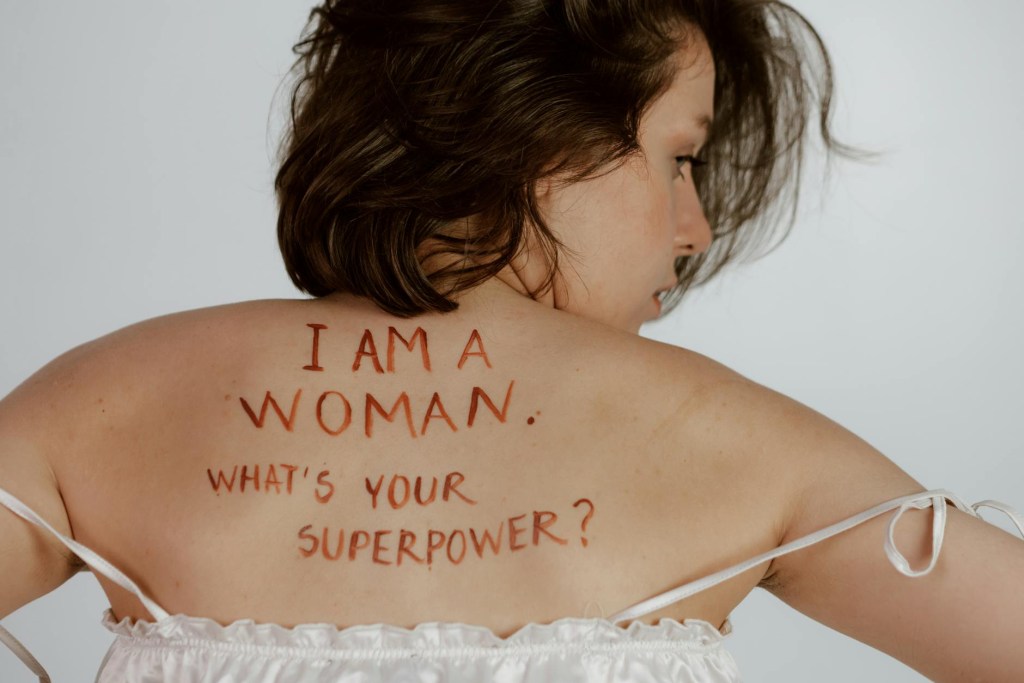
I would not be a renowned biblical scholar. I would not serve in church leadership or work overseas. I would not do many things I thought I would do. Instead, quietly, I found my vocational calling. I chose a career where learning and hard were valued and rewarded. I learned not to confuse one person’s opinion with God’s. I learned to listen more closely and to trust myself.
As I reflect today, I see that the good professor had a positive impact on many people based on their tributes. He also caused harm. Despite his unwanted “helpful” hints, I perused a life of learning which ultimately turned out better than I could have ever imagined. It is messy sometimes.
-
“Ice”olated
I am in the post- Christmas doldrums. It happens every year. I get all excited in the build up to the holidays. Family fun and endless games, fill the house with laughter. Trees and decorations light up the rooms with colorful sparkle.
And then, everyone goes home and the decorations come down. The January sky is grey. It is cold and hard to reestablish healthy routines. This year, it seems impossible due to endless ice and snow.

I know we have been blessed. Unlike other family members we have not had lengthy power outages , furnace issues, or leaky roofs. But we are house bound nonetheless. I feel trapped in a grey alternate reality.
At first, I enjoyed a few extra days of leisure. Slowly taking down decorations and cleaning the house, I filled the days with hustle and bustle. The next few days were spent reading and puzzles. The next few were spent in aimless wandering from chair to window to chair. I spent a long time chatting with my avian visitors who come to the window for a free meal. Finally, as always happens when I am idle too long, I began to fret about random things that don’t even matter. I am officially “ice”olated.

I just made up the term, but I like it. Humans are made to be social. Psychologically, we have three basic needs. We need to feel belonging. (Right now, I miss my wider community.) We need to have autonomy. (Being stuck inside and unable to get out of the driveway certainly doesn’t foster feelings of choice and independence.) And finally, we need to feel competence and that we are making a contribution . (While I made some awesome soda bread and managed a week of zoom meetings, I feel really unproductive). With all of my basic needs taking a hit, I am definitely “ice”olated.
The funny thing about “ice”olation is that while you know you need it to be over, you also dread its end. I crave the return to normal and yet rejoice when the days meetings were cancelled due to another round of snow. “Ice”olation means a longer morning coffee time. ..A chance to blog…not having to find shoes.. “Ice”olation also means I have to also think of how I am going to fill up the hours of the day, because endless screen time is damaging to my health. I have worked, read, scrolled, and watched my limit.
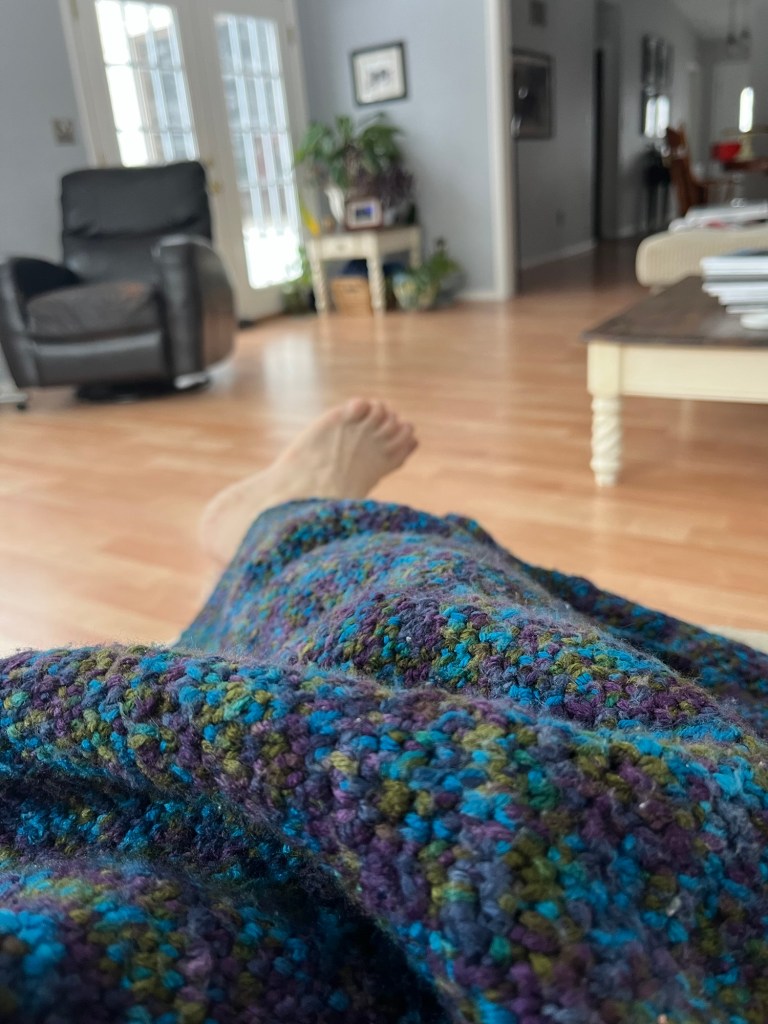
Praying for a thaw! I am terrible at doing nothing. If I can’t get back to normal soon, I may be forced to organize my sock drawer or alphabetize my spice Hope the rest of you are safe, warm, and coping with your “ice”olation better than I am.
-
Another Christmas….
I am up early this morning. Another Christmas when I can’t sleep. Waiting in the glow of Christmas tree lights, I give thanks for the family sleeping under my roof this morning.

Another Christmas Eve is in the books. Everyone gathered and all the cars in the driveway, I finally relax. My version is to putter endlessly in the kitchen. This year, I made turkey with all the trimmings and a fluffy toffee cake iced in freshly whipped cream.
Before dinner, we headed to Christmas Eve service. Another Christmas whereI am eager to celebrate the birth of Jesus. I love tradition and singing carols to celebrate and spread more joy. This year, the service was dark, slow, and detached. Or maybe that was just me…longing for more joy to the world and less existential anxiety that seems to creep into every modern service. I remember years of bright lights and singing children. This year the monotonous background music, the strange animation and the darkness of the room made the overall effect most melancholy. The speaker talked about hope in a way that did not feel hopeful. Just before I fell asleep in the church (embarrassingly), we were back in the car and headed home.

At home, I filled the house with light and joyful music. Another Christmas Eve with family and fun. My mother in law was here, in a jaunty snowflake cap. Cancer may have claimed her hair, but not her Christmas spirit. Unfortunately, my parents couldn’t make it this year. My Dad is resting after his cancer treatment. He has to be ready for the big show later today when we all descend on their house. Another Christmas where health concerns linger.
Another Christmas Day. Another Christmas to make memories. I contemplate years past as I wait for everyone to wake. Anxious for it to start, yet not wanting it to end. It is the same each year….and in the waiting I encounter the meaning of Christmas. The world waits in anticipation of joy and laughter and belonging. We celebrate God’s gift and we eagerly await reunion. We are happy, sad, excited, underwhelmed, overwhelmed, tired, and energized. We are alive.
Another Christmas …. Another blessing…

-
Subscribe
Subscribed
Already have a WordPress.com account? Log in now.
 Prisoner of Hopes