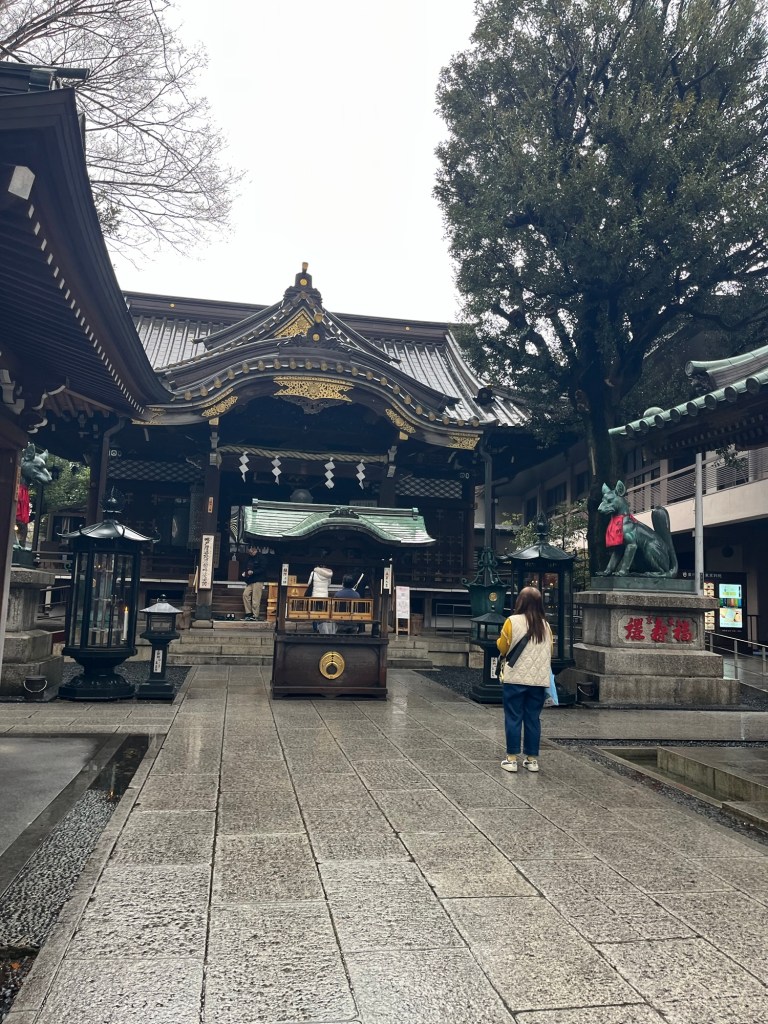
Walking down the street in Tokyo in the rain, I pass a colorful temple. It is local, clearly not a tourist hot spot, and very much in use. Since I love the quiet and reverence of sacred spaces, I step inside. This feels authentic, like a local church.
I have only visited one other Buddhist temple in my life and that was just yesterday. I want to be very respectful so I follow the steps I learned to cleanse my hands and lips before entering. I hope I do it correctly. There are only a few other people here so hopefully no one is offended if I don’t get all the steps in order.
This temple, the Toyokawa Inari Tokyo Betsuin is dedicated to an O- Inari who is said to have appeared to a son of Emperor Juntoku while riding a white fox with a rice plant on its shoulder. In Shinto tradition, Inari is said to have come down from Heaven riding a white fox and bringing rice. A vision or sighting would bring good fortune, so farmers began leaving gifts for the fox. This temple is a continuation of the Shinto tradition of prayers to the Kami of foxes. Inari worship was blended into the Buddhist tradition in the 800’s, when Inari was named protector of Shingon Buddhists.
Honestly, the traditions of the Inari and their white fox messengers (kitsune) are so varied and intertwined that I have trouble making sense of all the details. What I know is that this is where you come to pray for prosperity, happiness, wellbeing, and good fortune. I can certainly ask God for peace and happiness while I am here.
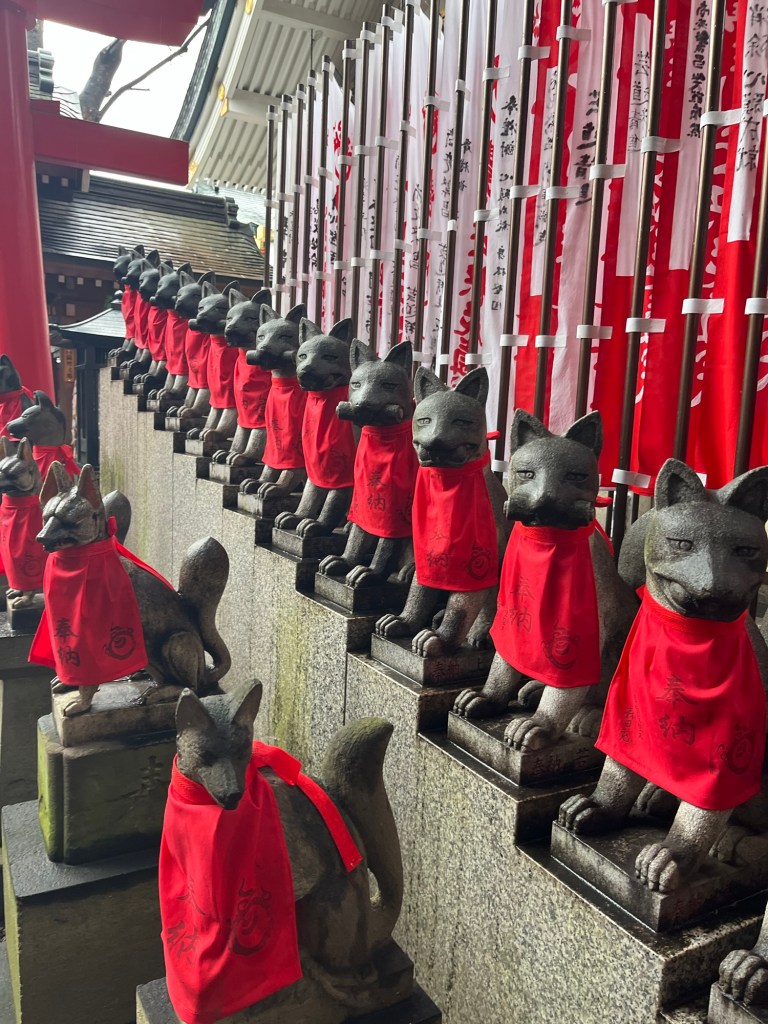
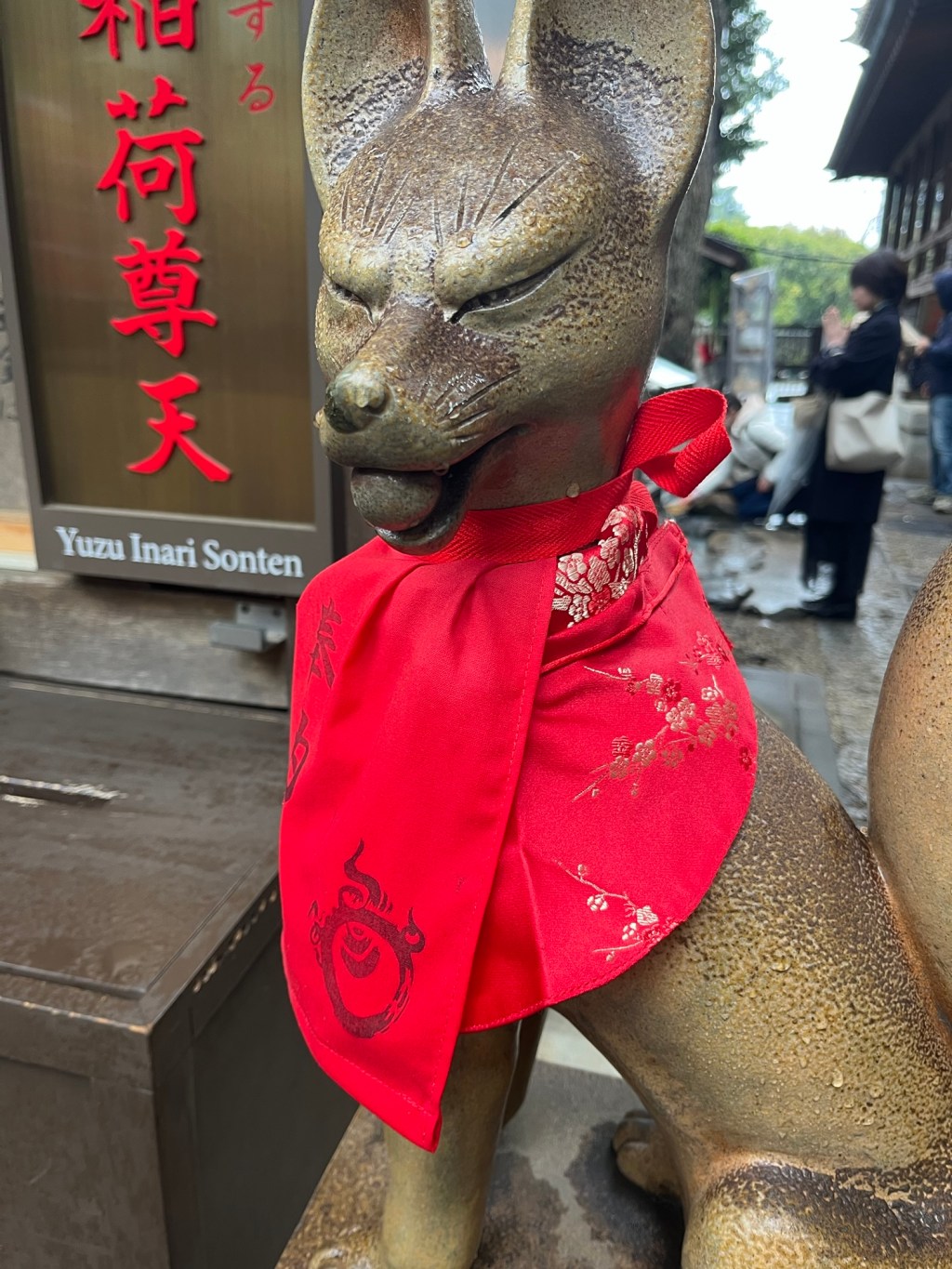
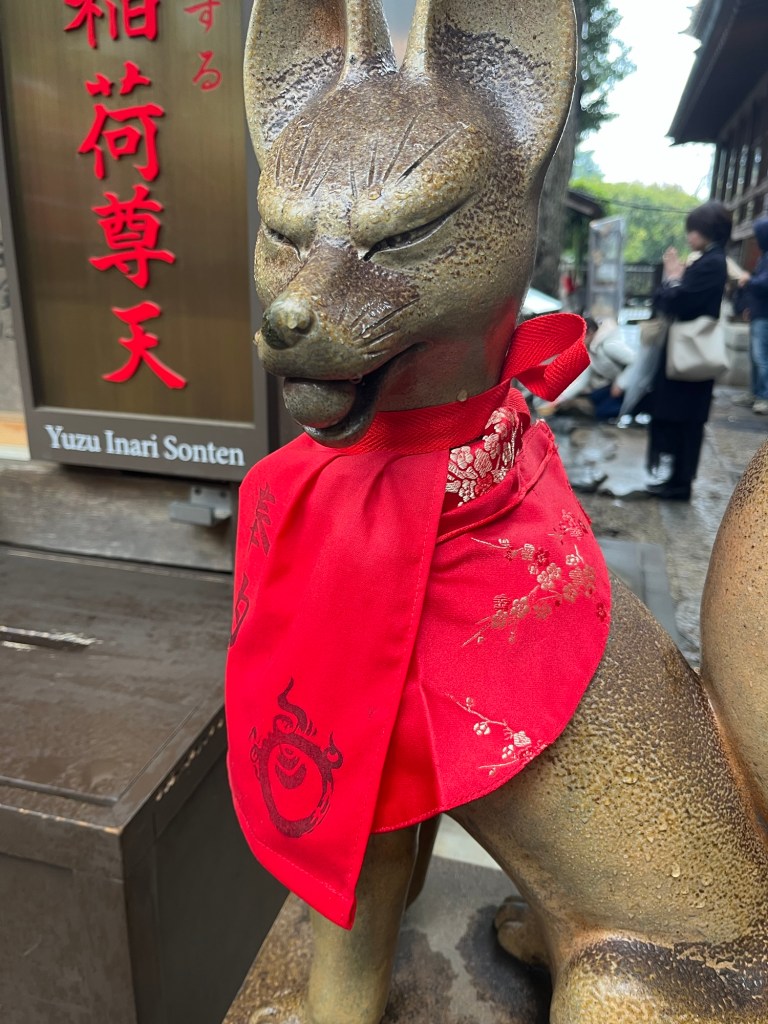
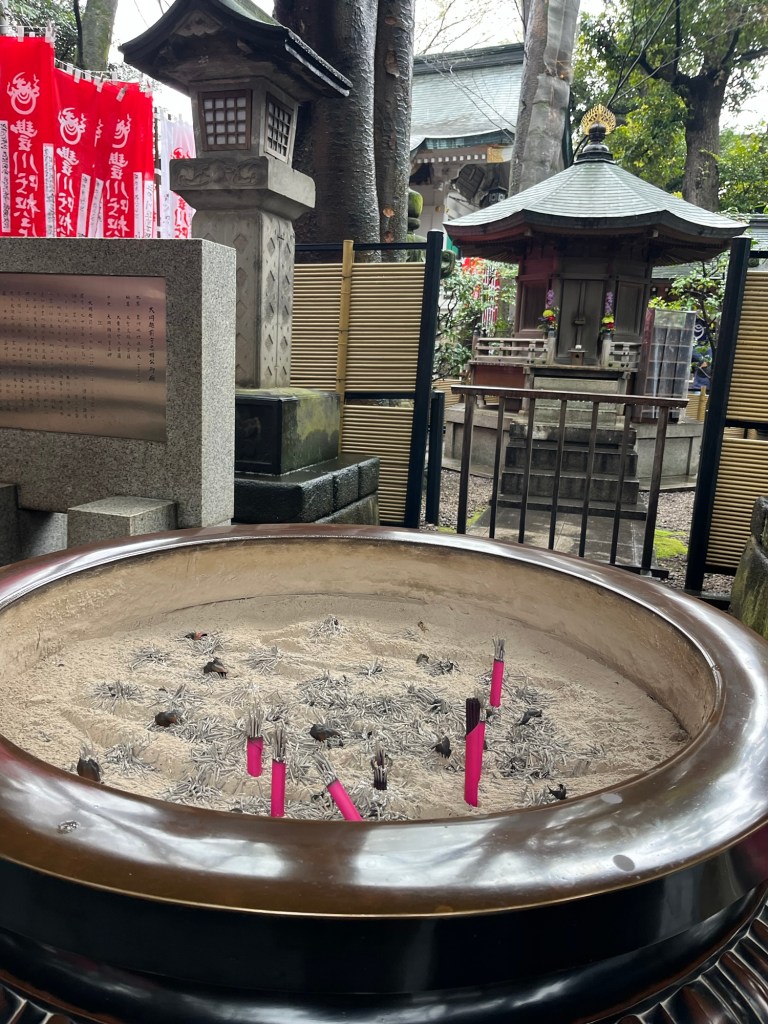
The kitsune (fox) are everywhere. They wear red bibs which have been placed by parishioners as a sign of respect. Each is a unique and colorful reminder of messages of peace and abundance. Red banners carry messages of well being. Candles and incense burn as symbols of requests ascending to heaven.
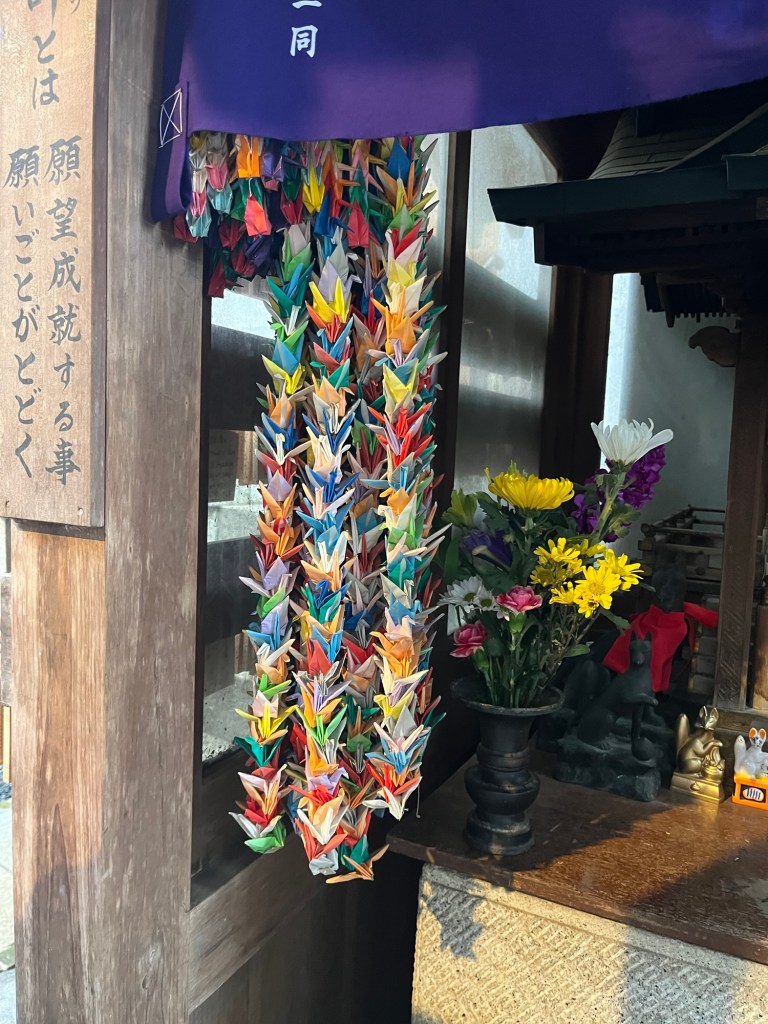
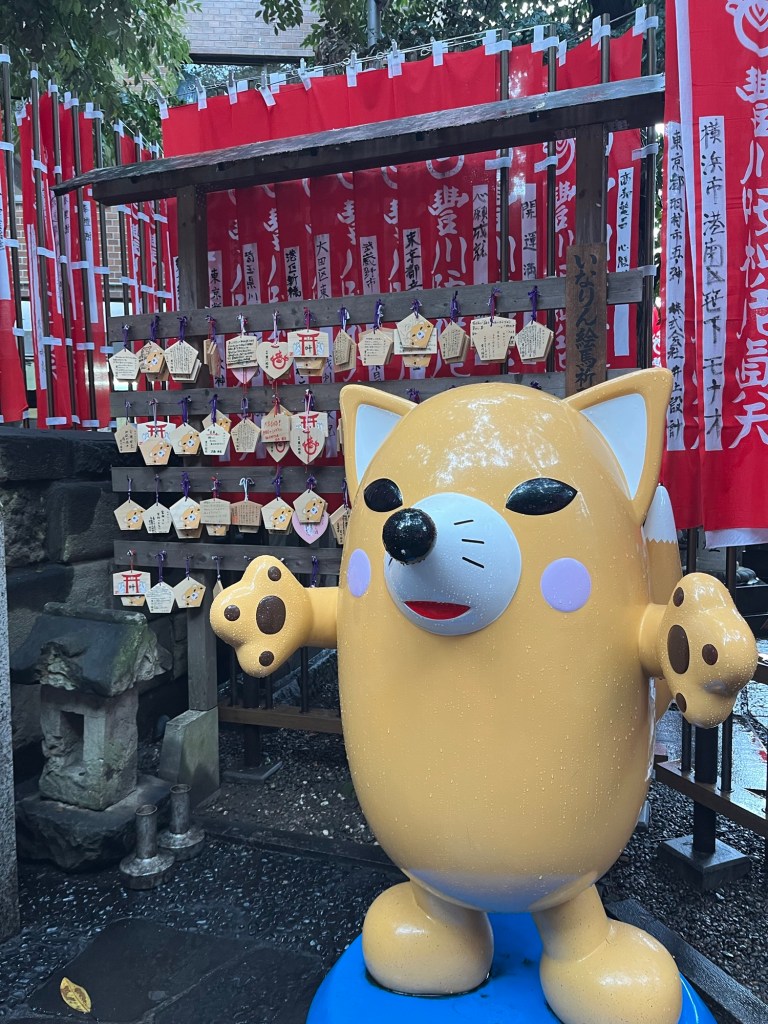
Like most Buddhist temples, you can purchase prayer cards to make a prayer chain or wooden ornaments. At this temple they are in the shape of a heart. Apparently this temple is a favorite place to seek help for romance and family matters.
And so I wander the walkways and try to stay far away from people engaged in prayer. It is not my intent to interrupt their offerings. And yet I can’t help but notice the ritual. It is a foreign concept to me that you would need to pay to pray, but each person leaves some money and bows before they leave. Perhaps it is left in gratitude and not as a means of enticing the Inari to help them. There is so much I don’t know.
I can, however, appreciate the beauty of the temple. Like the cathedrals I love to visit in other parts of the world, this place feels sacred and set apart. There is a reverence in the space as people come to petition for something beyond their own power. While I am Christian, I respect the seeking and the devotion. I recognize the sincerity. I say a prayer of blessing and thanksgiving. I am a stranger in a strange land, and I am grateful for the experience.