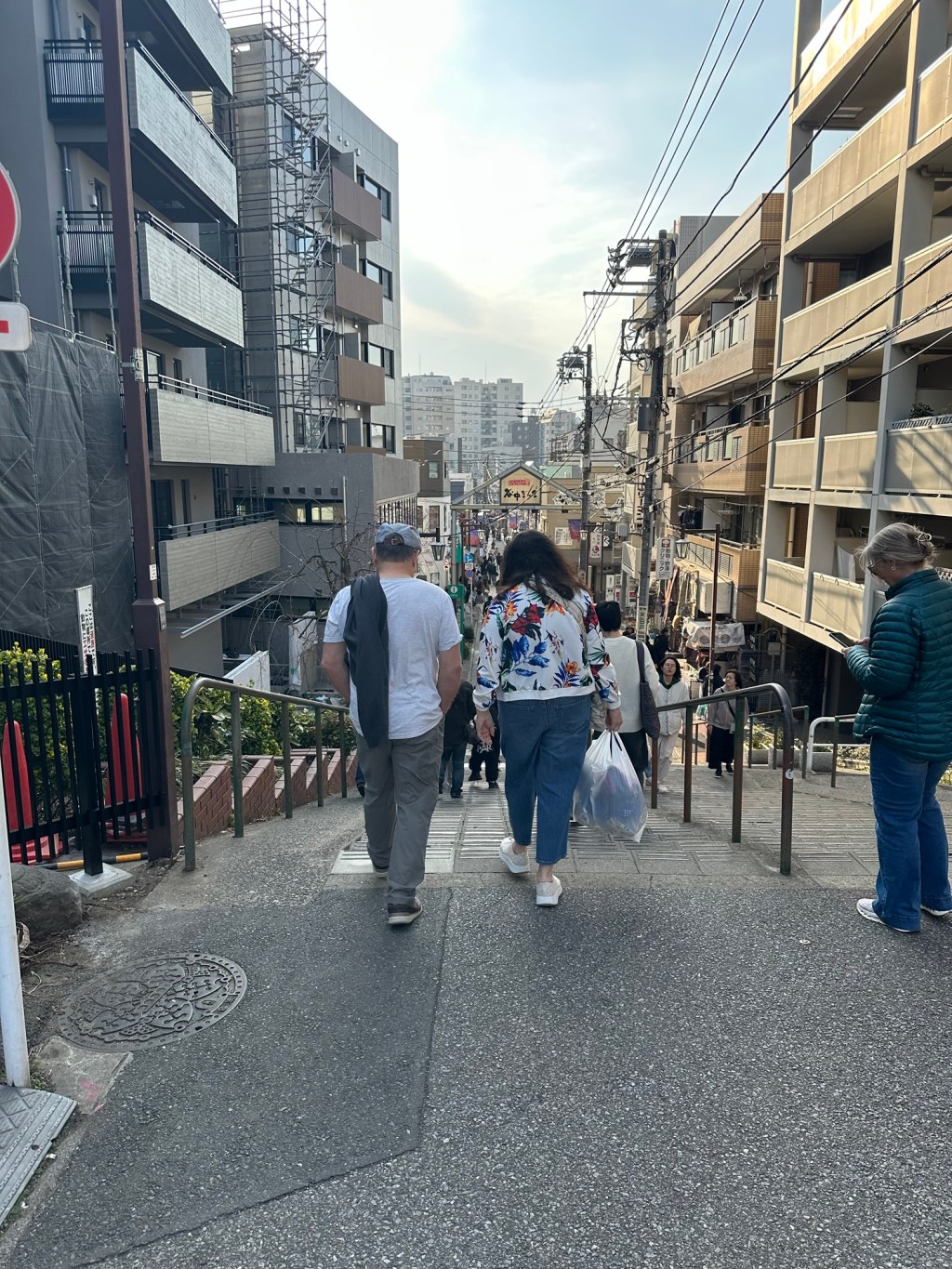
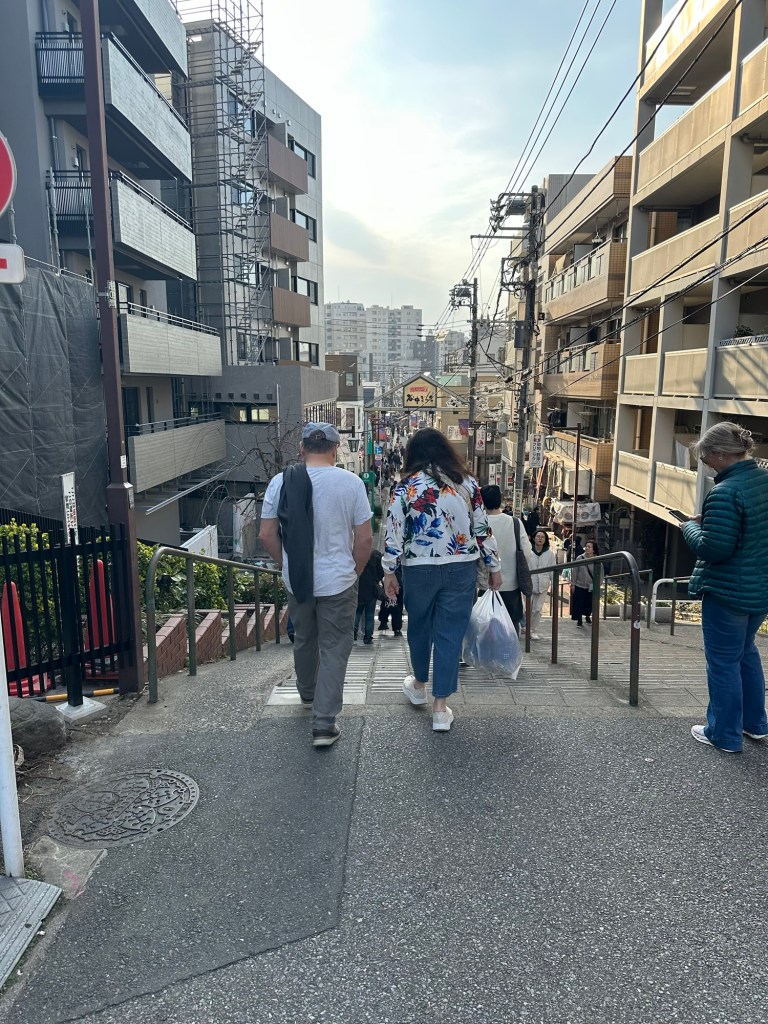
There is never any doubt in my mind that the best way to get to point b from point a is to walk. This rule only applies when we travel. At home, I am more than happy to waste gas to take me three quarters of a mile to buy a luke warm latte made of powdered chemicals in a dirty gas station vending machine. I have been know to get in the car and drive a just block to find a new parking spot rather than walk between shops, because it is too hot or too cold or too wet….. But I digress.
Home rules do not apply in a new place. Walking an unfamiliar city allows the character and color of the place to unfold in ways that are unexpected and joyful and sometimes jarring.
Today, we can take a 20 minute Uber ride from Tokyo’s Ueno Park to the small market street I have read about or we can walk 15 to 30 minutes through local neighborhoods and find out how people really experience residential Tokyo. I will choose the latter every single time (much to my husband’s chagrin).
As we walk, the streets are so narrow in spots that houses sit practically on the road. There are no sidewalks, simply a narrow painted line about 10 inches from the wall of the building. People have flower boxes hanging out windows, or mops leaning on the wall, or bicycles tucked tidily against the front porch. Walking down the middle of the street is really the only option, but thankfully, there are few cars this far from the main road. It is quiet here in the suburbs. Crowded, but very quiet.
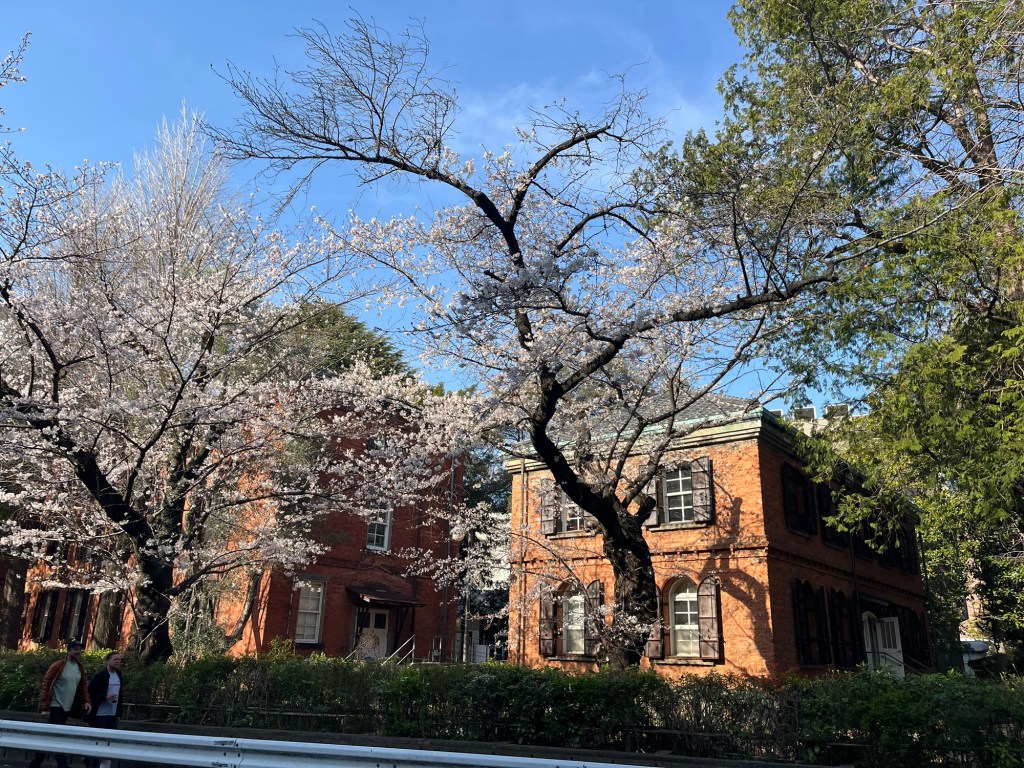
Closer to the park, there is a neighborhood nestled around a university. The houses are large red brick. The side walks are expansive. There are boxwood hedges and lawns. I might as well be in Cambridge or Boston. I have walked streets like these many, many times. Academia is a language I know well. I could be in University City or Berkeley. Apparently there is a prototype university staff neighborhood that has been replicated all over the world. I guess we can thank the English for that.
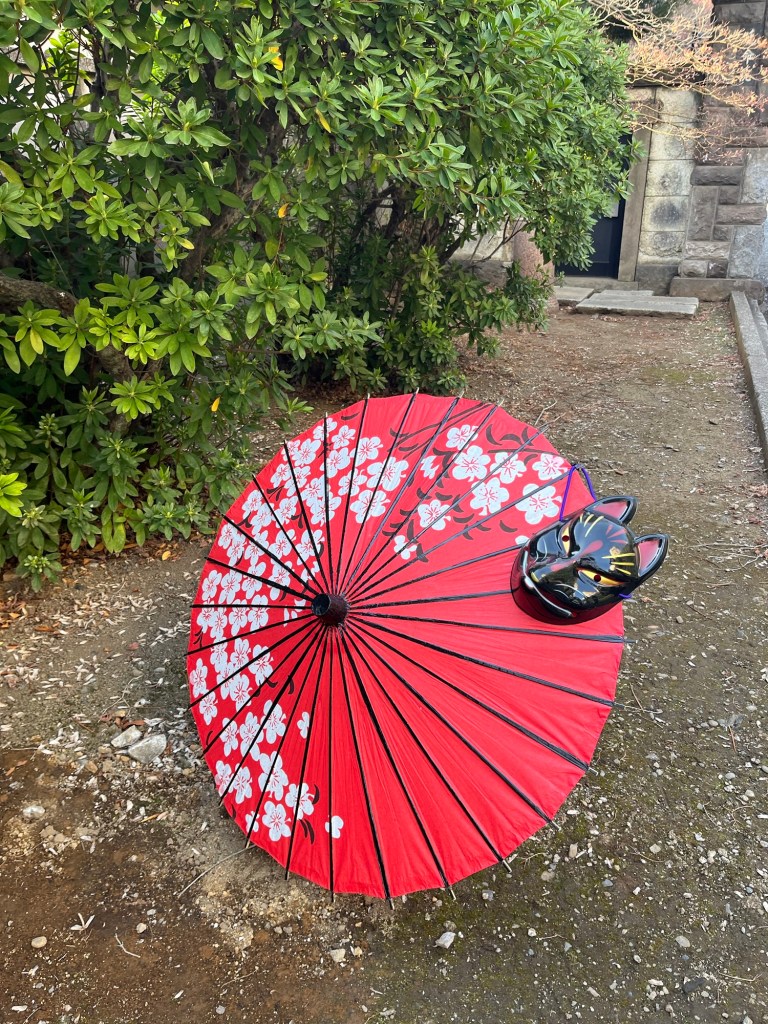
The commercial streets are a bit more crowded as we get further away from the park. But it is still pretty quiet here in the suburbs. It seems every few blocks there is a shrine or temple. They are tucked between copy shops and salons. Sometimes there is an adjacent cemetery. People come and go. Here in Japan, prayer and remembrance are practiced daily. At least, I haven’t yet found a place of worship devoid of the faithful.
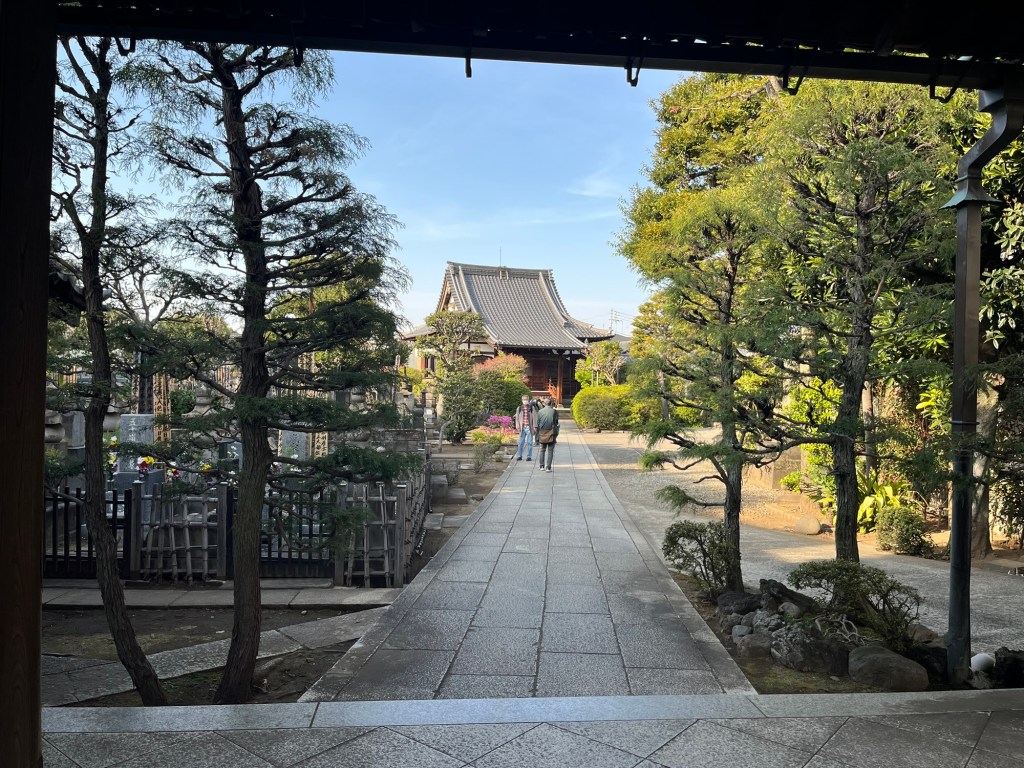
I am overwhelmed with appreciation of the clever use of landscape architecture. I just walked a mile down a street with dirty buildings and dangling electric lines, but when I step through the temple gate I am in another world. It is peaceful and protected. Prayer and remembrance is encouraged and supported by the natural oasis deliberately shaped in this small public shrine.
I find myself wondering how society changes when houses of worship create sanctuary instead of demanding attendance at “service”. This is not the first time I have pondered this question. In Europe, where I understand church attendance is in decline, I have never entered a church where there aren’t a number of people in the pews engaged in prayer. I wonder when the American church began to lock its doors in between formal gatherings? What does it mean? Wow these are deeper thoughts than I mean to have on a walk to buy inexpensive used kimonos. This is definitely not a typical “I’m headed to the flea market now” conversation. Do you see how good these spaces are at drawing you into reflection?
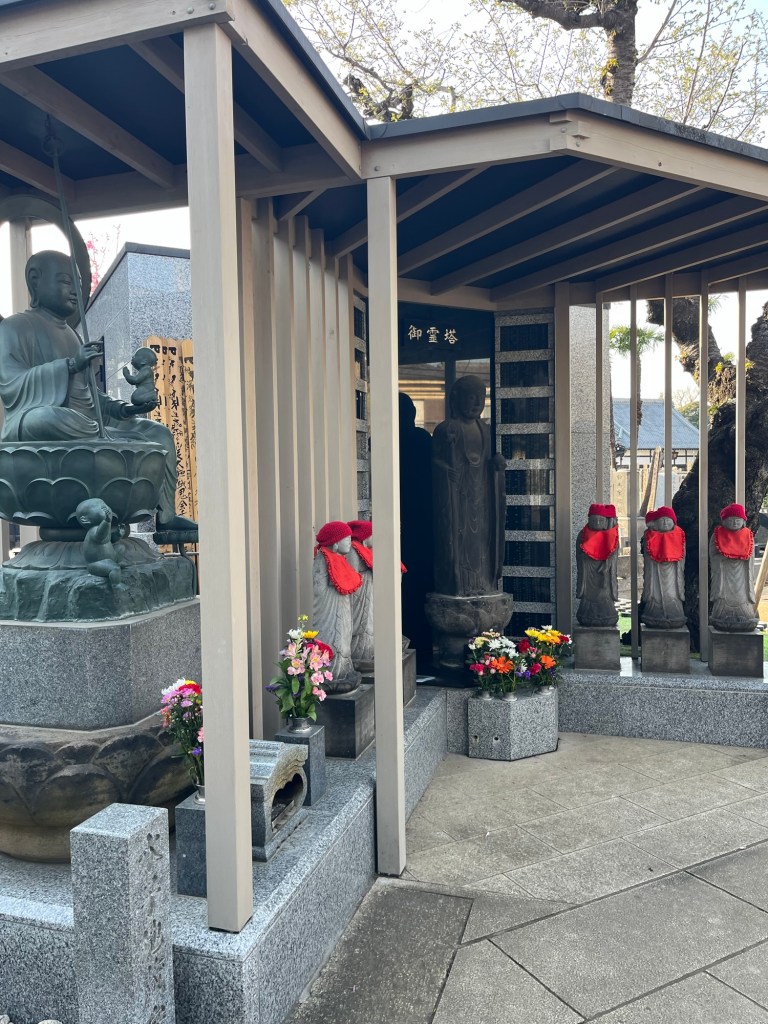
As we take a Google approved short cut through another shrine (my husband is beginning to ask “how much further is this little side trip you are taking us on?”). I notice the traditional red caps and jackets on some of the stone figures. These are placed out of reverence for a loved one or as an offering with the hope of good fortune. That is fitting. I am walking to the market that is known for selling used kimonos on a mission. I want to buy a few for the family and friends who are watching our house and our birds while we travel. I want to honor them with a gift and I hope I have good luck finding them.
I read that the kimonos are plentiful and inexpensive. Apparently, kimonos sold at the market have been made for the kimono rental business. In Japan everyone dresses up for photos during cherry blossom season and when visiting cultural sites and for special occasion. Sometimes people dress up when visiting museums or anime conventions. I don’t really understand and I don’t know what I will find. But I am intrigued.
I am already thinking about what I might buy and walking faster. My husband is thinking that he is getting hot, we have been walking a long time, and we are probably lost because a cemetery does look like a road to a bustling city market. He is getting slower. This is my clue that we need to find our destination before we hit critical mismatch. (This is stage of travel in which neither spouse is happy. We avoid this stage if possible.)
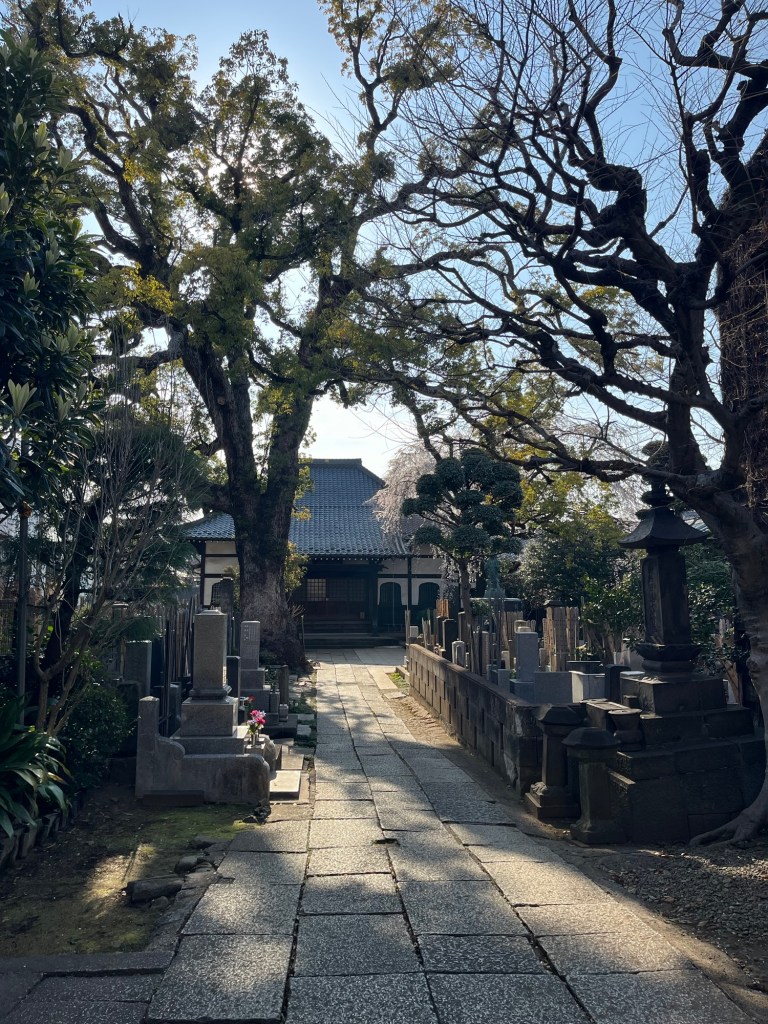
Soon, we do find the market. Google once again comes through (and this time we didn’t have to climb a gate or walk through a loading dock). There is an entire street of stalls. Most exciting, it seems to be an actual local market. There are no cheap souvenirs in sight.
There are, however, more kimonos than I could have imagined. They come in all shapes and sizes. I easily get carried away. One for my neighbor, my brother, my sister in law, me, my husband….and suddenly I have more kimonos than I can handle. I have no idea how I will carry or even pack them all to travel home. I don’t care. I love them. Each one matches the personality of the intended wearer. At least I think so.
The old lady that runs the booth tells me sternly that they are “Sore wa honmonode wa arimasen” (not the actual ones). She is insistent and intense. I smile and say I understand. (Only because a local woman translates as she sees me reaching for Google Translate.) It makes me wonder who has been upset to find out that the kimono they bought at such a low price wasn’t an authentic handmade Japanese treasure and had the gall to complain to her.
My smile and assurances satisfy the woman, who then agrees to take the offered yen. She asks if I want matching obi. I do, but couldn’t possibly carry 10 to 20 more yards of fabric so I say “no arogato”, which must make no sense as the old woman looks confused. The nice local lady translates and the old woman nods and hands me a bag. Apparently, the sale is complete. Everyone is glad.
An old man slaps my hands away when I try to fold the kimono to get them in the shopping bag. He kneels down on a sheet laid out on the street (apparently for this specific purpose) and shows me the proper way to fold kimono. This feels pretty actual to me. I appreciate the ancient ritual of it. There is honor and dignity in this sale. There is pride in the work. Even if I am standing in an alley, in a Tokyo suburb at a second hand market. Even though they are “Sore wa honmonode wa arimasen”, whatever that means.
I like to walk the cities I visit because in the streets and neighborhoods “ the actual” always shows up. The polished and the “for the visitors” places are fun sometimes, but travel is for me about seeking the authentic. Today we walked from Ueno park to a market. For two miles, I compared my known experience to a university campus, a one lane alley, a shopping street, a variety of temples, a cemetery, and a flea market. And as always, I found we have more in common than not. And I found the quiet dignity of the human spirit.
It is comforting to know that all over the world, there are people painting lines of protection even when the streets are just too narrow. There are people planting flowers in a sea of concrete. There are people creating beauty in a half acre lot between skyscrapers just to give people a place to pray and reflect. There are people honoring those that have gone before. There is an old woman that wants you to be sure you understand you are purchasing a used kimono so you don’t feel cheated. And there are old men who insist we take the time to do things the right way. I love that and I would miss it completely if I don’t take the time to walk.

