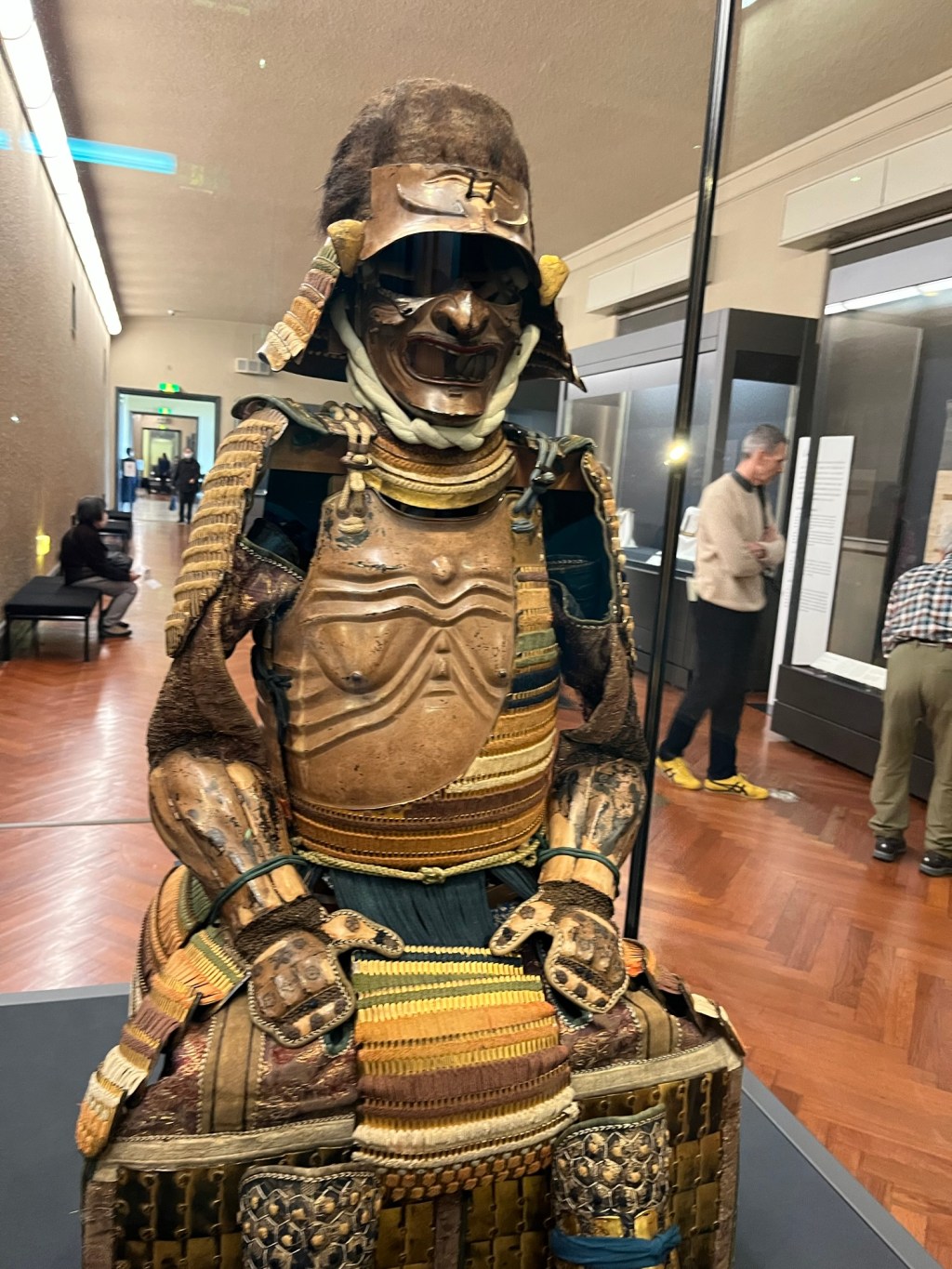
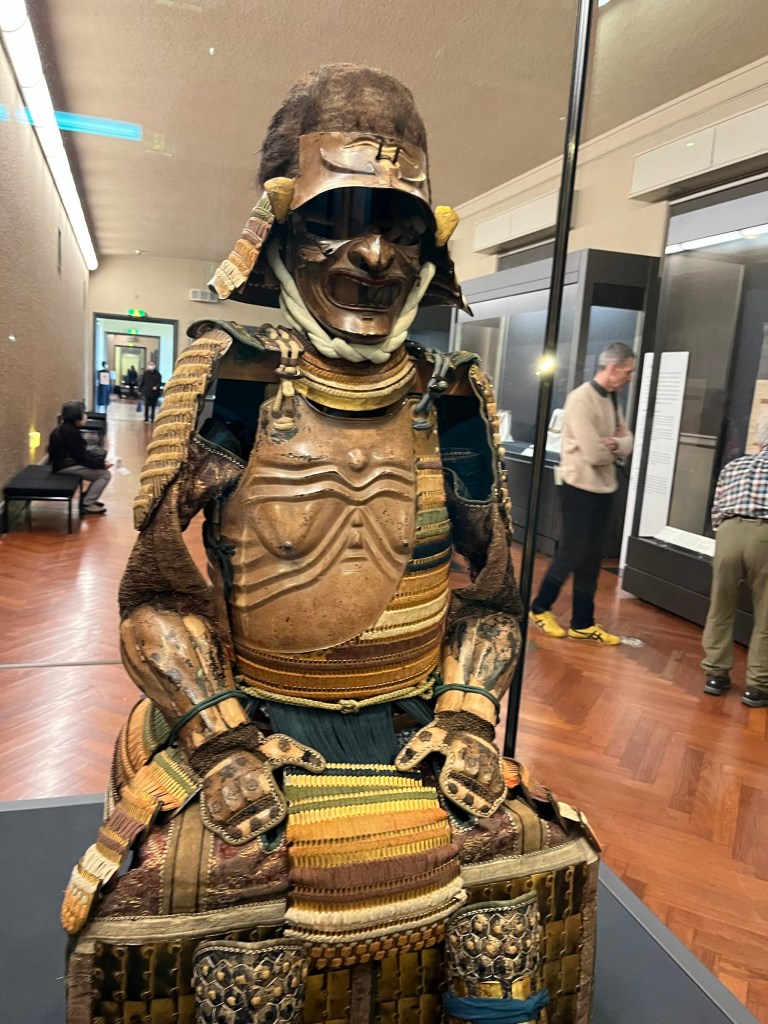
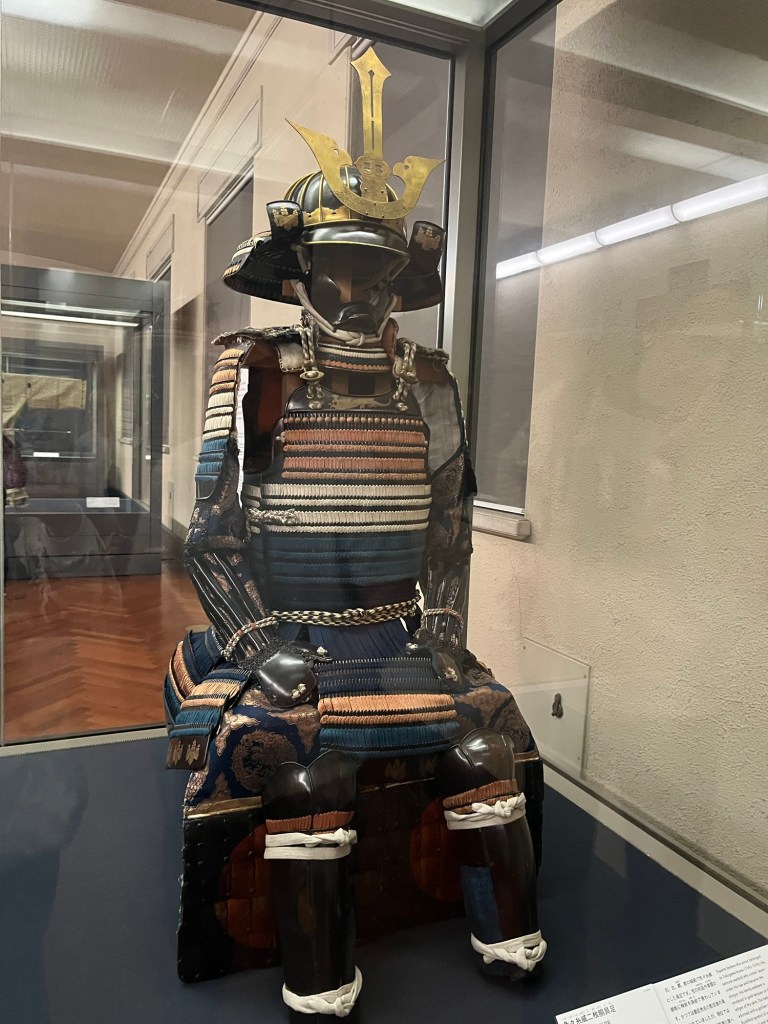
At the National Museum, the Edo-Tokyo Museum, and a number of smaller palace museums there are displays of Japanese armor. Japanese armor first appeared in the 4th century, but during the 1000’s the unique Japanese armour ō-yoroi and dō-maru appeared.
I know next to nothing about Japanese armor. But “o” and “do” make me giggle. In fact, most of the suits make me giggle. Some have molded sagging breasts. Many have mustaches and exaggerated facial features. I read that the fake mustaches and beards helped younger warriors look older, wiser, and more intimidating. A sign says the fierce mustaches helped create a terrifying, demonic appearance meant to shock opponents. I just find them comical.
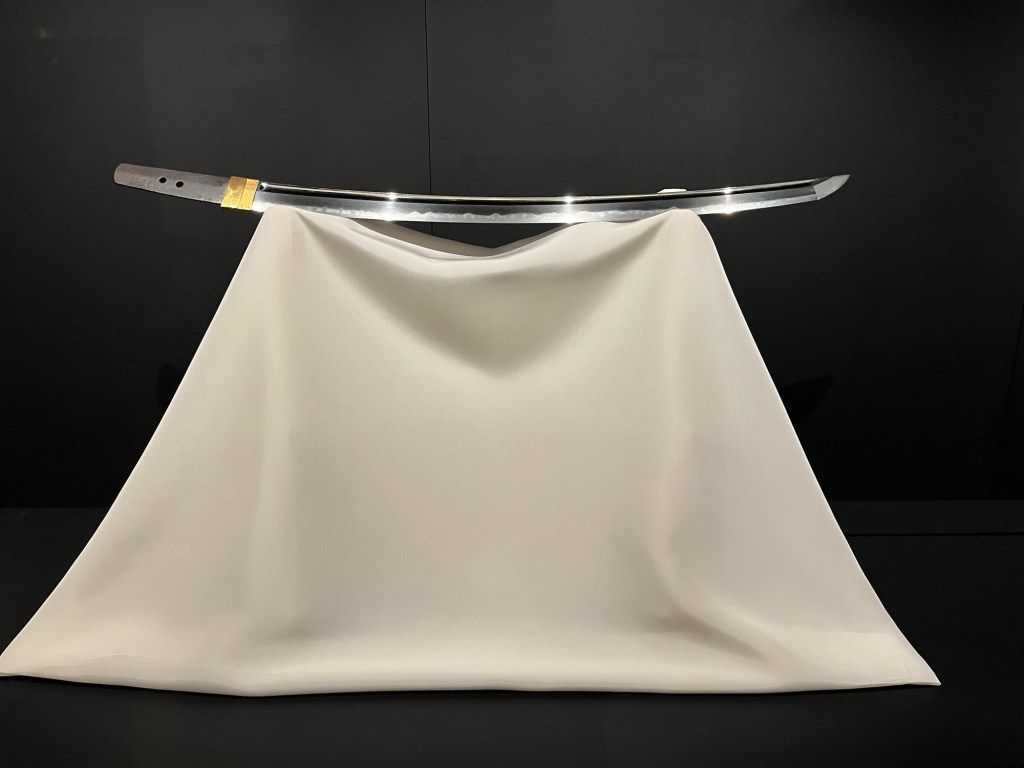
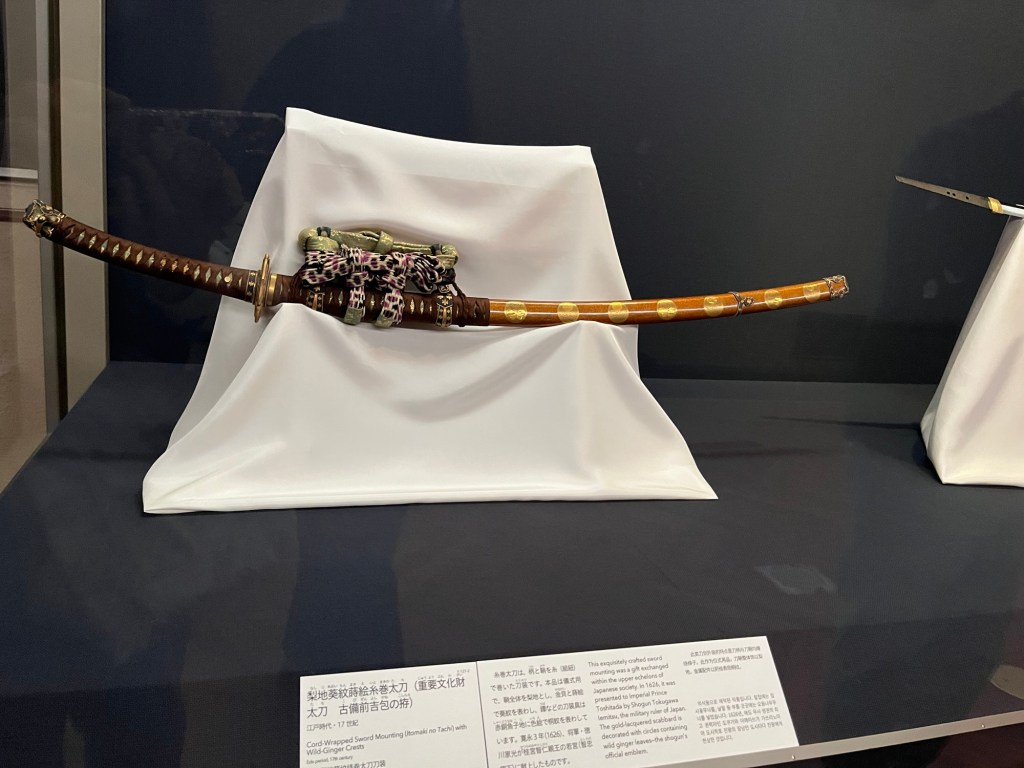
What I do find terrifying is the Samurai swords. The curved, single edged katana are traditional Japanese weapons prized for their master craftsmanship, historical legacy, and striking aesthetic beauty. The National Museum has several that are ancient and magnificent. I am mesmerized by the tachi (long sword) forged by the Heian-period master Sanjo Munechika, widely considered one of the “Five Swords Under Heaven”.
It is beautiful. The steel is shiny and you can see the ripples from the forging process. The edge is sharp and paper thin. It is a work of art. There is nothing here to make me giggle. I have a sense of reverence like I feel in front of a Da Vinci painting.
Armor and long swords; are they practical or ornamental? Did they exist to show power or to protect? None of that is obvious to me in this moment. I walk the gallery and consider the cultural connections. My historical knowledge skews toward European history despite my interest. It appears that Japanese armor prioritized lightweight mobility and flexibility whereas late-medieval Europeans preferred heavy plate armor.
The scholarly thoughts go right out of my head at the next display case. The armor has a white walrus mustache and a large praying mantis in full ninja pose sitting on top of the helmet. Suddenly, I am back to giggling.
 Prisoner of Hopes