Yokohama. When I hear the word, I see images in my head of ancient streets and trading ships. I see GI’s sending products home after WWII and wandering dark alleys. I don’t know what put those images there, probably a book I read or a movie I watched. All I really know is that it is 2nd largest city in Japan.
Even that knowledge seems suspect, because it only takes 20 minutes to arrive on the train and I can clearly see Tokyo Harbor across the bay. Why didn’t I know that it is so close to Tokyo (a suburb really)? I don’t feel like I am in a different city. I guess Yokohama’s citizens would not appreciate my musing. They are probably rivals. At least that is how it works in the small towns I come from. You never want to be compared or confused with your slightly larger neighbor.
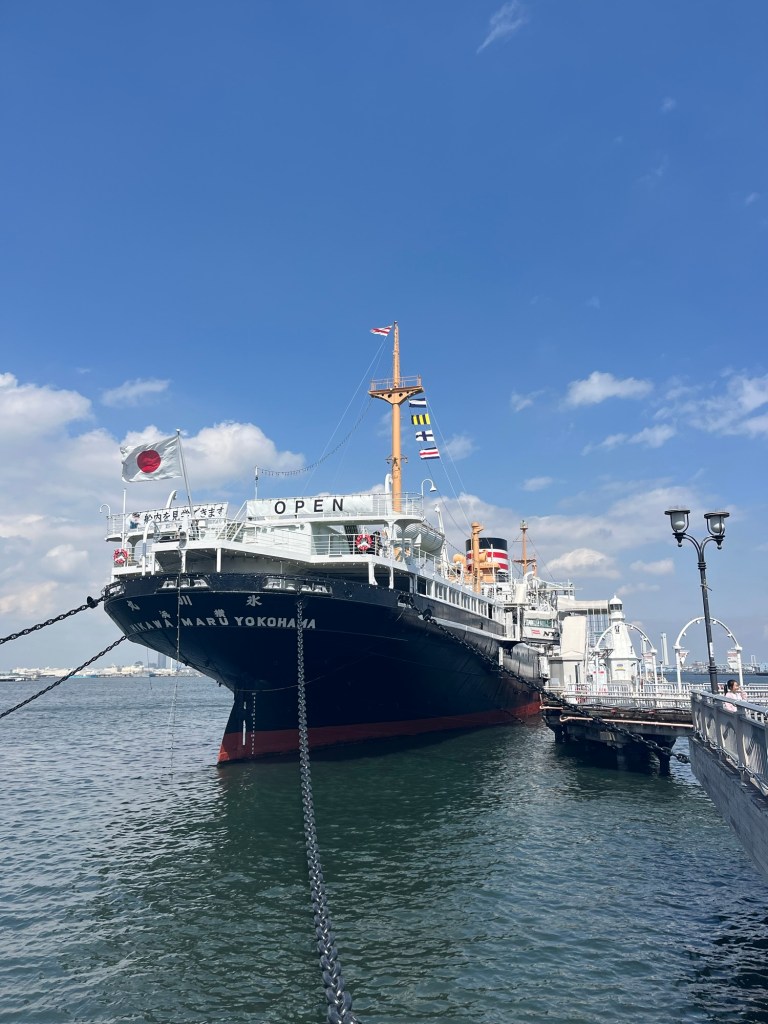
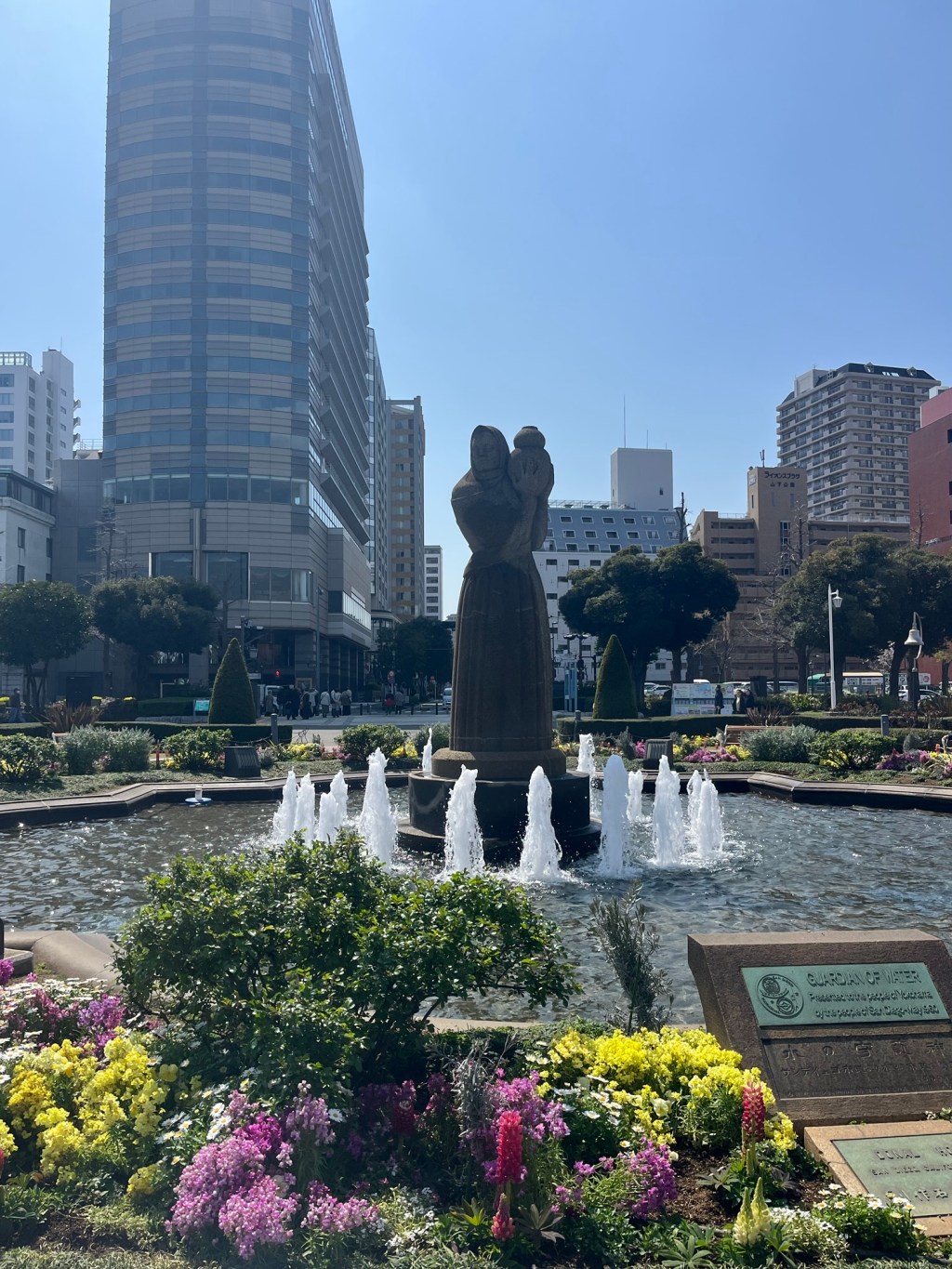
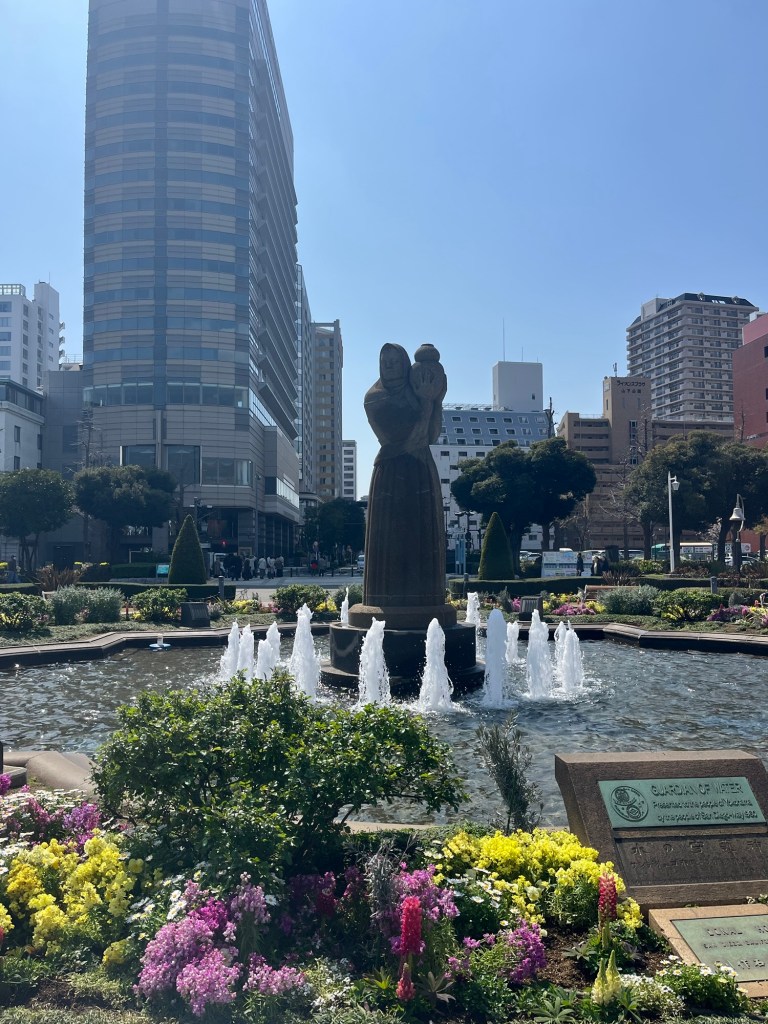
The train station is near the harbor. The public park and garden at the water’s are beautiful. We explore and take in the views. But we also notice a large ship docked nearby that is open for tours. Call me a museum magnet, but when I see historic preservation I have to explore.
The NYK Hikawa Maru is a historic luxury liner built in 1930 for the Seattle trade route. It is the only surviving pre-WWII passenger ship. During the war, it was converted to a hospital ship. Afterwards, it went back to hauling people from Japan to the U.S. and back again. Over the years it made 254 trans-Pacific crossings, before being retired in 1960.
I gladly pay my entrance fee and head up the gangway. It is like stepping back in time. We walk through steerage cabins and public rooms. We also have access to the first class cabins and even the Emperor’s suite. There is a noticeable difference between decks. Luxury for some. Cramped and airless spaces for many. I guess I would be in steerage. It looks worse than economy airline seats. I prefer the upper decks where we take photos on the grand staircase like we are movie stars.
In the functional areas of the ship, we take turns at the steering and navigation stations. We walk through kitchens and galleys. Deep in the belly of the beast we walk through the engine rooms that still reek of oil. I can’t imagine working with the sounds and smells coming off the giant machines. The lingering fumes (sixty years later) are enough to turn my stomach. And it would have been unbearably hot down here.
Pondering the mysteries and complications of Pacific trade and travel before, during, and after war is exhausting. We walk every deck and climb every stair. But now we are hungry. It is time to leave the harbor and head into the maze that is Yokohama’s Chinatown.
I don’t really have words for the crowded streets and the number of restaurants. It is the largest Chinatown in Japan with over 600 businesses crowded into a compact area. It is an explosion of colors and smells. After we walk through the large and colorful gates, we literally walk into the first restaurant we see. It is too overwhelming to consider anything else.
The restaurant is large and comfortable inside. A family welcomes us and hands us a picture menu. Order by photo is always adventurous, but we are generally happy with our choices. I am especially impressed with the garnishes of fresh flowers.
Despite the good will, I think the waitress is getting a little impatient as we ask for refills in our thimble size cups. But, we are Americans after all and we are thirsty. I would happily serve myself but that is not allowed. There are customs to observe.
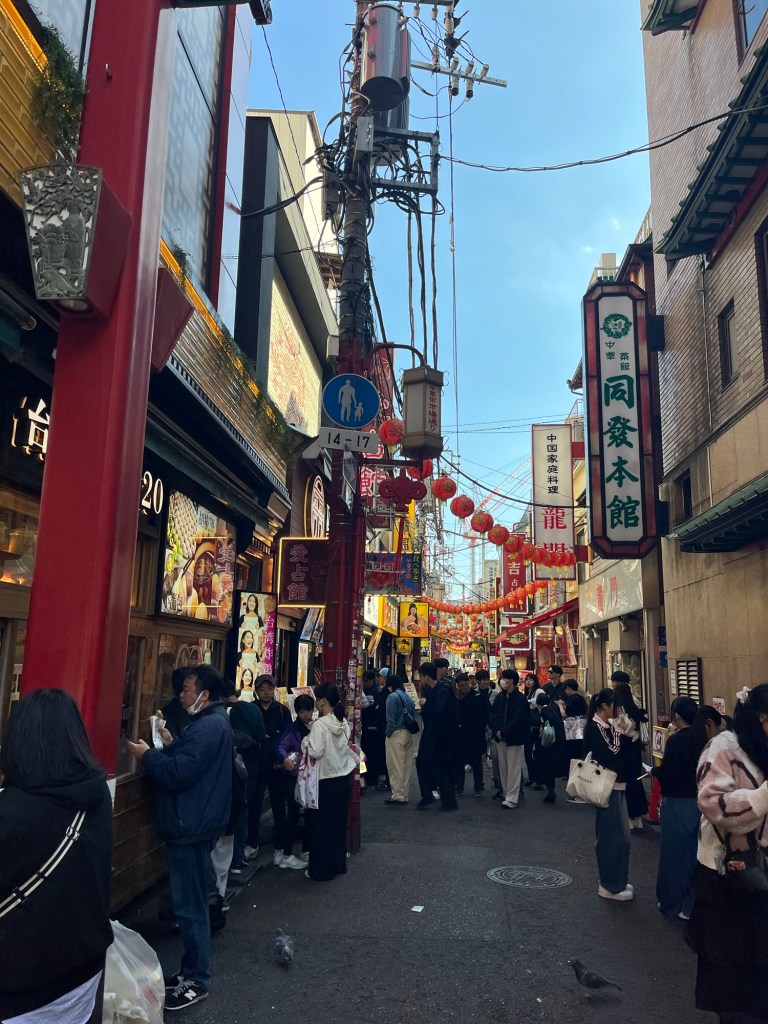
The day’s real adventure is finding our way out of Chinatown. People block the street waiting in line to buy sticky buns. I duck in a small shop and buy a hair ornament simply because I need out of the chaos for a minute. Refreshed, we press on. Eventually we walk into a quieter part of town with churches and shipping companies (perhaps an English or American quarter). There is no one on the sidewalk here. They must all be having lunch in Chinatown.
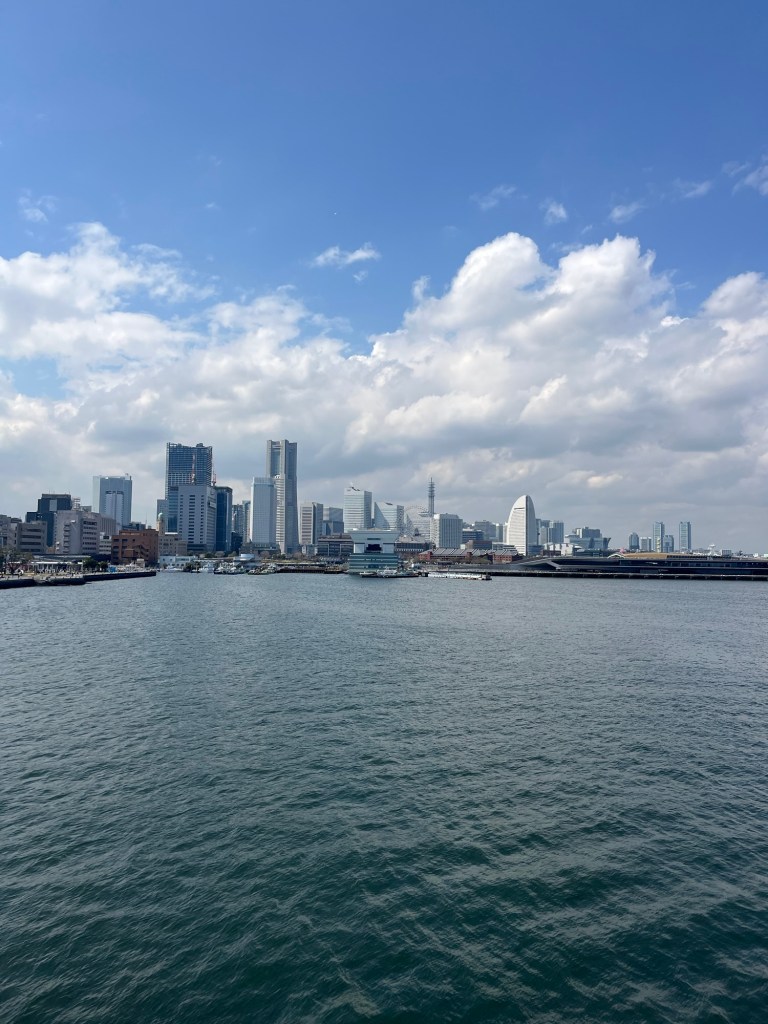
Eventually we make our way back to the bay. It is beautiful. Tokyo glistens in the afternoon light. I can see the Yokohama Red Brick Warehouse in the distance. I want to visit the old shipping buildings that are now filled with shops and restaurants.
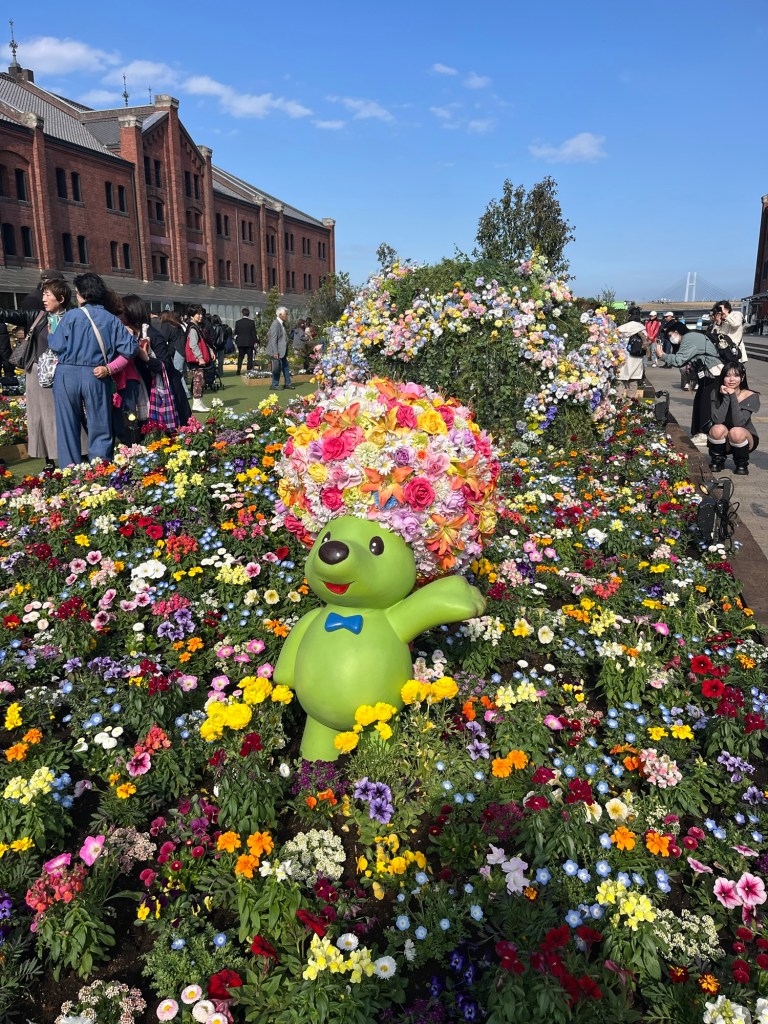
As we get closer, I am surprised to see dozens of container gardens and raised beds between the buildings. People are seated between and wandering among the blooms. It is really lovely. The town mascot is even represented with an Afro of flowers. I am captivated as I think how hard the Japanese people work to create green spaces within their sprawling cities. We could learn a few things.
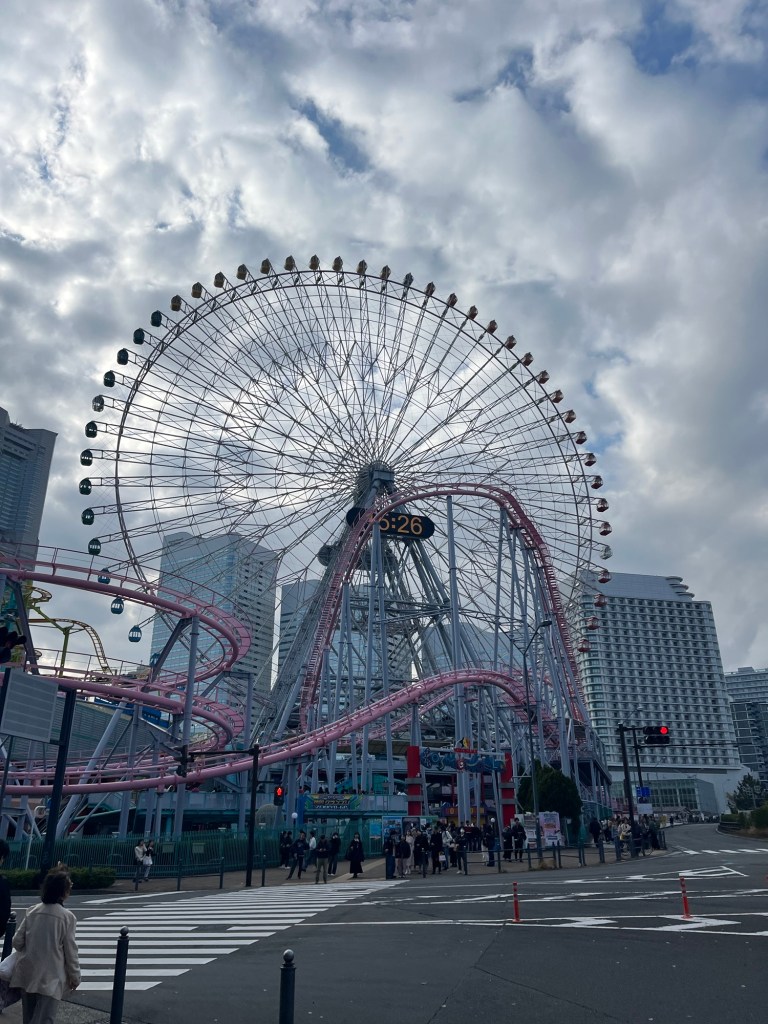
In the end, the shopping spaces are too crowded for me to enjoy. We look around and leave. Just down the street is an amusement park. I want to ride the Ferris Wheel, at least I think I do until I see the line. Nope. Yokohama feels a lot more crowded than Tokyo. Maybe it is just the day. Or maybe this is where all the cool kids hang out?
As we leave the amusement park, I notice that we can take a sky tram back across the park to a train station. We decide to give it a try. Within 10 minutes, we have an aerial view of Yokohama, a leisurely ride across the park, and we avoid a long walk.
Life is good in Yokohama. After a full day, I now have a more accurate mental image of local life. It is colorful, and modern. It is crowded and open. There is history and business and fun. Yokohama is Tokyo’s grown up little sister, and she is beautiful.