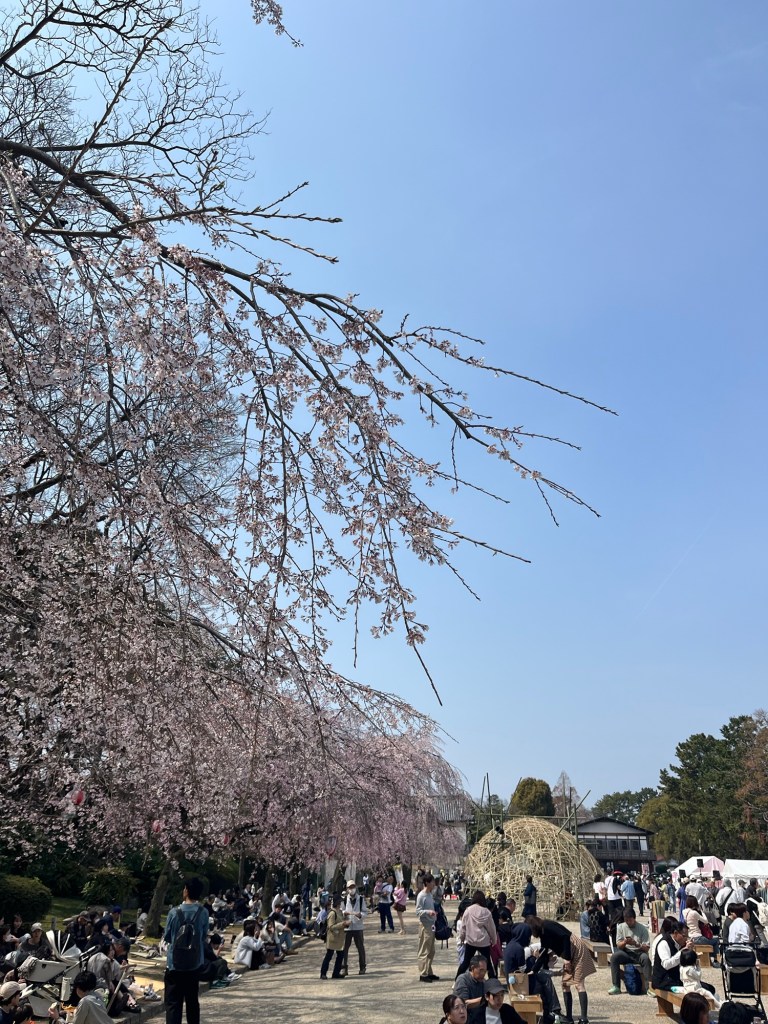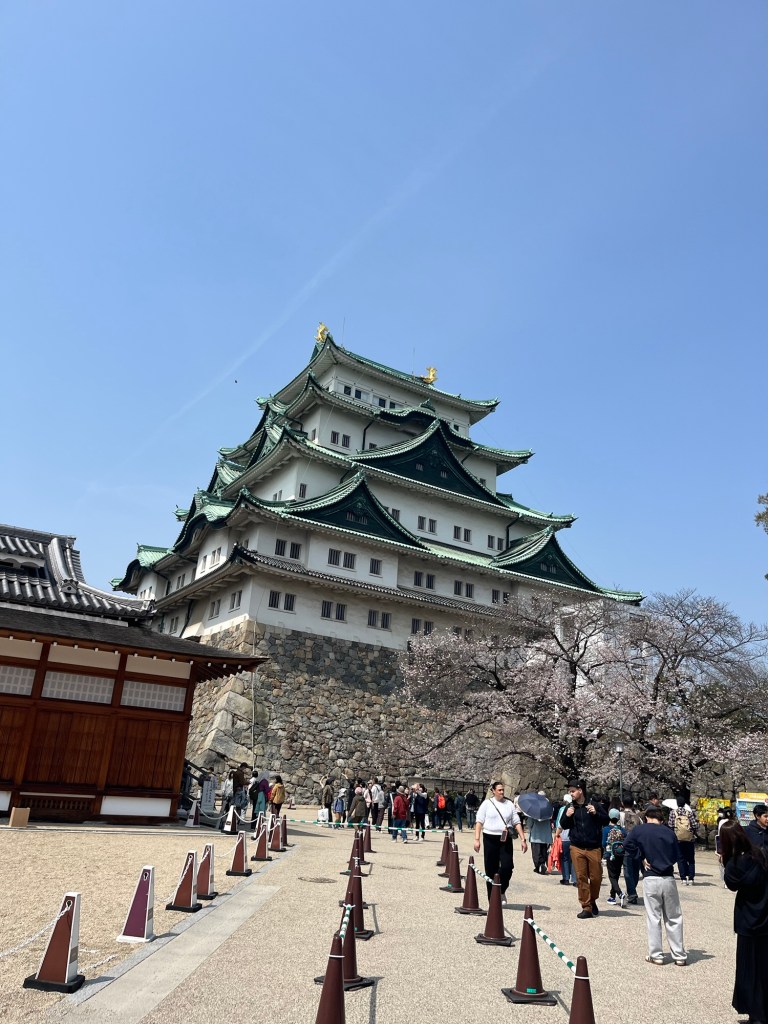
It is Cherry Blossom Season in Japan. So we aren’t surprised to see large crowds at the entrance to Nagoya Castle. What is surprising, however, is the many different food stalls that line the side of the castle. Today is a full blown Japanese Sakura Festival and it seems like all of Nagoya is here for it.
We enter the castle grounds and immediately are hit with the smells of fried dough and ice cream. Food stalls are everywhere. There are balloons and giant cotton candy animals. I laugh when I see a child carrying a cotton candy rabbit larger than he is. His face is covered in red sugar as he flashes a wide smile.
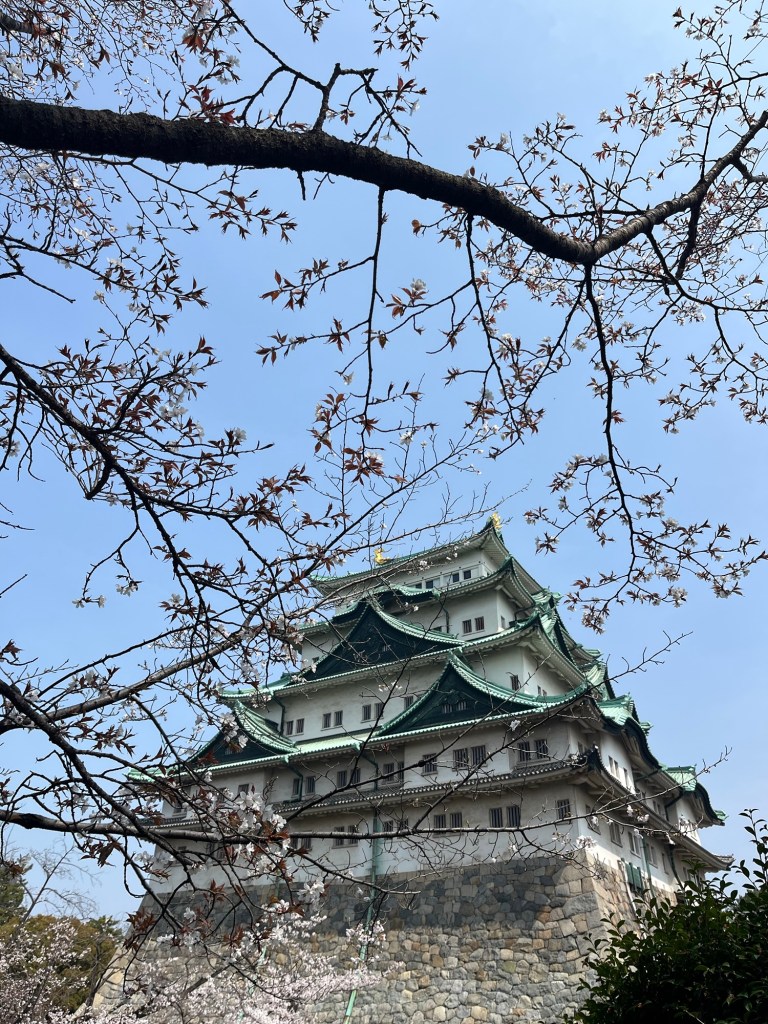
Nagoya castle, originally constructed in 1612 under the direction of Shogun Tokugawa Ieyasu, is beyond impressive. Built as a powerful stronghold and the official residence for the Owari branch of the Tokugawa Shogunate, the castle was heavily damaged in World War II. Recognized as a National Historic Site, it underwent meticulous restoration and has earned distinction as one of Japan’s premier castle structures.
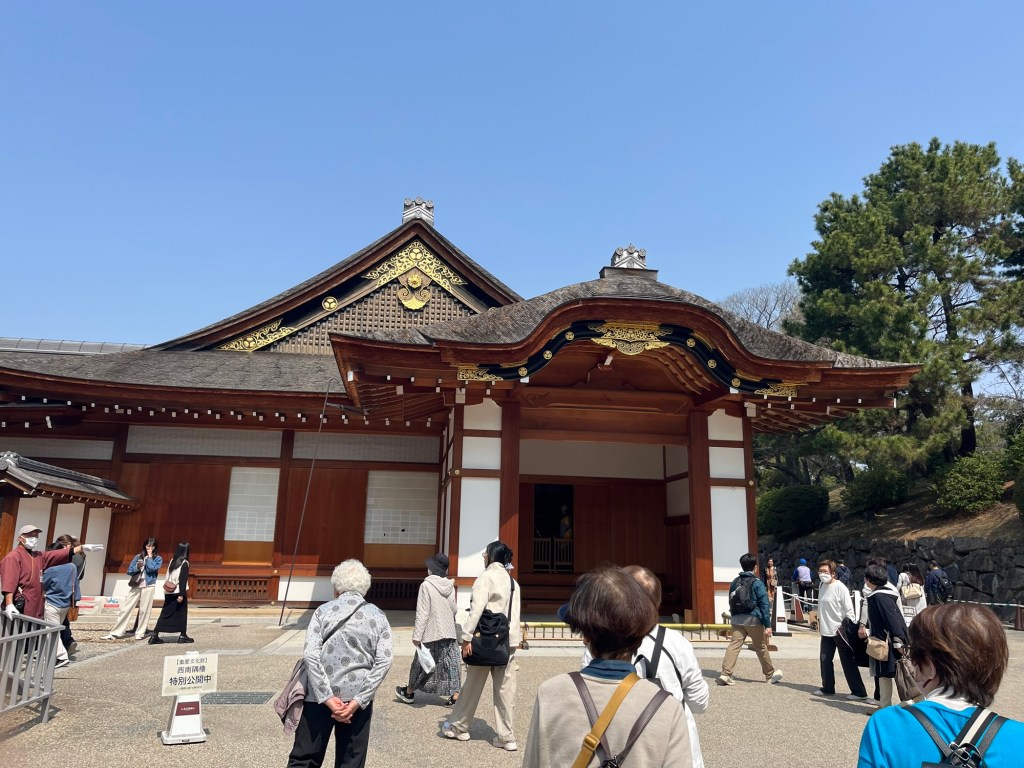
We line up to enter the Hommaru Palace. We appear to be the only non-Japanese visitors. I feel privileged to be here experiencing a local celebration in a place that visibly carries meaning for people. The line is long and people are visibly excited about entering the palace.
Golden Shachihoko: The roof is adorned with ornate, gold-plated tiger-fish roof devices (kinshachi) symbolizing ultimate power and protection. I think this is called the golden shachihoko, but the English translation of our entry brochure is sketchy. Sometimes Google Translate just makes me laugh. While we wait to enter the palace, we have excellent views of the palace, the main keep, and the shachihoko (if that is in fact what they are called).
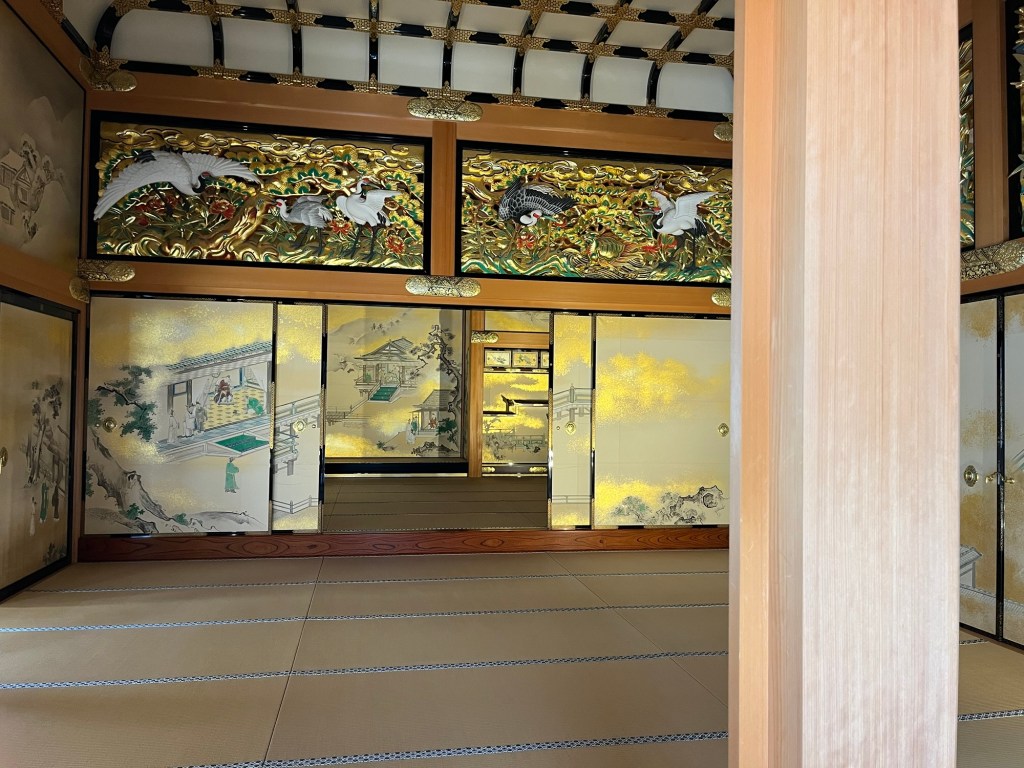
We finally are grouped for timed entry and are asked to take off our shoes. I haven’t gone barefoot as much as I have in the last few days since I was a little kid roaming the Missouri Ozarks. Here they provide me with slippers so my socks don’t get dirty as I walk through the palace.
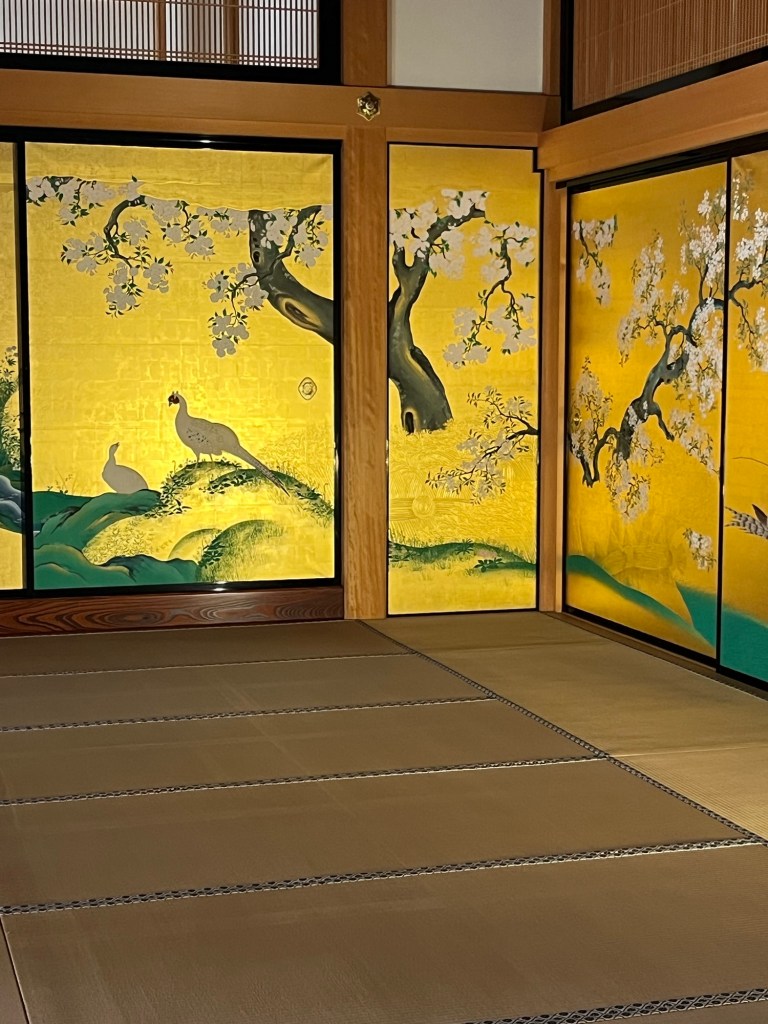
I am barely in the door when my jaw drops. It is insanely beautiful inside the palace. Delicate screen walls are awash in gold paint. There are scenes of waterfowl and peacocks. Delicate cherry blossom paintings tell me the over 2,000 cherry trees on the grounds have been part of castle life for centuries. My husband’s favorite is the blue room complete with ocean waves and mountains. I honestly don’t know where to look. My head is on a swivel.
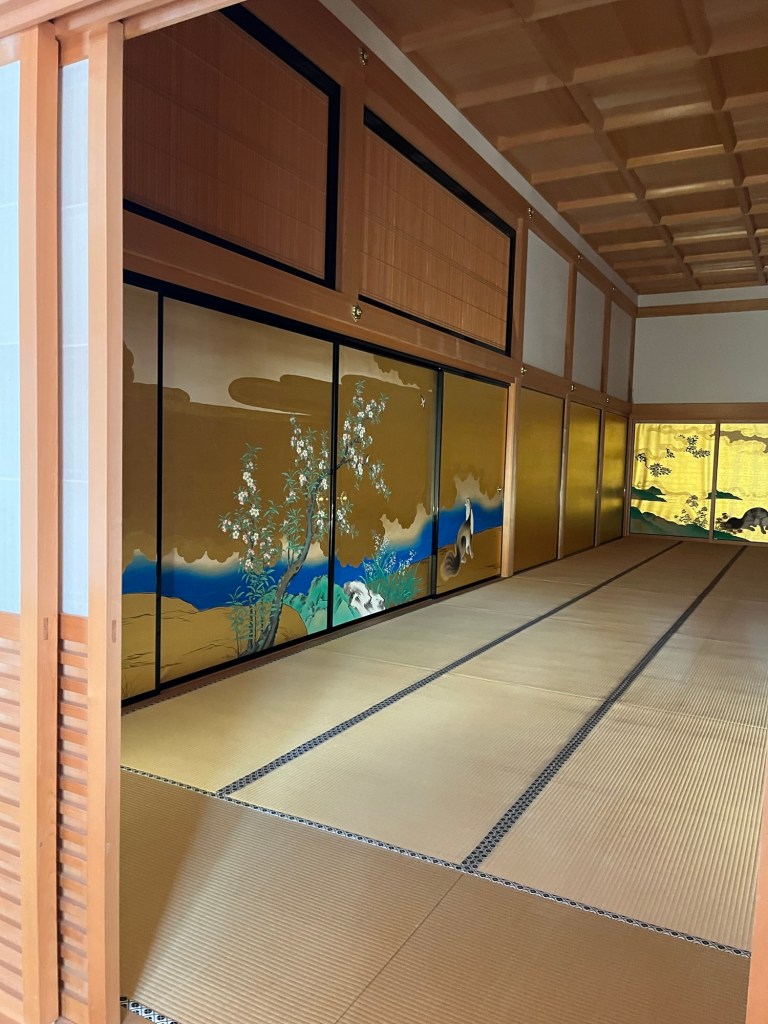
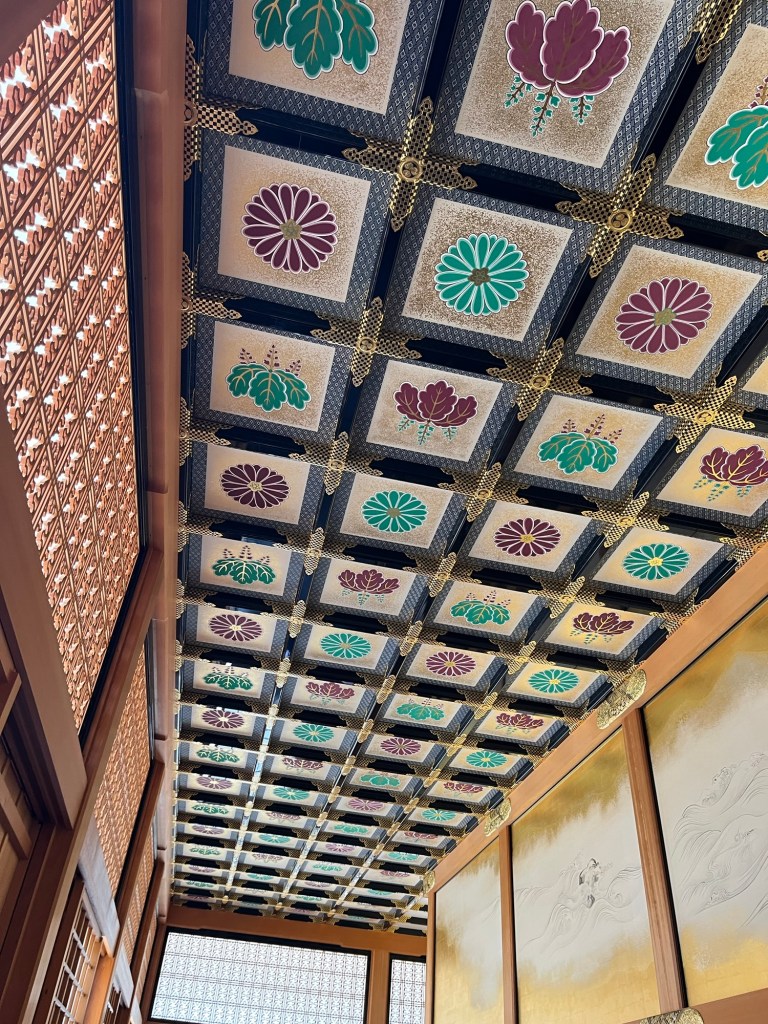
The ceiling is gilded and painted with starburst and leaf motif. The flooring is exquisite tatami mats. There are raised dias “thrones”. The entire structure speaks of wealth and power. We walk through silently and reverently with our assigned group, pointing and snapping photos. I thought I took a lot of pictures, but the Japanese take the cake. It is paparazzi on steroids.
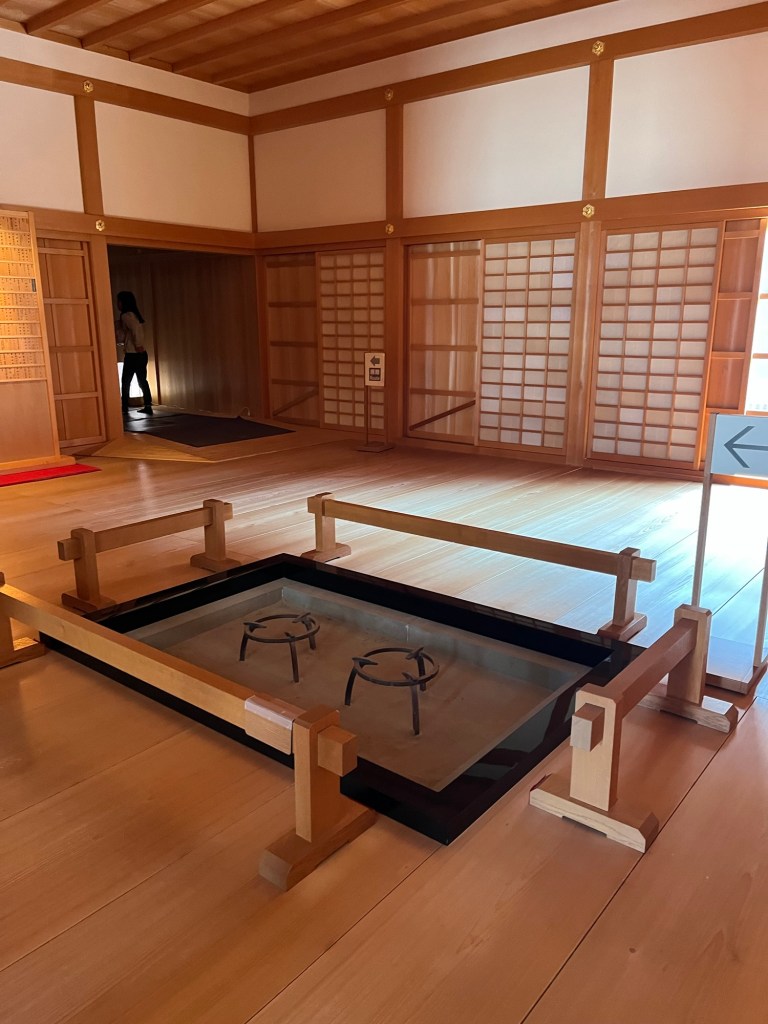
At the end of the palace tour we exit through the “kitchen”. It is a sand pit where fires can be made complete with cast irons stands that hold pots to cook rice. Given the entire palace is wood and paper, this seems risky. But who am I to question?
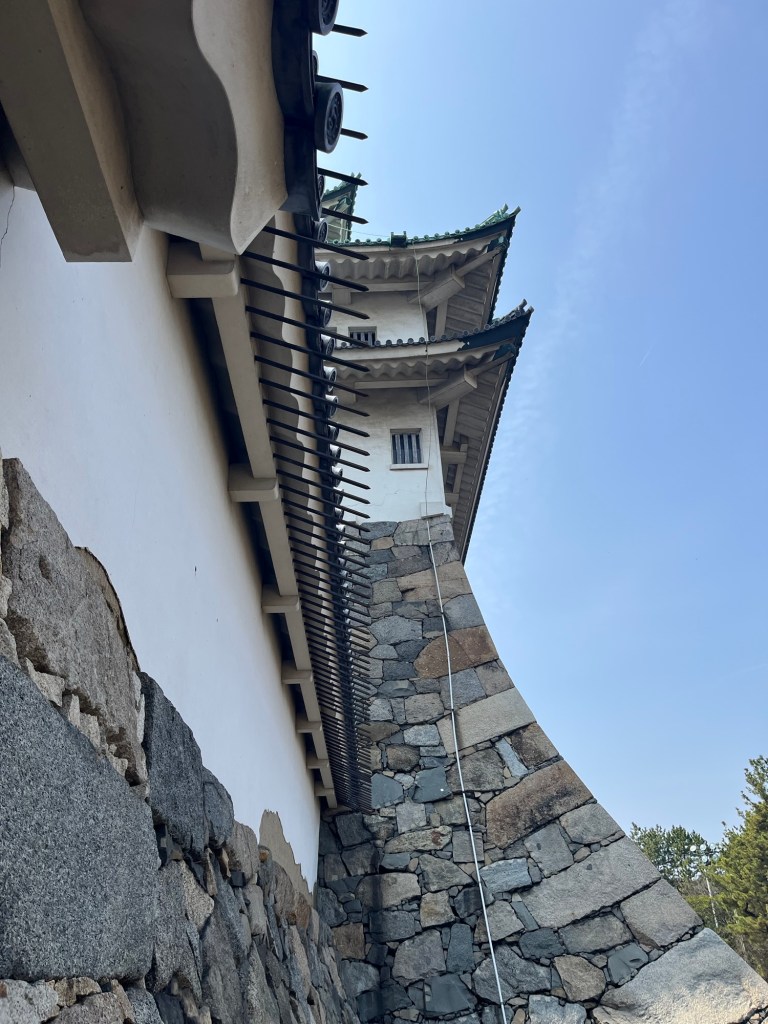
Back outside, we wander through the inner courtyard and pass the famous Tsurugi-bei Sword Wall (defensive architecture designed to deter intruders). The shoguns seem to have thought of everything. I wonder how a culture can honor war and beauty simultaneously? It defies explanation.
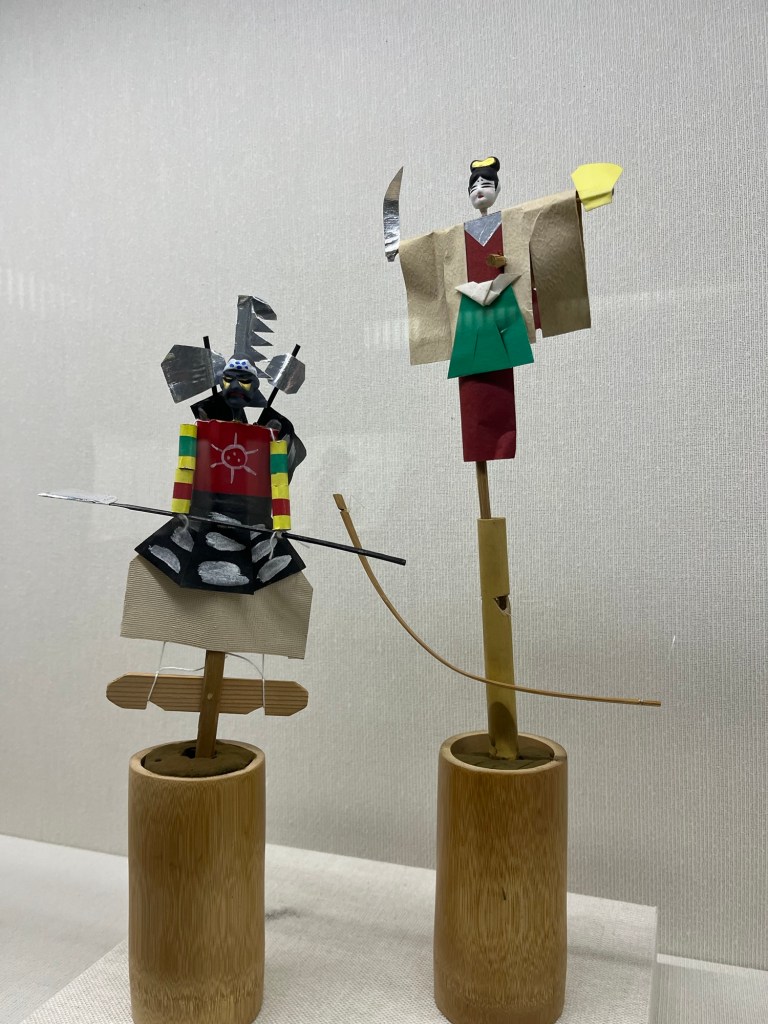
In a daze, we wander through a small outbuilding serving as a toy museum. Kids are kids in any age or culture. There is also a large museum with castle artifacts and displays about the restoration process. It looks like these buildings were either barracks or stables (or maybe both?).
Nagoya castle is beautiful;Breathtaking really. I take one last long look through the dangling cherry blossoms adorned with paper lanterns. But it is time we leave the castle to the thousands waiting to get in. I want to check out all those food booths just outside the inner walls. My tummy is rumbling and friend dough and chicken kabobs are calling.