We walk from Nagoya Castle to the Toyota Museum. I happily look at apartments and strange locking speed bumps that fit under residents car wheels while parked in the lot. My husband is slowly trailing me, wishing we had taken a taxi. Down a few residential streets and under an overpass gets us to a parking lot. Now we only have to figure out how to enter the museum.
We pass a couple who hand us tickets as we walk in. “Are you going in? We can’t use the tickets. We are at the wrong museum?” Yes, we are going in and yes we will happily use the tickets. I have questions (for what museum did they believe they were buying tickets? This museum is in a location that isn’t near anything else. You would have to deliberately come here.). They don’t stay around long enough for me to even ask.
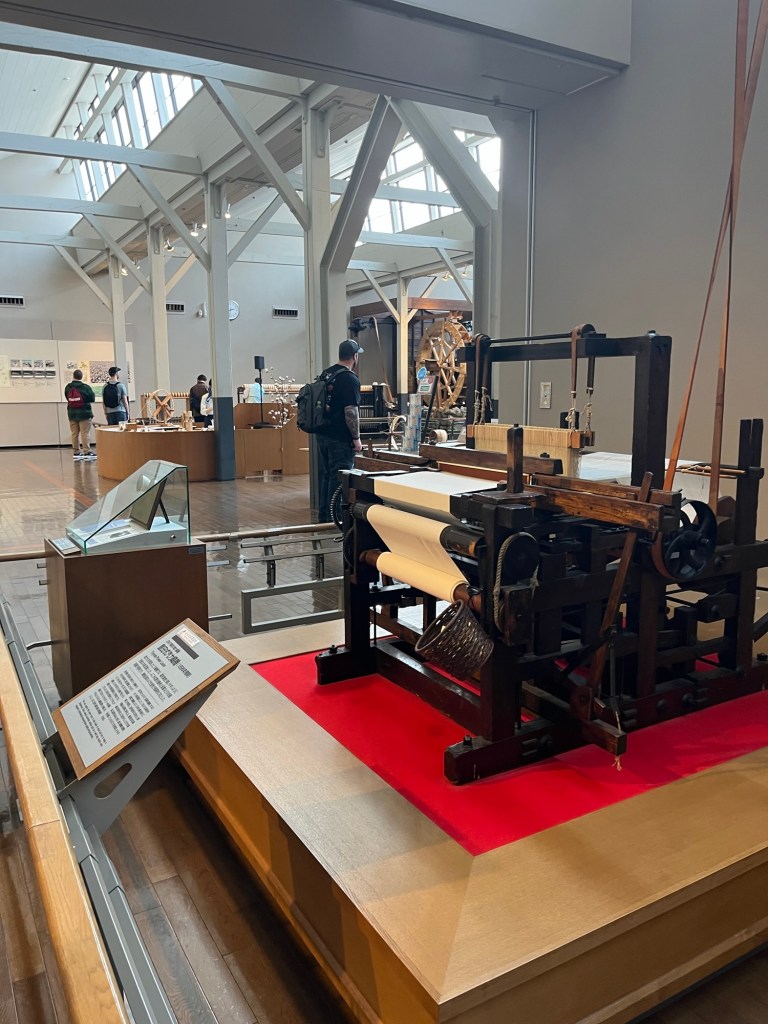
Within minutes, I realize that I don’t really know Toyota. First, the founding family’s name is Toyoda not Toyota. Second they made their name and fortune in textiles. They manufactured textile machines in addition to producing cloth. The cars came much later.
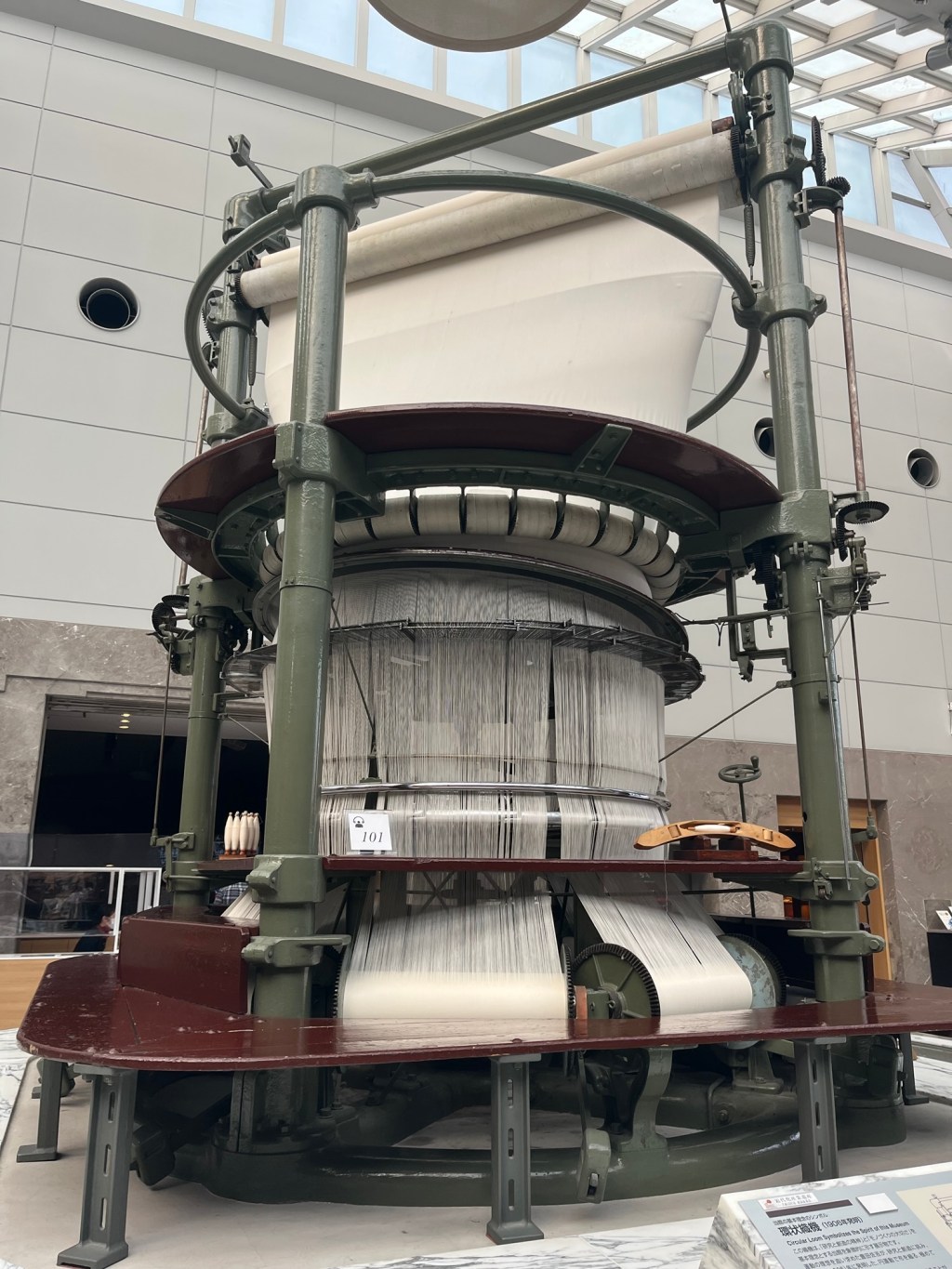
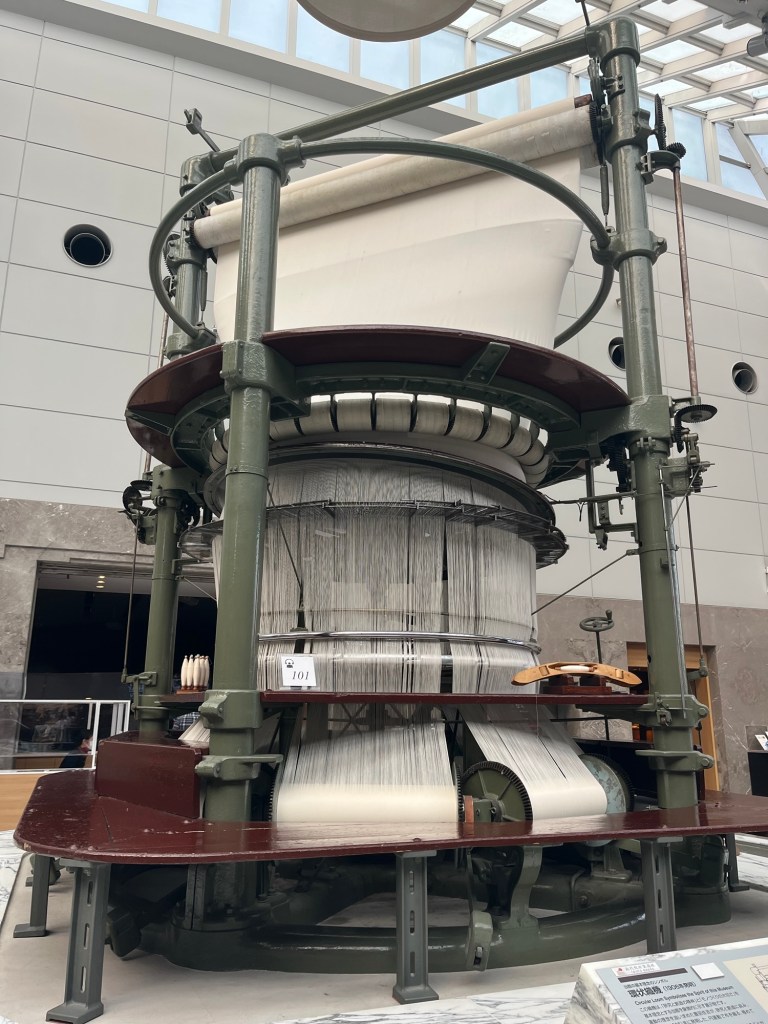
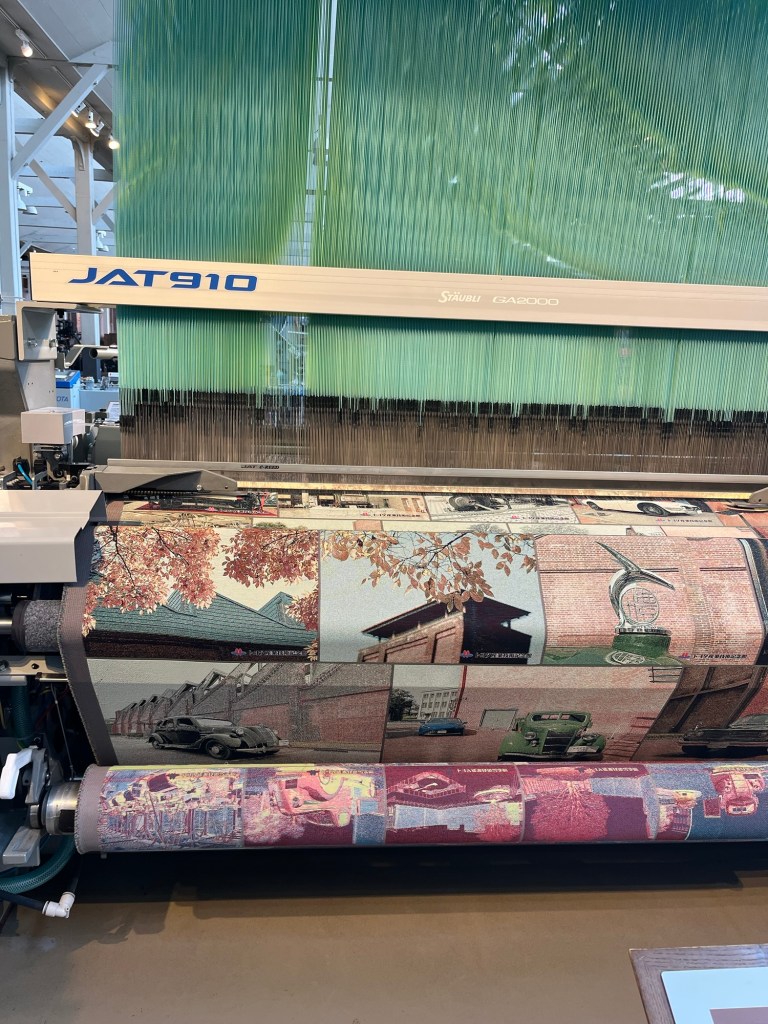
There are rooms full of textile machines. Throughout the museum there are people running the machines, some of which are over a hundred years old. There is a machine that makes cloth in a circle (the only one in the world….just in case you need a giant seamless tube.) There are weaving machines and spinning machines. I love the computer color printing machines that can do photographic quality cloth.
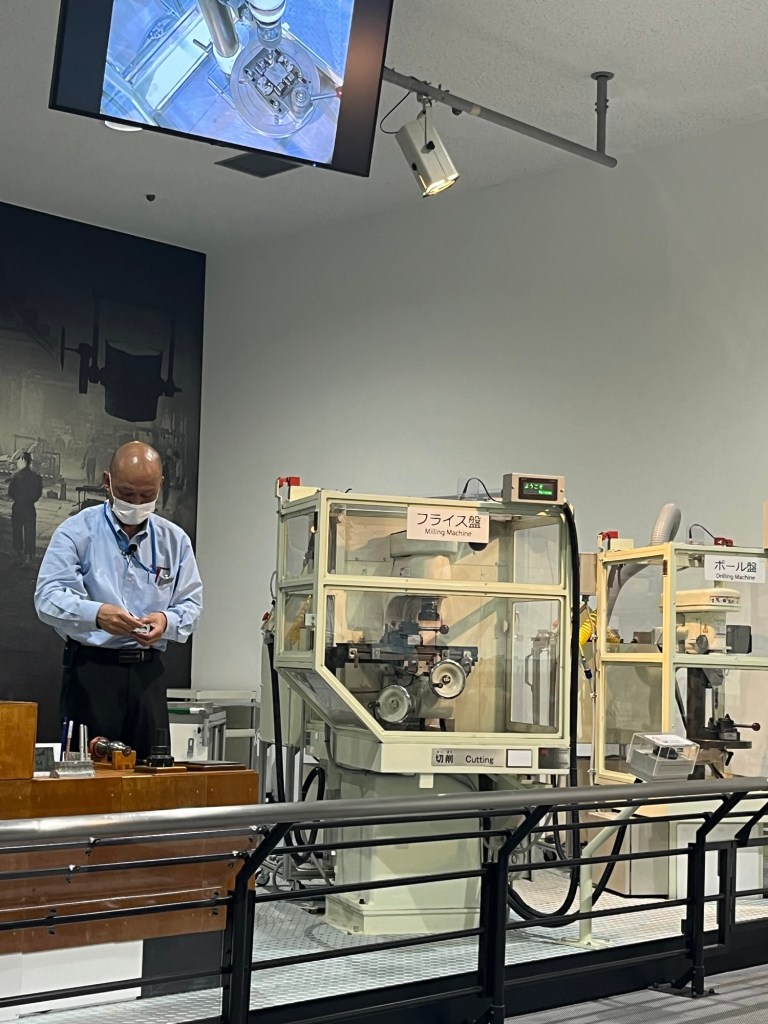
Next door there is a science lab, where visitors experience the machines that make the parts for the textile machines. Volunteers get to keep the parts they make. I’m glad I didn’t volunteer because I don’t have room in my suitcase for a metal machine part. But it is interesting.
We walk through sliding doors into a display of car parts and wooden forms. Kiichiro Toyoda (heir to the textile giants) became interested in cars while visiting in the U.S.. He wondered if he could apply the family knowledge of machinery to automobiles. It was not a popular position within the family or the company. He persisted anyway.
In 1936, Toyoda changed its name to Toyota. It had to do with signaling a new approach for the company. It signaled a shift to automobiles. And, it also it was influenced by the Japanese fascination with lucky numbers. The change reduced the number of Japanese characters required to spell the name to eight. Eight is a very lucky number in Japan. And it must have worked, because Toyota thrived.
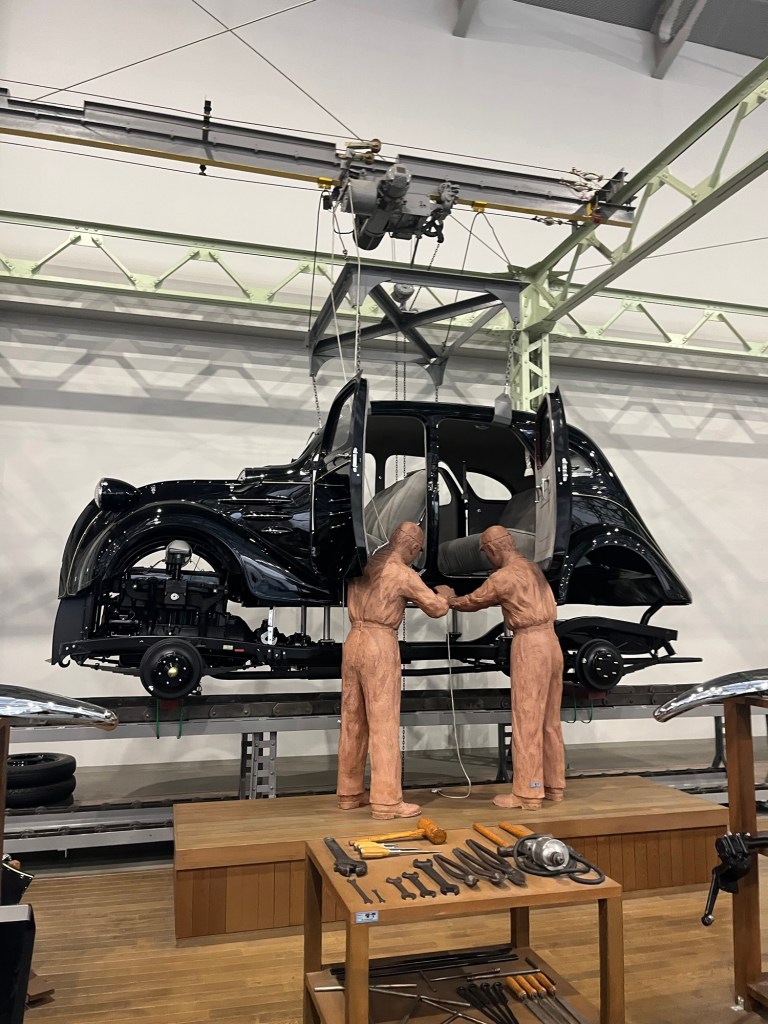
We stroll through the history of Toyota with a “t” (and that rhymes with “c” and that stands for cars). After several well done and cute exhibits about the history of the Toyota car factory, we arrive in a massive room that is part car show room and part car factory.
We see model after model of Toyota automotives. Some are cut away so that we can see the improvements in pistons and gear boxes and lots of other things that gear heads would know how to talk about. Sadly, I do not.
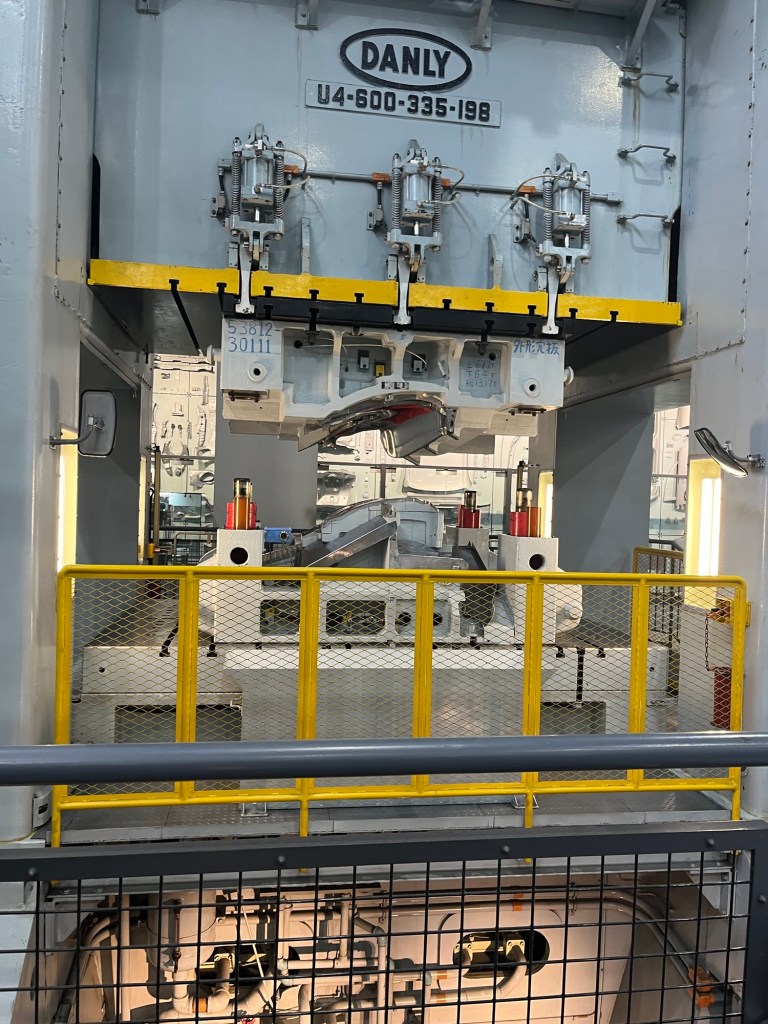
What blows my mind is walking through an entire assembly line and getting to watch the assembly process from start to finish. I even get to push the buttons that operate the machinery. Robotic arms drop engines, assemble crank shafts, and attach tires. It is fascinating.
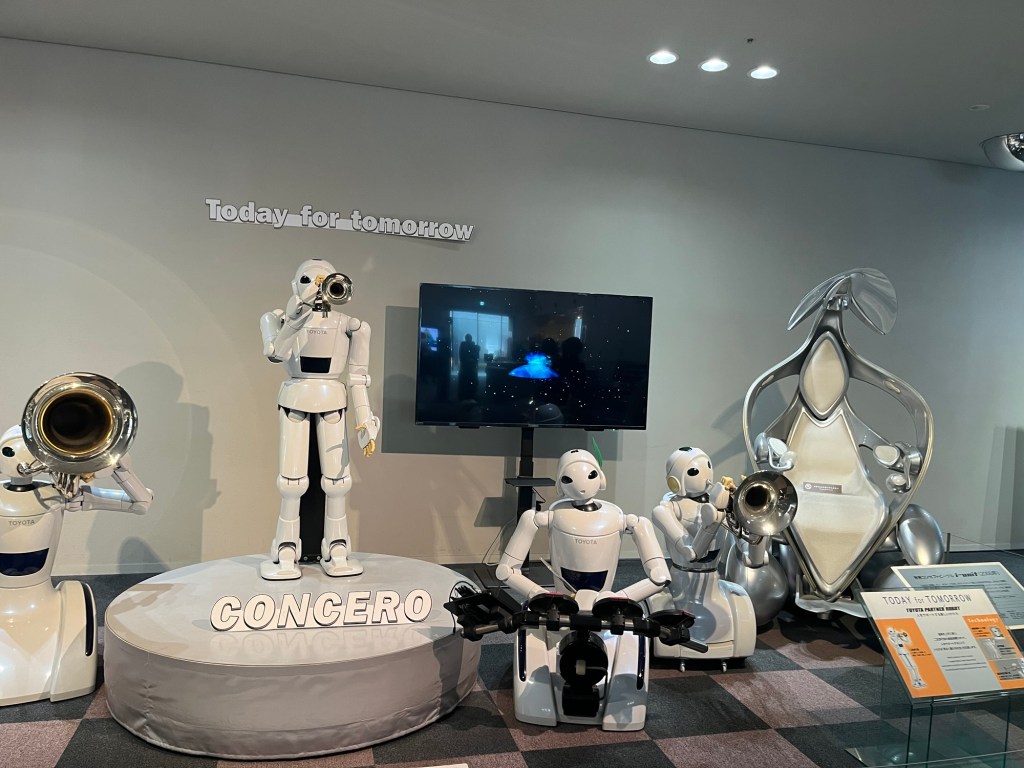
Just when I think it can’t get any better, we find a machine that allows us to 3d print our own cars (ok, they are keychains, but still cool). Exiting, we talk about how surprising and amazing the museum has been. But there is one last wonder left. In the exit lobby, there is a symphony of robots who play the violin for us. It sounds to me like a 12 year old who doesn’t practice enough, but by golly they are playing it. Wonders never cease here in Nagoya.