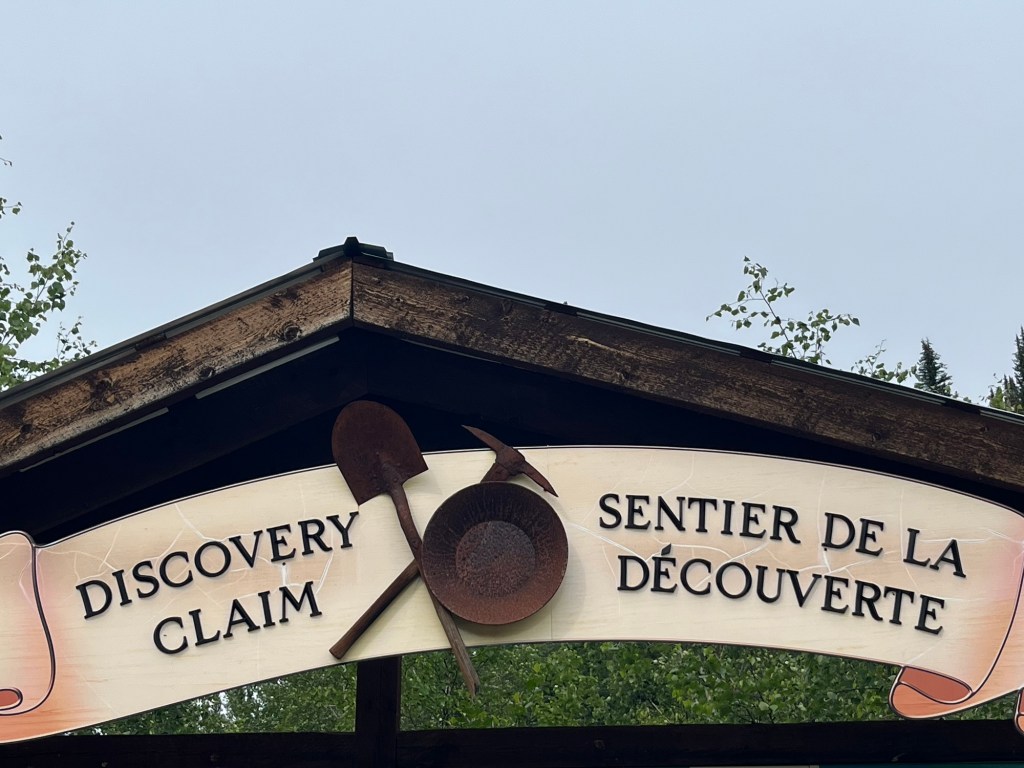
Not far outside Dawson, Yukon Territory is the site of the first gold discovery. You can walk to the creek where it all began. If you ask a local the story of how it happened you will get a dozen different answers. What everyone agrees on:
- The location was Rabbit Creek (later named Bonanza Creek).
- Those involved were a group of inter-related locals. Kate Carmack (Shaaw Tlaa), a local indigenous woman; George Carmack, her white husband; Skookum Jim, Kate’s brother; and Dawson Charlie, Kate’s nephew.
- One of the aforementioned people found the gold and George Carmack (the white guy) filed the claim the next day at a local police station.
- The gold rush occurred about a year later when news hit the outside world in 1897.
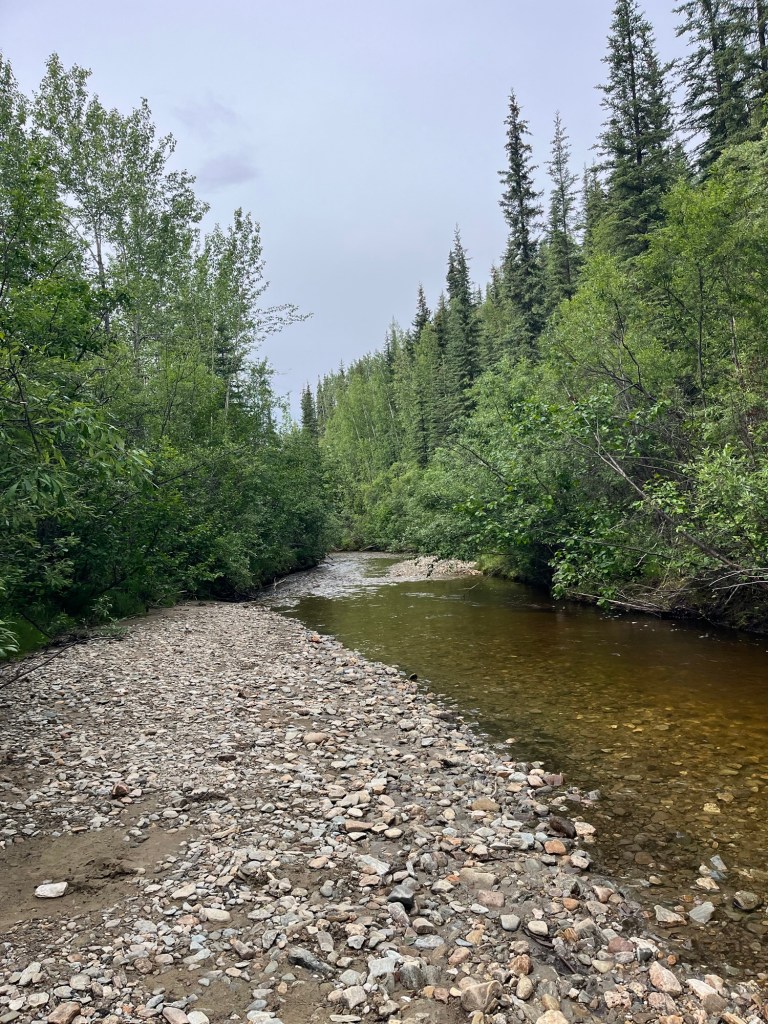
The story I like best is that Kate found the gold nugget in the creek while she was doing dishes or laundry behind their cabin. It seems most likely as it was an accidental discovery.
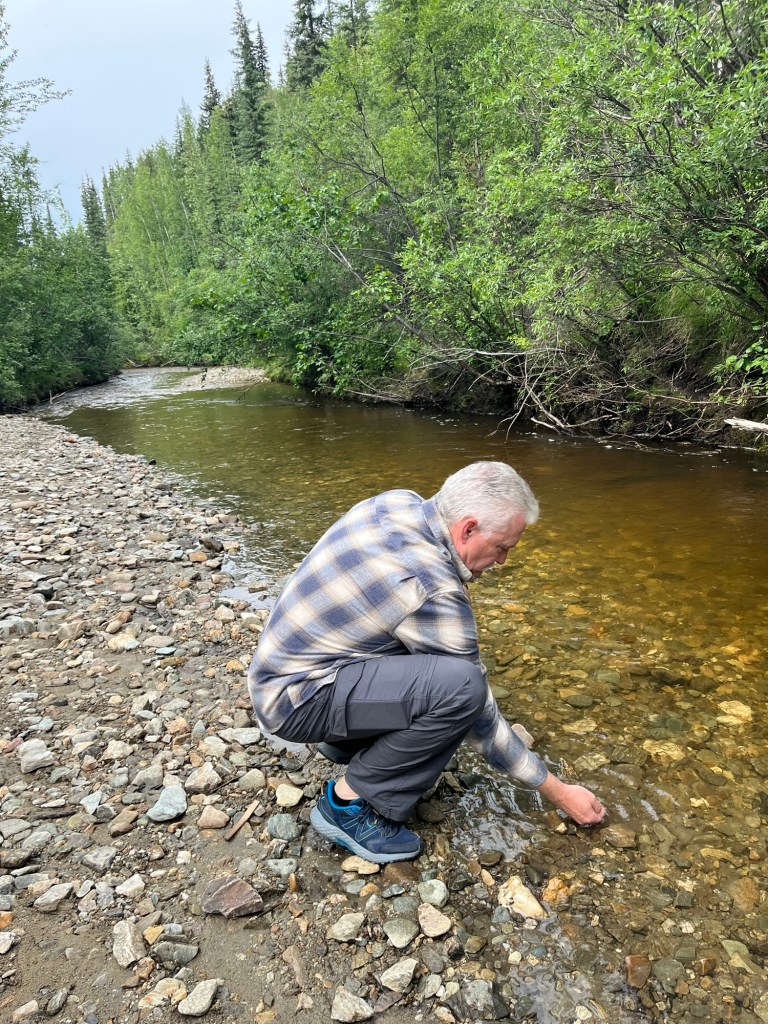
Today we splash around in the same creek. Sadly the gold is long gone, but that doesn’t stop us from looking. Hope springs eternal.
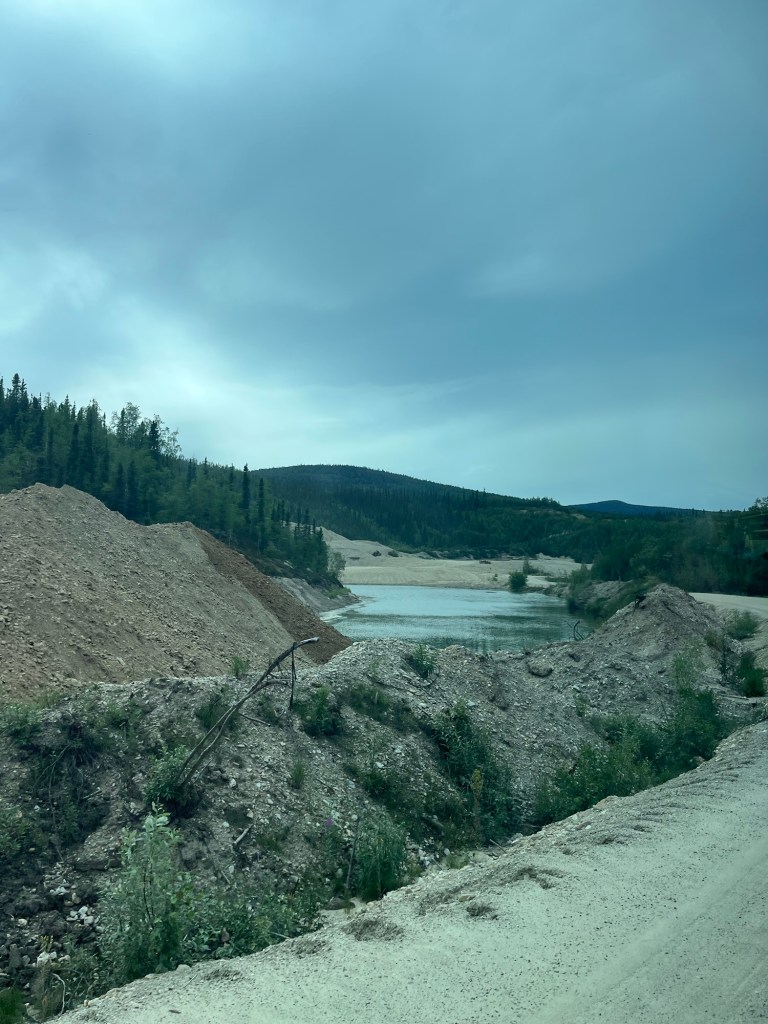
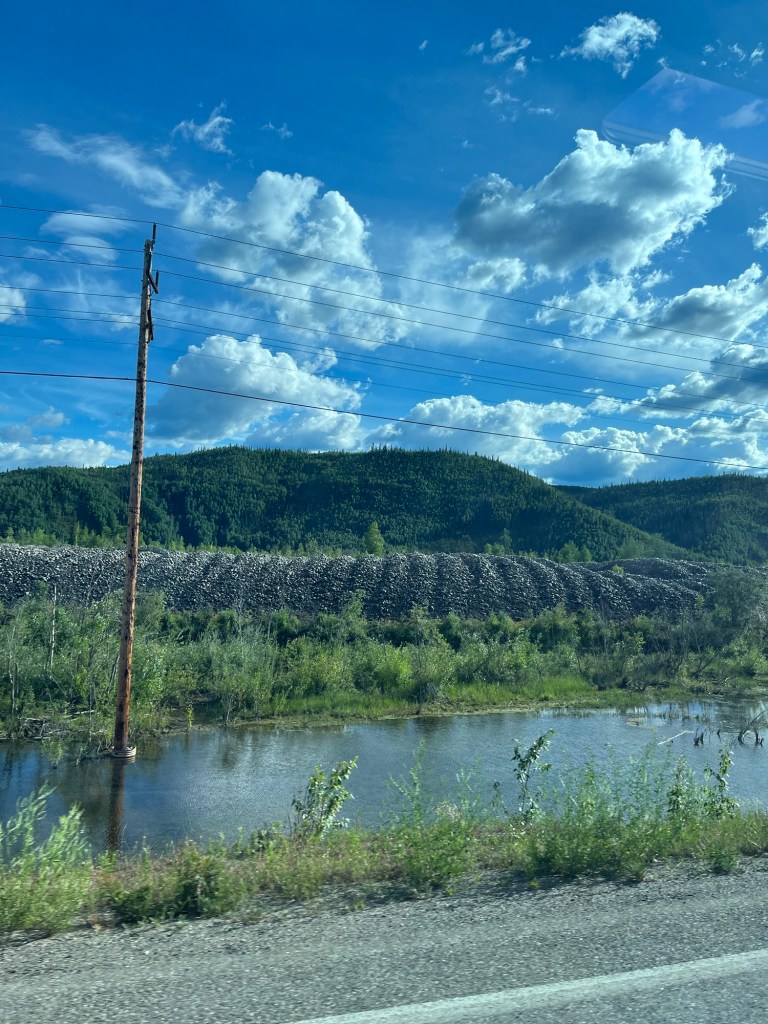
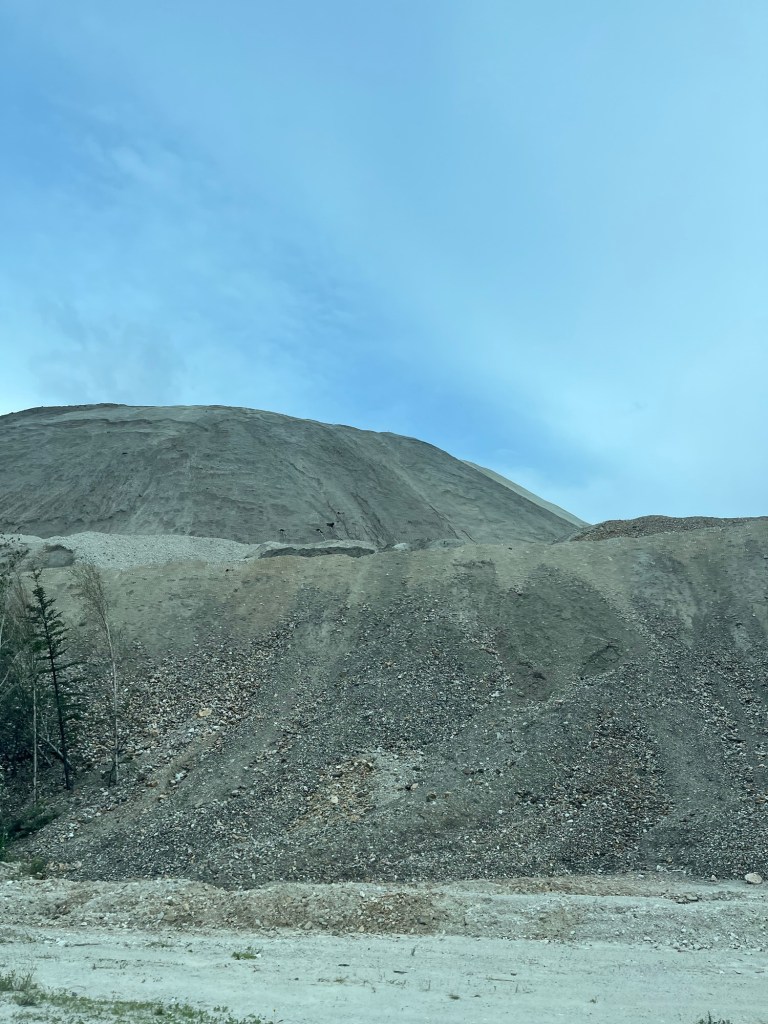
Just a short drive away, the ground is grooved beside makeshift pools of water. This is where the large dredges scooped the earth again and again mining for gold. The land is permanently scarred. On each side of the dirt road, piles of earth tell the story of man’s obsession with mineral.
The Parks Canada rangers maintain dredge number 4 so that visitors can experience a gold dredge from the inside out. It is decommissioned, but we are able to walk about and get a feel for its size and operation. We were briefed by a ranger and learned alot about commercial gold mining in the Yukon.
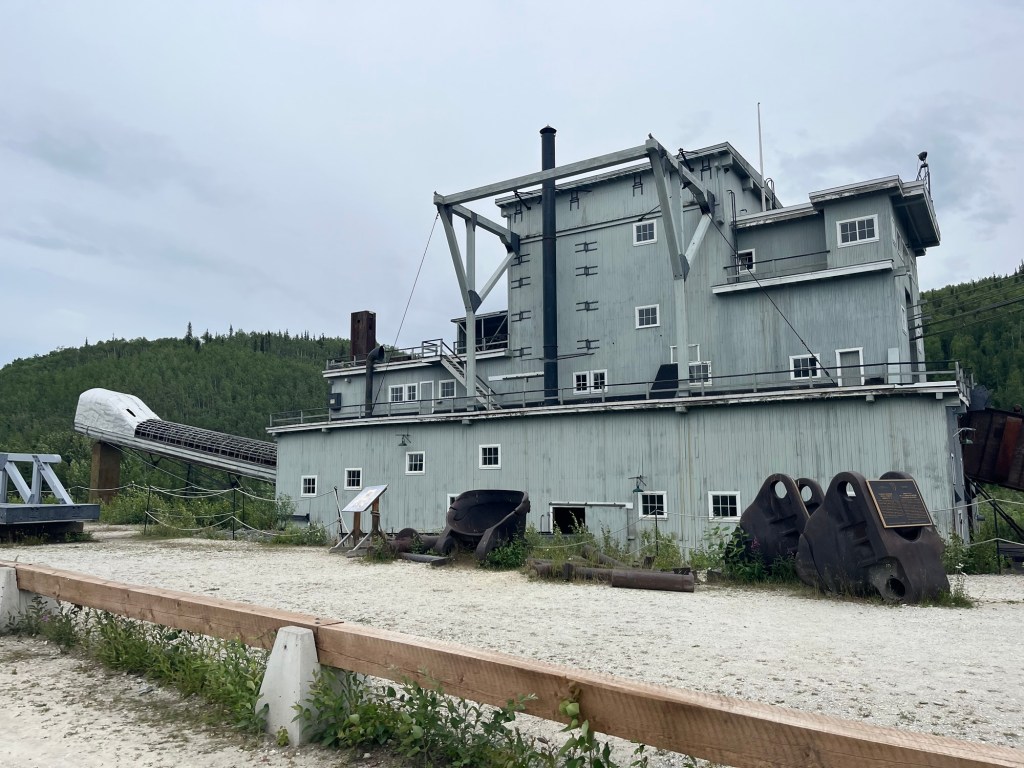
In September 1898, the first dredge began working the Yukon River. Two large companies, the Canadian Klondike Mining Company and the Yukon Gold Company received large land holdings, called concessions. The corporations constructed hydroelectric power stations to run the dredges. They also constructed a system of dams and ditches to provide an adequate supply of water for the dredges.
Dawson City provided government administration and banking services, and a transportation network. Dawson City also provided a large labour force and suppliers and services to meet the corporate mining needs. Dredge No. 4 was built in 1912 for the Canadian Klondike Mining Company and was the largest wooden hulled bucket lined dredge in North America. It worked in the Klondike Valley on the “Boyle Concession” until 1940 and then was relocated to Bonanza Creek and worked this valley until 1959.
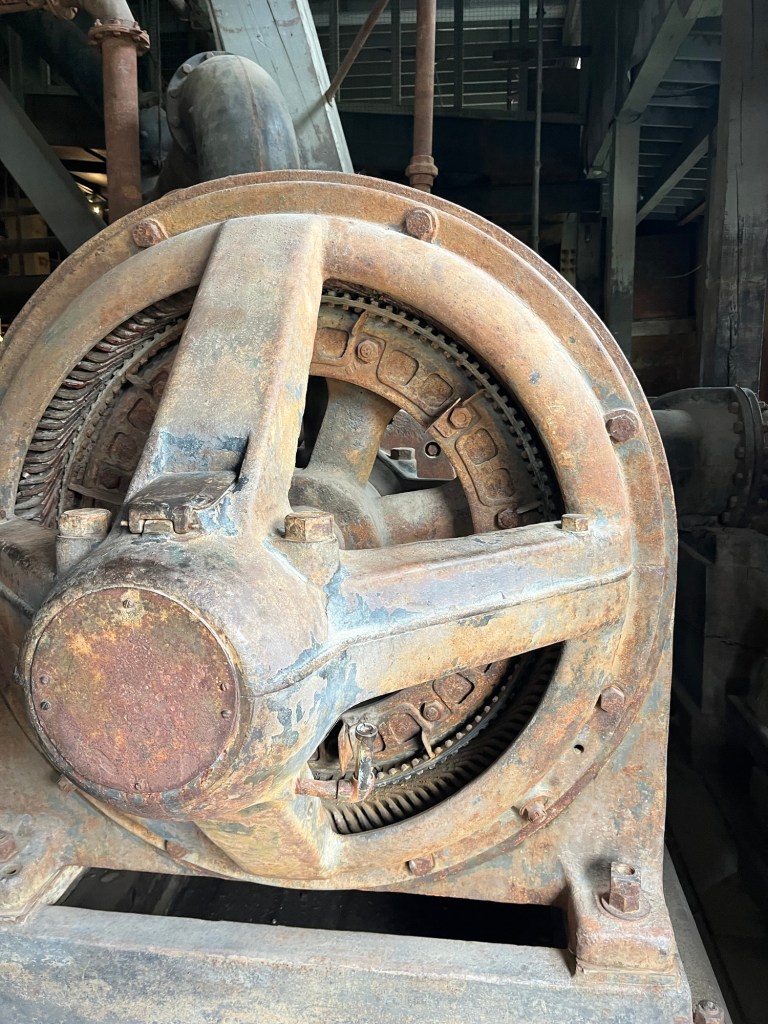
For almost fifty years, the dredge churned up the valley. Buckets dug up dirt and sent it into the dredge interior on a conveyer belt where small rocks were separated and then hand inspected. The waste was spit out the back chute, creating the rows of mine tailings. I can’t imagine the heat, sound, and smells.
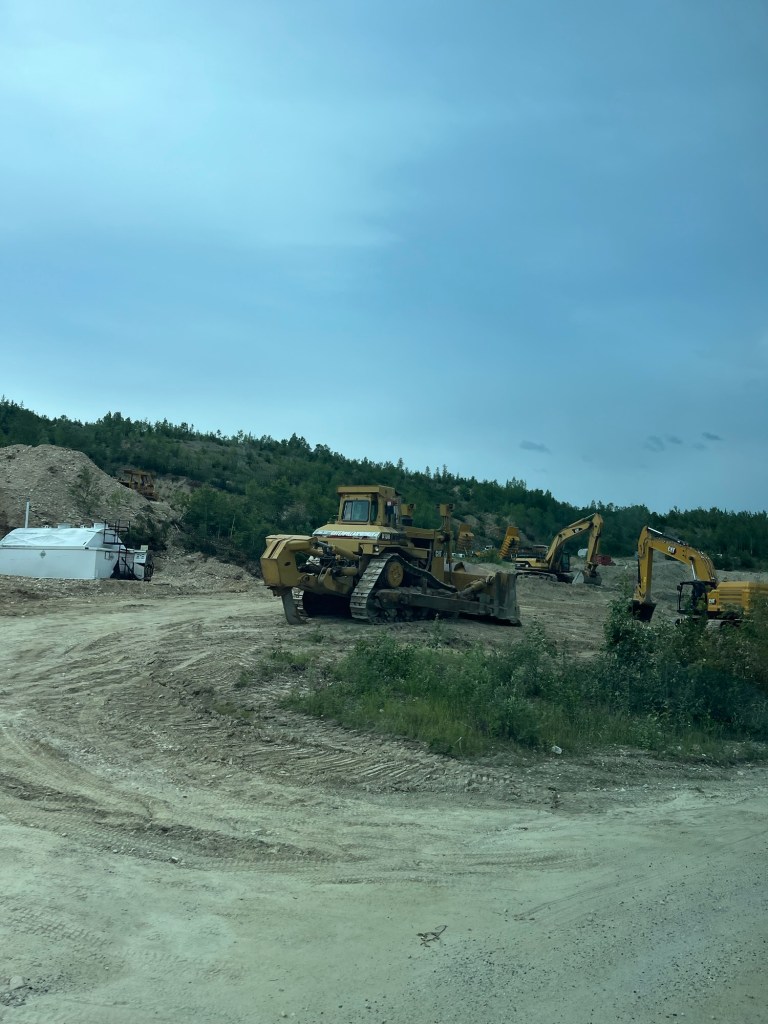
I would make a horrible gold miner. It is hard to imagine the people who are still running mining operations. And plenty of people are doing just that. Anyone can file a claim. You just need to prove that you have the money to put the land back as it was and you are good to go.
There are several operations along the road back to town. They are smaller and carry more risk than the old dredges. But apparently they are still making money. Or maybe gold fever is incurable.