-
Cavorting in Cavan: Travel Goals
“As I walk the road from Killashandra
Weary I sit down
For its twelve long miles around the lake
To get to Cavan town
Though Ougher and the road I go
Is a scene beyond compare”- Cavan Girl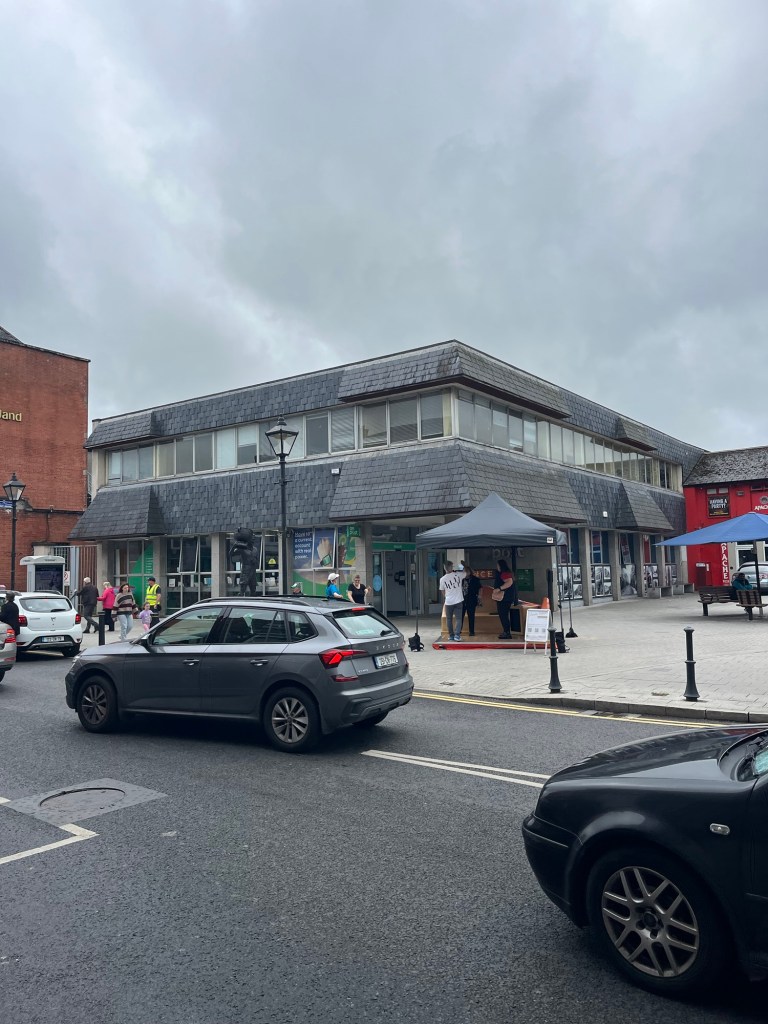
On the words of a song and an attempt to avoid the rain, we head to Cavan. The lake country is beautiful. And it is easy to get lost on country roads.
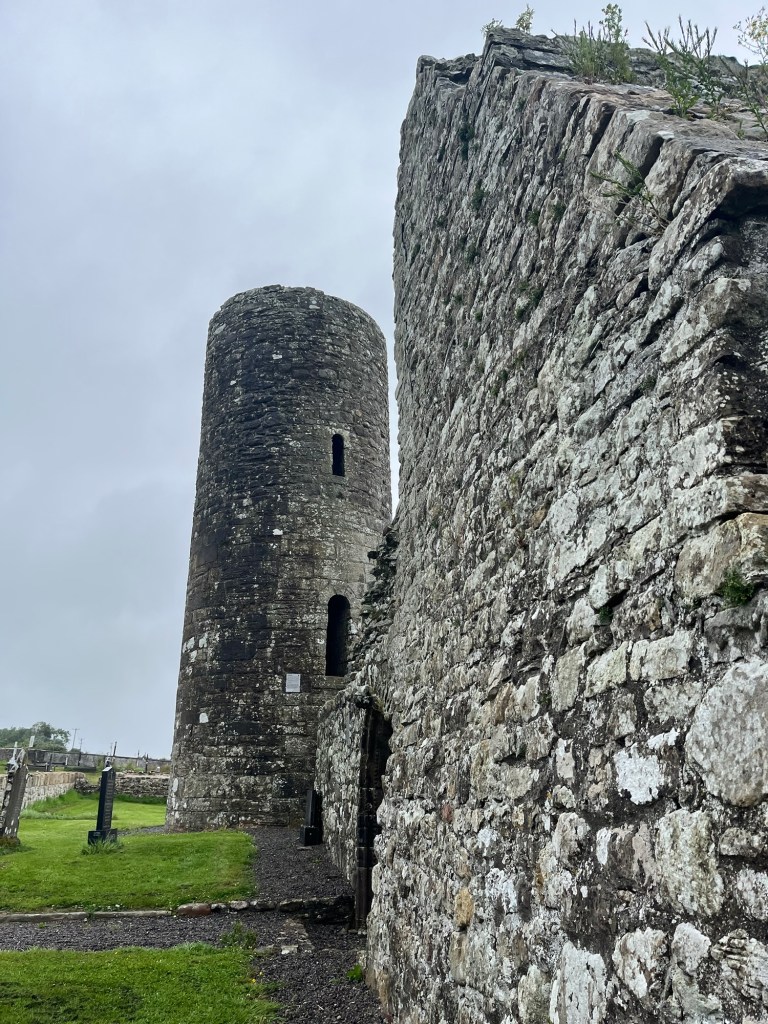
At an abandoned abbey, I wander the ruins in the rain. I walk among the graves and admire the haunting stillness of the lake. Wild swans glide by.
In Cavan town, busy streets play contrast to the rural countryside. I can’t help but smile at the man who set up a “dance with me” booth on the sidewalk. Retro music and silly dance moves brighten a dreary day. But the wild places call.
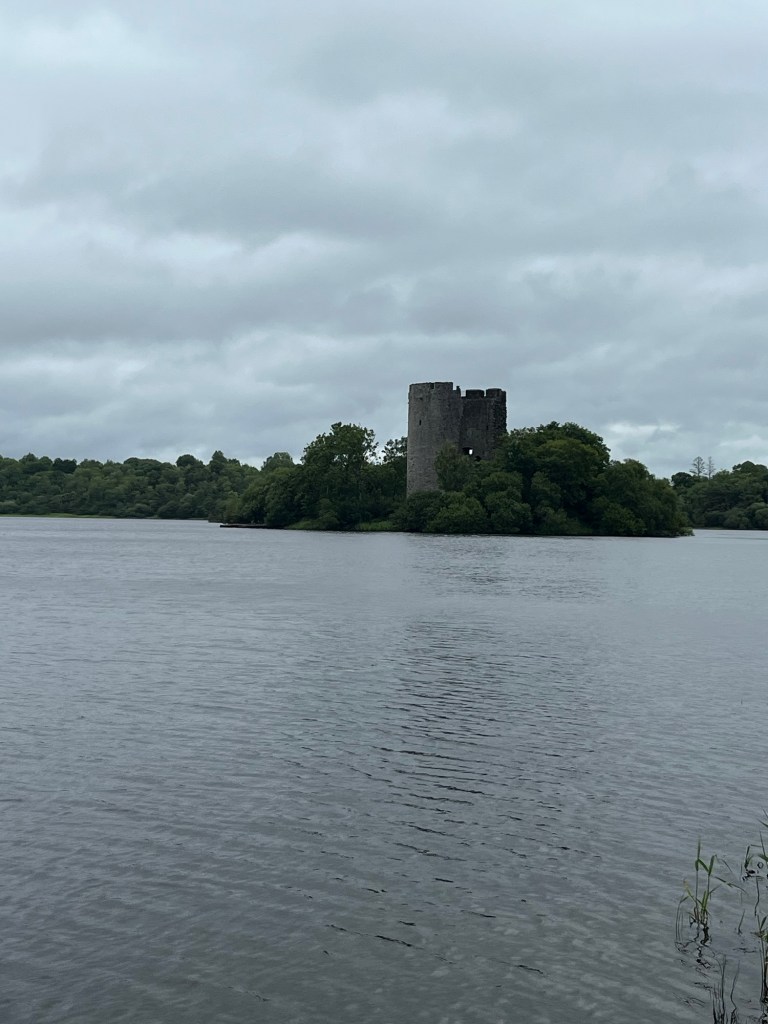
We head out in search of Clough Oughter Castle. GPS is no help. We follow it to a private drive. No signs. Backtracking down a one lane track, we find the lake. I see a large gathering of swans but no castle. I am ready to give up.
On cue, a car load of locals appear in our isolated location. They show me a gate and a stile. There is a weed covered path at the edge of the lake. I follow. Before me is a castle on an island in the lake. It looks so close, but will remain just out of reach.
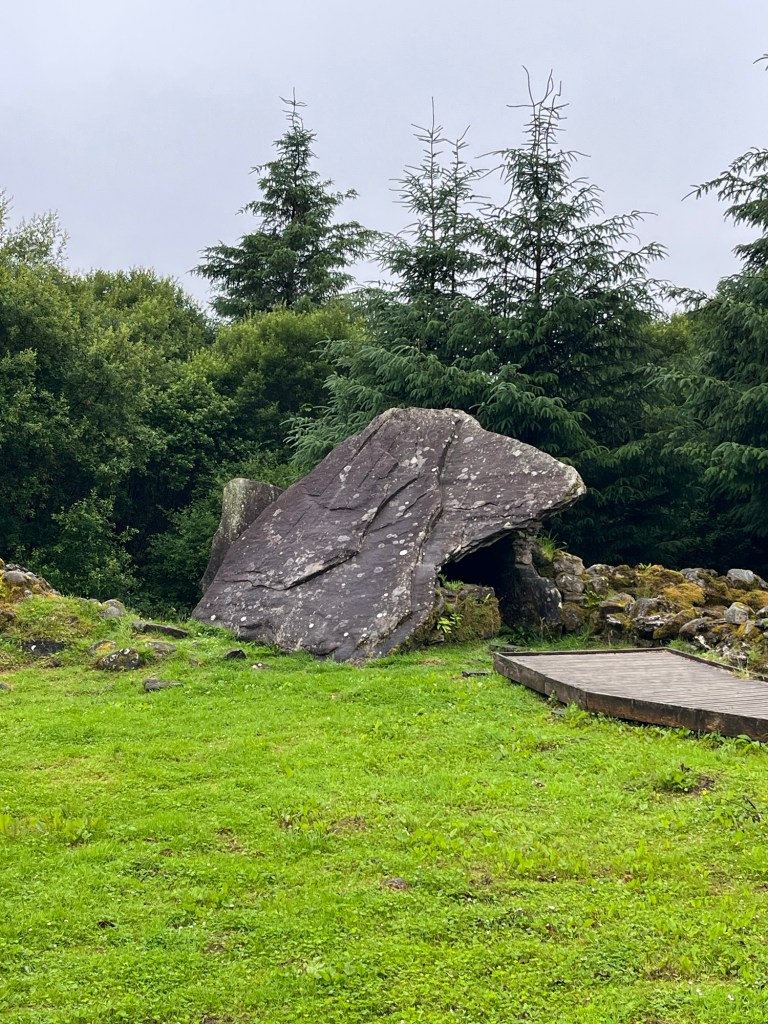
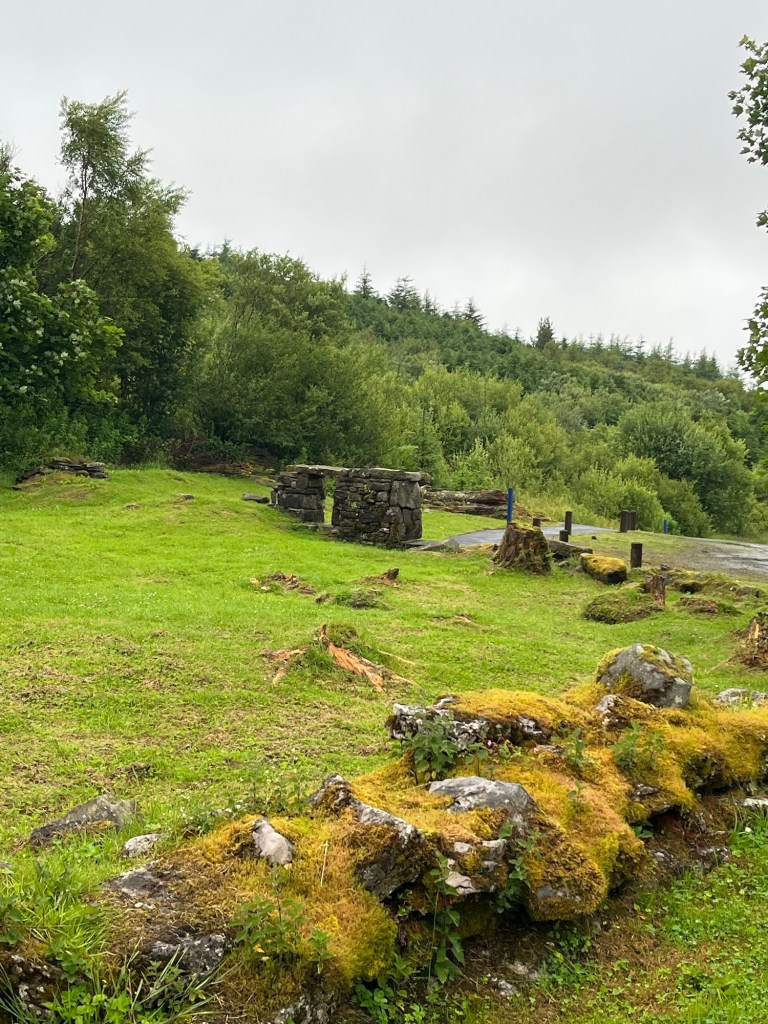
Further down the road, Cavan Burren park beckons. It is foggy and misty on the mountain. I walk paths to standing stones, portal tombs, and unusual cairns. The wind whistles and the temperature drops.
Ancient walls and sink holes whisper in the blowing wind. Ancient secrets. New hopes.
“The autumn shades are on the leaves
The trees will soon be bare
And each red-gold leaf reminds me of
The colour of her hair
My gaze retreats unto my feet
And once again I sigh
For the broken pools of sky remind
The colour of her eyes” -
Pilgrimage: Travel Goals
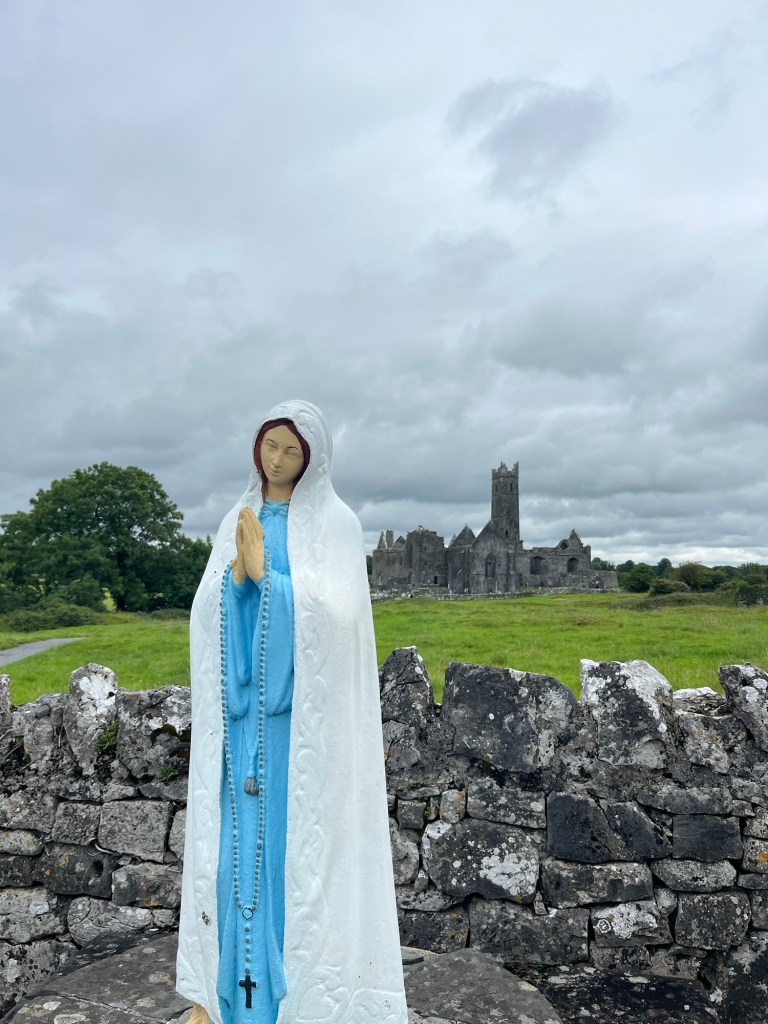
From a modern perspective, it is hard to envision a time when religion completely dominated the landscape. Yet in Ireland the past is everywhere. It is hard to cross a field without noticing some remnant of religious life. From Neolithic tombs to abandoned monasteries, religious architecture is hard to miss.

As a historian, I understand the power struggles and the economic issues that intertwined these religious spaces. A cynic would dismiss the ruins as dynastic power plays. One is built to show dominance and in the same way another is laid waste. An economist would tally the money changing hands in all this and proclaim the richest the winner. He who controls the territory and the resources is proclaimed right. But what of the faithful?
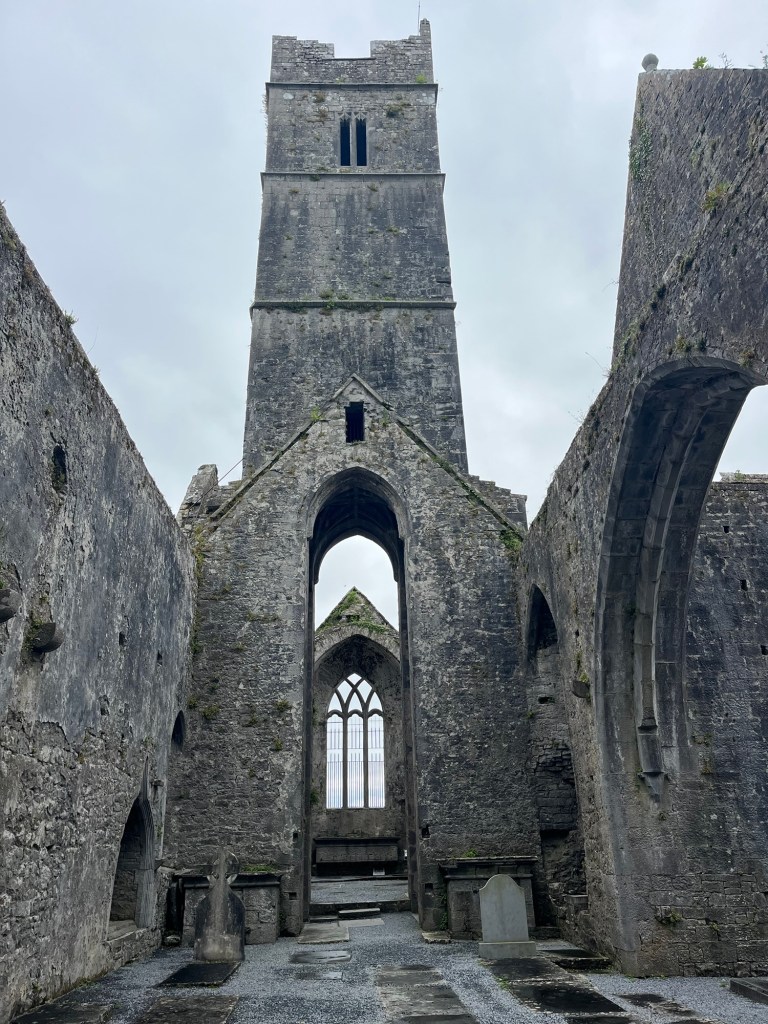
I walk these ruined interiors and I wonder what happens to those pure souls who dedicated their lives to service. What happened to those who fed the poor and tended the flock when the monasteries were closed because a new king wanted the money the land provided? What happened to the people who visited the churches and set up secret altars in the woods to continue their faith traditions despite the risks of being caught?
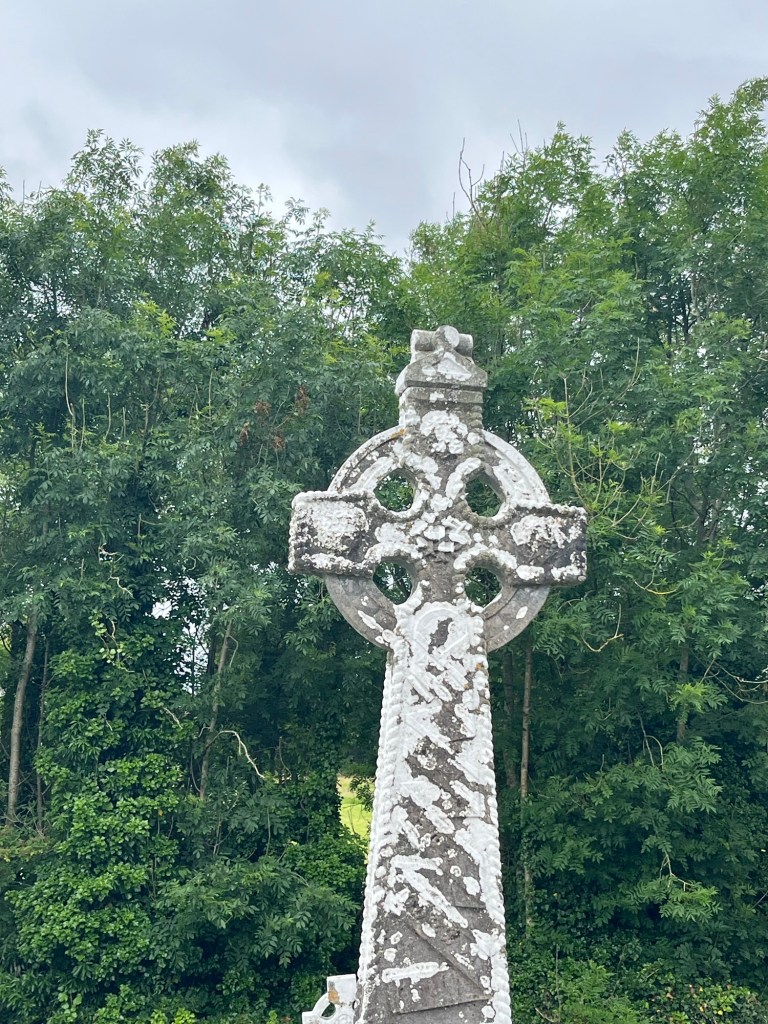
For those who see only power and money, religion is a means to an end. For those who seek God, it is an unbreakable relationship for better or worse. In modern Ireland, the patterns continue.
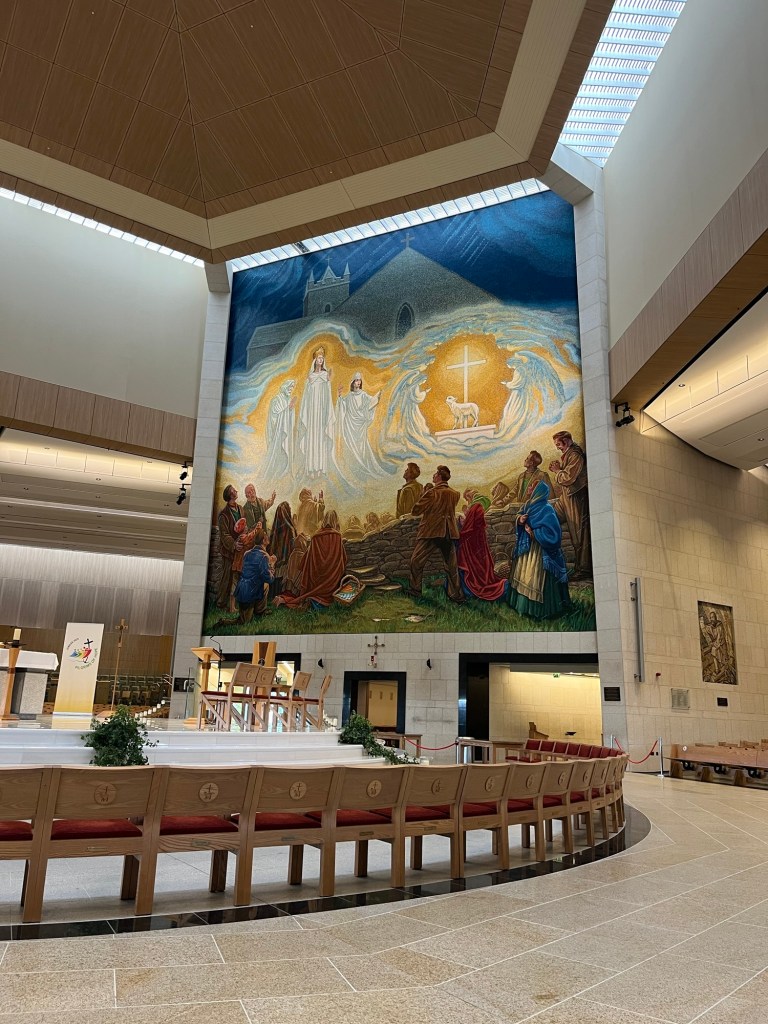
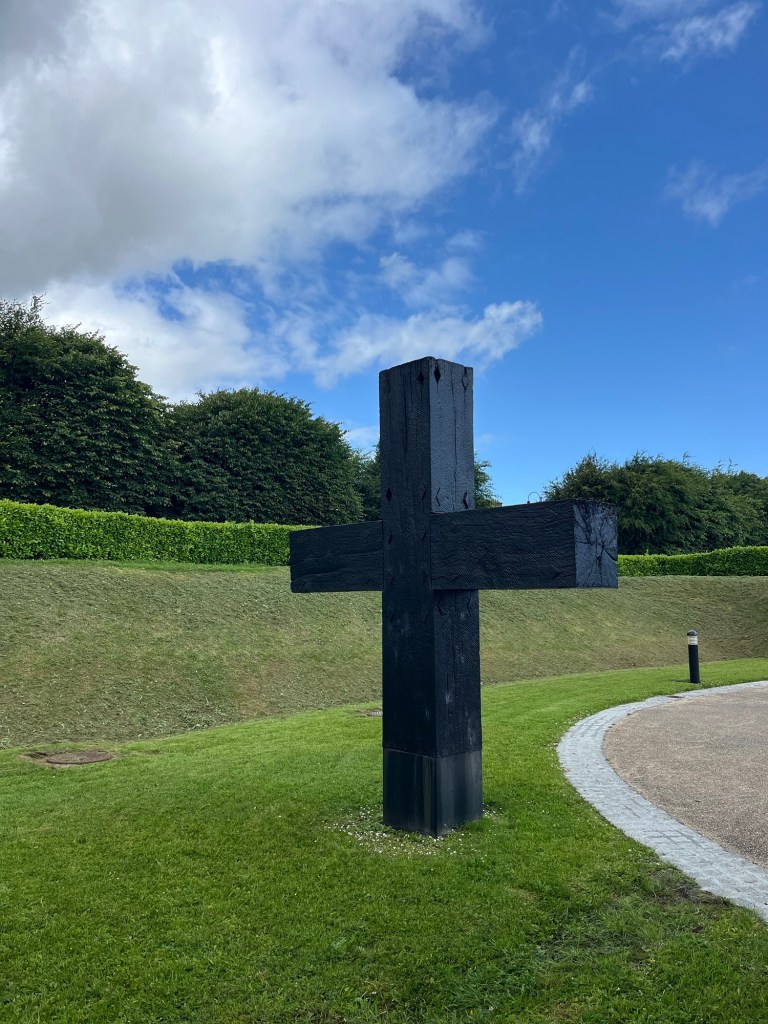
The ancient sites are full of tourists. The modern pilgrimage sites, such as Knock still bustle with the faithful. And in the woods and lanes you can find a holy well with cloth tied to trees for special blessings. In a random field, a stone with feather offerings carefully placed in the center. A rowan tree sits by the side of the road adorned with prayers and photographs. For the faithful, life is worship. There are after all, things that money can’t buy and that power can’t corrupt. In Ireland, I am reminded that faith is beautiful and always comes at a cost.
-
Ennis on Adrenaline: Travel Goals
Landing in Ireland is always a little magical. I always know there is a fine misty morning awaiting. The first shiver of cool air and a breath of soil and sea welcome me home. Ireland is in my dna. I have never lived here, but if memory can be passed down through generations then something lingers strong and true.
It is a short walk to the rental car lot. As we approach the car and notice the scratches along the sides, I suddenly have flash backs to narrow roads, hedgerows and rock walls. Driving is no joke here and I am running on little sleep. The thought of navigating the opposite side of the road and unfamiliar traffic patterns induces a spike of adrenaline. Luckily, (actually more planning than luck), we don’t have far to go. We are spending one night in nearby Ennis before heading to points North.
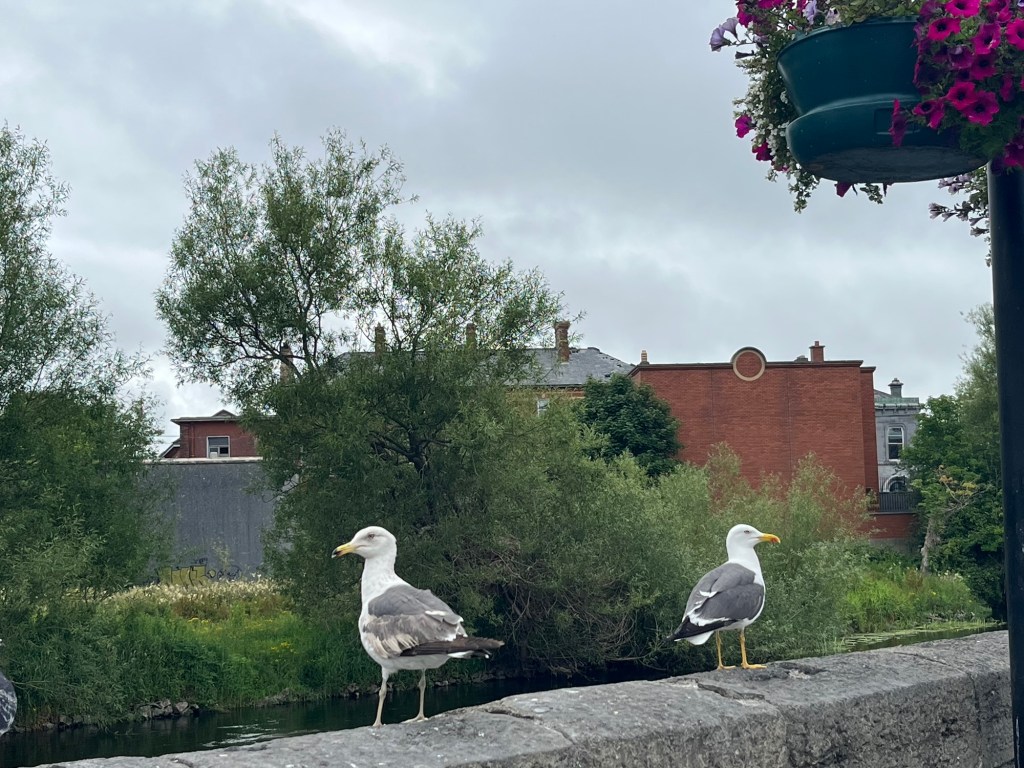
We make the brief trip from Shannon airport to town without incident and park next to the Ennis friary. Outside the lot, there are numerous signs to pay and display. Inside the lot there is no sign and no pay meter. We take our chances and head to the friary. It is not yet open.
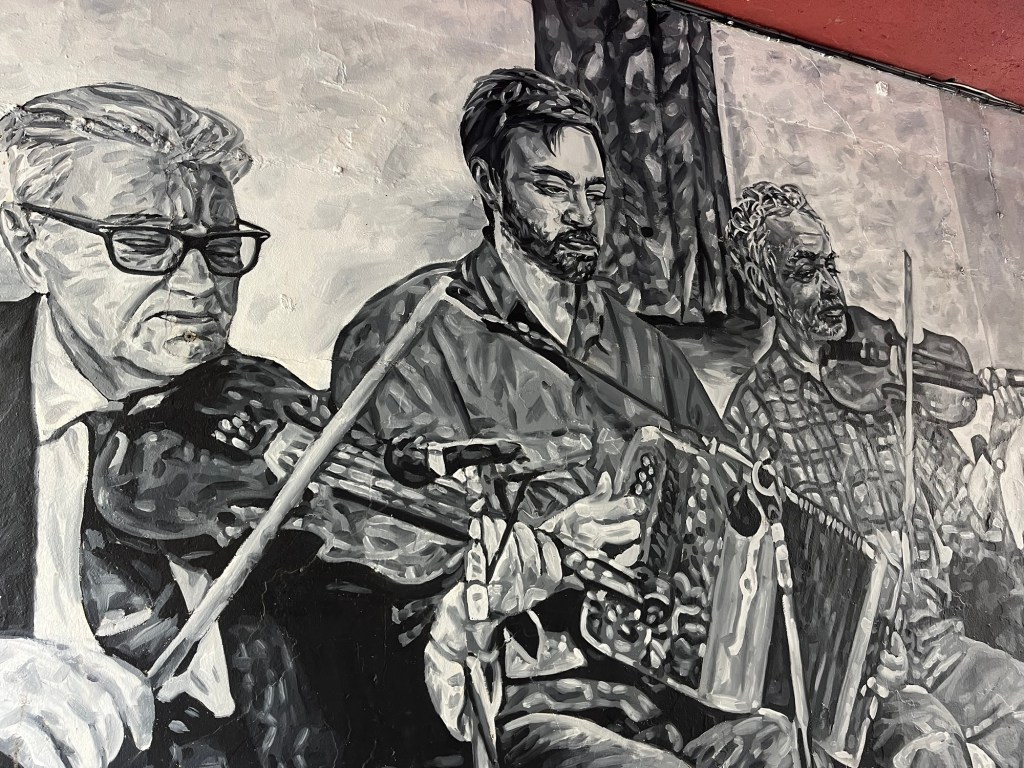
Thwarted, we aimlessly walk the streets of Ennis. People are walking to work and sitting in coffee shops. The stores are just beginning to open. This is not a tourist town and it is fun to get lost in local life. We pass murals and walk along the river. I giggle as I hear Irish slang and the constant presence of lilting curse words.
Tired of walking, we find a small visitor center attached to the Clare County Museum. We have to try three doors and walk down two different alleys to find a working way in (signage is not really prevalent or all that helpful in Ireland…just ask and someone is always happy to send you along).
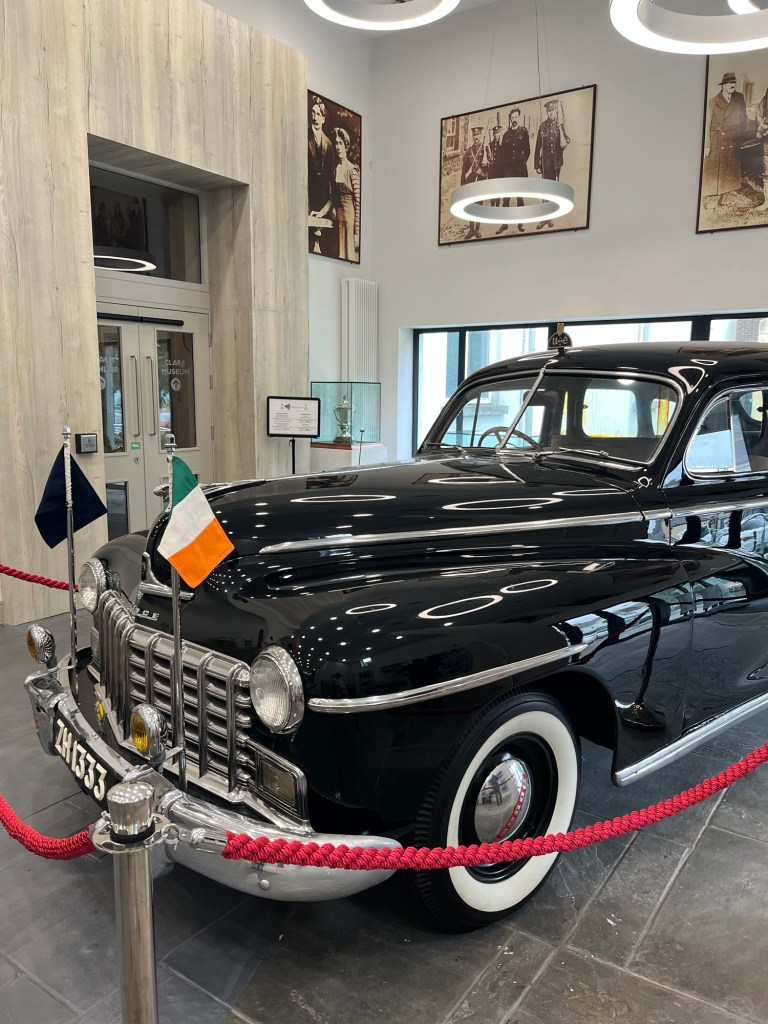
We are warmly greeted by the attendant and treated like long lost relations. She has suggestions for food and wants us to try a variety of walks. Maps are supplied for the days to come. She also suggests that we visit the small museum. It is a treasure trove of random objects. In pride of place, is a car that belonged to Eamon de Valera (former Irish President). There are artifacts from the Neolithic era, a door from a Spanish Armada ship, a wooden jar of “bog butter”, sports jerseys and a lot of other objects. By the time we look over everything, the friary has long since opened.

We are admitted to the friary without having to pay. It seems that bees have swarmed in the transept and the caretakers don’t want us stung. So we are free to roam the other areas of the friary, as long as we agree to just look through the glass at the bees.
The friary, which once would have filled me with awe, now seems familiar. It is very similar to a number of other sites. I have committed to memory the shape of the monastic churches and the feel of the old stone. There are remarkable carvings and corbels that stand out at this site. The wet stone is home to birds and plants. It seems ancient and alive.
We wander for a while. Until the adrenaline has worn off. Eventually, we need food and sleep. We have arrived safely and I am already feeling relaxed. Somewhere a bowl of stew and slice brown soda bread is calling my name.

-
Expect The Unexpected: Travel Day Zen

My motto when traveling is to expect the unexpected. Perhaps I am over sensitive to things that may go wrong. Over the years, I have taken a lot of flights (solo, family, and as a group leader). I have seen a lot of mishaps. It is rare to fly without at least one delay.
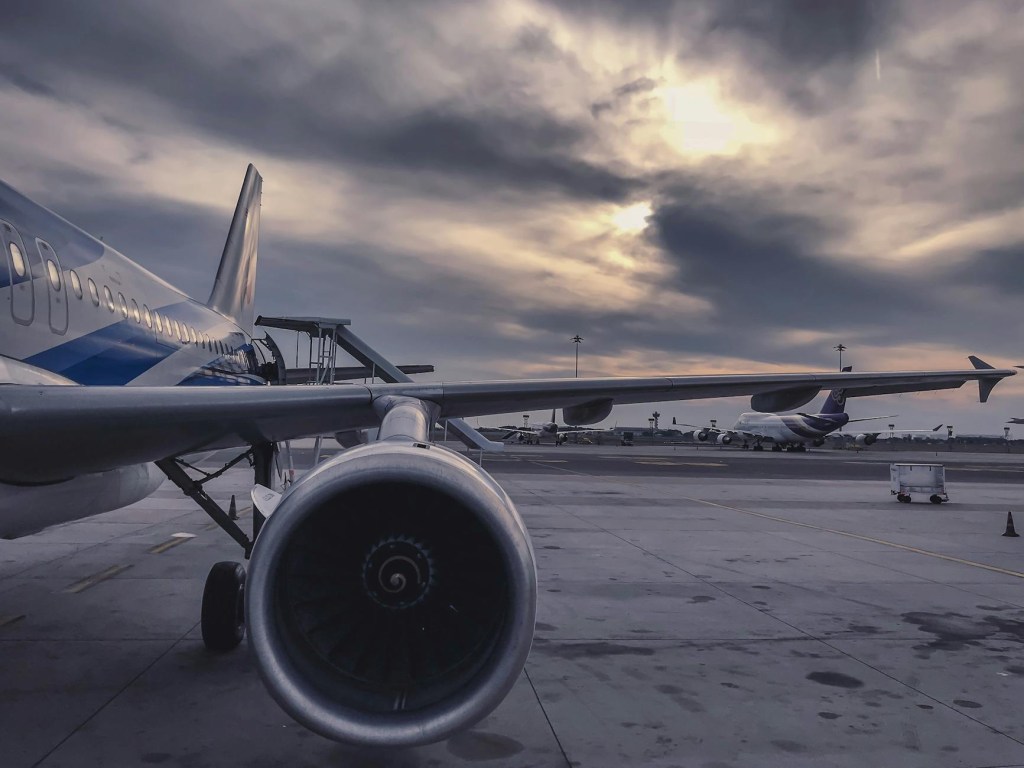
Most travel delays are unavoidable. But I try to mitigate anything I can control. This means, getting to the airport early. It gives a cushion for highway closures and emergency traffic delays. I have time for airport parking and shuttle delay. My bags are checked before cut off times. And if there are delays at security, I am fine to wait in line.
If there are no issues, I have time for a cup of coffee and a croissant. I can people watch or read at the gate. Once, I have cleared the independent travel and security hurdles, the trip is out of my hands.
Another strategy is to fly early in the day. There is more likelihood of being rebooked on a later flight if there are more remaining options available. I also like to know the flight schedules of code share partners.

Even when I have cleared all the hurdles and am sitting contentedly at the gate, there are subtle signs of potential delay. If your flight is scheduled to board and there is no plane…there may be a delay. Using a simple online tracker like flight aware can tell you the location of your plane. If it is still in flight, you may as well settle in with another cup of coffee.
Sometimes, your plane is at the gate and you have no crew. We sat for hours once waiting on a co-pilot. On one trip, I had a plane and a crew but no food showed up for the international flight causing a multi hour delay.
Perhaps worst of all, you are sometimes boarded and then informed you are delayed due to maintenance. Overhead compartments won’t close. Computers need to be reset and tested. Fuel needs to be added and removed. Wings must be de-iced. I actually had a plane jump started before take off! The pilot said not to worry that “we didn’t need a battery in the air.”.
When I only had a few precious days for vacation and a very tight work schedule that did not allow room for delays, flying stressed me out. Travel day was sure to induce raging anxiety. These days, I have more time. A delay would be annoying, but not a catastrophe. I am trying to mellow. Change is hard. Unfortunately for my husband, the early to the airport rule isn’t going away anytime soon
-
What I learned from TV Westerns
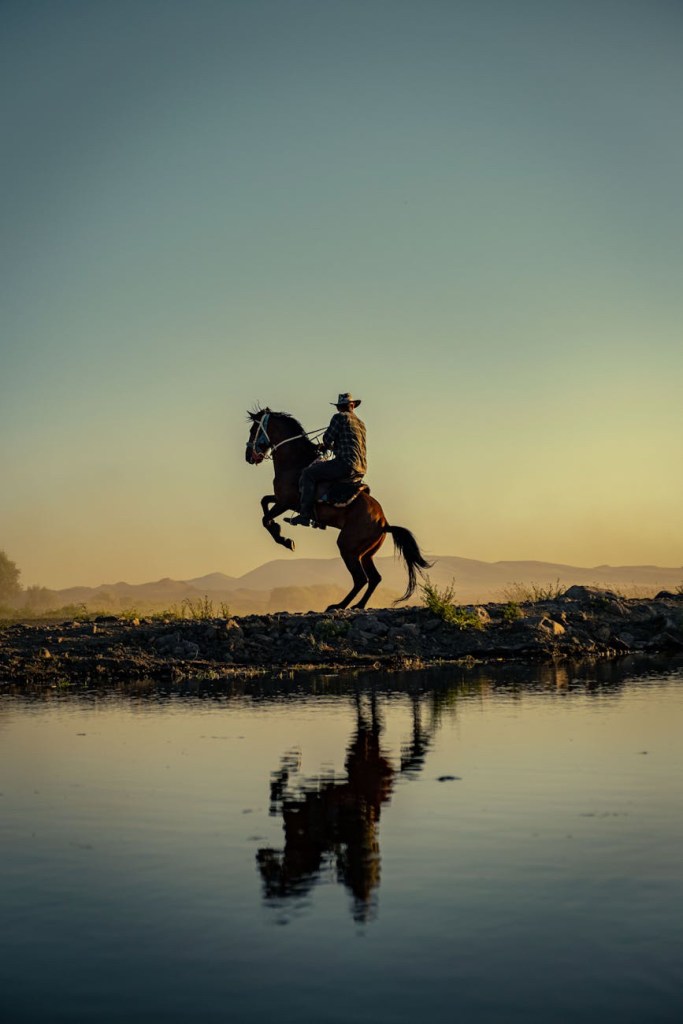
I grew up watching Westerns. My grandparents fed me a steady diet of John Wayne and Gene Autry. But I loved the television series westerns like The Lone Ranger, Gunsmoke, The Big Valley, Bonanza, and the rifleman. In one hour, a community is faced with a crisis and then larger than life characters with outsized moral courage put everything right.
Unsurprisingly, I still need my weekly dose of a world where the good guys always win. On any given day Saturday morning, you will likely find me doing laundry and binge watching westerns on ME TV. Of course, it is harder to keep up with the plot when there are 18 commercial breaks trying to sell me life insurance, medic alert bracelets, and reverse mortgages. But I digress. These shows continue to remind me of civic virtues and obligations. They speak to universal truths of liberty, justice, and dignity for all.
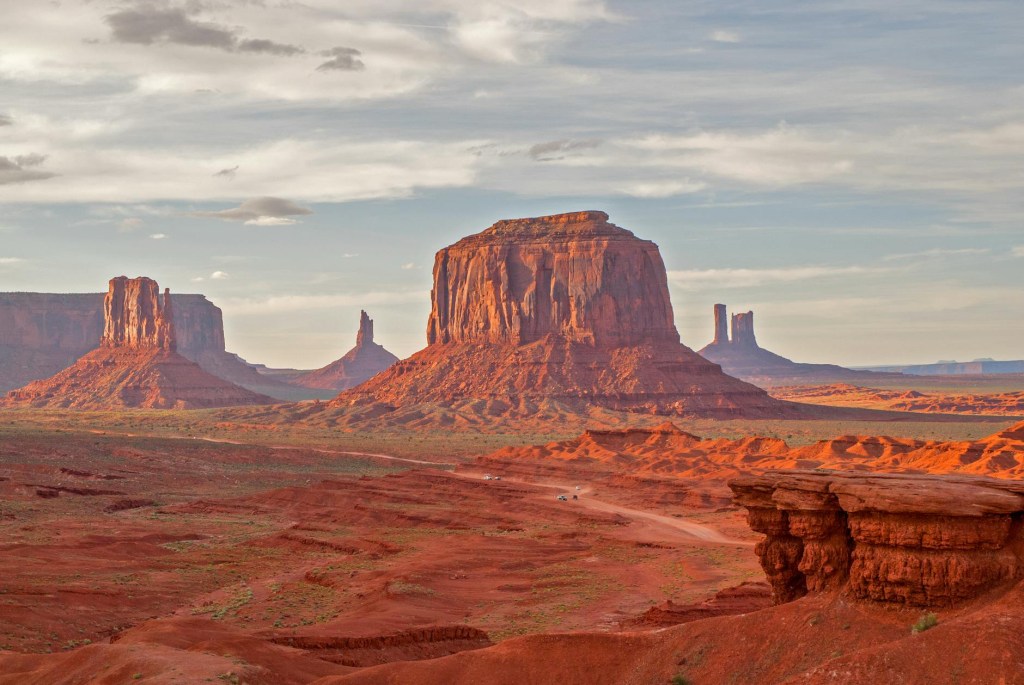
In each old west encounter, I learn valuable truths. The wagon train master insists that people that are different are not the enemy and forces the “Karens” to confront their bigotry . Victoria Barkley (Barbara Stanwyck is a force of nature) takes on any number of social ills because she believes people have value and makes sure family intervenes when there is injustice. Lucas McCain teaches his son Mark that violence is a last resort, but greed and lawlessness have no place in civil society. Each episode is a moral reckoning. In each episode right prevails.

TV Westerns remind us that good people must not be silent in the face of bigotry, lawlessness, and greed. Westerns remind us that it is everyone’s responsibility to promote the common good. Westerns remind us that the majority must step up to protect minority rights and that benefits of civil society should extend to all people.
If only it were possible to solve issues in a 45 minute episode. If only racism could be fixed by one person’s courage to speak up. If only a person could turn from a life of self centered swindling because one citizen offered grace.
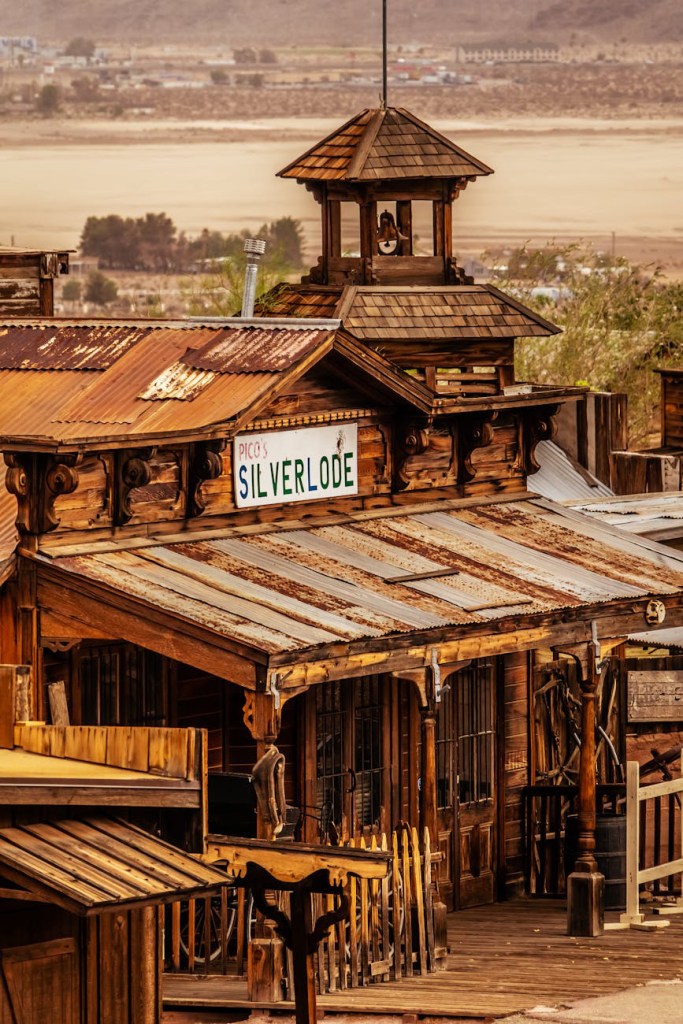
Call me Pollyanna. I already know that I am bound to be disillusioned. I have had countless students tell me “life isn’t really like that”, when I promote the civic virtues that underpin our fragile democracy. But the title of my blog isn’t accidental. I really am a prisoner of hope. If you believe in liberty and justice for all….you have to be……
Our ideals are no less valuable because they are hard to attain. We have no less obligation to commit because they manifest imperfectly. Nelson Mandela called it “the long march to freedom”. But I prefer to quote deputy Festus Haggen. “The onliest thing you get from stradlin’ the fence is a sore backside.” We must choose to live our core values.
What I learned from television westerns is that you have to choose what kind of person you will be and that choice has a profound effect on the world you have to live in. We will be imperfect. We will stumble. But just like Rowdy Yates we must
Keep rollin’, rollin’, rollin’
Though the streams are swollenKeep movin’, movin’, movin’
Though they’re disapproving’
So this morning, I will watch a western for inspiration. This afternoon, I will stand up for the civic ideals I believe in. This evening I hope to look back and say “Boy Howdy (to quote Heath Barkley) I have had me a day!”
-
Zoological Meandering: Travel Goals

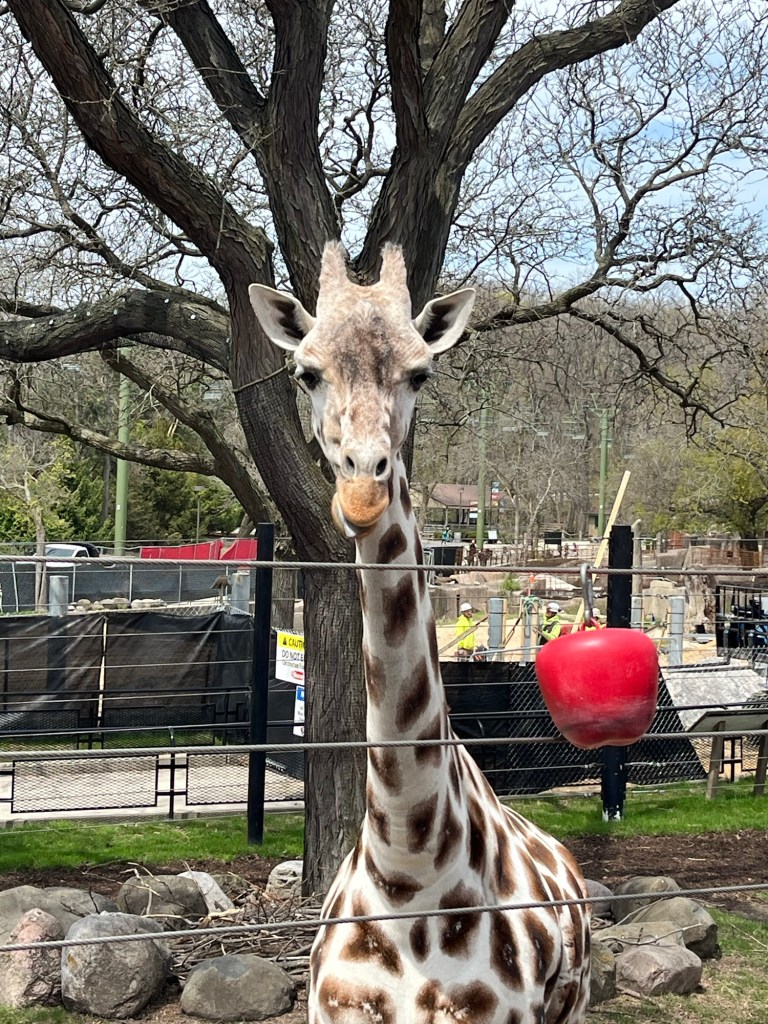
I love zoos. Where else can you go to see animals frolic, listen to children laugh, learn science, and also help conservation efforts world wide? I especially love zoos that take wildlife management and animal quality of life seriously. Today’s zoo have come a long way and are continuing to evolve. We like to visit as many as possible.

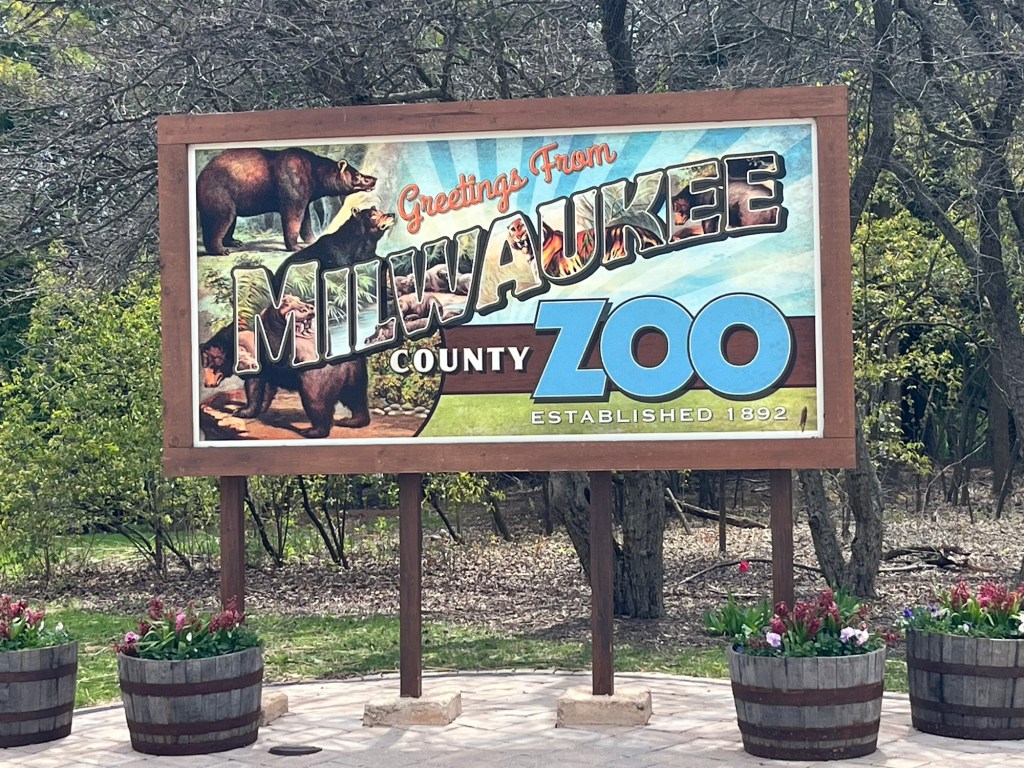
At the Milwaukee zoo, we were greeted by a flock of free range flamingos. Nearby, an owl family had spontaneously made the tall pines their home. Volunteers told us about the resident birds and it was clear they loved their winged neighbors. We loved the friendly greeting.
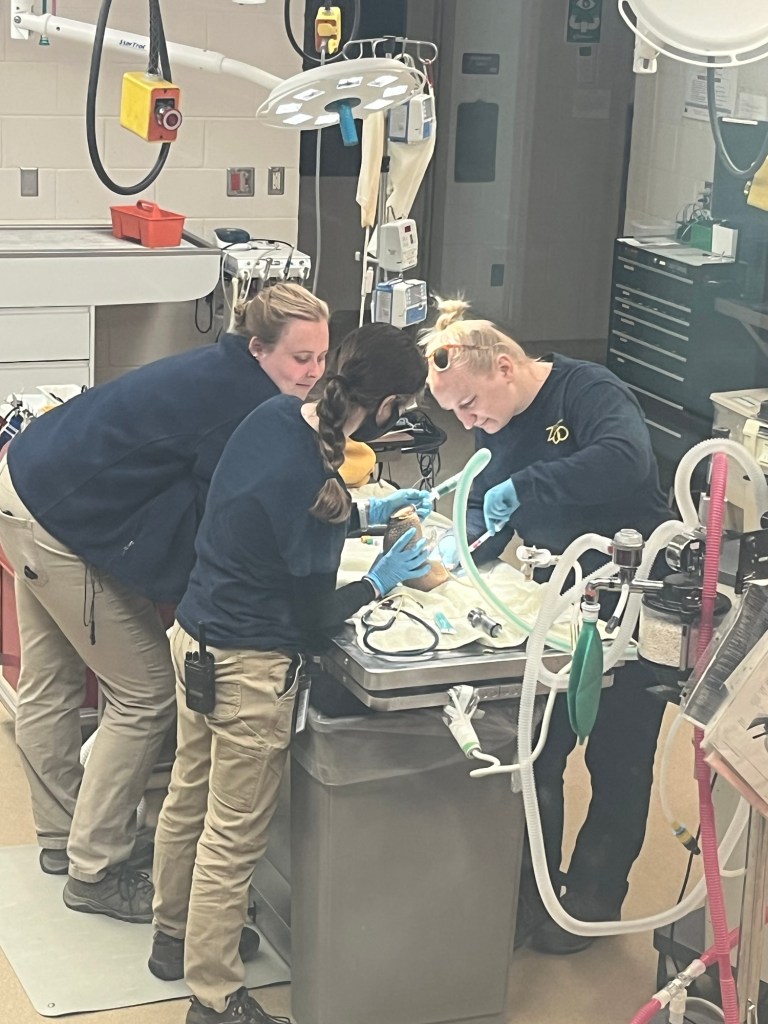
I was fascinated by the surgery center’s large observation windows. They made the behind the scenes activity accessible to the public. Today, the team was sedating an armadillo for a necessary blood draw. All manner of procedures happen here. An employee pointed out a milk carton that had been adapted for use with giraffe sedation. The perils and challenges of animal care are fascinating.
I won’t bore you with all the details of our trip to the zoo. I will simply say that when you sit eye to eye with another living creature, you learn things. When you listen to their breathing and you watch their routines, you connect in ways that are mutually meaningful. You begin to understand that we each affect the other. We only have this one beautiful world and we are called to stewardship. So we will continue to visit, enjoy, and support conservation efforts. I hope all these smiling children are going to grow up and do the same.
-
Rural Road Trip: Out for a Walk

When the mind races, I take a walk. If I am overwhelmed, I walk. If I have time to kill, I walk. Walking is good for my body and mind. I don’t really need an excuse to take a walk. Today I found myself with an extra hour between appointments and decided to take advantage of the paved river front trail. As much as I like to travel, local life has its charm.

I step out of my car and onto the paved and trail and almost immediately feel the calming effects of the natural surroundings. I am dressed for a meeting that will happen within the hour, but this trail is like a long sidewalk through the woods. I think I have time for about a mile in and back.
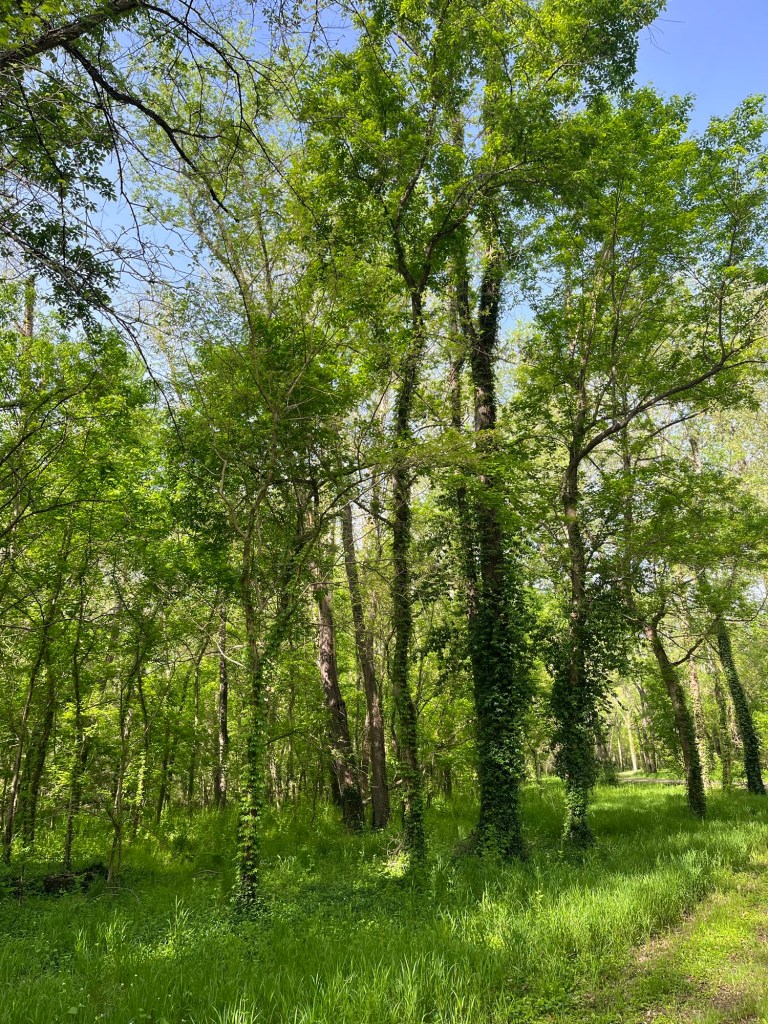
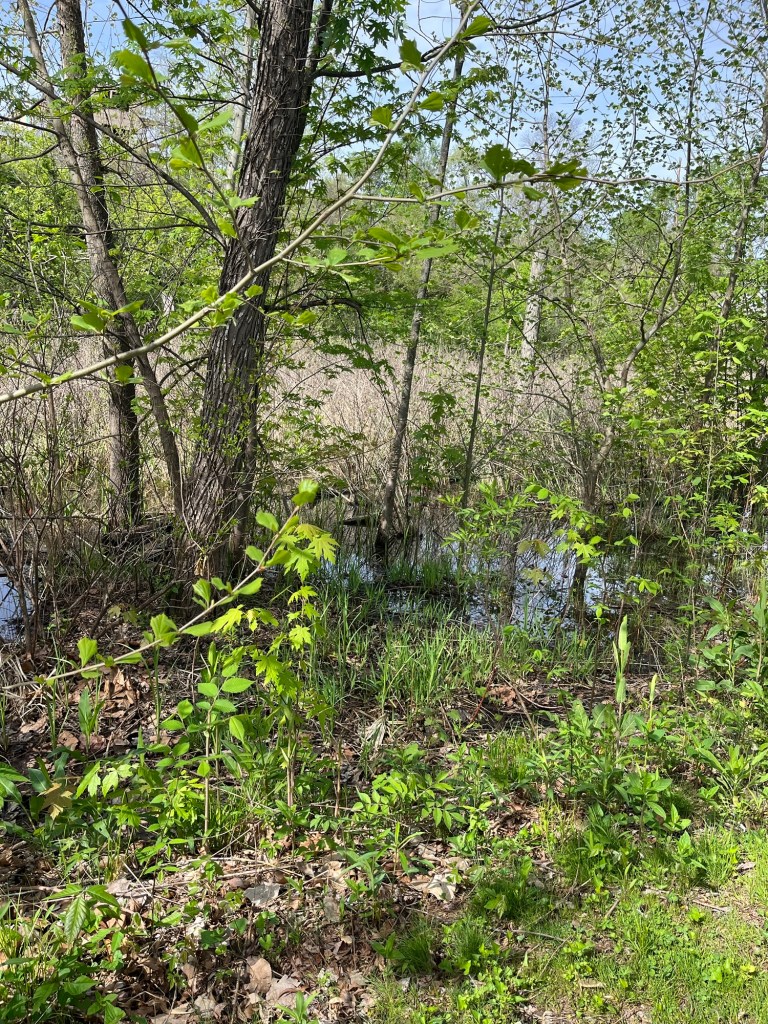
The trees are whispering their greetings. The rustling of leaves pleasantly welcome me into their midst. I gently touch the bark of trees along the path to return their greeting. Old men ride by on bicycles. They are moving fast, much too fast to appreciate the aroma of the spring undergrowth or the way that light dappled the forest floor.

Birds are singing a disjointed symphony. I hear the familiar cardinal and robin song. Small birds twitter in the vines. My Merlin app tells me that the warblers have also arrived and that we have a Northern Parula here as well. That explains the vibrant blue splashes darting about.
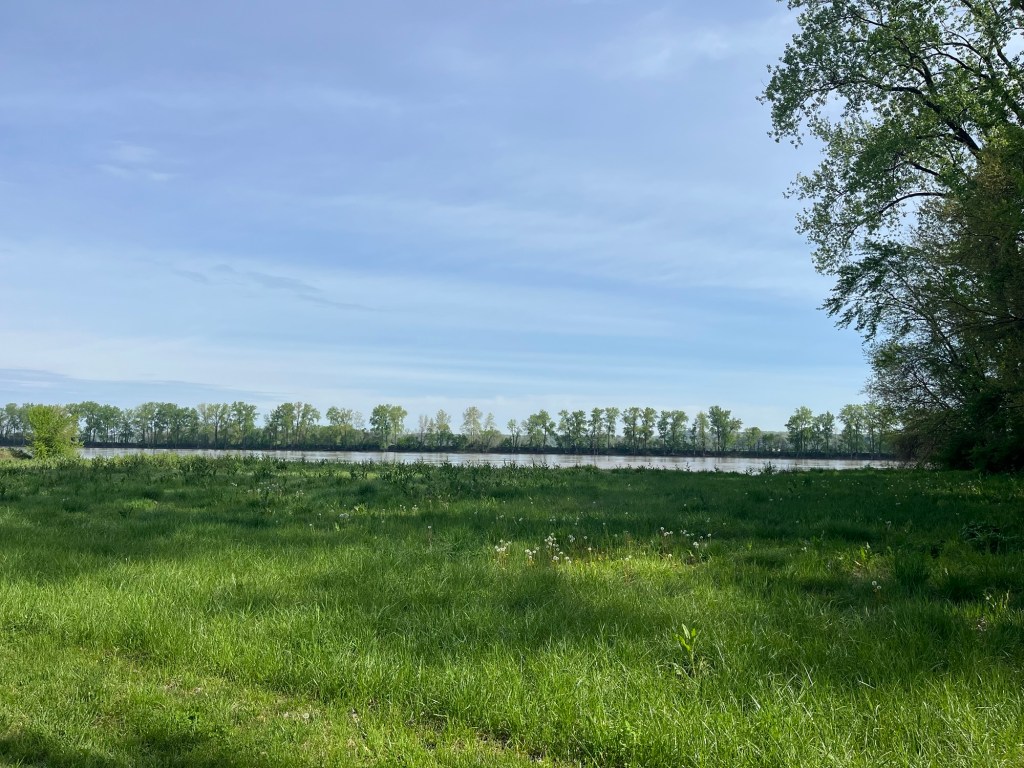
In the clearing, I can see the broad Missouri River rolling by. Large logs float down the current. The water is high from a lot of rain, but not yet at flood stage. A man walking his dog passes by. I say hello, but am ignored. No matter. I am here for the scenery.
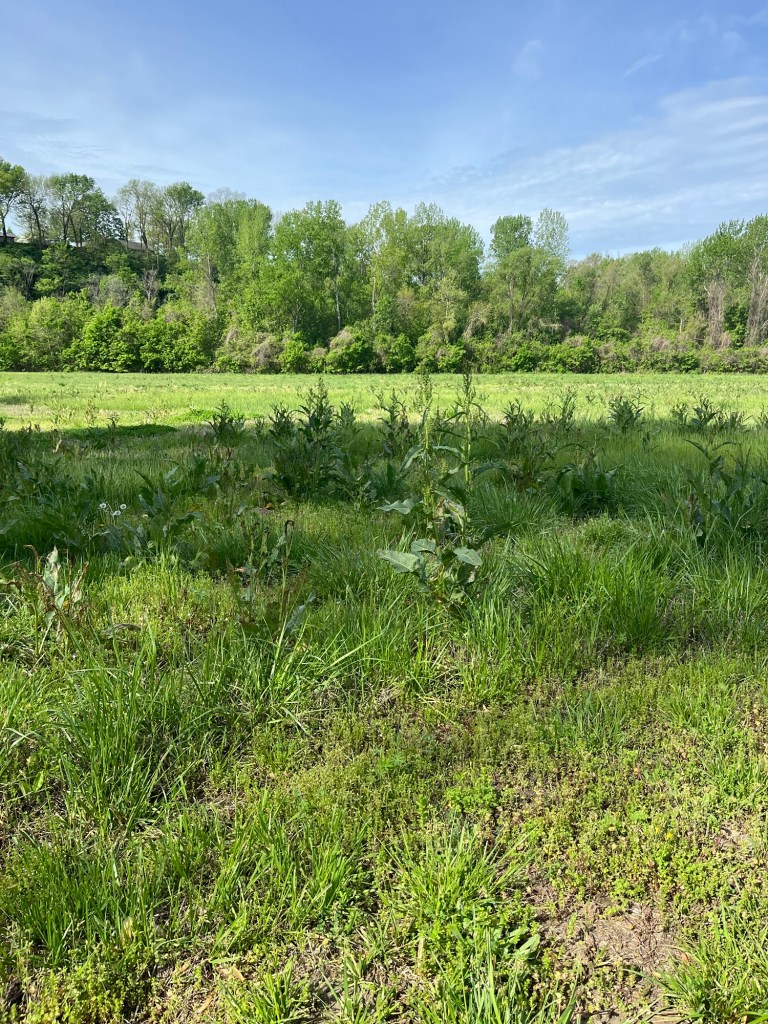
I realize the time, and reverse course. I have less than a half hour to walk back to the car and get to the meeting. I am content to walk in the shade of the trees and think through my meeting notes. I don’t notice a guy on roller blades who skates up suddenly. He says “you look like you are going to prom.” I have on a very casual skirt and walking shoes. I guess perhaps he is not used to seeing a woman in a dress. He says, “will you go to prom with me?” I simply smile and tell him I hope he enjoys his skate.
On my way to the car, I say goodbye to the trees. They have better manners and are always glad to see me. They don’t care if I am in my dirty clothes or my summer skirt. They don’t expect witty conversation. They don’t demand to know where I am going or where I’ve been. They just stand solid, tall, and beautiful and await my return.
-
Peonies Make Me Think Of You

In the Spring the peonies pop up from the ground in vibrant greens. As their big leafy stalks appear, I think of you. Memories come unbidden of sitting on your front porch in the Spring rain. I would rock slowly in the old iron chair that used to sit in your Dad’s lawn. Generational history unfolded as we sat and rocked and talked about the weather.
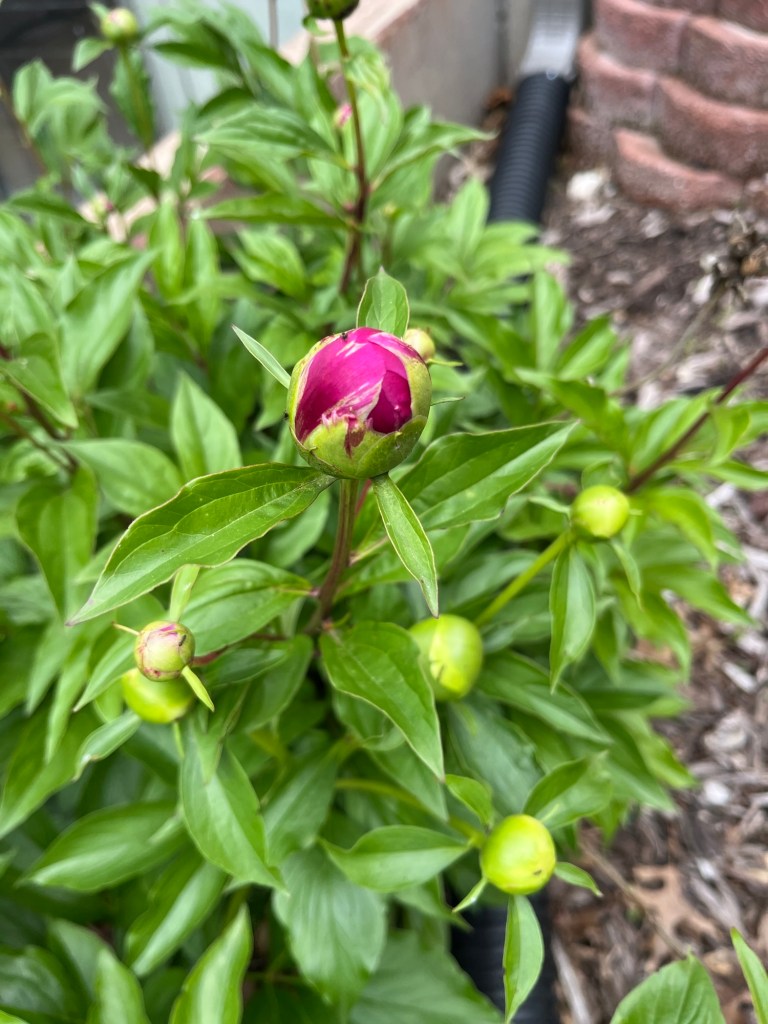
I noticed bulbs forming today and I thought of the large bushes in your yard and the Spring blooms. You showed me how to shake out the ants before we brought them in the house. You laughed when I read about using hairspray to drive out the ants, but we tried it anyway with some success. You smiled your shy smile when I told you how beautiful they were.

Peonies make me think of you when I see the large blooms and I think of how you doted on me. You made me feel like I was the most special child in the world. As I got older, our visits were less frequent. I moved. I had to hear from Mom how you passed out in the yard tending your plants. Visiting you in the nursing home, there were no blooms. But you did develop a passion for afternoon bingo and you never lost your spunk.
We lost you in the Springtime and when the florist in town told us they couldn’t get flowers for the funeral, I went to the city to place an order. Your grandson drove the large casket covering arrangement down in his suv. No one tells us our Grandma won’t have flowers at her funeral. And when they brought the large blanket of flowers in, covered in glorious pink and white peonies I smiled. Peonies always make me think of you….
And when my own daughter walked down the aisle with a bouquet dotted with peonies….you were with us. Just like this morning. I sip my coffee, smell the sweet fragrance of the flower we both love and think of you.
-
When the Culture Gap Seems Wide: Travel Goals
We have been home for almost a month and Norway seems a distant memory. I finally have the photos digitally organized and labeled. My photo book has been ordered. I have even created a dvd slide show of our adventures. But what I have really done is stored memories that help us bridge a culture.

We travel to encounter places that are different than our lived experience. We hope to make the wider world more familiar. By the time we return from a month abroad, what seemed odd or exotic is suddenly familiar. My pictures remind me of those early encounters when the culture gap loomed as a chasm.
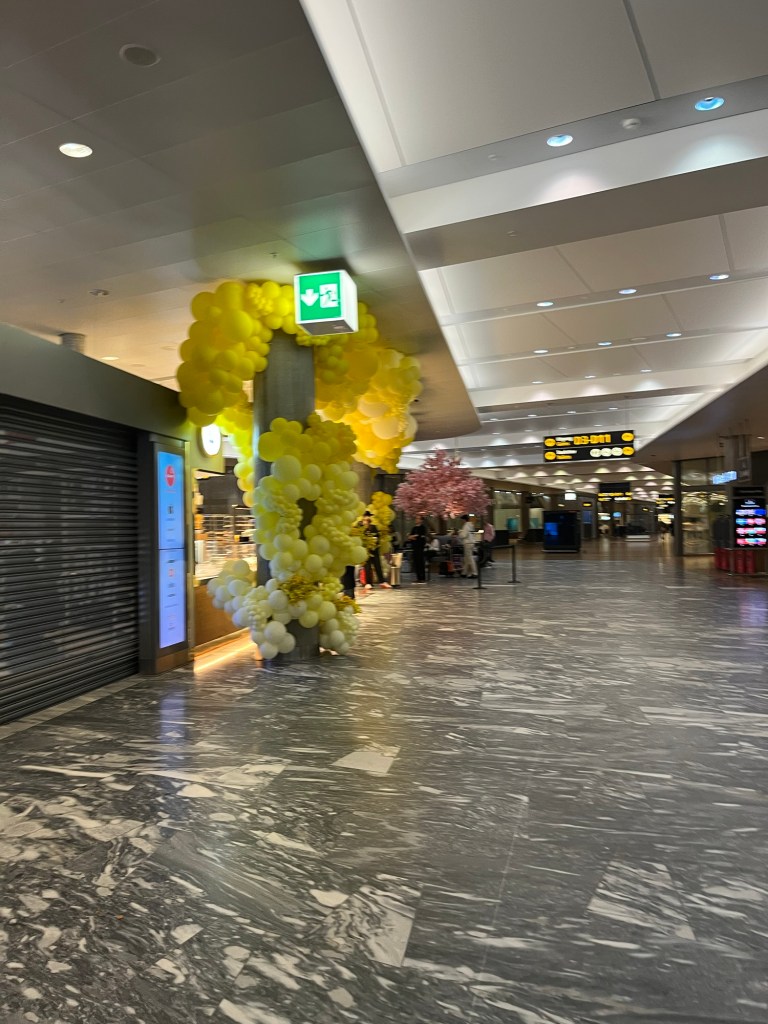
It usually happens as early as the airport. In Frankfurt, the coffee shop did not accept cash and my carefully saved euros from our last trip to Europe just stayed in my pocket. Then in Oslo, there was no customs and immigration check point. We just walked out the airport as if we were on a domestic flight.
That seemed odd. But I soon learned that in Norway there are grown men whose name is Odd. So you can’t say something is odd. For me, that was really confusing and a little funny. “Ask Odd” does have a nice ring to it. Oddly, none of the men named Odd seemed Odd. (I will stop with this now).
Sometimes things feel out of place. You can see the invisible rules, but you aren’t sure exactly what or why they are. At Norwegian bus stops people wait standing at least six feet away from another person in a straight line along the sidewalk. It is curious to see these long lines of people waiting quietly, not making eye contact knowing that in a few minutes they will be crowded inside the bus. Often they are seated or standing cramped together in tight spaces. Perhaps Norwegians fortify themselves in their personal space before being subjected to togetherness. Small talk in either setting is not encouraged. Younger people were a bit more talkative with each other. But virtually no one acknowledged strangers.

Unable to talk, as I stood in my own personal patch of sidewalk waiting for public transport, I noticed the men didn’t really spend too much time on grooming. Hair was often unkempt and did whatever it wanted without challenge. Long hair and Viking beards. Short hair sticking out in all directions. Frizzy mid length. Oddly a lot of people reminded me of Bernie Sanders.
I also, unfortunately, noticed that it was acceptable (and all too common) to hack up a lung while you waited and spit the contents directly onto the sidewalk, preferably to the edge of your six foot waiting zone….even if that put it into someone else’s zone. Disgusting.
I tried to distract myself by counting the unusually tall individuals that we regularly encountered. Six and seven foot tall humans with striking blue eyes and long blonde hair seemed to be everywhere. On public transport this left me looking at their armpits as I tried to hold onto the strap to keep from falling the tram rolled along. Beautiful people whose very appearance screamed Nordic. It was hard not to stare.
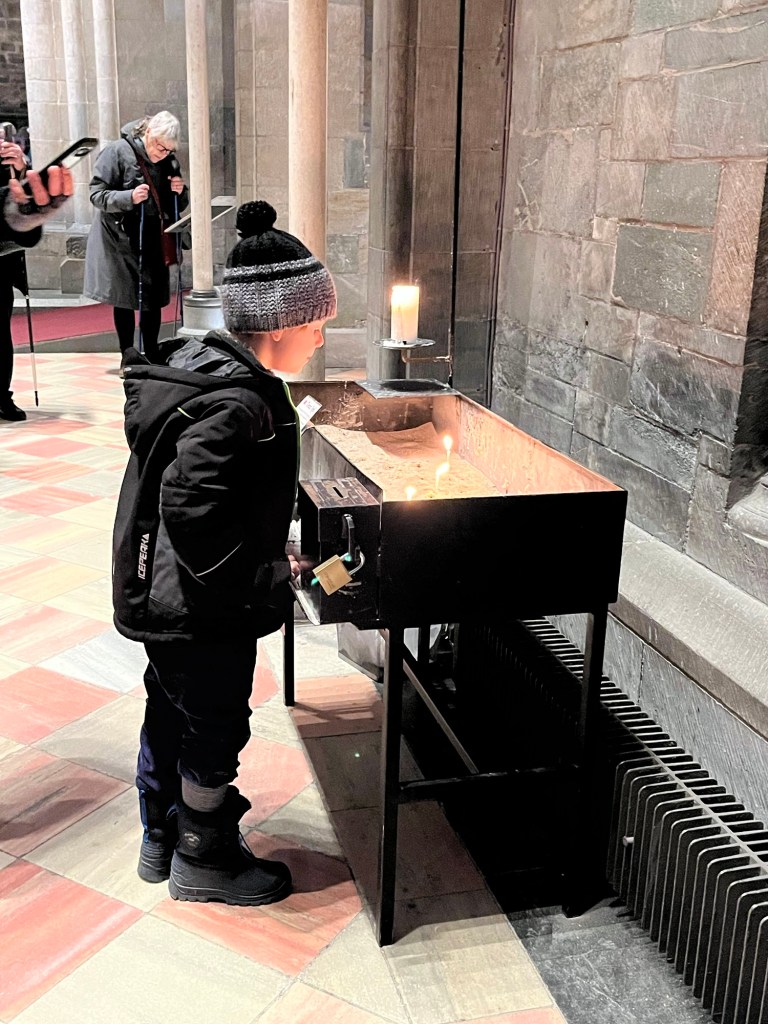
Beautiful people make beautiful babies and children were everywhere. Norwegian children seemed to do whatever they wanted, wherever they wanted without challenge and with minimal adult interference. It wasn’t that the children were ill behaved, they just seemed feral. (Of course, this may just be the universal new age of parenting.)
Perhaps this fierce independence comes from the Norwegian practice of bundling your child and putting them to sleep in their stroller and then leaving them outside for their nap. We encountered a number of babies parked on the sidewalk in 30 and 40 degree weather while a parent sat inside a coffee shop having a pastry. It seemed so strange to us. When I inquired a man responded “of course it is good for them. The air makes them healthier ….and who would want to take someone’s child? It is hard enough to raise your own.” Can’t argue with logic.
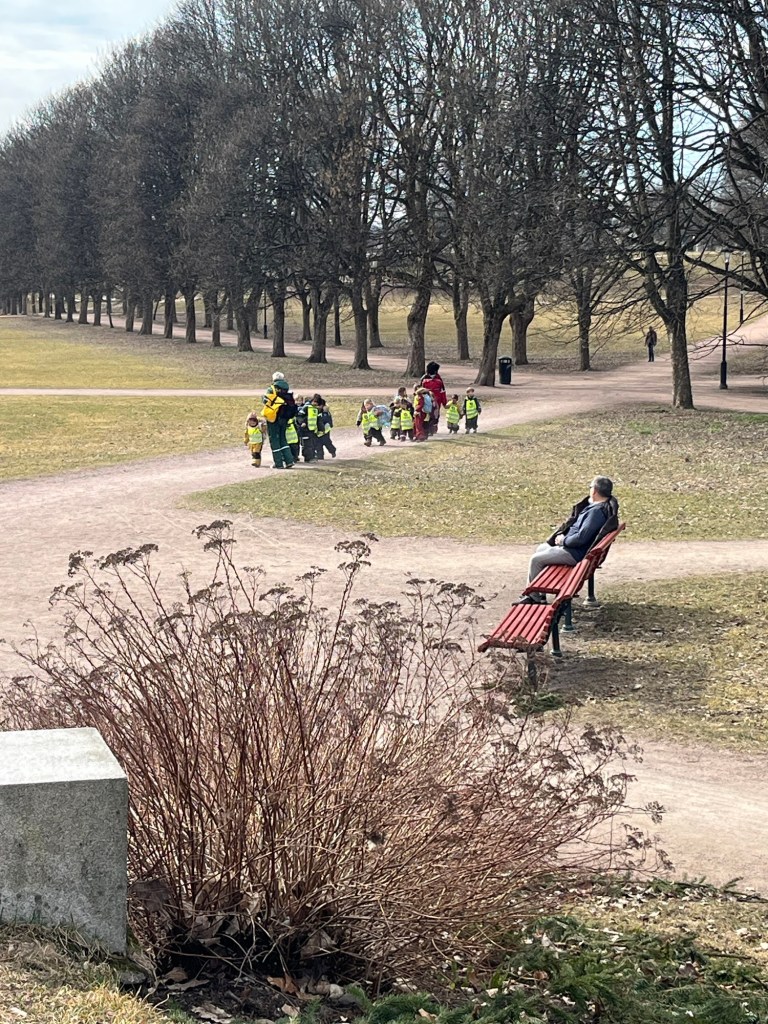
This outdoor obsession carried over into the daily life of school age children. The Norwegian school day was short compared to the U.S.. Every day we encountered students on field trips throughout the city. Preschool students filled the parks on their daily field trip. They would roam the grounds in their tiny yellow safety vests, climbing, running, and jumping. When it was time to go, they held hands and sang their way back to the tram or bus. Small children navigated the public transport alone on their way to or from school. High school students ignored their teachers and charted their own course to the field trip destinations. Once there, they determined whether to engage or to sit outside the venue. As a teacher, I was dismayed at what I perceived as lack of engagement. Norwegians likely have a different take on their field trip outcomes.
My biggest worry while we were out and about was finding a public toilet. Most fee based establishments had clean and free restrooms. Sometimes they were accessed with a key or keycard. But parks and outdoor venues had pay toilets. If you were lucky, they took coins. The worst (in my opinion)were credit card controlled toilets. I hated making a two dollar credit card purchase to use a toilet. In every situation where I had to pay to pee, there was no toilet paper.

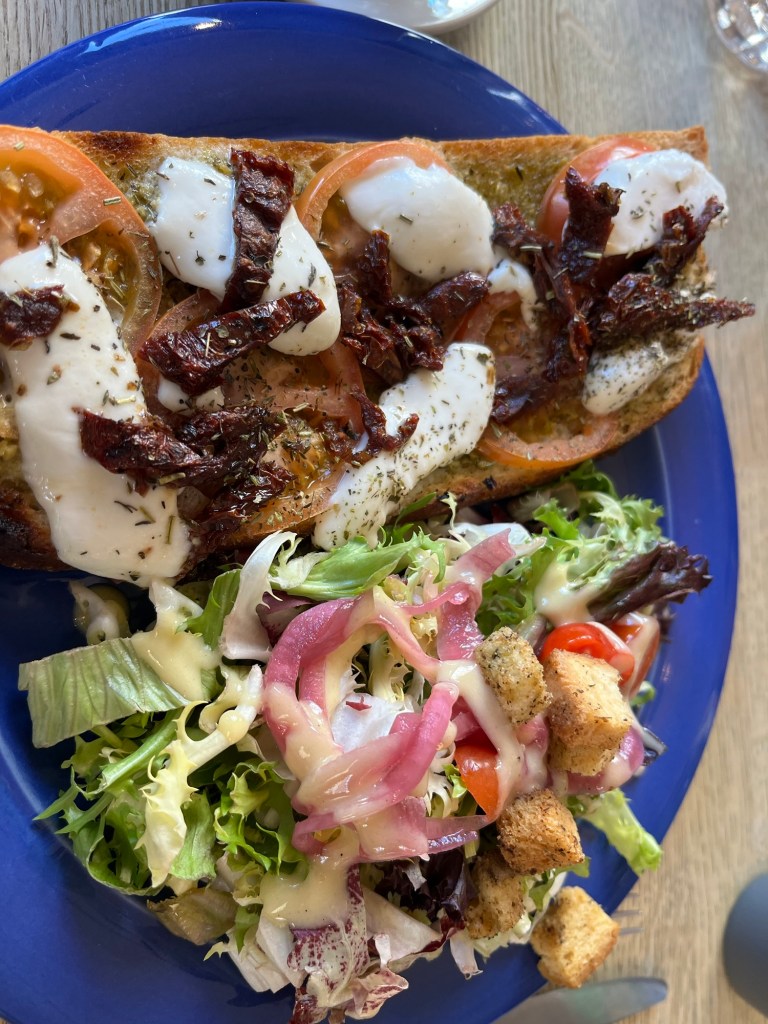
Culture shock also set in at the grocery store and restaurants. Food in Norway was very expensive. My eyes popped out of my head when I tried to buy a very small beef steak (smaller than my palm) and realized it would cost over forty dollars. So we adapted new eating habits with adjusted eating times, more bread, and less red meat. We discovered, however, that we love reindeer steak. We also learned the simple pleasure of an afternoon coffee and pastry break.
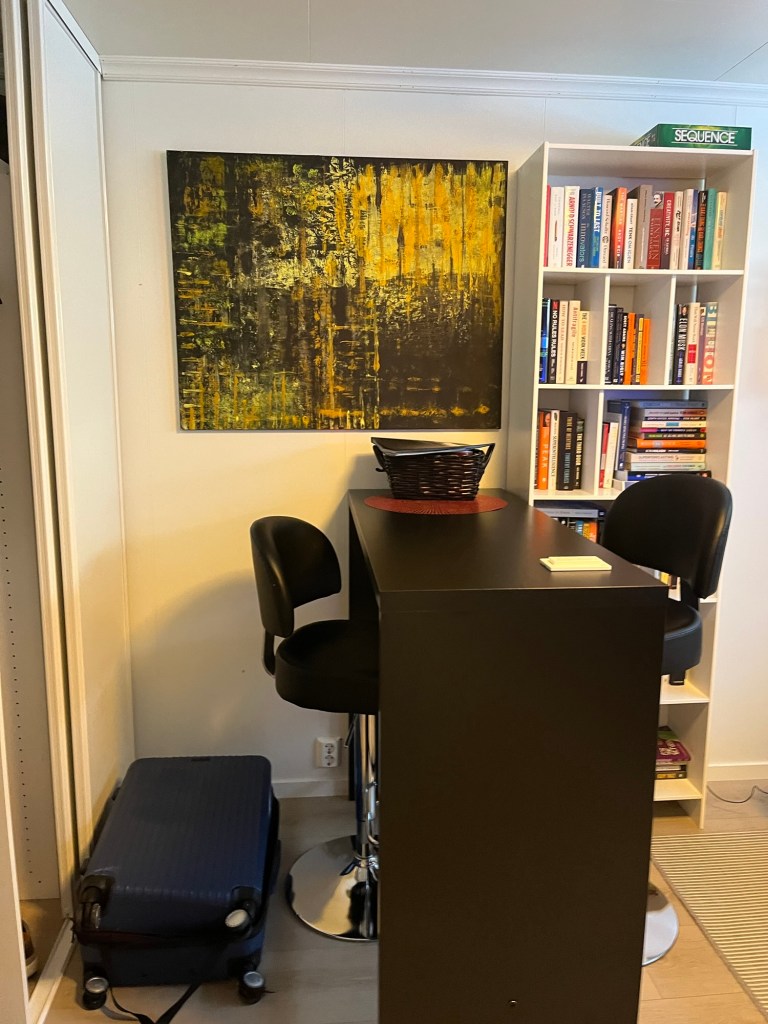
Life at home also presented some challenges. The apartment looked like an IKEA showroom. Space was carefully utilized. The kitchen was small but fully functional. The stove had a safety setting and would turn itself off if its conditions were violated. I had to learn some new tricks. Thankfully, the washer was a model I had mastered on a prior European Vacation. I did learn to use a closet dryer (a clothesline in a closet with a heating element in the floor). And we learned that wall vents (think dryer vent size holes) are cut high on the outside walls of each apartment to help circulate outside air. Outside air is cold when you are above the arctic circle. No matter, we were still instructed to open windows and refresh the apartment daily.

Our last apartment was located in Grunerlokka, a diverse neighborhood of Oslo. The street was lined with barber shops and middle eastern grocery stores and restaurants. One morning we arrived at the bus station as people were returning from the mosque. Hundreds of people in their Sunday best. Djellabas, burkas, fez, turbans, saris…..stark white to bright colored. People from many nations joined together in faith. An endless procession of people content in their world. I stood and I watched the greetings and hugs. The handshakes accompanied by stories and smiles evoked memories. This scene was so similar to scenes I experience every Sunday as the community gathers in our mid-western Christian church. I found myself smiling as I watched the interactions. I was comfortable because even though the religion and nationalities were very different, I recognized the ritual. Salam alaikum…..wa alilaikum salaam (peace be with you…..and also with you).
So many memories….so many things that seemed strange….so many things that helped us grow and rethink and relearn. In most cases, we learned to see the wisdom in the differences. We learned how history, resources, and tradition influence choice. We adapted. And we came home grateful and changed. Even when the culture gap seemed wide, we realized we are more alike than different. And that connection is empowering. When the culture gap seems wide, we need to build more bridges.
-
Leaving in a Jet Plane: Travel Goals
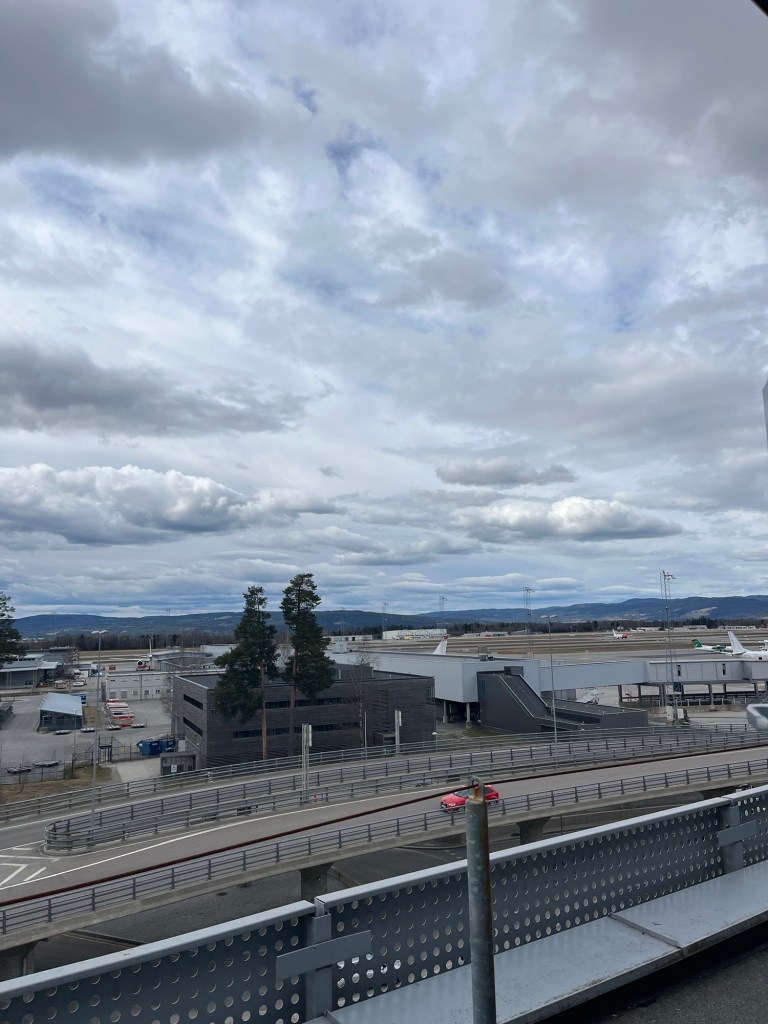
I used to love air travel. It seemed glamorous and uncomplicated. Over the last two decades, while prices have gone up, the experience has definitely lost its luster. Perhaps I am jaded or turning into an old curmudgeon. Or perhaps profit motive and misguided security measures have ruined the experience.
I used to call a travel agent to do the legwork and hand me a paper ticket. That ticket felt like freedom. On the day of travel, I would show up on time and walk to my gate to board. That was it. No fuss and no drama.
Today, I buy my own tickets online. I love the power of search engines. Google flights and fare finders have saved us a lot of money. Technology is very helpful in that regard. But airlines are very crafty. Do you want to pick your seats? Extra charge. So you buy the upgrade. But the only seats you can pick are middle rows. Want an aisle? additional extra charge. Want to be able to change your flight? Extra charge. Want to take bags? Extra charge. Need to carry on a bag? May be an extra charge. Need a snack? May be an extra charge. Need assistance from a gate agent? You guessed it…some airlines are now charging for the privilege of having airline employees help you with their check in process.
I try to ignore the creeping cost of flight and the infuriating added charges. But now, we check in online and then get to the airport early to check in our own bags. Security lines are long and after I practically undress and have my bags scrutinized, I scramble to put on my shoes and make sure that everything is repacked and not left in the security trays.
At the gate, I have wait for fourteen variations of groups before they ever get to group two. If I have an aisle, I may be in an even later group. If so, they will likely start fussing that there is not enough room for my carryon. They may try to take it from me, even though I explain it only has electronics and medicine. Once on the plane there will be plenty of room until that one old guy comes on board with three items (how did he do that?). One will be oversized. He will attempt to to shove it forcefully into my small bag of electronic equipment. If I tell him that my bag is fragile he will scowl at me and shove harder.
I will sit down and try to ignore his elbows and knees that are halfway into my seat. Because he was assigned a middle seat, he feels entitled to manspread into mine. If he is feeling brave, he may try to raise the armrest between our seats. I will have to move it back so he isn’t sitting in half of my seat as well. If he goes to sleep, he may slump onto my shoulder.
I will blow up my pillow and try to go to sleep. The flight attendant may tell me that they are not allowed (even though I have used it on dozens of flights). So instead I will sit, awake, staring at the small screen that is inches from my face because the passenger in front of me has reclined as far back as possible. At least I have an aisle to turn my face toward. I will only be bumped every time a flight attendant passes by. Whew…it is a logistical and tactical battlefield.
Eventually we will land. The excitement of arrival will usually outweigh the amount of extra time I have to spend waiting on my checked bag to arrive. On the plus side, I can now track your bag in real time. That is a real advantage for international travelers that is almost as useful as the interactive airport maps. If I have to do it myself, real time information is absolutely essential. But I still miss the uncomplicated and glamorous full service airport experience. I would gladly trade my airline apps for full service and a paper ticket…. If only…..If only….

-
Subscribe
Subscribed
Already have a WordPress.com account? Log in now.
 Prisoner of Hopes