-
Chena River Discovery: Travel Goals Alaska
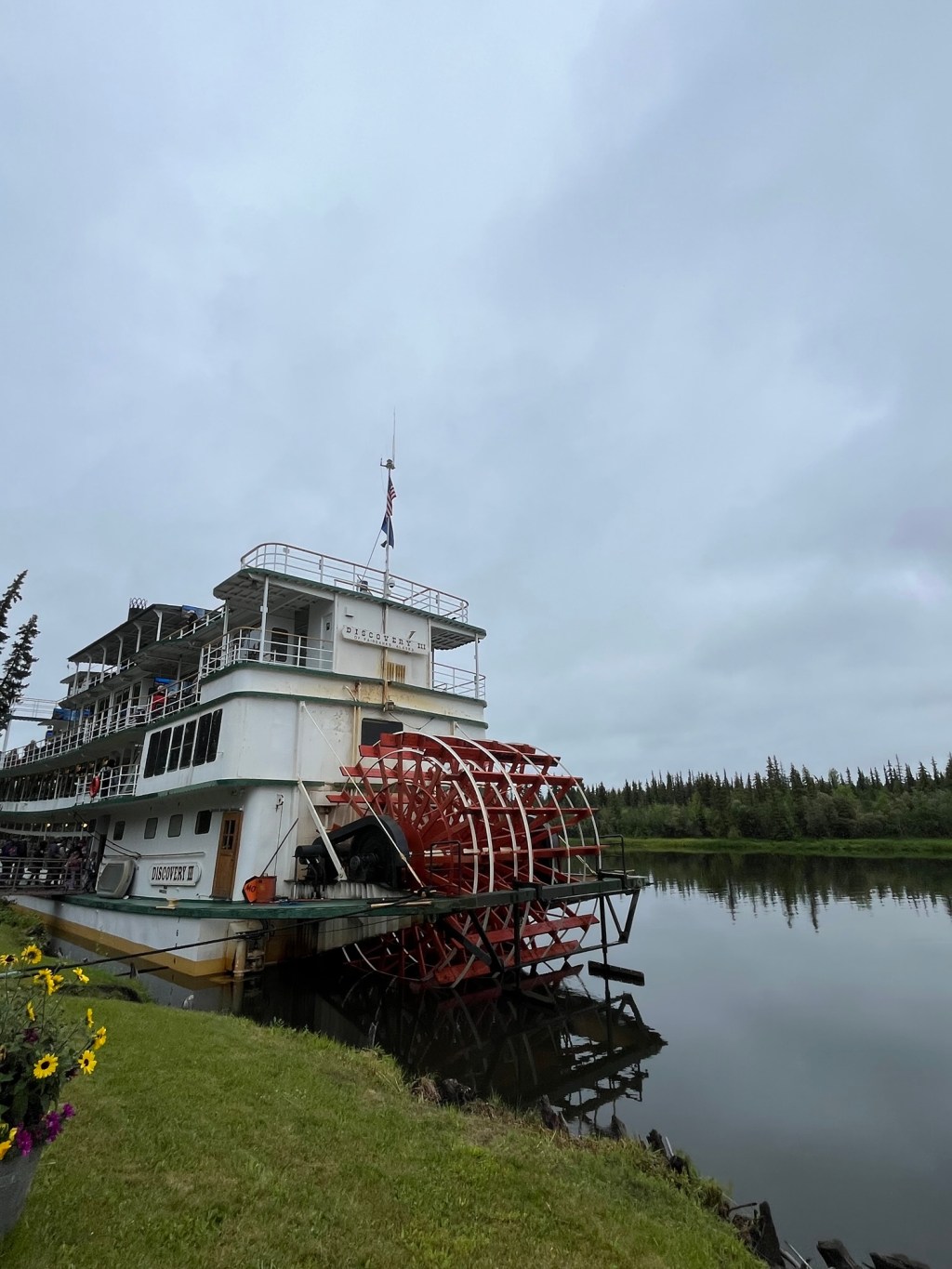
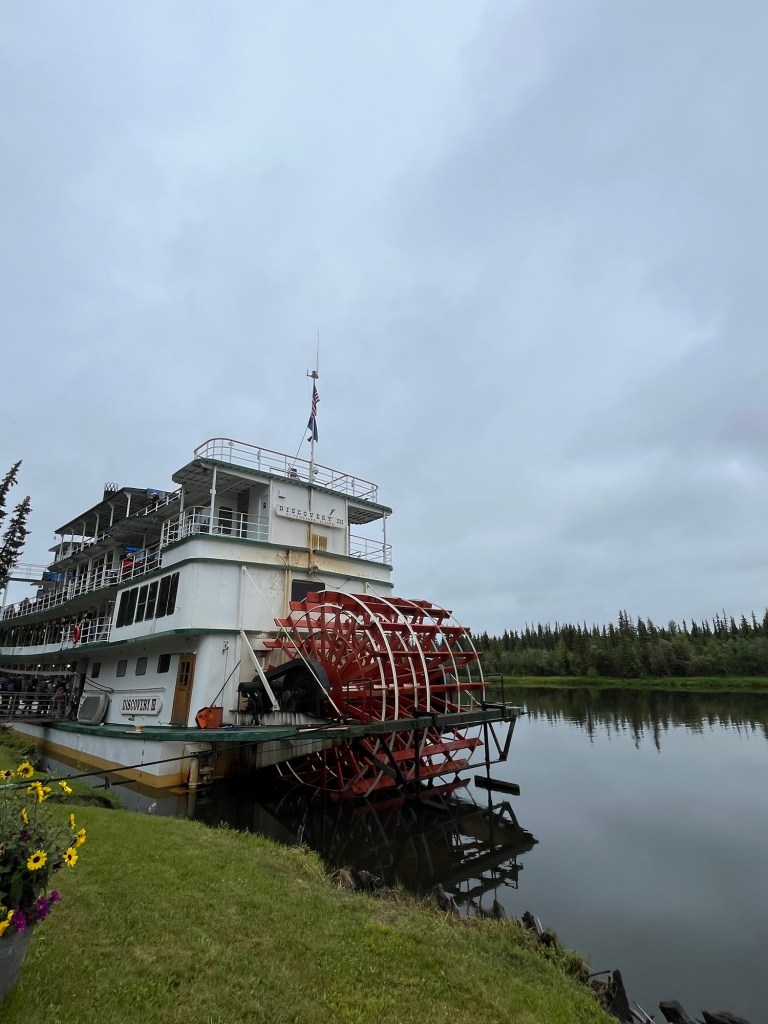
I’m making the bold claim that the Riverboat Discovery cruise is the best value in Fairbanks. I was impressed start to finish. We skipped it on our last visit, because it seemed like just a short ride up the river. We come from Mississippi River country and have been on our share of river boats over the years.But this time, a ride was arranged for us and we happily went along.
It was cold, but we picked seats outside on the top deck anyway. A little cold mist never hurt anyone. It is the only way to enjoy the water. I immediately noticed a large digital monitor at the front of the seating area. I didn’t have too much time to wonder what it was for before they served us hot coffee and warm blueberry donuts. Let’s be honest, at that point I was putty in their hands.
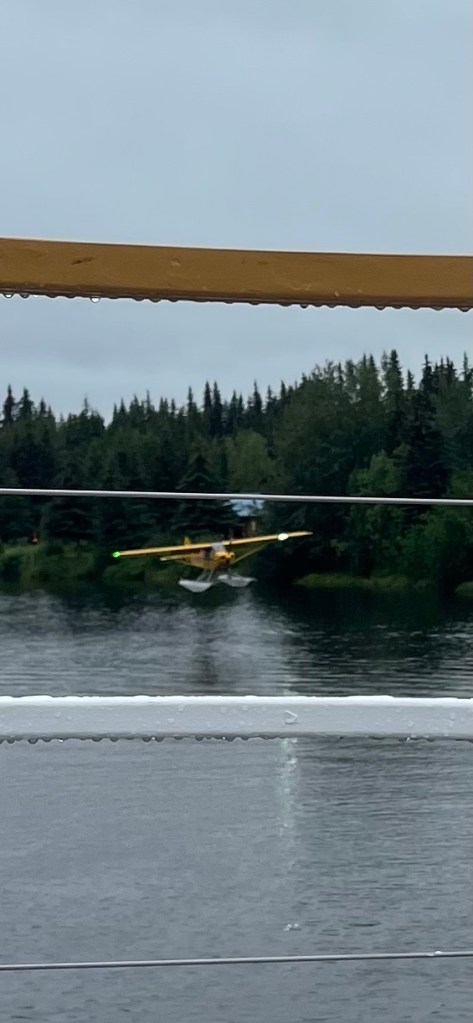
While I was still happily sipping my coffee a sea plane began making take offs and landings next to our boat. The large screen in front of my face came alive with a live stream of the pilot. He wished us good morning in real time and explained the importance of the sea plane in remote Alaska. He also did a few more take offs and landings to the delight of the tourists, while he explained the technique.
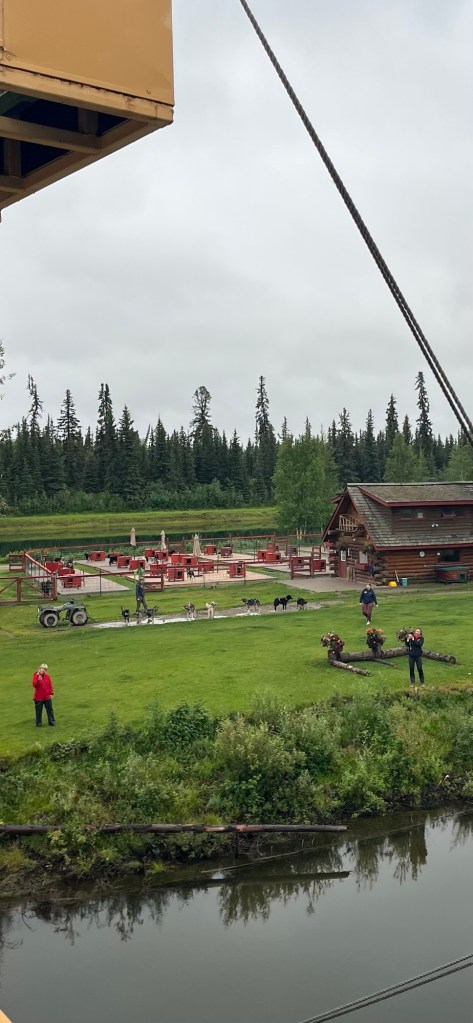
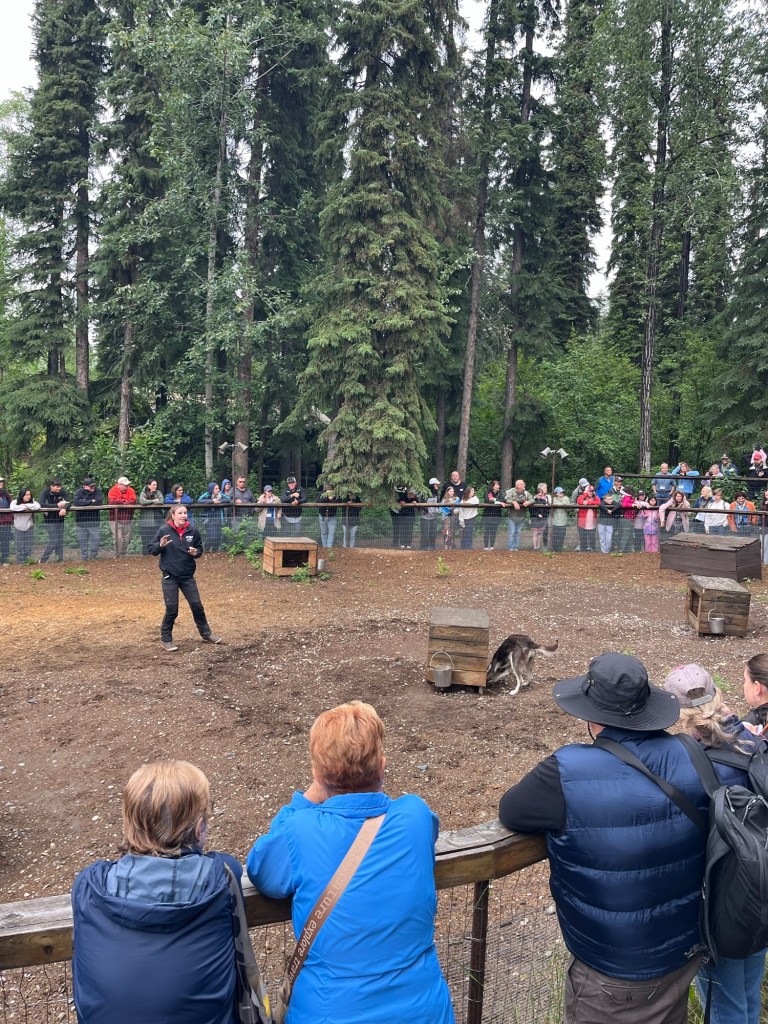
Residents stepped out of houses along the river to wave as the boat floated past. Suddenly we stopped beside a large kennel. The big screen came on again and we chatted with Tekla Butcher-Monson, daughter of the famous Susan Butcher (the first woman to win the Iditarod). She owns the The trail breaker kennel, and they pulled out all the stops. They showed us puppies and even had a live sled dog demonstration run. Of course all of it was projected on the big screen so we didn’t miss a thing. My head was on a swivel watching on the bank and then the screen. It was a pleasure to hear her story and see the dogs.
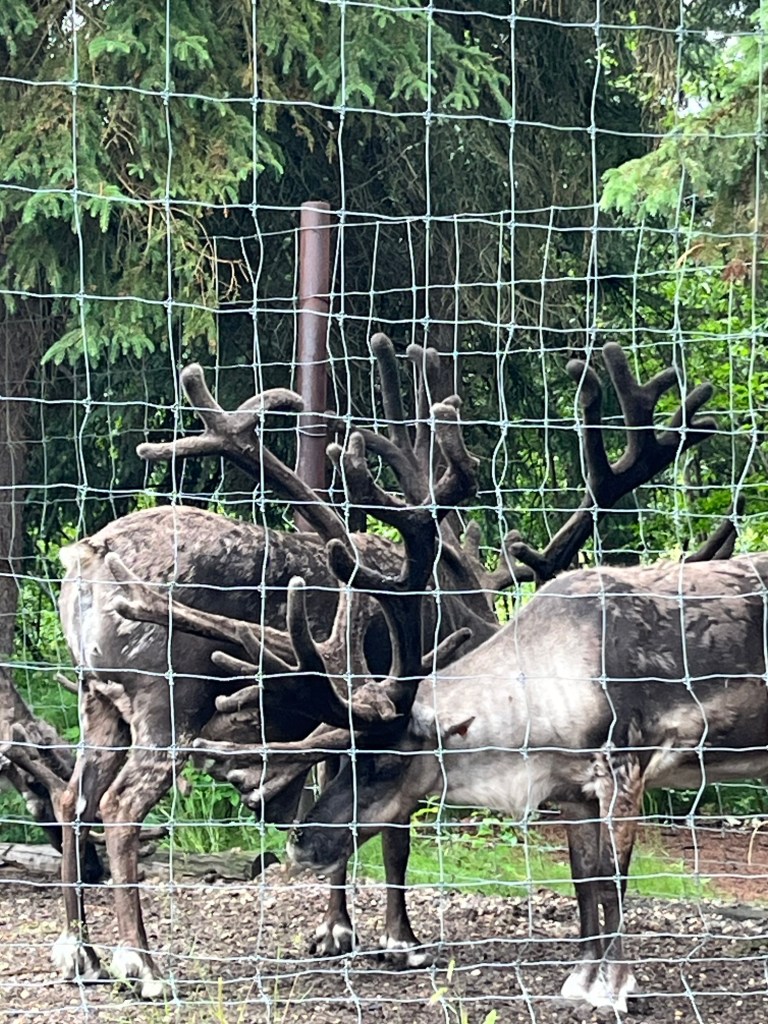
Further along, the family that owns the boat talked about running the operation and growing up in the family business. It seemed to be a generational family affair.
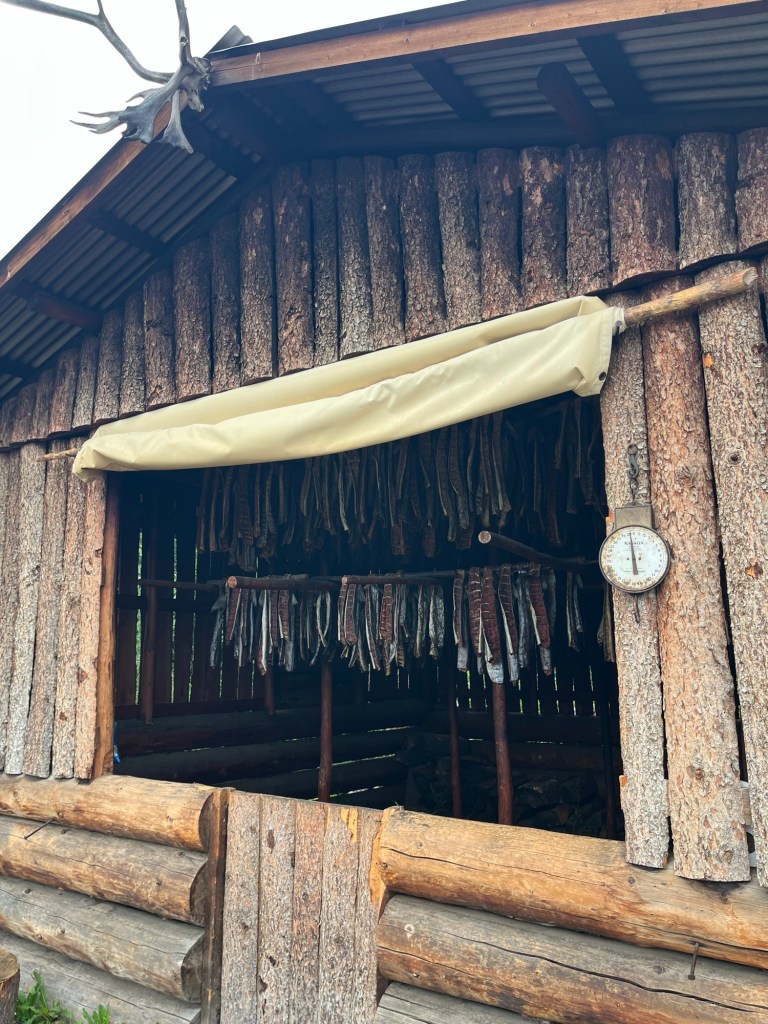
Caribou came running out of the forest just before we reached a native village (recreated of course). They are pets and we eventually got to see them up close and personal. But what a delightful surprise.
I noticed a large fish wheel and a salmon smokehouse but we sailed right on by. A native guide waved as we passed. I thought we were stopping. I was confused.
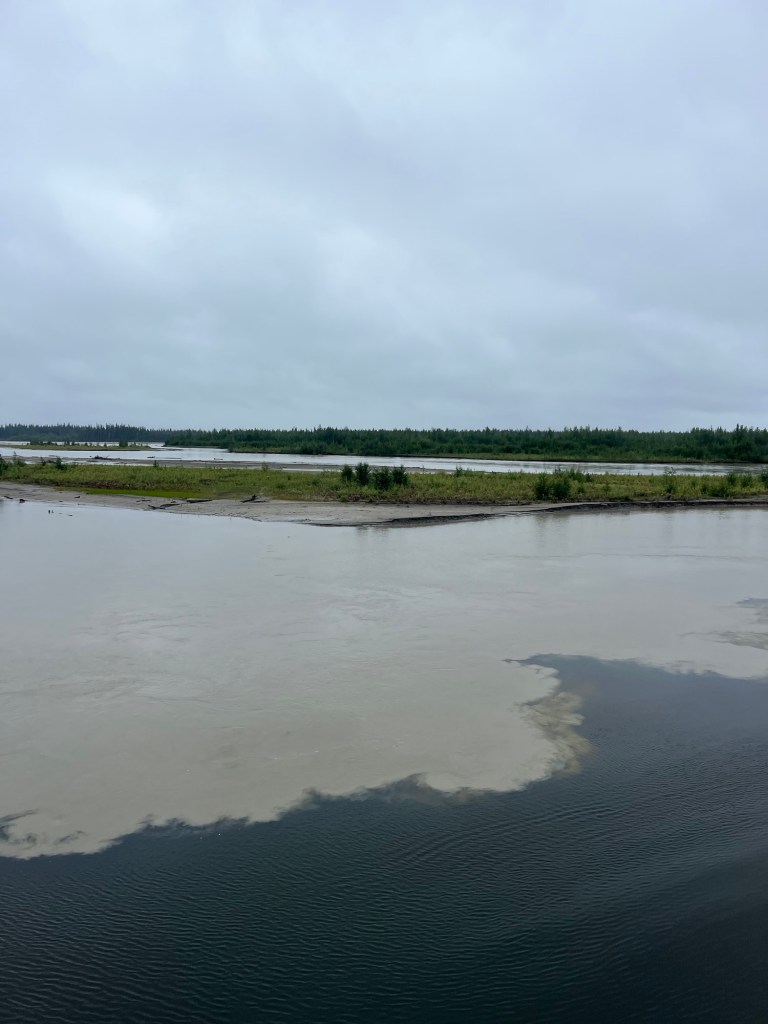
Then we were suddenly into the river’s confluence with the Tenana River. The water was two different colors, making a dramatic contrast. Just as we entered the merging water, we reversed course and stopped at the village after all.
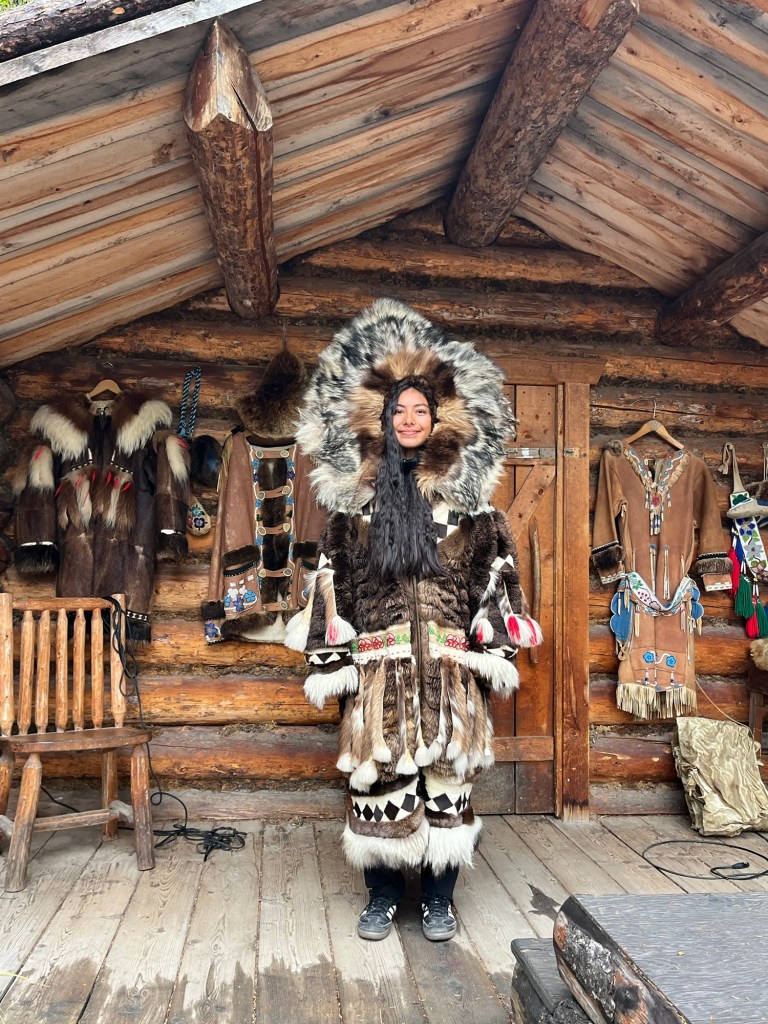
At the village, we exited the boat and two native Alaskans took us on a tour explaining native culture and history. We learned about the importance of caribou and other game. The young lady modeled a full winter fur coat. It was astonishing.
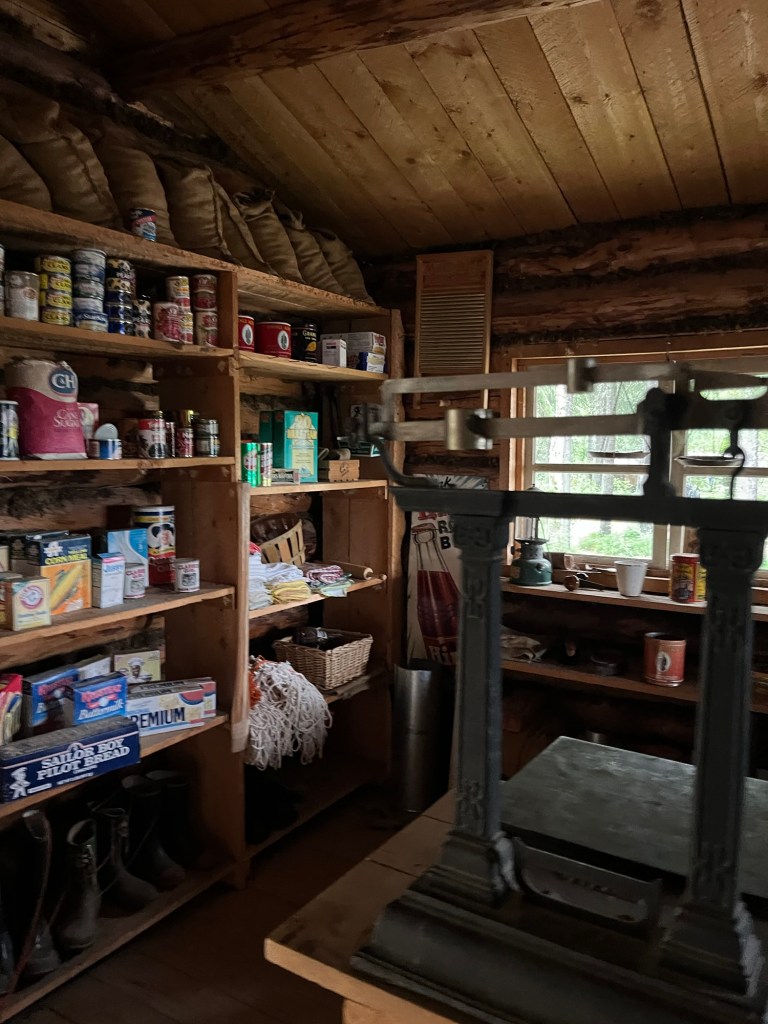
We toured cabins and took pictures with a stuffed moose. Every fifteen minutes or so we would rotate locations and be told more stories. Time passed quickly.
We opted to walk to the back section and play with the sled dogs. They were active and loved the attention. But before long the boat whistle blasted and we had to head back on board.
On the return, the boat slowly made its way upstream. This time, we were served a salmon spread. It was delicious! This trip just kept getting better. Top notch service, seamless narration, attention to detail, interesting topics that were informative and not gimmicky… I can’t say enough good things.
Back at the dock, we disembarked and headed into the dining hall for a catered lunch. We feasted on thick stew and homemade bread. We also made a few new Australian friends over a shared pot of stew.
Afterwards, as I perused the gift shop, my husband decided he should visit the forty below room. He entered and experienced the extreme cold. He is crazy like that. I took his picture from the balmy 60 degree exterior. Turns out the Riverboat Discovery had a little something for everyone. I only wish we had been smart enough to experience it sooner.
-
Fairbanks?: Travel Goals Alaska
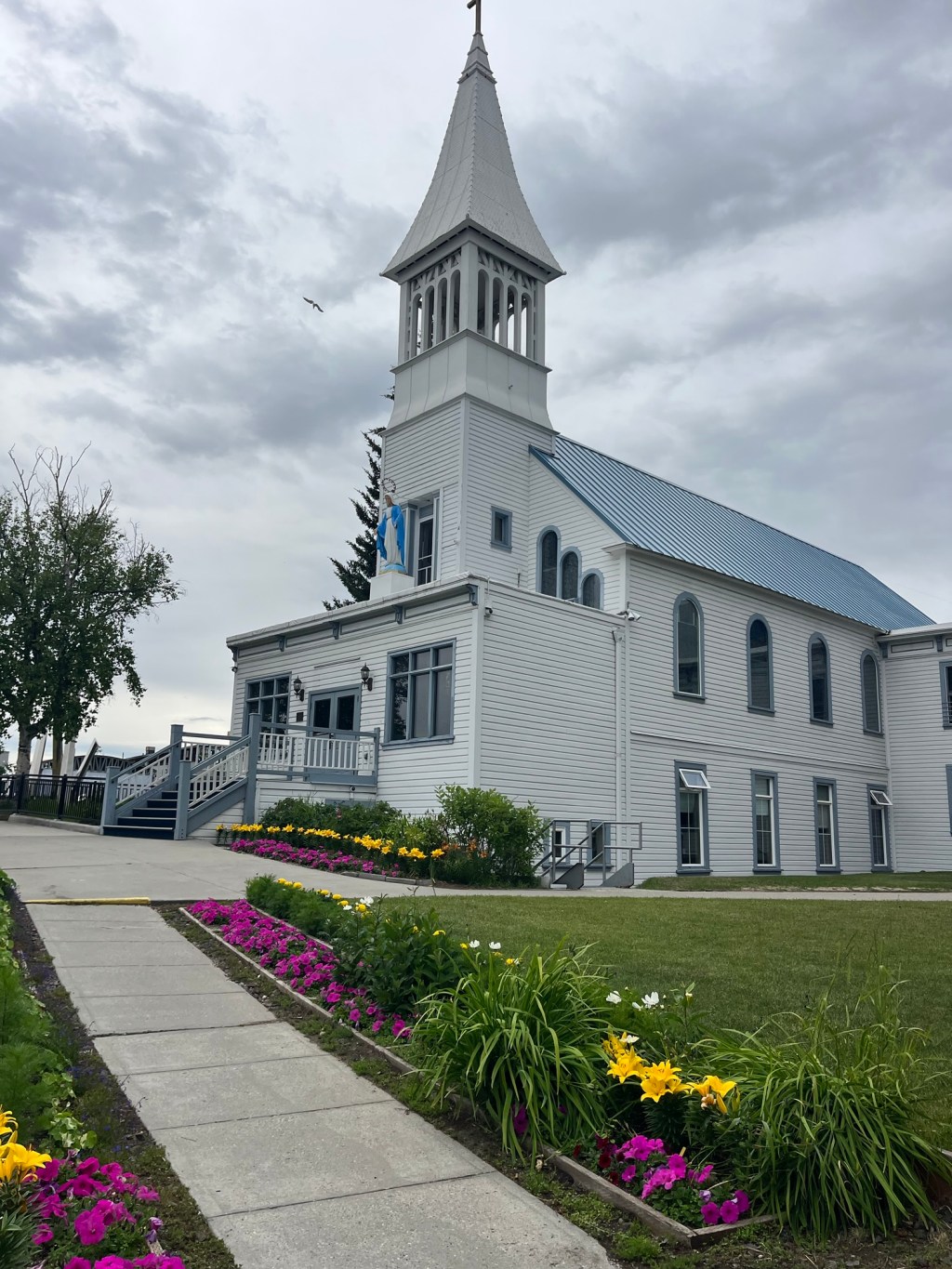
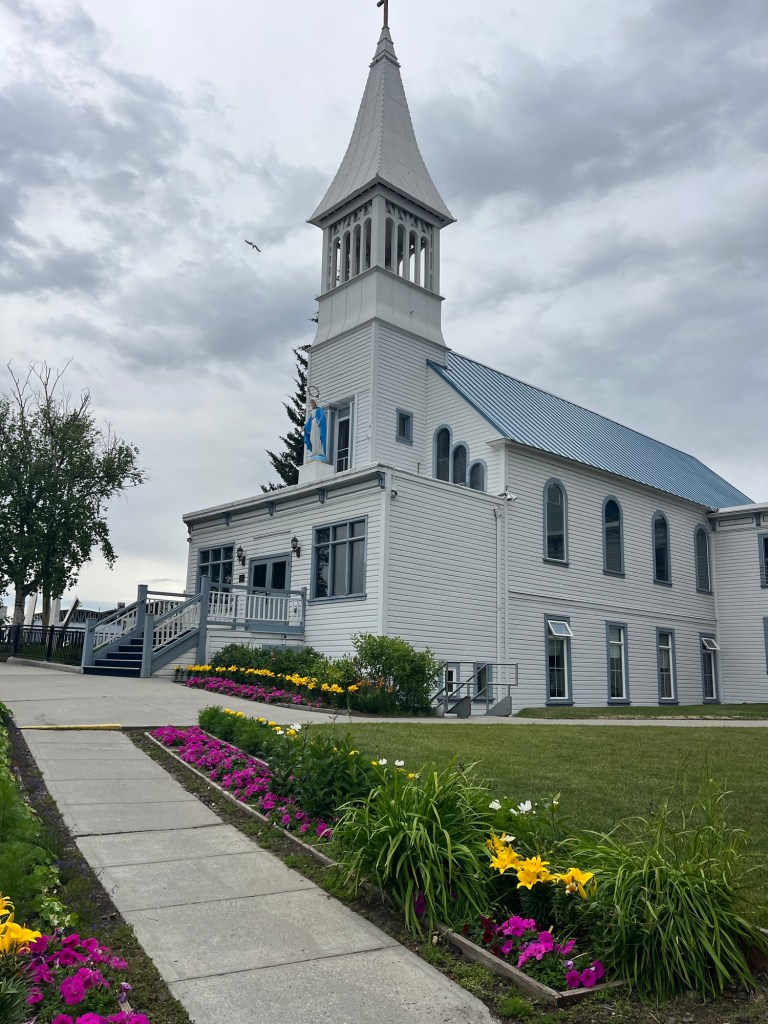
Honestly I don’t know what to think of Fairbanks. It has some amazing spaces and yet it always seems a little sad, a little dated, and a little down on its luck. It is an enigma.
Our hotel, the Westmark Fairbanks has clean and bright public spaces. We head to the park because our room isn’t ready even though we receive a room key. While we spend an entire afternoon playing in the mild Alaskan sunshine, our friends check into their room and have a lengthy nap before we get back. They text us to tell us how refreshed they are. So we are very surprised when our room still isn’t ready five hours later and we have to stand in the hall for another half hour while it is hastily finished.
As a rule, I don’t publically comply about service because anyone can have a bad day. But in this instance, I will make an exception. On the way to our room, an army of hotel staff with cleaning supplies in hand crowds into the elevator with us. It is not that I mind sharing the elevator with staff. I do mind them shoving the guests aside without an acknowledgment and then having a mop handle knocked into my face without a care.
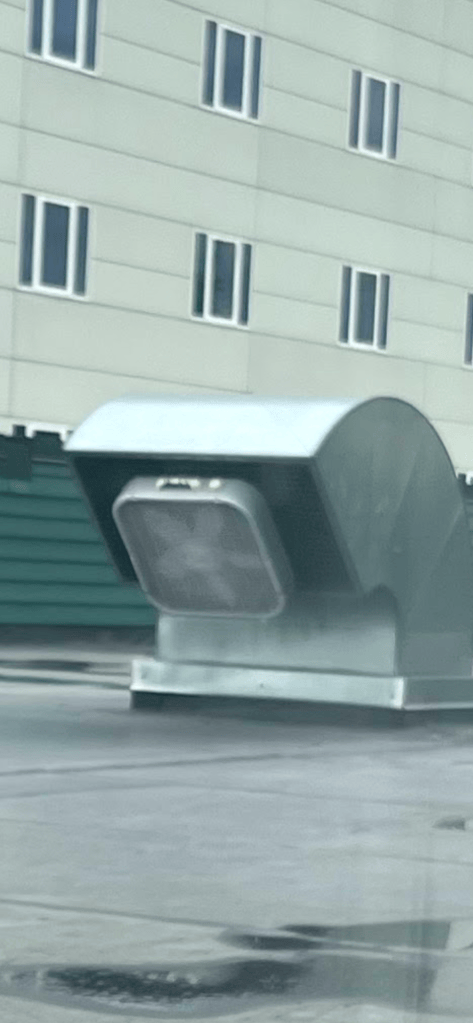
Once in our room (keep in mind it took over five hours from the time I was handed a key upon arrival for the room to be ready), I notice the room is filthy. The bath room toilet leaks and is still running water from the seal onto the tile. The shower curtain has holes in it and the tub is permanently stained (I won’t be using it). The dressers are dusty and the handles are sticky (I won’t be touching them.) The wall has patches. When I walk to the window, my shoes stick to the carpet. I don’t know what is in the carpet, but thank God I have my shoes on. I look out the window trying to center myself by looking at the sky. That is when I notice that someone has strapped a box fan to the outside exhaust. I think the maintenance department might need a little training….
The room clearly isn’t a refuge, so we decided to head out until bedtime. Thankfully, we only plan to spend one night and the sheets are clean. We should be able to find things to keep us busy and outside the room. A short walk brings us to a busy Thai restaurant. The food is delicious and brightens my mood.
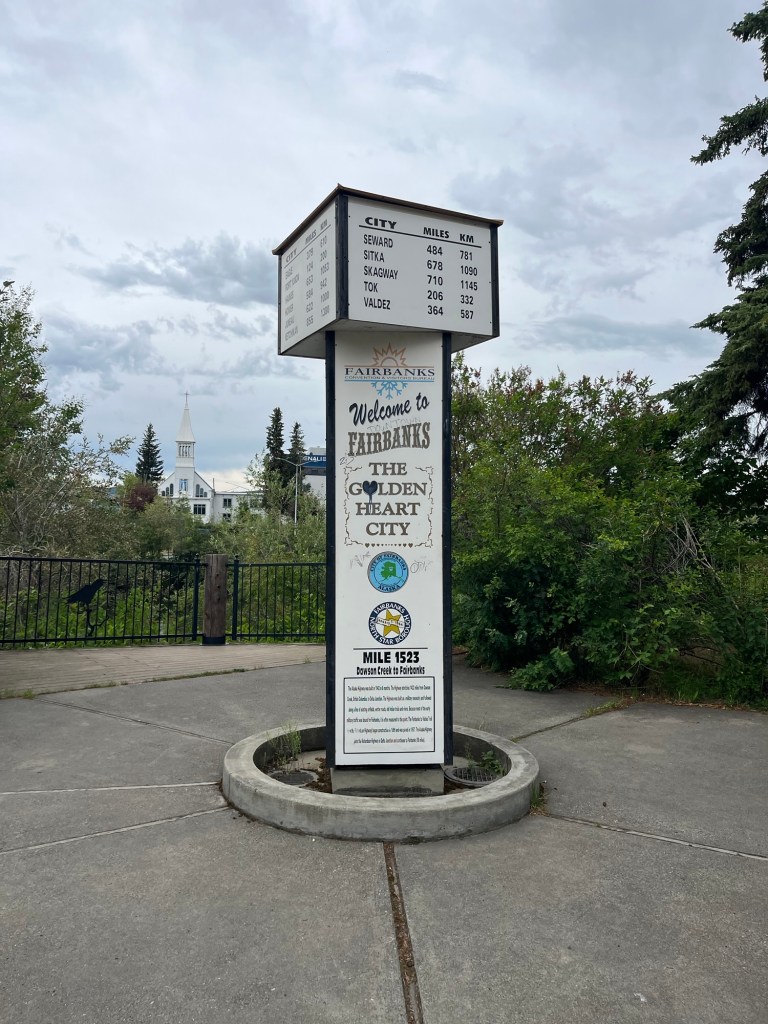
We aren’t far from downtown and decide to take a walk along the Chena River. The path is paved and there are flowers and statues along the way. It is beautiful. Looking forward to a peaceful walk, I am not prepared for the disheveled crowd that lounges in every corner of the park. Every city has its share of street people. Fairbanks is no exception. Large numbers of people aimlessly lounge and roam the public areas. They are not threatening just unkempt.
I understand that I am privileged by the world’s standards and am always moved to try and help where I can. I was thinking how Fairbanks is dealing with the issue of poverty and housing, when a woman on the river bank starts pointing at me. She keeps shouting that she is going to “beat my ass.” She is clearly disturbed so I pretend I don’t hear her and walk on. Other people come from the park, calm her down. Just another day in an American city pondering mental illness, drug use, poverty, the plight of indigenous peoples, and housing affordability. So much for vacation vibes.
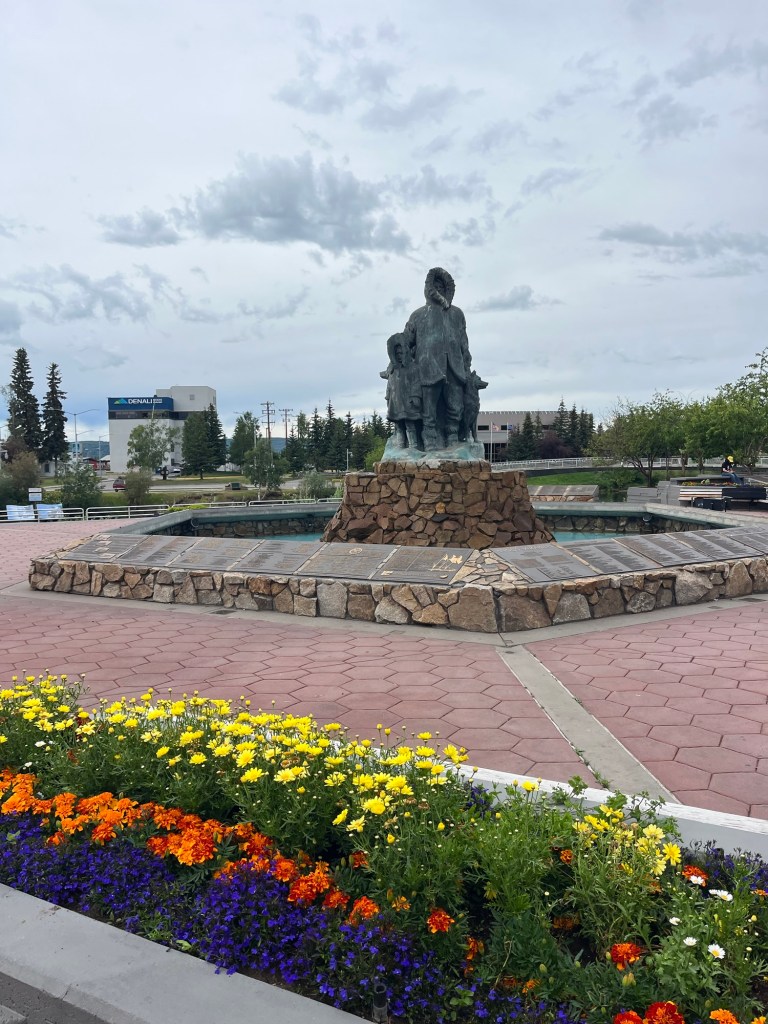
The park and the nearby church grounds are beautiful, but it is hard to sit here. There is clearly a local community to which we don’t belong. So we walk a block to a small strip mall. It is closing within the hour and has no air conditioning. We take photos with the stuffed wildlife and ogle vastly overpriced thrift store finds. Between the heat and the smell of old clothing, we are ready to leave long before the shops close.
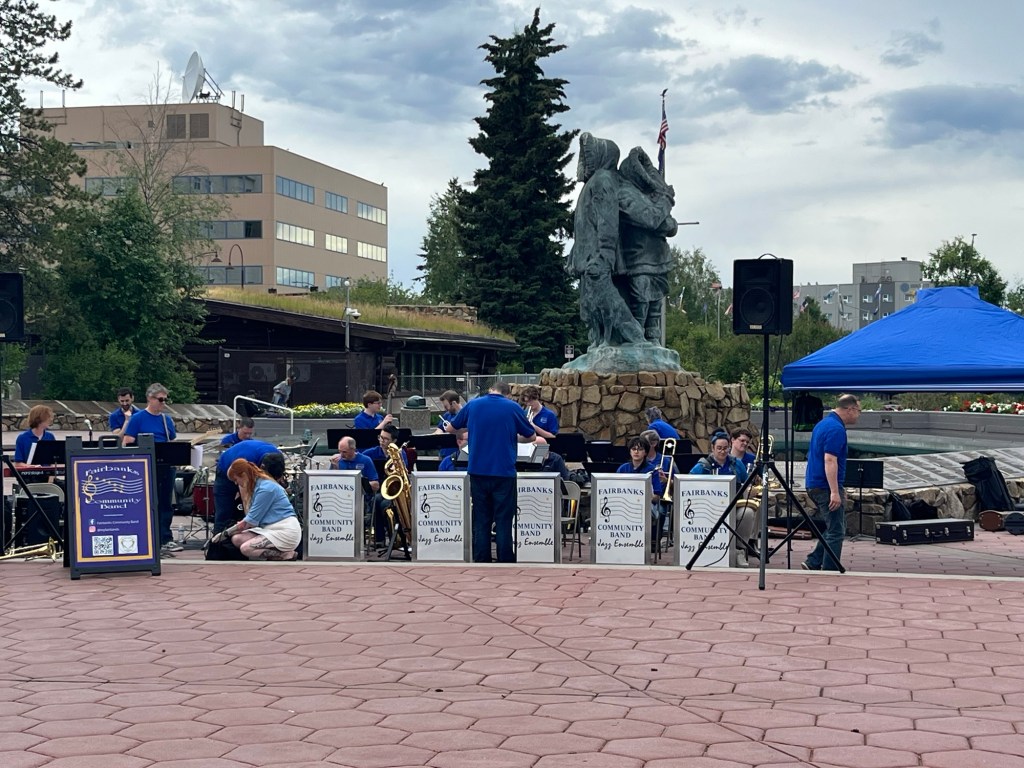
Just as I am ready to give up and head back to the hotel, we notice the Fairbanks Community band setting up for a free concert in the park. The same park where just a half hour before the local characters congregated and chased away visitors is now the site of a community event.
We love live music so we stay. For about two hours, we enjoy jazz standards under a summer sky. The band member’s family and friends make up most of the sparse crowd. And one by one, the cast of characters emerge from every corner of the park. The lady who wanted to beat me up smiles and begins to dance. The guy who is clearly strung out stands and nods his head to the beat. The guy who carries his possessions on a bicycle performs a bicycle ballet, turning slow circles to the music. Skateboarders roll slowly past. Guy with the giant stick does a disjointed rendition of tai chi. The band plays on as if this quirky and strange dynamic is entirely normal. Perhaps it is.
It is a fair city indeed that can embrace its citizens and treat them all with dignity and respect regardless of circumstance . I will never know what brought the people to the park this night. But for a brief moment in time, music made everything right.
-
Pioneer Park: Travel Goals Alaska
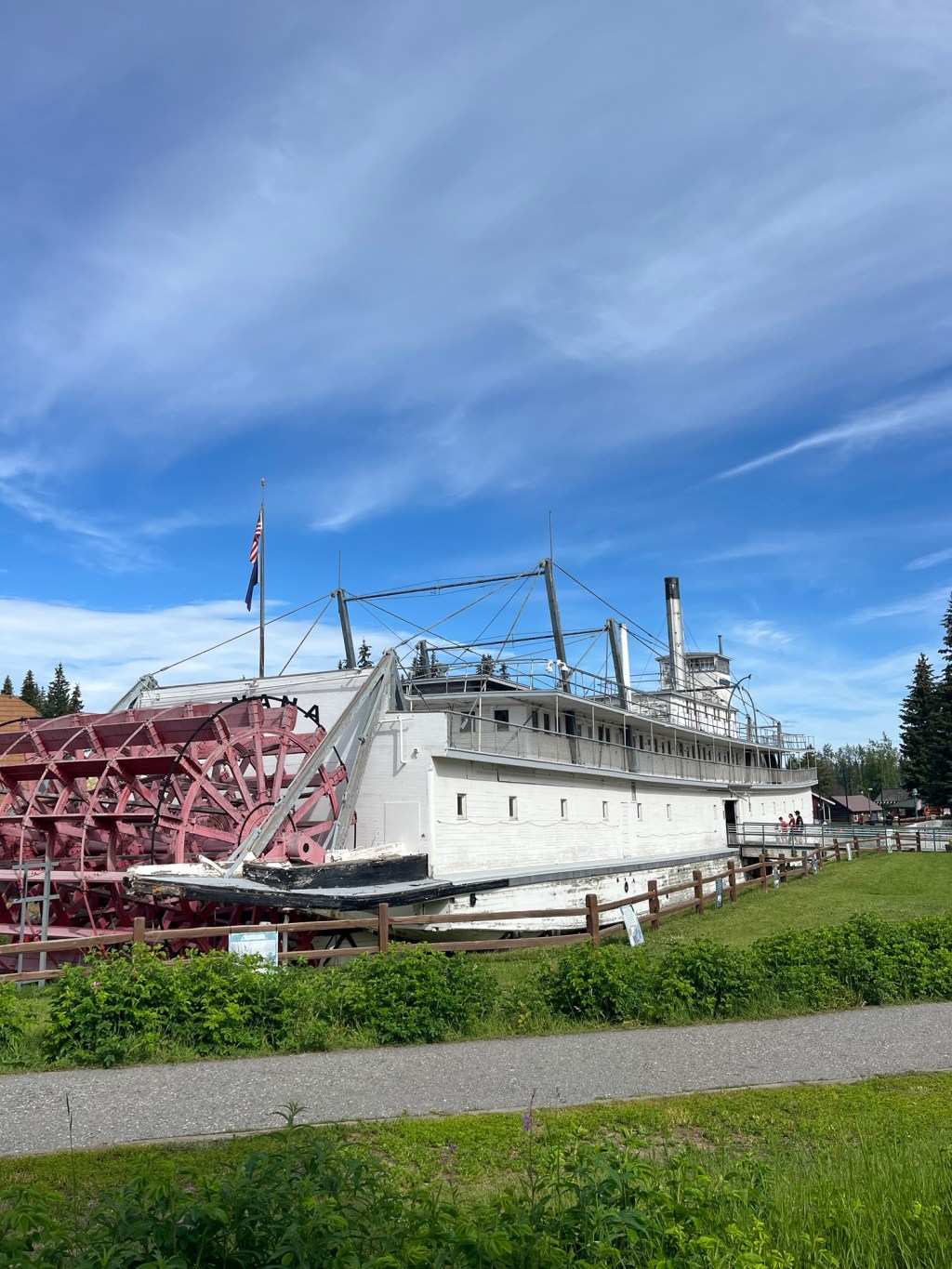
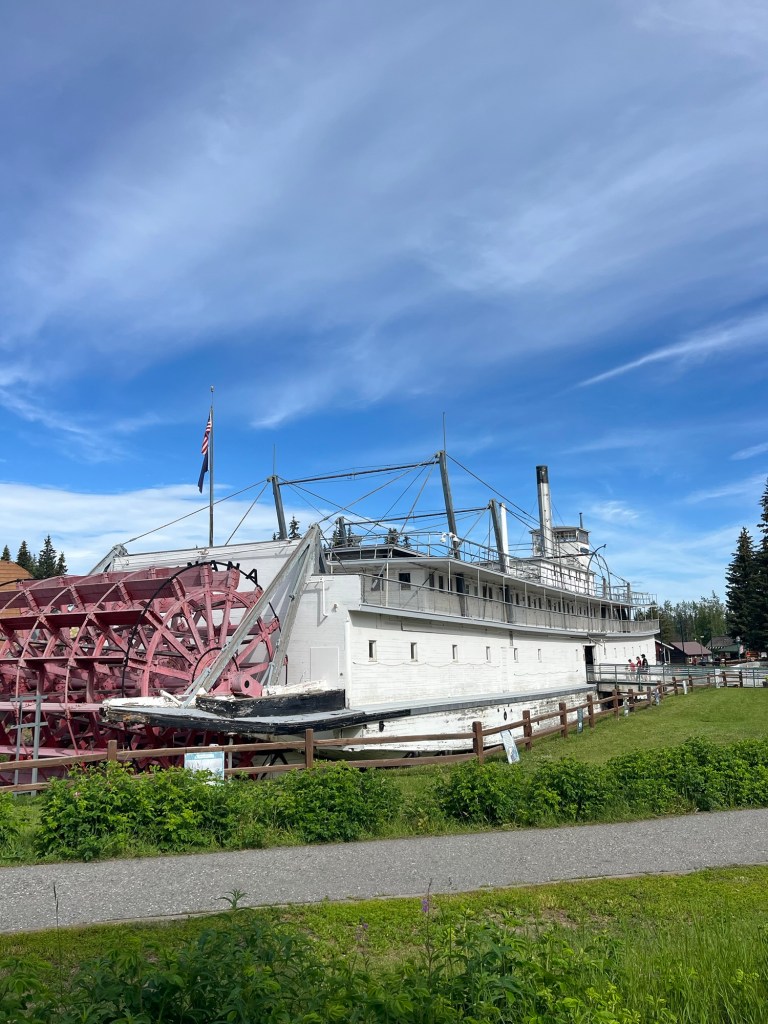
After a quick flight from Dawson City to Fairbanks Alaska, we find our hotel room isn’t quite ready. So we hop on the free shuttle and head to Pioneer Park. It is as good a place as any to spend an afternoon in Fairbanks.
We’ve been here before and know that we will have options for shopping, food, and recreation. The weather is near perfect. And the sun is shining.
Upon entry to the park, there is the train that President McKinley used when he visited the area. There is also an old paddle wheel steamboat. We walk through both. There are dioramas showing life along the river in earlier times.
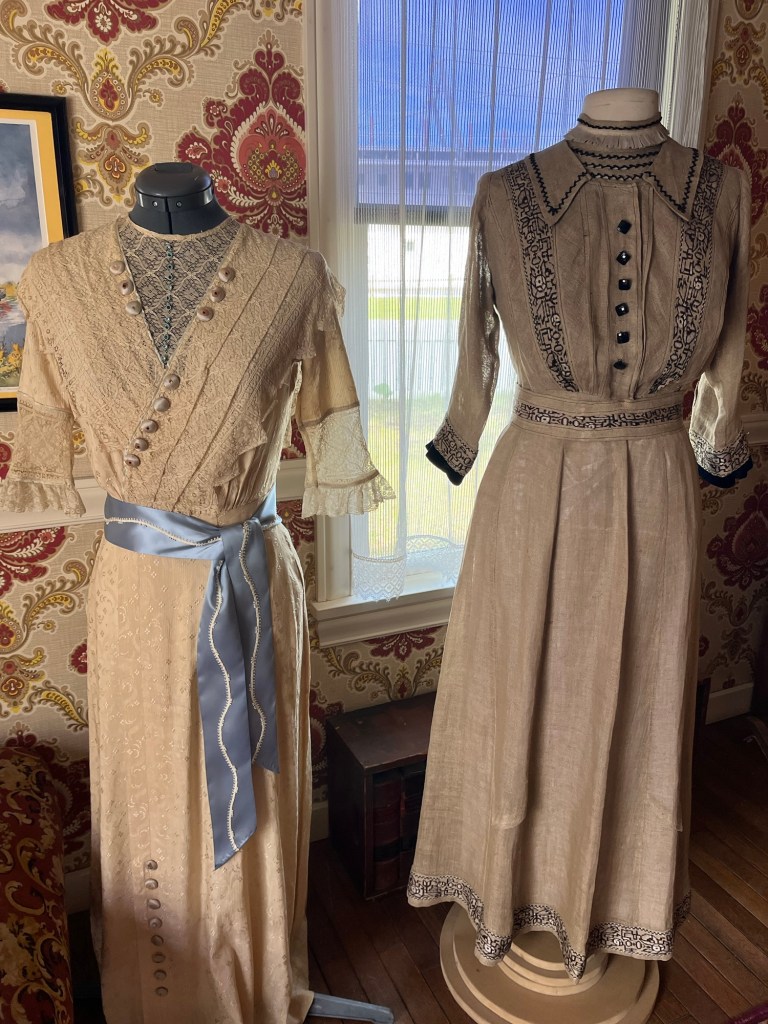
Nearby are the houses of early residents which are freely open for visitors. The small houses are a time capsule of pioneer life near the turn of the twentieth century. As history teachers, we like to take our time and examine the artifacts. Since we are the only visitors we enjoy the small rooms without feeling crowded or rushed.
By now, we have worked up an appetite. I see Cheechako’s tacos next to the historic Presbyterian Church. (Side note: a Cheechako is a person new to the gold fields or a greenhorn. A veteran miner was called a sourdough. Oddly, this nickname was because they kept their sourdough starter inside their pants to keep it from freezing, thus ensuring that they would have bread. But I am not sure about eating bread from yeast some grubby guy held in their shorts….)
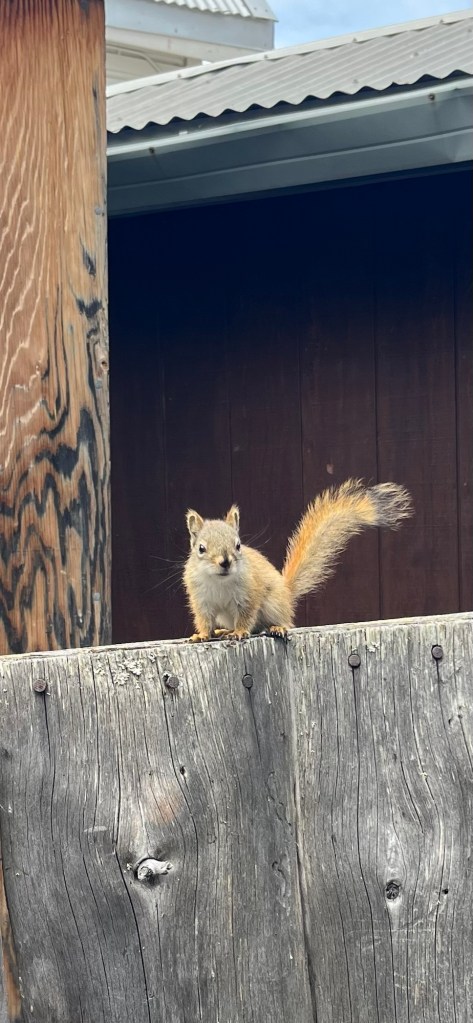
I love tacos and they are smoking the meat onsite. They have lots of variety to choose from. My barbacoa tacos are even better than they smell. And we have entertainment as we eat. A small and fearless squirrel decides to beg for scraps at our table. I know you are not supposed to feed the animals…but he is so cute…. And it is just one tiny tortilla crumb….
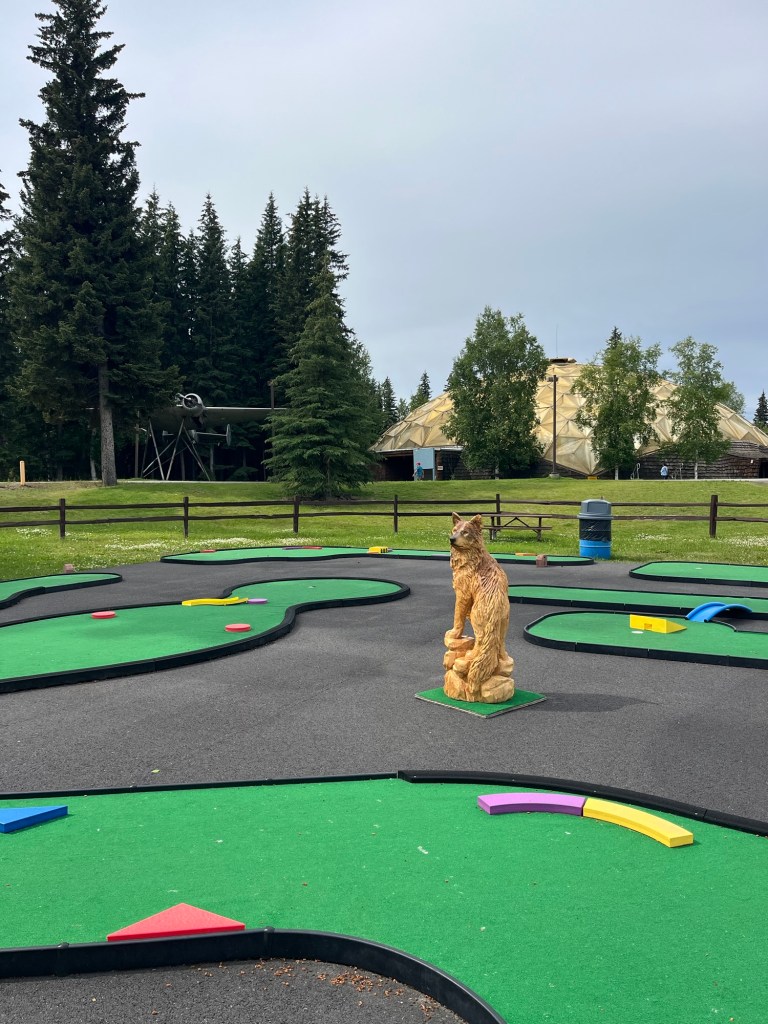
Because we are really just big, goofy kids, we decide to play mini-golf. It is just us and the eight year olds. The course is simple and generic but we still have fun.
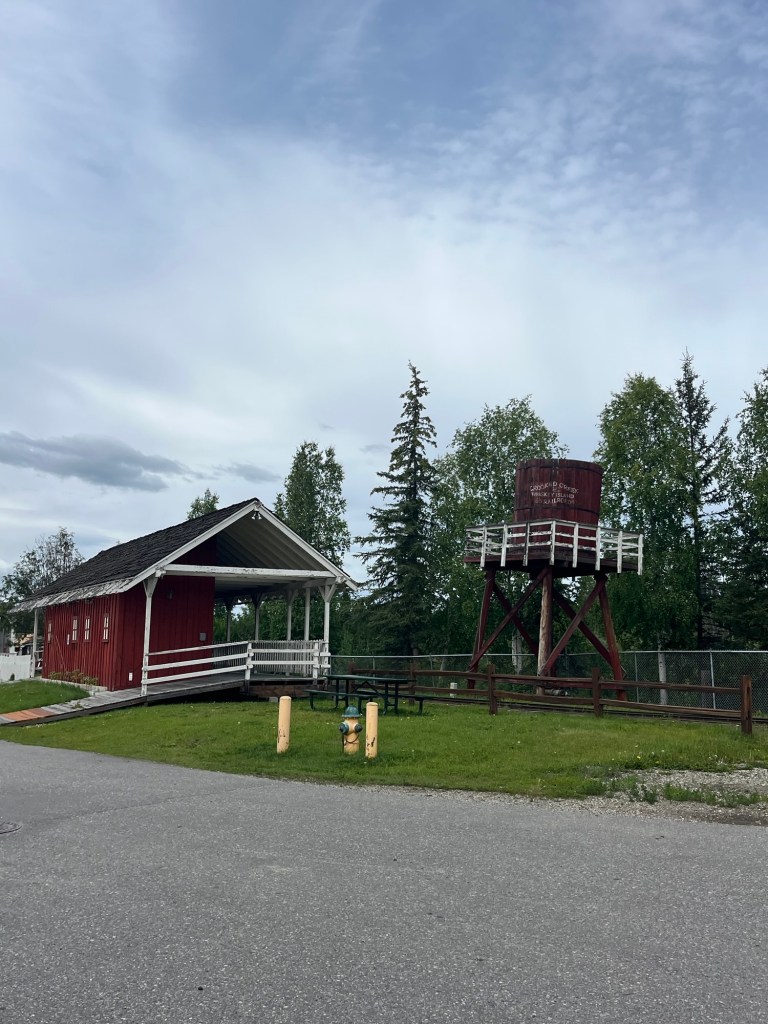
Pioneer park has a local history museum where we see dog sleds and farm implements among other remains from the past. There is a train shed with locomotives large and small. There is even an aircraft museum with helicopters and small planes (It is closed today, but it was a good value when we were here last.) Eventually, we wander to the first nation picnic area, and decide to rest on a bench. We enjoy icecream while we watch the world go by.
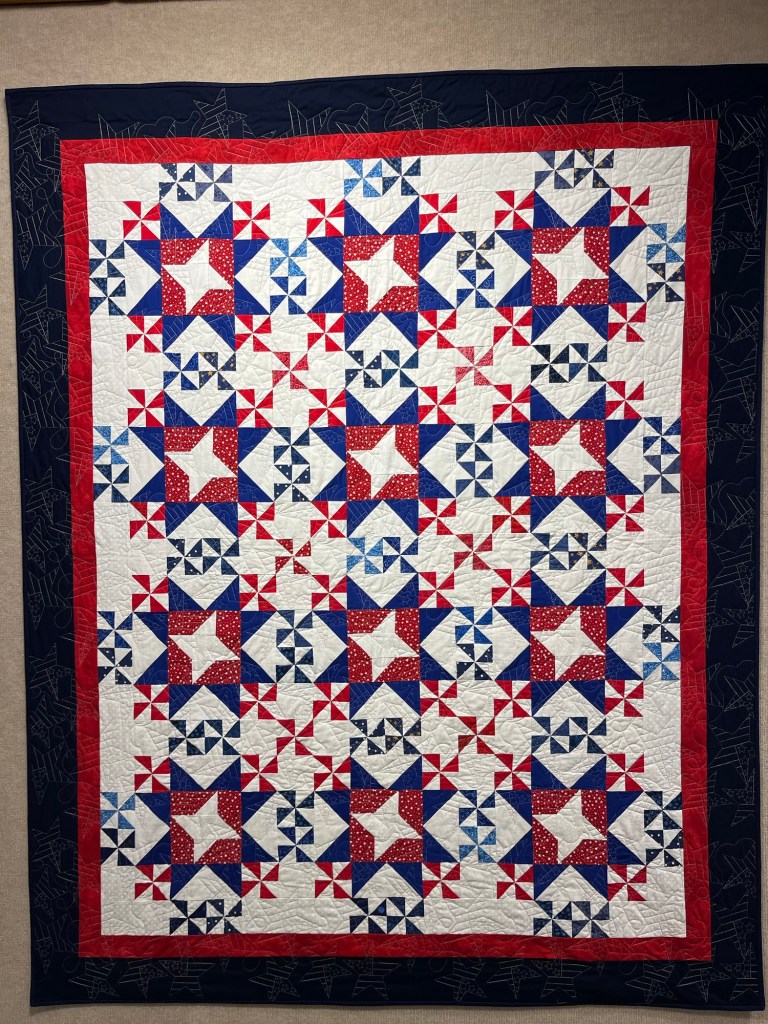
It should time to check into our room now, so we decide to head back. On the way, I notice the community center is hosting a quilt show. (I love quilts, because it reminds me of sewing with my grandmothers). I stop in and am not disappointed. There are several stunning variations. I don’t think my husband is as enthusiastic about the unplanned stop, but he just had ice-cream so he will be fine waiting on me.
It is actually hard to leave Pioneer Park, there is always just one more thing to catch your eye. Just one more quick little stop….
-
Gold Rush: Travel Goals Canada
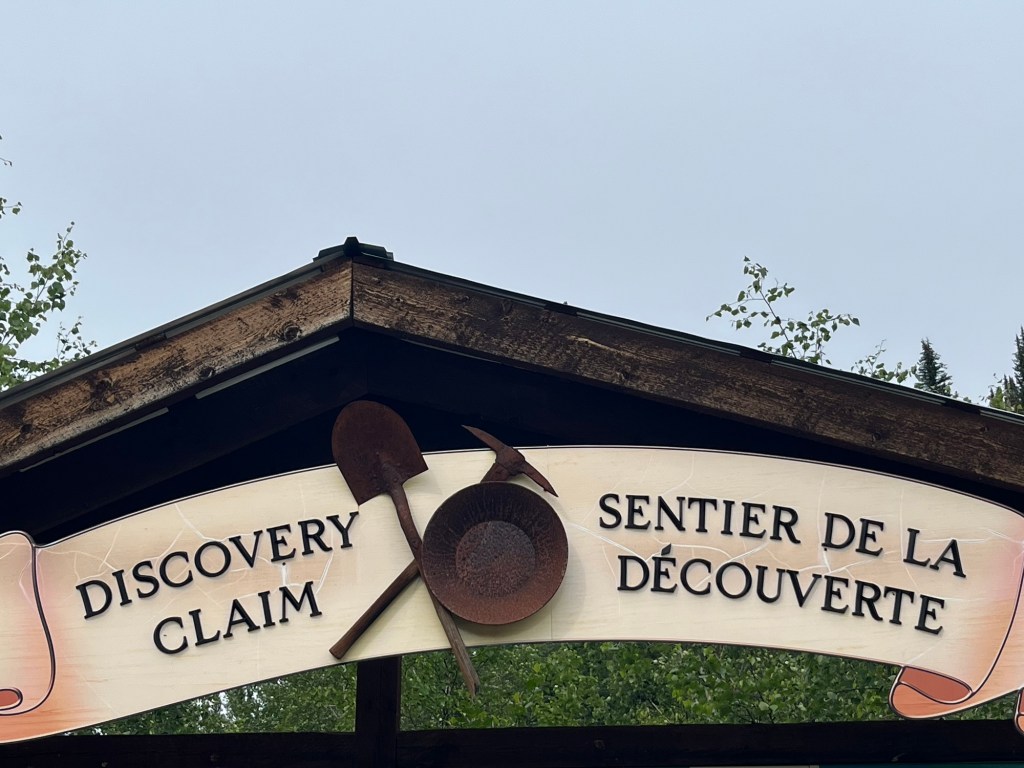
Not far outside Dawson, Yukon Territory is the site of the first gold discovery. You can walk to the creek where it all began. If you ask a local the story of how it happened you will get a dozen different answers. What everyone agrees on:
- The location was Rabbit Creek (later named Bonanza Creek).
- Those involved were a group of inter-related locals. Kate Carmack (Shaaw Tlaa), a local indigenous woman; George Carmack, her white husband; Skookum Jim, Kate’s brother; and Dawson Charlie, Kate’s nephew.
- One of the aforementioned people found the gold and George Carmack (the white guy) filed the claim the next day at a local police station.
- The gold rush occurred about a year later when news hit the outside world in 1897.
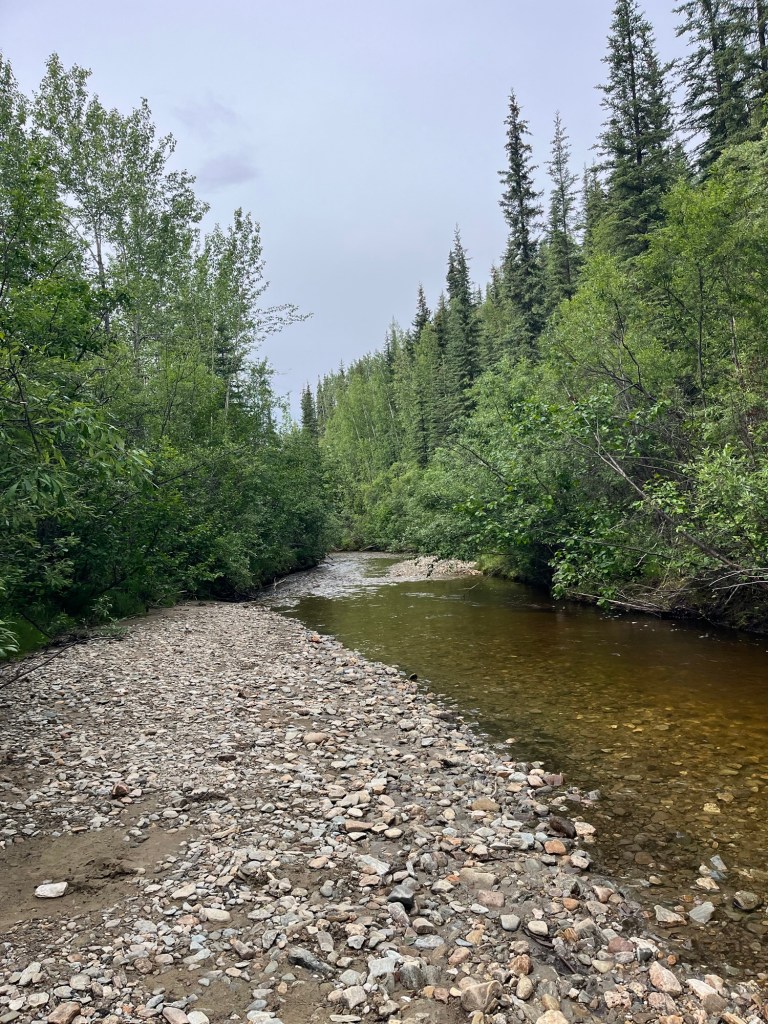
The story I like best is that Kate found the gold nugget in the creek while she was doing dishes or laundry behind their cabin. It seems most likely as it was an accidental discovery.
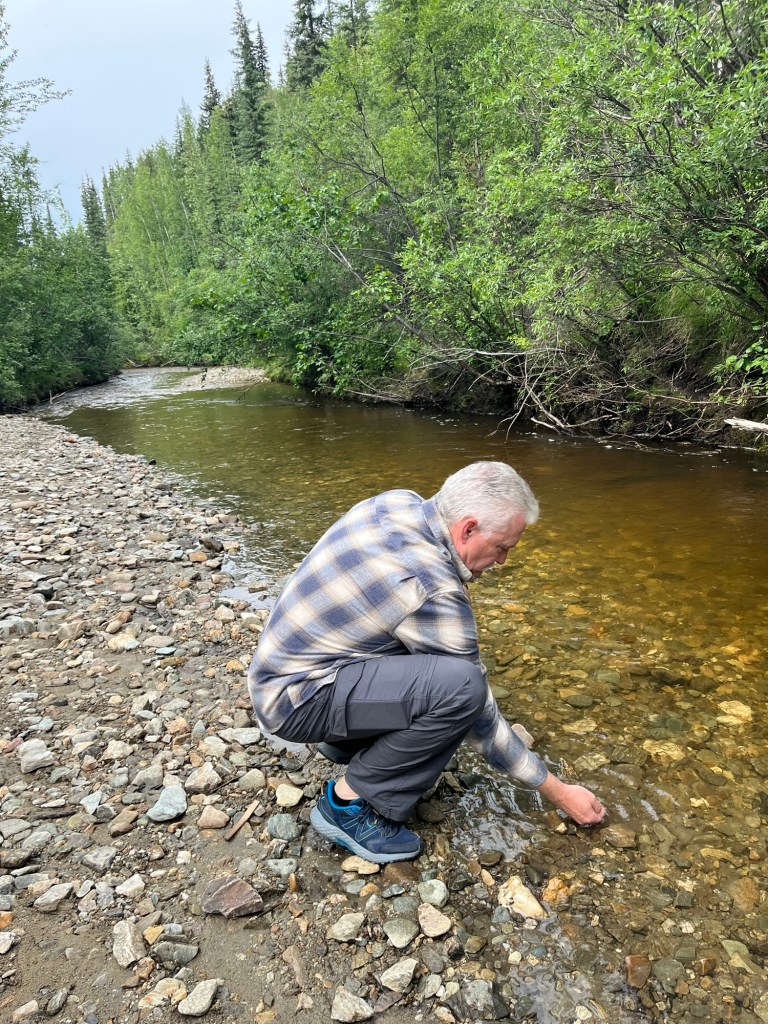
Today we splash around in the same creek. Sadly the gold is long gone, but that doesn’t stop us from looking. Hope springs eternal.
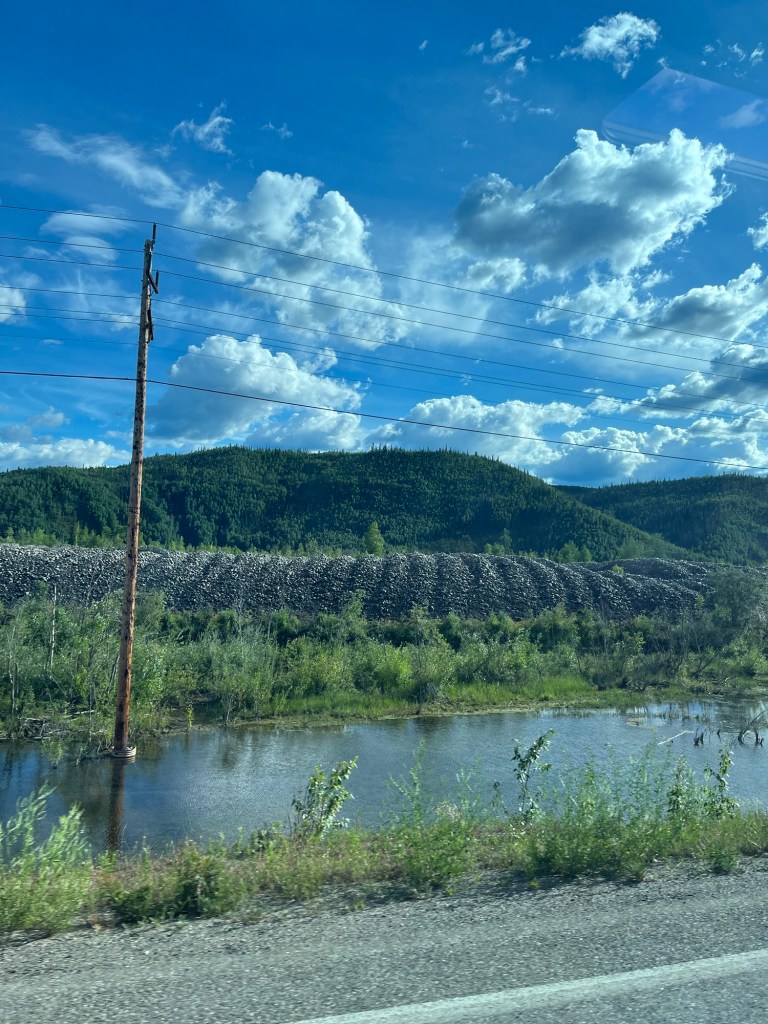
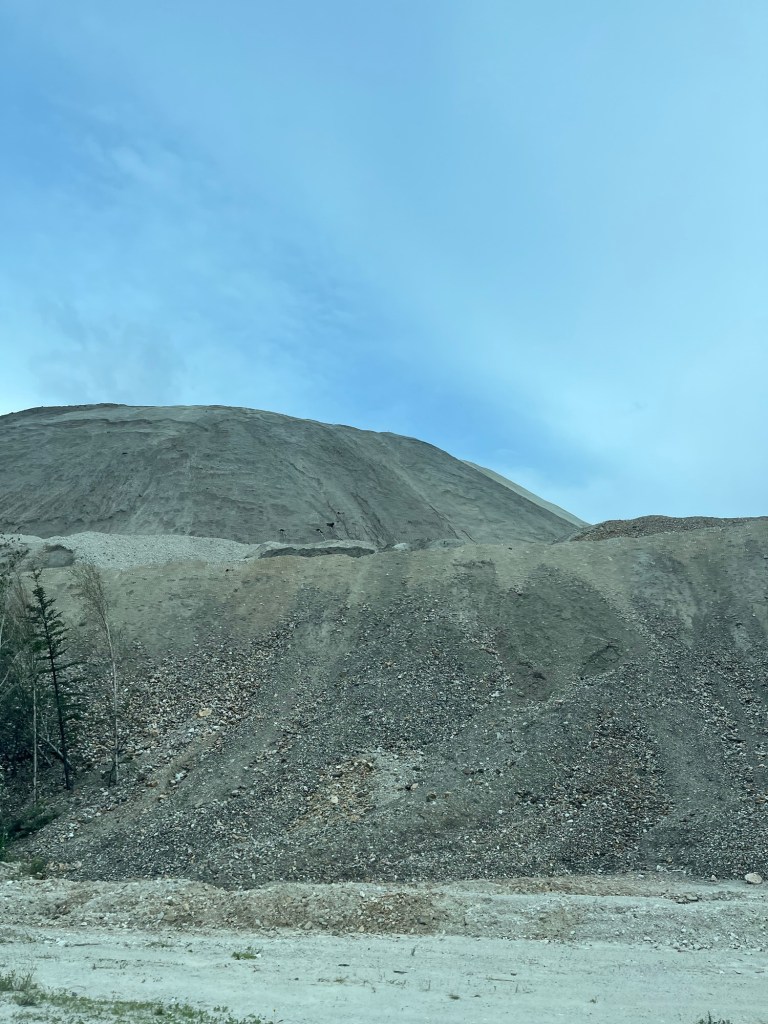
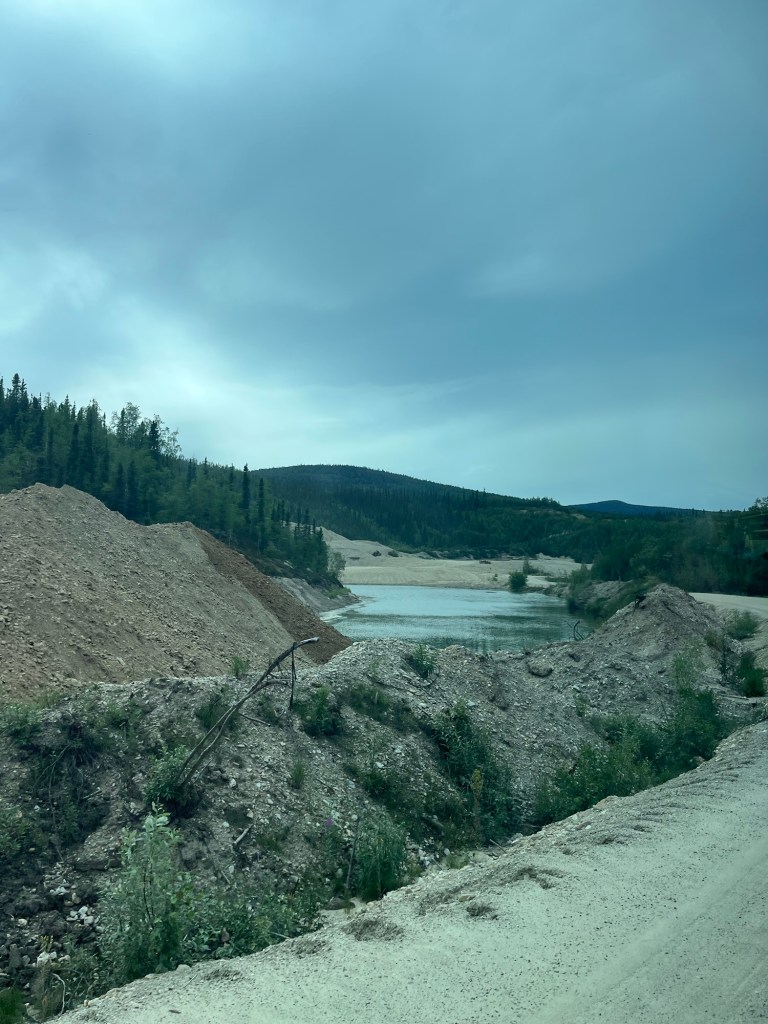
Just a short drive away, the ground is grooved beside makeshift pools of water. This is where the large dredges scooped the earth again and again mining for gold. The land is permanently scarred. On each side of the dirt road, piles of earth tell the story of man’s obsession with mineral.
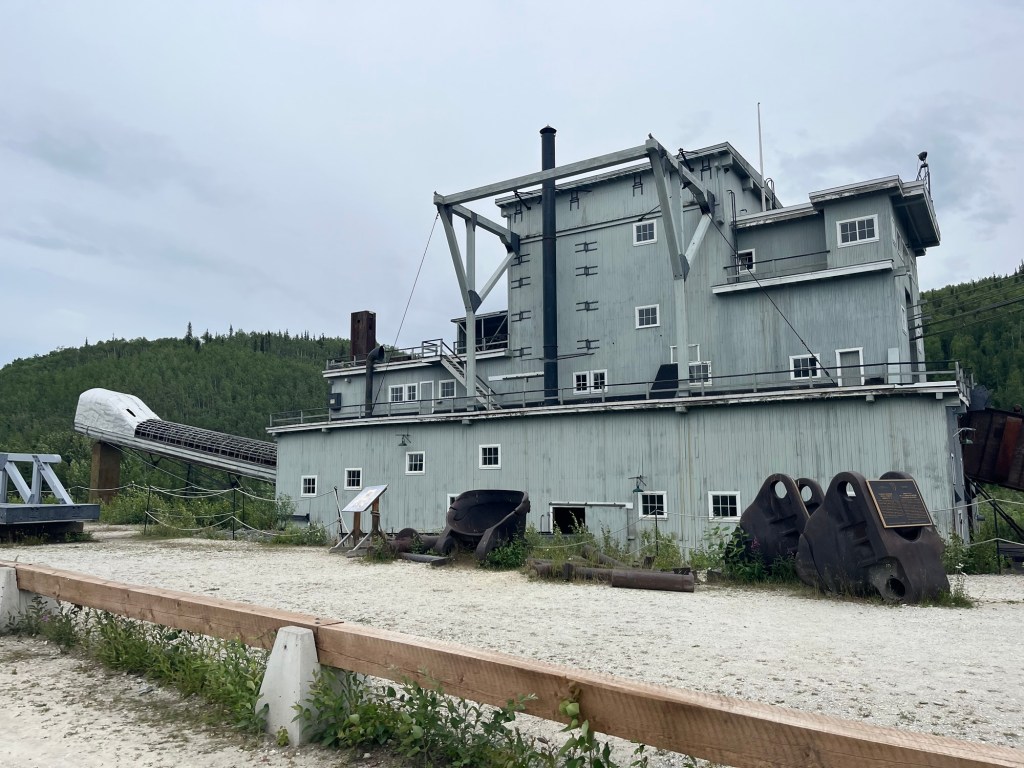
The Parks Canada rangers maintain dredge number 4 so that visitors can experience a gold dredge from the inside out. It is decommissioned, but we are able to walk about and get a feel for its size and operation. We were briefed by a ranger and learned alot about commercial gold mining in the Yukon.
In September 1898, the first dredge began working the Yukon River. Two large companies, the Canadian Klondike Mining Company and the Yukon Gold Company received large land holdings, called concessions. The corporations constructed hydroelectric power stations to run the dredges. They also constructed a system of dams and ditches to provide an adequate supply of water for the dredges.
Dawson City provided government administration and banking services, and a transportation network. Dawson City also provided a large labour force and suppliers and services to meet the corporate mining needs. Dredge No. 4 was built in 1912 for the Canadian Klondike Mining Company and was the largest wooden hulled bucket lined dredge in North America. It worked in the Klondike Valley on the “Boyle Concession” until 1940 and then was relocated to Bonanza Creek and worked this valley until 1959.
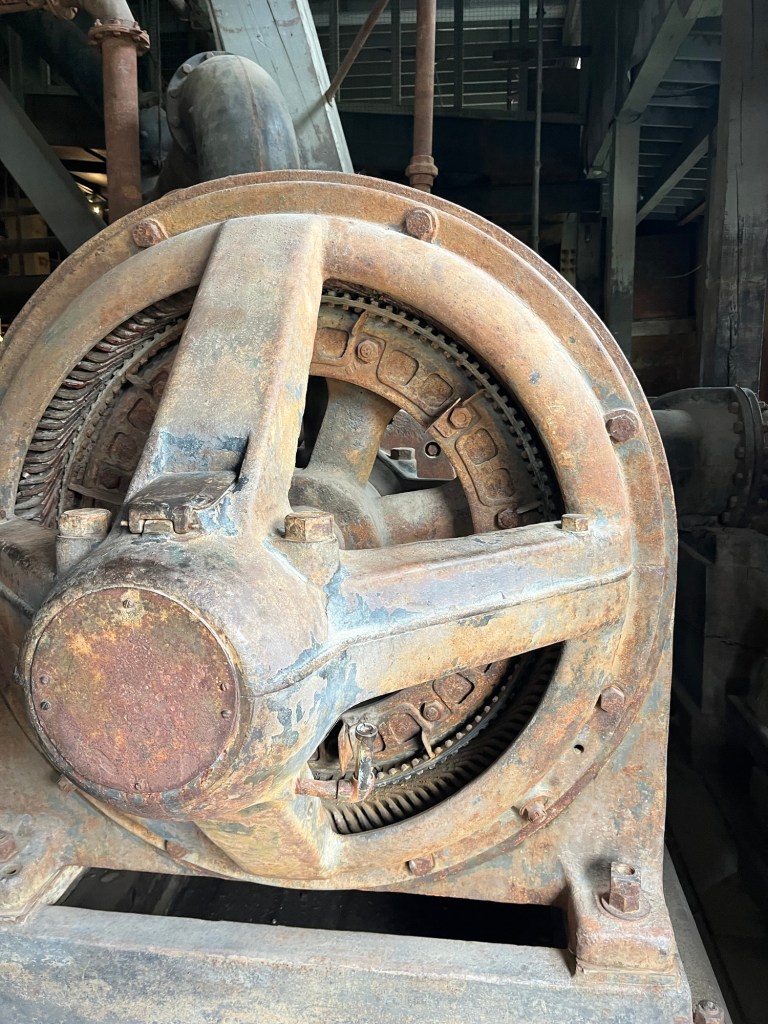
For almost fifty years, the dredge churned up the valley. Buckets dug up dirt and sent it into the dredge interior on a conveyer belt where small rocks were separated and then hand inspected. The waste was spit out the back chute, creating the rows of mine tailings. I can’t imagine the heat, sound, and smells.
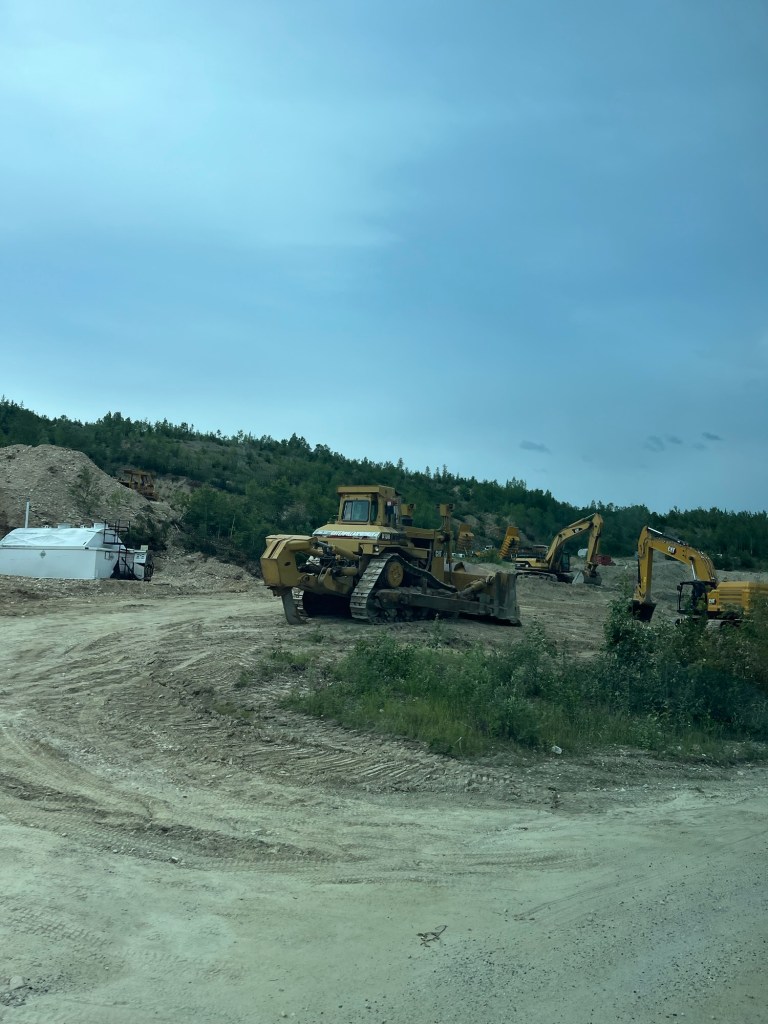
I would make a horrible gold miner. It is hard to imagine the people who are still running mining operations. And plenty of people are doing just that. Anyone can file a claim. You just need to prove that you have the money to put the land back as it was and you are good to go.
There are several operations along the road back to town. They are smaller and carry more risk than the old dredges. But apparently they are still making money. Or maybe gold fever is incurable.
-
Dawson City: Travel Goals Canada
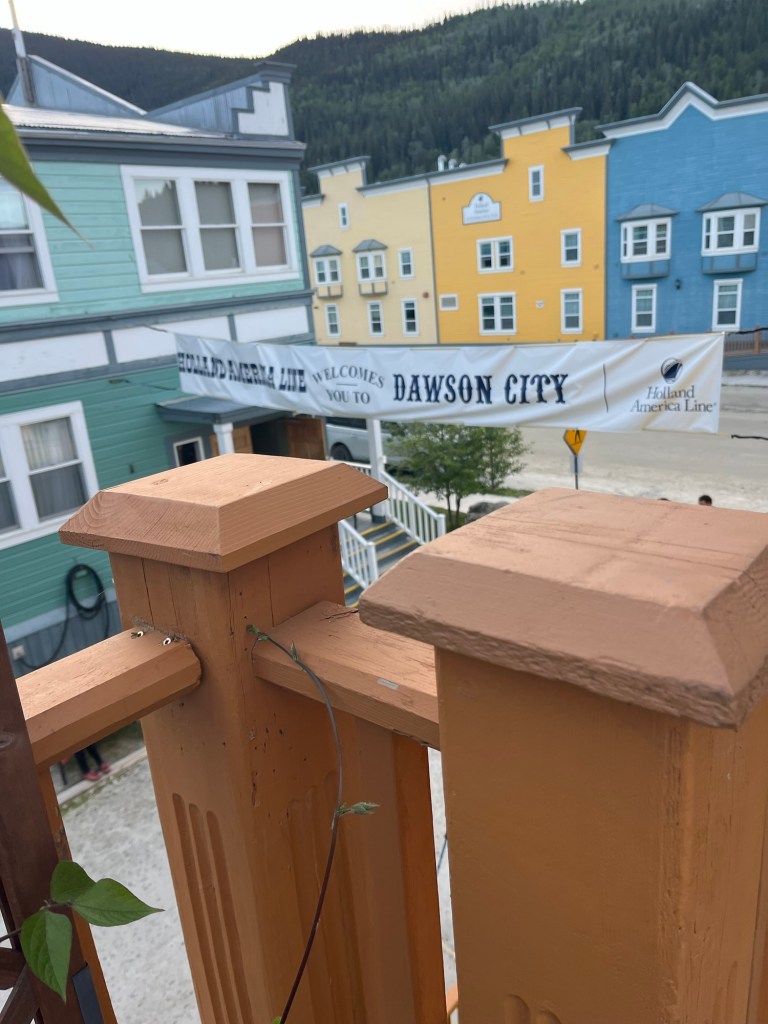
Our plane lands in a small field outside Dawson City, Canada. Just before landing we have a spectacular view of the Alaska Range including the mighty Denali. As we make our way into town, we pass mountains of mine tailings. The earth was ravaged here in the early quest for gold. Dredges sliced and diced the area until the 1970’s. Environmental laws now require miners to return the land to the condition in which it was found, but the early damage is done.
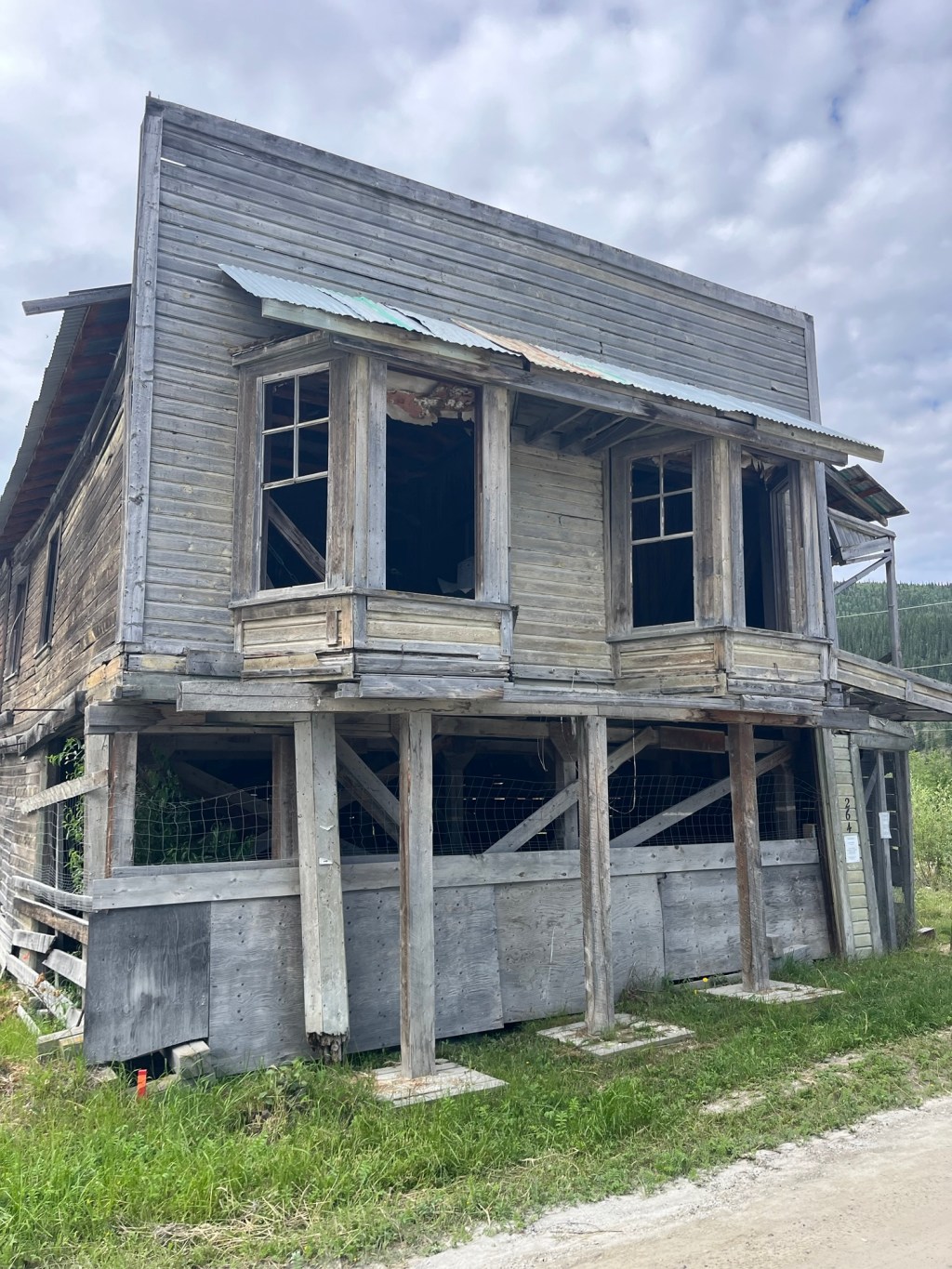
First glimpse of Dawson is dusty streets and old buildings. Our lodging is an old school complex reworked as a hotel. It is some of the only “newish” construction in a town that otherwise looks like time forgot. The town is largely run by Parks Canada as a memorial to the gold rush era.
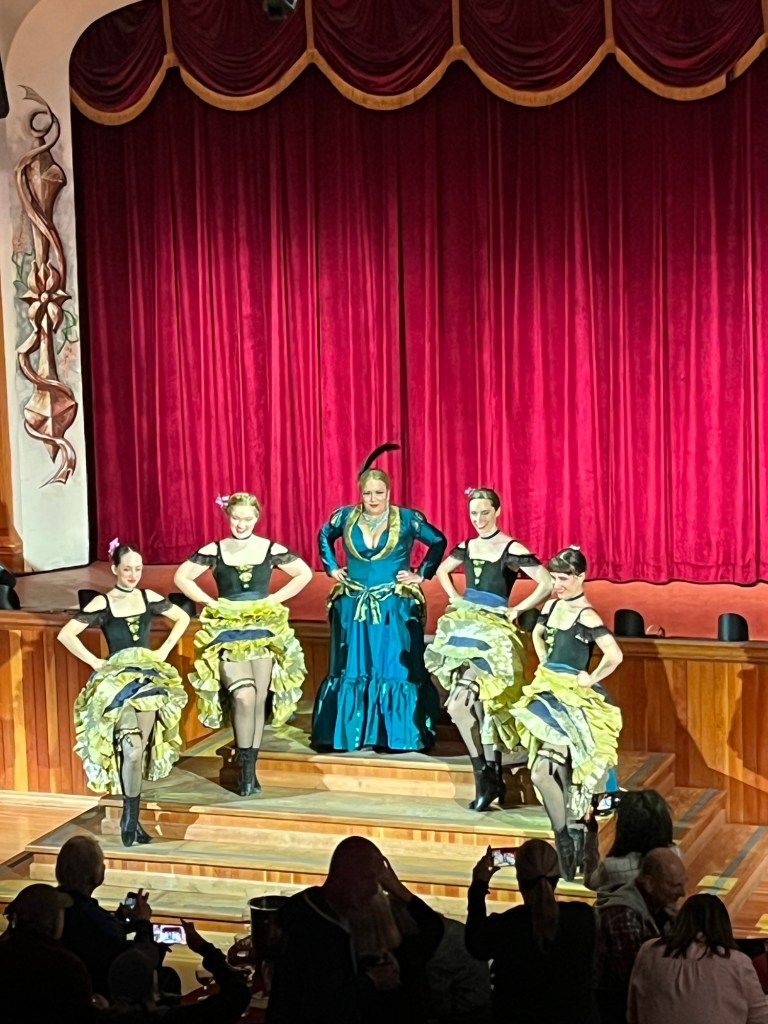
Despite my misgivings, we pay about $25.00 each to enter Diamond Tooth Gertie’s. It is the oldest functioning saloon in the territory and actually Canada’ oldest casino. We somehow get a table on the balcony with fabulous views. While Gertie’s will never win awards for the terrible pizza, the show is wonderful. Gertie can sing in any concert hall in the world and not be out of place. What a voice. Her can can dancers are also impressive.
The show is so good that we decide to stay for the later show. In between entertainment, I decide to try my luck on the slot machines. The saloon is run by Parks Canada so anything I lose will go back into maintenance of the town. To my surprise, I win. Once I make enough to pay for our dinner, I head back to the balcony and enjoy show number two. There are three shows a night and they are all different. Too bad we are too tired to stay for the midnight show.
We walk back to the hotel under the light of the midnight sun. It is funny to walk by the Midnight Sun Hotel in what seems like broad daylight. It truly never gets dark here this time of year. I am thankful for the blackout curtains I noticed in the hotel room earlier, because I have a hard time sleeping in the 24 hour daylight. And although it is late, it is bright.
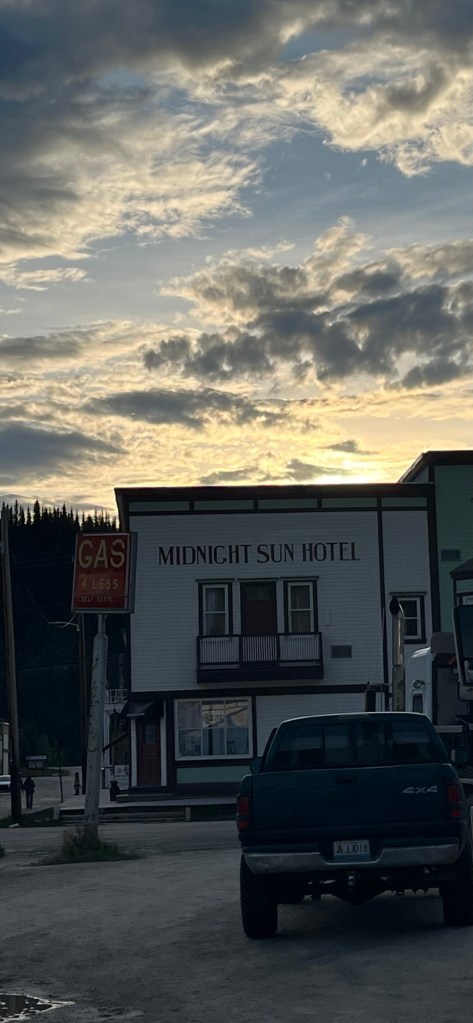
After a good night’s sleep, I wake up early and get my work done. After a few zoom calls and email, I decide to take a walk. Very few people are up. I pick a street and head toward the mountain. I know to look out for a small bear that has been seen nearby so I am cautious. No sign of a bear.
I walk toward the historic cemetery and the Jack London cabin. Suddenly two very aggressive dogs run toward me. I freeze and return the way I came. (Having already suffered one dog attack, I am not keen on experiencing another.) I think I would rather encounter a bear.
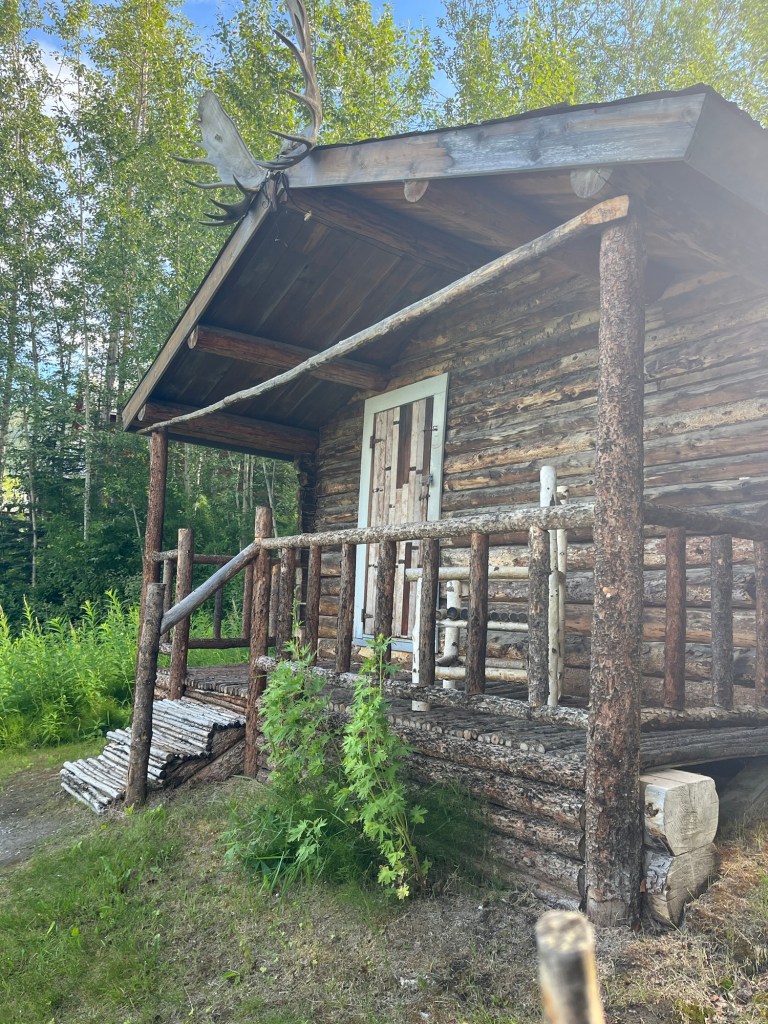
Once my husband is up, we head back uphill. This time there are no dogs in sight. The Jack London cabin is tiny. I remember “Call of the Wild” and picture him huddled here dreaming up the story to chase away the brutal winter chill. I can’t imagine wintering in the sparse cabin.
Just down the hill sits a modern hospital. It is perhaps the only medical facility this far north in the Yukon Territory and a lifeline for the gold miners.
Nearby there is a park and the Dawson City Museum. We decide to pop in the small museum housed in what was once the territorial administration building.
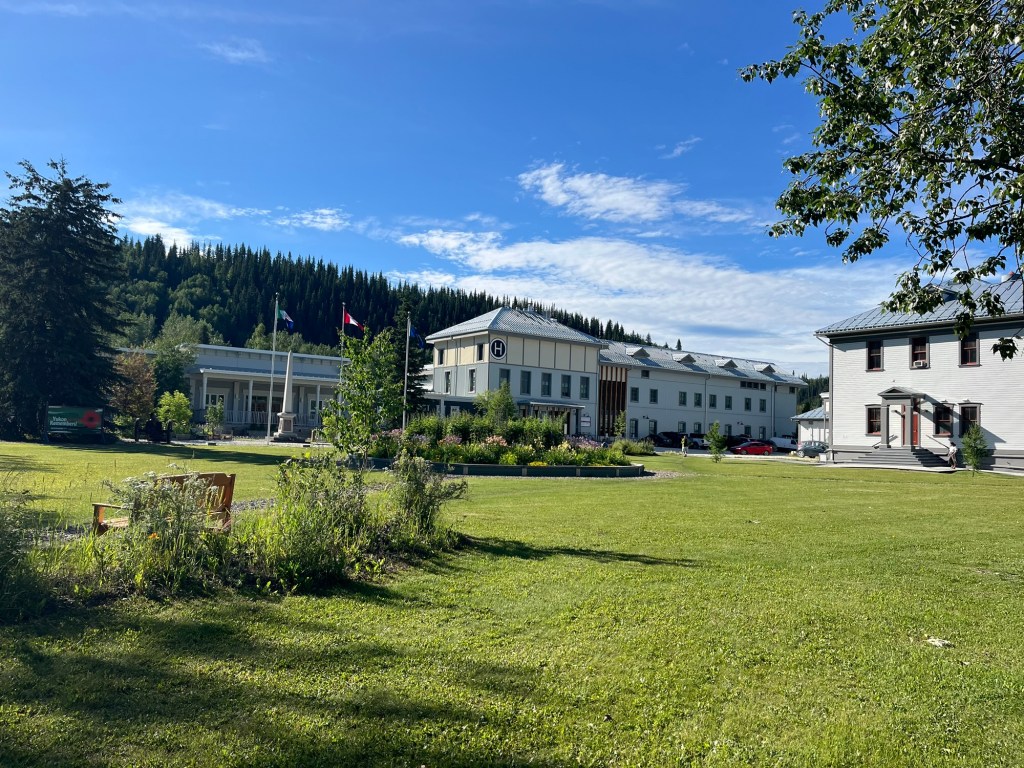
The galleries in the museum are interesting. Attractive displays inform us about the Tr’ondëk Hwëch’in First Peoples, pre-gold rush eras, the Klondike Gold Rush, and Dawson City’s boom-and-bust development. A lot of history is packed into just a few rooms. They even have a small building housing old steam locomotives. Luckily, we are able to catch a short tour of the train shed which only opens a few times a day.
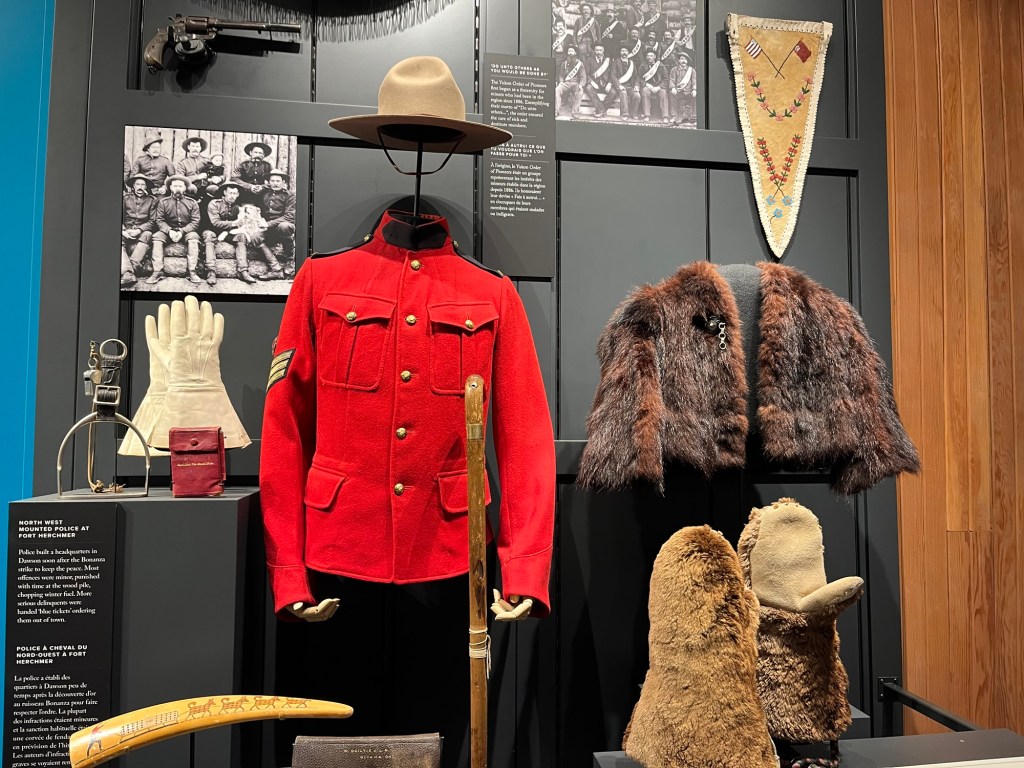
Armed with historical knowledge, we set out to walk the town. Old wooden board walks are raised above the dirt roads and keep our feet mostly clean. We have to hop on and off the platforms at the intersections, but at least it isn’t muddy.
We pass a hardware store and step inside just to see what people that live in Dawson might buy for supplies. I am perusing animal traps and winter gear when a man walks in dressed like a 19th century sea captain. The owner says, “Captain, how did you do last night.” The captain replied, “ about 90.”
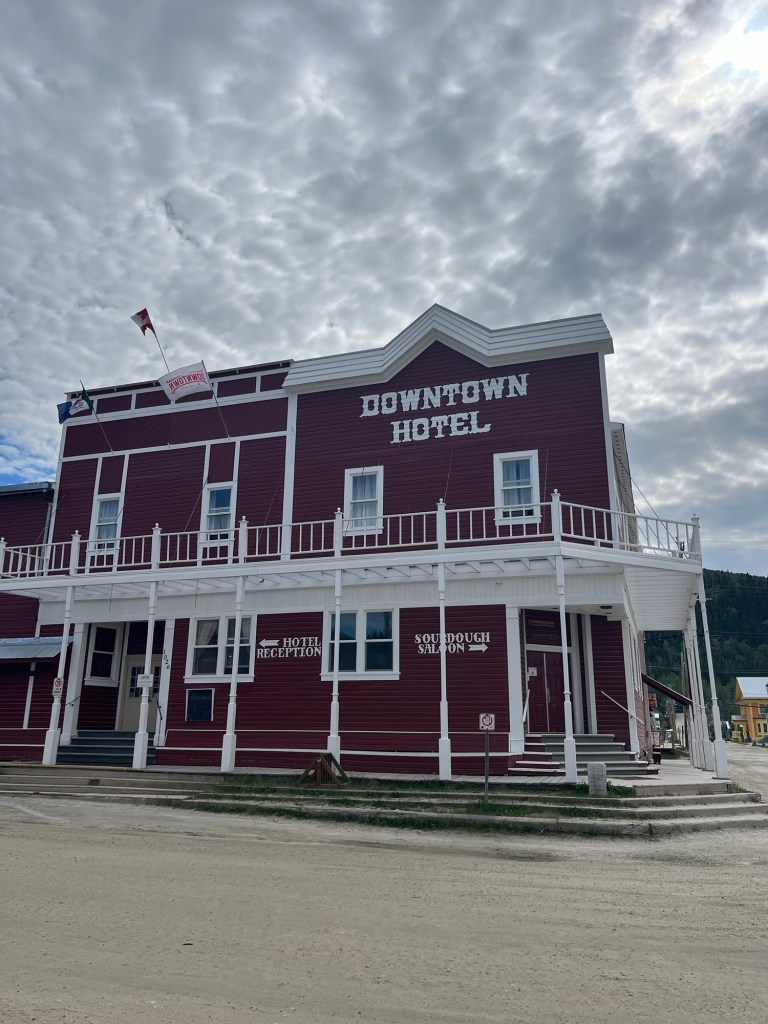
Curious, we inquire and find out that the captain is the owner of a mummified toe. We don’t know whose toe it is or how he came to possess the toe. What we do know is that for “$15.00”, the captain will put the toe in a shot glass with a healthy dose of whiskey. If you take the shot and let the toe touch your lips, the captain will give you a certificate. If you swallow the toe, you get a fine of a couple thousand dollars. Only in Dawson.
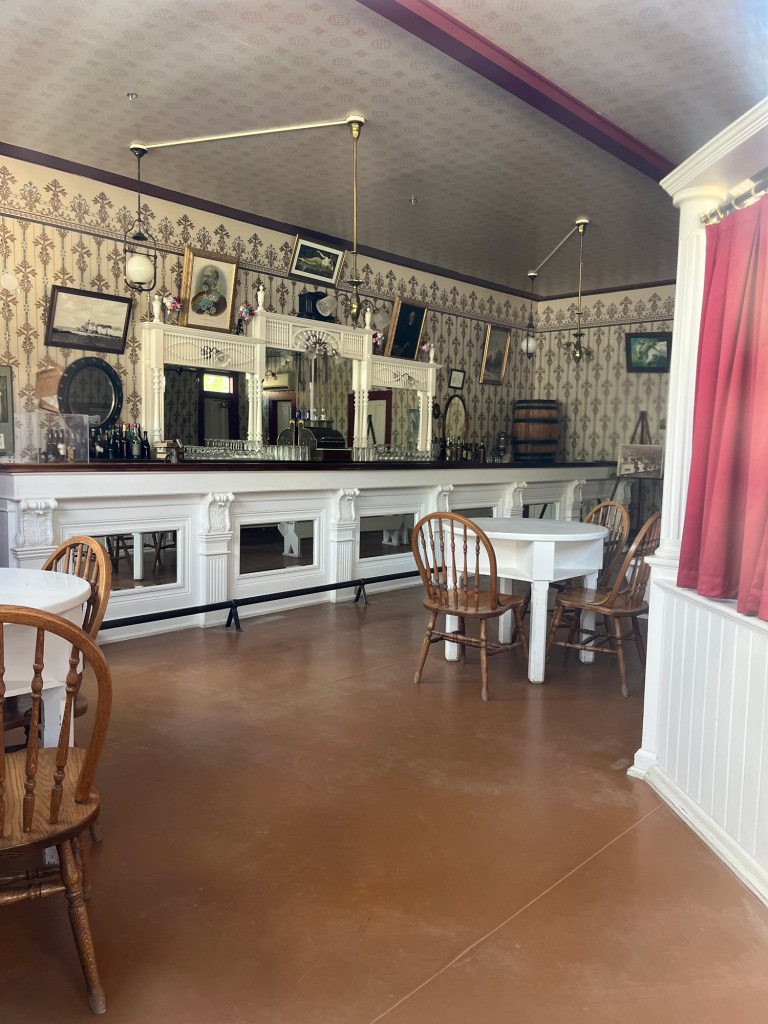
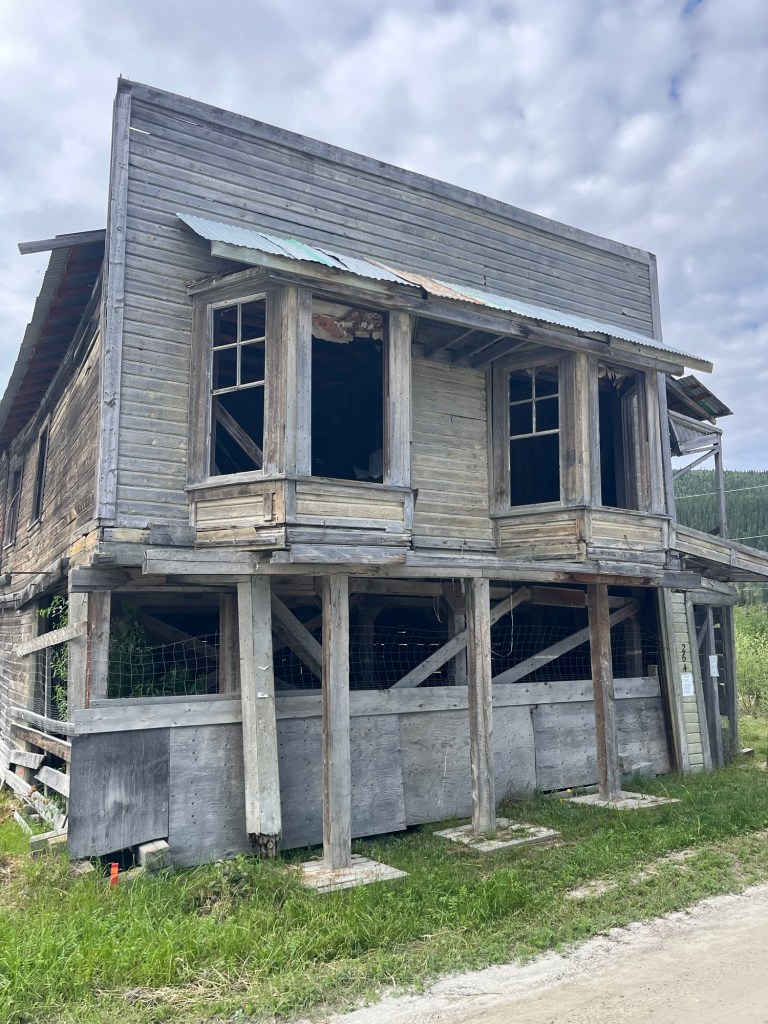
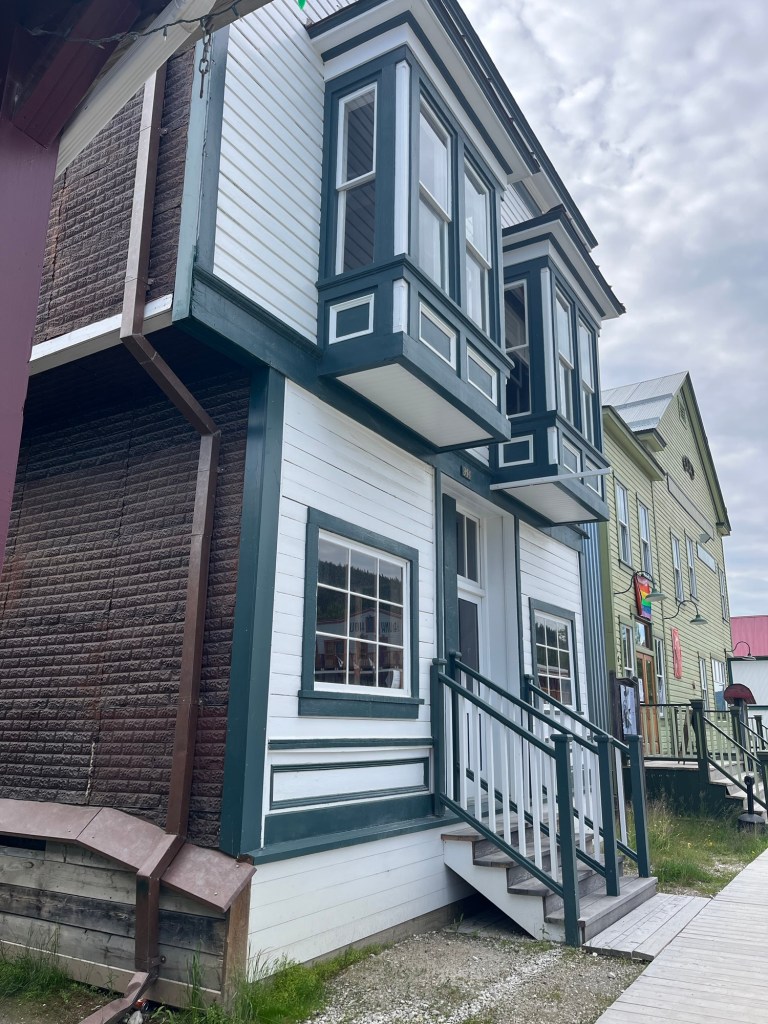
Many of the buildings in Dawson are empty, derelict, or managed by the park service. On Main Street, we find bar rooms and brothels. The last brothel officially closed in the 1950’s. The madame was a pillar of the community. There a plaque and her photo next to the small house just a street away from Main Street.
Somewhere on the street facing the Yukon river, we stop for lunch. While I am waiting for our sandwiches, my husband sits down outside. Meanwhile two guys from the “Gold Rush” reality television series roll up on their motorbikes. Tourists ask to take photos while we try to figure out who they are. (Thank goodness for google.)
Late in the day my husband is ready to turn back. He has had enough exploring. I, however, have one more mission and then plan to join him in the hotel lounge. I want to see the confluence of the Yukon and Klondike rivers. It is only a short hike from town.
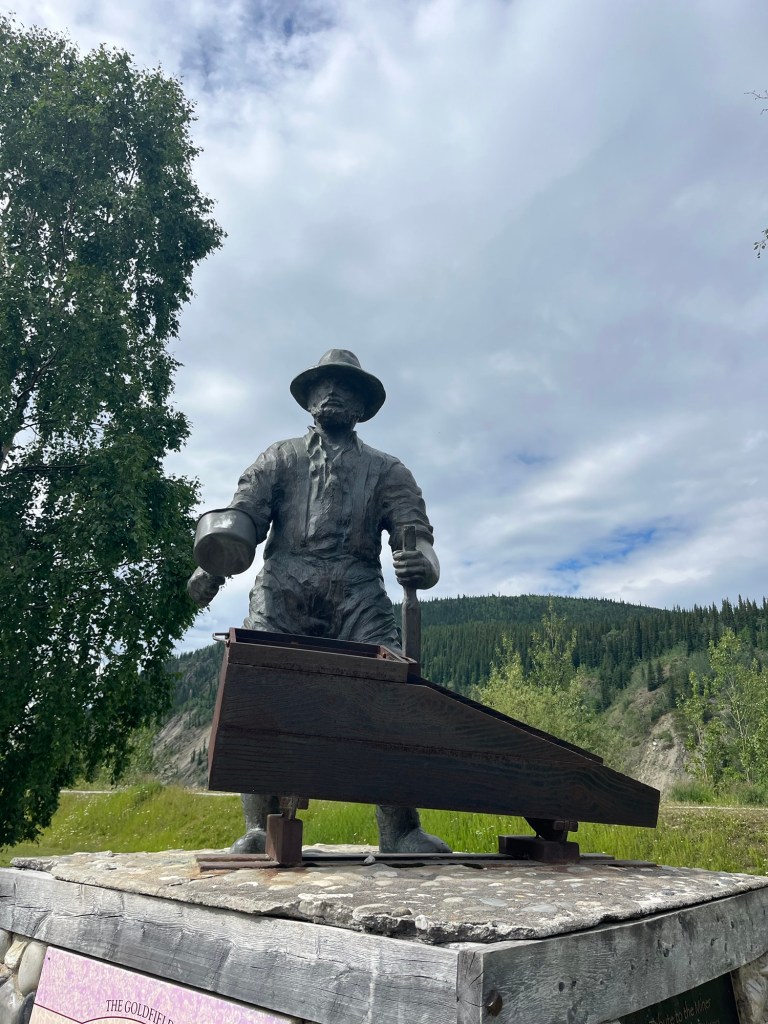
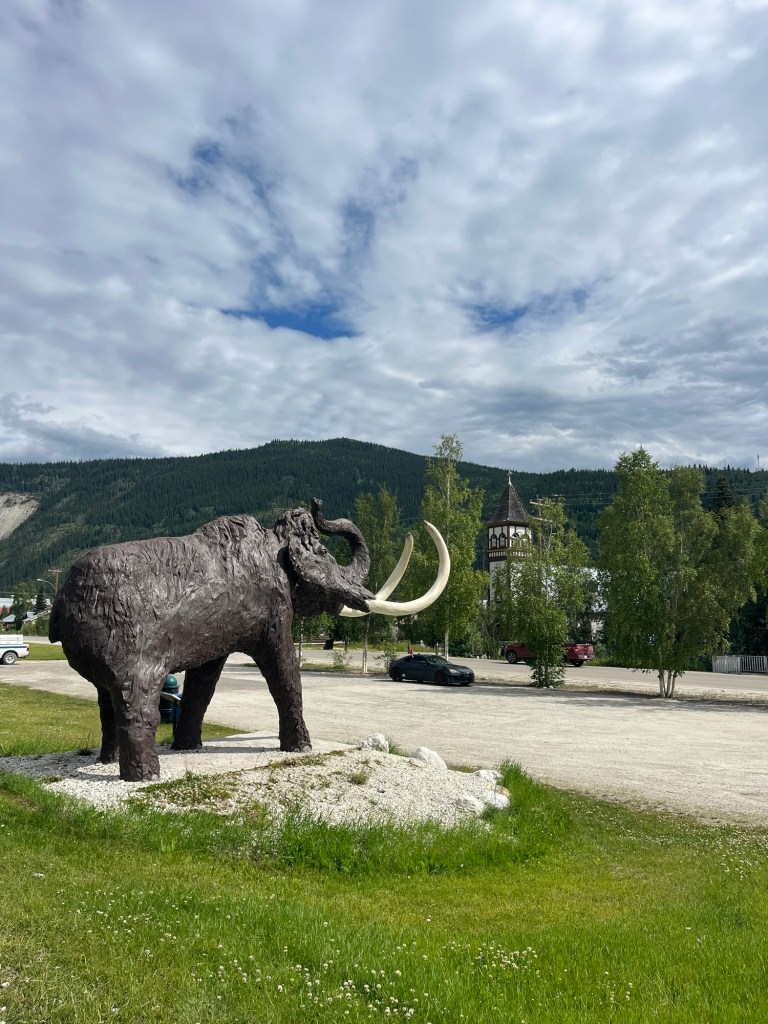
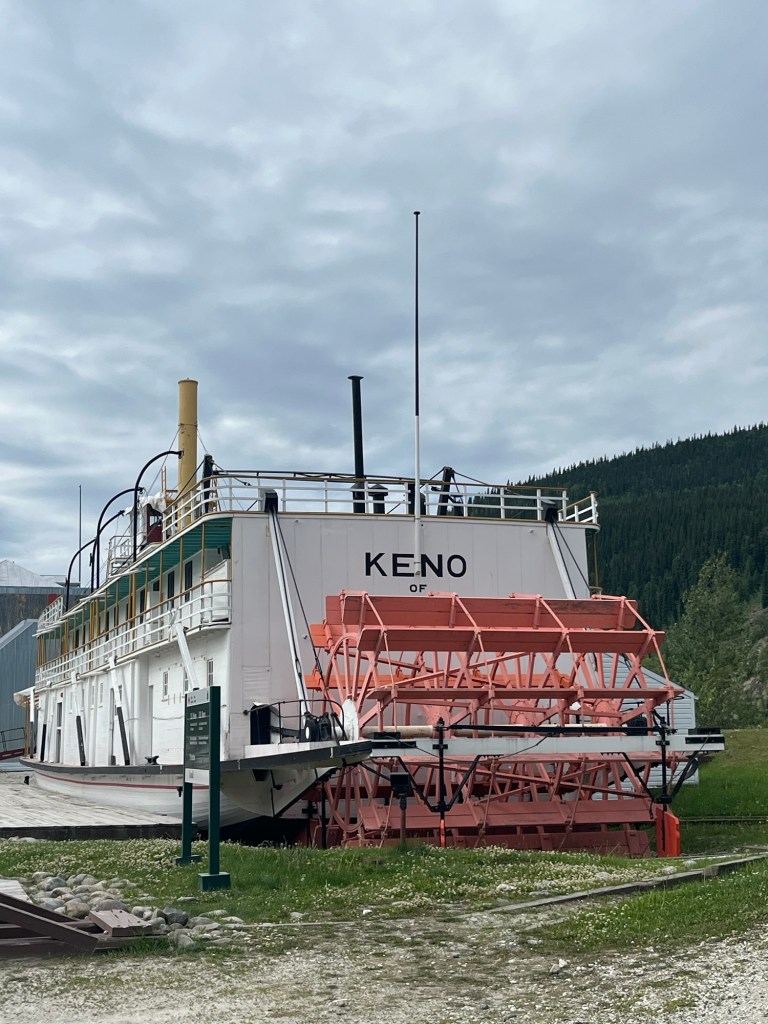
As I walk along the Yukon river, there is an old river boat that is being restored. The sun is hot, so I don’t linger in the park. There are fiberglass mastodon and mining statues placed at intervals. So I do stop for a few photos. I rarely meet a statue that isn’t begging for a photo. Every so often there is a tiny path down to the waters edge. I am not fishing or swimming. I am just taking a stroll until I see the waters meet. So I walk on.
Mission accomplished. I am the only person standing at the confluence where two storied rivers run together. It is peaceful: just me and the butterflies. It is hard to imagine the place overrun with boats jostling to get to the gold. It is wild and beautiful.
Afterwards, I cut back through town to get to the hotel. This end of town is a little more run down. All in all Dawson is a sleepy little town with a larger than life past. The gold rush legends live on, but today the real money comes from tourists. I guess I’ll find my husband and see what else we can contribute to the local economy.
-
Carcross: Travel Goals Canada
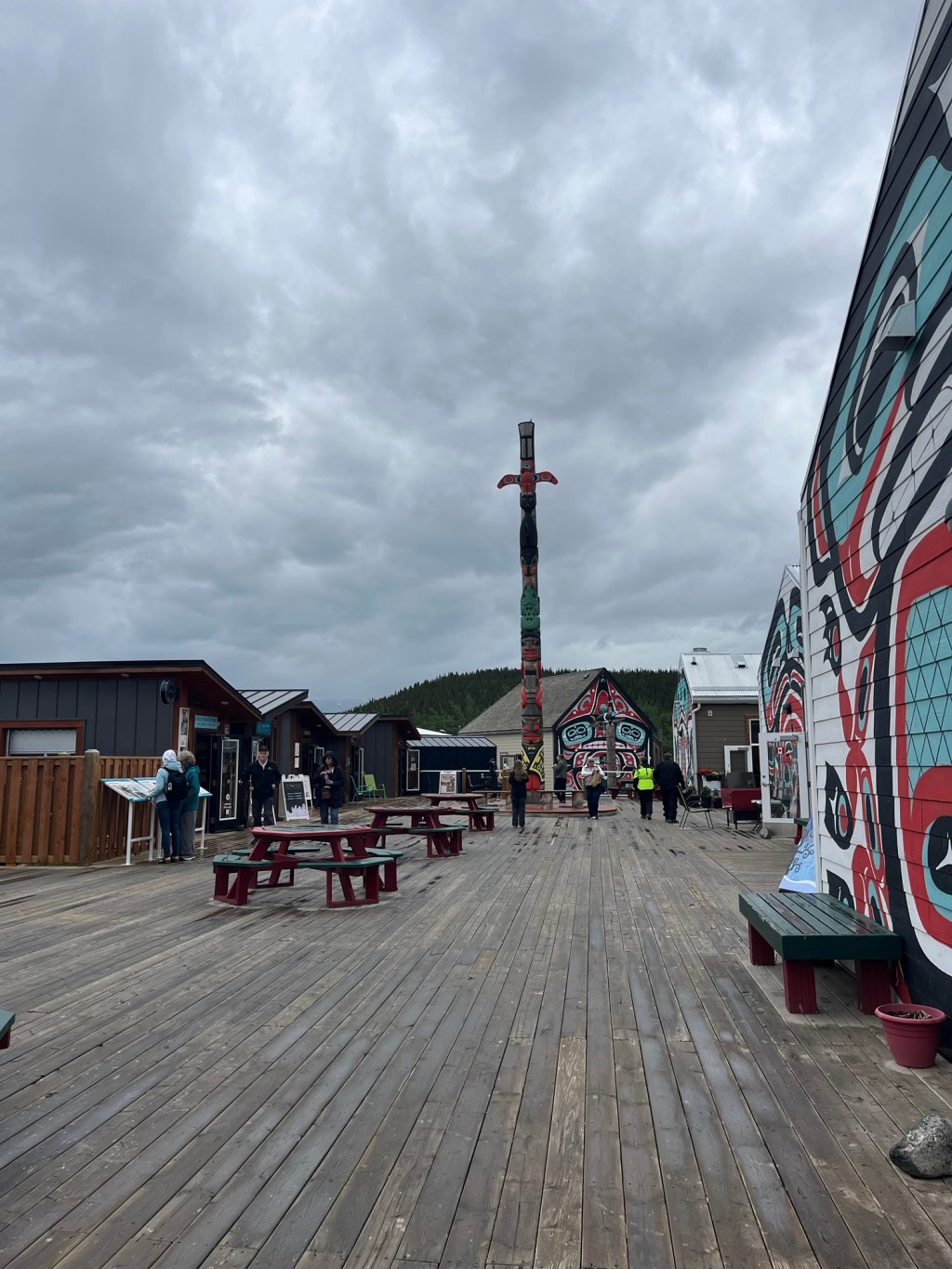
We are herded onto a motor coach for a trip from the Canadian Border to Whitehorse where we will catch a charter flight into the interior of Canada. I expect a long drive with trees lining both sides of the road. Time to find my kindle. At least the bus is comfortable.
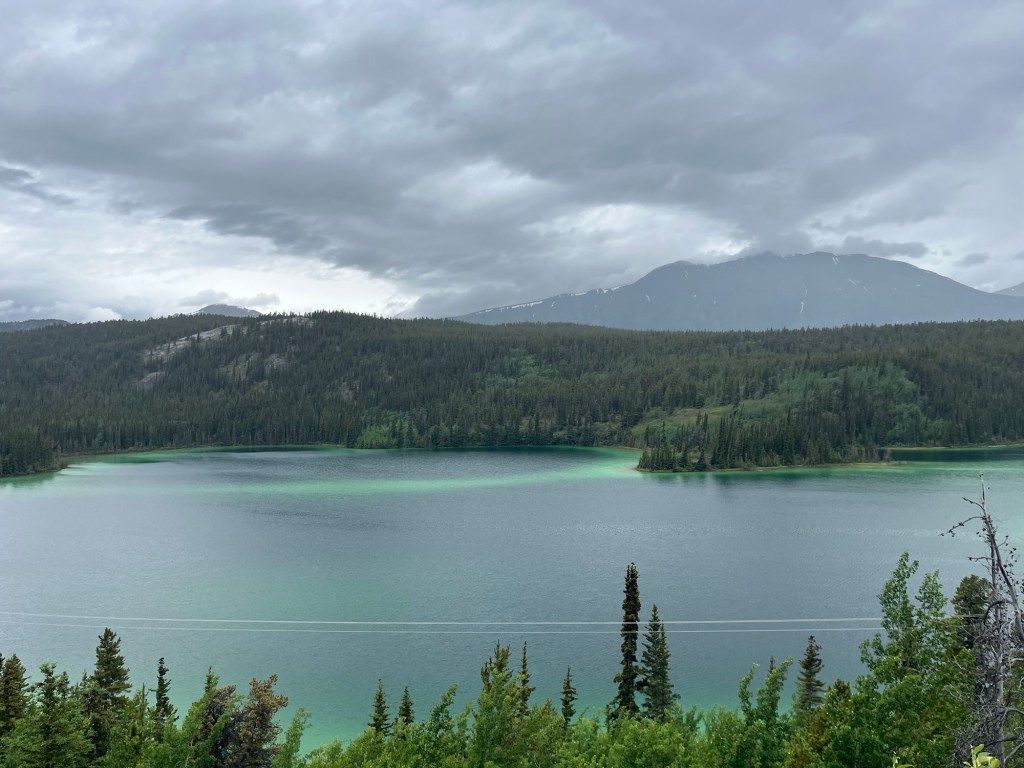
Except I never actually turn on the kindle. Shortly after we cross the border there are fascinating glacial lakes. And then there is a bear. The young bear is adorable as he plays by the roadside. Our driver is kind enough to pull over and let us watch until he trundles his way back into the forest.
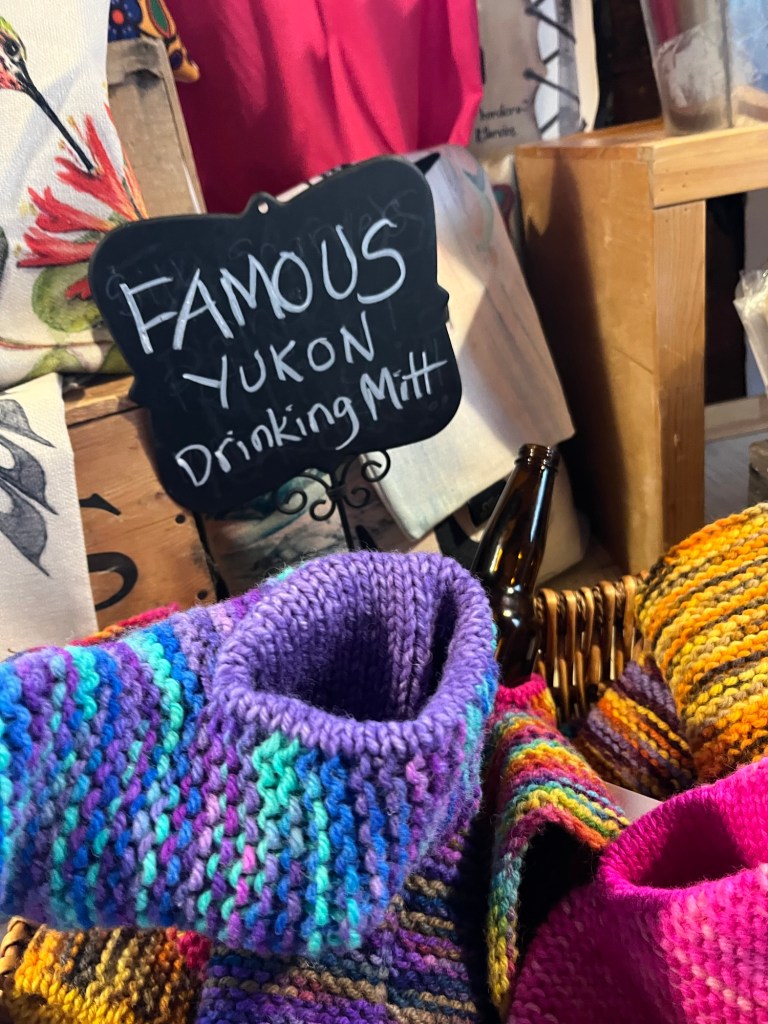
Before I know it, we are in Carcross, Canada (short for Caribou Crossing). I’m told two towns shared the name Caribou Crossing, but the post offices in each town got really tired of the mail mistakes so this Canadian town just permanently shortened its name to Carcross.
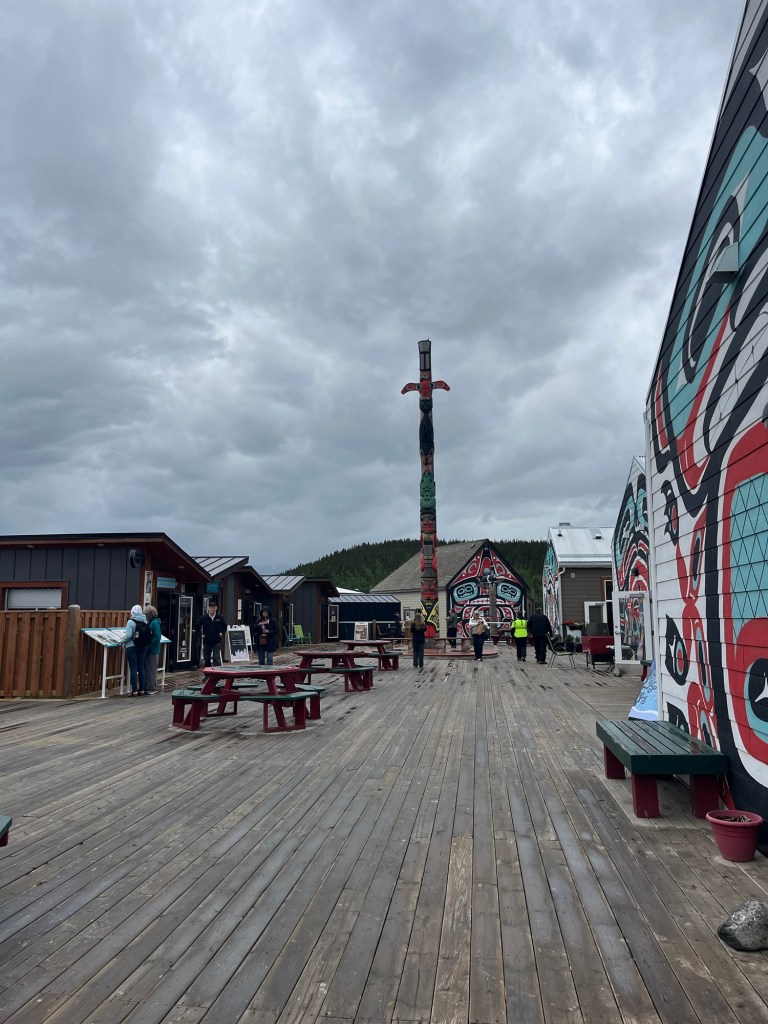
There isn’t much in Carcross, but it is lovely nonetheless. There is a complex of new buildings which house a visitor’s center, shops, and cafes. The buildings are decorated in indigenous design and support the local population.
I buy a coffee and a slice of tiramisu. I am a self-confessed tiramisu snob, so I wasn’t expecting much. I was wrong. It is creamy and lovely in every way. Real cake and real mascarpone. No pudding imposters. Yay! Authentic tiramisu in the middle of Carcross under the shadow of a totem pole. The world is a surprising place.
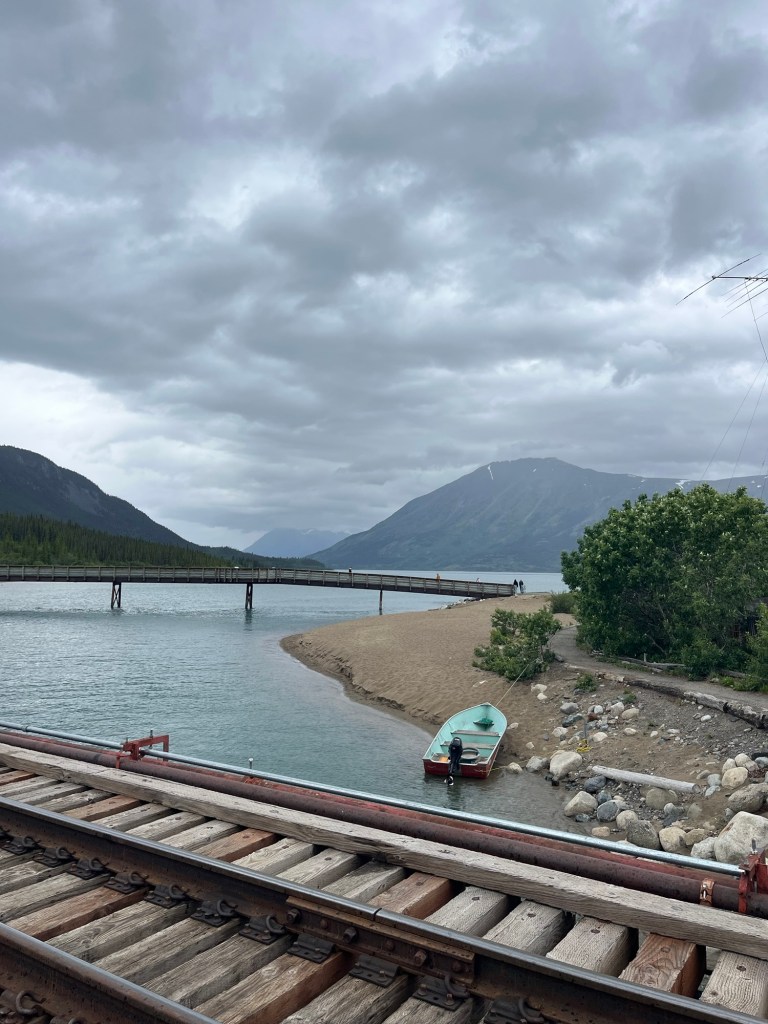
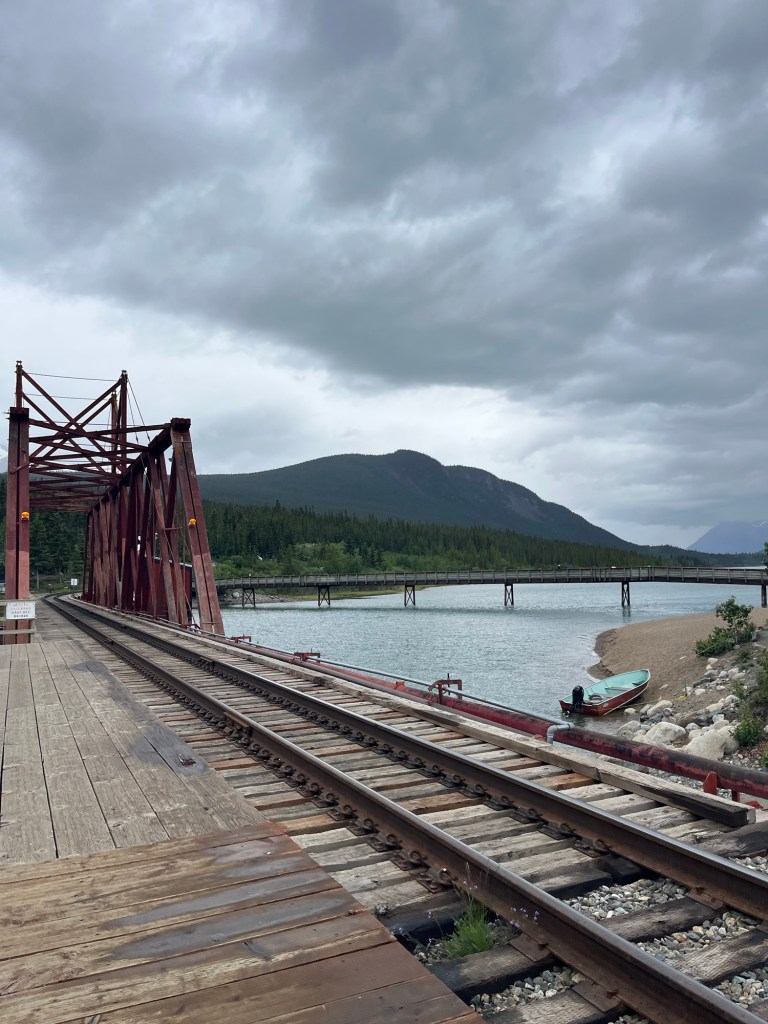
There is a railroad stop here. It is the end of the line for the regional White Pass Railway. I wonder to myself why we didn’t just take the train this far, but I am not planning this adventure. I will leave the car planning to someone else this trip. Instead, we walk out to the old trestles and look at the beautiful water.
From here we can see the old town. There is a grocer, a general store and a hotel. They are all in original buildings from the 1800’s. The most unusual is the Caribou Hotel. Here, I read the story of Polly, a yellow and green Amazon parrot. Polly arrived in 1898 during the gold rush via the Chilkoot trail and took up residence at the hotel in 1918. Polly’s owner was a ship captain who died in a tragic sinking of his ship, “The Princess Sophia”. Polly lived over 122 years (until 1972), spending most of them at the hotel. Known to the locals as foul-mouthed and hard drinking, Polly bit patrons and also sang opera. I’m sorry to have not made his acquaintance as he sounds like a local legend.
I like Carcross. The nearby green lakes, the river, and the history give it charm and depth. Carcross proves that sometimes a small spot along the road can be wonderful.
-
White Pass Rail: Travel Goals Alaska/Canada
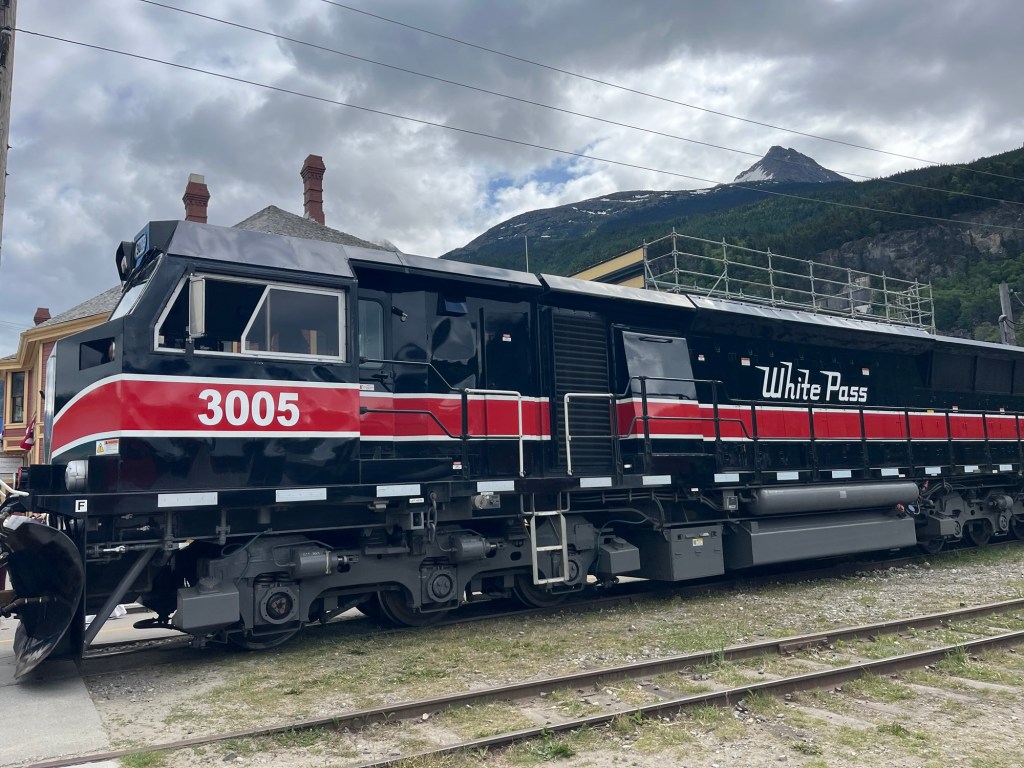
Today we are leaving Skagway so we are up early. We grab breakfast at the local coffee shop and head to catch the transport to the White Pass Railway. I am excited about the trip over the White Pass. This is the way that hundreds of Gold Rush miners walked with their supplies. Canada required prospectors to carry a year’s supply (2,000 pounds) of food, and gear in order to cross the border to get to the Yukon and Klondike Gold Rush. I can’t wait to get a glimpse of the infamous trail.
The rail cars have simple wooden benches and large windows for viewing. There is also an outdoor platform for open air viewing. The air is quite brisk and it is drizzling rain, so any outdoor visits will be brief.
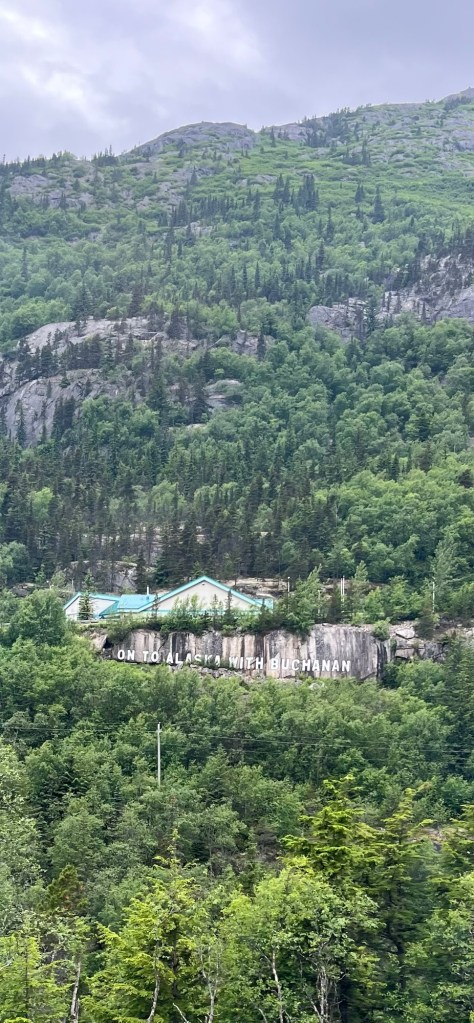
The train immediately makes an ascent. We climb the pass slowly and steadily. It doesn’t take long to see the Canadian border patrol building across the valley. It’s perched on the side of a different mountain and marks the border on the Chilkoot pass. The mountain proclaims “on to Alaska with Buchanan”. The sign was painted by kids on a youth tour program that ran in the 1920’s by a wealthy American, George Buchanan. Not Gold Rush related at all, but interesting.
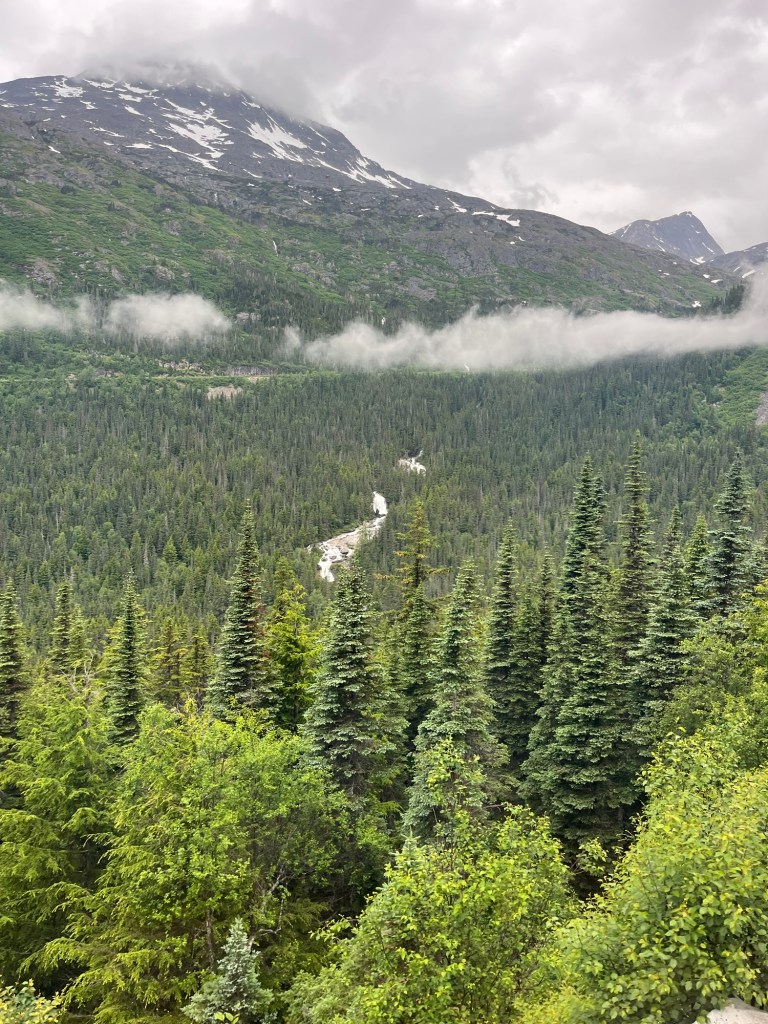
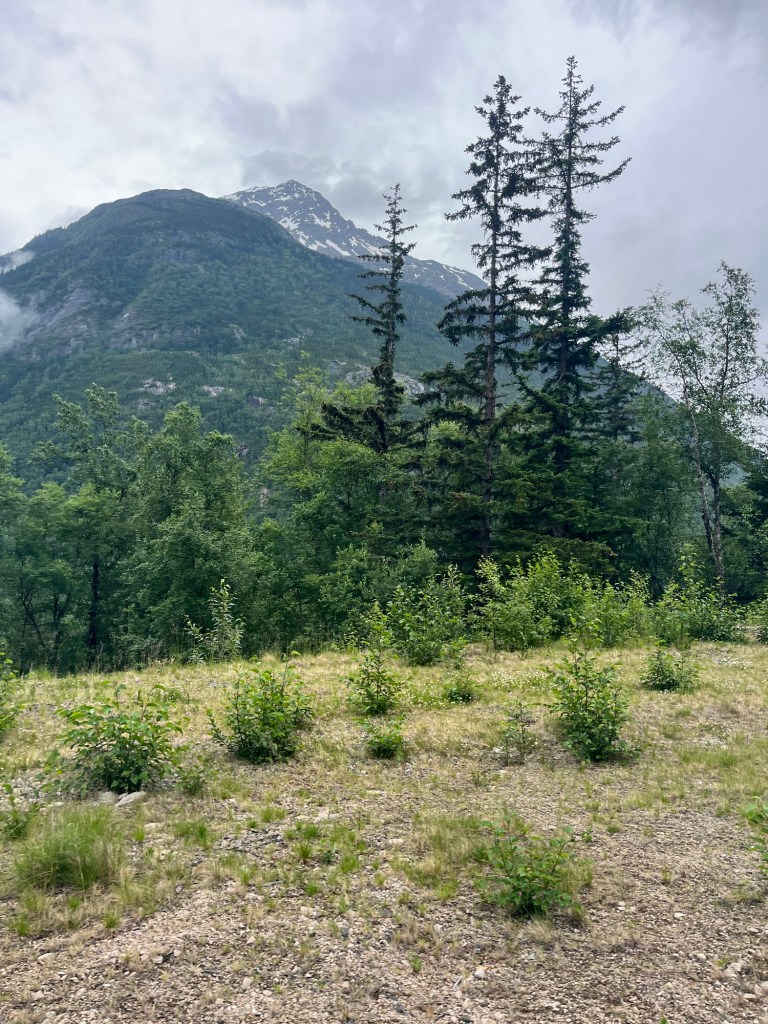
The Mountain views are incredible. Tall fir trees obscure steep drops. Mountain streams, and cascades crash down the mountain slopes. (I discover that a cascade differs from a waterfall in that it is temporary and caused by snow melt. Who knew?)
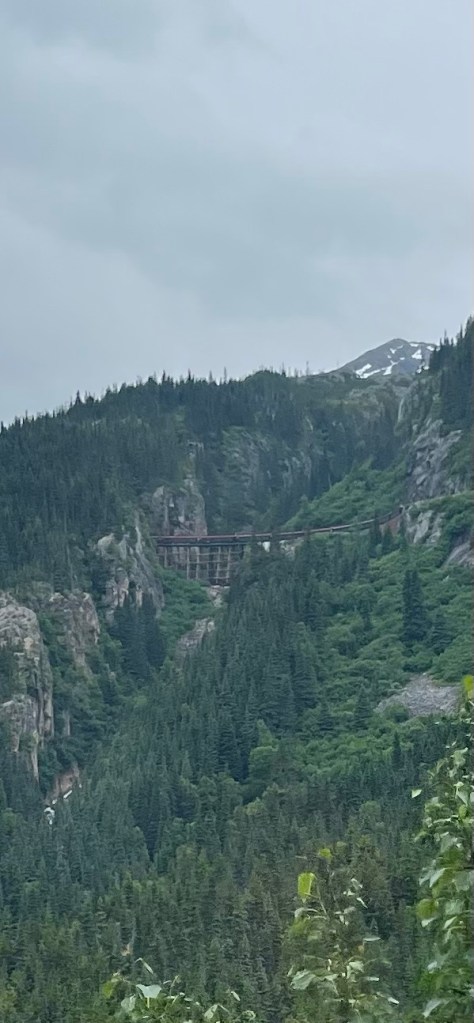
There are train trestles visible all along the route. Our train is suspended thousands of feet in the air by timber. I venture outside to get a closer look. I don’t last long in the cold rain, but Wow!
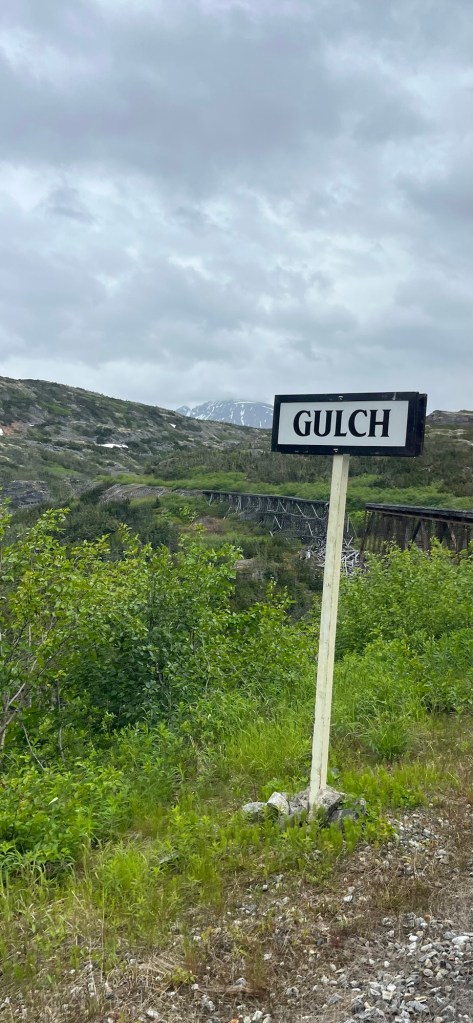
A bit further along, at a place aptly named Gulch, we see another trestle that is no longer functioning. The entire center section is missing. Thankfully the conductor lets us know that it is the old track. We will be using a new bridge. (We just can’t see it yet.)
Eventually we reach the U.S. Canadian border. It is marked by a small shack beside the train track. A literal lone Ranger walks out to wave at the train. What a lonely job.
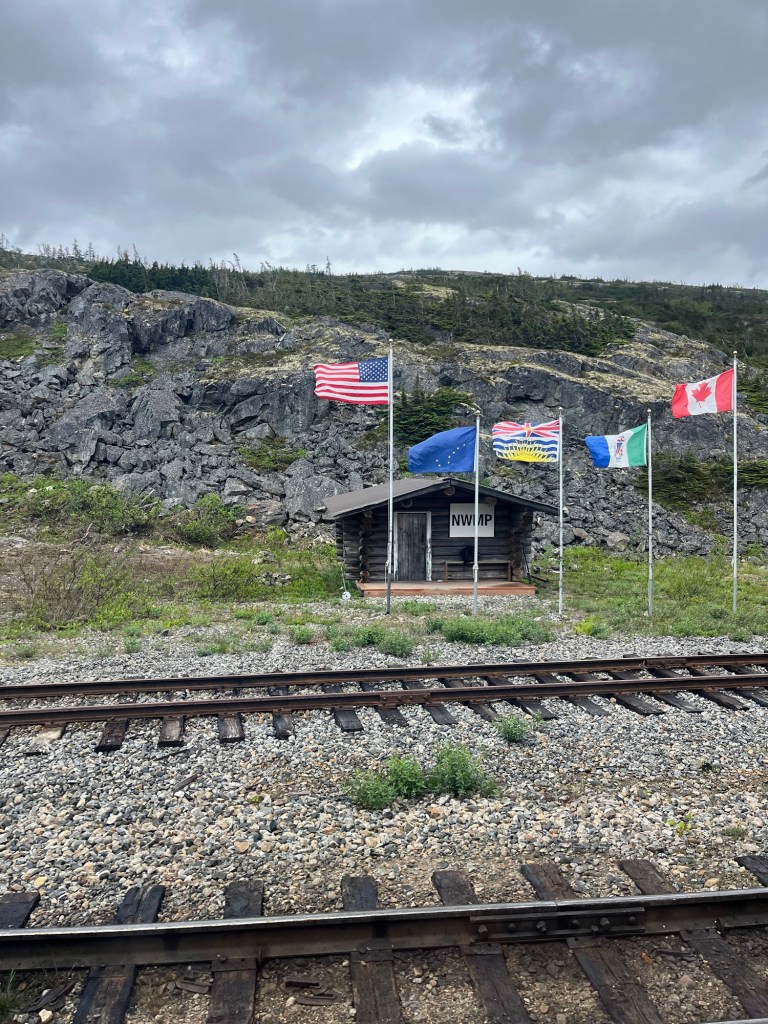
The old trail is just a thin ribbon snaking its way up the mountain next to the tracks. You can hike it, but with the comfort of the rail car going to the same place, only the hearty (or foolhardy) make the attempt. There is snow at this elevation and it often covers the trail. There are large boulders and treacherous loose chert.
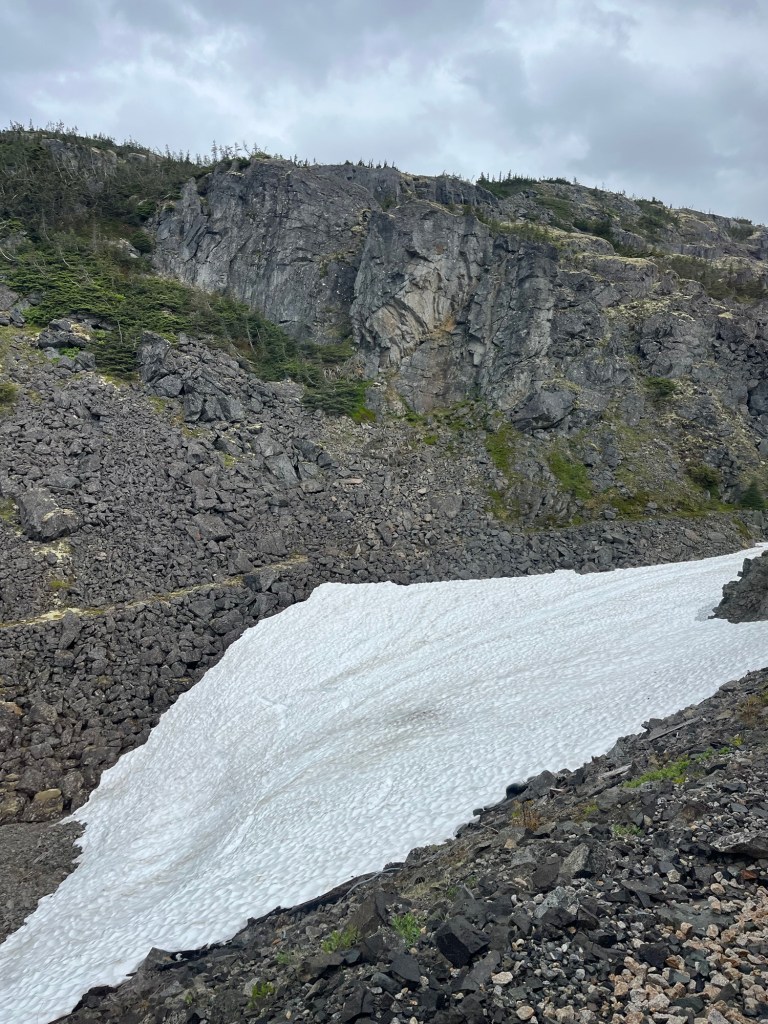
Each round in the bend brings new vistas. This the most enjoyable train trip ever and such a good value. It is a historic route, but hard to imagine hundreds of prospectors making multiple trips on foot while carrying hundreds of pounds of supplies. Despite plenty of photographic evidence, it is hard to imagine the level of gold fever required to even attempt the climb.
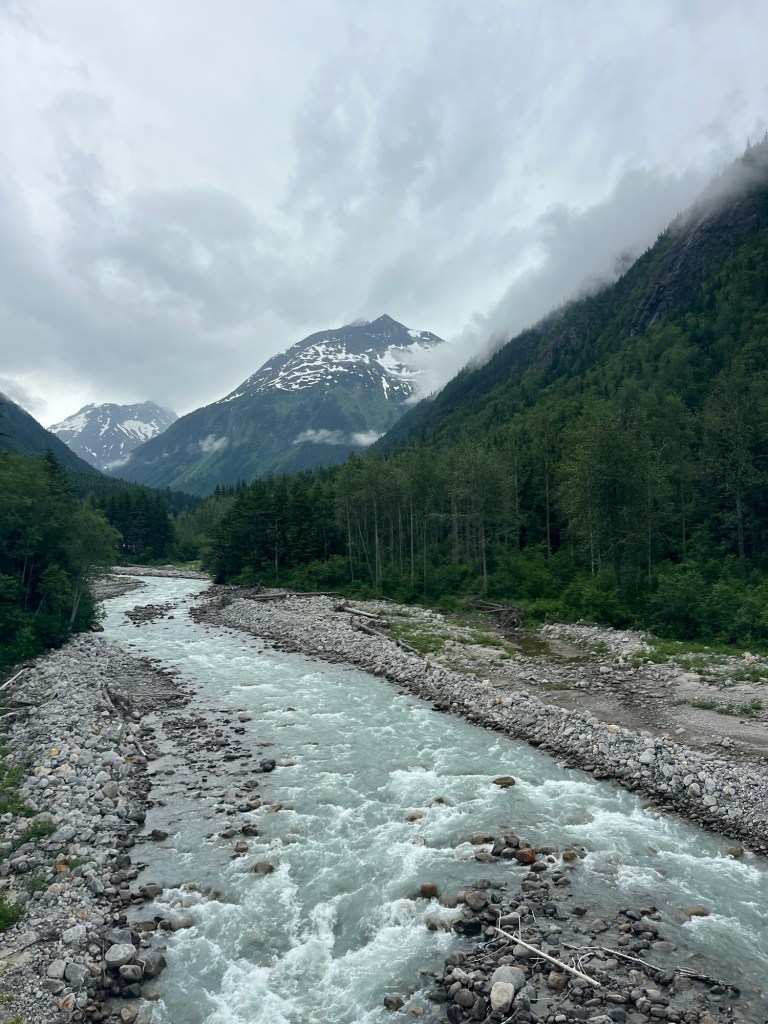
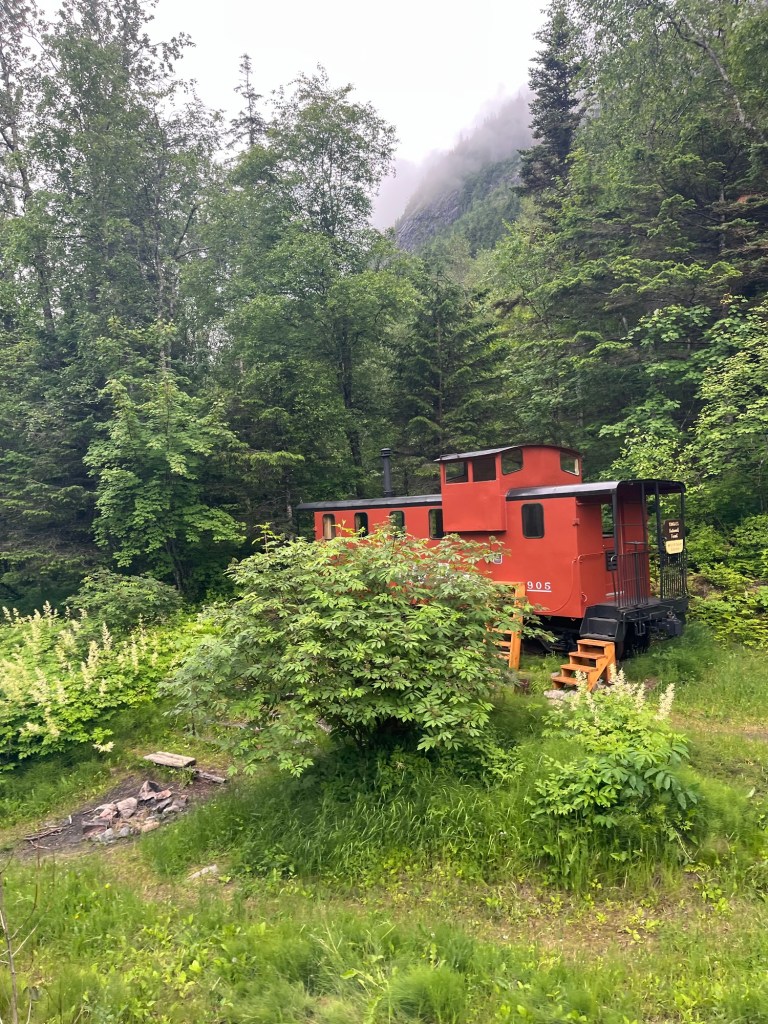
As the train makes its way back down the path, I think about the native Alaskans and how they must have been confused by the influx of green horns. It must have been hilarious and alarming. Of course, the First Nations are still shaking their heads at the influx of cheechakos. Today we just hop the tourist train and hit up the gift shops.
-
Mountain Hike: Travel Goals Alaska
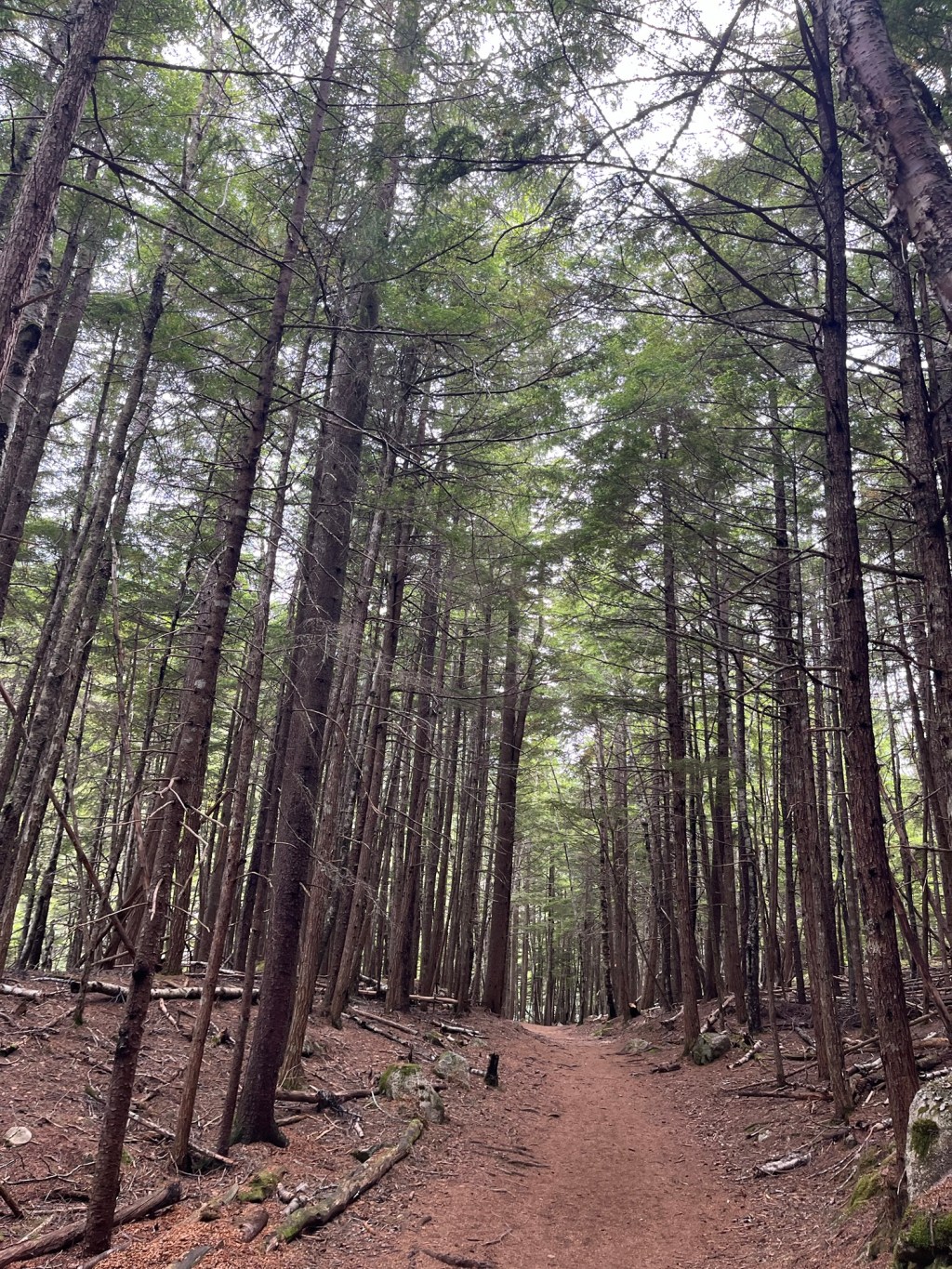
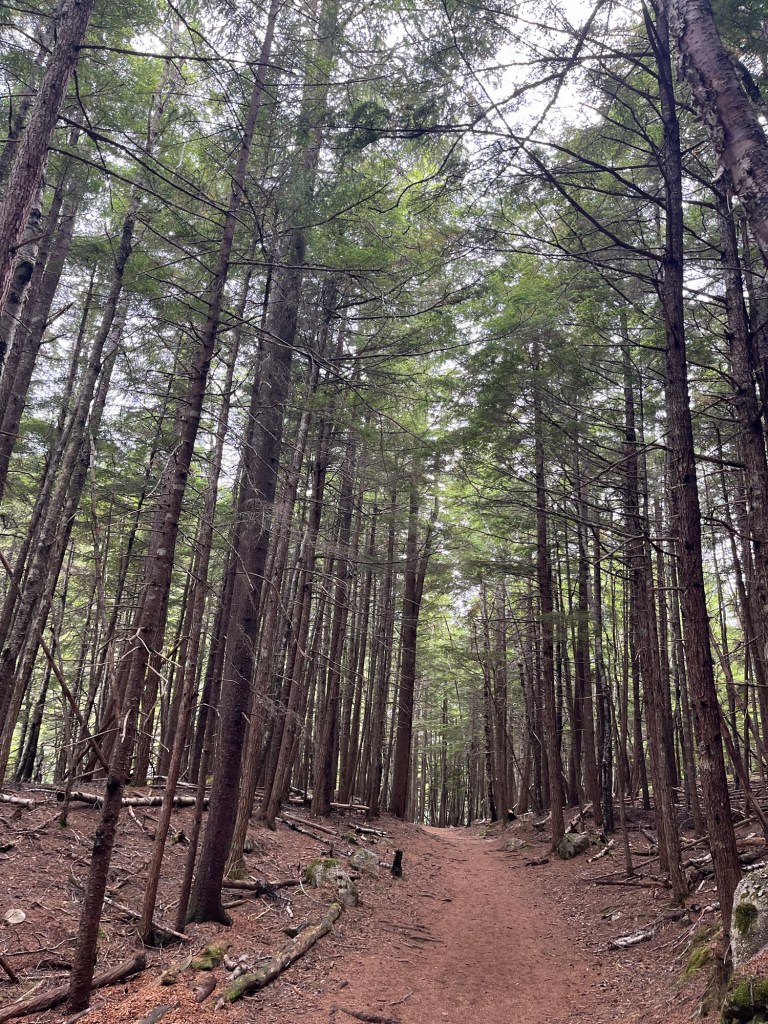
After spending the morning in Skagway, I want to spend some time in the woods. The lower lake trail is touted as a two mile loop trail around a mountain lake. To get to the loop, there is a steep trail up the mountain beginning across the railroad tracks from the Skagway Hotel.
Our new friends J and N decide to join us. This gives my husband someone to commiserate with in the climb up to the lake. He now has a buddy to spend the entire hike telling me that I can’t calculate mileage, even though I am using the All Trails app the entire way (just to make sure we don’t accidentally get in the upper loop trail system). We don’t have bear spray so I want to make sure we stay relatively close to town and well clear of bear sighting areas.
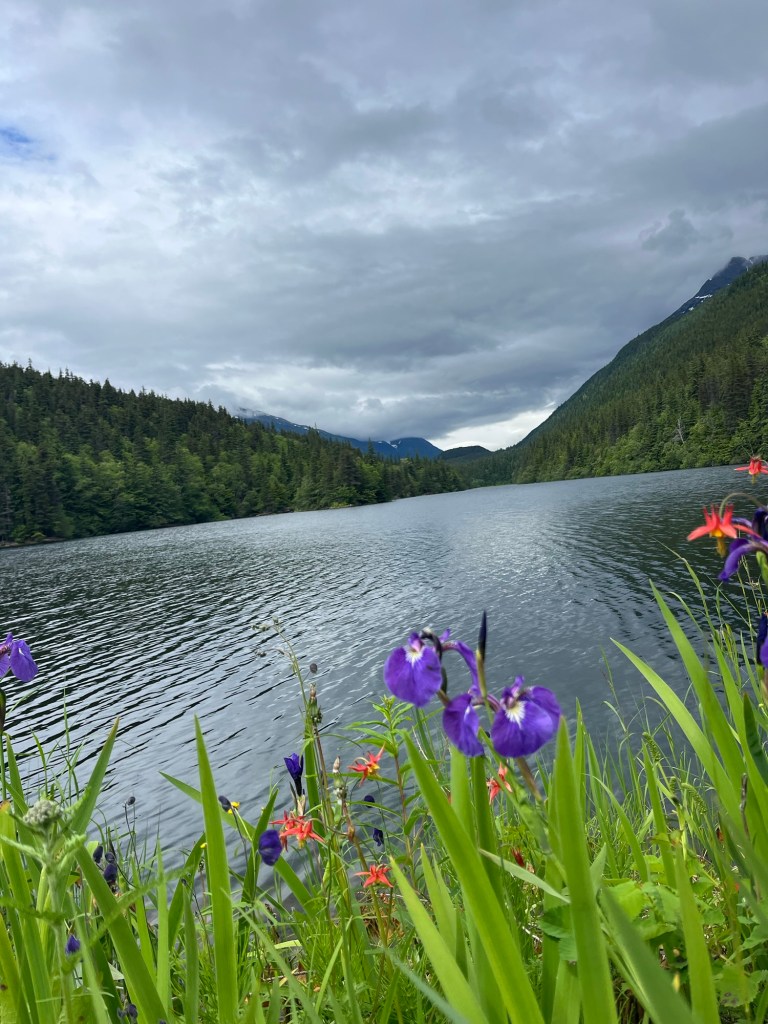
The lake is beautiful and well worth the steep climb. The Summer flowers are in bloom and bursts of color line the lakeshore. The water is frigid so the swimming docks are nice in theory, but not used much.
We only pass a few other people on the mountain. They are also harassing their hiking partner. “are we there yet? This has to be more than two miles!” It must be what all non-hikers say in the woods to pass the time. By now, I am immune to the queries.
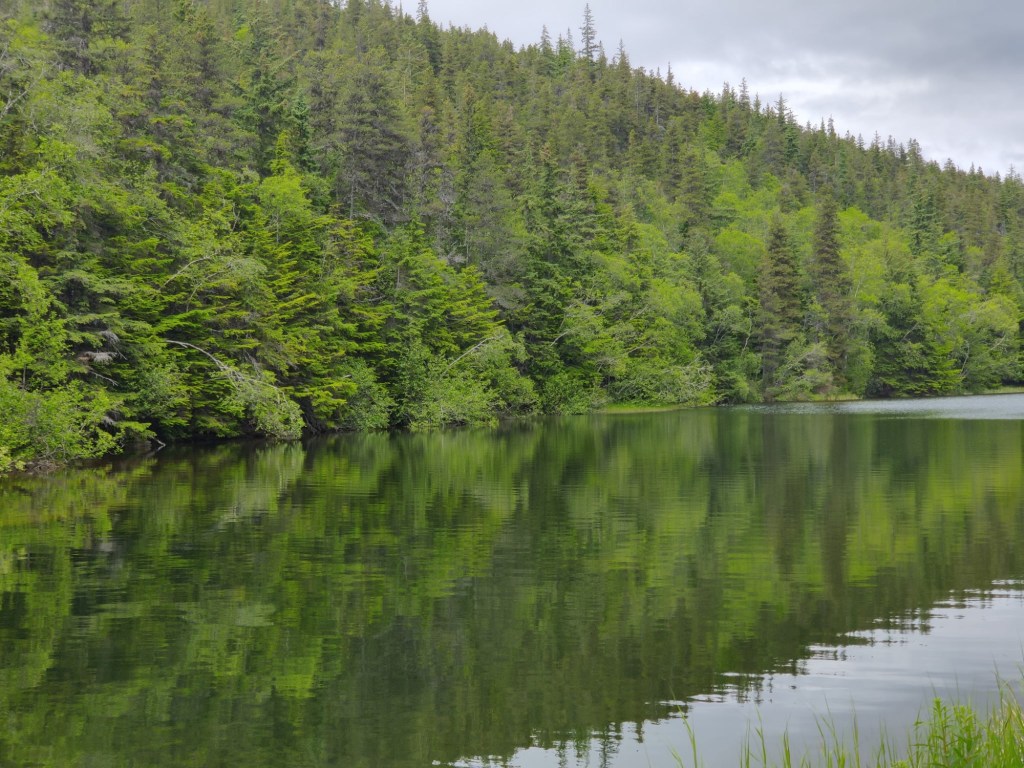
The pines smell fresh and the views are idyllic. This is my kind of country. I find myself wishing I was prepared for a full day hike. But my luggage allowance didn’t give room for heavy boots and hiking poles, and bear spray is expensive. So we will keep to the lower slopes where my cheap tennis shoes are adequate. The soles are already separating so I will likely be throwing them away long before we leave the North country.
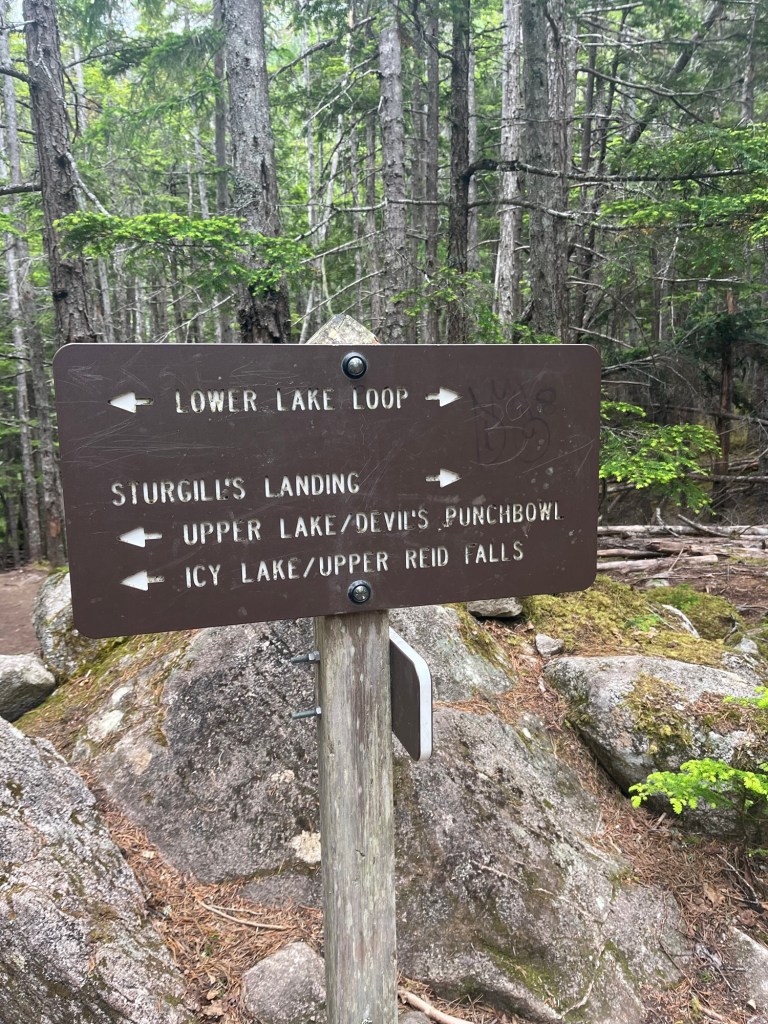
About halfway around the lake, the trail takes a steep upward slant. The men begin to protest that the trail around the lake is supposed to be mostly flat. I tease them back. “Mostly is different than always.”
Midway up the hill we notice a rock that looks like a giant chia pet. It has a large nose and goofy grin if you use your imagination. And I love to use my imagination,
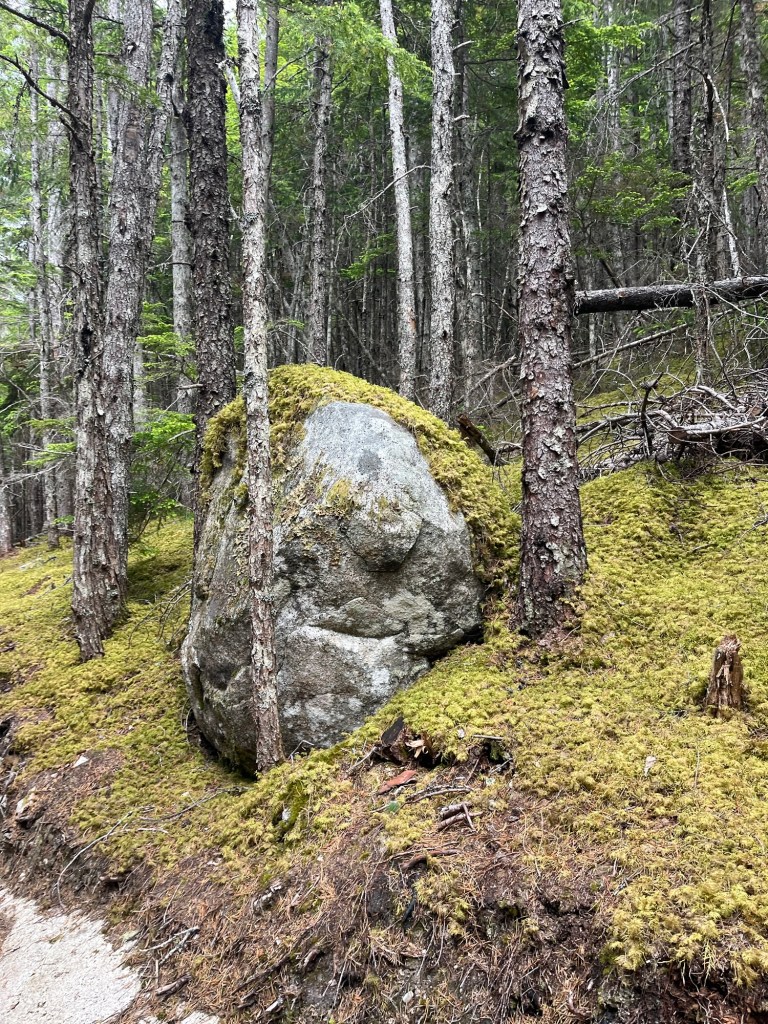
At about 3/4 around the lake we meet a family who wants to know if they are almost through with the hike. It is very amusing to me that people start a hike wanting it be over.
No. They are not “almost there” and neither are we. But we are approaching a day use area with boat docks and a swimming beach. No one is using either. It is no where warm enough for a swim (at for people from the lower 48).
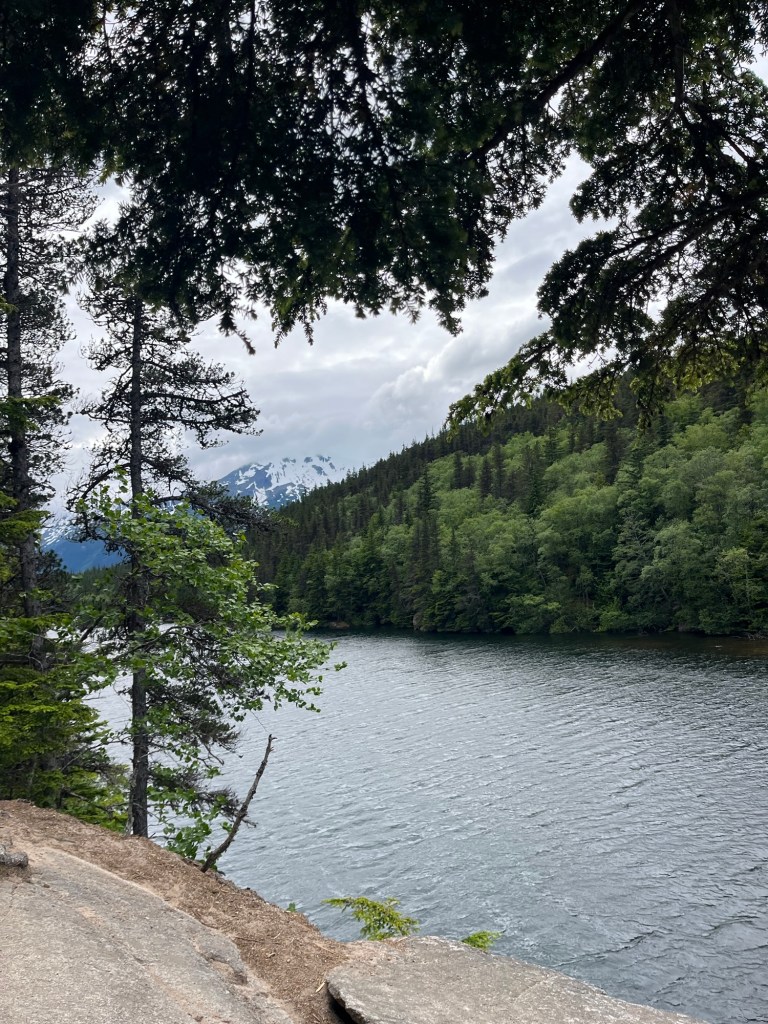
At exactly the two mile mark we make our descent. I concede that the total walk is accurately logged at 2.5 miles. The All Trails description only included the lower lake loop and not the steep ascent/descent path. J is an engineer and claims he knew my app was flawed. I just smile. We had fun and everyone survived the hike up and down the mountain. Sometimes you just need an afternoon in the woods.
-
Departing Japan: Travel Goals Japan
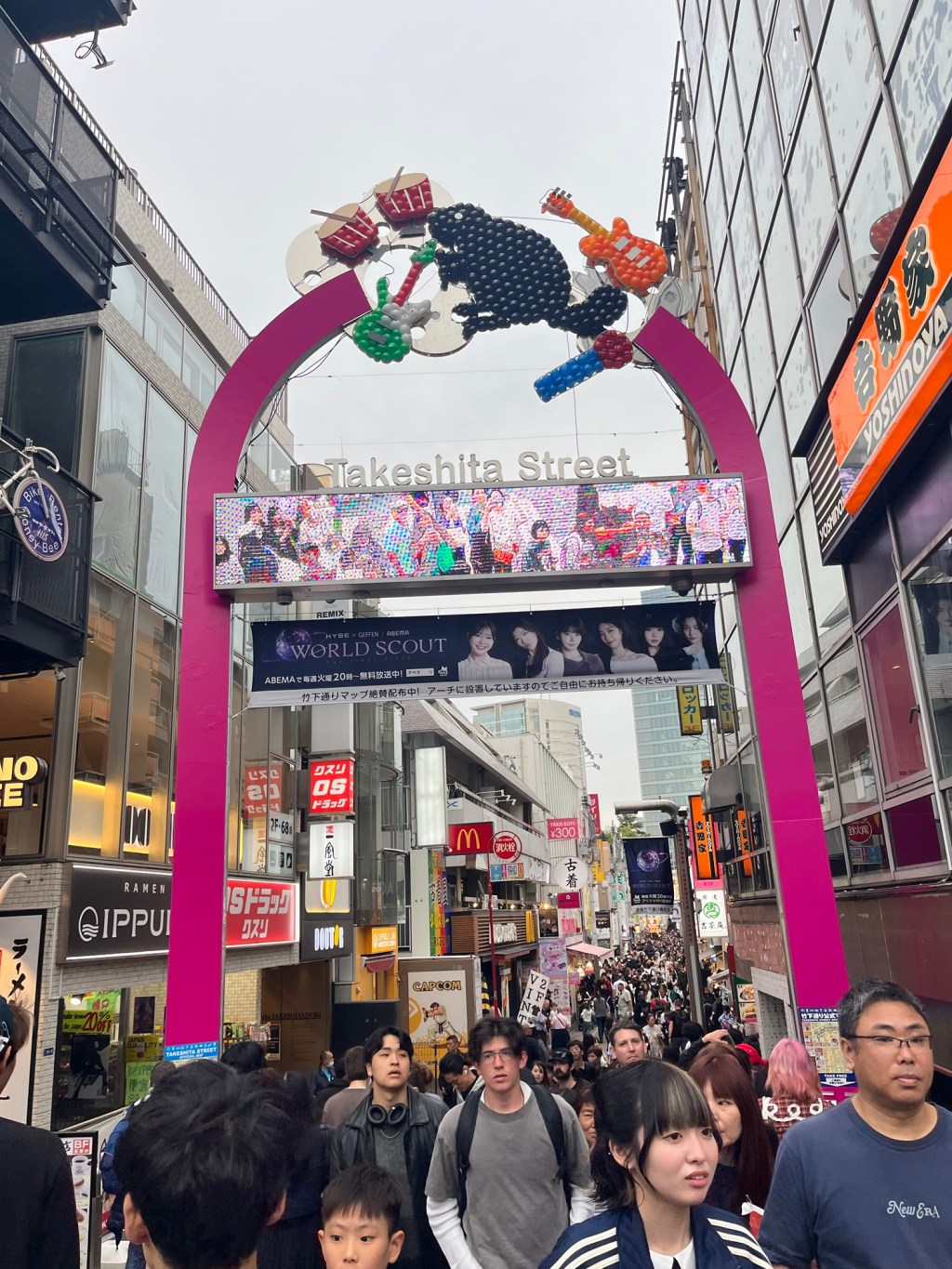
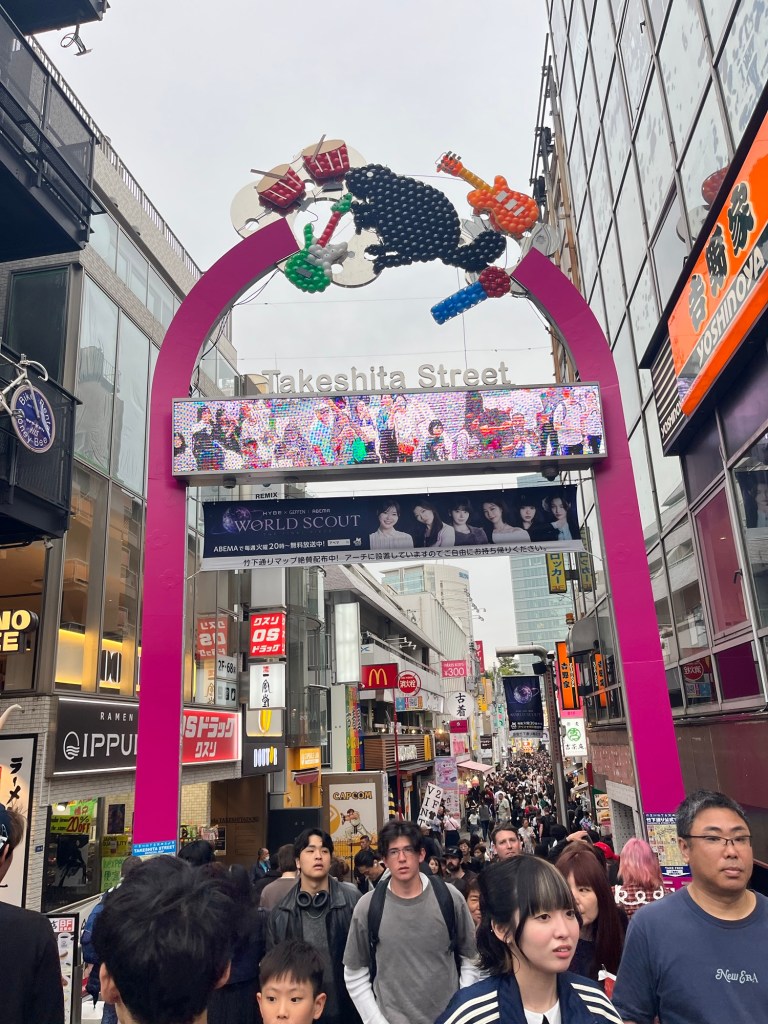
Saying goodbye is bitter sweet. After a month of life in Tokyo there are things I have come to love. Unexpectedly, what I think I will miss most is the Japanese toilet. The heated seat, the heated water bidet, the sound machines make even public restrooms a comfort.
I will also miss the cleanliness. People here value order and sanitation. They are polite. There is no unnecessary noise. It is quiet, even on crowded trains. These are my people. The loud noises in American public spaces will be jarring after a month of quiet living.
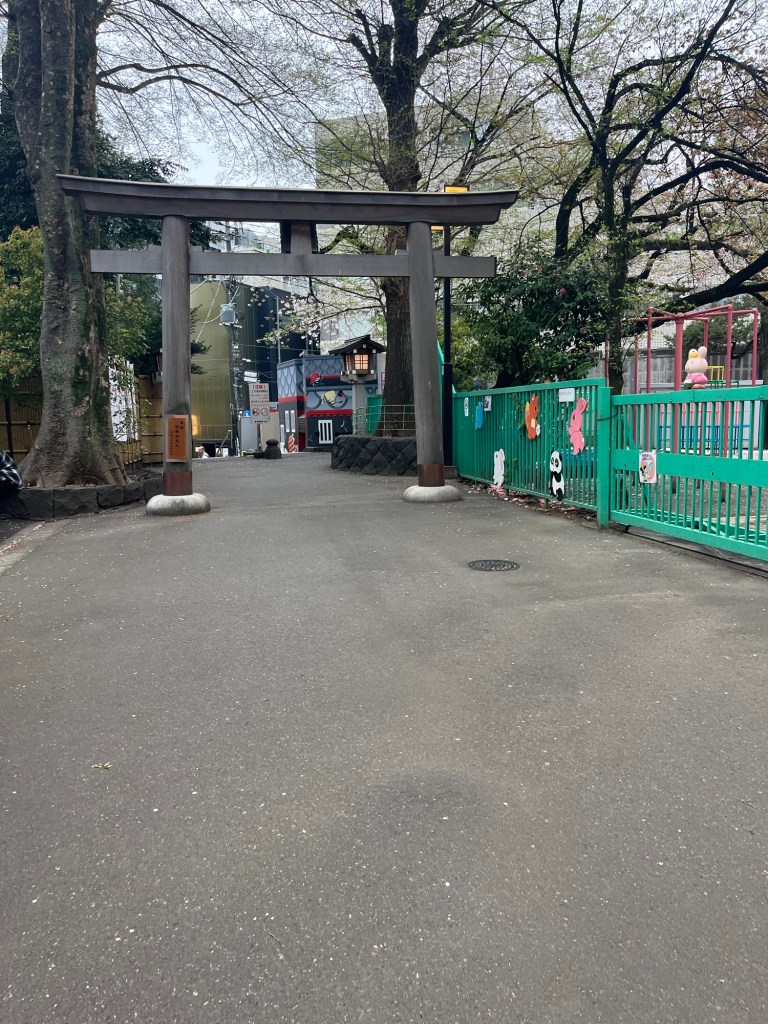
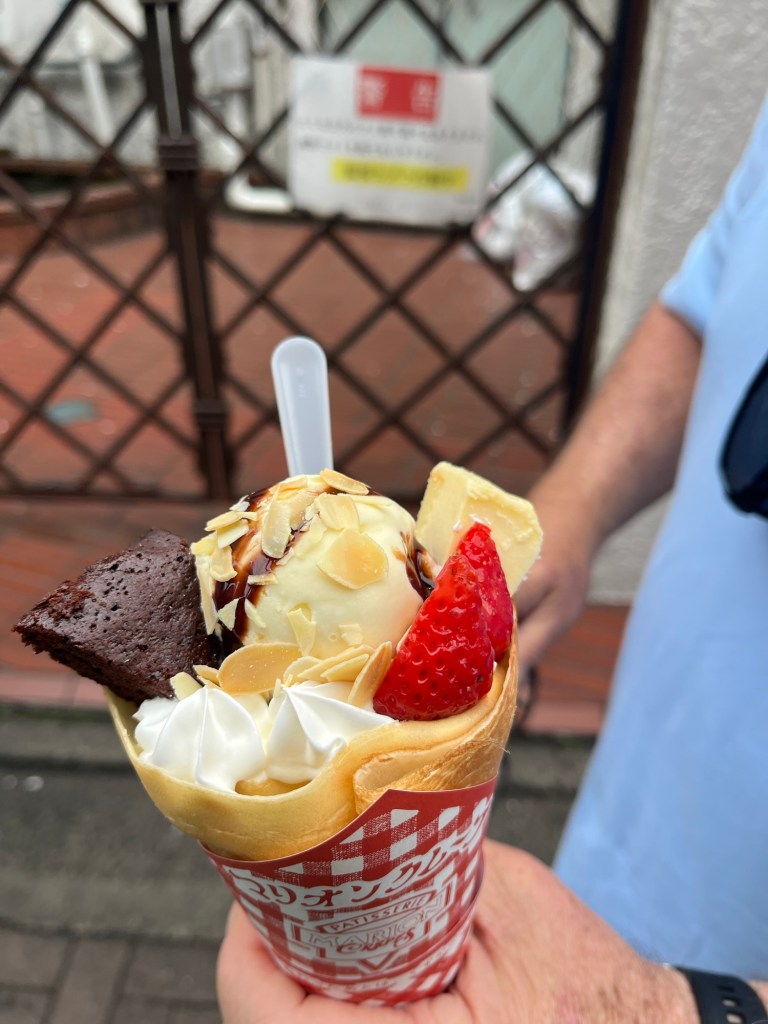
I will miss the quirky shops and animal cafes. Perhaps I will have a crepe ice cream extravaganza for the road. Or maybe we should stop by a Family Mart for old times sake. One last pot of tea seems reasonable.
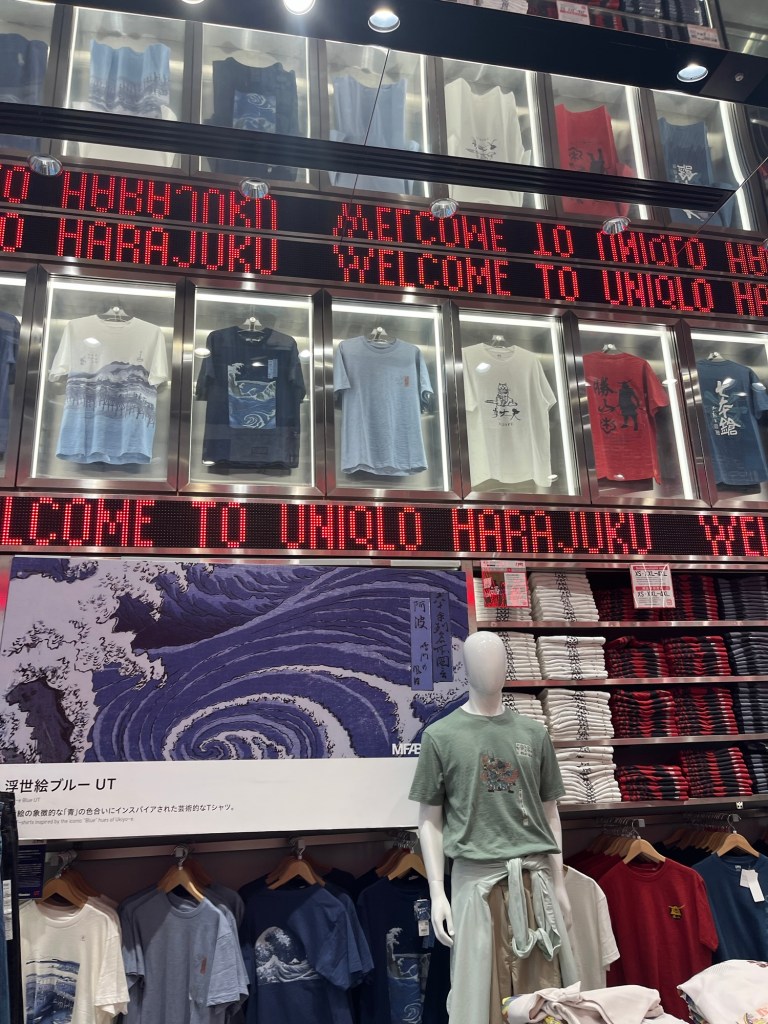
As we walk through Takeshita street one last time, I take the opportunity to buy one last shirt from Uniqlo. We have only visited them about seven times, but I think a nice round number is best. I may have missed the one thing I need to round out the outfits.
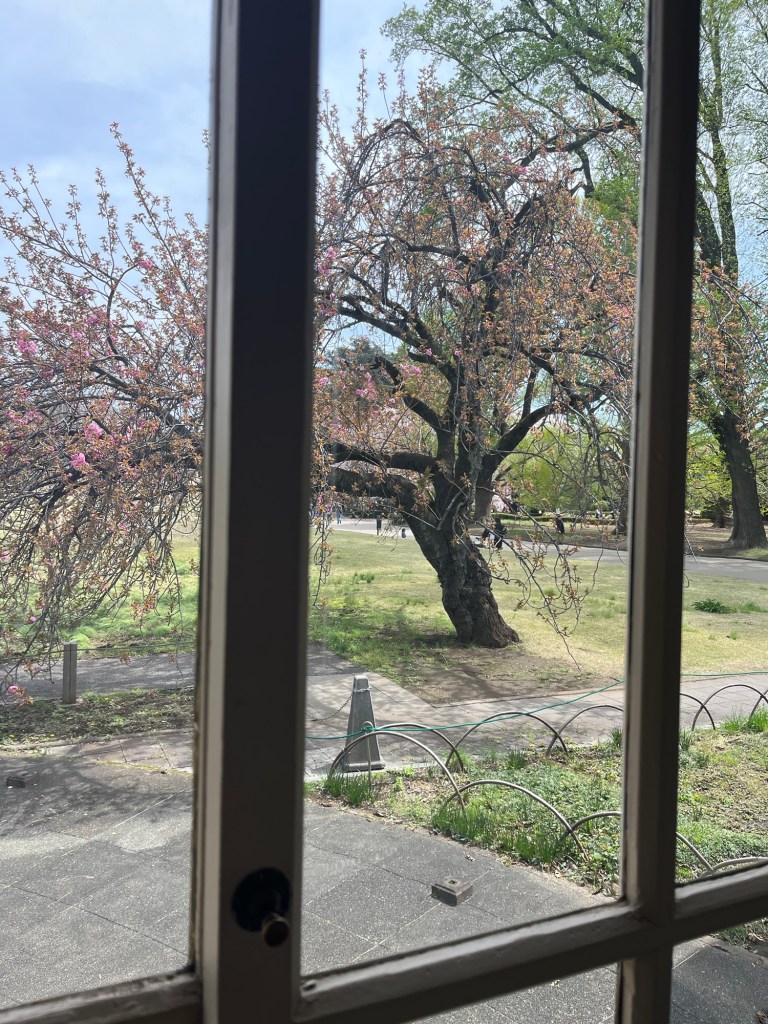
The cherry blossoms are fading and our plane is scheduled for take off. It has been a great month. But we are ready to return to the USA. Where water is plentiful at every meal and where we don’t expect to order rice any time soon. Where we don’t have to stoop to enter doorways and public trash cans are plentiful. My sleep number bed is calling. It is nice to travel and always nice to head home. Goodbye Japan. We are very pleased to have made your acquaintance.
-
National Garden: Travel Goals Japan
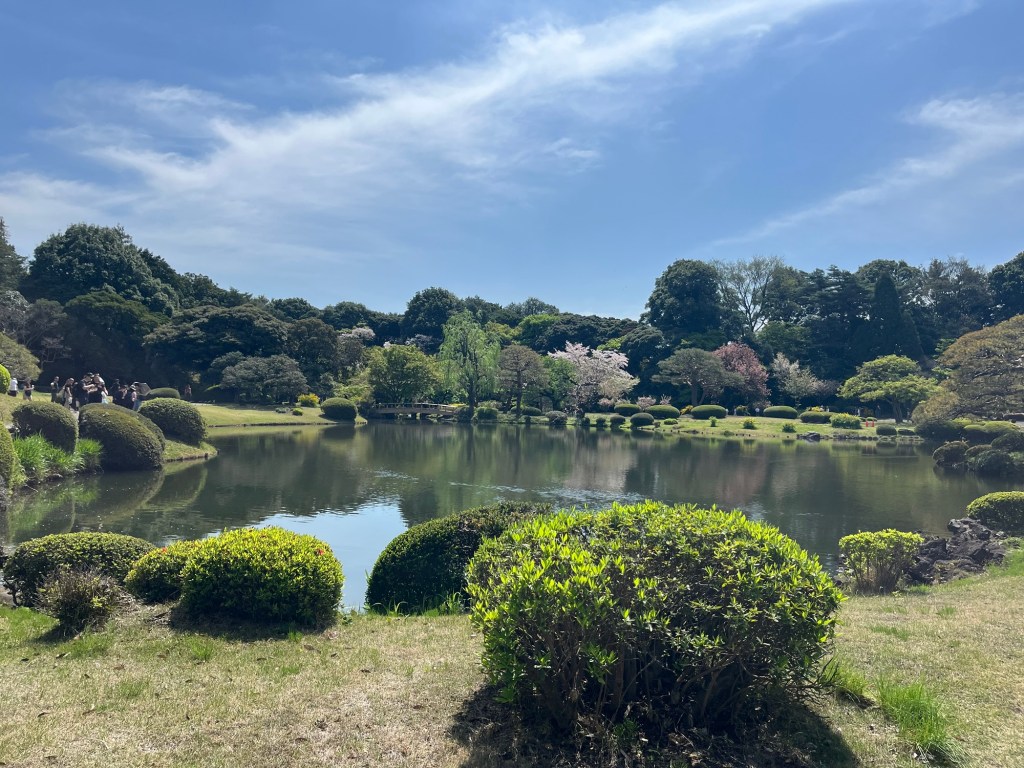
It is our last day in Tokyo as we visit the National Garden of Japan in Shinjuku. The garden sits within 15 minutes of our house. We didn’t visit before because of the cherry blossom festival. There were huge crowds and timed entry for weeks. Today, things are back to normal and we can walk right in.
The garden is delightful. (At least I think so. Gardens are my husband’s idea of a good time). We make a right turn and are walking on a secluded path along a stream and a series of ponds. I feel deep in the woods even though I know skyscrapers and the world’s largest train station are only blocks away.
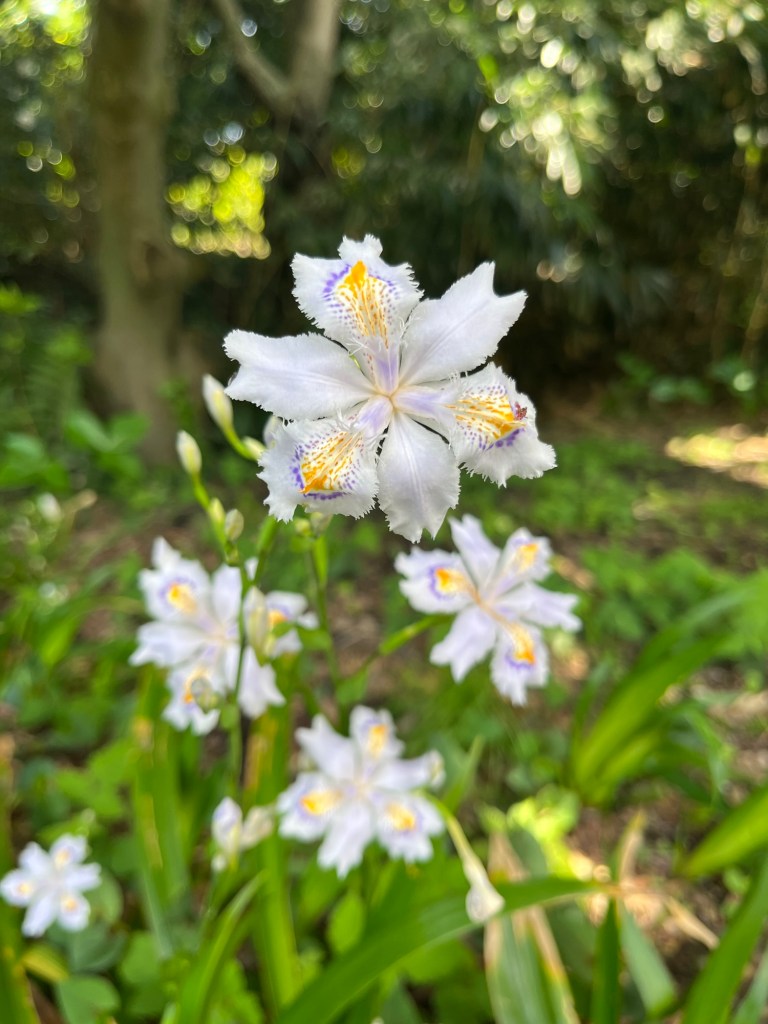
Along the forest path, there are species of orchid that I have never seen before. Springtime in Japan holds delightful surprises. Ahead I can see a tea house sitting beside a manicured lake. The Japanese maple dips gracefully toward the water. It makes sense that the world’s most beautiful Japanese gardens are in Japan.
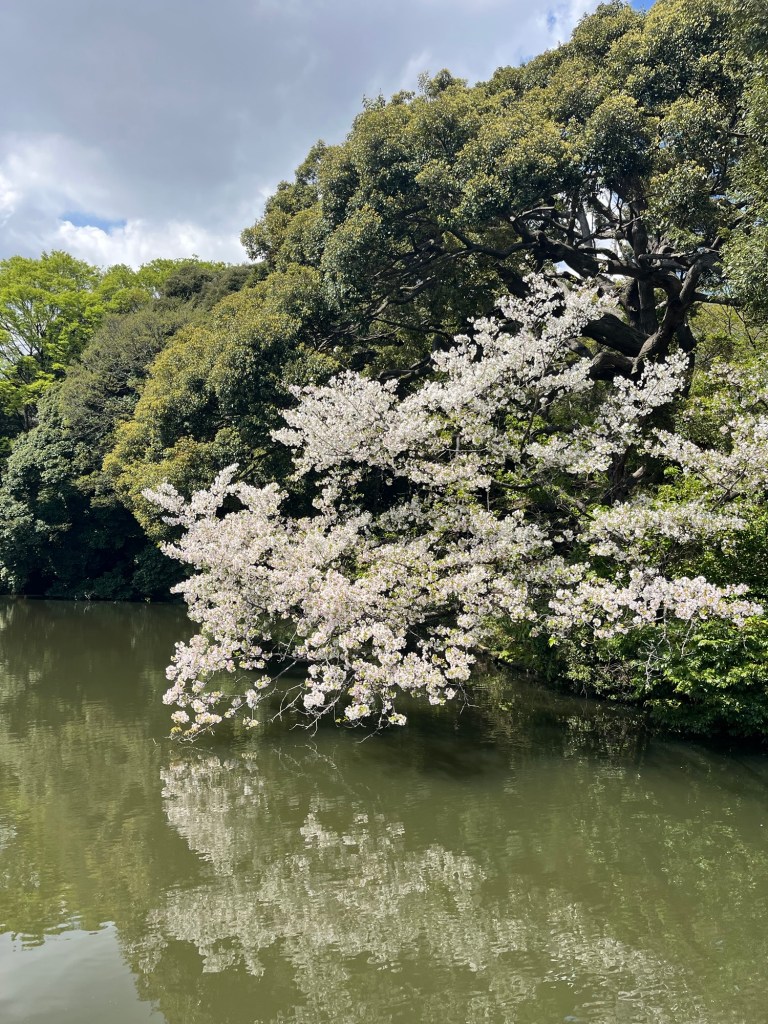
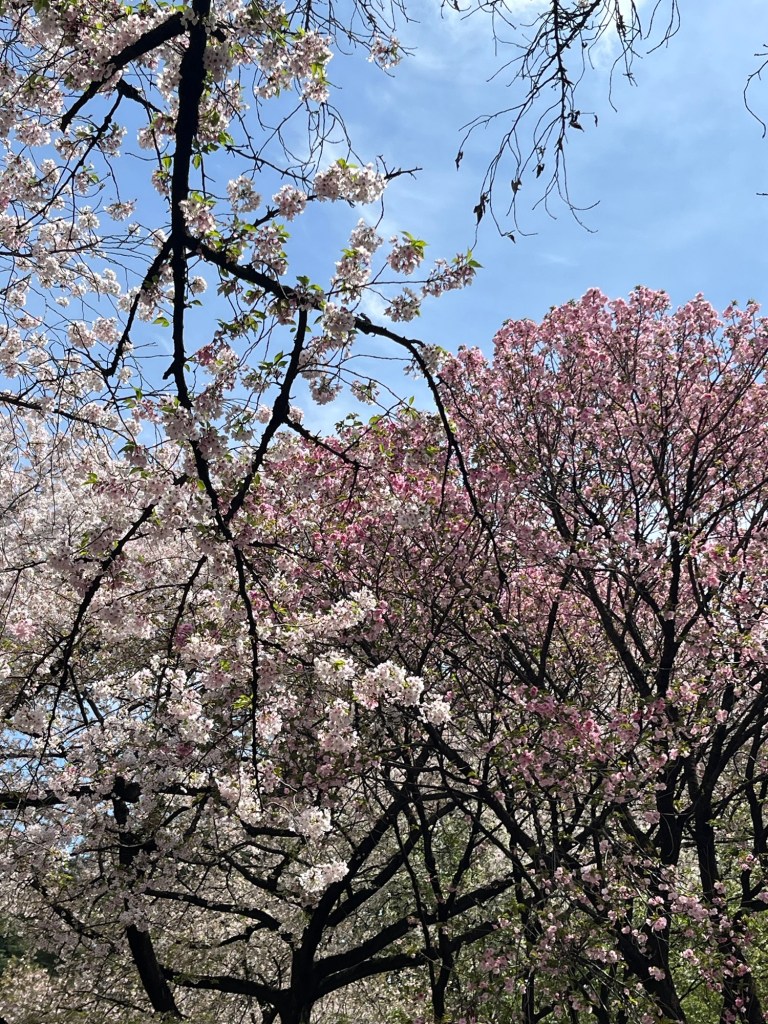
Surprisingly, the Sakura (cherry blossoms) are still beautiful. Many are falling, creating an ethereal pink snow. Standing in the grove of cherry trees is a once in a lifetime experience. I smile and turn my face to the sun and feel the sweet smelling petals kiss my face as they fall. My husband has been over the cherry blossom experience for weeks and walks on to sit and wait for my antics to play themself out. But first I walk among the colors: white, pale pink, light pink, dark pink.
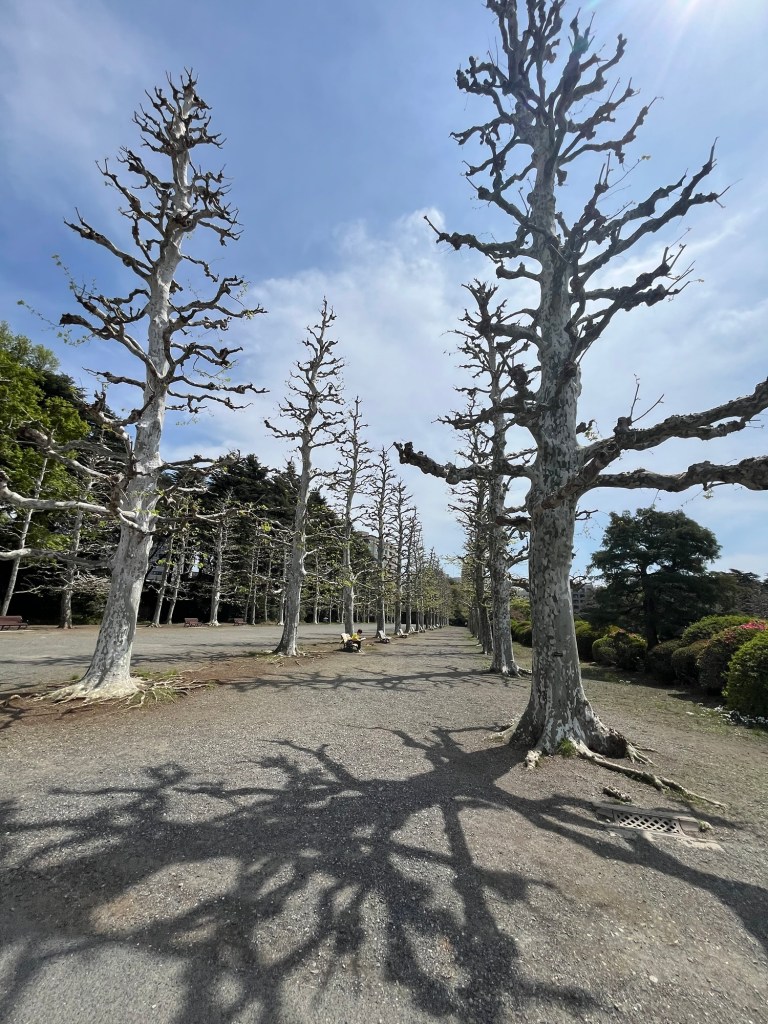
I insist we walk the entire garden. The formal garden is a little disappointing after the glorious Japanese garden. But the avenue of bald English plane trees was fascinating. I assume they will eventually get leaves. Today they just look like someone gave them a really bad haircut.
We walk through greenhouses and I even get an opportunity to stroll through the Emperor’s summer rest house. Apparently strolling the garden required a nap and potentially a shower. Ah, the life of an emperor. I settle for an ice cream to revive me before we walk back to Shinjuku station.
Prisoner of Hopes