-
Acting Like Children: Travel Goals

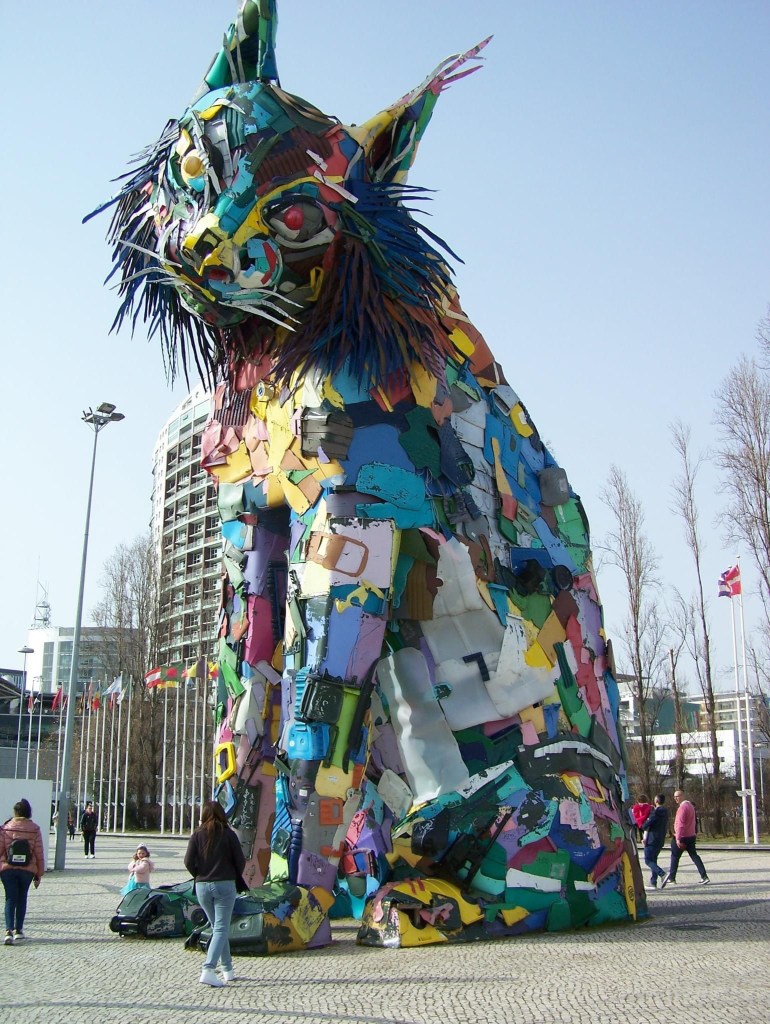
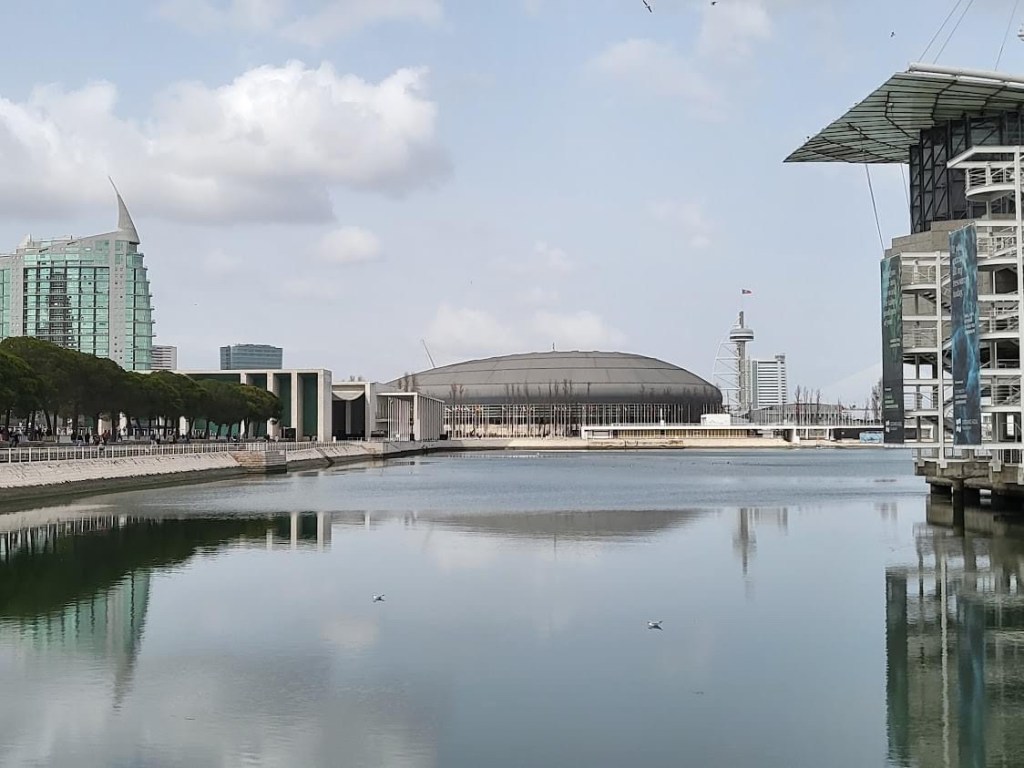
I love a good park. Parque das Nacoes was created in 1998 as the site of the Lisbon World Exposition. It is a large modern park along the banks of the Tagus. After several failed attempts to exit the Oriente metro, we eventually found our way to the central section of the park. We had to cross a busy intersection and navigate through a shopping mall, but eventually we made it to some benches in the shade. The park mascot greeted us with plastic arms held high.

Sitting in the park was therapeutic. We watched children play and pigeons strut. Pine trees swayed and the beautiful Tagus River rolled by. People on bicycles and scooters bounced over pavement made wavy by roots and weather. We took bets on who was going to wipe out and who would make it across the bricks.

We walked along the banks of the river, but the bridge across the lagoon was closed. We could go no further, so we strolled up stream instead. I wanted to walk to the cable car station at the far end of the park. My husband, reluctant but ever the good sport, agreed. After purchasing two tickets and a taking few steps into a moving aerial tram, we were air born. Just like little kids, we pressed our faces to glass to look down to river and the park below. We took photos of the unique buildings in and around the park. Ahead in the distance, we could see the Oceanario, our target destination. I felt excited. I was going to get up close and personal with sea life.

Upon exit (quickly because the tram didn’t stop), we walked toward the Oceanario. We saw doors, but they didn’t open. When in Lisbon, you should expect to walk around the building to buy tickets ….so we walked around the building. Next to the ticket office was a large waterfall. I walked behind the falling water and splashed my hands in the spray. You are never too old for water play.

Upon entry, we were surrounded by families with small children. Just like at the zoo, you almost feel bad defending your small viewing space from encroaching children. We quickly learned that if we were going to see anything we were going to have claim our space. I quickly forgot about everything but the sea creatures.
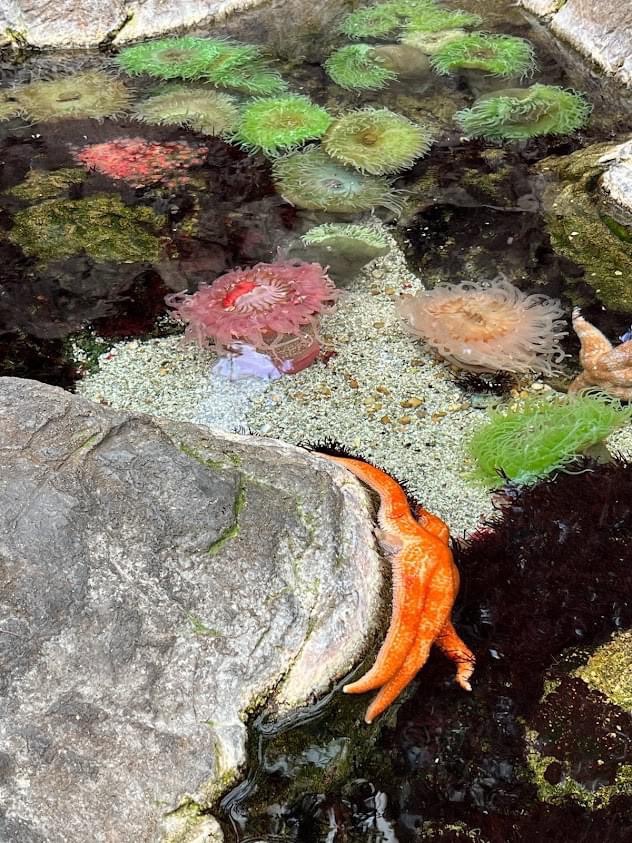
The first exhibit was a wonder of sights and sound. An under water forest, created by a Japanese artist was a glorious moving, living tableau of plants. Small fish darted in an out of the changing the plantscape to the sounds of spa like music. It was mesmerizing. The plants were in constant synchronized motion.
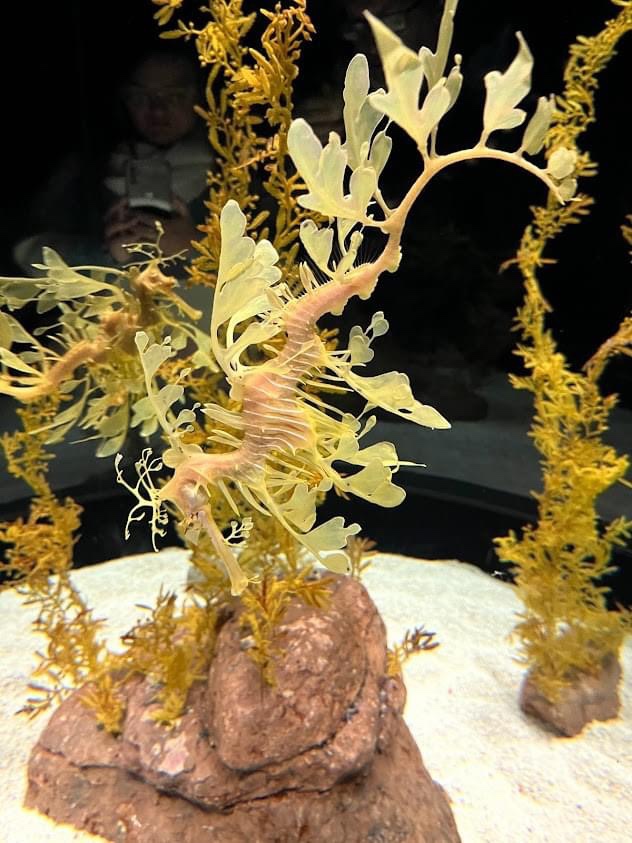
With the world’s largest saltwater aquarium, Oceanario staff have a lot of tanks and sea life to care for. Despite the extensive collections, they had the cleanest, best cared for tanks I have ever seen. It was clear that they cared about the ocean ecosystem and were committed to education and conservation. Each tank was unique and pristine. We dodged free flying seabirds, played with otters, and stared down sharks. I scowled at the moray eels, but by the time we left, my face hurt from smiling.
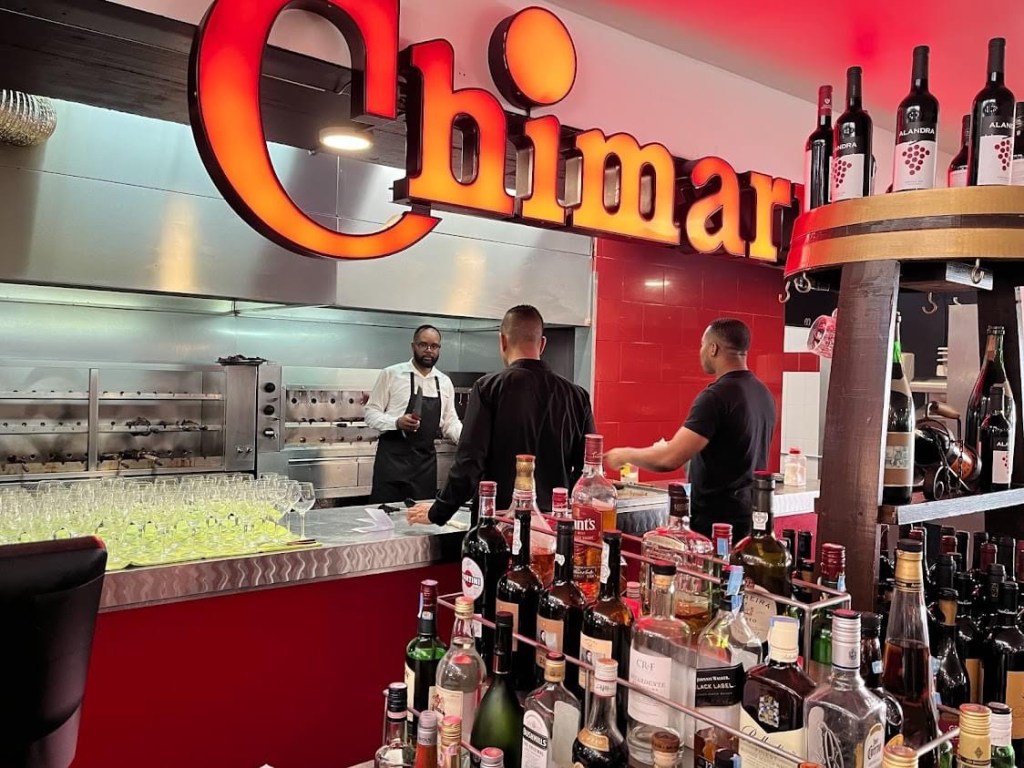
When we exited the Oceanario, it was well past lunch time. One of the first restaurants we passed was Chimarrao. My husband lit up like a little kid at Christmas when he realized it was an all you can eat restaurant where they walk around with meat on giant skewers and carve directly to your plate. I explored the buffet of foods, including many that were unknown to me. It was a culinary adventure. Our waitress did not converse in English although I am pretty sure she understood us. I like a challenge so we just kept talking to the meat carvers. It was a little chaotic as there was a large gender reveal party at the table next to us. The place was packed with families enjoying the afternoon and hustling for the buffet.
I learned some things. I now know that I love mixed seafood cakes, but am not so fond of seaweed salad or bloody meat. It was an educational and overall pleasant experience. My partner didn’t even get the meat sweats, although it was a close call.
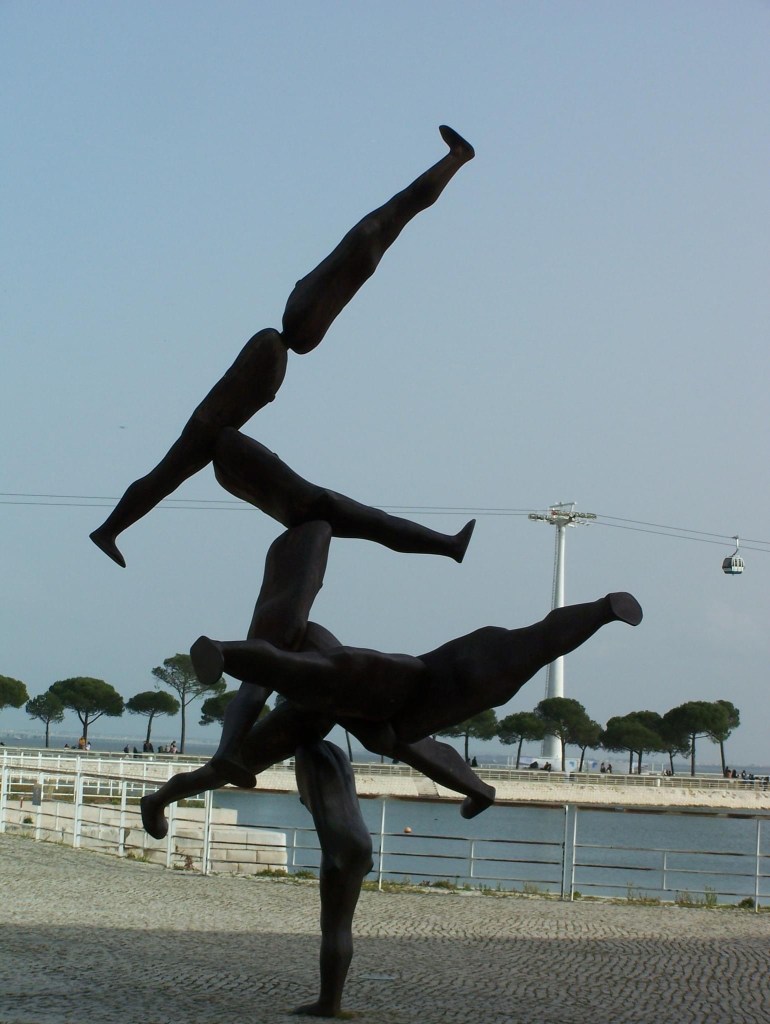
After all that meat, I needed to walk a bit. So I strolled the park’s central avenue and took pictures of statues. My favorite was a giant cat sculpture made entirely of plastic trash retrieved from the ocean. The Portuguese have a special relationship with the sea, so I was delighted to see something so beautiful reclaimed from garbage previously polluting the ocean. It was a playful statue and a real attention getter in the center of the park.
After playing like little kids all morning, I channeled my inner teenager and convinced my spouse to cruise the Vasco de Gama Mall (what else could they call it? This is Lisbon after all). While I didn’t need a thing, we wandered three floors of fashion, electronics, and beauty products. I must be the wrong age to appreciate Portuguese fashion. Everything skewed too young or too old. But a girl can dream.
Oriente Station was easier to navigate on the way back. A short metro ride later and we were back to St. Apollonia station. Even though it was only a 10 minute walk back to the apartment, we opted to wait for the bus that would take us to a stop that would leave us with a five minute walk. Why trade a 10 minute walk for a five minute walk? Walking the entire way included numerous stairs and a continuous steep hill. The walk from the bus stop was a slow meander downhill to our door. We agreed the bus was a better option. As much as we acted like children through the day, our muscles and joints knew our actual age and decided to remind us. We played. We paid. For once I listened.
-
Crowded (Why the Peña Palace Was a Pain): Travel Goals
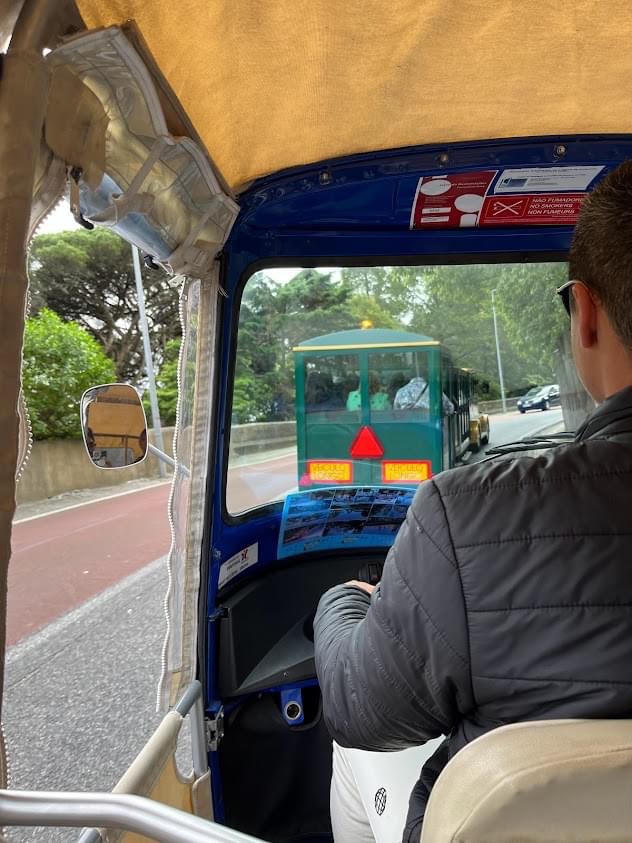
I was so looking forward to our return to Sintra. Our last visit was relaxing and I was charmed by the old town. This trip I felt more prepared and was determined to hire a tuck tuck. I braced myself for the rush of drivers and tour operators that accost you when you exit the train station.

We lucked out and almost immediately hired a nice young man who agreed to drive us up the steep streets to the Peña palace. Our plan was to visit there and then walk back down the hill stopping at the Castelo and the gardens en route. We enjoyed the tuk tuk ride and appreciated the driver stopping for photos as he passed various lookouts along the way.
As we crept further up the hill, the traffic increased dramatically. Soon we were inching along. This didn’t bode well. He let us out slightly before the ticket kiosks and we walked the rest of the way. The line at the self serve ticket booths was long. We got in line then read signs to scan a QR code to avoid the lines. I tried that, but the reception was slow. We just waited in the line. There was only timed entry slots available and the first slot we could get was two hours away. It was both too long to wait and not enough time to walk to the Castelo and back. We deliberated and decided to take a later entry.
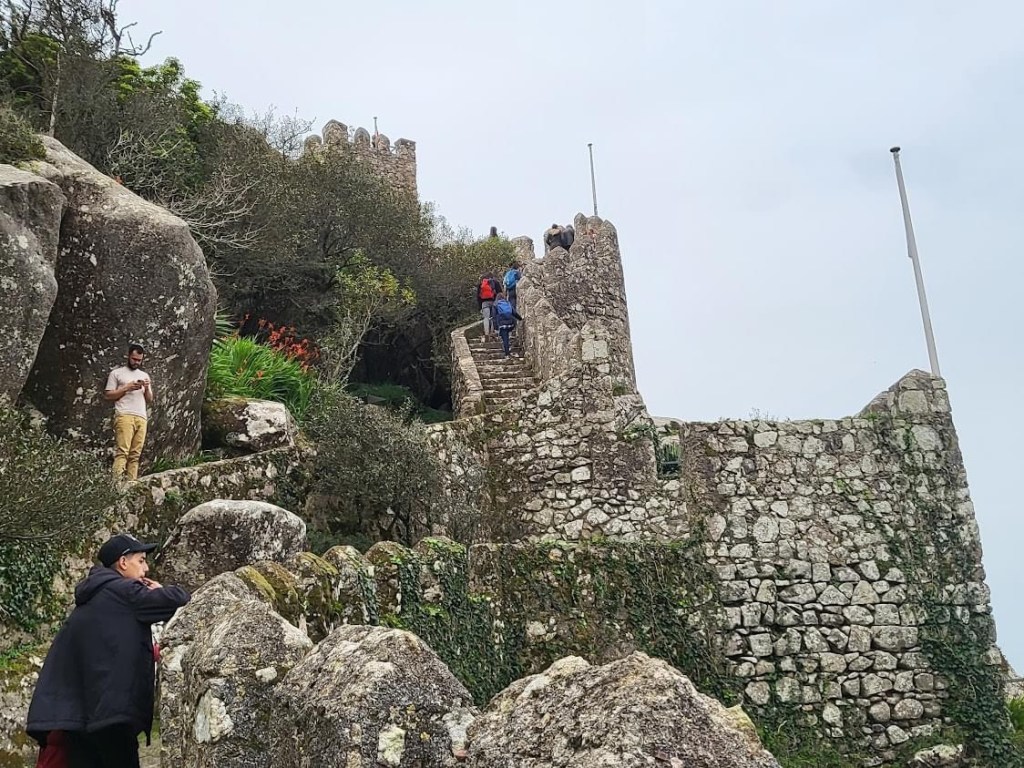
With Peña Palace tickets in hand, we walked downhill toward the Moorish Castle. The ancient fortress was built into the cliff face. We walked to the entrance downhill only to climb steeply uphill once inside. Once inside we realized the only entertainment was to hang out in the center with no view or to walk up hundreds of stairs to circumnavigate the castle walls.

I chose the castles walls. The wall walk was beautiful and invigorating. Looking down at the winding streets of Sintra, I am glad we took the tuk tuk. (We may have died before reaching the mountain top and certainly couldn’t have done this walk afterwards.) Each step along the walls took me higher. There were no guard rails or handrails. The wall was low in spots and the stairs seemed narrower the higher I climbed. Because the wall was built along a cliff face, it was a long way to the ground. Definitely it a walk for the faint of heart or the unfit. But the views…. The views….. The National Palace of Sintra, visited on a prior trip, was visible in the distance. I drank in the country side and the glimpses of the sea.
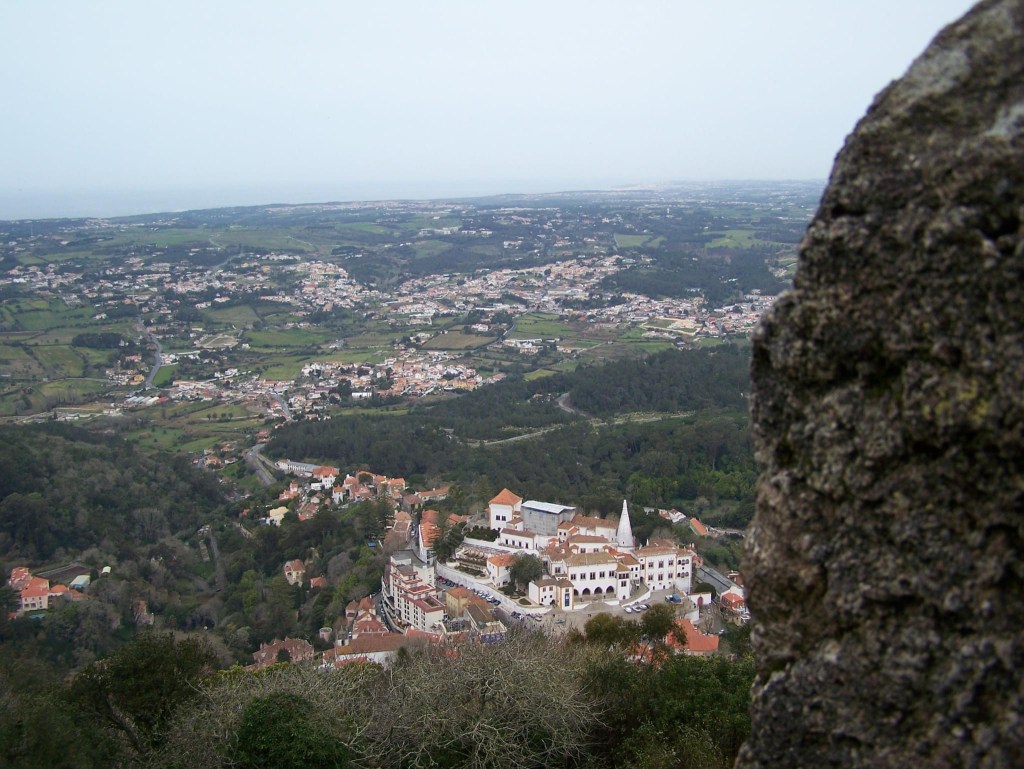
I decided to make my way down from the upper lookout before my husband started to wonder what happened to me. Once at the bottom, I did a little celebration of thanksgiving that I had not fallen to my death on the stairs. Perhaps that was premature, because there were more stairs to climb down…five flights in fact….to get to the ladies room.
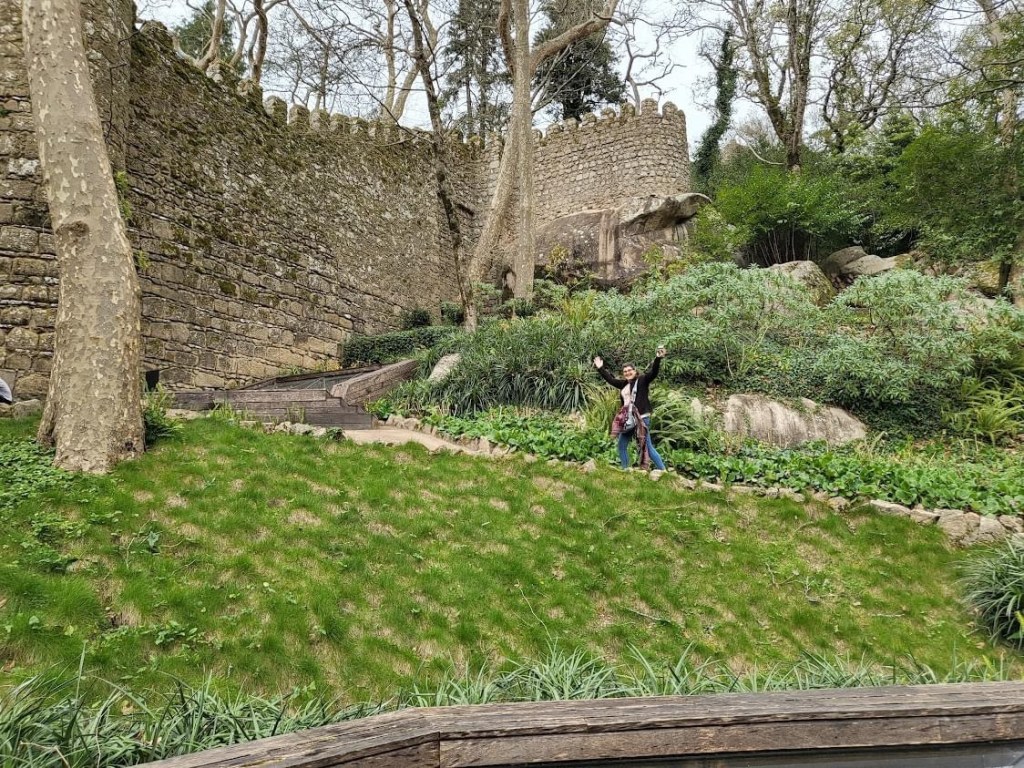
All in all, I enjoyed the visit to the Castelo. There were no structures to visit, no buildings, no interpretive signs. There was just the ancient wall walk and an interior that is now more garden than castle. Nature with glorious views. My kind of place.
We decided to begin our walk back uphill to the Peña Palace. It was past lunchtime and we were getting hungry. After huffing and puffing our back through endless traffic, we noticed it was even more crowded than before. We headed to a site map and realized that it was a half hour walk to the Peña Palace entry point (sigh). But there was a food kiosk visible near the entry point we needed to locate (yay).
We started the long walk…of course uphill. About halfway we sat down for a rest along the steep path. We eventually arrived at a large plaza with the food. The line to the counter ran the length of the plaza and service was slow. There was no way to see what to order until it was your turn at the counter and orders were being individually prepared by the lone worker. My American impatient self had to be reminded that a slower pace and individualized service was a good thing. My legs, jellylike from all the climbing I had done all day disagreed. Standing in a long line in order to eat was not in the plan.
Just as it was our turn to order, an American girl brought her tuna salad sandwich back to the counter and jumped in front of the woman who had just paced her order. She loudly asked to exchange her sandwich, which she clearly had sampled, for something else. She said she couldn’t possibly eat it, because the bread was “too hard”. I didn’t know whether to laugh or be disgusted. She was holding a sandwich made with freshly baked artisan bread. The worker tried to be polite, the entitled girl kept getting louder insisting that it be exchanged for something else because she liked soft bread. After an cringeworthy exchange, the manager firmly told her there was nothing wrong with her sandwich, she had ordered it, and that it would not be exchanged. The manager called her attention to the hundred or more people happily eating identical bread. The girl stomped and pouted and made a giant to do of throwing the sandwich in the trash. Meanwhile I was trying to think of how I could be the opposite of whatever that was and if I could fake an Australian accent. I no longer wonder why Americans have such a bad reputation as tourists. We’ve seen too much over the years.
After the 10 minute delay caused by sandwichzilla, we finally got our food. The bread was delicious (soft in the middle with a hard crust), just the way it is supposed to be, in case you were wondering. But there were not enough tables for the number of people so we sat on a large rock. Unruly children chased each other through the flower beds, screaming and crushing plants. They ran into people, stood on statues, and sped in and out of the food line playing tag while their parents sat on the opposite side of the plaza drinking wine. The teacher in me had to resist the urge to line them up and talk about responsibility and courtesy (the kids could also use some instruction).
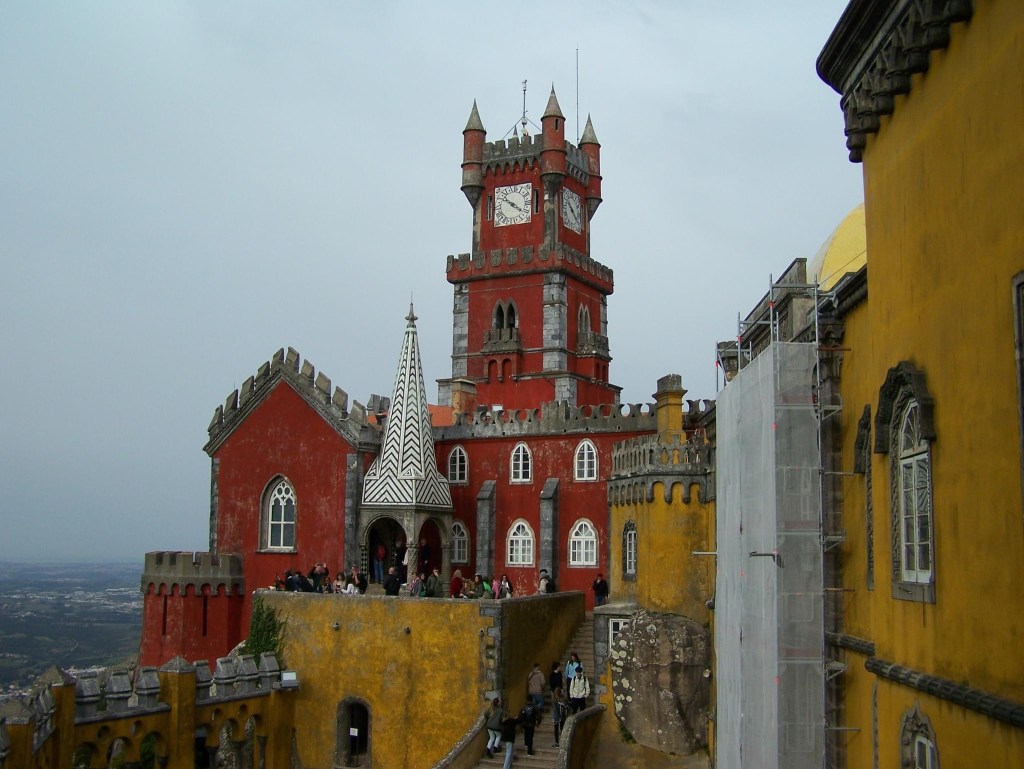
Finally we headed up the steps to the entry point only to find a line. This line was a queue to sort you into time stamps for entry. Once inside the outer courtyard, we stood in the actual line where they counted out the number of people who could enter every so many minutes. My husband kept making mooing sounds to make me laugh as we were herded like cattle toward the entrance.
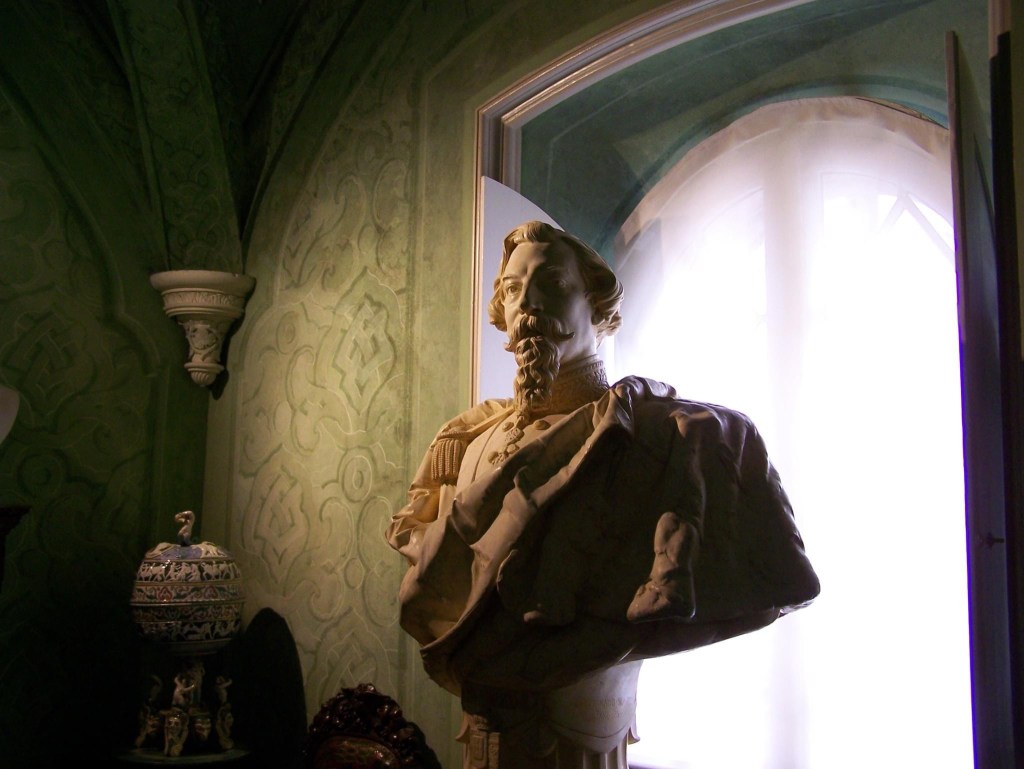
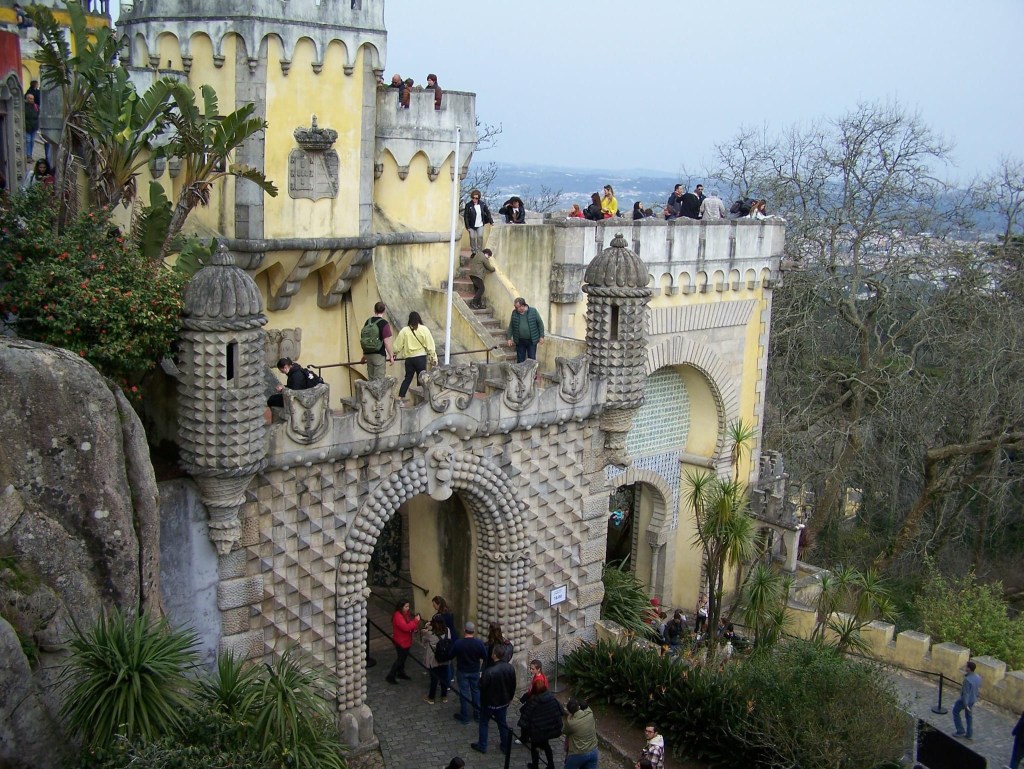
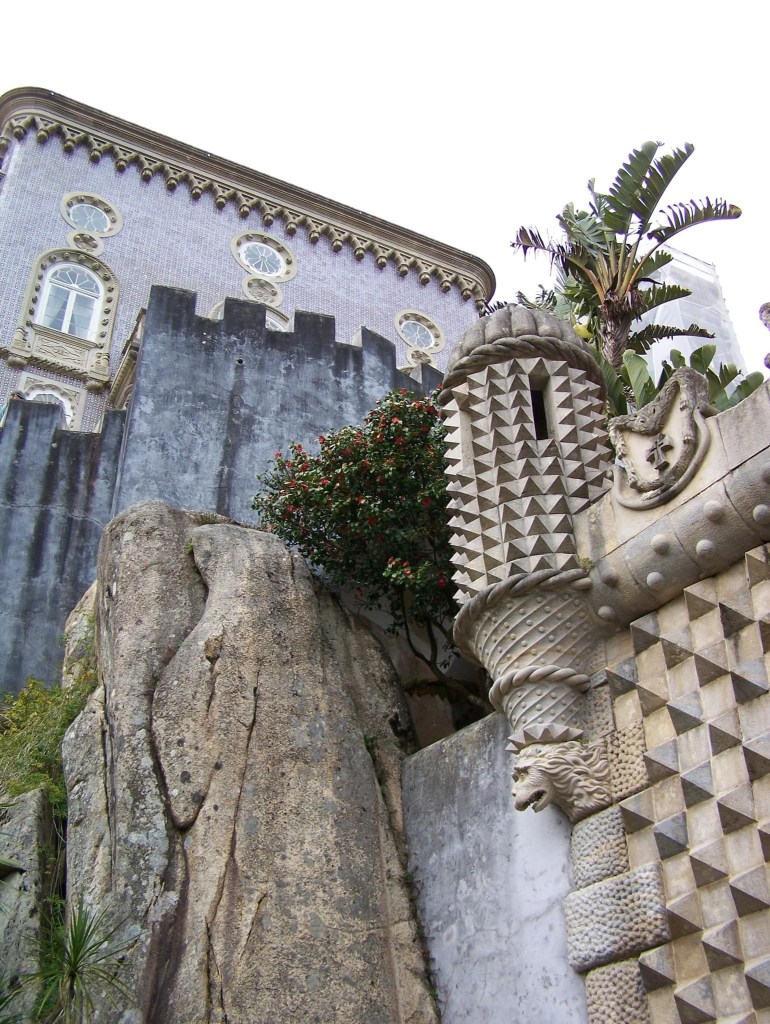
Once inside there were interesting things to see, except there were so many people you had to jostle and avoid getting run over. There were few signs to tell you what you were looking at and you couldn’t stop long enough to process. I felt like I was in a drive through Christmas light display or a Disney ride. Pleasant enough but you must keep moving. Having an okay time, but so many rude people. I expect the crowds in a theme park, hated them in a castle with tight spaces. I hated even more that most had no respect for what they we actually looking at and were to busy taking selfies to notice their surroundings.

We fought our way out of the castle. We had to struggle our way through a crowd waiting to ascend the steps to an overlook to even get to the stairs leading to the gift shop. After zig zagging around shoppers, we made it to the exit. The prospect of walking down the mountain through the gardens had lost its luster. As we walked the half hour back to the entrance, we decided we had walked as many hills and had seen as many people as we cared to for one day. Another tuk tuk ride, whisked us down the mountain.
I wish I could say the train ride home was peaceful. Seated near us were loud American college students who thought the whole train car should hear about their drunken exploits in Lisbon. Trying to look less like American tourists, we settled into our seats and counted the miles to our quiet apartment in Alfama. It is funny how some sites turn into a tourist circus. Lulled by the rocking of the train, I compared our first leisurely visit to the National Palace of Sintra to the human zoo that was Peña Palace. Hard to fathom the influence of travel writers and “must see” designations. I guess the lesson is that we prefer hidden gems. I don’t like to be crowded. And we never, ever want to part of the “ugly American tourist” crowd. Tour groups are not in our future.
-
Built on a Hope and a Prayer: Travel Goals

Mafra Palace is enormous. I don’t actually have an adequate word to describe how big it is. King John V made a vow to build a monastery if his wife had a child. The building, now a UNESCO world heritage site, was built to honor the vow of hopes and prayers for Princess Barbara.
Construction began in 1717 for a small friary near the King’s hunting preserve and quickly turned into plans for a grand palace and monastery. It is now one of the grandest examples of Baroque architecture in Portugal and perhaps the world. It is so large that photographs can’t capture the scope of the building. Touring the building, I couldn’t even comprehend its shape. Only at the end of the tour, when I saw a scaled model, did I begin to understand the magnificence of the building.
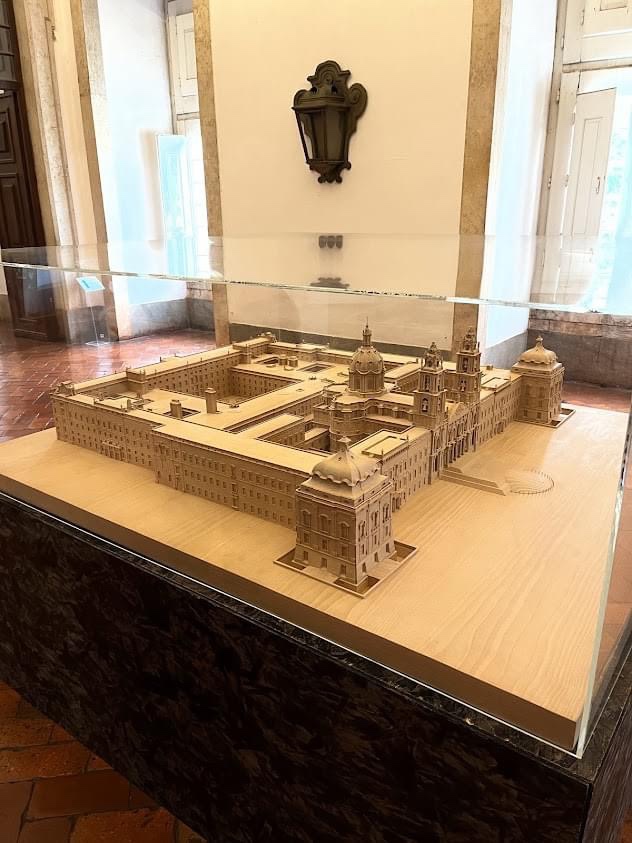
After exiting the bus from Lisbon, we encountered the impressive front exterior of the building for the first time. We saw a sign at one corner that said tourist office, so we headed there. As we entered no one looked up. We were the only guests so we waited. After a time, I finally asked where we entered the palace. The response, “other side of stairs”. We left the tourism office with little information and without anyone looking up from their computer.
There are lots of stairs at Mafra. The interior stairs near us were blocked so we decided we needed to go outside and walk around the large stairs in the front of the building and then down the street to the far side of the building. We hoped we could find the ticket office, because the length of the building was daunting. However, having been in Portugal for several weeks we were good at the “hunt for the historic site ticket office” game. We scanned the building for doors and looked for people entering and exiting the building.
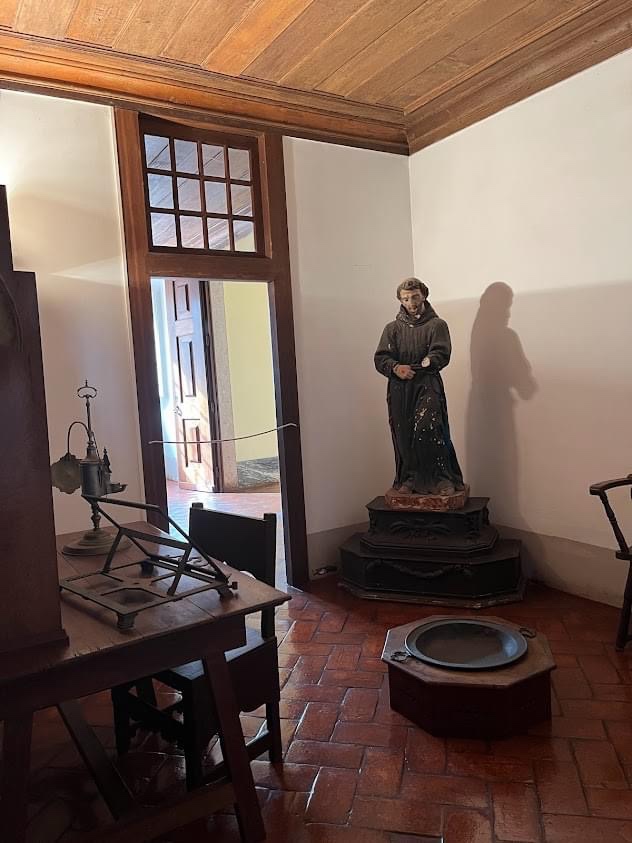
Success. With tickets in hand, we climbed the wide stairways to the upper floors of the palace. First, we encountered religious art exhibits. They were interesting, but we had been exposed to countless reliquaries, chalices, altarpieces, and vestments on this trip already. So we quickly perused until we entered the friary area of the building.

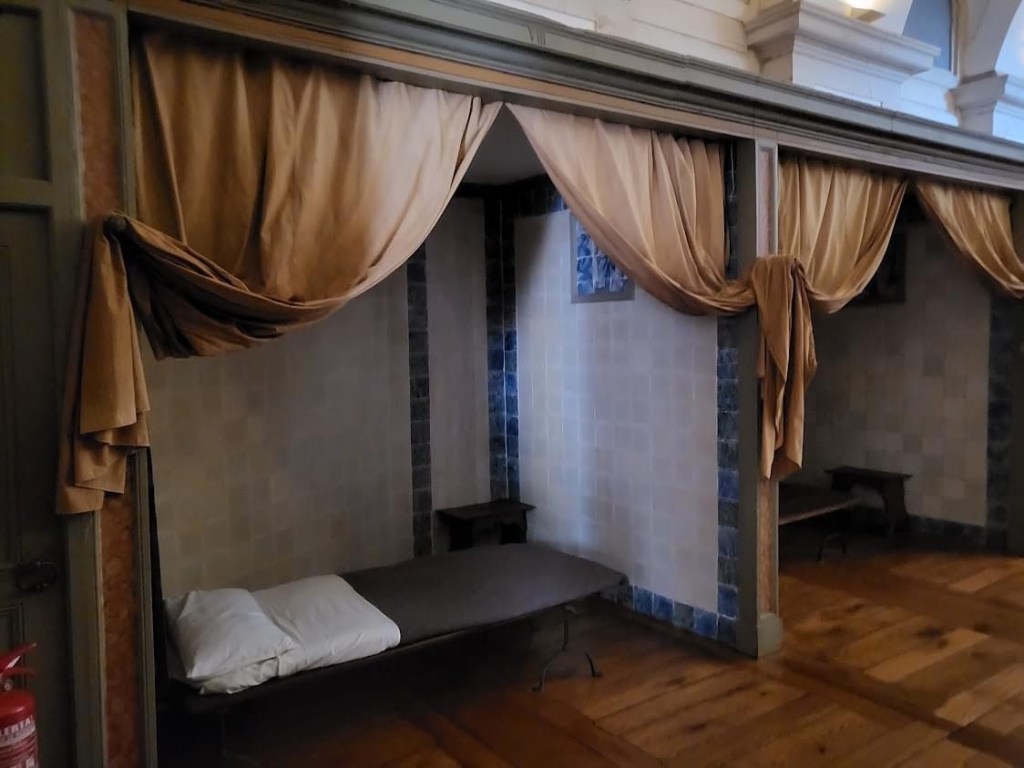
The cells contained book stands and candle shields and any number of inventions of interest. Perhaps most fascinating, was the Franciscan hospital. The ward had individual stalls divided by wooden walls and curtains for privacy of the patients. However, the beds could be pushed to the middle walkway in view of an elaborate altar for daily mass. It was not hard to imagine an army of friars tending the sick. Patients could leave through one of two doors; the one they came in or the one leading to the cemetery at the opposite end of the hospital corridor. The hopes and prayers of patients long forgotten seemed to echo in the large hospital chamber.
My imagination continued to concoct whispered hopes as we entered the reception and throne rooms. Elaborately painted walls and ceilings lent grandeur to the room. The only furniture, two simple thrones, clearly signaled that this was an audience room where you stated your business and moved along.

We walked through room after room. My husband, a former coach, declared that a track heat could be run down the long hallways. Grand rooms eventually gave way to more intimate living spaces, modernized by later Kings and Queens. Hunting trophies and billiard games occupied a wing used for amusements.

But for me, nothing compared to the library at Mafra. 36,000 books written from 1300 through 1700 were waiting. A repository of ancient knowledge, hopes, and prayers sat silently. They called to me. I almost ran through the corridor to them. My husband reminded me that they would still be there when we arrived down the long walk.
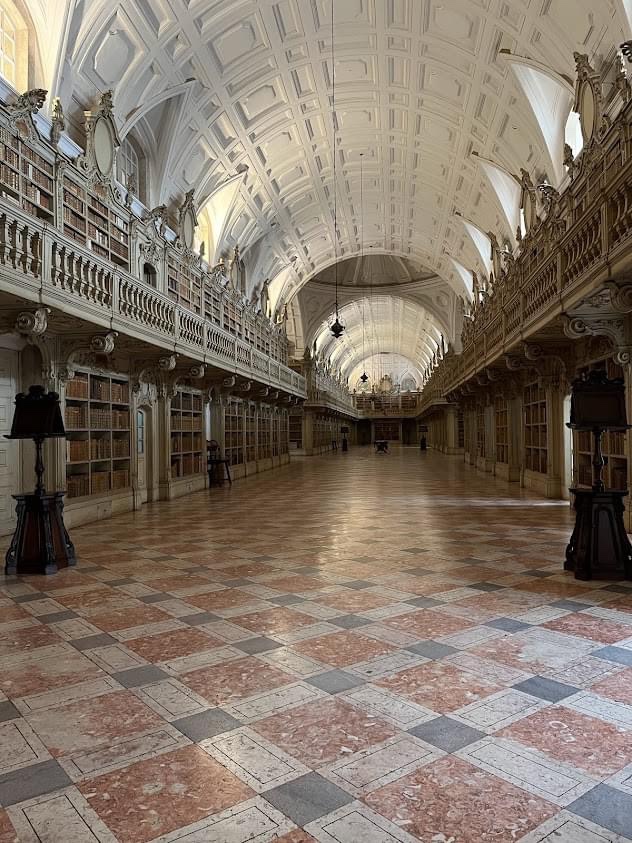
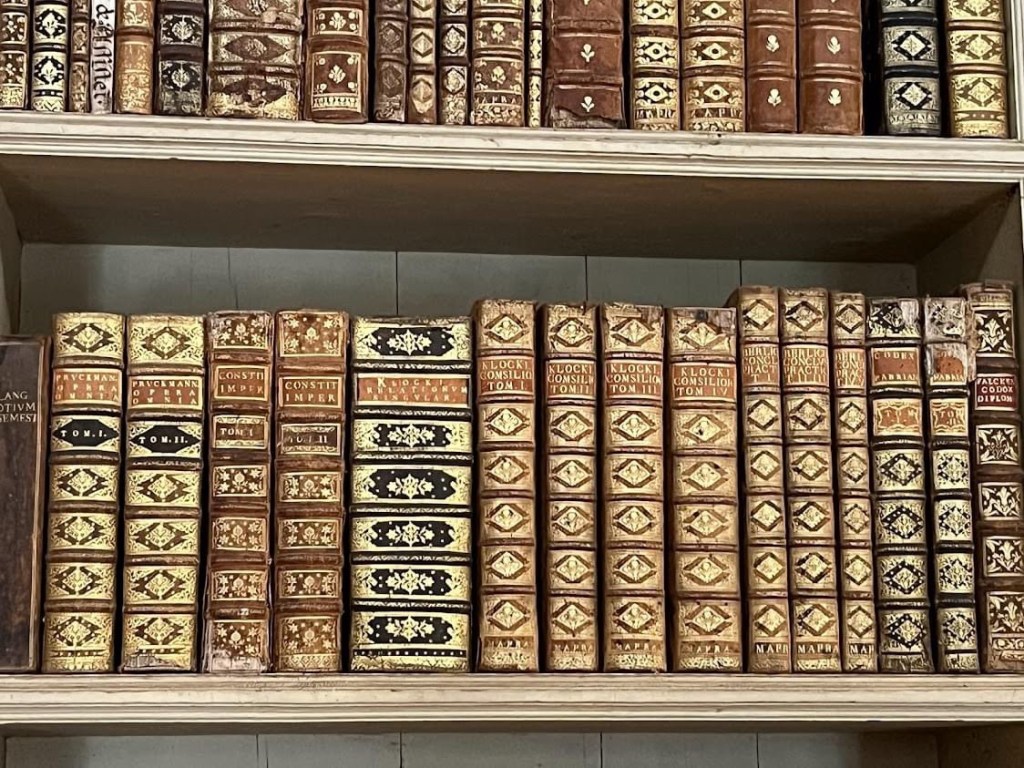
I love books. I love the way they look and the way that smell. These particular books were amazing. I wanted to touch them, to run my fingers down their spine and feel the leather and the embossed titles. Sadly, that was not allowed so I had to settle for admiring the beauty of the Rococo bookshelves. I read the titles out loud and imagined myself holding them. It was enough to know that I was standing the largest collection of medieval literature I am likely to ever encounter.
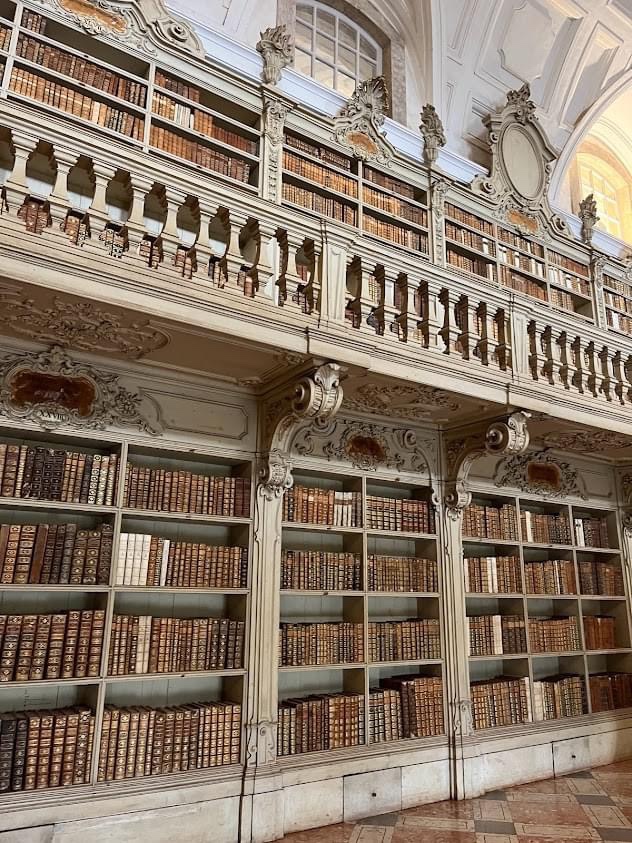
We were intrigued by the pristine condition of the books and were startled by the preservation technique. They library roof has tiny openings under the dome that allow bats to enter the library at night. They eat any bugs that would damage the books. Library workers cover the furniture before they leave and uncover it each morning, carefully cleaning any guano left behind. The system has worked for centuries. Bats are the libraries night watchmen, taking care of the priceless collection.
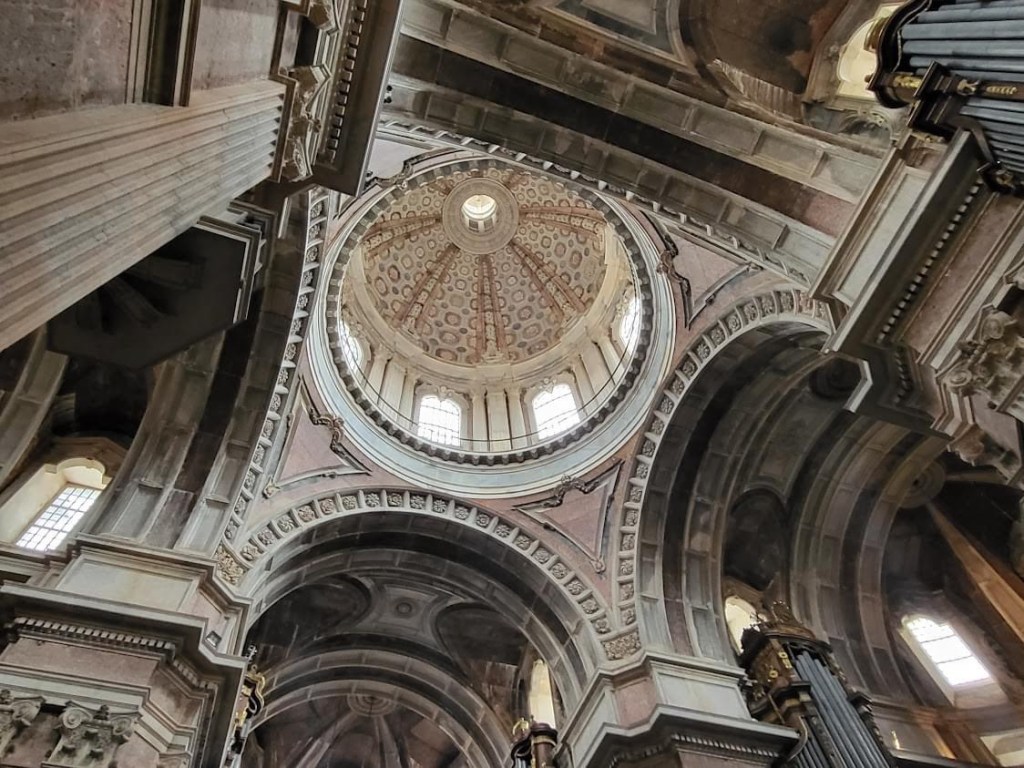
Not to be outdone by the library, the Basilica of Our Lady and St. Anthony takes center stage in the palace complex. An explosion of pink marble, the church is lined with the statues of saints. The cluster of arches and domes creates the feeling of a church in the round.
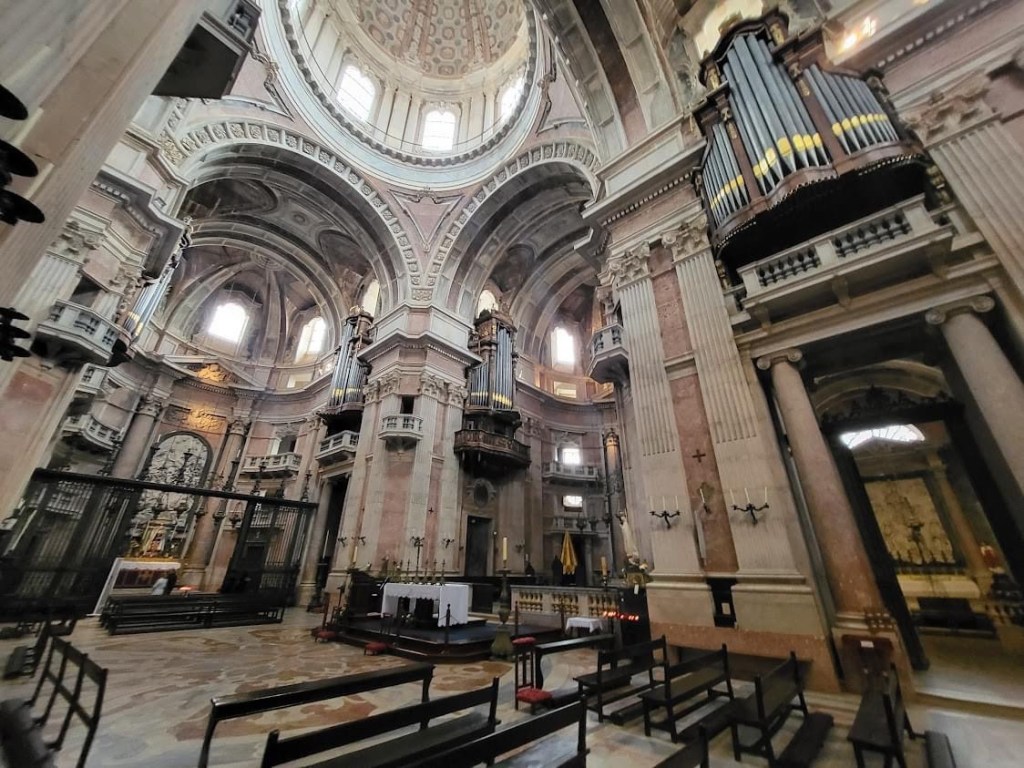
I visited each chapel and knave. Jealously, I inspected the massive pipe organ. What I wouldn’t give to play an old fashioned hymn or a little Bach on a pipe organ again. Sadly pipe organs are in short supply and not en vogue in American churches where drums and guitars reign. But I digress.
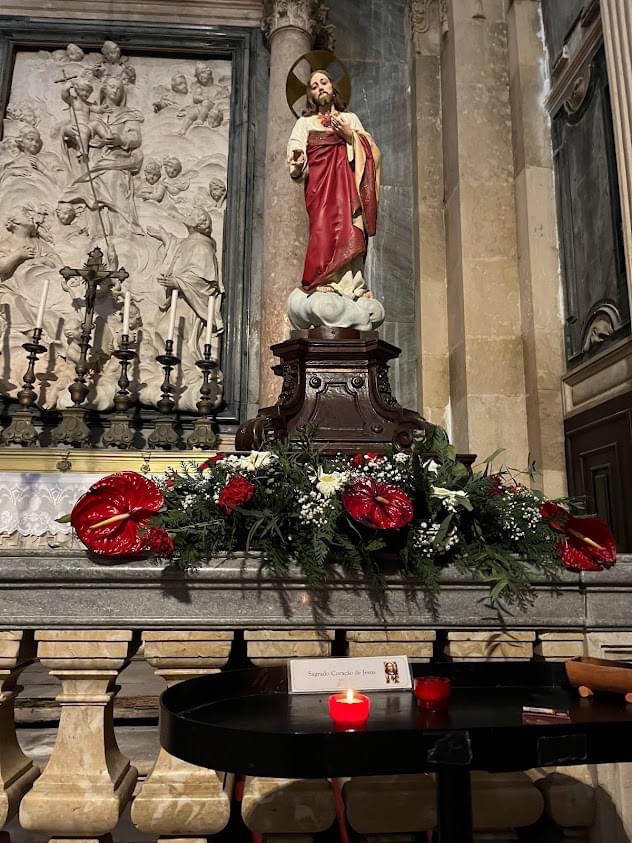
In a quiet corner chapel, I lit a candle and placed it by the Christ the Redeemer statue. I prayed a prayer of hope. A card translated in English contained a “prayer for peace”. Mafra was built out of a hopeful vow. As I stood there, I wished for a world where humans would seek to help each other and to serve each other. I thought of my friends in Ukraine, and I wished for a world where nations united in peaceful cooperation for the betterment of mankind instead of going to war over greed and power. I wished for the end of hunger and disease. I prayed for blessings on God’s people that we again understand what it means to Do Justice, Love Mercy, and Walk Humbly instead of weaponizing piety and manufacturing endless culture wars to prove imagined superiority. I hope and I pray for God’s grace. Mafra begins and ends with hope and a prayer.
-
Piddling At The Park: Travel Goals
Some days you just need to piddle. I am an expert piddler. Before you get concerned, let me define piddling. To piddle is to stay busy doing nothing in particular. You set about your day doing things that catch your interest, but that are not particularly useful or productive. Piddling is best done at a leisurely pace.
My husband and I took the metro to the stop near Parque Montiero do Mor. We had not been in this area of Lisbon so I studied the map before we set out. It is a large park and yet it was not visible. We found our way across a highway, and headed toward where I thought the park should be. When piddling one should not be stressed by one’s spouse repeatedly asking if you know where you are going. You can’t be lost when you are piddling.
The park appeared to be behind a large wall. It was a high stone wall, so we couldn’t know for sure. We followed the wall several blocks until we found gates, which were locked. We followed the wall a few more blocks until we came to the National Costume Museum which sits at the corner of the park.
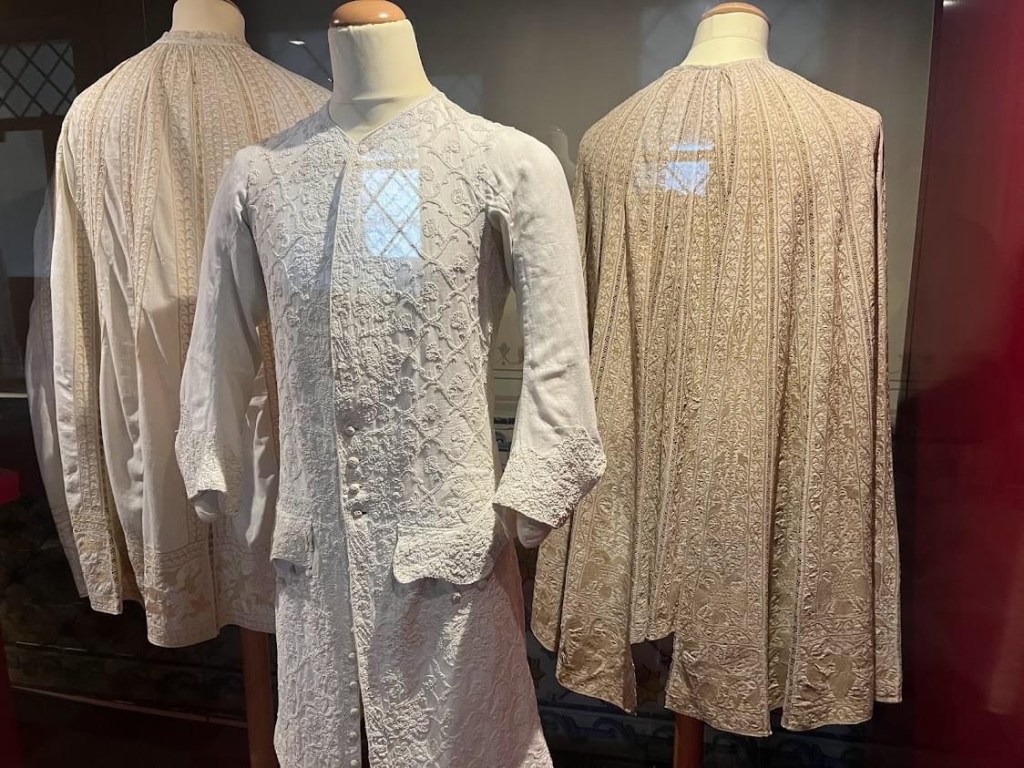
The way into the park appeared to be through the museum. I never miss an opportunity to waste time in a museum. So we paid a lengthy visit, and I forgot about the park. We encountered clothing going back to the 16th century. One of my favorite ways to piddle is to ogle textiles. I have more fabrics in my basement than I will ever use…I love to buy and touch material. There was no touching allowed in this museum, but the quality of the needlework and the age of the fabrics fascinated me.
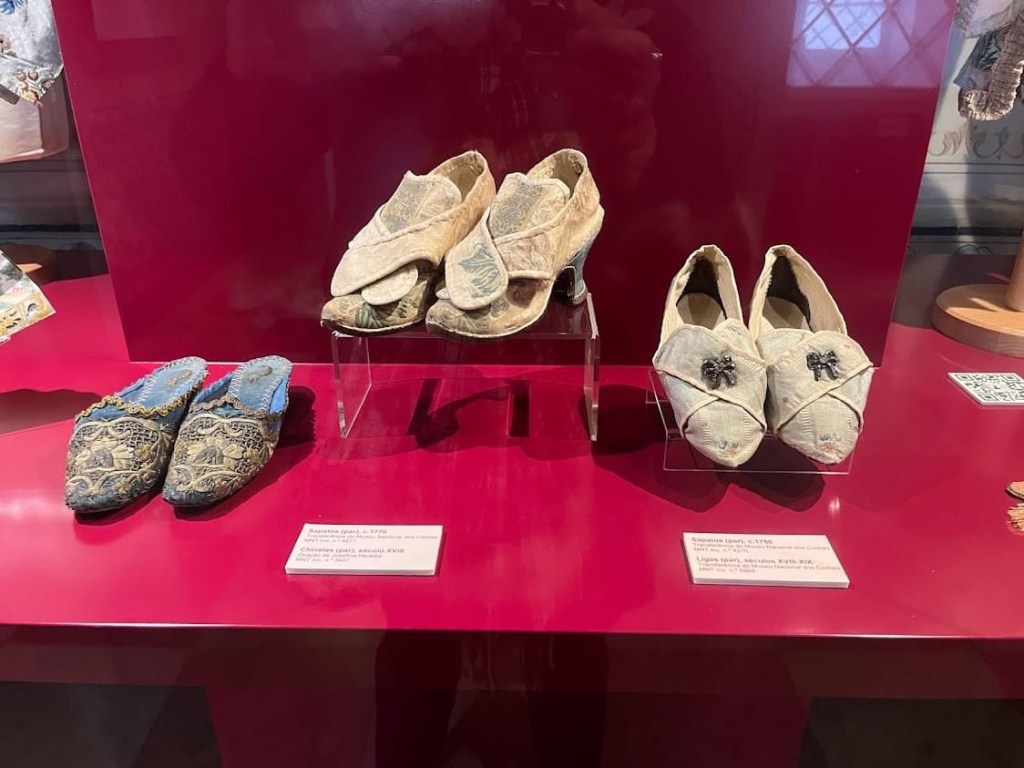
Best of all, they had shoes! I am a serious shoe girl. My Facebook friends have been subjected to an infinite number of shoe pictures. To see dainty and beautiful shoes in silk and brocade that were 500 years old almost sent me into nirvana. I oohed and ahhed and took lots of pictures.

We laughed and joked as I picked out suits for my husband. I told him that he should bring back the knee breeches and hosiery. Vests and ruffles and velvet…he probably wore it in the 1970’s anyway. In fact I have heard stories of purple velvet pants and baby blue leisure suits. We piddled away the morning trying to decide what century would be the most flattering for each of us, and reliving our fashion forward disasters.
We finally exited to the gardens only to find that a stroll would be more like mountain hiking. The plants grew in steep and deep ravines. This was our aimless and relaxing day so we stayed on trails along the edge of the park. Whatever required the least amount of steps got our foot traffic. There were little annoying bugs and the water features were stagnant. Everything could have used a trim so we moved on. I was not dressed for a full on back country hike (I exaggerate, but it was overgrown).
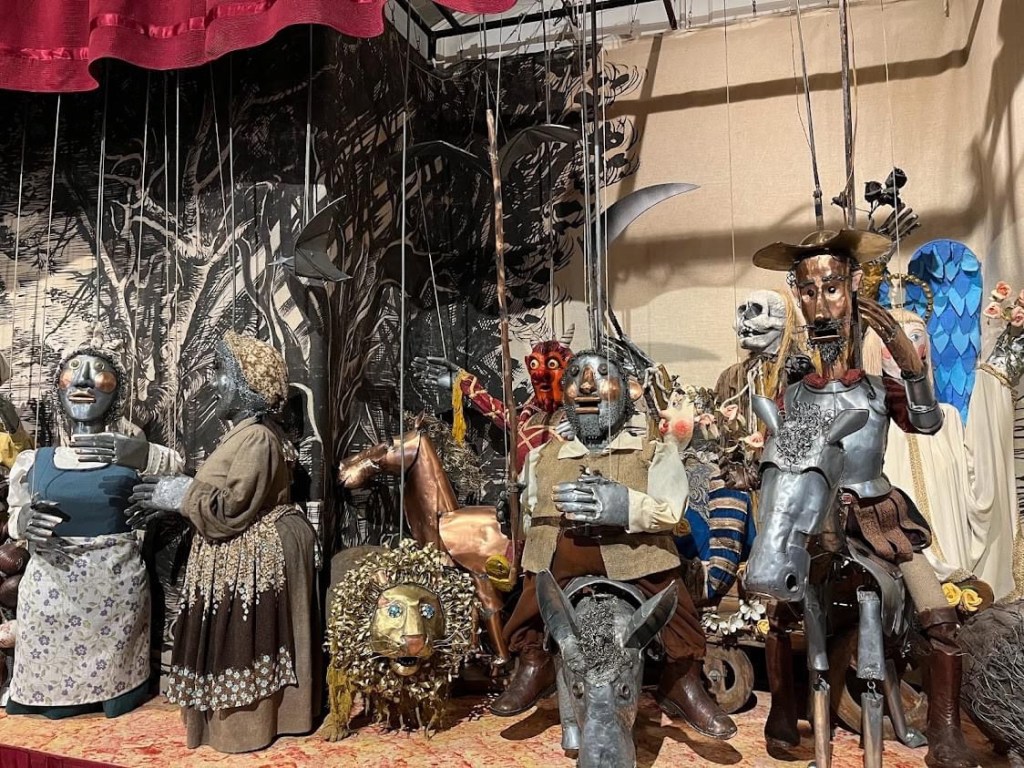
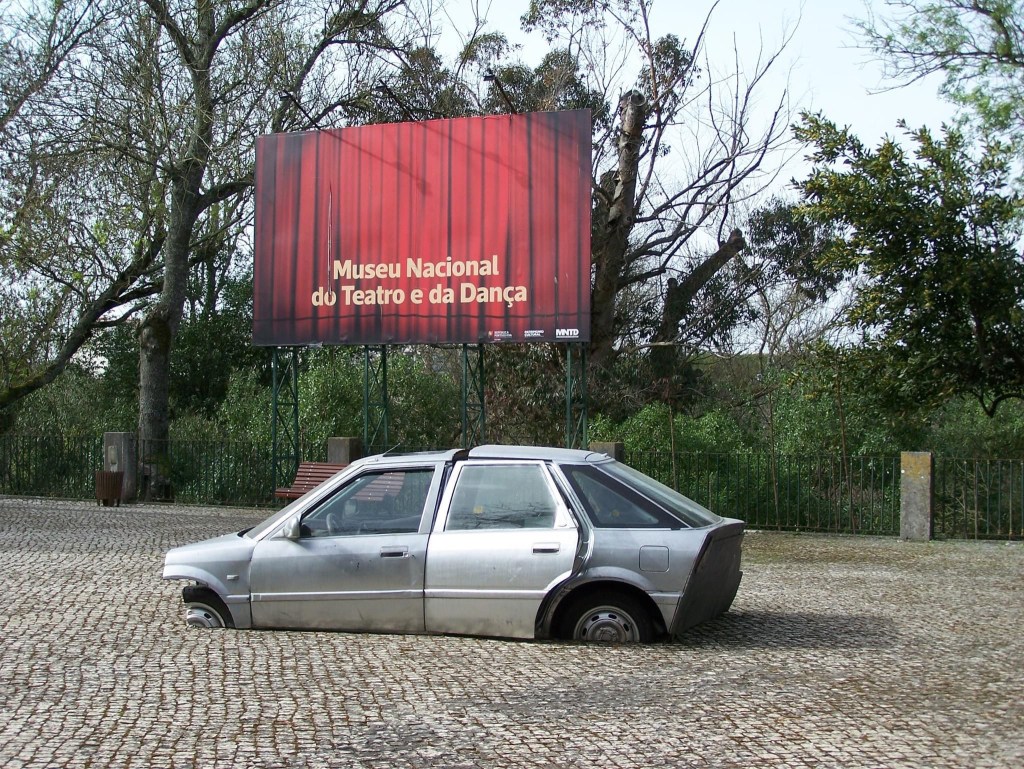
We climbed some stairs and came to the National Theatre Museum. It looked like a good place to aimlessly kill some time. Except the signage was all in Portuguese ( thank goodness for google translate). The actors were all Portuguese (what did we expect?). We saw costumes and puppets and ballerina outfits. We sat and watched early films. Most of the time we had no idea what we were looking at, but it was still fun piddling.
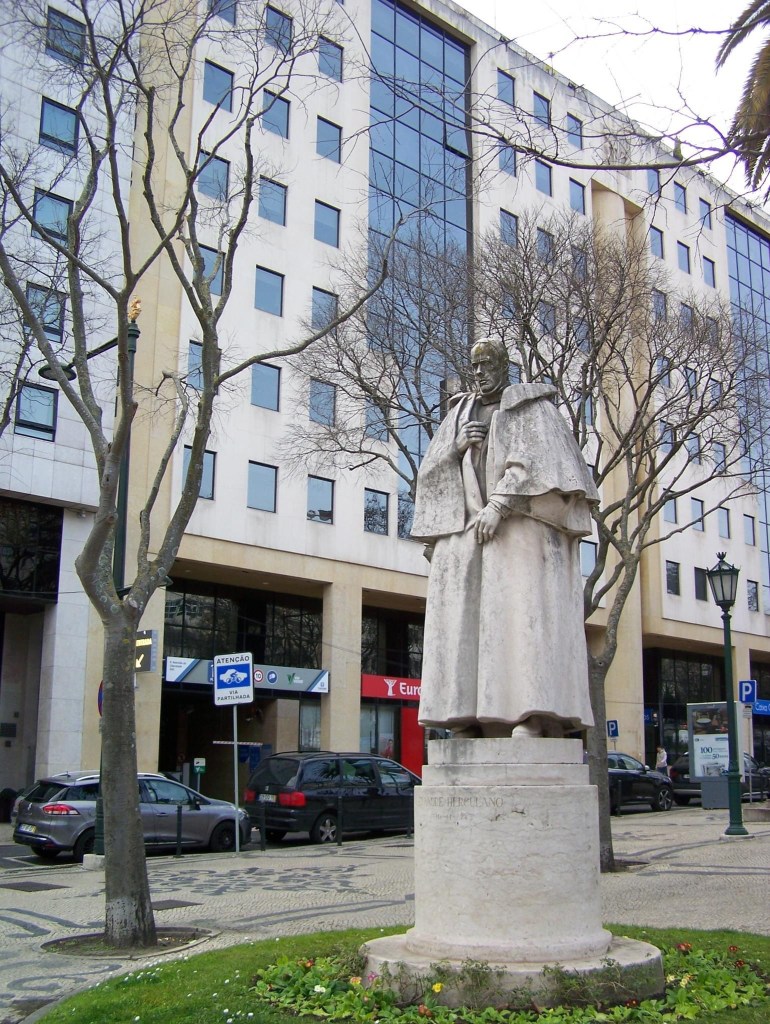
We somehow found our way out of the garden without having to backtrack and managed to find our way to the street. I made a stop at an Irish Catholic Church, St. Brigid’s. Why is there an Irish Church in Lisbon? My inquiring mind wanted to know. I didn’t accomplish anything other than seeing inside a lovely neighborhood parish. But spending time in a beautiful church is my favorite Portuguese piddling destination.

On the way home we exited the metro and strolled hand in hand, down the park in the middle of the wide Avenida de Liberdade. There were vendors lining the side walk. Yes! There is no better way to piddle than to peruse stalls in a street market. Ceramics, cork, antiques and souvenirs…I needed to see it all. And before I knew what happened, we had piddled the whole day away…. aimlessly ….unproductively……gloriously. Piddling at the park turned out to be just the right thing to help us recharge our travel batteries. You should try it sometime!
-
The road less traveled leads to Queluz: Travel Goals
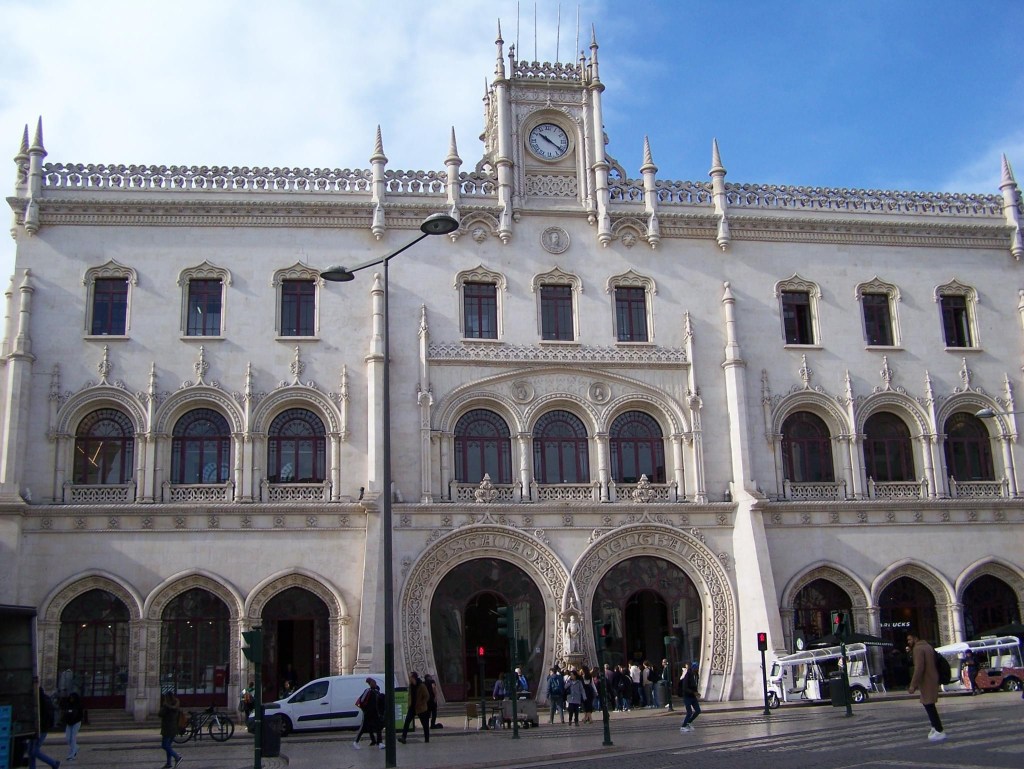
While officially in the middle of a train strike, we head to Rossio station full of hope. There appear to be at least some trains running. We have decided to visit Queluz, Portugal. It is close enough that if we have to find an alternative route home, we will be able. Queluz is not an advertised destination. I only noticed it as an afterthought in a travel booklet. We don’t know what to expect, but it will be nice to get out of town for the day.
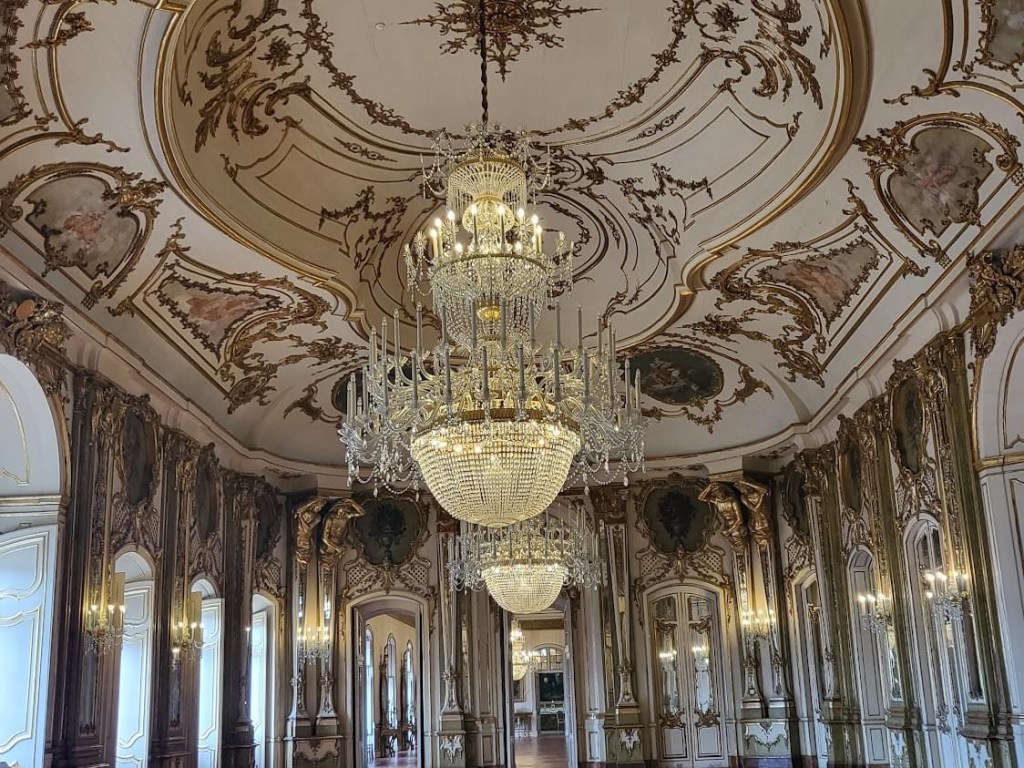
We have trouble finding any signage to tell us which way to leave the train station. The pastry vendor in the terminal is not helpful. We shrug it off. We will find our way. There are dozens of stairs that lead over the train tracks. We don’t want to climb down the wrong direction and have to backtrack. We make a decision that proves correct. Feeling confident, we step out of the train’s shadow. Now there are signs pointing the way.

We walk through town, and past the social services center where people are lined up for assistance. We pass restaurants and shoe stores and abandoned buildings. It is definitely not a tourist town. We finally see very large blue buildings. The signs are no longer visible. We are not sure where to go. It looks large enough to be a palace. It is Portugal after all, I don’t know why we were expecting signs. So we just approach random doors until we find the ticket counter.
The palace is huge and we are the only people in the place. I think I see one other visitor in a far hallway. There is a hall of mirrors. There is priceless furniture and fine china. As usual, I have a neck ache from staring at the painted ceilings. I am shocked at the majesty and charm of the place. Why have I never heard of Queluz? I imagine myself at a soirée in the music room.
We talk about the beauty of the palace and wonder why no one is touring. Surely this has been a movie set, we muse. We compare this palace to Versailles. It is not as grand, but it also does not have the oppressive crowds. The intimacy of the chapel and the sitting rooms is endearing. The lack of other guests means that we can take our time to read and gawk.

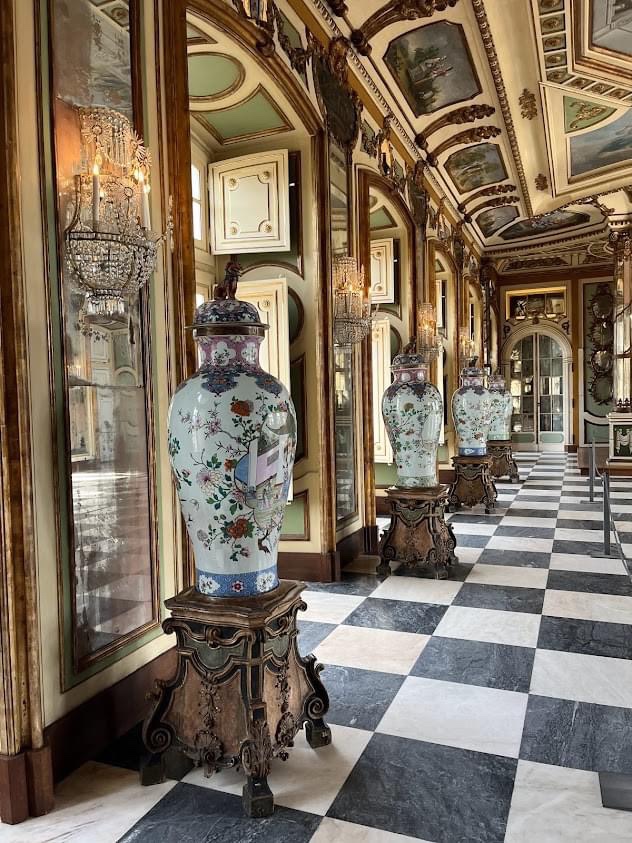
The throne room is testament to colonial conquest. Oriental vases, parquet floors, and murals representing the colonial empire fit together in an impressive display of power and elegance. I imagine a ball in this room with the king and queen enthroned on one end of the room and the infantas enthroned at the other.
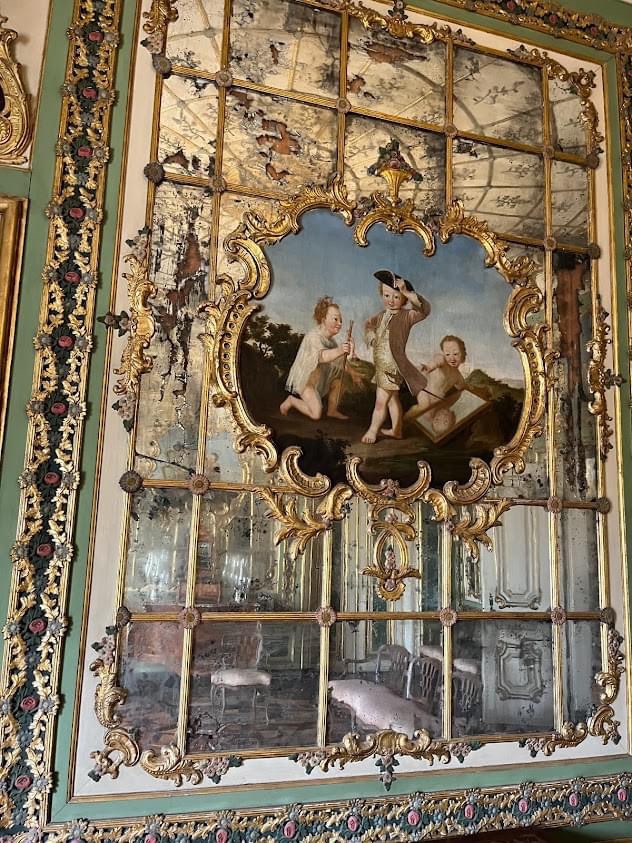
When we think we have seen the palace, we find another wing. Here are the nursery rooms and private quarters. The king’s bedroom sits at the end of the corridor with views of the formal gardens. Murano glass chandeliers and painted mirrors distract us as we end the tour of the palace and exit into the gardens.
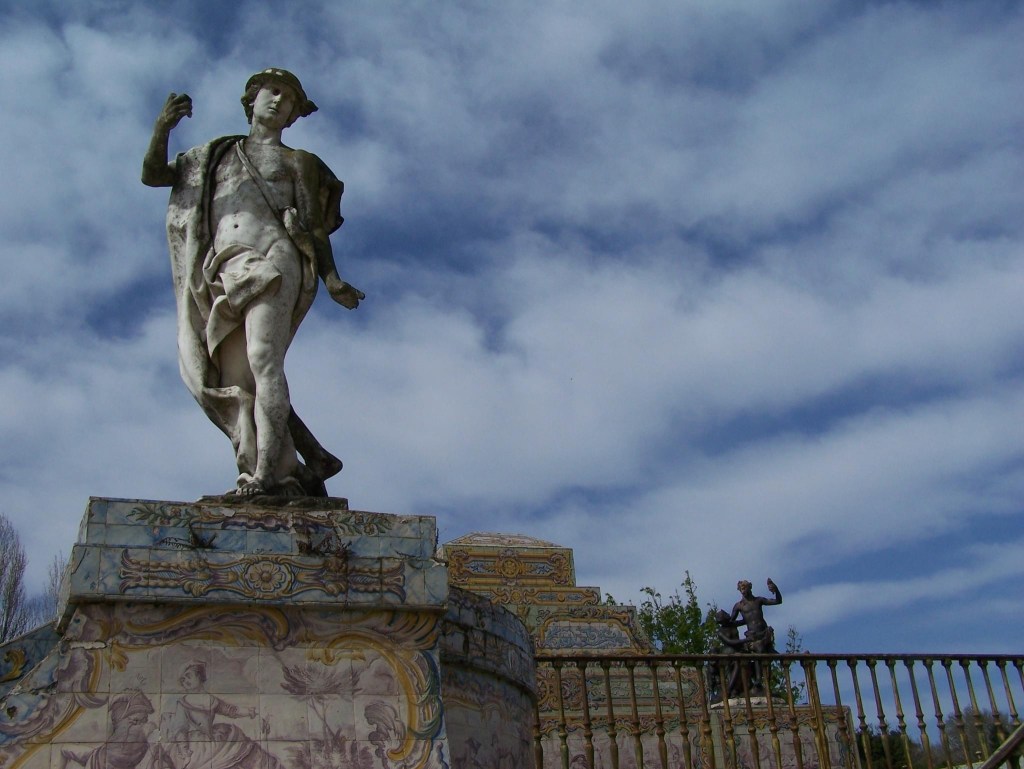
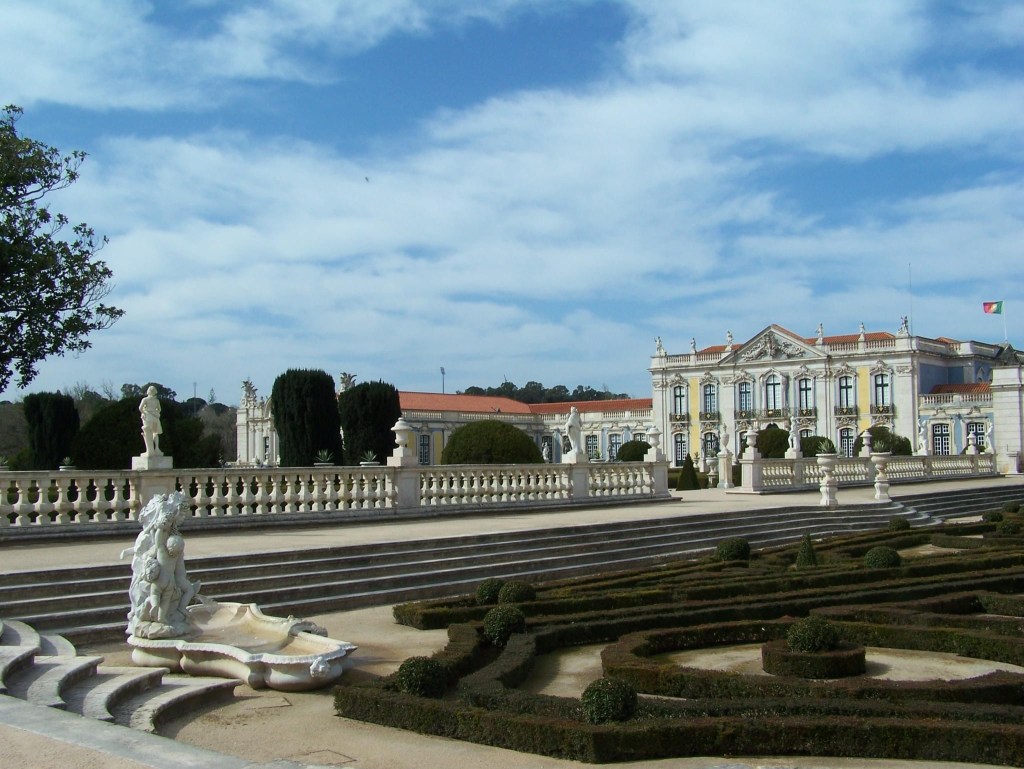
The exterior of the palace facing the gardens is beautiful. It seems a very different look compared to where we entered. I don’t know where to look or where to go. The gardens are vast. Hidden statues and fountains surprise us around every turn. There is a canal that used to be filled so ships could sail through the gardens.

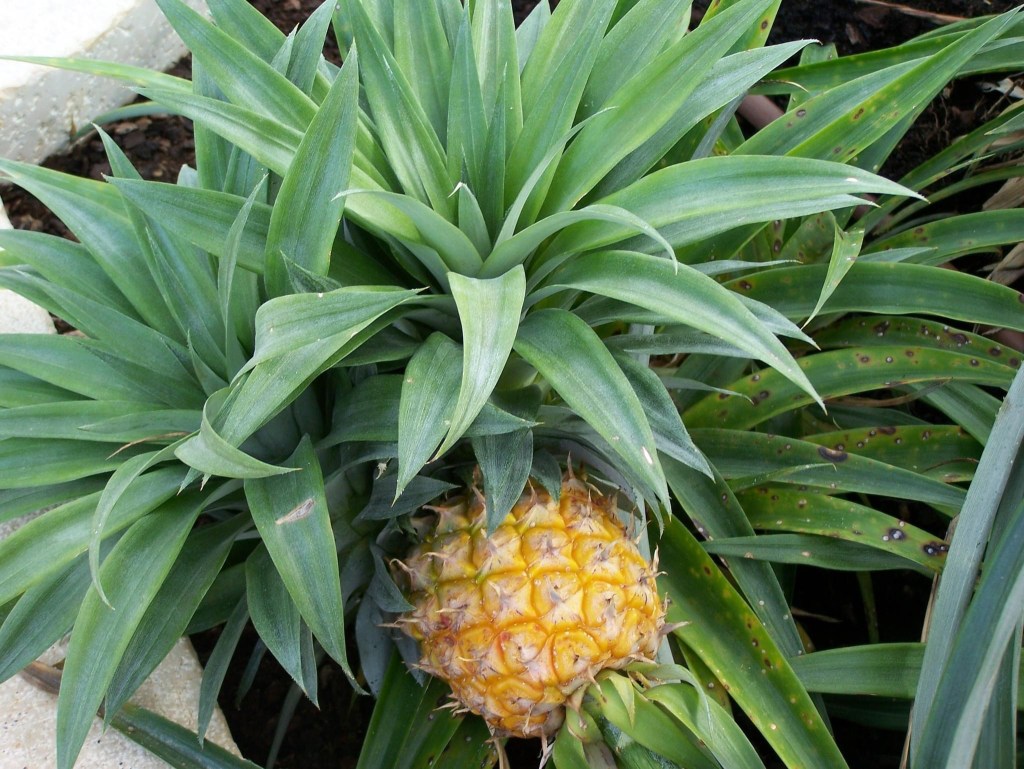
We walk past water tanks and lakes. There is a stable and a riding arena. We stroll past orange groves and forest. Further along the canal, is a tropical garden. There are hothouses growing beautiful pineapples. There is an ancient tennis court and hedge mazes.
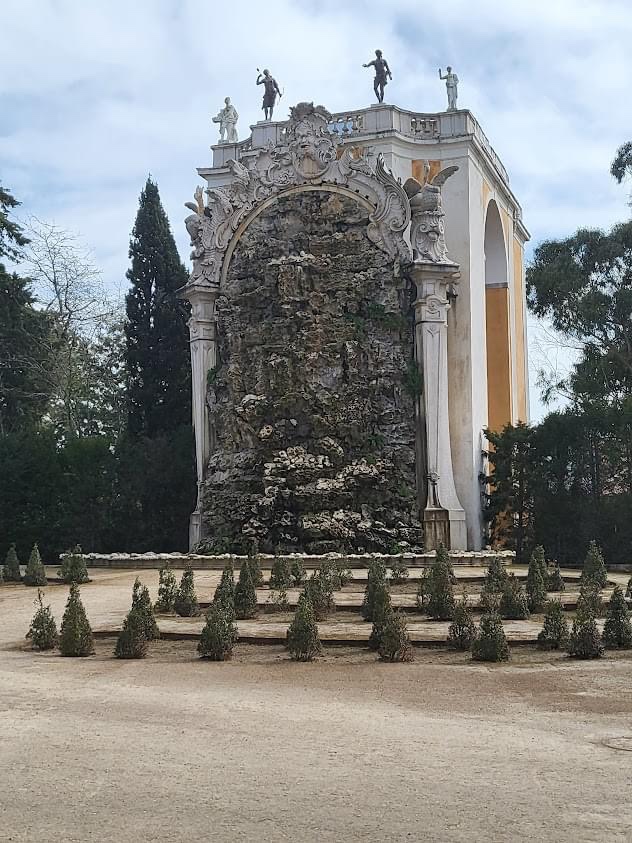
At the carriage entrance, the avenue leads to the palace. Nearby, a man made waterfall rises at the gardens edge. Its rock and archways defy description. Photos can not capture the visual impact. We linger, drawn by the sights and sounds.
Eventually we make our way back to the formal gardens in the shadow of the palace. Manicured shrubbery and whimsical fountains are carefully placed for maximum impact. The simplicity of the lines leaves a powerful impression.

There are sunken gardens and classical themes. Cherubs and dolphins spout water toward the sky. The sky is blue and the warm sun shines down. We walk and talk. An unexpected private experience in the loveliest of settings.
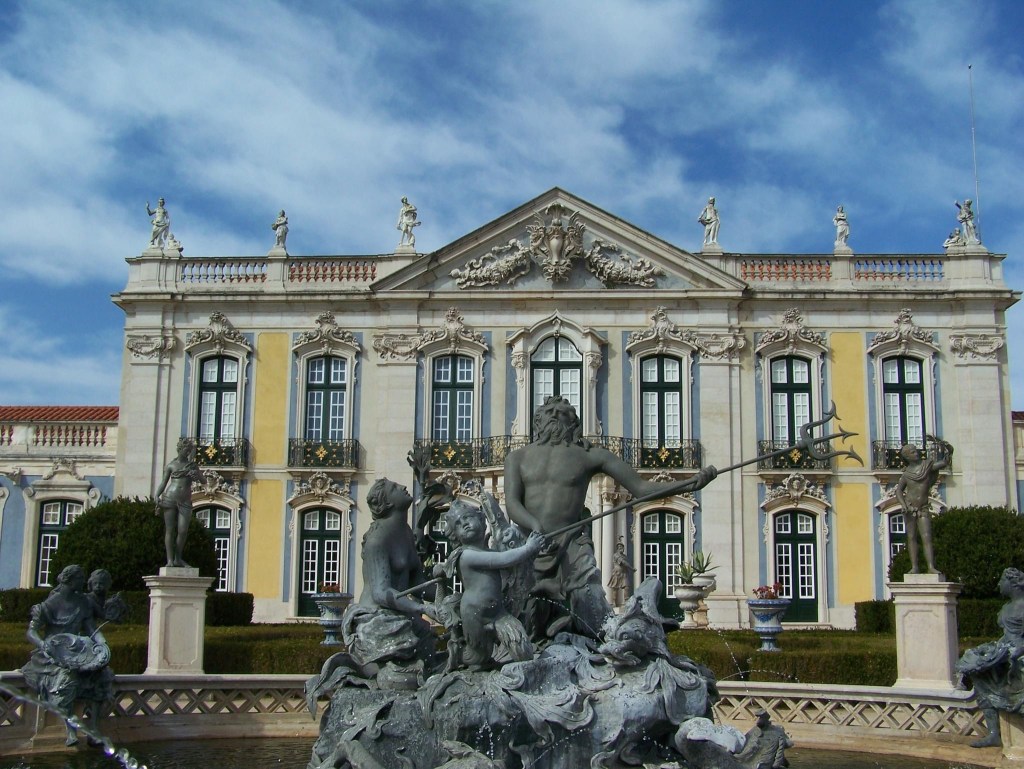
Why is this a secret palace? We can’t understand why everyone flocks to certain sites and others remain hidden. This place is high on my list of must see sites. It is spectacular. A favorite experience in the many places we have toured.
We reluctantly leave. Nearby, a small restaurant is crowded with locals. We take a seat with views of the palace exterior. We happily talk about all that we have seen and experienced. I search the menu and see what I think is listed as “a little girl”. My Portuguese is really bad, so I use google translate. It says little girl. I ask the waitress why a little girl would be on the menu. She looks startled and then giggles. After assuring me that it is fish and not actually a child, she brings us olives and bread.
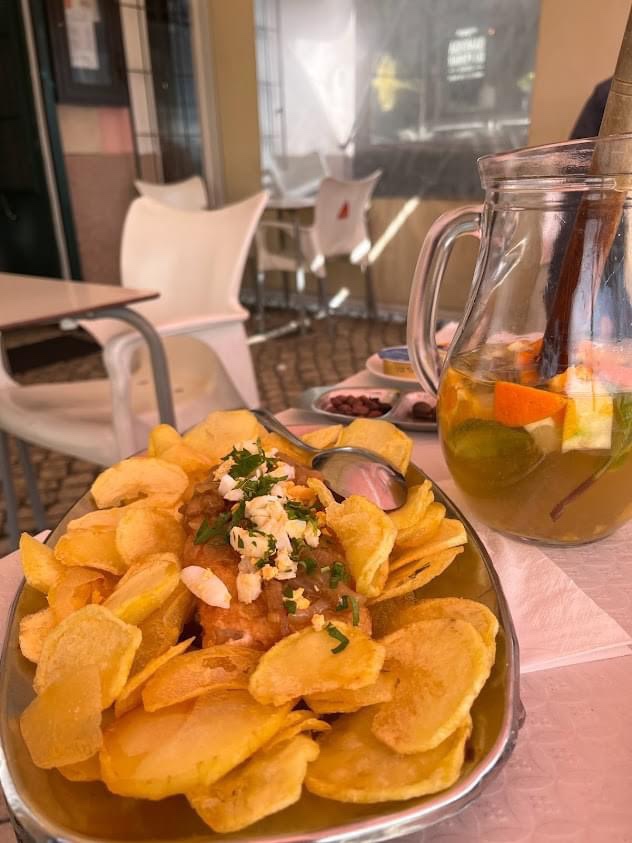
And so, we linger in a town labeled unexceptional, over an exquisite meal. We fondly say goodbye to a palace that was barely mentioned in the tourist guides but captured our hearts. As we walk back to the train, we feel grateful that we took the road less traveled. To quote Robert Frost, it has “made all the difference”.
-
Valentine Adventure: Travel Goals
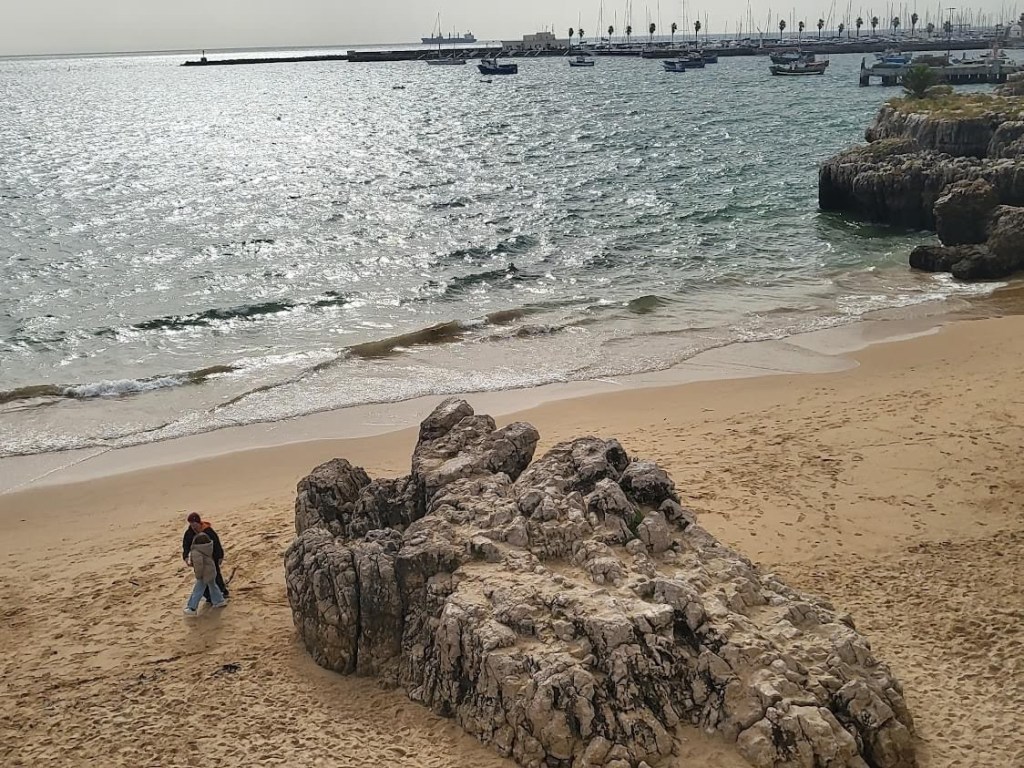
February 14th arrived a little cooler and cloudy. Valentine’s Day is usually like that. . . a lot of hype about a cold day in the “F” month. This day, however, we finally got to take a train to Cascais. The seaside beckoned out the windows of the train as we moved along the Estoril coast.
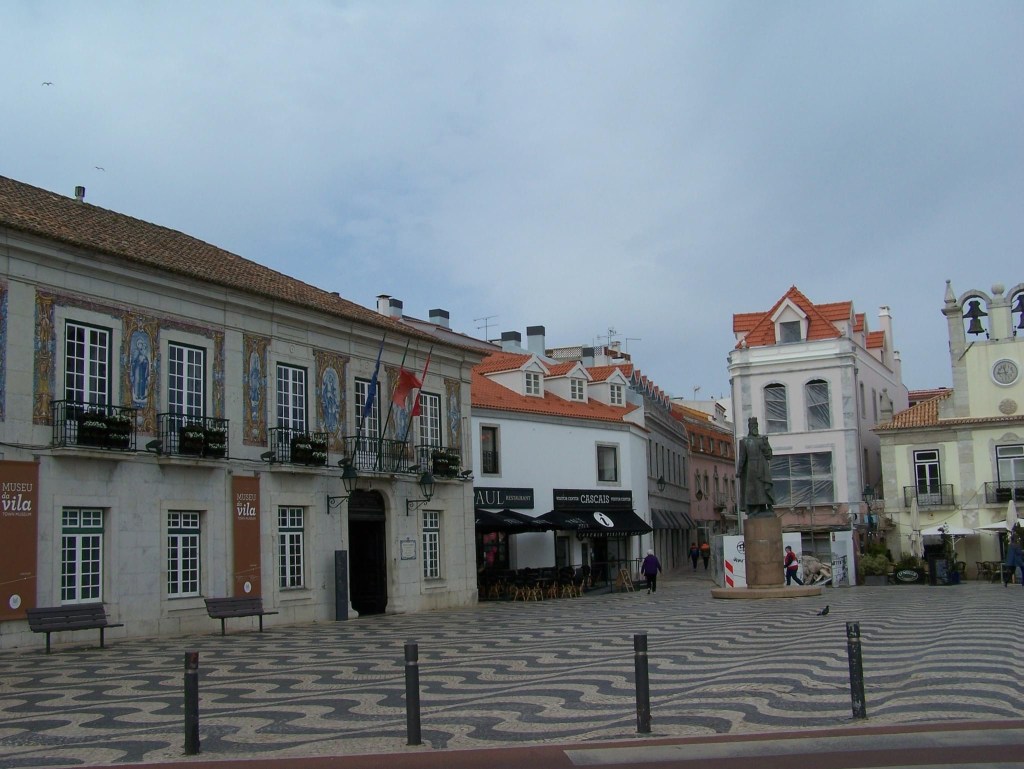
The wind was biting as we walked along the waving bricks through town, but the sea was glorious. Wind surfers braved the cold under colorful sails. Sailboats bobbed in the harbor. Flags snapped on castle walls. And as many others have been before me, I was charmed by the seaside village.
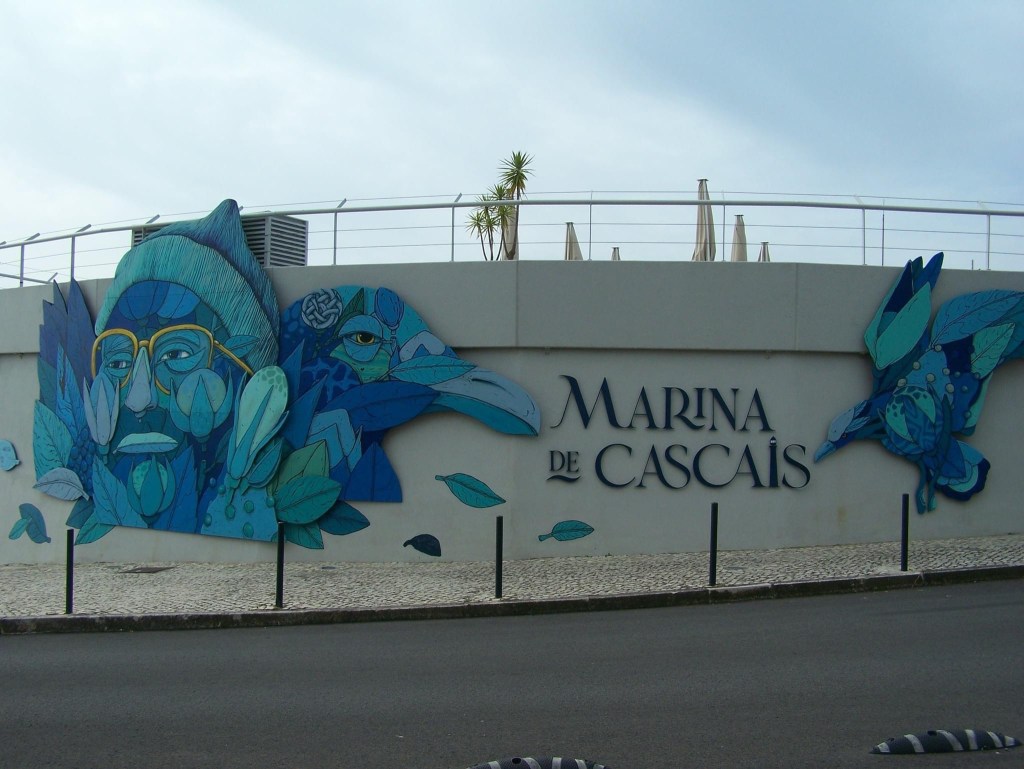
We wandered through the castle turned hotel to the marina. The smell of the ocean and the sound of waves never fails to excite. We watched boats and fishermen while we ignored the cold wind coming off the sea.
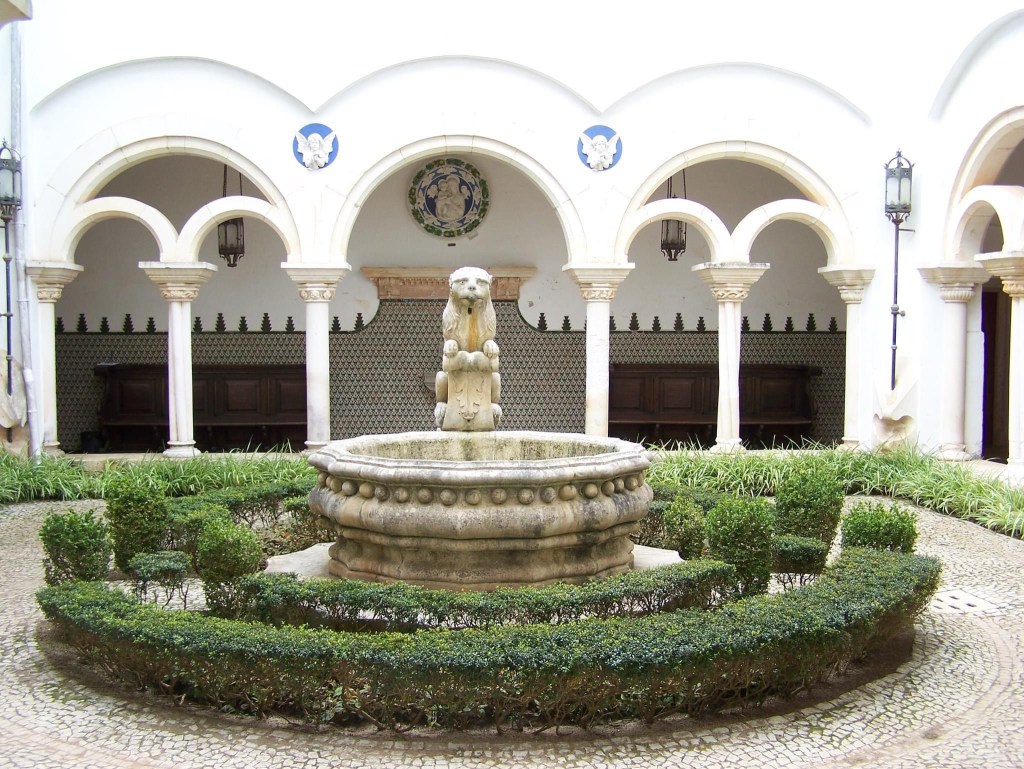
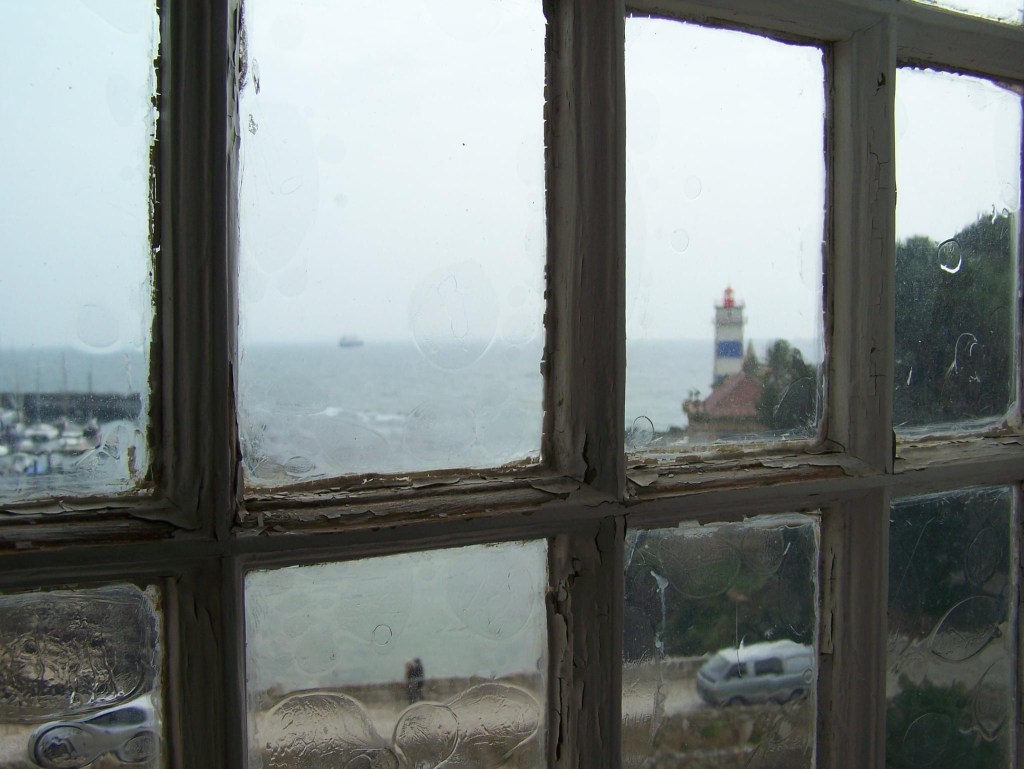
We visited an exhibit on Portuguese advertising and chuckled at ad campaigns no longer relevant. We visited a tiny museum of the sea. The exhibits were unexceptional and contained plastic models of sharks. A strange cartoon explained the motion of the ocean. It would have likely scared or bored actual children. Artifacts and photographs from the last king of Portugal, who loved Cascais and the sea, filled rambling rooms. A small room held items from the men and women who worked the sea. Here at last, was life and memory. Women who cleaned the fish and men who went to sea in tiny boats looked with shining eyes out of early photographs. Their pride of place was evident.
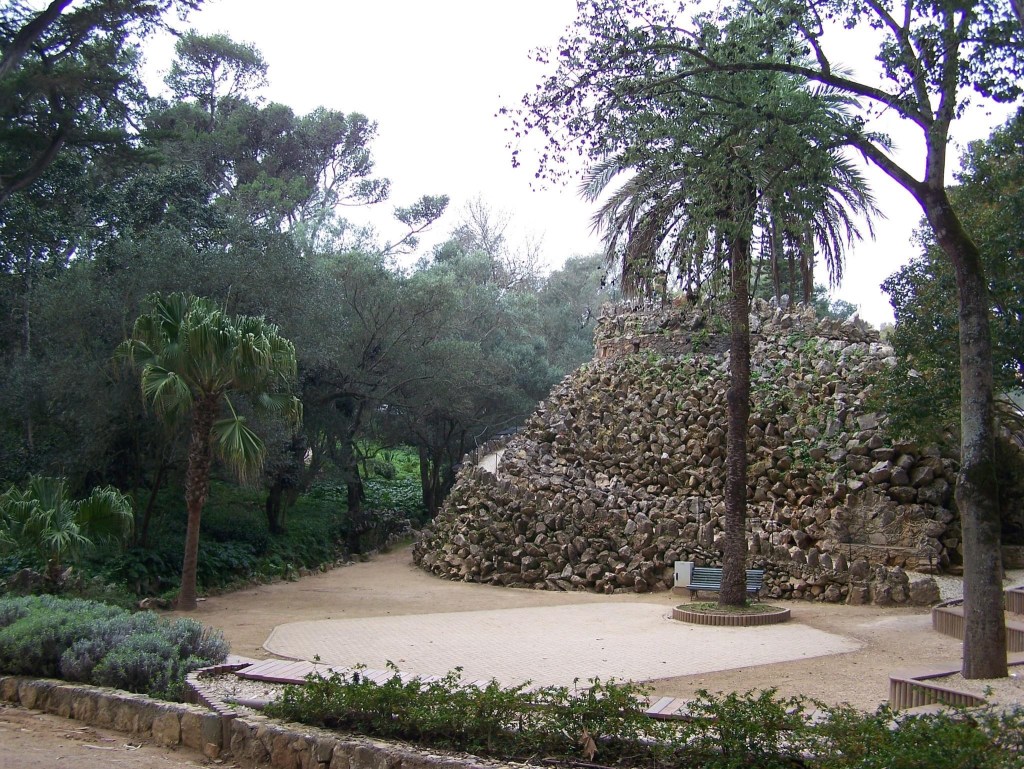
We walked across the road to a large and lovely park. Turtles swam in ponds. Peacocks lurked in the shrubbery as people enjoyed coffee in the cafes. At the far corner of the park we visited a turn of the century mansion with stunning views of the sea. The original owner was Irish and Portuguese. Shamrocks linedthe ceiling, making me smile.
We walked back through the park downtown and found an Irish pub. Fish and chips seem appropriate. We ate outside despite the chill. The lure of the sea was too strong. We needed to watch for as long as we could. The day wouldn’t last forever.
When we got too cold, we headed to city hall. The museum was free and full of interactive delights. We took a cheesy photo in a photo booth with Cascais beach as our backdrop. We stood in the dark for a LED light extravaganza extolling the virtues of life in Cascais. I was already sold. No light show required.
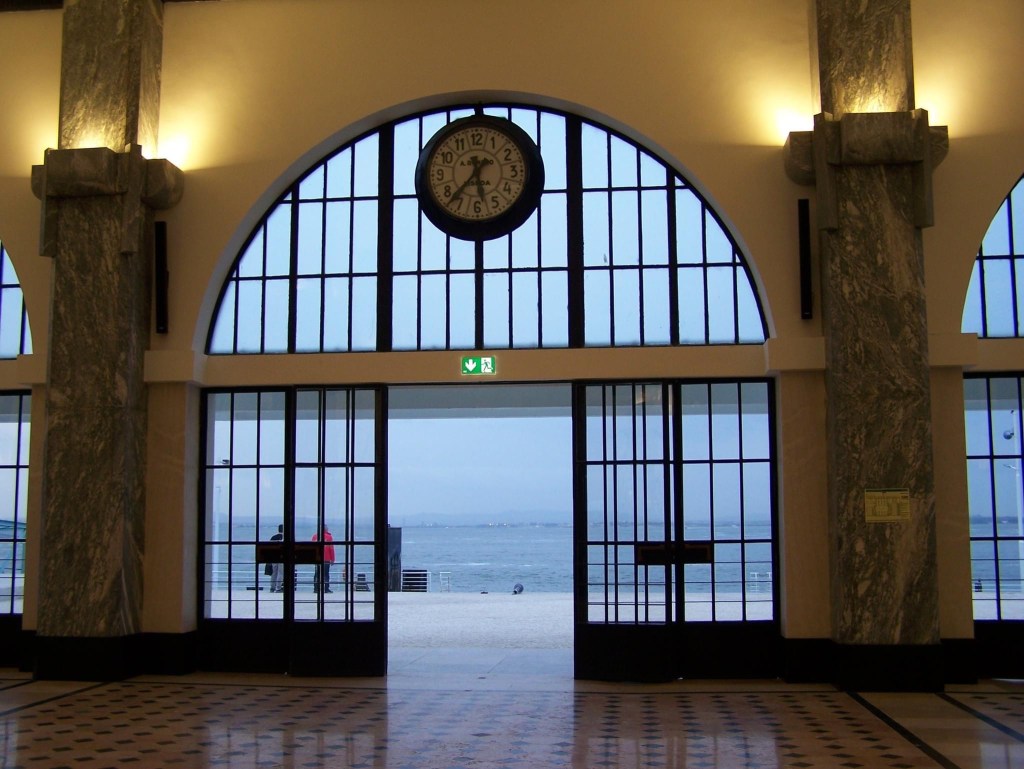
As we left town, a realtor pressed a bag of candy into my hand. She wished me happy Valentine’s Day and asked me to remember her when I am ready to buy a house by the sea. What a lovely dream.
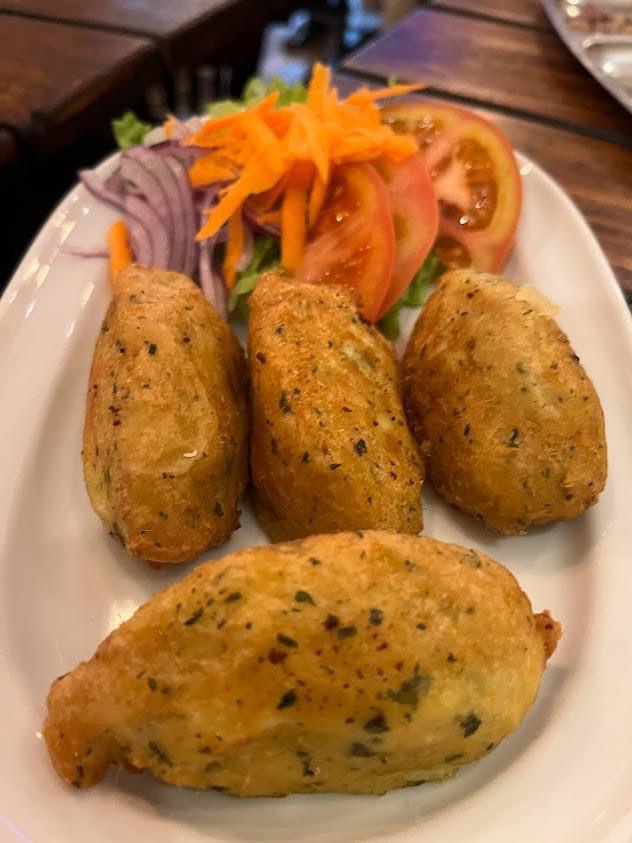
I was content as we rode the train back to Lisbon. Before heading home, we visited the lovely corner restaurant by our flat for a Valentine’s Day dinner. It was warm and cozy, just the way you should feel when you spend the day with your Valentine.
-
Over the River: Travel Goals
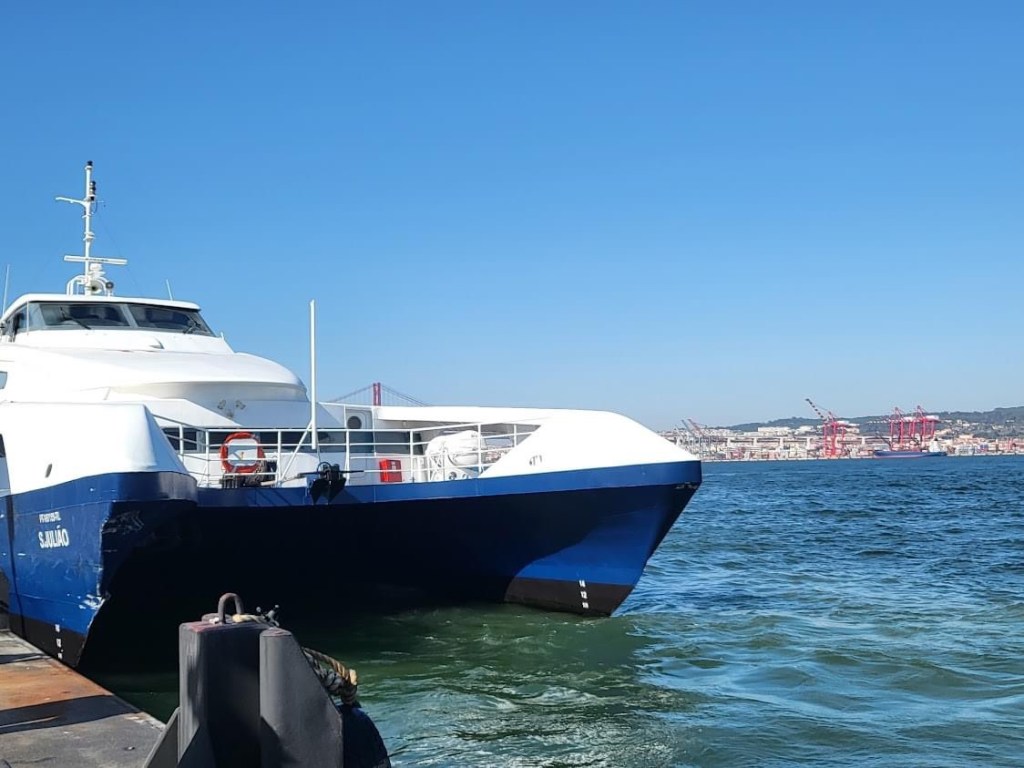
Over the river…. The Ponte de 25 Abril bridge goes over the river….. the Christo Rei stands vigil over the river…..the best seafood is over the river….. Today is time to head over the river. The ferries are large and clean. They move swiftly over the river.
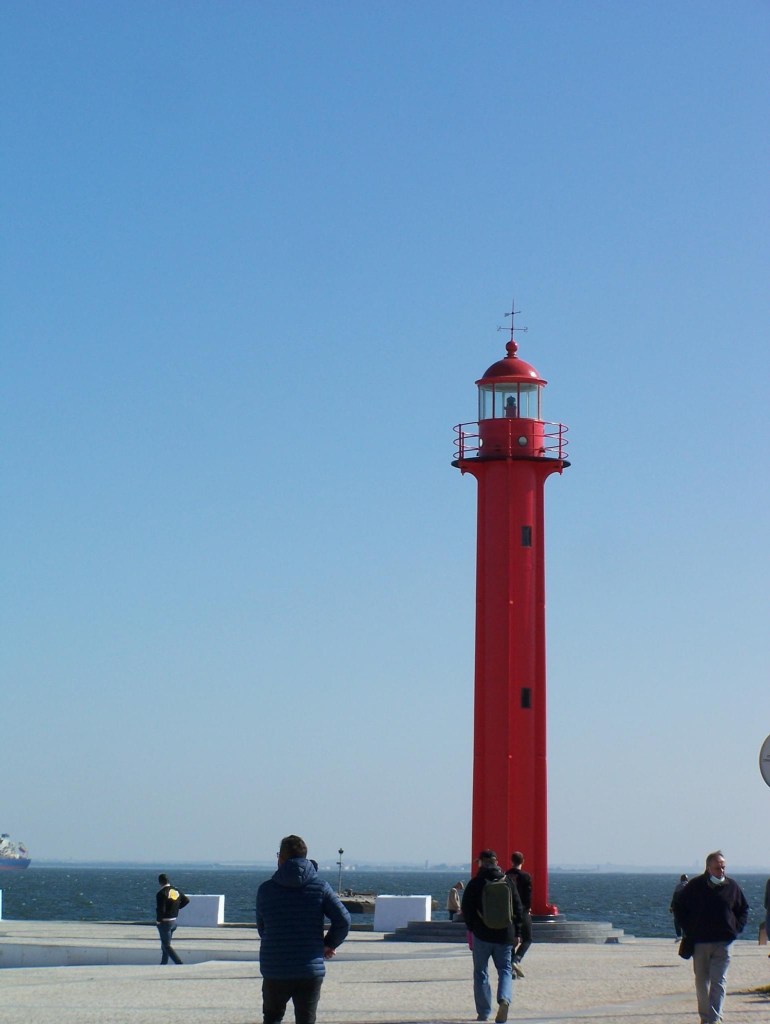
We step out onto the dock. Lisbon is now over the river on the opposite shore. A lighthouse and bus depot coexist at the shoreline. A train line also meets the river. We walk around the busy area looking for a bus to take us to Christo Rei.
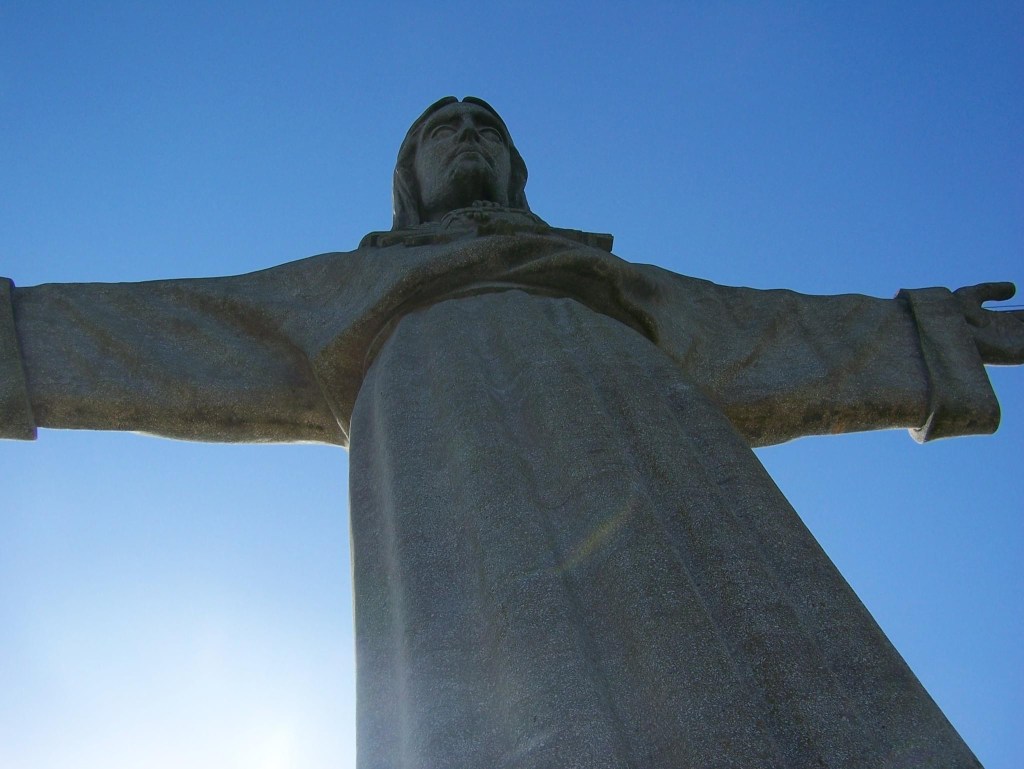
Christ the King is a large statue of Jesus that dominates the skyline across the river from Lisbon. The grounds are an oasis of calm. Olive groves surround the statue and soothing music plays throughout the groves. The statue itself it is more chaotic. We stand in line and are only allowed on the elevator when there are four more people in line than I believe the elevator should hold. When I am convinced that there can be no way anyone else can enter, the elevator operator pushes her way into the car. We make the assent, but are surprised to find that the elevator does not go to the top. We get out and have several flights of stairs yet to climb.
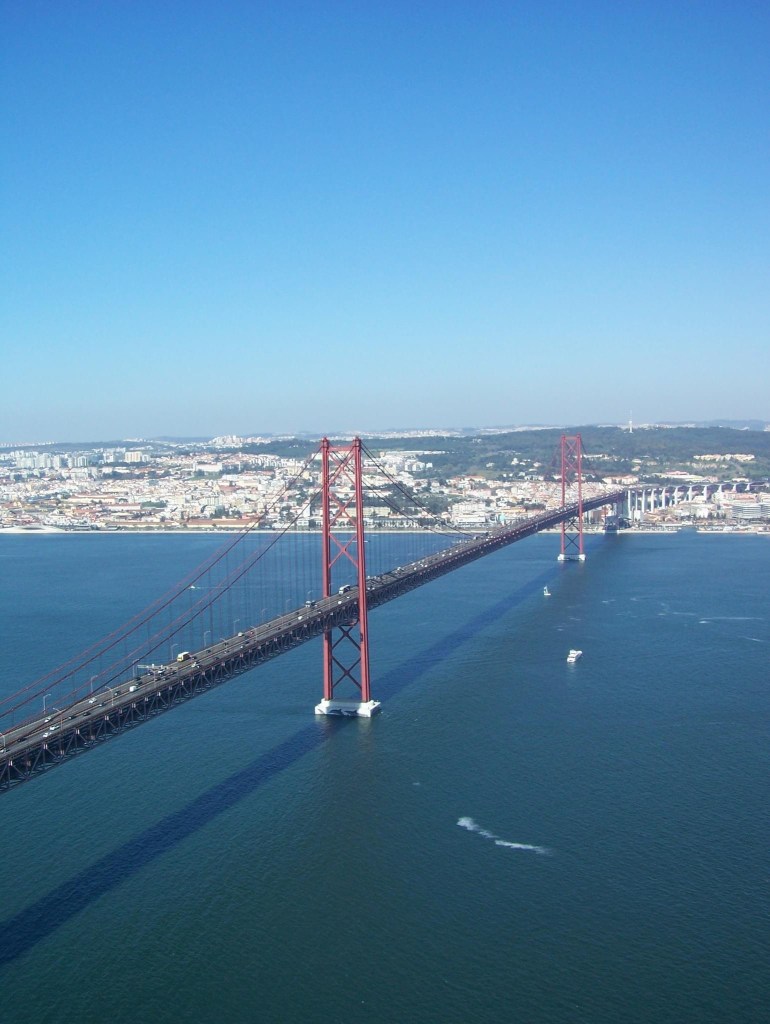
We step out into a brisk wind. The views over the river are spectacular. We look down on the bridge and the rugged shoreline. The town of Cacilhas spreads out across the hills below. We make a circle around the platform, under the feet of Jesus.

Afterwards, we walk down the steps, through the gift shop, and back on the crowded elevator. It is warmer on the ground. The stations of the cross are laid out along the campus. We take our time appreciating the artwork and the natural beauty of the park. Along the way, we look across the river to Lisbon. It looks peaceful and serene in the morning sun.

Suddenly hungry, we take the bus back to the harbor and search for food. We find a small restaurant across from the church. The owner does not speak English and we communicate through smiles and gestures. I see what I want to order, but the menu does not include a price. The English menu does not match the Portuguese menu. I use google translate to try and help me find the information. A young man appears at our table and asks if he can help. He goes to kitchen and comes back with the answers. We order and relax.
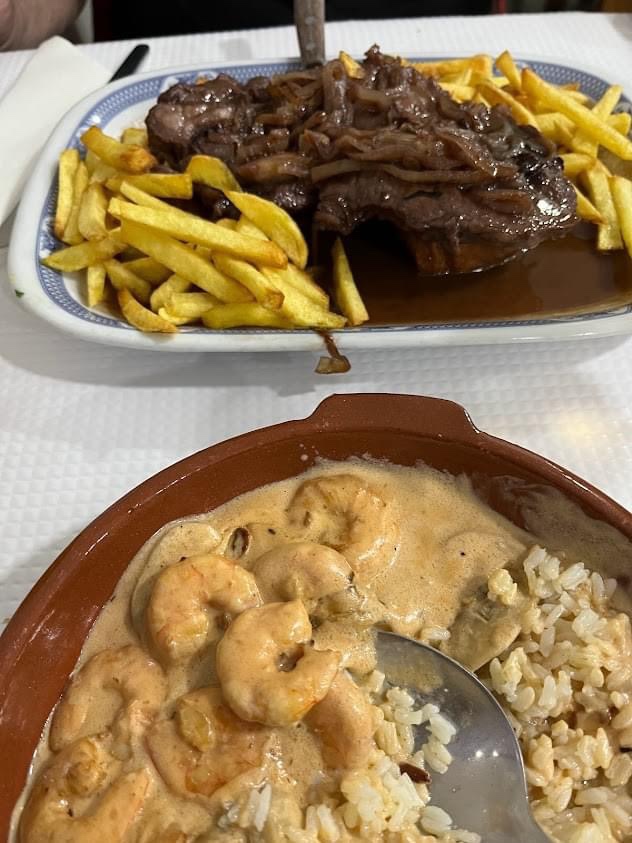
As I make my way to the water closet, I notice that the young man we assumed was a waiter was eating with his wife in the back of the restaurant. Embarrassed we go over and apologize. He smiles and explains that his father owns the restaurant. We laugh together and meet his dad. It is the best food we have had in Portugal. The food is really better over the river.

With full stomachs, we notice a ship along the riverbank and decide to investigate. The Gloria is the last sailing navy vessel to make the Índia run. The ship traveled across oceans many times, for months at a time. We climb aboard and explore.

Looking in each nook and cranny, I imagine what life on a sailing ship. It is both more spacious in the interior than I imagined and smaller overall than would be comfortable on the open seas. Every inch is used. Ingenious use of space and materials ensure that nothing is wasted. We wander up and down decks and in and out of cabins until we have run out of spaces to explore.
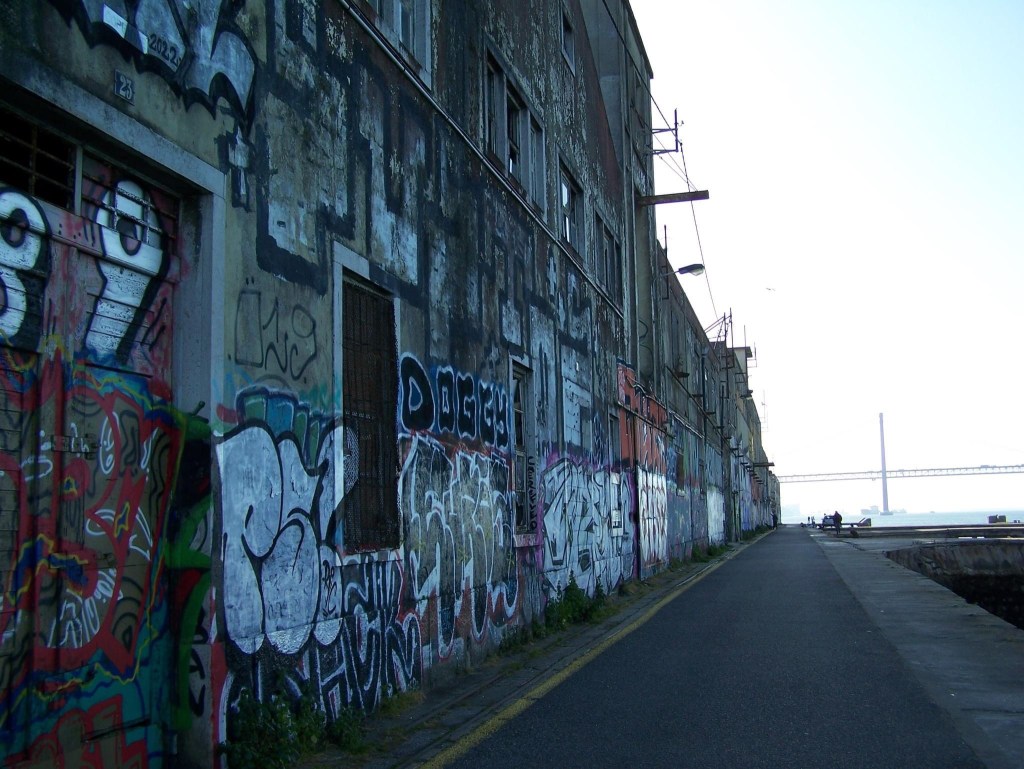
In the late afternoon, we walk under the cliff along the old docks. The walls are covered in graffiti. The first several docks look sketchy and abandoned. I had read that there were parks and a free elevator to the tops of the cliffs further along, so we walk on.
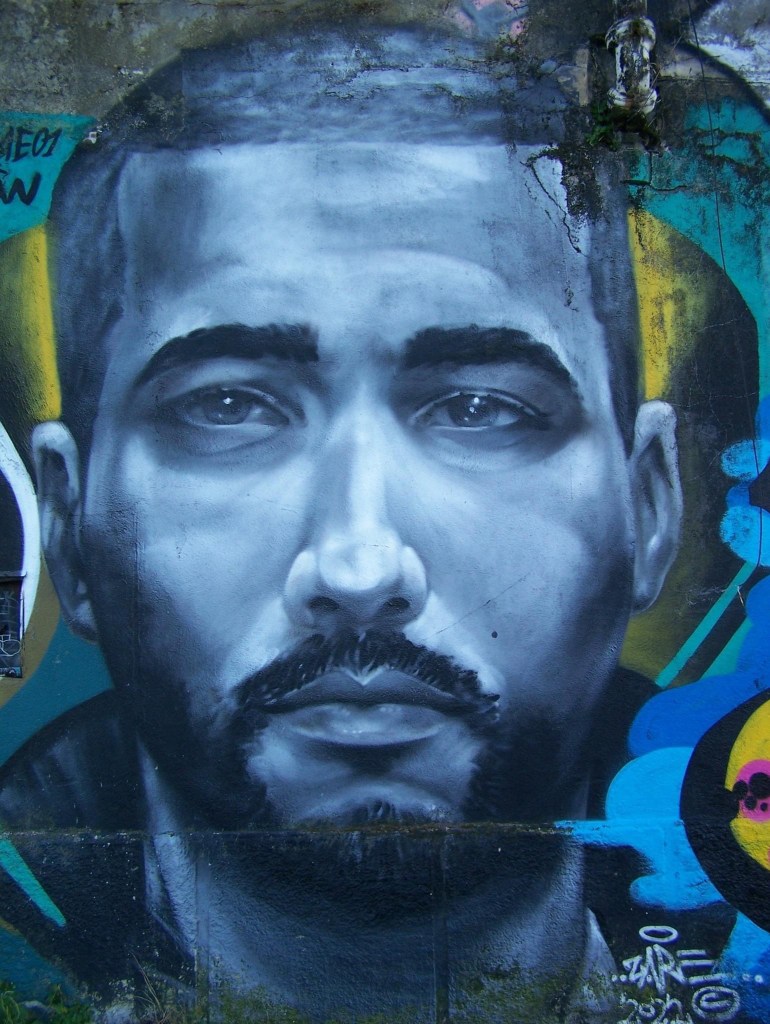
As we walk along the river, the graffiti becomes surreal. I am astounded by the realism and the raw beauty of the art. Two men are spray painting a new creation. We step around them, near the water to keep moving along the riverbank. We encounter small beaches and cafes along the water. Isolated and beautiful, the cafes are hidden gems. We reach a park and see the anticipated elevator. It is glass so that riders have unobstructed views over the river. It’s only purpose is to connect the docks with the town on the cliffs above. We enjoy the views on the way up.

Once in the heart of town, we decide to walk back down the hillside. We walk through residential neighborhoods, parks, and commercial shopping districts. In between, we catch beautiful views over the river.
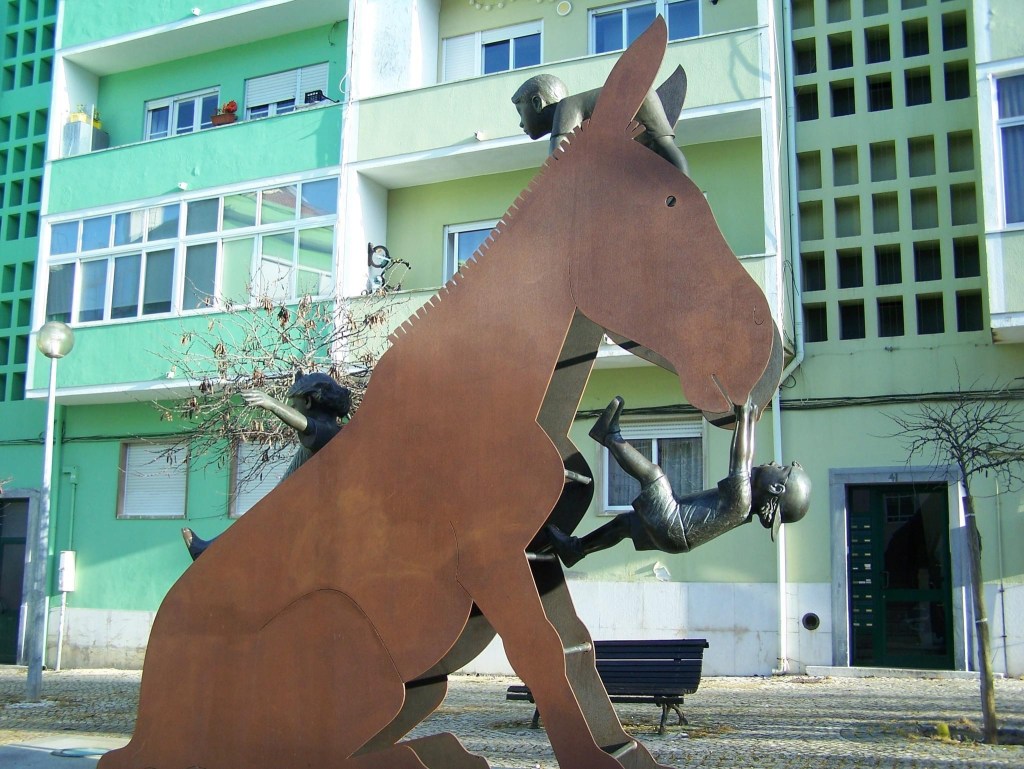
Once back to the docks, we scan our transport card and wait for the ferry. This time, the vessel is old and looks less trustworthy for the voyage over the river. We board and settle on dirty seats and look out dirty windows. Before I have to ponder why the beautiful catamaran ferry from the morning was no longer running, we were over the river. I stepped off the boat and looked toward Christo Rei and the bridge…over the river.
-
Everyday Gourmet: Travel Goals
Gourmet: high quality and/or rarity, crafted to deliver exquisite taste and presented in a pleasing fashion.
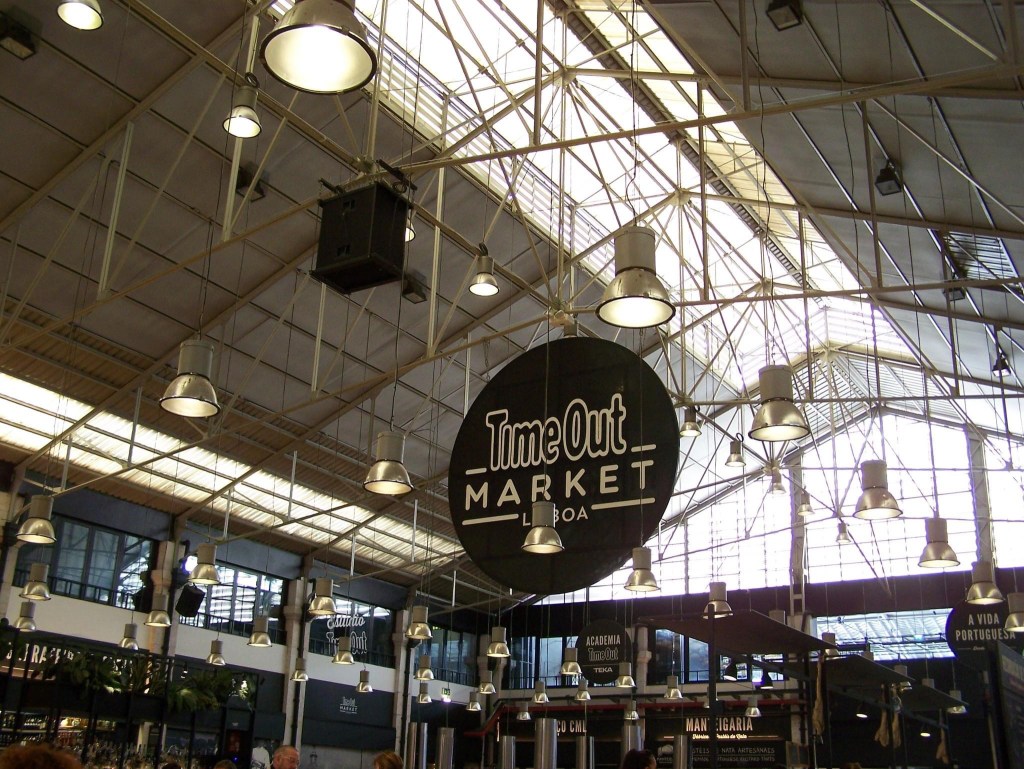
Thus begins our daily adventure. We have no destination in mind other than to seek out high quality experiences and/or rarities. Our first stop is the market. I am disappointed that there aren’t a lot of stalls. We give a cursory glance to the fish and vegetables. On the other side of the building is the Time Out Market, a gathering place for foodies. In this giant food court, you can find examples of cuisine from across the city. I see a tiramisu donut the size of a plate! Finally something to be excited about.

The donut is rich and sits like lead in my belly. I both exalt in and regret my choice. After a comical incident, where I encounter an older American man in the women’s restroom who apparently can’t read Portuguese or understand universal symbols for female, we take to the streets.

We look for the elevator da Bica. The street is steep and we know we don’t want to walk. We walk back and forth arguing with the gps, who tells me we’ve arrived. My husband finally notices that the tram stop is inside the building that looks like any other shop along the street.
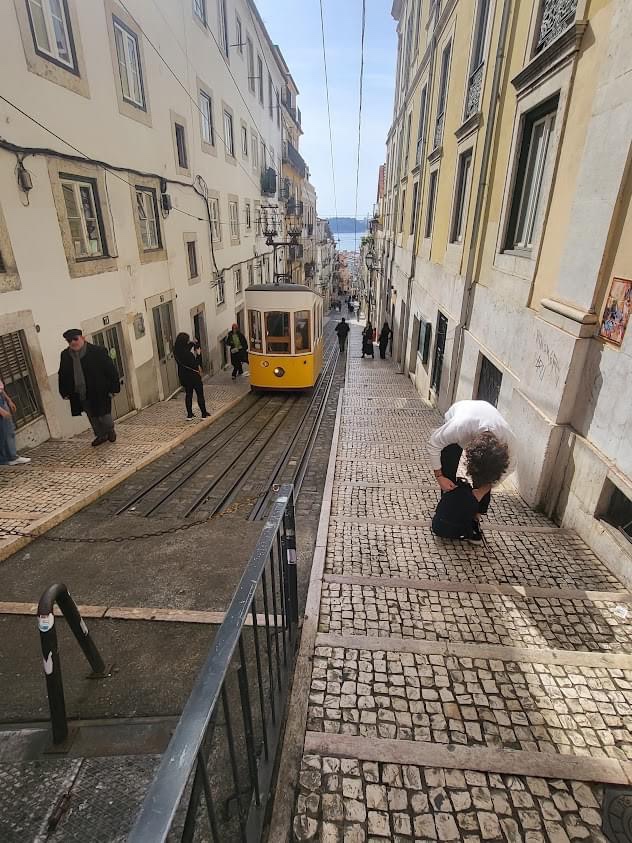
The tram ride is short but pleasing. I have great views out the back of the tram and can see the narrow street and the river. We walk uphill to the Miradouro Santa Catarina. The views are exquisite. The sun is shining just so on the water. We sit next to local college students doing homework and making out. I can’t help but smile. Life is good. It must be . . .the sign painted on a wall in front of the miradouro says so.

Deceptively hidden, the pharmacy museum is tucked in a corner just behind the park. We walk back and forth a few times before we find it. It is full of rarities. Medicines and apothecary tools from 4th century b.c and onward fill the museum spaces. I am mesmerized by a medicine bowl with prescriptions painted on the glass from Judea at the time of Christ. We giggle at the early enemas and chastity belts like junior high students on a field trip. This is confirmed when we later encounter junior high students on a field trip who have an identical reaction. There are plague masks and recreated pharmacies. Museums make me realize how much I don’t know.

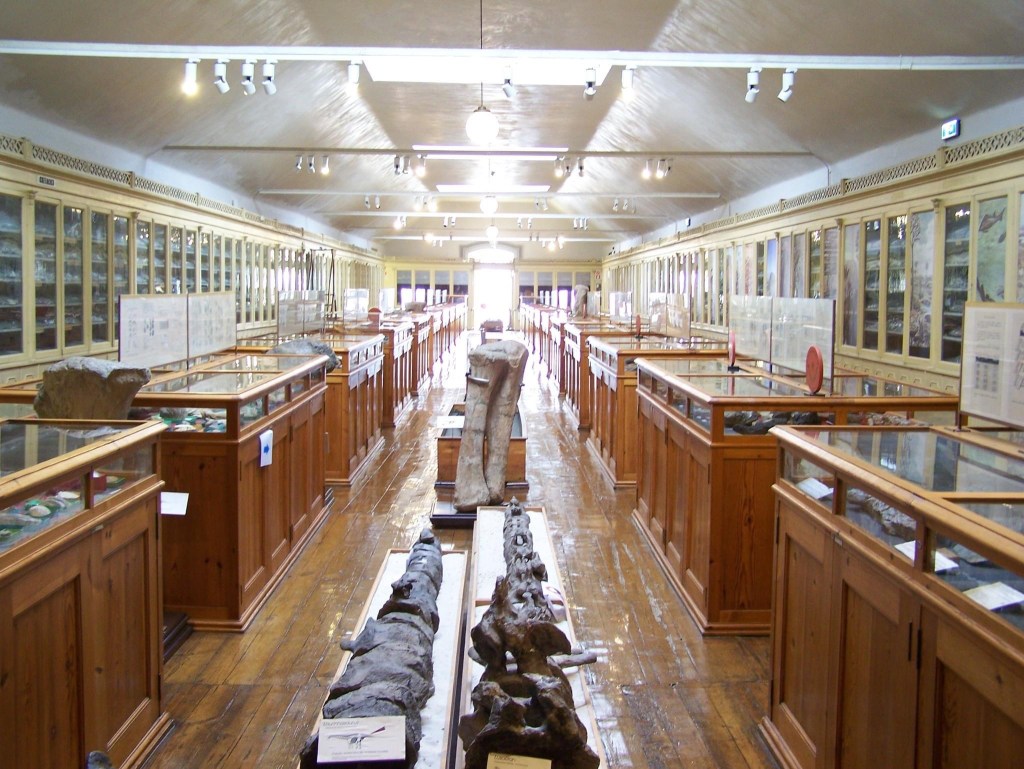
We walk to the University of Lisbon. I decide to brave the four flights of stairs to the small geology museum. It is crowded with bones and rocks. This is a working cache of samples. I am the only visitor. I feel like Indiana Jones….the professor not the explorer. Dinosaurs and human remains surround me in silent witness. It is a little overwhelming.
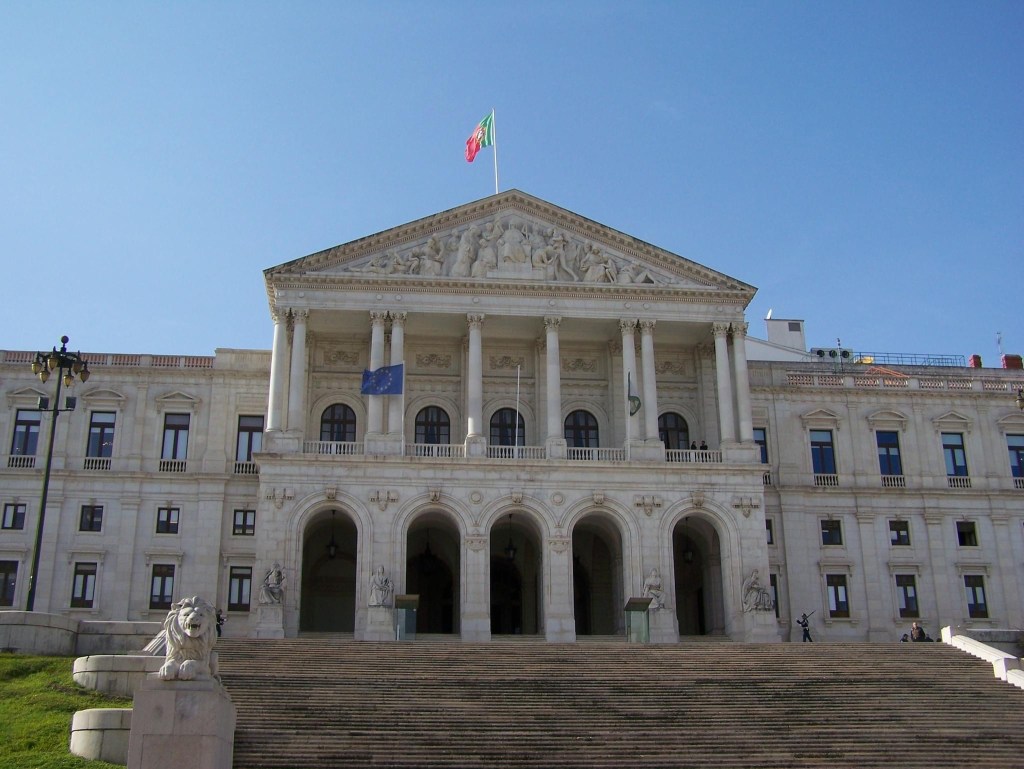
We walk back down the hill and are startled to encounter the Parliament building. We had ridden by the side of the building several times while on the tram and never noticed it was the capitol. We totally overlooked the seat of government. I’m sure there is a lesson there somewhere, but today is my day to find the exquisite and the rare so we move along.
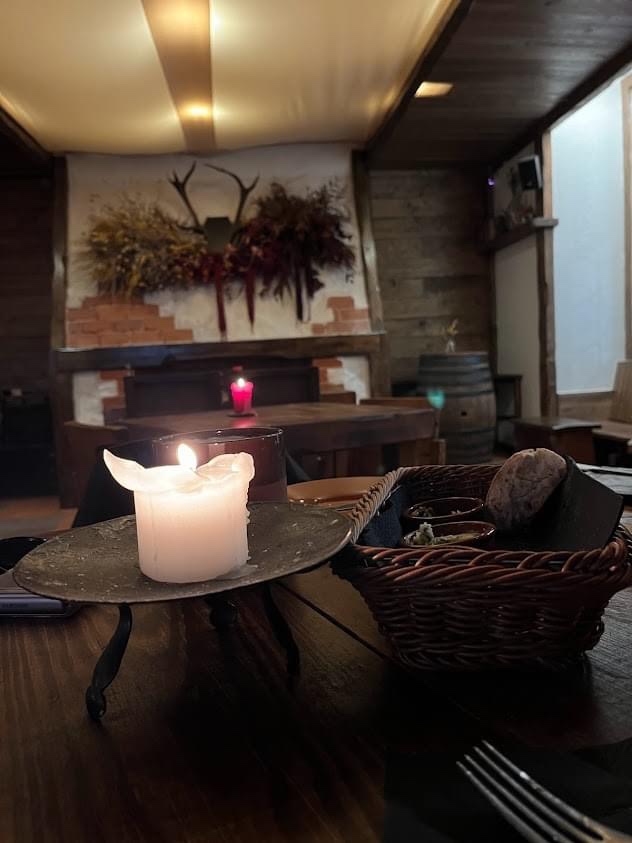
The medieval tavern delivers pleasing, rare, and quality atmosphere. Set up as a medieval inn, the tavern is a step in time. We buy food out of a wooden cart, choosing bread, cheese, and sausages. Our drinks come in clay tankards while minstrel flutes whistle plucky tunes. It is a good place to linger.
As the sun sets, we find ourselves once again at the Portas do Sol. Here is a gourmet experience that I can enjoy each and every day. It feels like home and yet is never less beautiful or inviting. I don’t know who planted the palm tree, but I thank them. It is exquisite, a rarity, and infinitely pleasing.

-
Ado at the Zoo: Travel Goals

I love zoos. When I was a kid, my parents would take us to the zoo for the whole day. St. Louis has a world class zoo. It is free and available to everyone in order to promote conservation and love of animals. As an adult, I still visit the St. Louis zoo as often as I can. I make a point to visit zoos, wherever I happen to be. Small zoos. Large zoos. As long as the animals are well cared for, I love them all.
I was thrilled to visit the Lisbon zoo. It is clear that the keepers love their animals. It was a little strange to see animals that we see on our farms and in our wild places. But I am a sucker for a good petting zoo. Sheep, goats, pigs, chickens and smiling children make it hard not to smile.

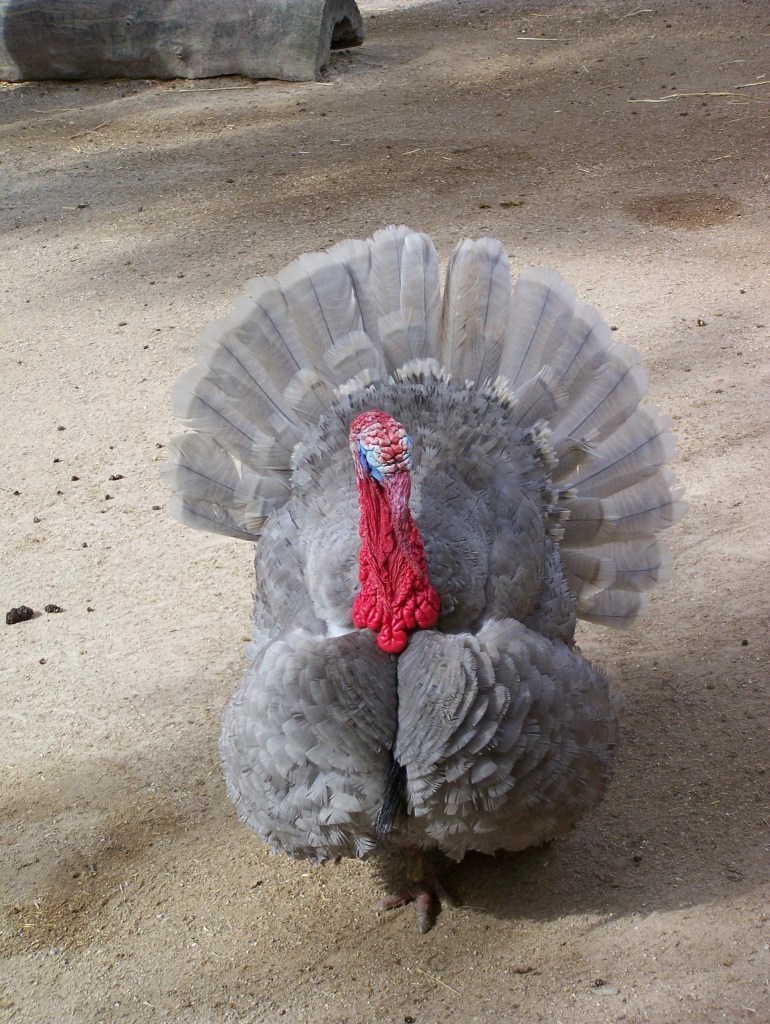
The turkey really strutted his stuff and made me an instant fan. The American bison reminded me of home, because I see them in the nearby county park on a fairly regular basis. I was not expecting them in Lisbon.
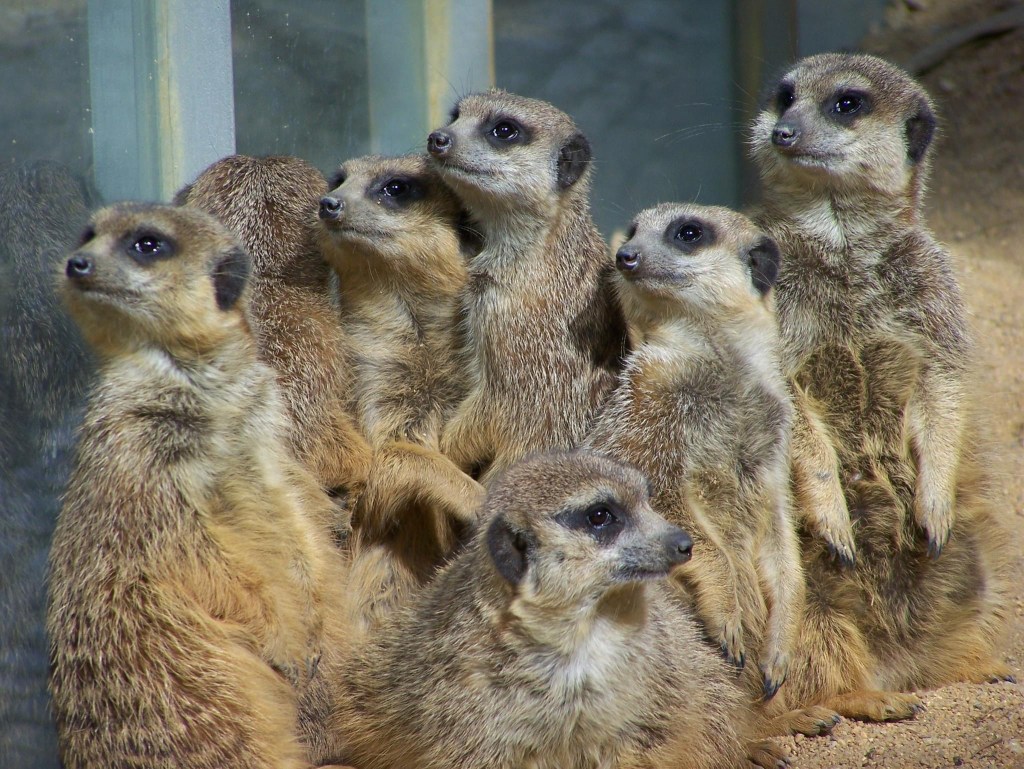
The meerkats can’t help but make you smile. They are so attentive and inquisitive. The only wild small mammals I like better than meerkats are prairie dogs….no prairie dogs here.
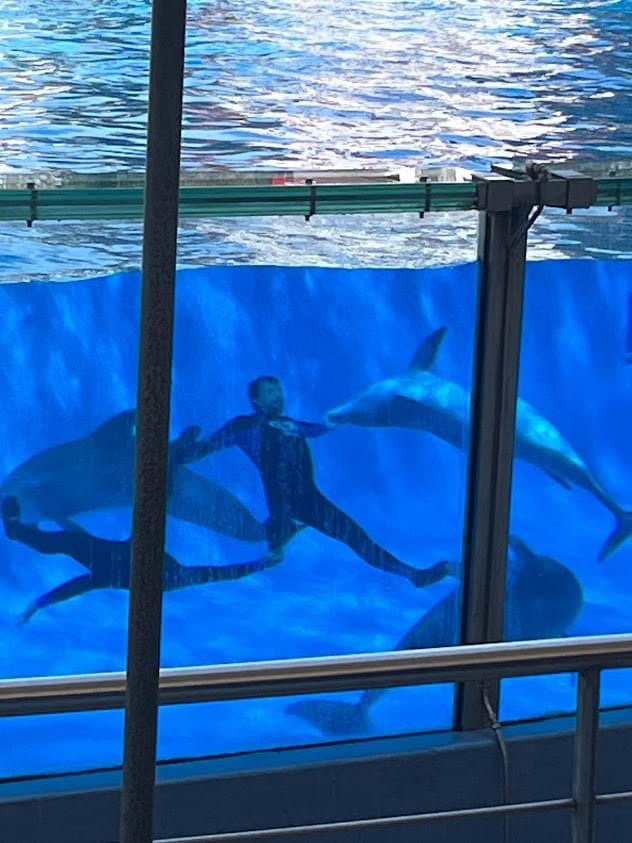
The highlight of the Lisbon zoo is easily the dolphin show. It is clear that the keepers love the dolphins and that the dolphins return the affection. Okay, maybe it’s just the fish they get as a reward.. . But they are eager to connect.

I have never experienced a dolphin show quite like it. There was the usual jumping, spy hopping, clicking and waving. The crowd oohed and awed like a fireworks display was happening. As the music swelled, the keepers swam in an underwater ballet with the porpoises. It was beautiful and magical. And it was weirdly distracting that the head keeper was a doppelgänger for Vladimir Zelenskyy. I am sure Zelenskyy would rather be swimming with dolphins than fending off the rabid Russian bear.
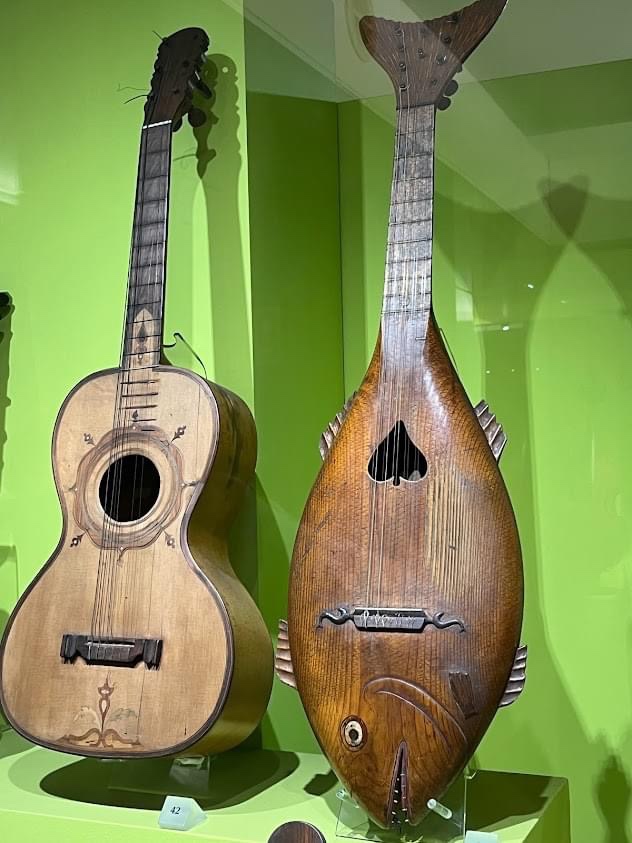
I never want to leave a zoo. It is a happy place. Reluctantly I head to the metro station and am surprised to find a museum full of antique instruments right inside the tunnel. One of things I like as much as a good zoo is music. I love to play the piano. I loved to play a variety of woodwinds and mallet instruments. As I have aged, I find I sing more than I play.
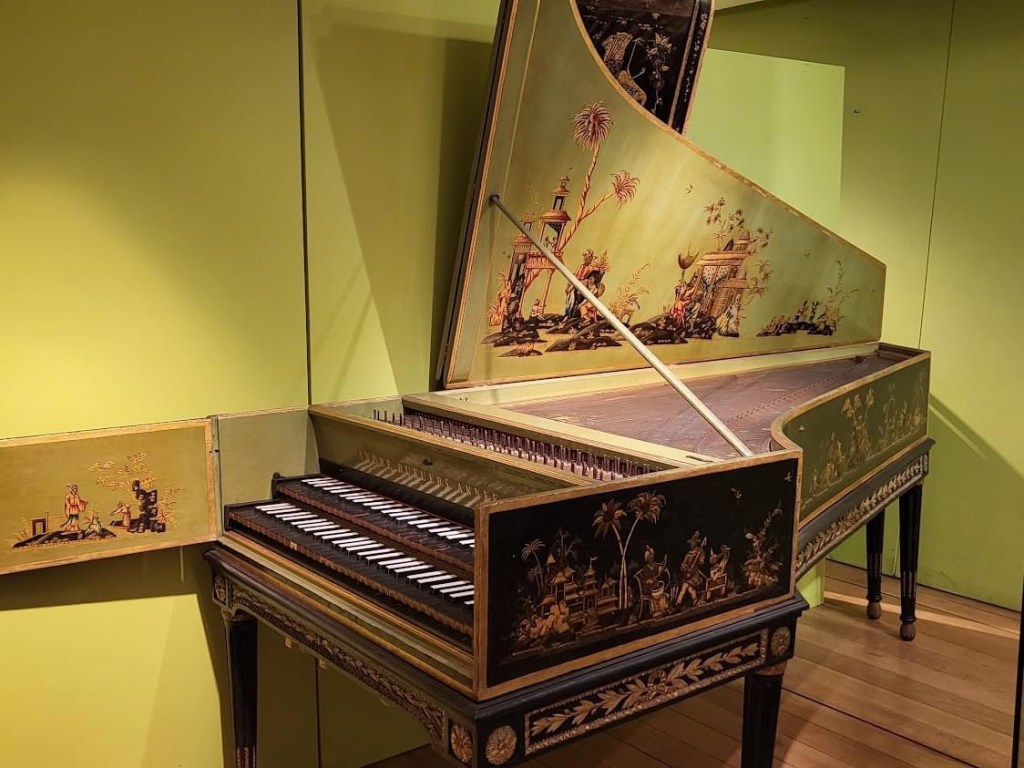
Never the less, I love instruments. They are beautiful and ancient. They have history and made me wonder what songs they have produced. There were instruments available for playing. I tried them all. Animals and music. Simple joys. The world would be a better place if we had more of that in our life.
-
Cinderella in Wonderland: Travel Goals
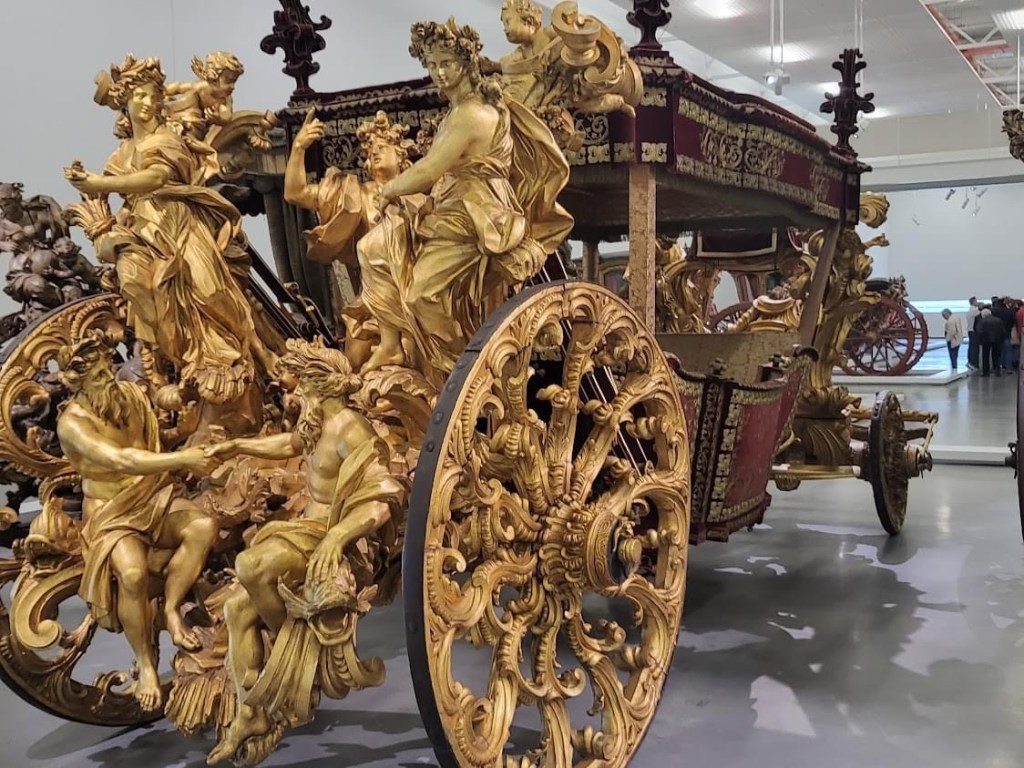
As a little girl, I read countless fairytales. Cinderella going to a ball in a carriage made from a pumpkin requires imagination. The carriages in the Museu dos Coches are beyond imagination. I walk around the fantastical creations in disbelief. Kings and queens used these rolling masterpieces to make a grand entrance. I don’t know if they were ever used to arrive at a ball, but I know that anyone going anywhere in these rolling works of art would have been noticed.
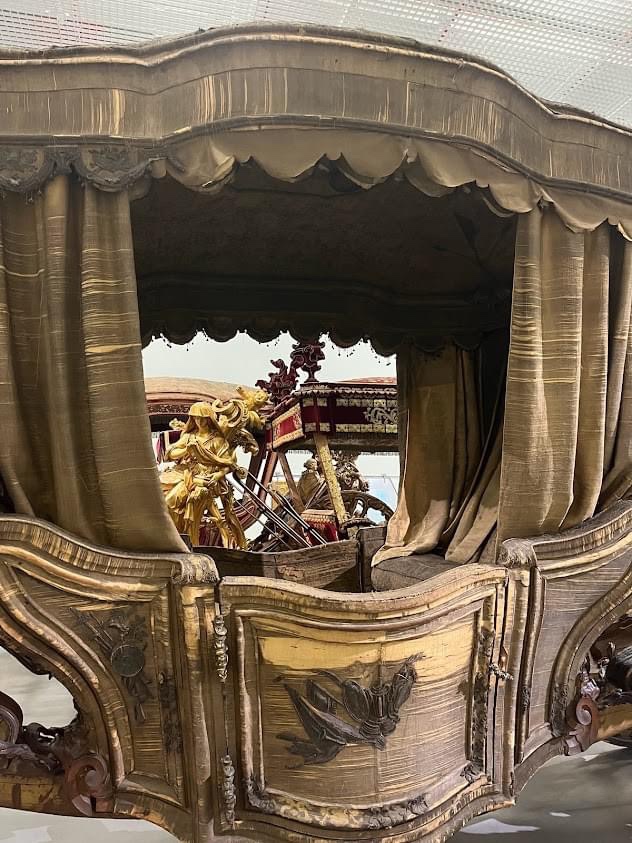
Also in the collection are the coaches used for the so called “princess exchange”. In 1729 a princess of Spain married the heir to the Portuguese throne and a princess of Portugal married the Spanish prince. The couples were transported in elaborate carriages to the border and exchanged in exquisite ceremony. If the carriages are any indication of the grandeur, it was quite the occasion.

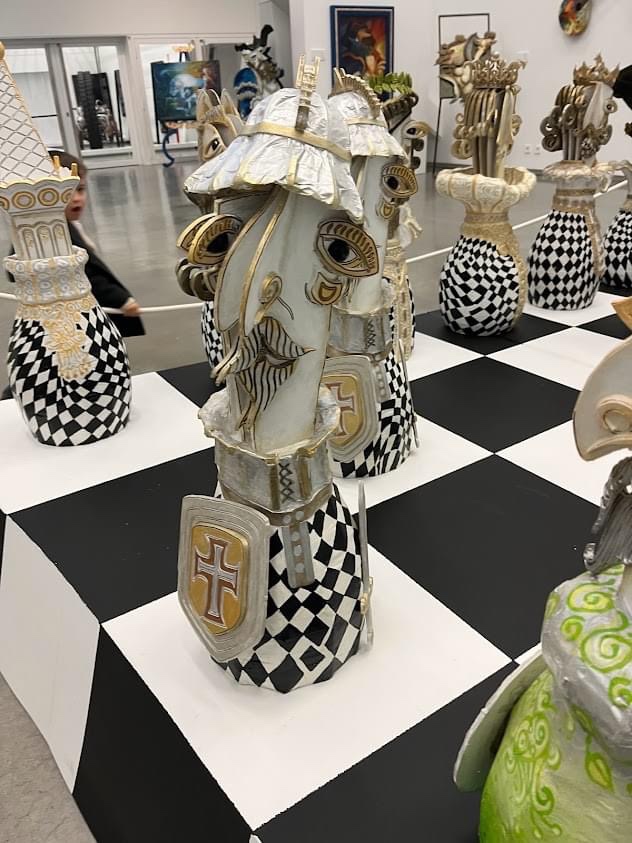
While I try to control my inner Cinderella, I feel a little like Alice in Wonderland as I take in the whimsical scenes from Camoes’ “The Lusiadas”. Chess pieces, statues and paintings, all works of artful fantasy greet me in the special gallery. Oversized and cartoonish images of the Kings of Portugal and of course Vasco de Gama…always de Gama, vie for attention. A marble slab tells me that the dance is only for the sexy people. So I dance a few steps in defiance.
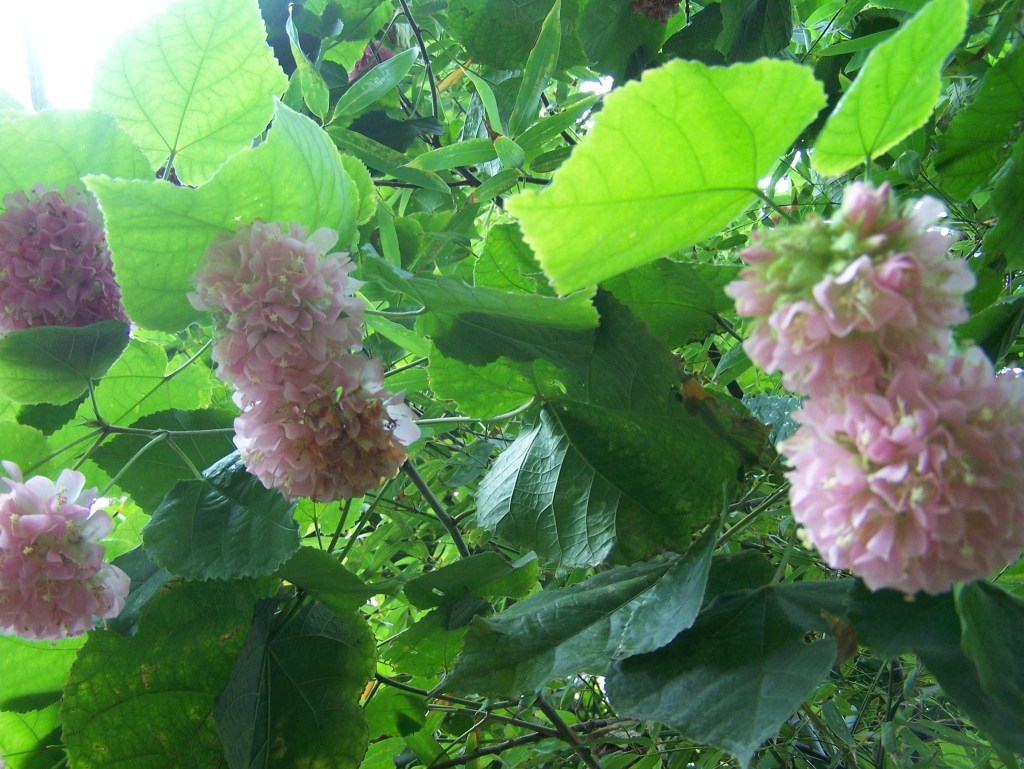
Everyone knows that if you go to a ball, you eventually end up walking in a garden. We stroll through the Jardim Botanico Tropical, even though we did not arrive in a coach. We are greeted by peacocks who escort us through a variety of garden settings. Beautiful blooms hang from trees. Palms and a variety of other species imported from the colonies create majestic borders.
We stand on the steps of a building still standing from a world’s fair and take in a hedge maze. I would have liked to explore but the sprinkler system had other plans.

Calla lilies remind me of the day I felt the most like a princess. They made up my wedding bouquet once upon a time. Standing here near a secret waterfall, I remember the feel of them in my hand. My nervous anticipation on that day has lead to decades of happiness.

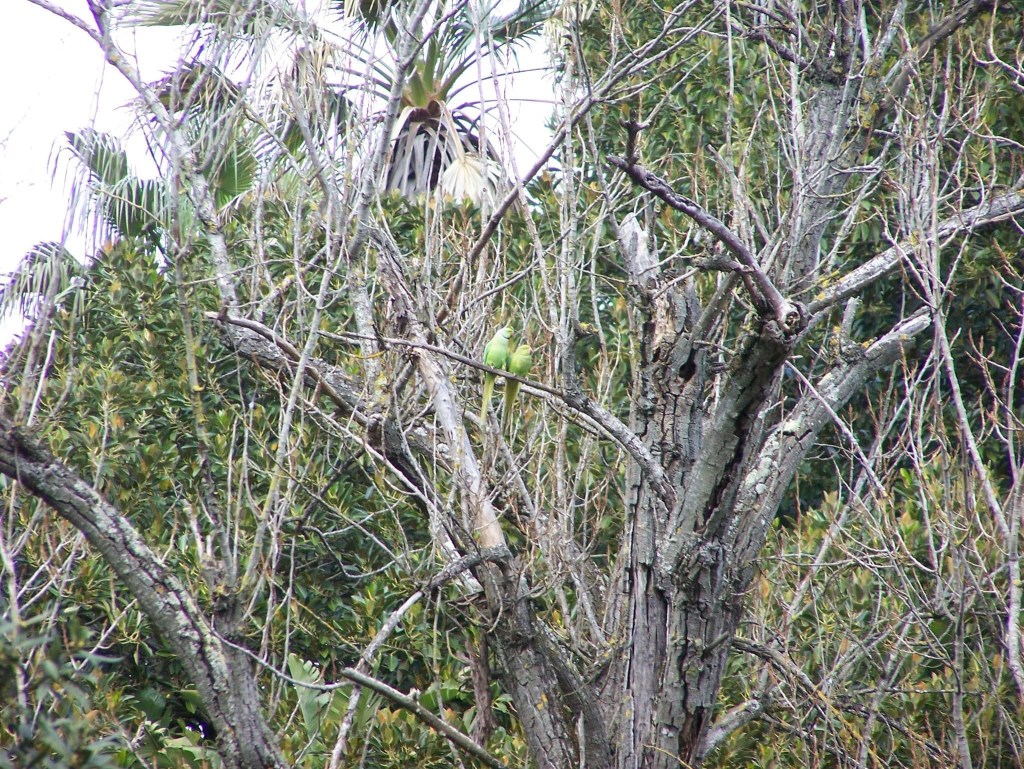
Even princesses need to rest, so we sit by a lake. The peacocks shake and spread their feathers for us. A pair or tropical birds land in the trees not far away and remind us that love birds are beautiful and not just in fairy tales.

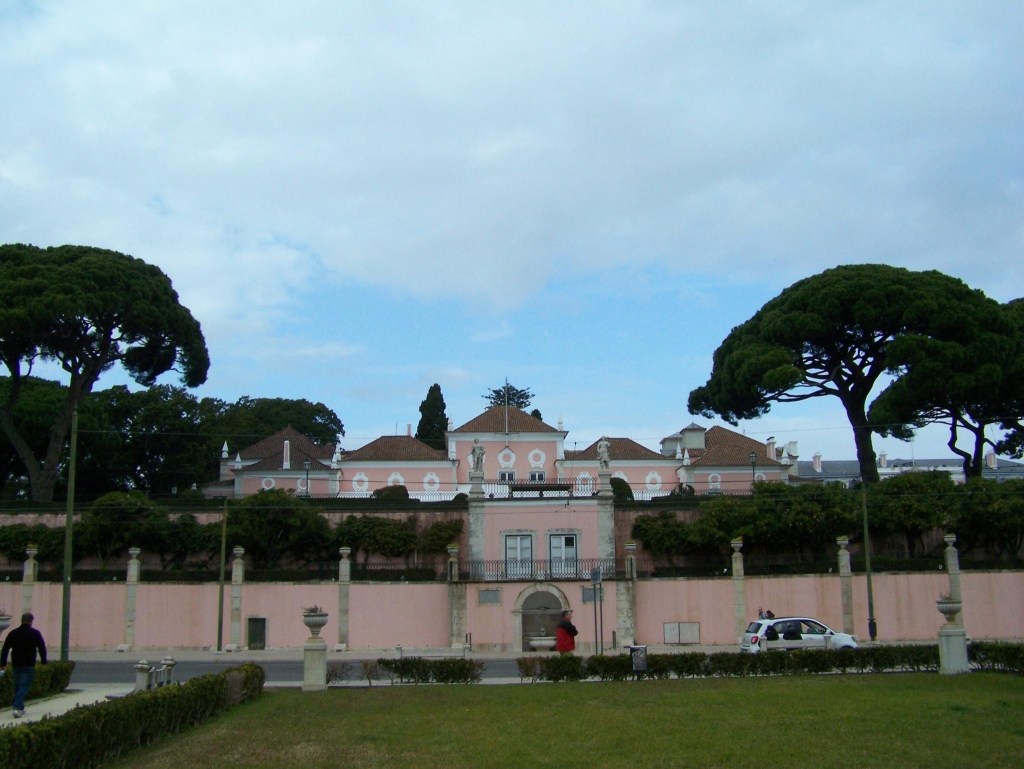
After our rest and some hand holding we walk past the real life pink palace of the President of Portugal. It is hidden between high walls. We walk on and climb the many stairs to take the elevated path across the highways and trains to the river.
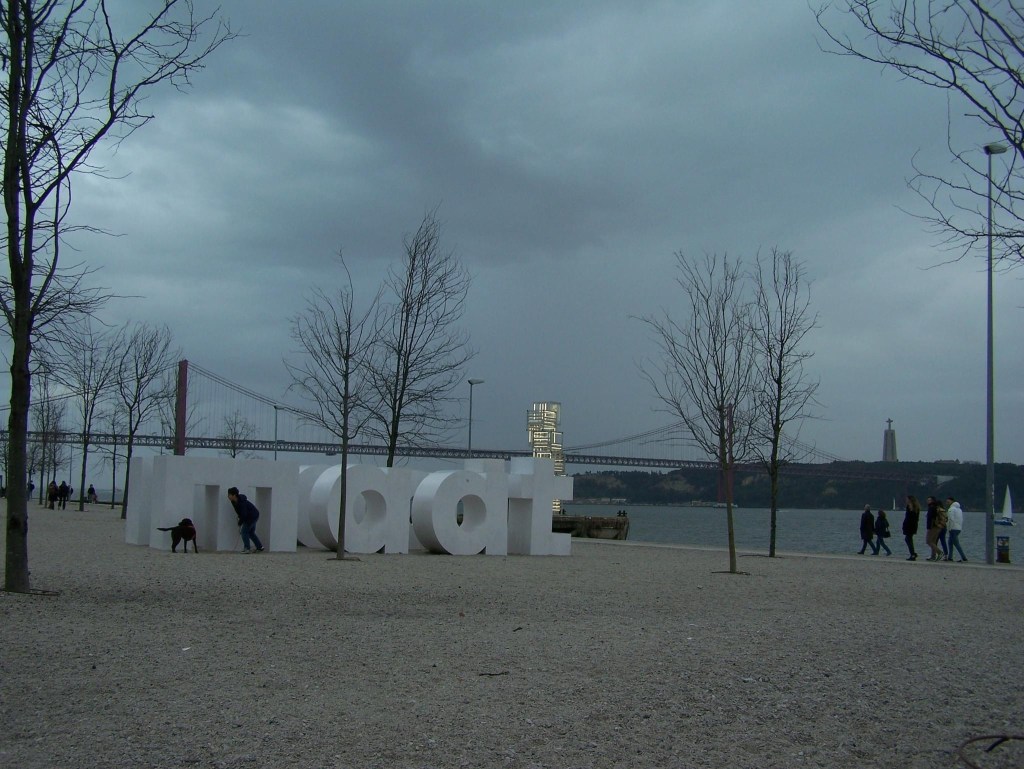
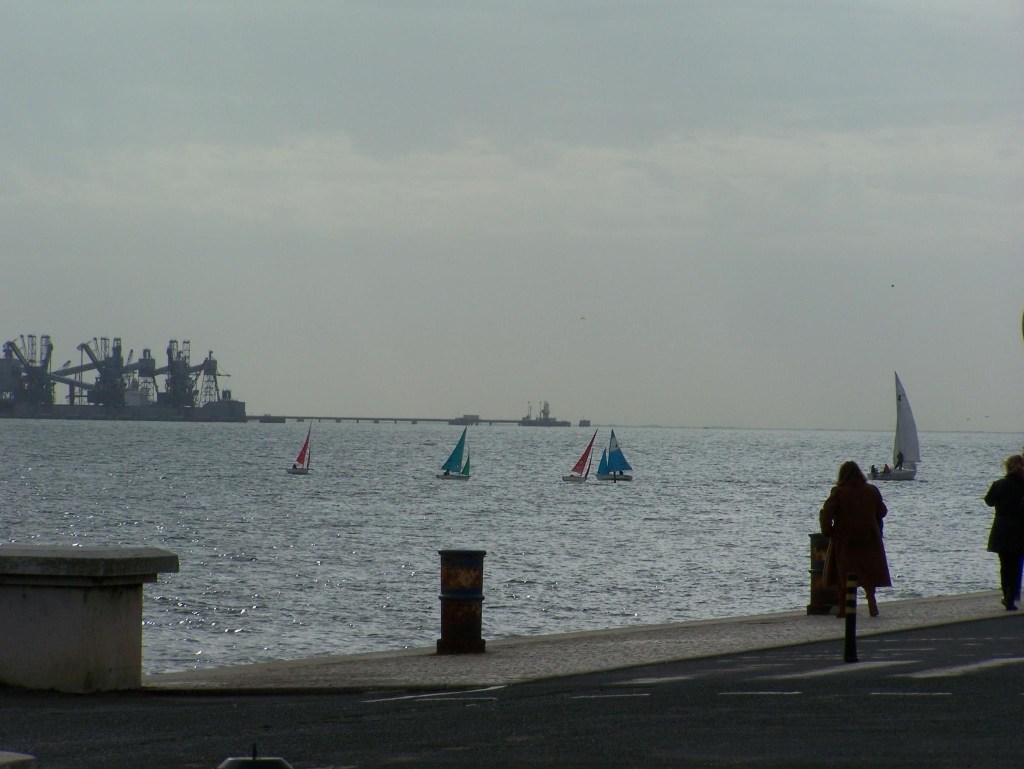
The magic of twilight makes the ordinary extraordinary. We watch a boy play with his dog. We watch couples walk hand in hand. We watch sailboats floating in a colorful line.
And we are reminded that happily ever after comes in many forms. As we walk we decide we will try some roasted chestnuts. There are many vendors roasting nuts in little carts. We pay for a paper cone full and I am excited to try them. They smell delicious. They taste like mud. Some things are better left to verse. And all good things must come to an end. We decide to head for the house, because sleeping beauty needs her rest.

-
Subscribe
Subscribed
Already have a WordPress.com account? Log in now.
 Prisoner of Hopes