-
White Sands: Rural Road Trips New Mexico
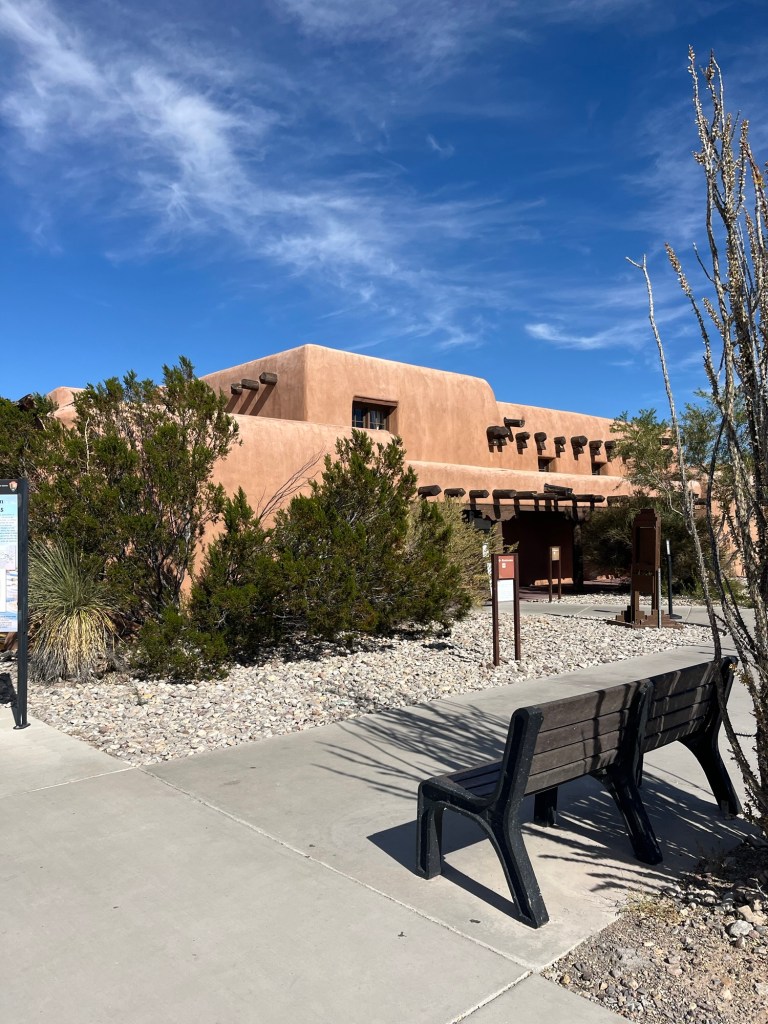
Today we decide to channel our inner elementary school selves. We leave with all the excitement of “are we having a snow day”. But not before we stop and borrow two round “UFO” sleds from our campground. It is hot and fully in New Mexico’s high desert. But Apparently sand dune sledding is a thing, and we are all in on the adventure.
So this morning, we travel the lonely highway to White Sands National Park. Along the way we cross the White Sands missile range, which is an active military test site. It is crazy that you can see missile observation stations from the highway. It is crazier to think that the government actually tested nuclear bombs not far from where I am driving. History is sometimes hard to imagine through my modern lens.
A few sonic booms make me wonder what they are up to today and whether we should even be here. No one else looks concerned, even when we have to come to a full stop on the interstate at a government checkpoint. A flock camera reads our license plate and a border agent asks us questions. I feel a little silly saying I am taking my “flying saucer” to surf a sand dune and I need to cross your missile range, please. They don’t even bat an eye. Since this is the only main highway, I guess they are used to a steady stream of commuters.
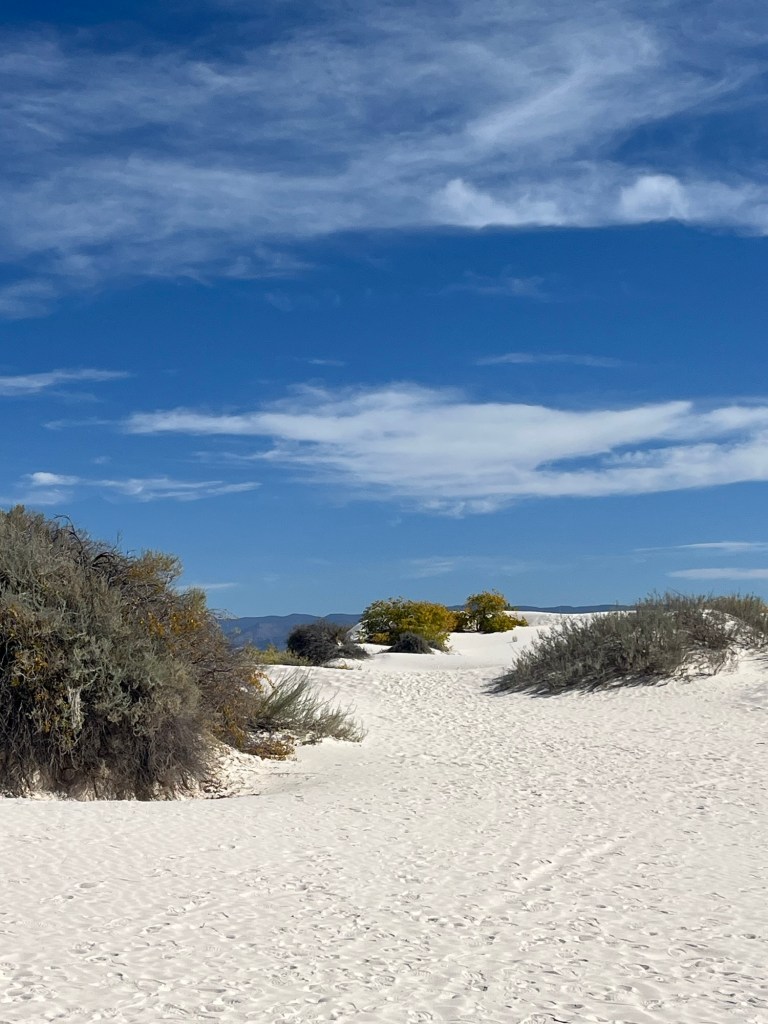
At the visitor’s center, we browse exhibits about the dunes, read and hear numerous warnings about trails and consider the very real possibility of getting lost. After all the cautions, we also buy an extra gallon of water. Just in case.
On our first stop, we hike a 1.5 mile trail over the sands. It is beautiful in a surreal way. I get beach vibes without the water. Where did the sand come from? How can one tree grow in a sea of sand?
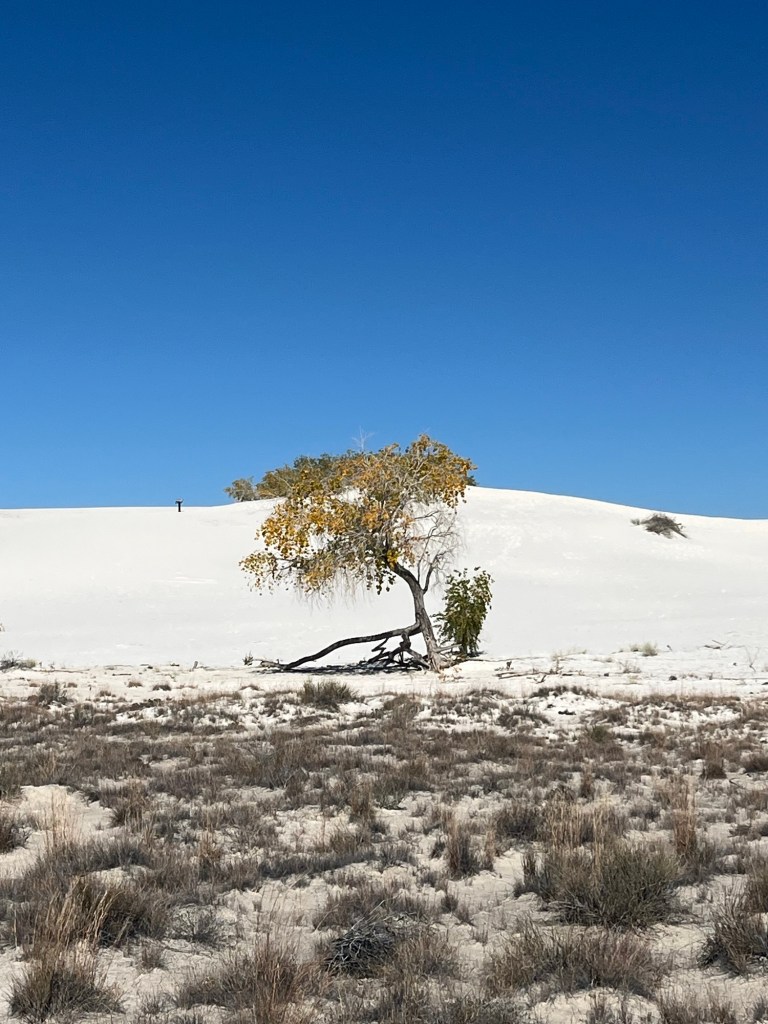
We are careful to follow the trail markers. It is not always easy as the wind has blown dunes over some of the way finding signs and other directional sign posts are placed in areas that are hard to see. We wander back and forth in deep sand, straining our calves and thighs.
It is hard walking. The sun is high in the sky and searing our skin and eyes. Even my sunglasses don’t seem quite dark enough. The birds and small rodents don’t seem to care. I concentrate on the wind on my face and finding the way back to the truck.
Back at the truck, we drink an ample supply of water and head on down the road. At some point, we run out of paved park road. From here on, we drive on occasionally plowed silica. It is like driving after a Midwest snow storm. I keep trying to use the technique I use to drive on ice or hard pack. It is instinctual and makes no sense in our current situation. But I feel like at any time I could hear the crunch of snow under the tires. In reality, it is more like a washboard dirt road. Thankfully, I am also a veteran of country backroads.
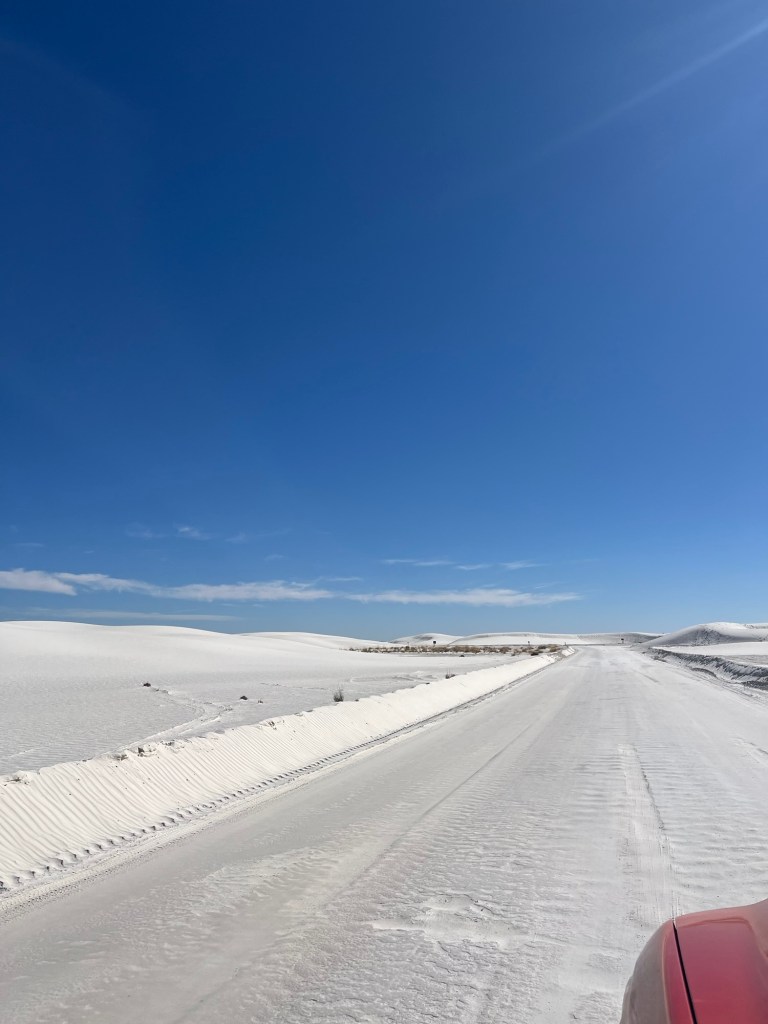
I don’t know how long it will take to the large dunes, but we have been assured that a) there will be a nearby parking lot and b) we will know them when we see them. We also were told not to venture beyond the first few dunes because the trails have not been maintained and no one will be coming to the rescue. Point taken. Noted. Don’t have to tell me twice.
Eventually, we reach mountains of sand. We are not the only crazy people out here. There are others and they also have sleds….and children. It seems we may be the only retirees. Oh, well. Age is just a number.
My husband commences with the waxing of the sled. We are supposed to coat the bottom of the sled with a think layer of wax to help it run smoothly over the sand. While he is working, a car pulls up. A couple that is easily our age (probably older) gets out and asks if we are going to try it. We say, “of course.” They ask to join us.
The more the merrier. It turns out that they are also staying at our campground. It is fun to make new friends so we share a few stories from the road. It seems we all had issues getting our rigs safely down the horribly maintained highway. There are woeful stories of potholes, elevation gains, and high winds.
Eventually it is time to fight my way to the top of the hill through the deep sands. It is harder than it looks. I struggle to climb. Two steps up, a giant slide back down. If I zig zag like a mountain trail, I make progress. Heading straight up is an epic fail. This could take awhile.
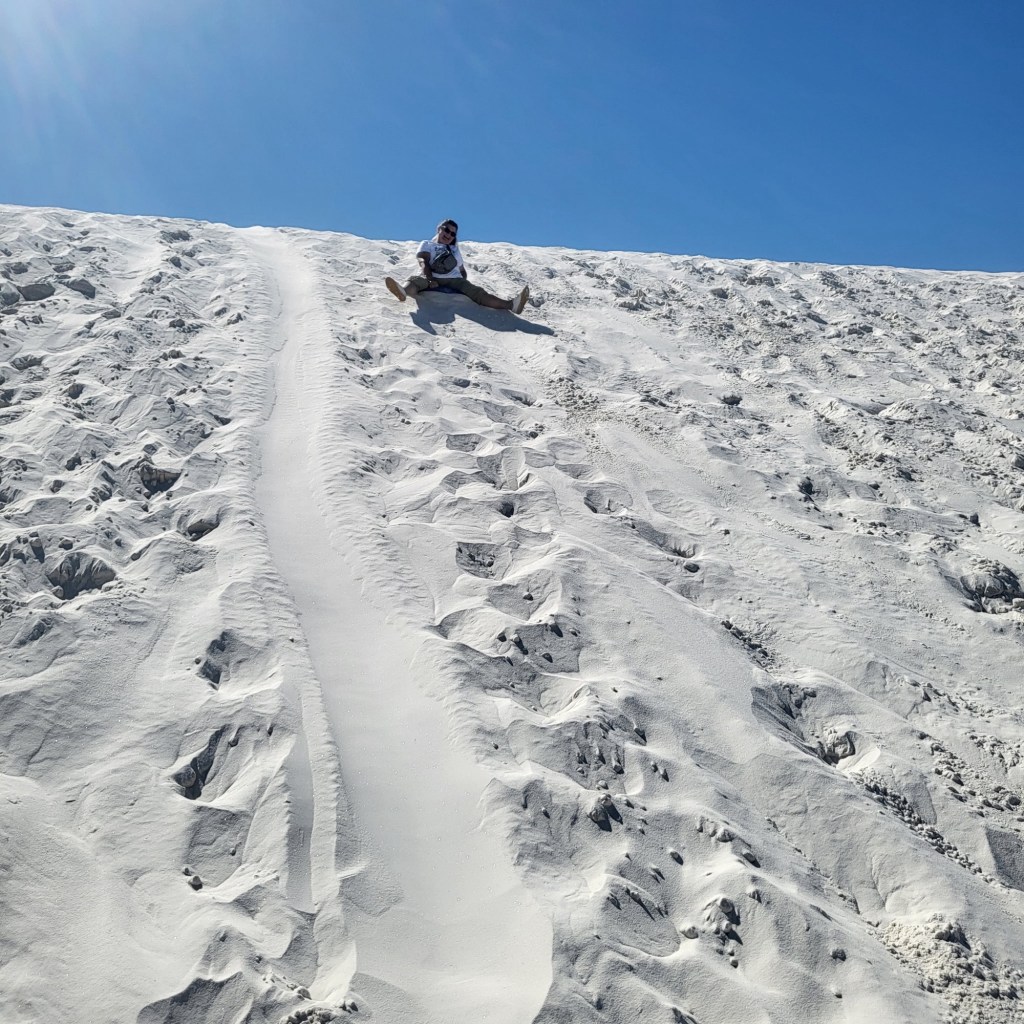
At the top of the hill, I swallow hard. It looks so steep from here. Am I sure I want to do this? I wish I could watch someone else first. Oh well. I just throw down the sled and jump on….. I hit the ground and jerk forward. My sled collapses in the middle and takes on a saucer full of sand. Meanwhile my husband zips down the hill.
What the heck? I sit and try to shake sand out of my underwear and wonder what just happened. I try again and ground out once more. Like a beached whale, I slide along, pulling myself with my feet. The sled buries and pitches me forward on my face. I can’t make it go despite a variety of technique changes
I watch my husband with envy. He wisely declines to offer advice. After awhile we decide I should try his sled. I take a running start and I zip down the hill. Whee! This is awesome!
I am so glad it was my defective, floppy sled and not me. I walk up the hill and zip down again. I have memories of trudging through snow up the small hill in my backyard. I am still that small girl in my mind’s eye. I am once again Queen of the Hill. I can do this all day.
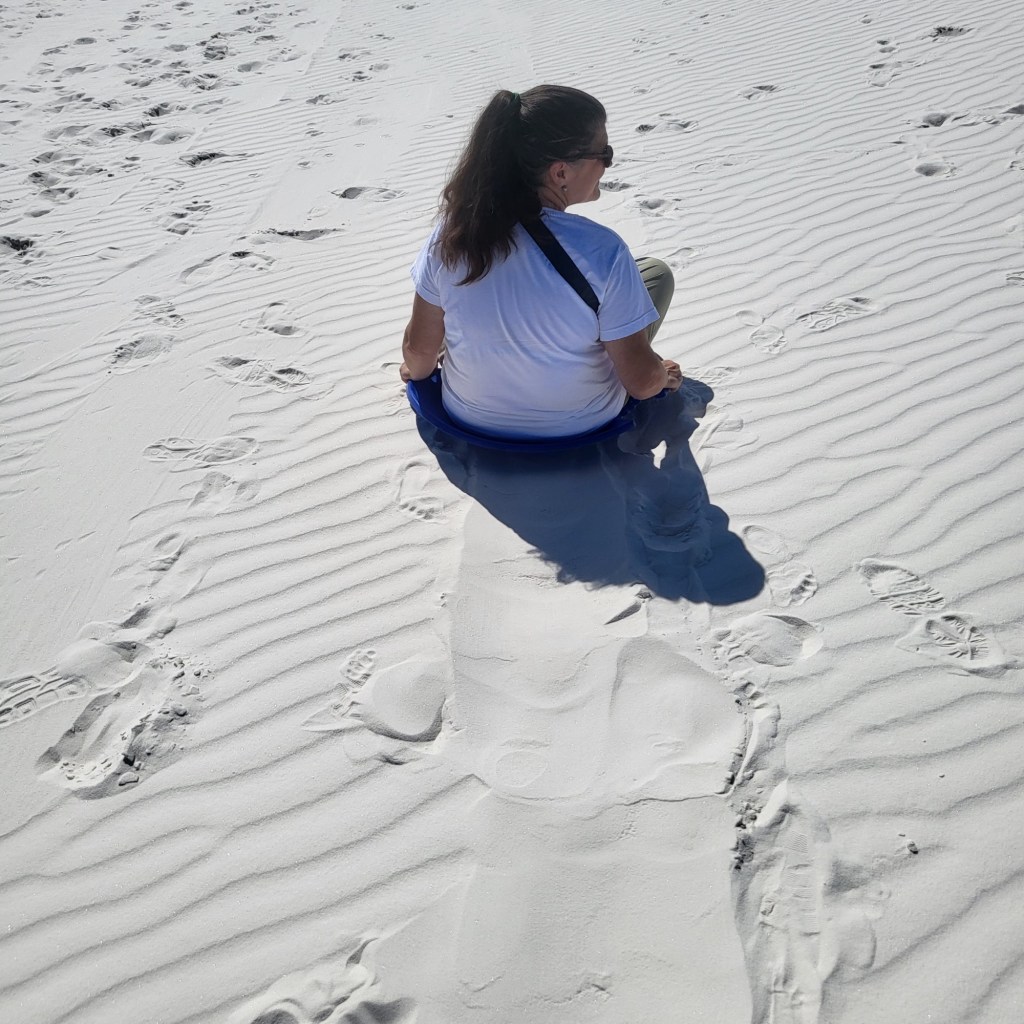
Eventually, we tire of the long climb. Our shoes and pants are full of sand. I have gritty grains in my hair, teeth, and eyes. The sun is getting lower over the dunes and it is time to go. We say goodbye to our new friends and invite them to sit at our campfire tonight.
We will need to clean up, and refine the stories of the day. One of the best parts of “snow day fun” was sharing hot cocoa and laughing about the adventures of which you lived to tell the tale. Since we are in the desert, I think a nice cold drink and a pizza may be more appropriate.
-
Electric Town: Travel Goals Japan
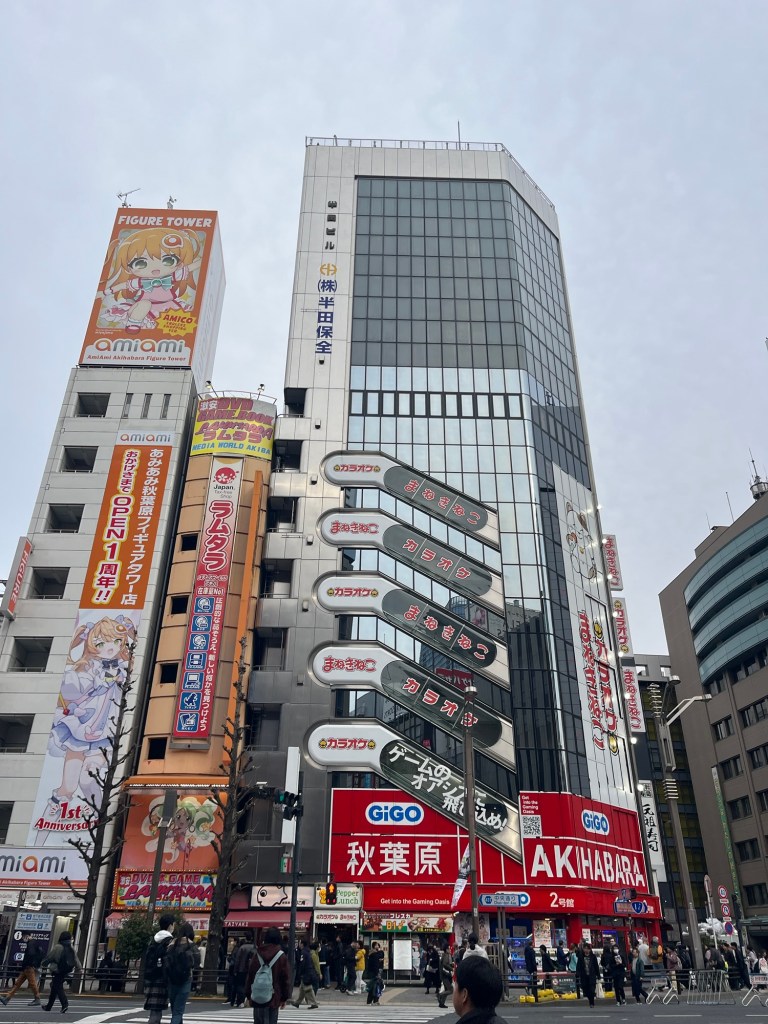
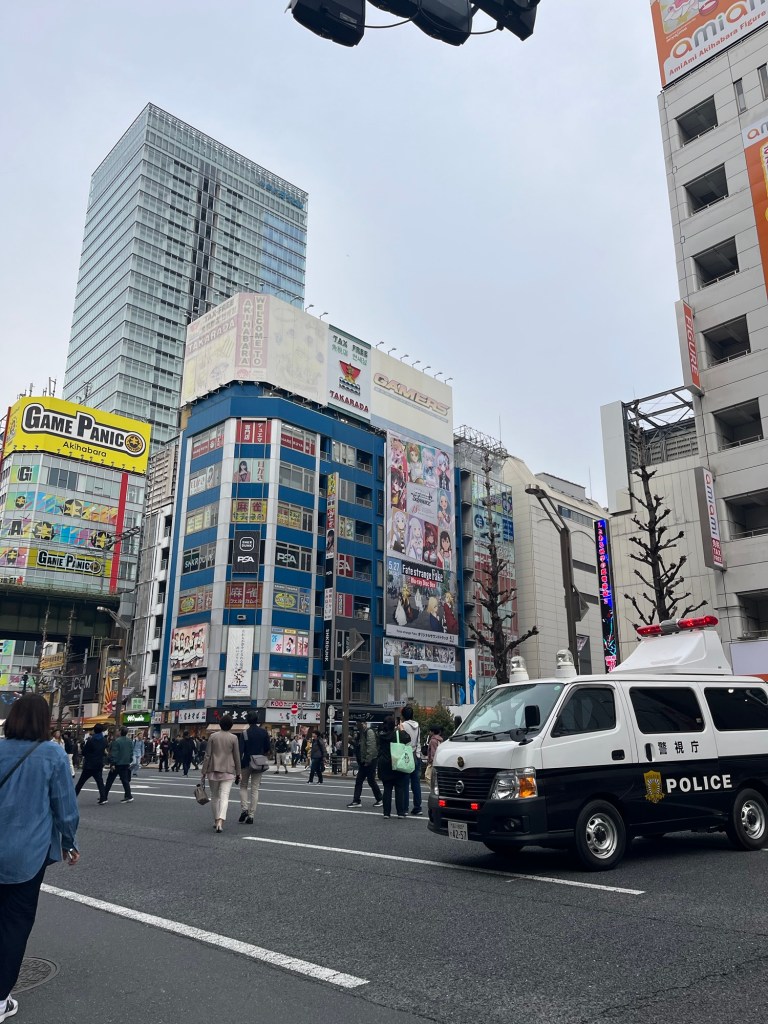
You want it? They’ve got it. At least that seems to be the case in Akihabara. We are spending the afternoon in Tokyo’s Electric Town. As we walk across the river from the train station, we see police vans blocking off the streets. This allows the thousands of consumers to wander freely through the city blocks of multistory commercial frenzy. It also looks like an opening scene from Godzilla attacks Tokyo. Where are we?
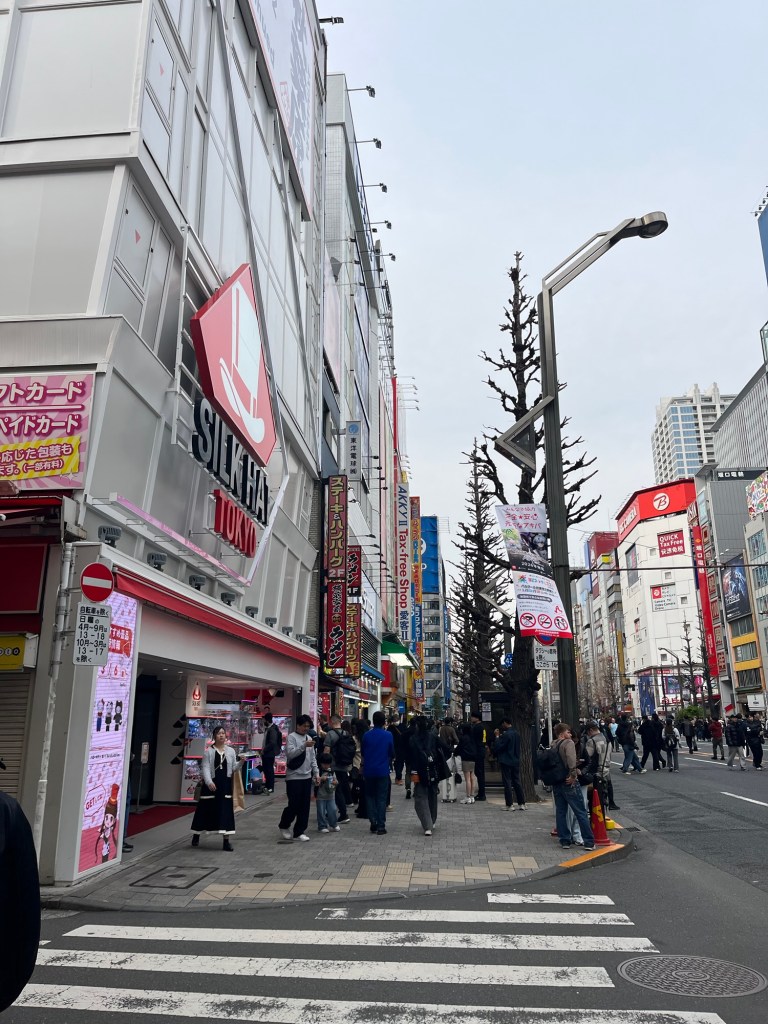
Akihabara is vibrant, literally awash in neon color. Multistory billboards advertise electronics, video games, manga, American movies, anime, and cartoon characters. It is a bit overwhelming. I don’t know where to look. Should look at the signs, the items for sale, the food vending machines, the arcade games, the skyscrapers, the police cars, or the people walking by looking like they stepped out of a comic con cosplay session. We are deep in Japanese “otaku” (geek) country, and determined to embrace it.
We start in a 10 story electronics store. There is just about one worker for every shopper. They don’t hover or make you feel watched. Instead they clean and straighten and are immediately responsive to your every need. It is refreshing after living in the land of self checkout.
We ride endless escalators between floors of watches, televisions, computers, printers, clocks, telescopes, toilet seats, and every conceivable gadget. After a while I can’t remember if the exit is up the escalator or down. A rescue party may need to help me find my way out. I should have left a trail of rice pellets.
The selections are endless. I didn’t know there were thousands of brands of high end watches. I did not have so many varieties of cameras and computers on my radar. I am simply overwhelmed with choices.
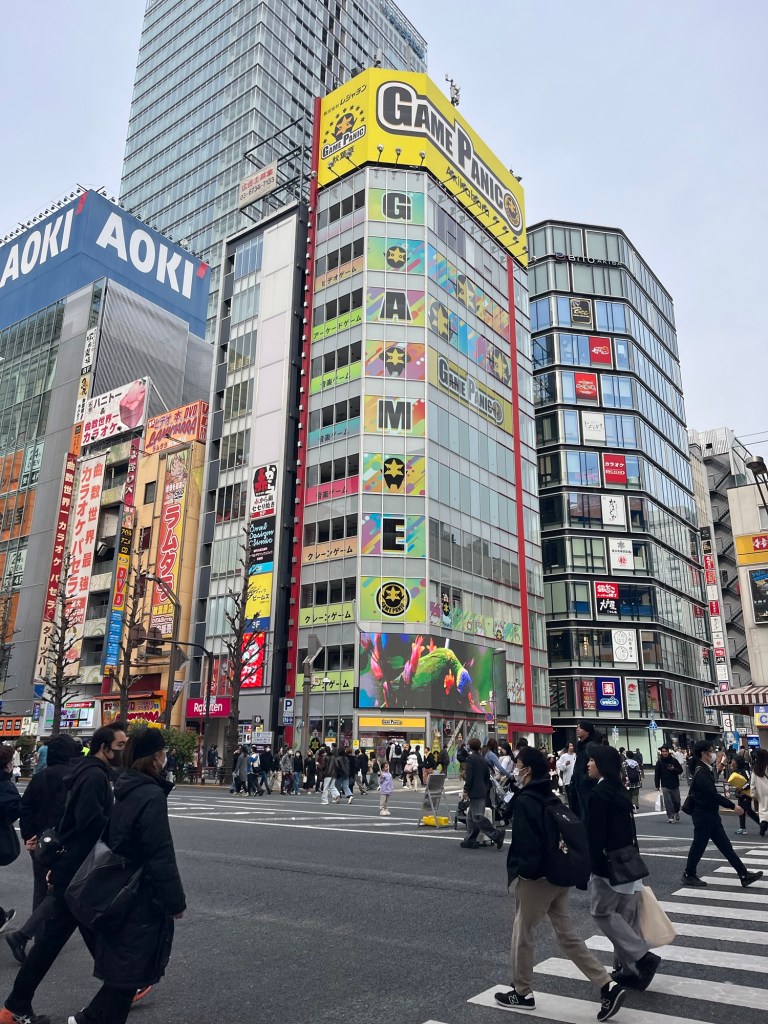
Another store is filled with action figures, trading cards, toys, and collectibles. Godzilla is on prominent display, perhaps only overshadowed by Pokémon characters. It is like being in a “Downtown Disney” shopping area for geeks. I am starting to think that maybe I am an unrealized “otaku”.
I am fascinated by the endless arcades. I can play video games or try one of the thousands of claw machines. But it turns out I am mostly drawn to gachapon. Don’t get too excited. Despite how it sounds, that just means I love capsule machines. I put in a few coins and a prize pops out in a plastic capsule. I get a miniature plastic sushi, a Japanese lantern, and even a cloth bag to hold my power cords. I am digging for more change, but my husband drags me out of the store before I start using the credit card. He knows the early warning signs.
What an experience. Two retired Americans spend the day with thousands of Japanese teenagers. We smile and play. We learn some things. As we return to the train, I see a giant advertisement for a new J-pop group. They are posing with thumbs up. I salute them with two thumbs up of my own. Not my scene, but for one afternoon there is nowhere I would rather be.
-
Queen of the Desert: Rural Road Trips
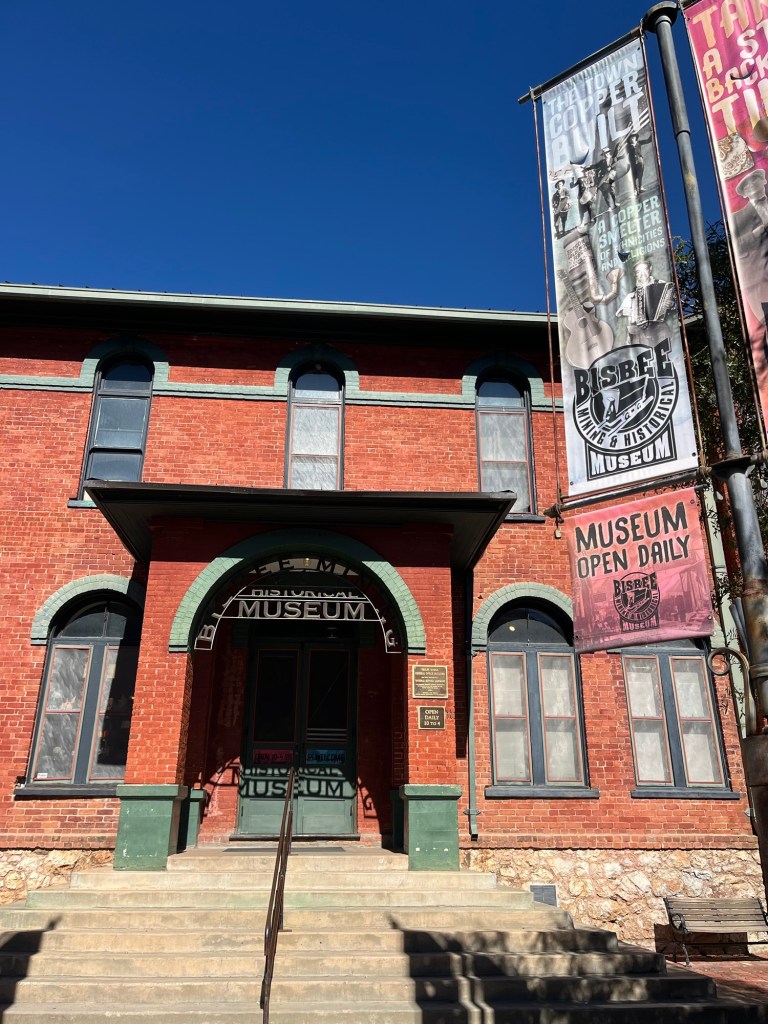
Today we head to Bisbee, Arizona. It is a small town built on a legacy of copper. The copper queen mine sits just at the edge of town, a reminder of a booming past. The present condition of Bisbee is the opposite of booming. It has seen better days. Still there are antique shops and restaurants to explore. Like much of this part of the state, the local economy seems to depend on tourists. We try to do our part by visiting the local establishments. We have a day to waste. It might as well be here.
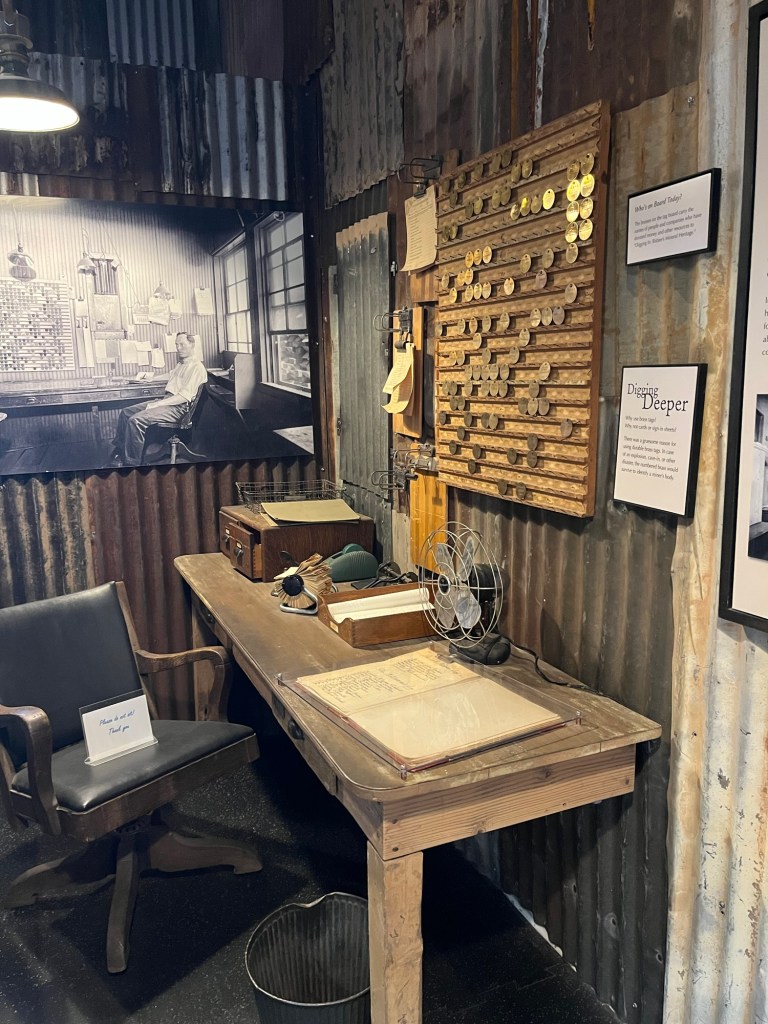
The Bisbee museum is a fun diversion. Inside, we learn about the history of Bisbee. There are displays on mining and local life. We also find out that just a few miles down the road, historic Fort Naco was once home to some of the first Black troops.
Intrigued, we decide to drive to Naco. It sits in the shadow of the atrociously ugly border wall. On each side the land looks exactly the same. A giant, artificial, black slash carves up the beautiful valley. A community is separated and the animal corridors destroyed. Humanity can’t seem to figure out a way to get along and everything suffers accordingly. Failure in ugly, ugly steel bars. A prison of our own making.
We drive around for a while before we find a weed covered Fort Naco. It sits behind a chain link fence, forgotten. We are here to remember. Someone said the locals are fighting to preserve these dilapidated barracks. I hope they can.
Life here was never easy. It’s seems man made barriers and the human condition are determined to confront my consciousness. This feeling of heaviness was not on my things to today. But I will sit with it. The uncomfortable realities spur growth and perspective.
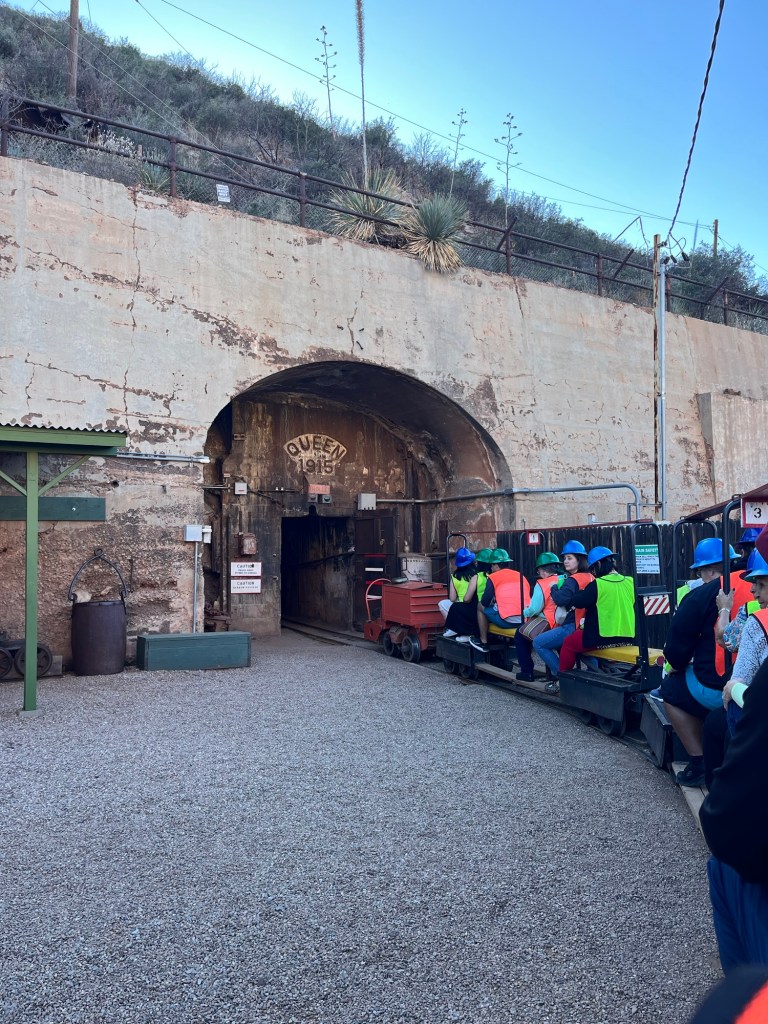
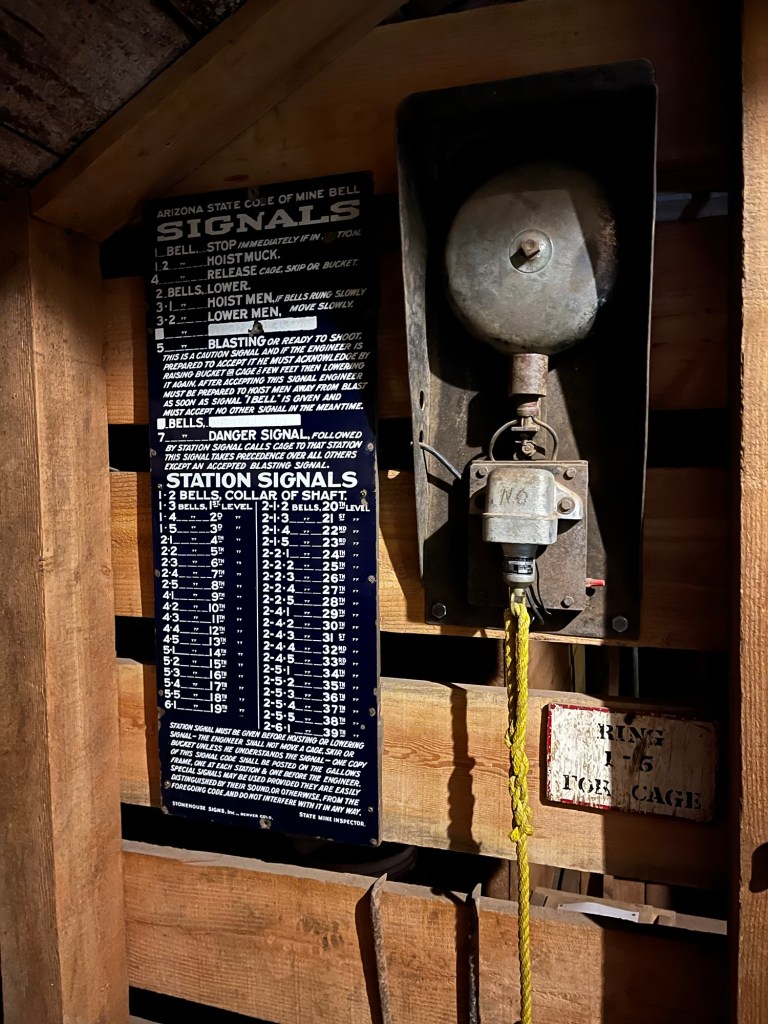
On the way back to town we decide to visit the Copper Queen. Luckily, we are able to join the last tour of the day. They give us hard hats and neon vests. We also have a powerful light “just in case“. I didn’t ask “in case of what?”.
We make our way to the mine train that we are riding a mile deep into the mine. We step up and the straddle a bench seat. A few people had to be helped aboard. As soon as the train made it into the mine entrance a lady started screaming to be let off. She was calmly removed from the tour.
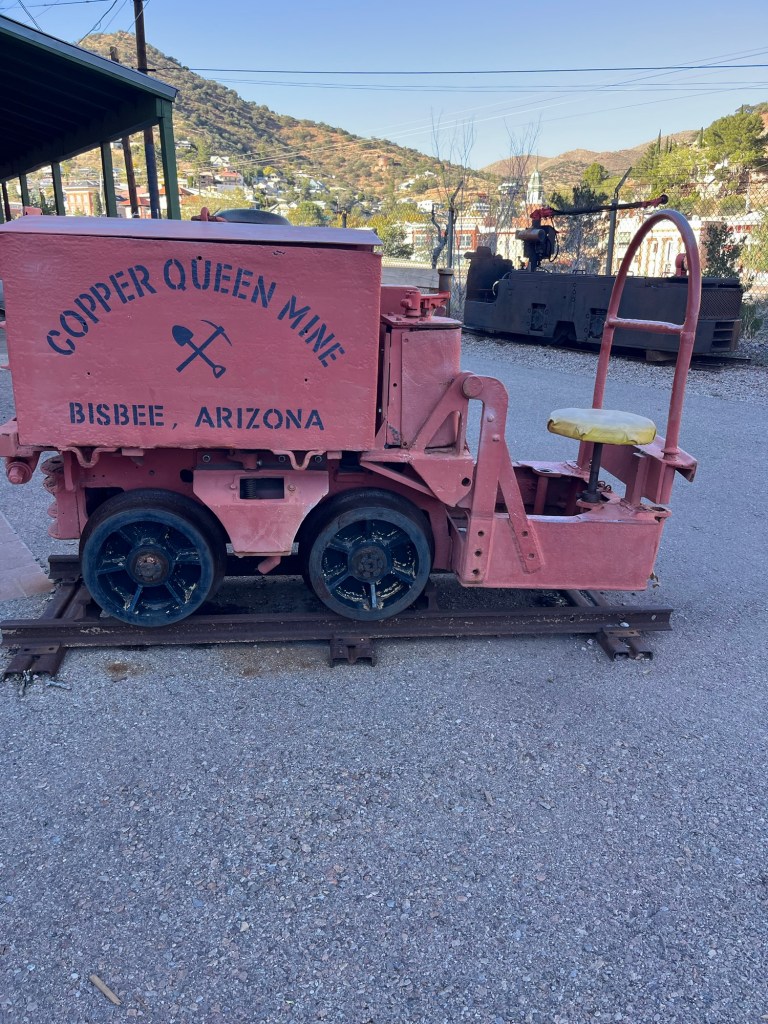
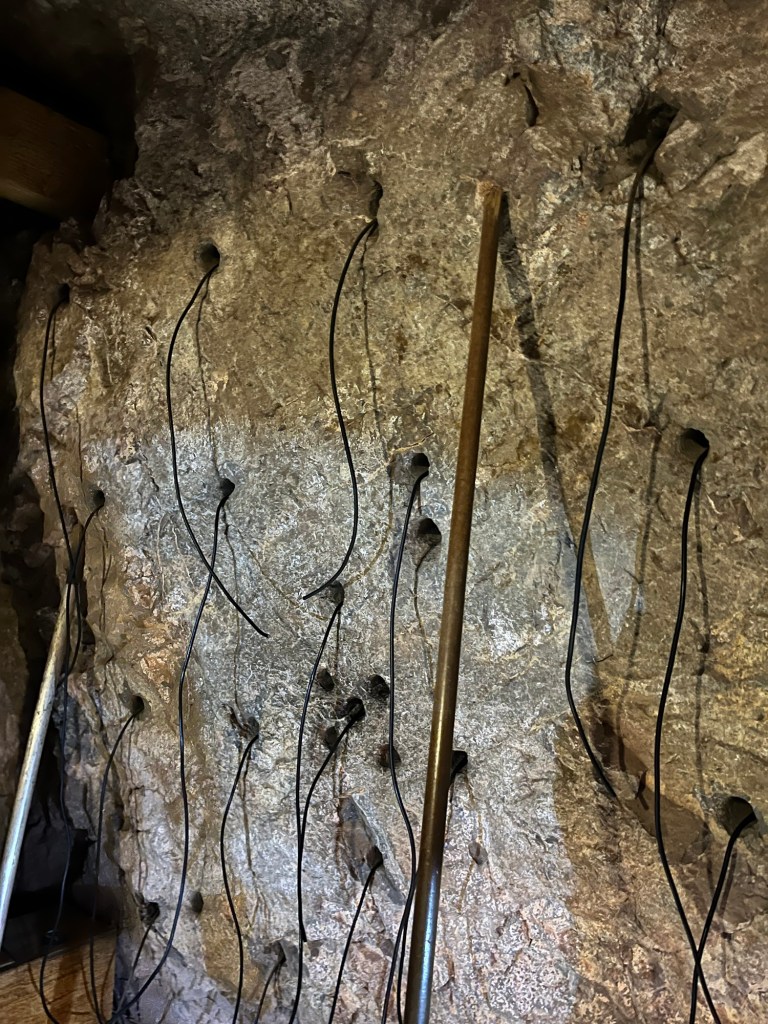
John, our tour guide, had worked as a miner here. He knew the ins and outs of the Queen mine. At some point, the train stopped rolling and we walked to see sunken shafts. He showed us the blasting process and let us practice putting (dummy) dynamite in the drill holes.
John told stories of hijinks and pranks. He shared that a miner might accidentally ride an inspectors rail bike into the mine to avoid a long walk. He showed us the “toilet car” that could be moved along the rail line to be emptied. He was highly entertaining. It is good to have loved your work.
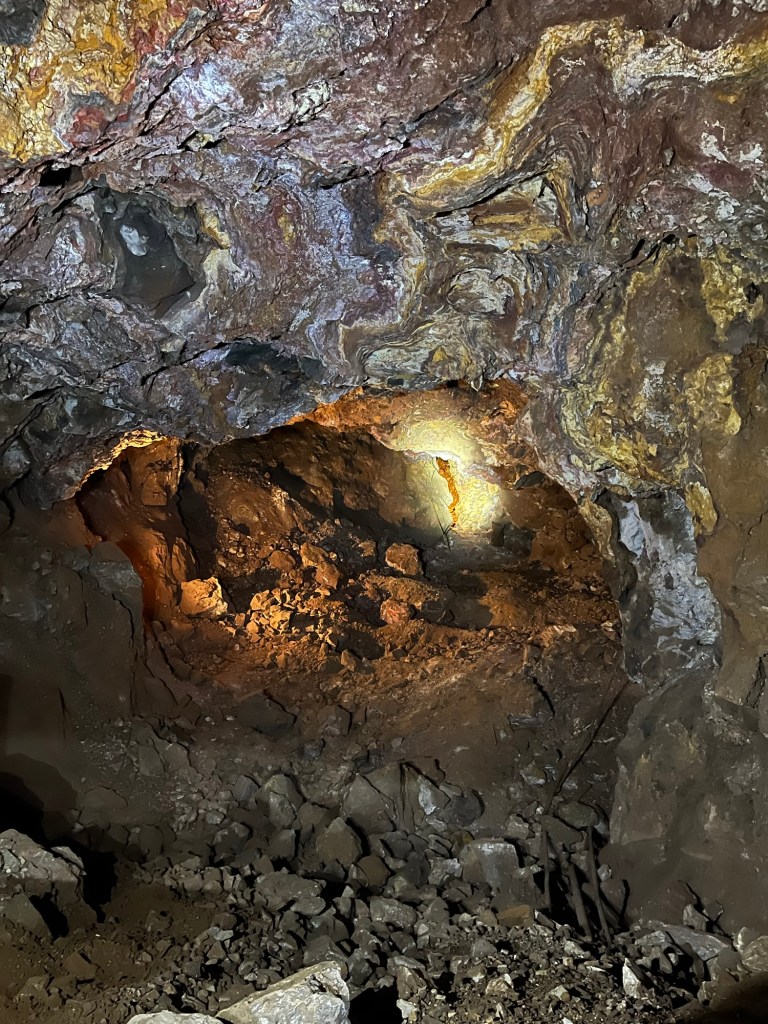
I don’t mind being in an old mine, but I am certain I would not have liked a working one. Dust and explosions and jack hammers and endless dark. No thanks. Not for me. I don’t know how my grandfather drove a mine train for all those years. I guess with eight children to feed he was just thankful for the steady work of the Missouri lead mines.
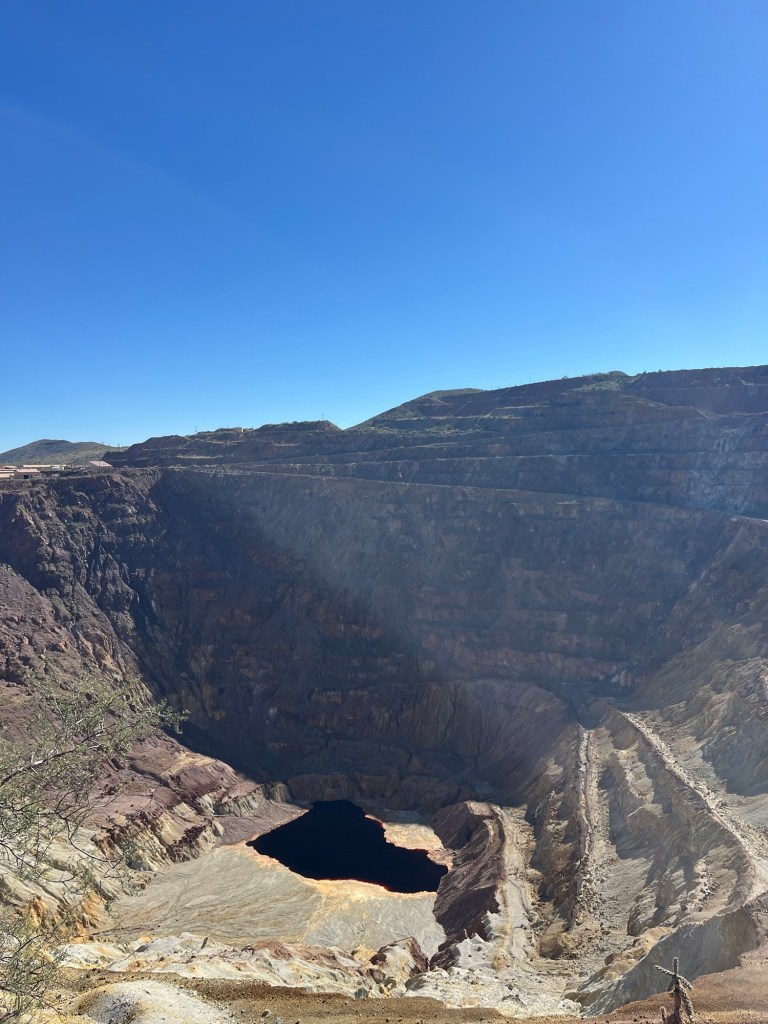
I love the adventure, but am thankful to see the sun. We emerge into the early evening with the sun going down over Bisbee. A quick stop at an overlook allows us to take a good look at just one of the enormous pit mines. Giant holes in the ground are reminders of the raping of the Earth for the left over minerals. Today, there is nothing left. The companies have moved on. I wish there was a better, more sustainable way.
Today I am reminded that history is not pretty. It is hard. There are boom years and lean years. There is prosperity and poverty. People strive for more, often preferring short term gains to longer term growth. There is exploitation and honor. The struggle continues. You see that clearly in Bisbee. The Copper Queen built a community and then drained it dry.
-
Tokyo Tower: Travel Goals Japan
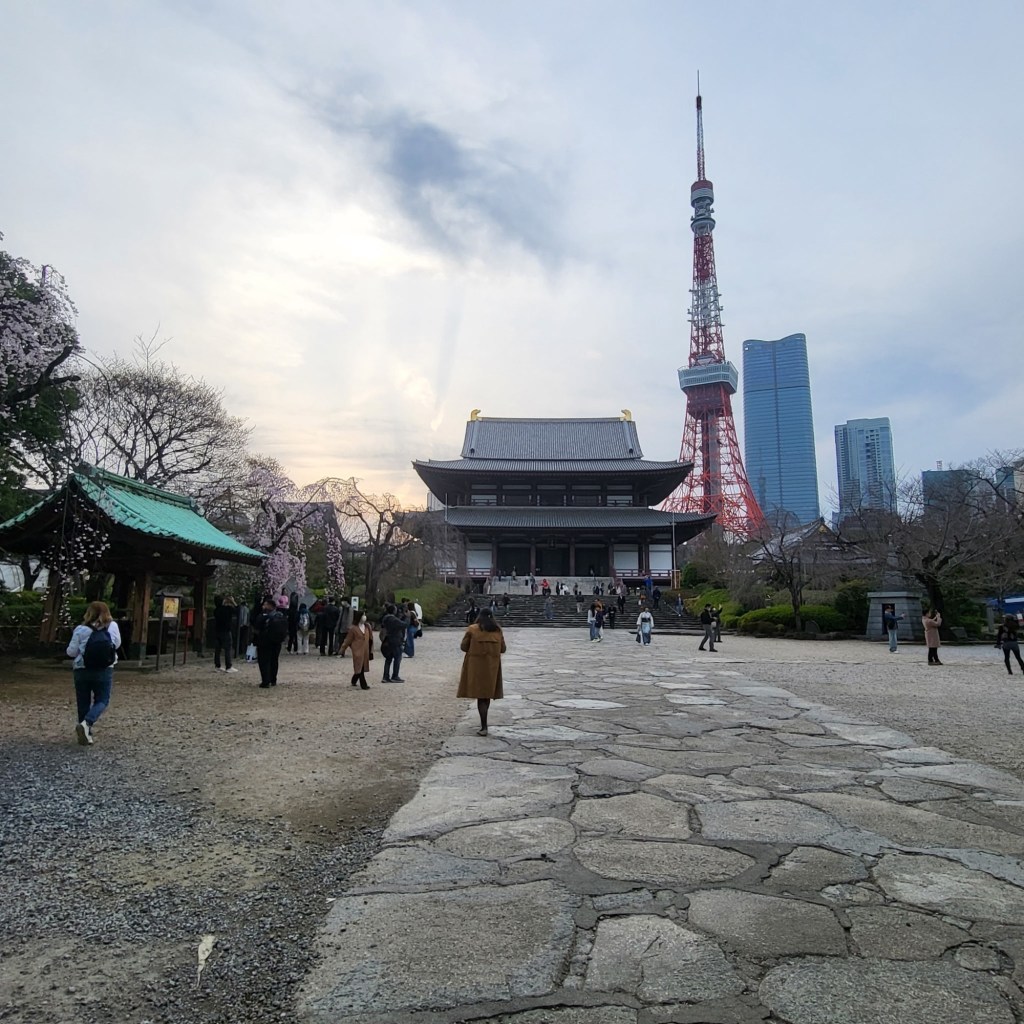
It screams tourist trap. There can be no purpose visiting Tokyo tower except to have a tourist experience. And yet I am drawn like a fly to a flame. Not quite Eiffel Tower vibes, but the smaller Tokyo Tower is impressive when juxtaposed against the monastery that sits beside it. I guess the Tokugawa shoguns buried in the adjacent cemetery didn’t envision this backdrop.
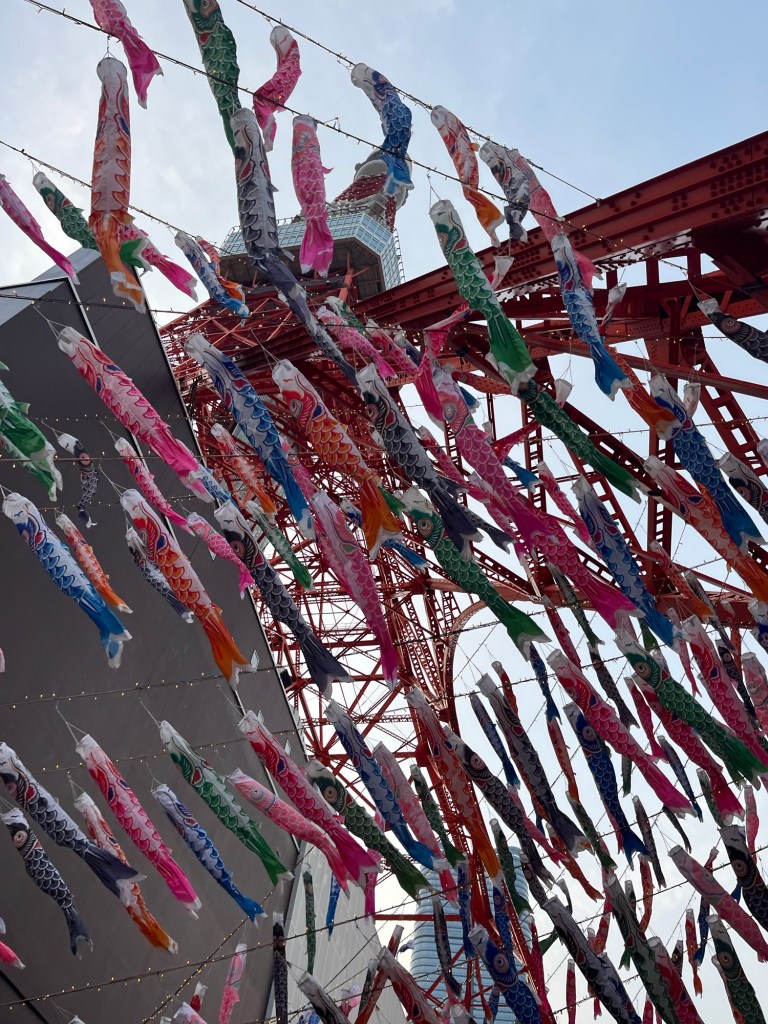
The entry is a riot of color. Good luck fish windsocks wiggle in the breeze. Teenagers eat ice-cream on the entrance patio as they gossip and enjoy the brisk Spring weather. We bypass the shops and head straight to the line. To our surprise, there is no wait. The admission is reasonable and we walk directly to the elevator to take us to the top.
As soon as the elevator starts to move the walls shift from opaque to glass. It is a longer ride than I expected. It is definitely not a fast ascent. Eventually we exit onto the observation deck with a clear 360 degree view of Tokyo.
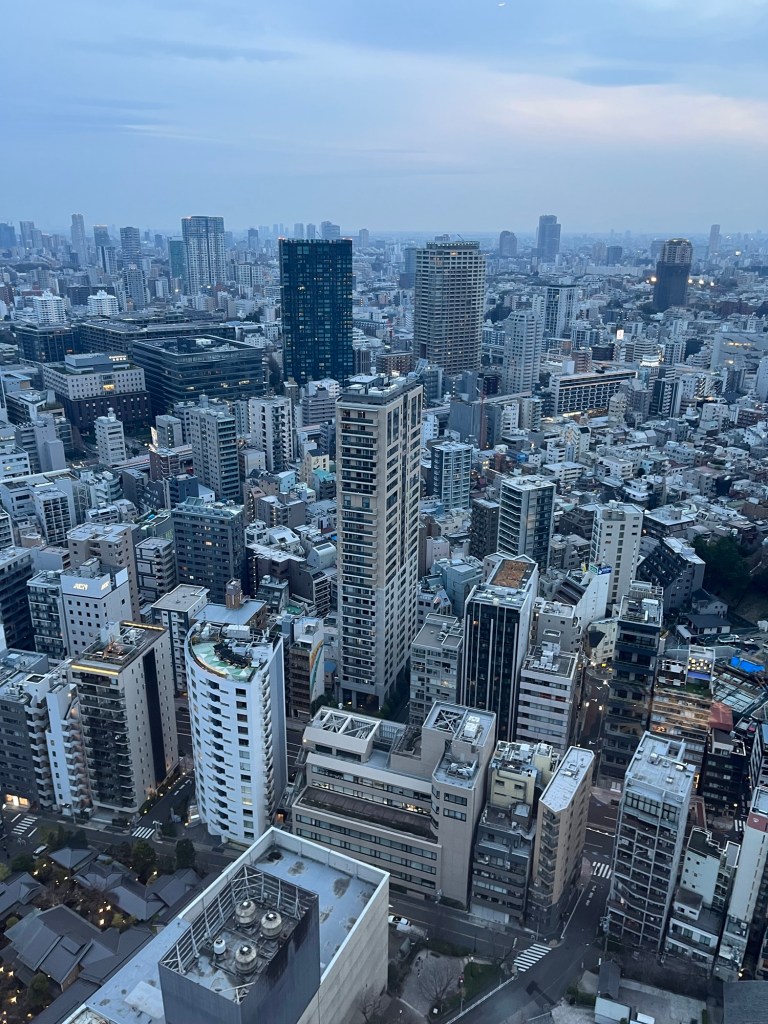
The monastery we just visited looks tiny from above. I can clearly see schools and parks. Even the skyscrapers seem small. We are surrounded by highways. I think about how light the traffic is compared to American cities and have a moment of longing for better public transportation. This city has figured it out. We should too.
As I am lost in thought, I take a step. I feel the floor move under my feet. As I quickly look down, I see nothing but air and ground below. They have sections of glass flooring! It is a panel that is a little loose. I almost scream, but it comes out as a whimper. Once I realize what is happening I kind of like it. But what an unexpected surprise.
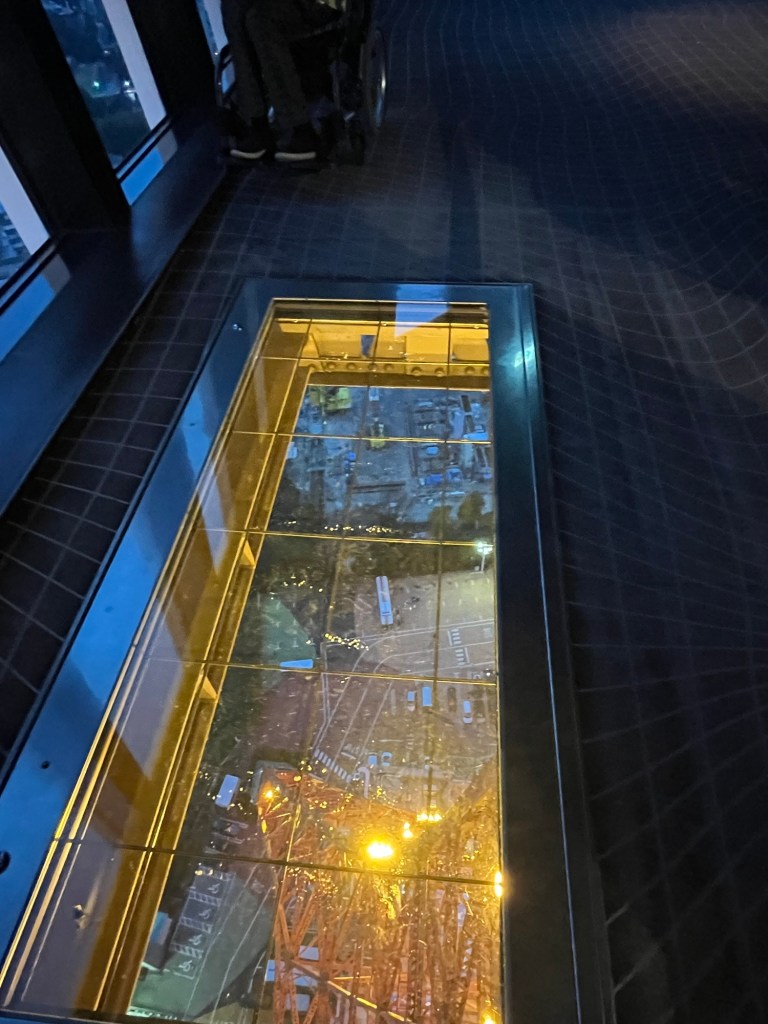
I could wax poetic about the view, or the beauty of the city at night. Instead, I will just say we spent about an hour high above the city enjoying the lights. There was even a free concert with traditional music in a small seating area.
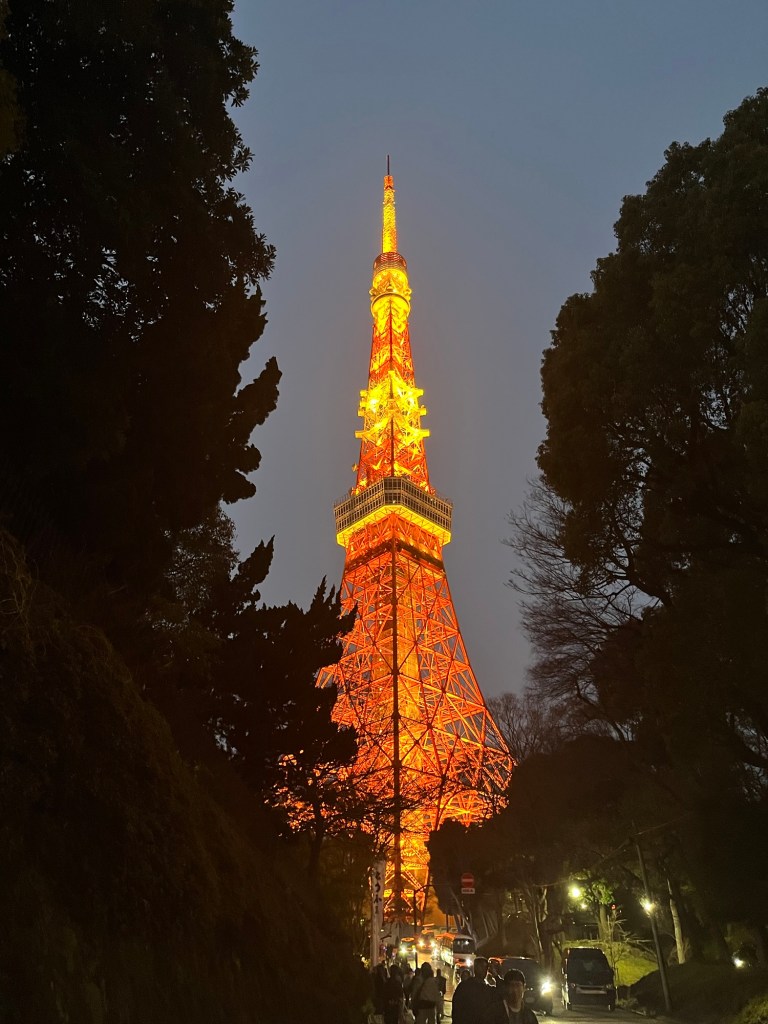
Afterwards, we walk back to the closest metro station….which turns out to be not that close. But the tower is so beautiful at night. I am enjoying the walk. The night is pleasantly cool. The neighborhood is quiet….except…… a rat runs by in the night. Good thing I am looking at the tower. My son thinks it is funny…. Do not. I mean I am already traumatized by surprise glass floors. A surprise rat may be one fright too far.
-
Tiny Town that is Somehow Larger than life-Tombstone: Rural Road Trips
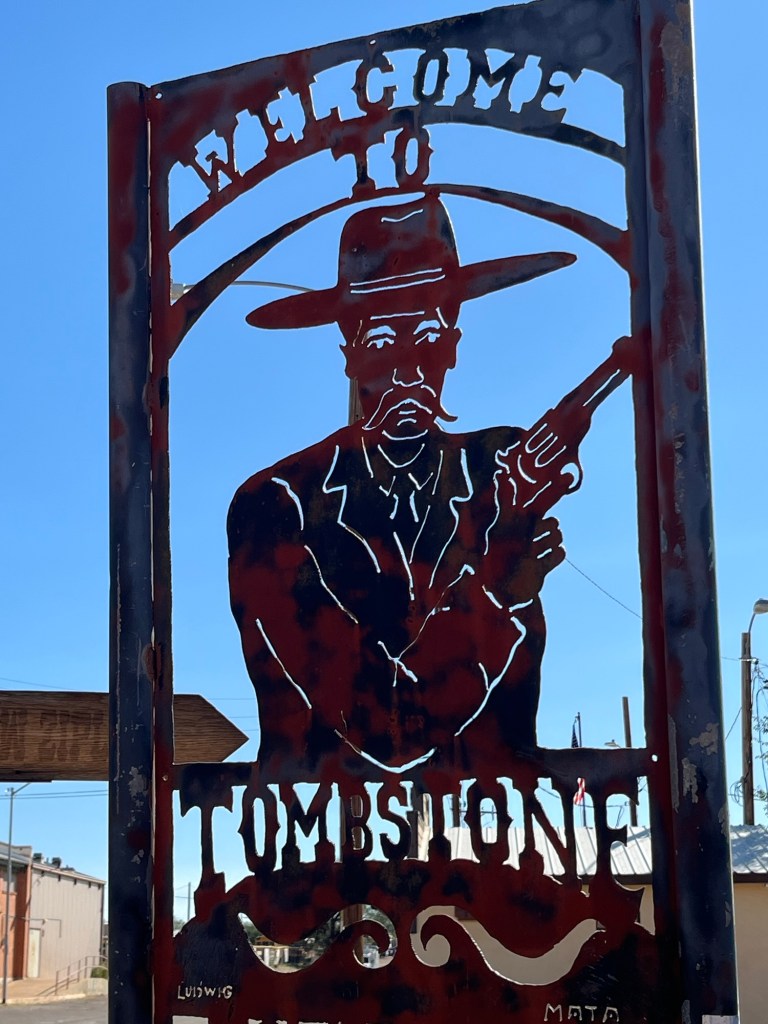
The show down at the OK Corral….every kid (at least kids my age) has heard of it. It was immortalized in print and film. My favorite version is Tombstone with Kurt Russell, Sam Elliott, and Val Kilmer. So on this road trip through Arizona, I am determined to see the place for myself.
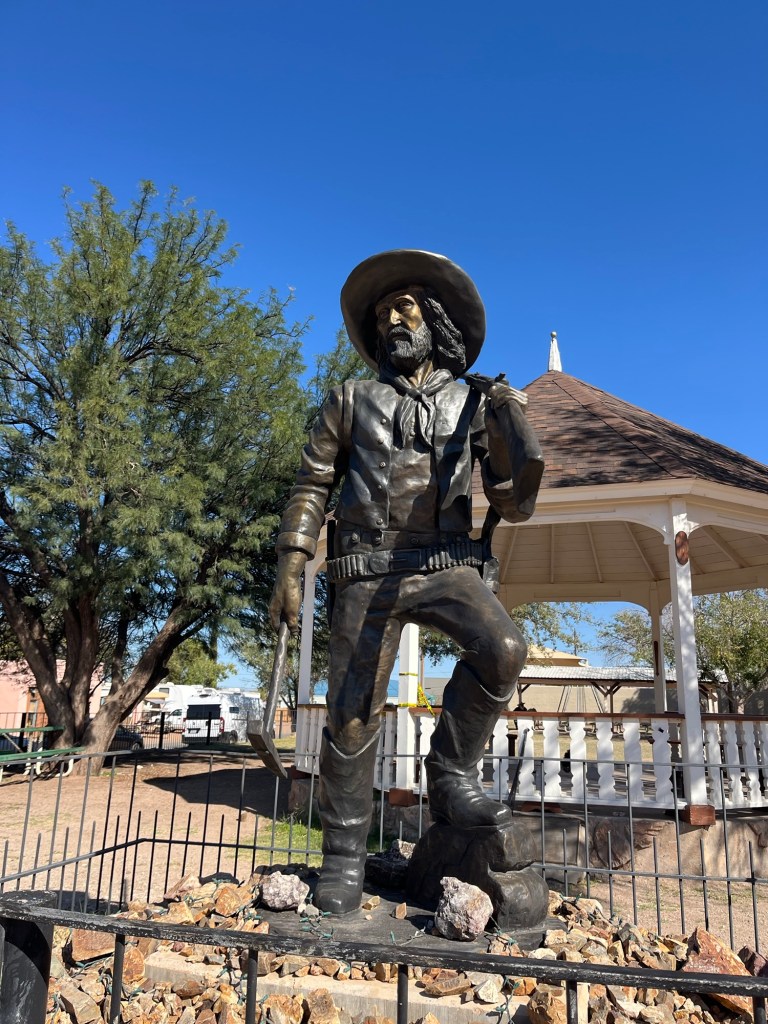
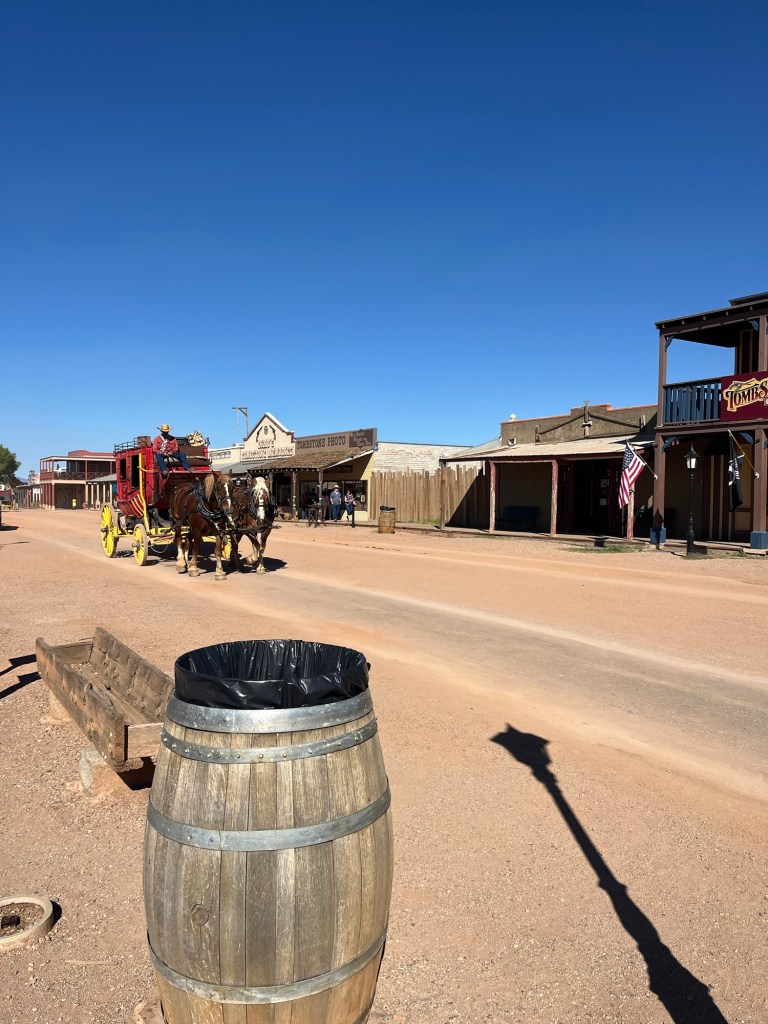
There may be more than three streets in Tombstone, but not many more. Parking is easy in a free lot near the Main Street. No traffic is allowed on the historic town center. Instead a stage coach makes an endless loop, carrying tourists back and forth. Costumed volunteers roam the streets with rifles and pistols, just to set the old West mood. Tombstone wears its past.
At the far end of the Main Street, a statue commemorates the miner who struck gold and put Tombstone on the map. A small park sits just beyond the OK corral. It boasts the only readily available public restrooms, so there is steady traffic in and out of the park. We apparently aren’t the only fools who drove miles into the desert to experience legends of the Old West. We also aren’t the only ones who are making a pit stop before exploring.
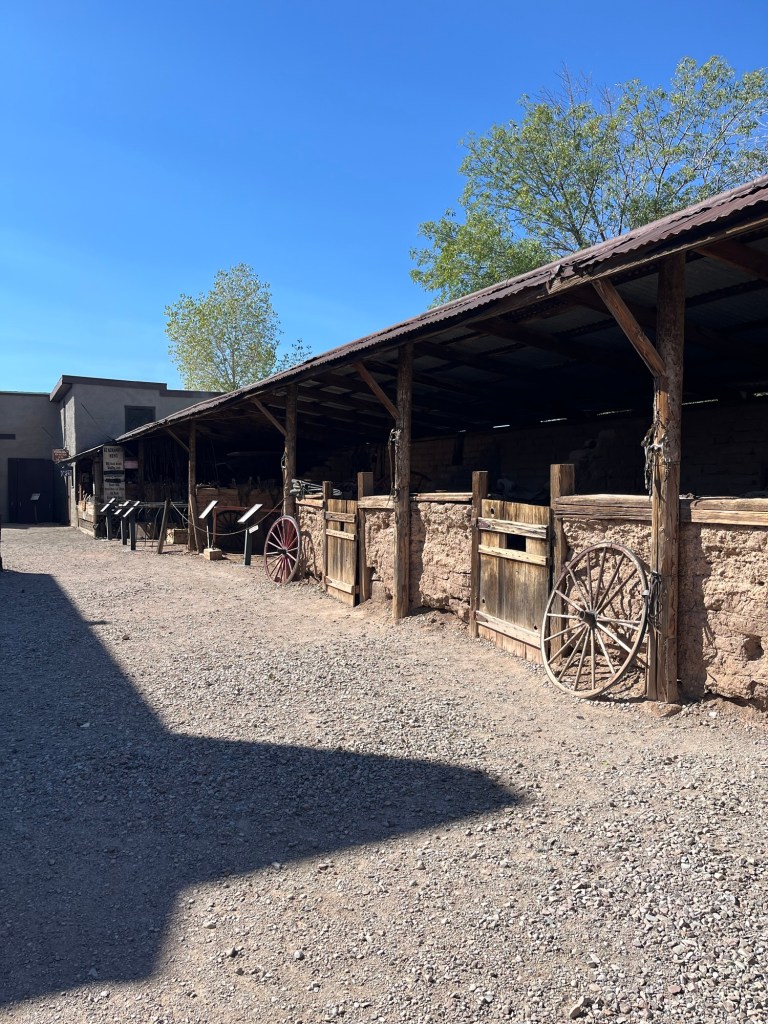
We decide to start at the place that is most associated with Tombstone. The OK corral, is a tiny lot that sits just beyond a stable. I don’t know what I pictured, but this is not it. The corral is so small that everyone involved in the shoot out would have been within twelve feet of each other. It would have been like shooting fish in a barrel. I am shocked. What actually happened here?
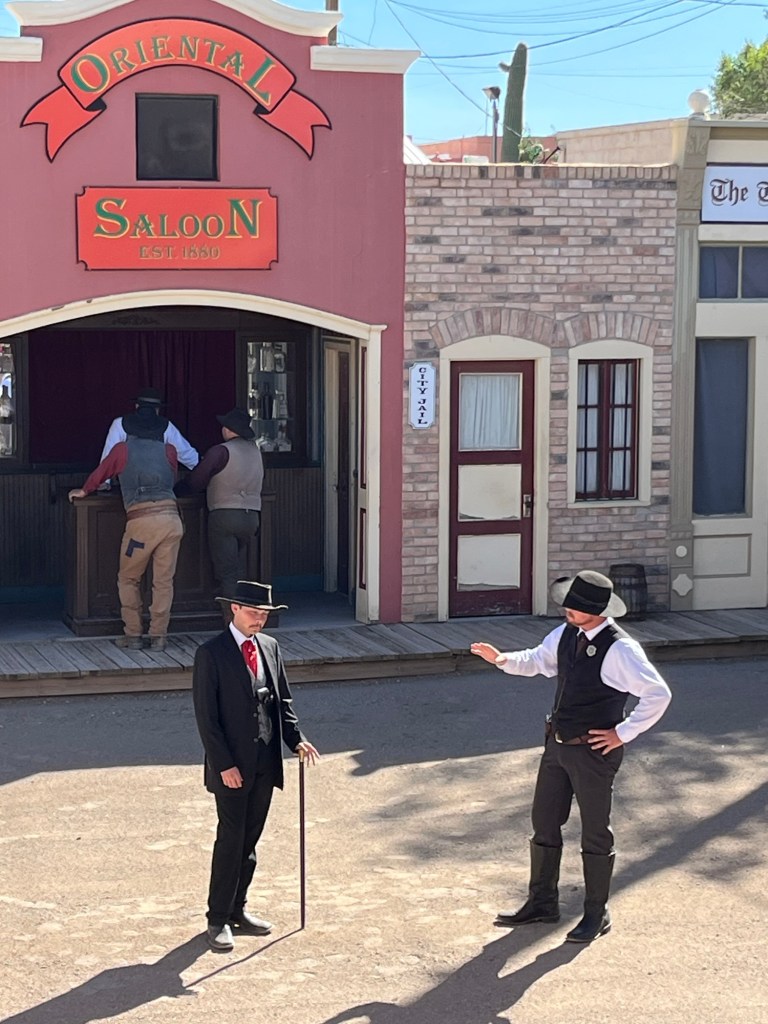
The admission to see the very, very small corral also came with a re-enactment show in a much larger outdoor theater. The actors were entertaining and although I can’t speak to accuracy, the drama set a mood. In Tombstone, the Earps are flawed heroes. (yeah!) The Clancy clan are the identified villains. (Boo!) The actors insist that you cheer on the good guys and shout down the bad guys. We even practice the heckling.
The actual historical record is a bit more complex, with undertones of cowboys vs miners, establishment vs personal freedom, law vs wild country, etc. Both the Earps and the Clancy wrestled for control and were accused of corruption, grifting, and vigilantism. Everyone looks pretty sketchy. But legends are only ever close approximations sprinkled with wishful thinking and baked in fond memories.
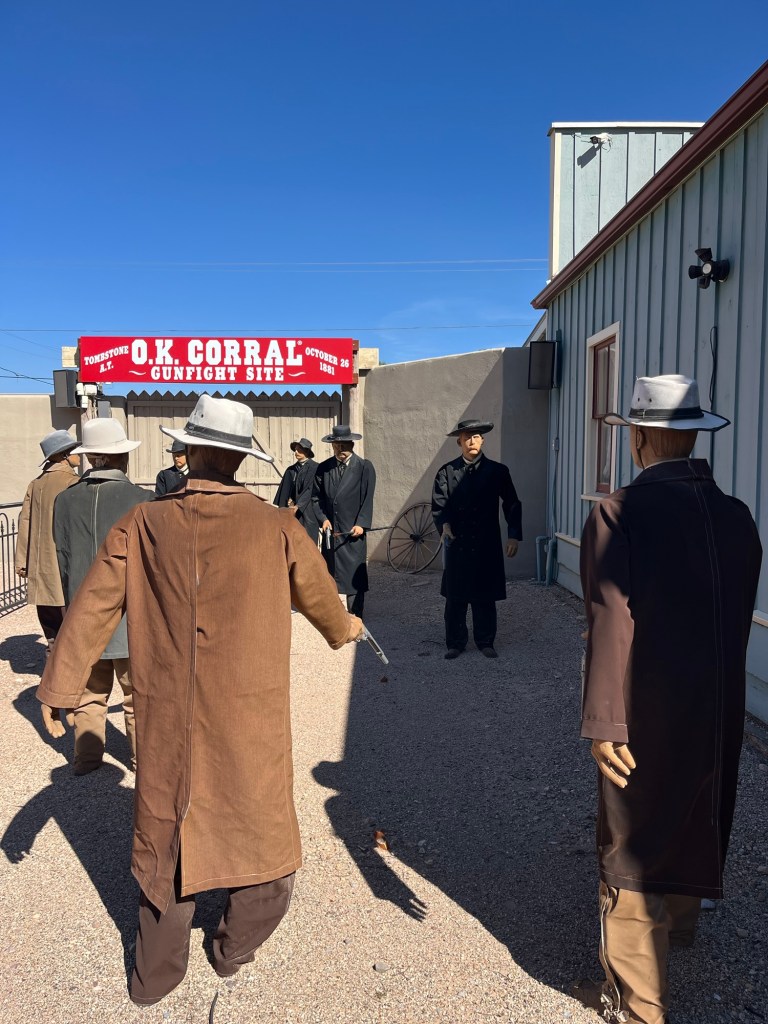
After the show, we walk by the corral once more. Here, mannequins stand in a close approximation to where the men stood during the shoot out. It is a miracle anyone survived. Kind of ridiculous that anyone would see this as heroic. There would be more room to maneuver on a city bus.
Next door to the corral is C.S. Fly’s photography studio. There are lots of Fly’s photos of the residents of Tombstone that gave rise to the legend. An adjacent building chronicles the life and times of local ladies of the night.
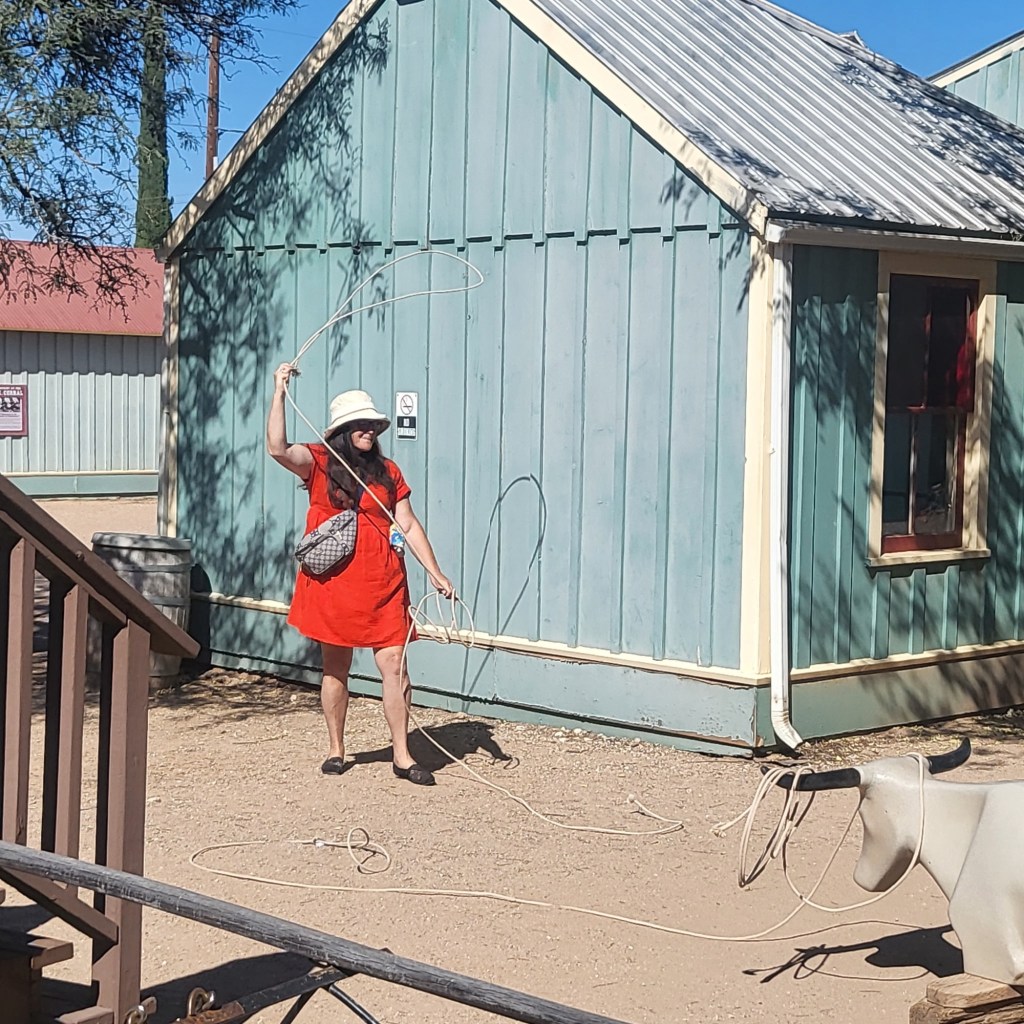
I have fun sitting in stable yard buggies. I even try to rope a fence post. My aim is good but the wrist snap needs work. It is easy to pretend it is still the 1880’s within this compound. But just outside, I know there is a whole street full of shops and bars and restaurants. The modern residents have to sell the past. The mines have long ago collapsed and nothing will grow. Tourists fund the local economy. I am okay with that.
We wander through shops selling souvenirs, antiques, and period clothing. My husband buys a vest like Sam Elliot wore in the movie. I can only approve of his choices. Lord have mercy.
Across the street, there is music playing and food being served. Off to Big Nose Kate’s we go. There is a long wait, but if we are willing to sit at a table of strangers we can bypass the line. Sounds like it is time to make new friends.
The historical Kate ran a dance hall and brothel and was the long term romantic partner of Doc Holiday. The modern Big Mose Kate’s is run by a retired New York cop. He stops by our table and shares his vision of a place filled with music and Old West Magic. He tells us repeatedly to have fun.
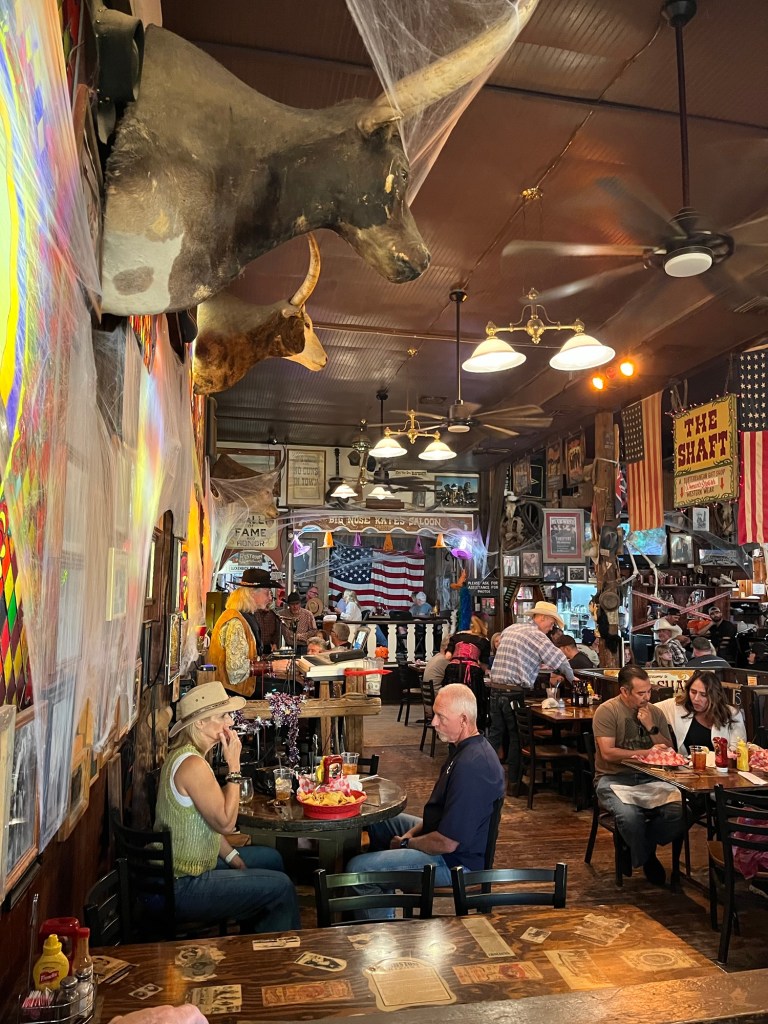
The owner flags us over to his “manager” who gives us western wear and props. The props include hats, scarves, a feather boa and a very real double barrel shot gun. Before I know what is happening, I am standing on a piano in a calico skirt and a boa with a bottle of whisky in my hand. In the next few minutes I look down the barrel of a very heavy shotgun and pose for what will be very funny and not very flattering photos. The owner is now satisfied that we are sufficiently having fun in his establishment. He is correct.
Turns out that if you see enough souvenirs they all start to look alike. And none of the other bars and restaurants can top our experience at Big Nose Kate’s. We stop at the historic newspaper office and pick up our free commemorative paper. Just in case I want to read the headlines about the OK corral, I know possess the replica.
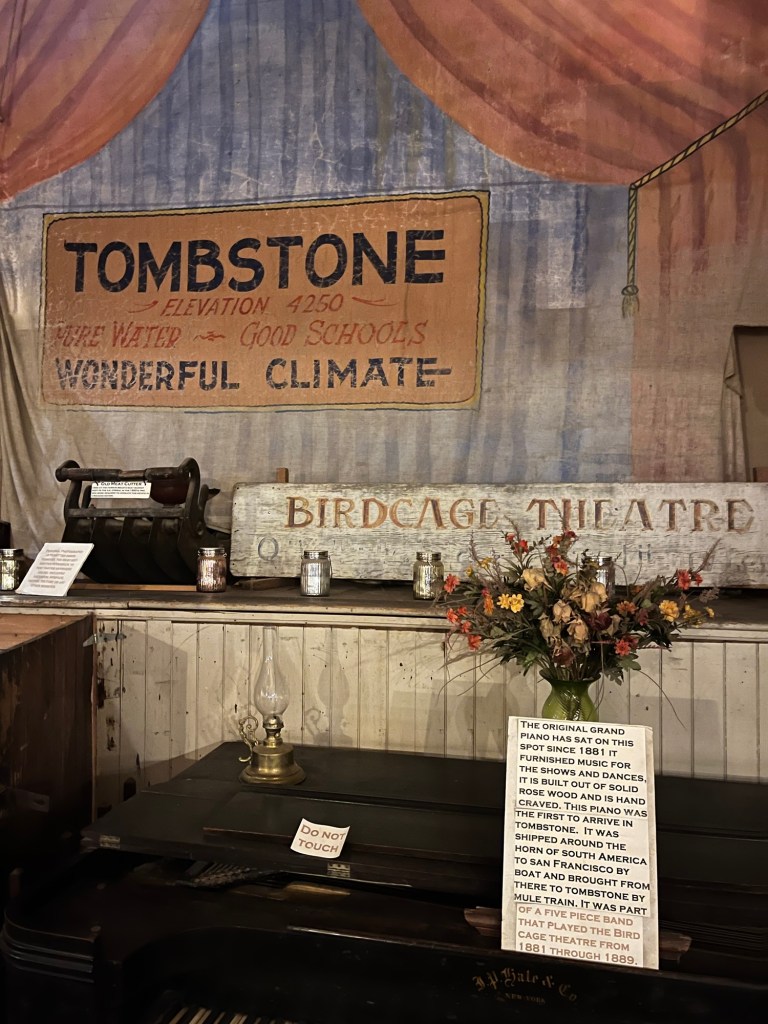
I talk my husband into spending too much money to see the inside of the Bird Cage Theater. It was a notorious saloon, gambling hall, and brothel that sometimes operated as a theater. It was known for its lawless atmosphere, raucous entertainment, poker.
Today it is a junk heap. The place is dusty and run down. The stage is about as big as my dining room table. The place is full of filthy antiques. For almost twenty dollars a person, someone should dust.
I am disappointed. Tourist traps are sometimes just part of the experience. I did however find a good explanation of Faro at a gaming table in the basement. That cleared up a few gaps in my Old West knowledge so the experience wasn’t totally wasted.
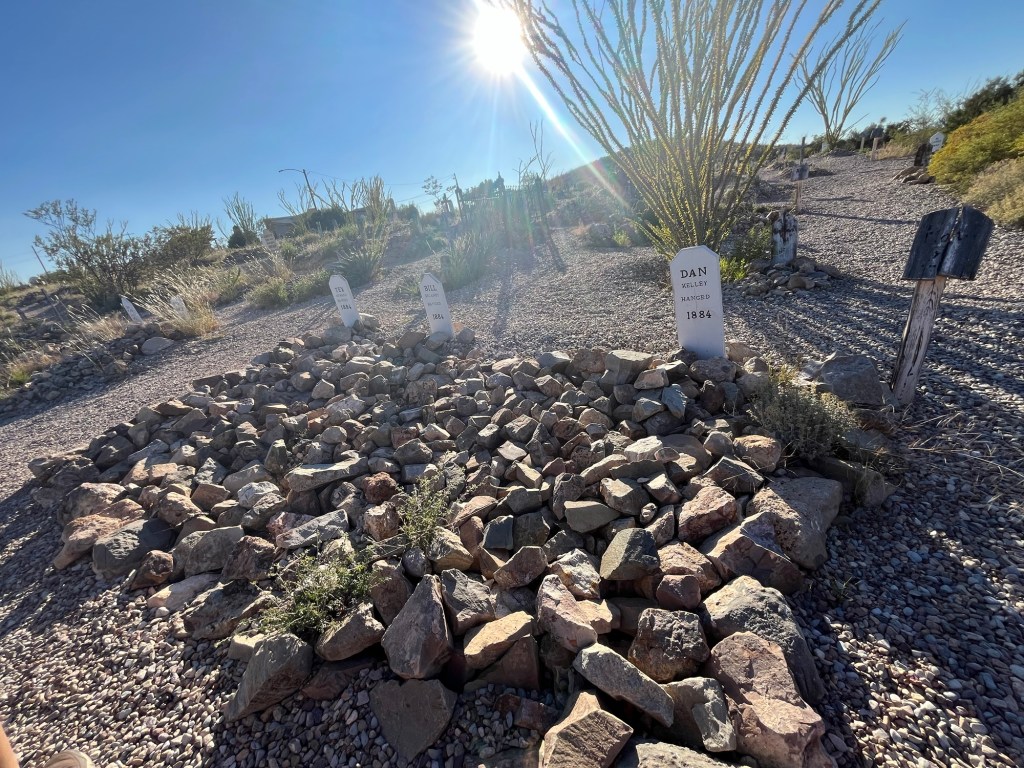
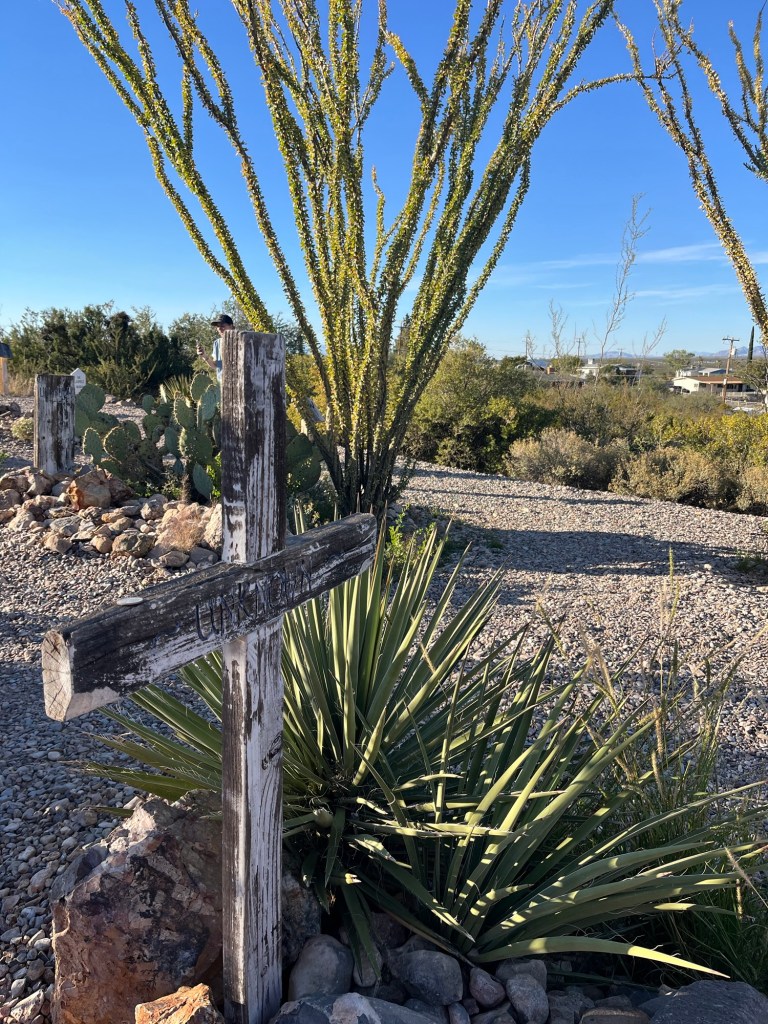
As the sun was slowly going down, we ended our day on Boot Hill. It is far enough away from downtown that we saved it for the drive back to the campsite. Of course there is an admission fee, but this time it is reasonable and we get a guide to the graves. Each person has a story. A few are normal. Most are crazy by today’s standards. It is weirdly enjoyable to read about their lives.
There are the Mclaury’s and Clantons of OK corral fame. There is a lawman killed by Curly Bill. Children who drowned and died of disease make up more graves than I care to see. There are prostitutes and preachers side by side. Some people died by gun fights, fist fights, and falling off of horses. One guy fell off and was run over by his own wagon. There are former slaves, Chinese money lenders, Indians, Mexicans, and European immigrants. (Modern politicians who like to pretend the “real” America was homogenous have clearly never been to Tombstone.)
Eventually we make it down all the roles and exhaust all the stories. Tombstone is the land of Old West stories. It is fitting we ended the day here. It has been a lot of silly fun, and yet here I am confronted with the reality of struggle and corruption and hardship. Tombstone was gritty and rough. While that kind of reality makes a great movie, it certainly wouldn’t have made a great life. Something to think about as we drive the long desert road back to the rv.
-
Caving: Rural Road Trips Arizona
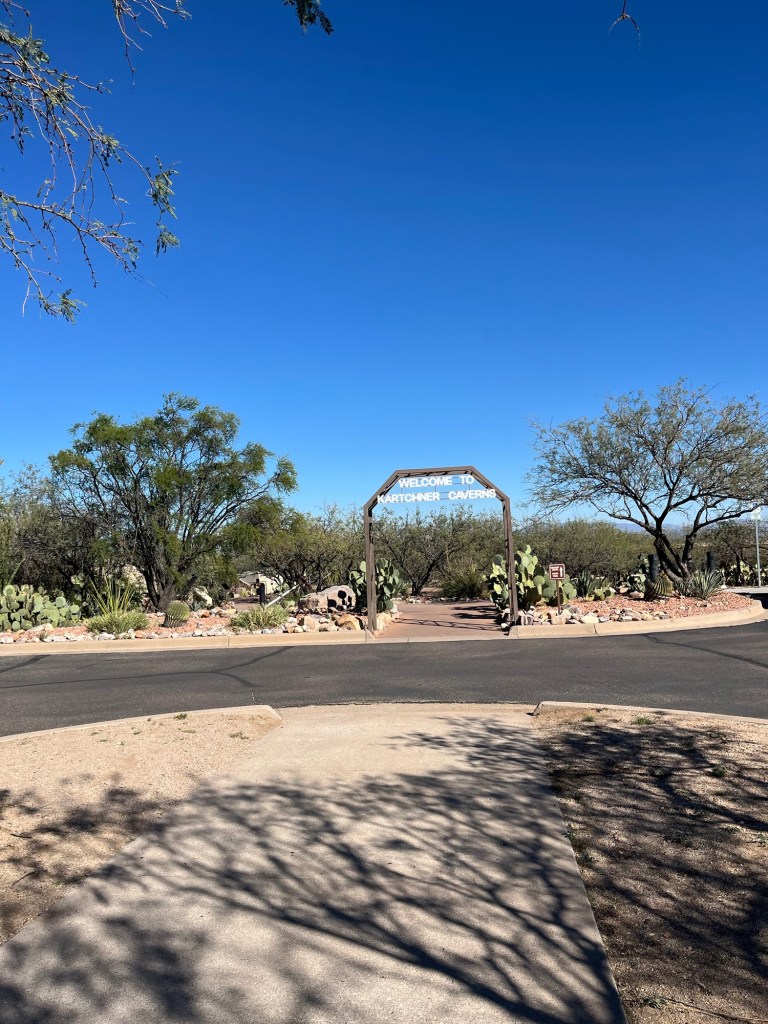
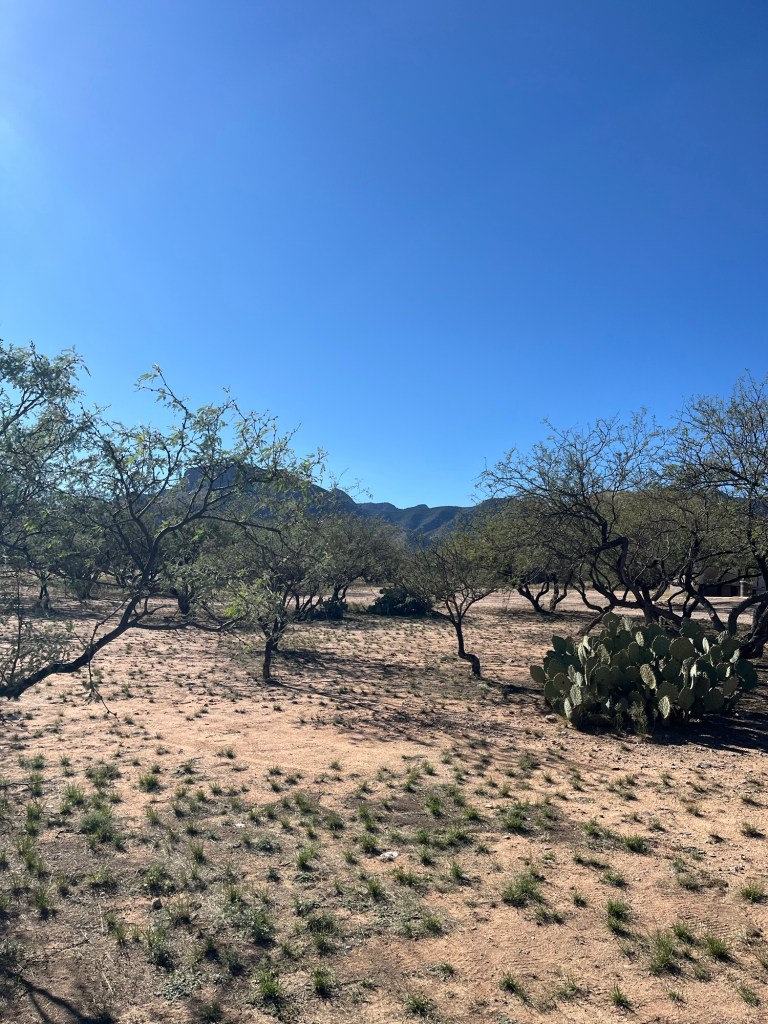
We find ourselves in Arizona near Karchner Caverns. We booked a Koa near highway 10 and within a short drive to Tombstone, where we will adventure tomorrow. But today, we need to secure two tickets to see the cave. I call and ask for same day tickets. I am put on hold. I tell them there is only two of us. I am put on hold. Somehow we get on the last tour of the day. I feel accomplished.
At the facility, I have to rent a locker outside the visitor center. It will apparently be closed before we come out of the cave. I only have a small crossbody bag, but apparently the only thing you are allowed to take in the cave are keys and your wallet. So a coin locker is my only option. I wish they would have explained that during one of the brief moments I wasn’t on hold. But maybe this means there are great formations that in the cave or maybe it is a wild cave?
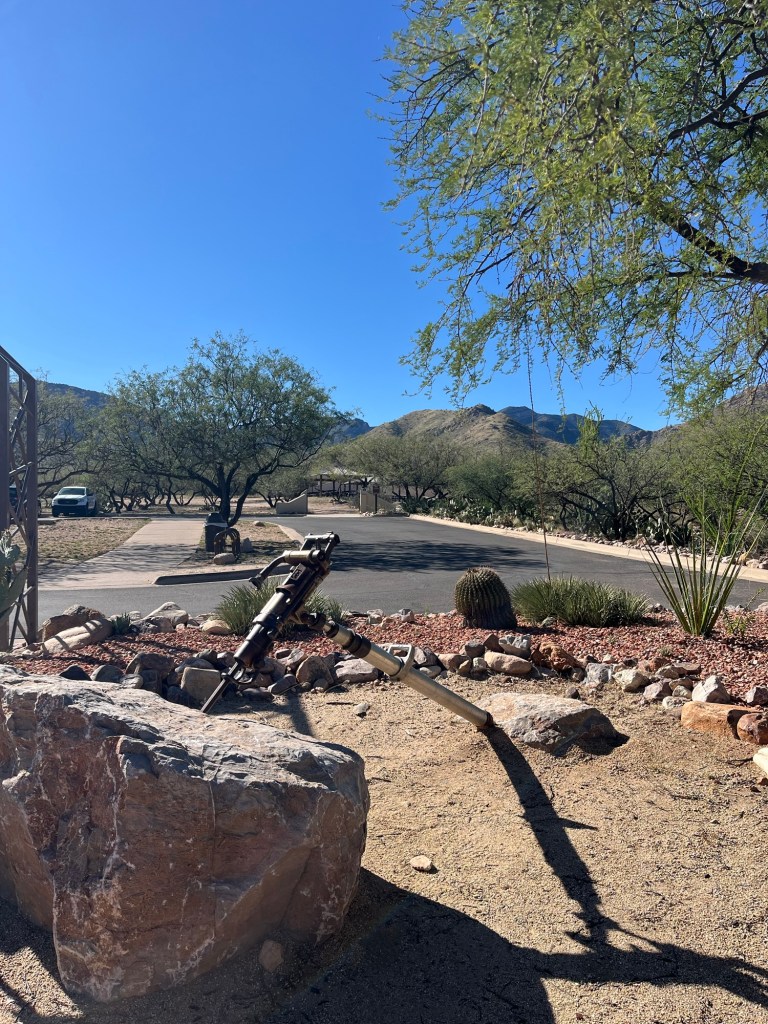
We head into the visitor center and see a small display on the cave exploration. We then sit in an outside seating area and await the tram that will take us to the cave entrance. As we wait we are entertained by three older men traveling together. One of which knows everything about everything. Just ask him.
A lady sitting down the bench from me does a pretty good job of fixing her face, but her eyes roll of their own accord. I feel ya’ sister. This guy is so good at mansplaining, he mansplains to other dudes. Thankfully, our tour guide arrives to save us…..or possibly to save Mr. Know it All…it could go either way.
Our guide is a retirement age woman wearing a crazy cat lady T-shirt. And she is wearing a cross body bag. Hmmm? I am thinking about my life choices at this point and only after I make a mental choice to let go of my resentment of the coin locker do I realize she is talking about the early exploration of the cave. She references the teenage explorers of the nineteen seventies as if they were gods. She then goes on for a very long time about safety precautions, so that we don’t contaminate the cave. At this rate, we won’t actually see the cave because the tour is only an hour and we have been standing here almost fifteen minutes. I am really wondering what is inside this cave that has everyone so worried about what we might spoil.
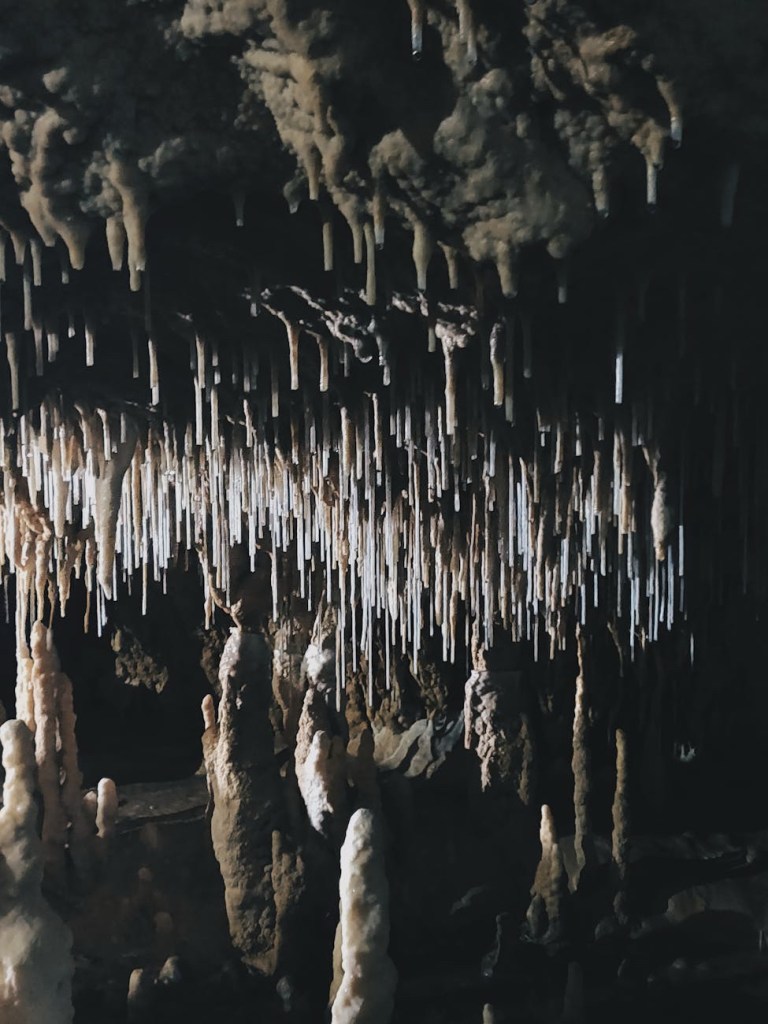
Eventually we get in a small tram that takes us about five minutes up a hill to an airlock door. We get to hear another five minutes of reminders to not touch anything. Before, I go any further, I should note that I live in cave country. There are at least three well known show caves within a half hour of my house. And the karst topography, provides dozens and dozens of random caves along the hillsides where I hike regularly……so. …. I am underwhelmed by the amazing, fantastic and (insert your own superlative) cave that we enter. There is mud where the only footprints belong to “Randy” and the other guy who first entered the cave. Oh, yeah, she got to meet “Randy.” He apparently comes by sometimes.
I look around for the “amazing” formations. There are soda straws. There is a big room with a flow stone and a cheesy light show to music that illuminates the singular flow stone. I guess if you have never been in a cave you would have been impressed. I was not. I am behind a concrete wall and a metal rail. I could not touch a formation if I wanted to. All the same, I am reminded that someone will come behind me and wipe down the railings in case we contaminate the cave. Okay sister….
And yet, our guide is sincere and clearly loves the cave. She is excited about her work and I will give her credit for that. It is cool down here and outside in the desert it is hot. Also, Mr. Mansplainer has been quiet the entire time we have been underground. It isn’t so bad…. I have just managed to pay $50.00 to see a large underground room. Good times.
My husband and I laugh and consider the experience “local color”. We are sure “Randy” would have approved. In a great mood, we make our way across town to one of the only restaurants we can find. It is crowded….a good sign. It is loud….not ideal. The people next to us leave money for their drinks and leave the restaurant because they have been waiting too long for their food…oh no. Benson, AZ has one last joke to play. We wait forever, but have little choice at this point. It is chaotic and noisy and I have a migraine coming on. We skipped lunch in order to get camp set up and make our way to the cave on time.
Dinner needs to happen and soon. I have endured telephone holds, cross body bag patrol, Mr mansplainer, cave explorer groupie tour guide, endless “Randy” stories and now a dysfunctional restaurant environment where I am getting ready to serve myself. I am hangry. And I am also from the Show Me state where we have Show caves, and geologists, and park rangers who give tours where you learn some things, and people who know how to kill, pluck, and fry a chicken in the time it is taking to bring me a glass of water. Whew….. where did that come from? Got water…feel better…..need food…..
-
Stroll Through The Park: Travel Goals Japan
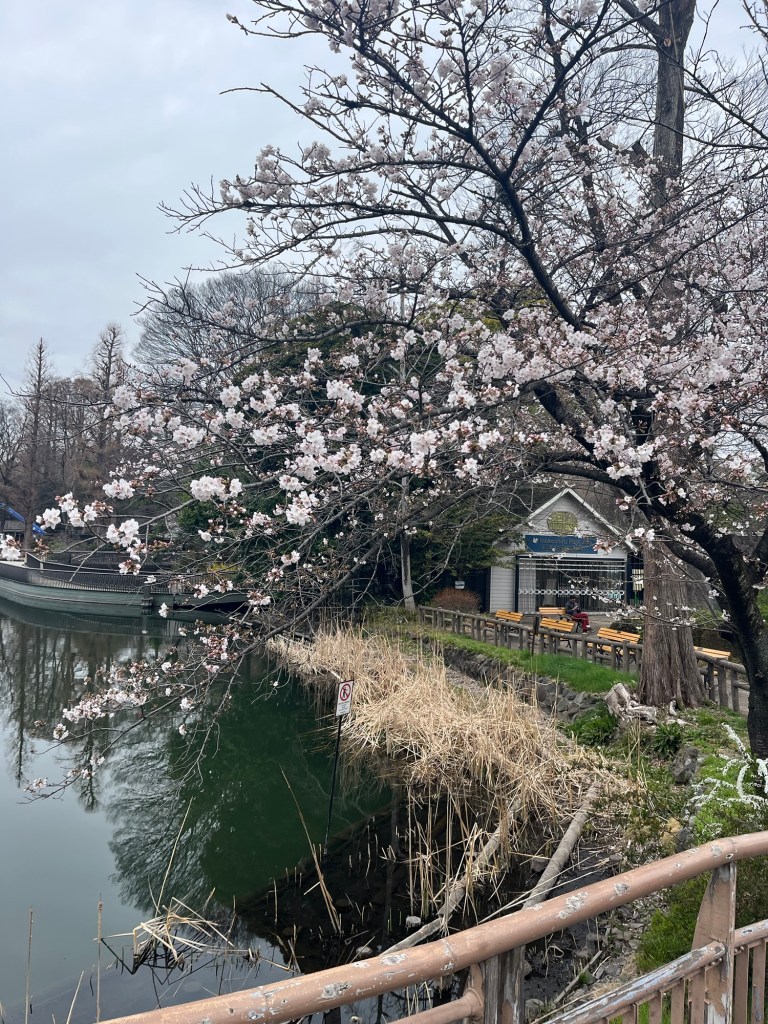
It is the last Monday that our son will be with us in Japan. No one warned us that all the museums in Tokyo are closed on Monday. So are the zoos. I should have checked when we mapped out his week with us, but I never imagined all our options would be closed today. I am feeling a little pressure to make sure he has a great day. Ordinarily, we roll with it, but he has limited time and we want to make the most of it.
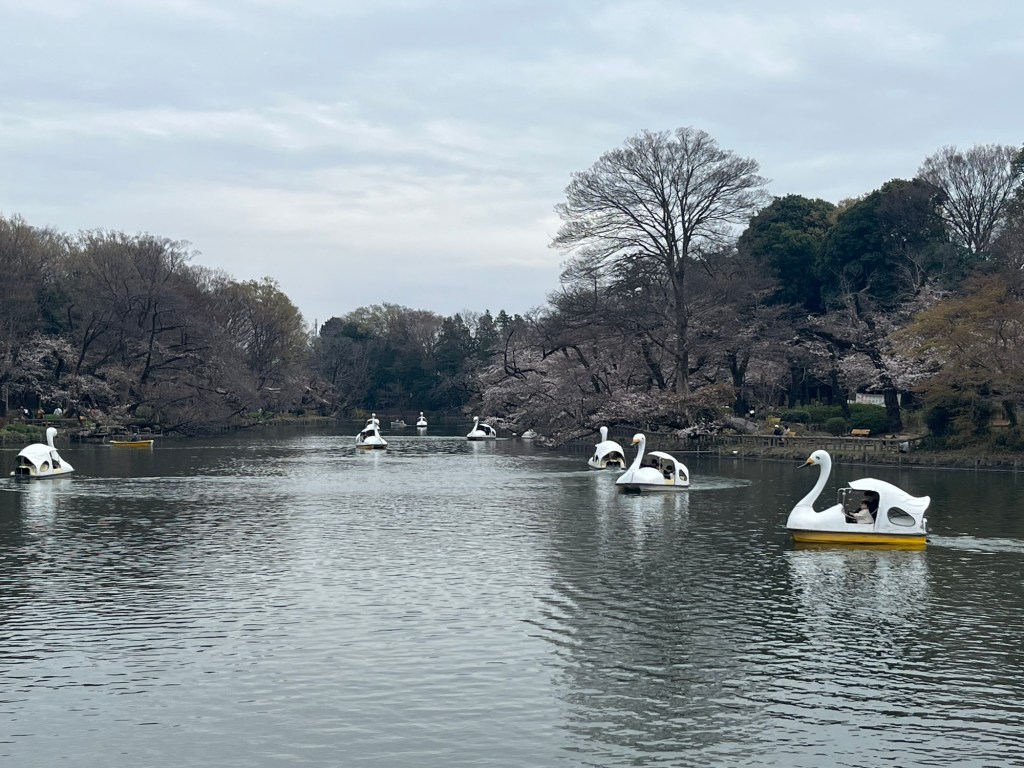
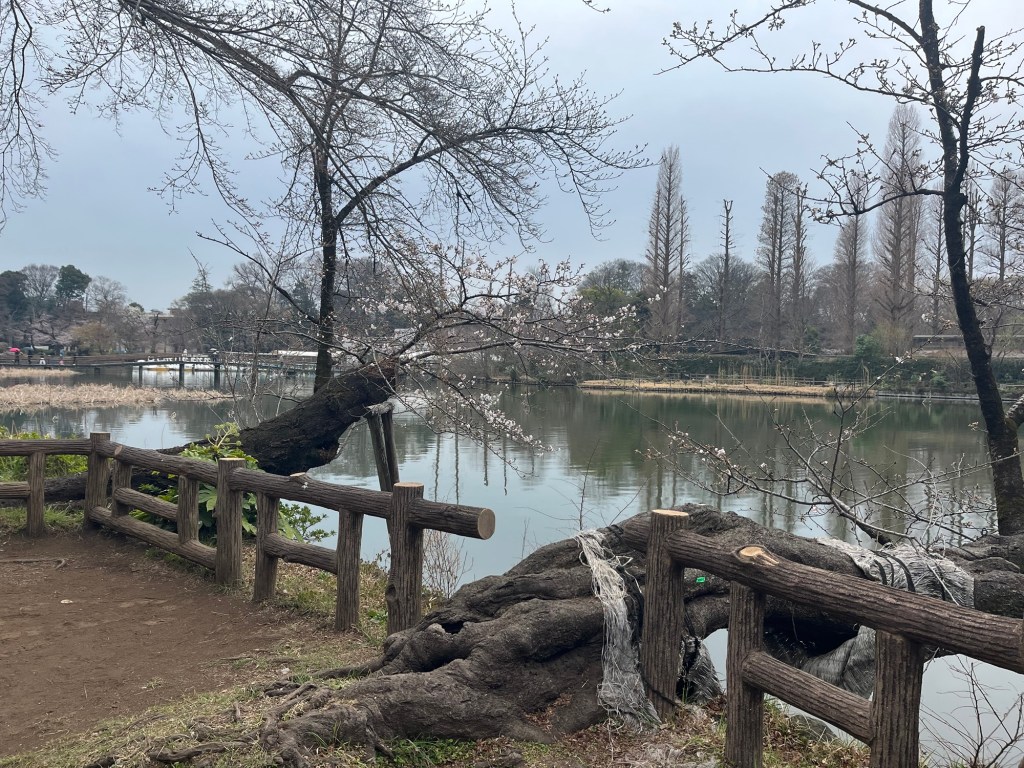
Plan B is to head across town to Studio Ghibli. He likes the animation and I like that it is open. After a short train ride we reach the outer suburbs. We walk through a cute town center and then into a park. It is surprisingly beautiful. Suddenly, I forget about finding a destination. I am ready to linger near the lake and simply watch the swan boats as they cruise under the cherry blossoms. I want to rent one, but know the boys will veto the idea. “Too much work!”, they say in unison.
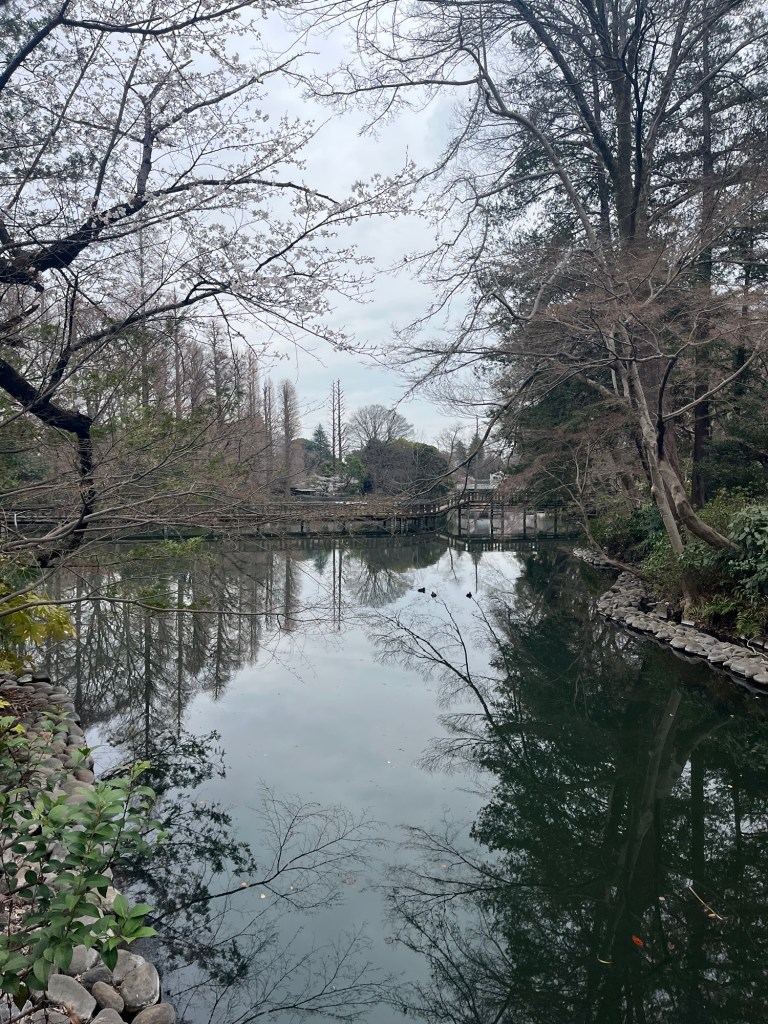
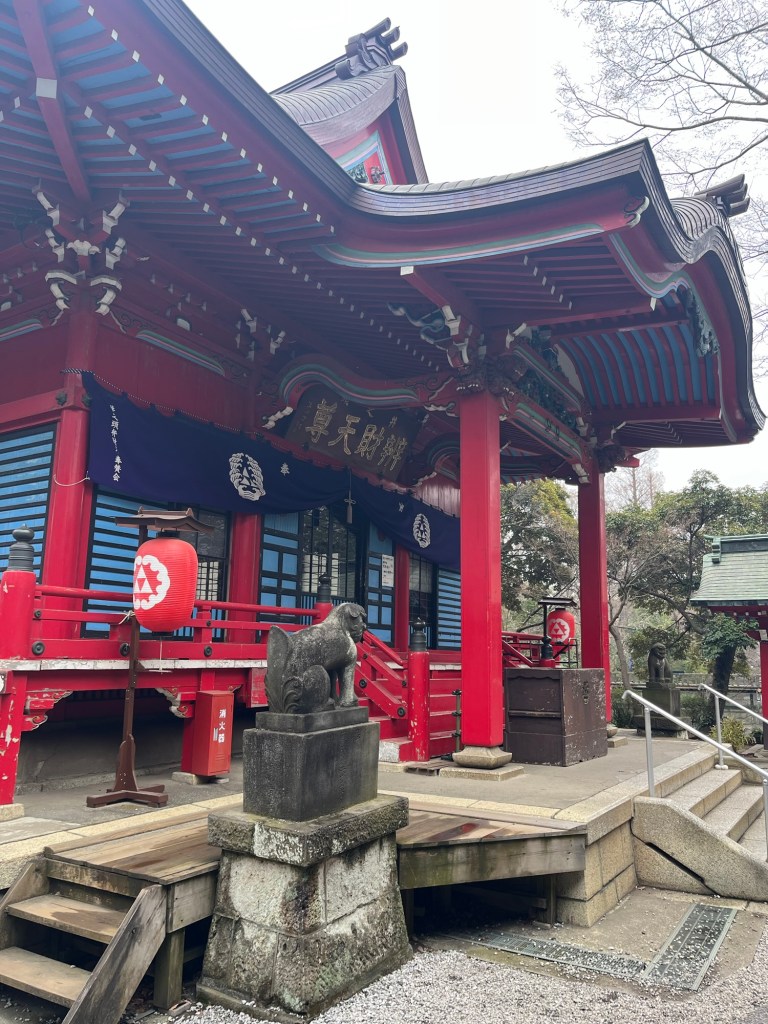
As it turns out, the Ghibli museum is open but sold out….. so…… a walk in the park is now plan C. We find a temple with incense still burning even though we are the only ones here. A bit further along the path is a bird sanctuary. We are not allowed to enter. No one is. It is only for birds. But I hear their songs. Old men are doing Tai Chi and grannies zip by on bicycles.
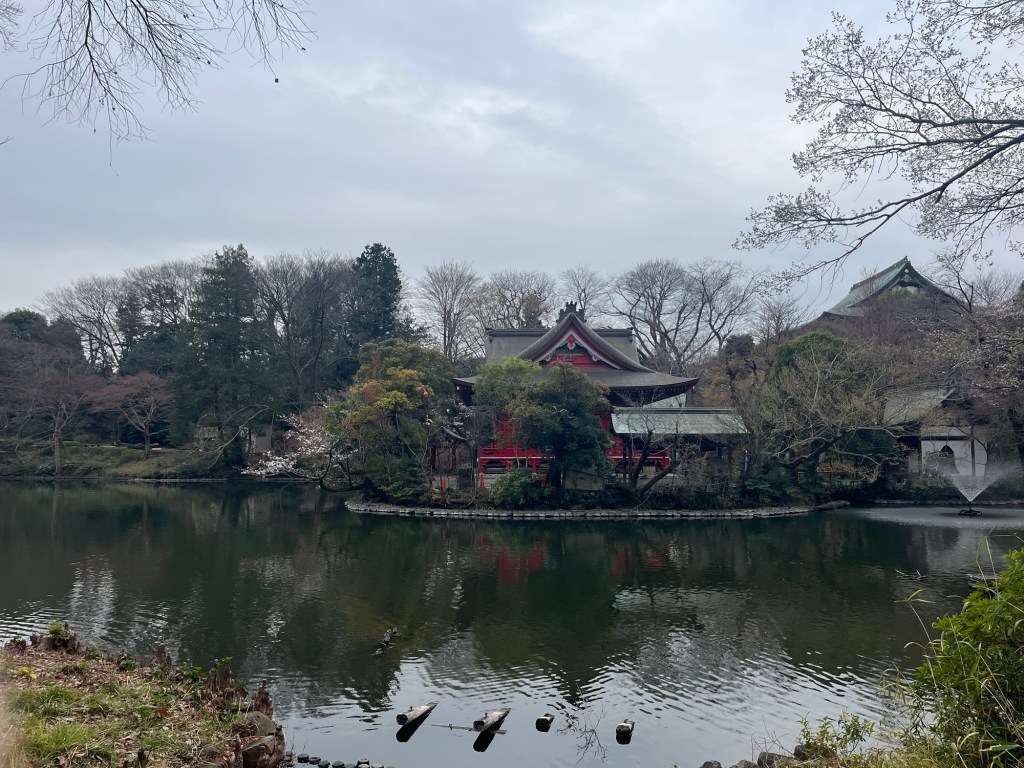
I stop and buy cherry blossom ice creams at a kiosk by the lake. I know the boys will be on board with that. There is a small zoo that we could….wait, also closed. So we sit and watch the ducks and plan to explore the area near the train station. I think I saw shops. It is either shopping or the paddle boats. Suddenly my husband is sure he found a steakhouse for lunch just after I finish shopping. Funny how that works.
So we wander the side streets. American vintage clothing is selling at ridiculously high rates. If I had only known, I could have filled a suitcase and helped pay for this trip. T-shirts, blue jeans, and army jackets are apparently in high demand. Who knew?
And just like that we filled a whole day doing not much of anything. We actually have plans for our evening and need to head back into Tokyo, but this little unplanned foray into Japanese suburbia is satisfying. I never am disappointed by a good stroll in a beautiful park. Ice cream and vintage shops also help.
-
Random Stop at the Chandler Museum: Rural Road Trips
We find ourselves outside the Phoenix zoo with nothing on the agenda. We drive around the park, but hiking in the desert sun after walking the entire zoo is not appealing. It is too late in the day to pay admission to a large attraction and too early to head back to the RV.
It is time for some Google magic. This is the Hail Mary travel hack. I type in things to do near me and see what pops up. Bingo! We are near the Chandler Museum. It is small and best of all, free.
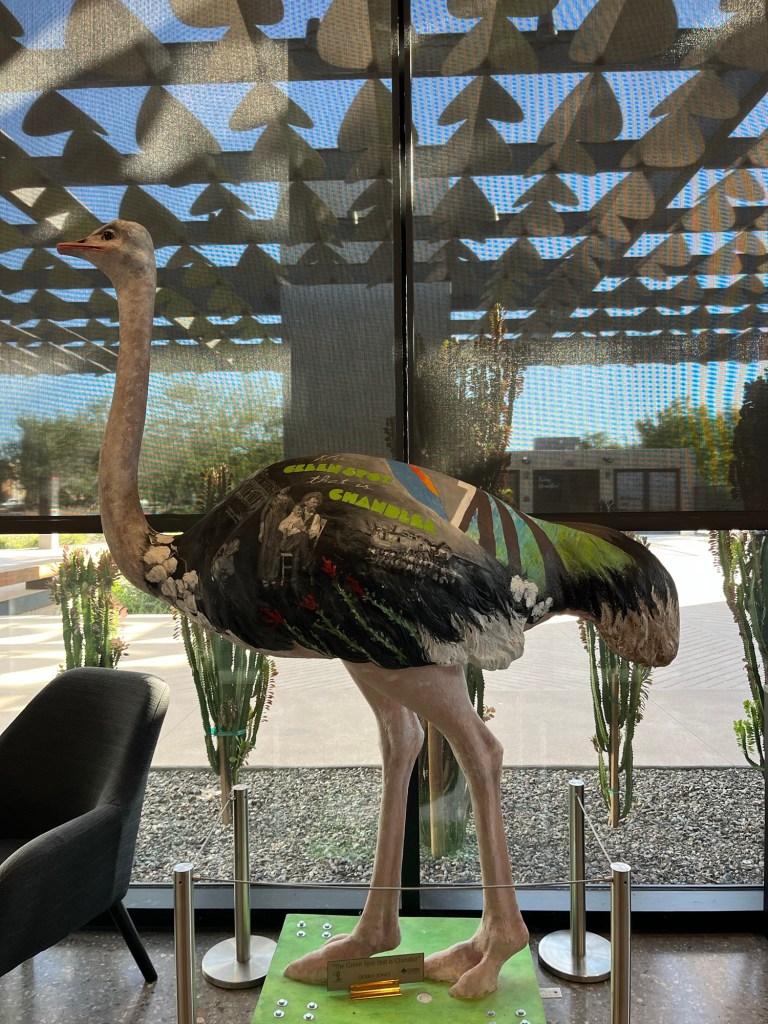
We enter with zero expectations, besides air conditioning. The attendant is friendly and welcoming. She tells us there are four exhibits. I am unfortunately not paying attention, because there are historical photographs just behind her of the Chandler ostrich races. I guess that used to be a thing. There is even an ostrich statue.
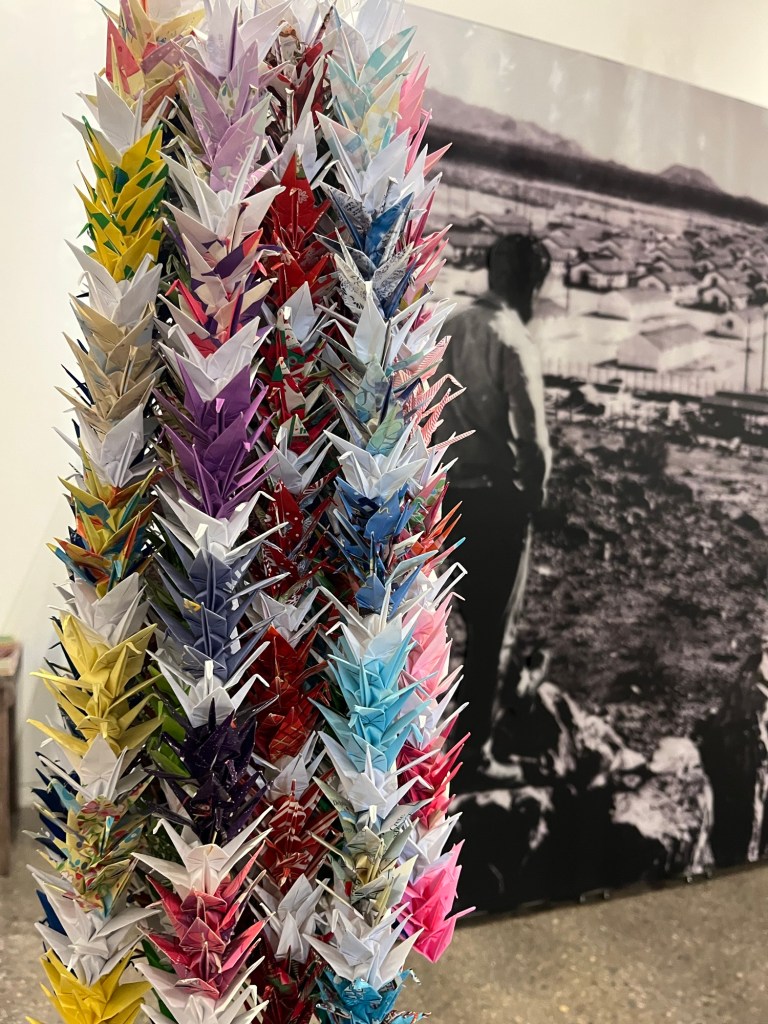
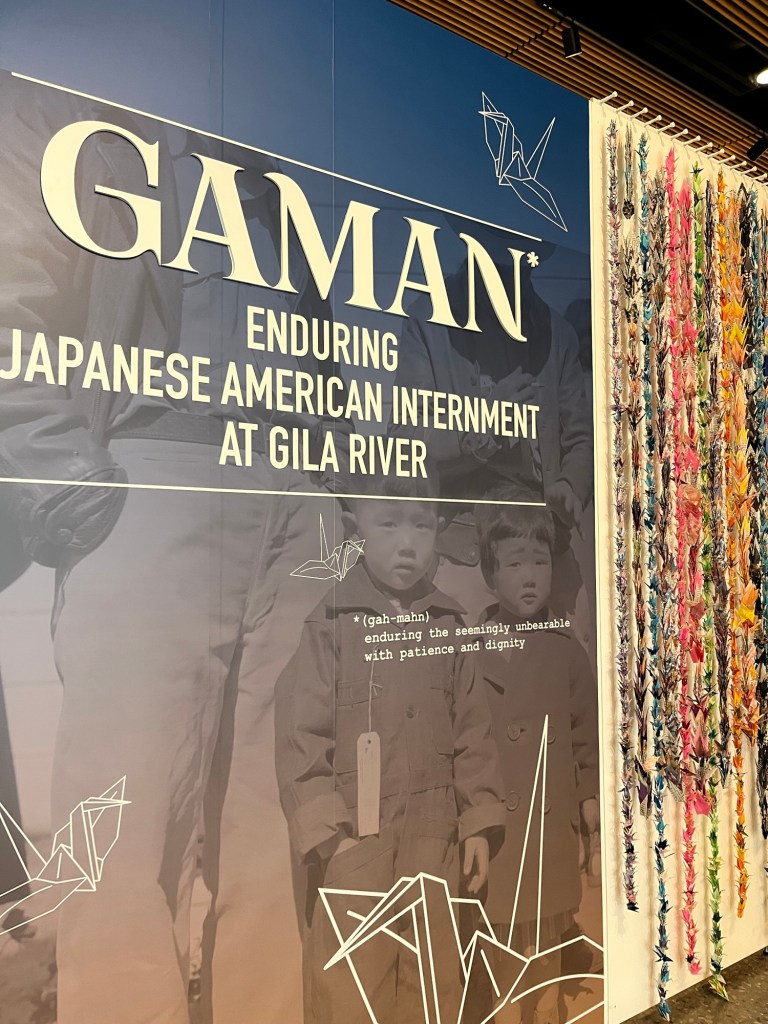
It is the rest of the museum that truly stops me in my tracks. The first room is an honest look at Japanese internment from the eyes of those who endured the injustice humiliation. It is sobering to see what humans will put each other through.
The second room was beautiful photographs of immigrants who were recently naturalized. They are captivating by themselves, but the narration panels tell their stories in their own voice. It is both sobering and I inspirational. I can only hope America embraces their courage and fortitude.
The rest of the museum passes in a blur. I think a room is dedicated to cowgirls and another to local history. I am not really paying attention. I am thinking about identity and how fear is often a terrible motivator. This is pretty heavy for a random stop seeking air conditioned amusement. I can only pray that we are guided by our better angels and learn to make decisions based on liberty, love, and justice for all. That after all, is the real promise of America.
-
Phoenix Zoo: Rural Road Trips
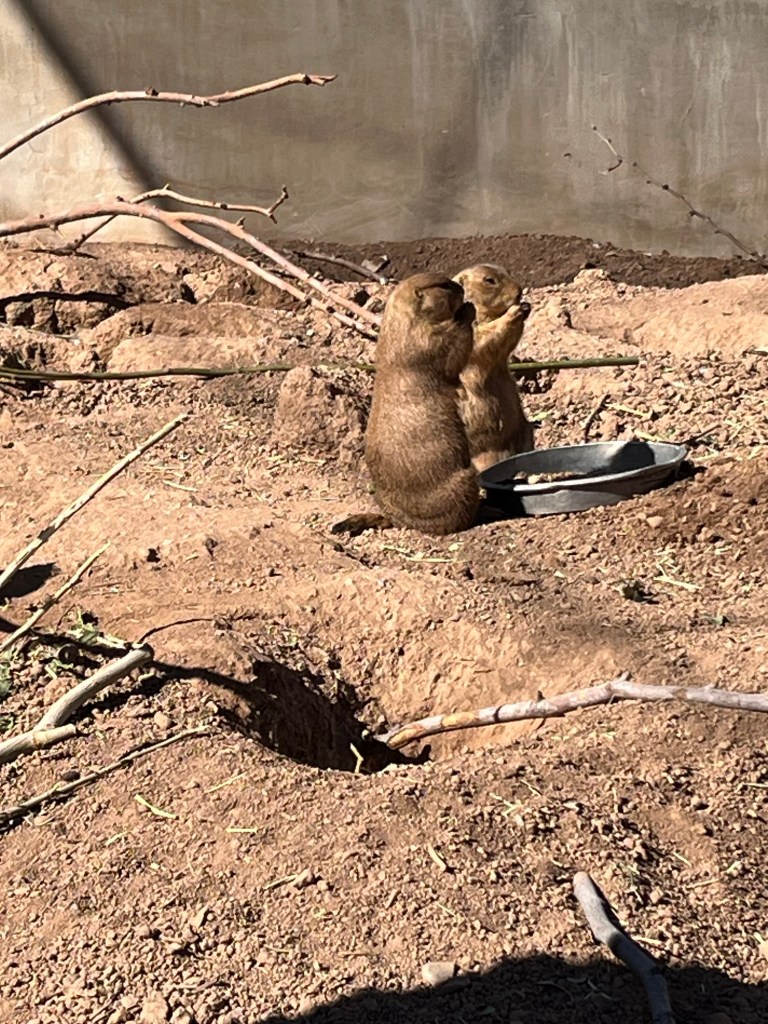
It is no secret that I love zoos. Correction, I love animals and zoos have always been a way to get closer to wildlife and encounter more species. A good zoo treats its animals well and works toward essential wildlife conservation. Bad zoos with poor care and tiny cages break my heart. We visit zoos to support the animals and connect with nature.
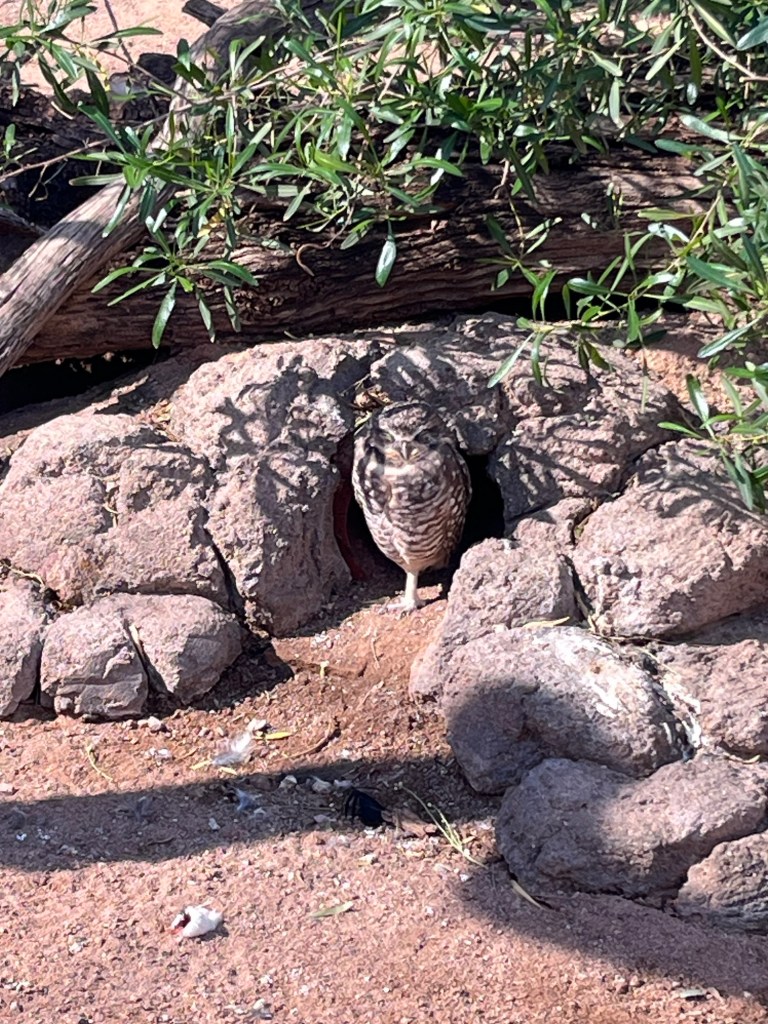
The Phoenix zoo is ridiculously expensive. I assume most families can’t afford to come on a regular basis (maybe ever). Of course, I am from St. Louis where the world class zoo is free.
With high expectations we enter the zoo. It is spacious and it is clear they care for their animals. But half of the exhibits seem to be under construction and many of the animals are off exhibit. (Note: the area had severe weather last month that may have damaged infrastructure). I joke that we should only have to pay a proportional entry fee based on the number of exhibits actually open. I calculate about a 60% discount.
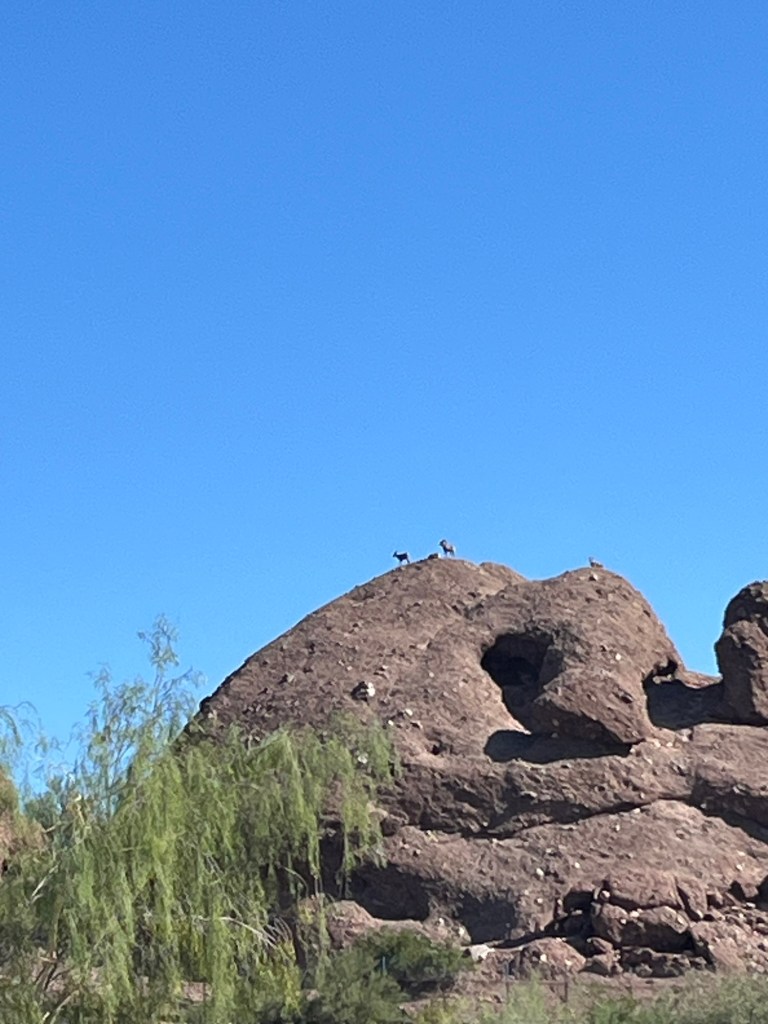
One of the best views we have is an overlook at the lion enclosure. We can’t actually see any lions. They must be sleeping under the trees. But we can see some bighorn sheep, which ironically appear to be in an area outside the zoo. Leave it to me to buy a $50.00 ticket to a zoo with no animals actually visible, and then stand and watch animals outside the zoo.
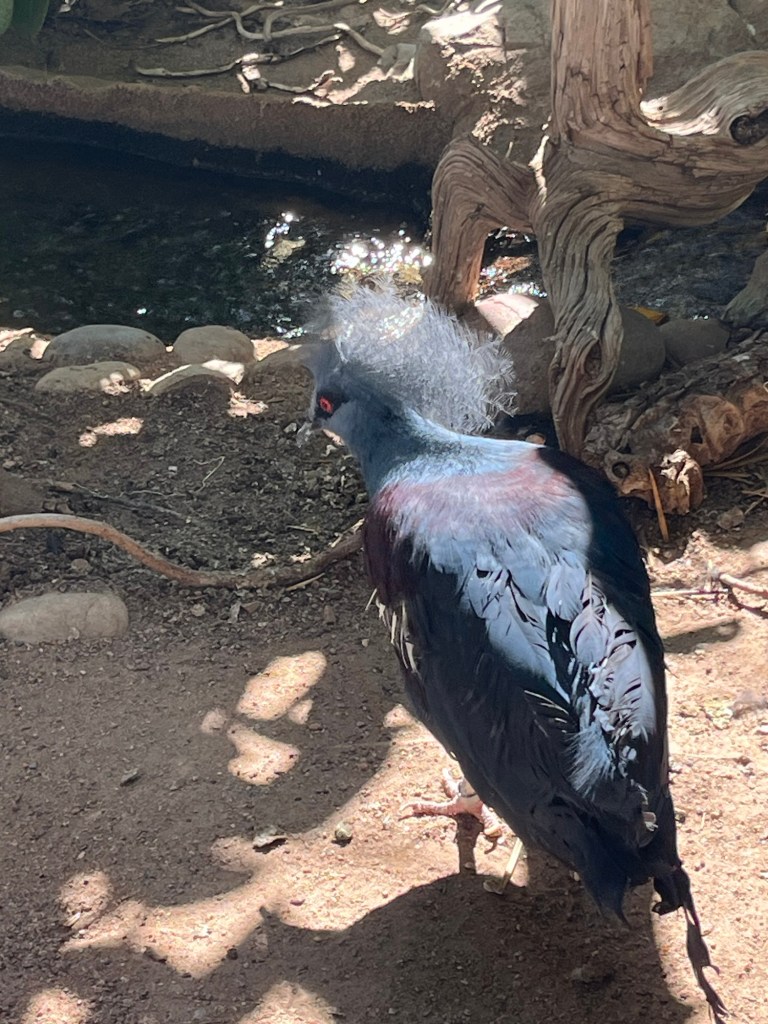
We walk through a number of visually appealing exhibit areas where no animals are visible. Some are asleep in their enclosures while hidden by foliage I guess. Some of them may be inside. It is hot and they are hiding. Or else the zoo is playing a crazy Halloween prank and there aren’t actually any animals.
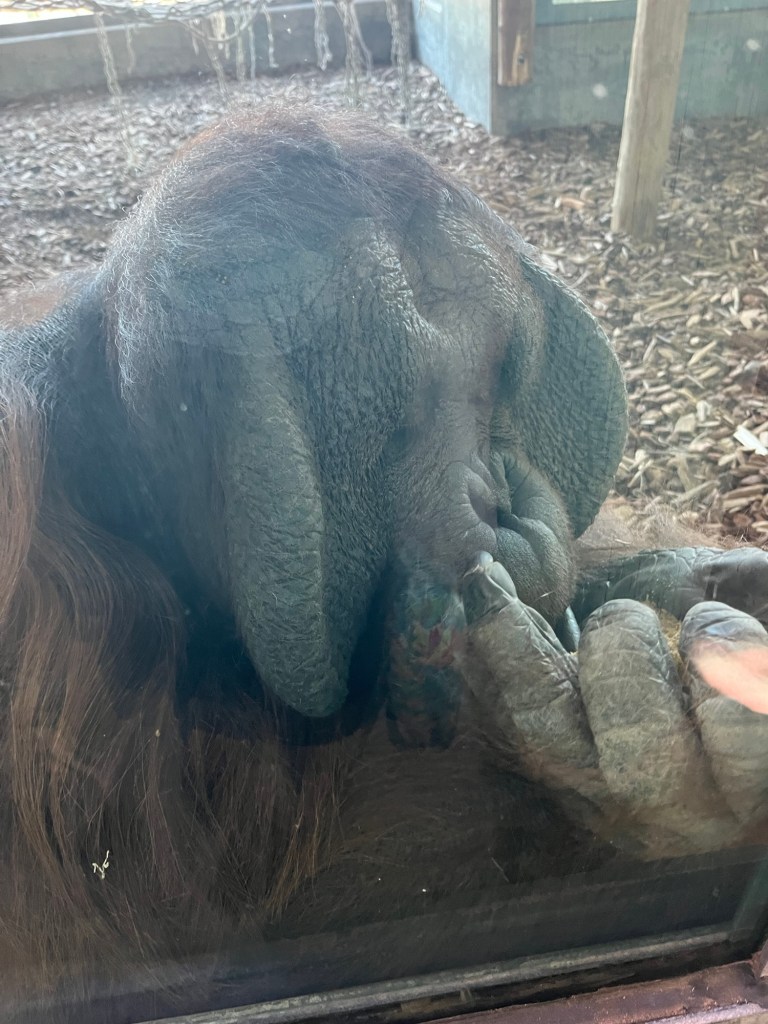
My guy is starting to get a little salty about walking long distances in the heat with very little pay off. Thankfully in the primate house, we find a very responsive orangutan. He is having a great time chewing up primate biscuits into mash and then spitting it out to show me his masterpiece. It is a little gross, but it is making both the orangutan and my husband happy. Plus, it is air condition led. So I sit down and let the orangutan show me his regurgitated lunch.
Close by, we also find a walk through monkey enclosure. The little guys have complete freedom to roam and we try not to get in their way. It isn’t as interactive as the Australian zoos, but pretty neat. A docent tells all about them as we watch the frolicking from underneath their trees. This is what a zoo should be.
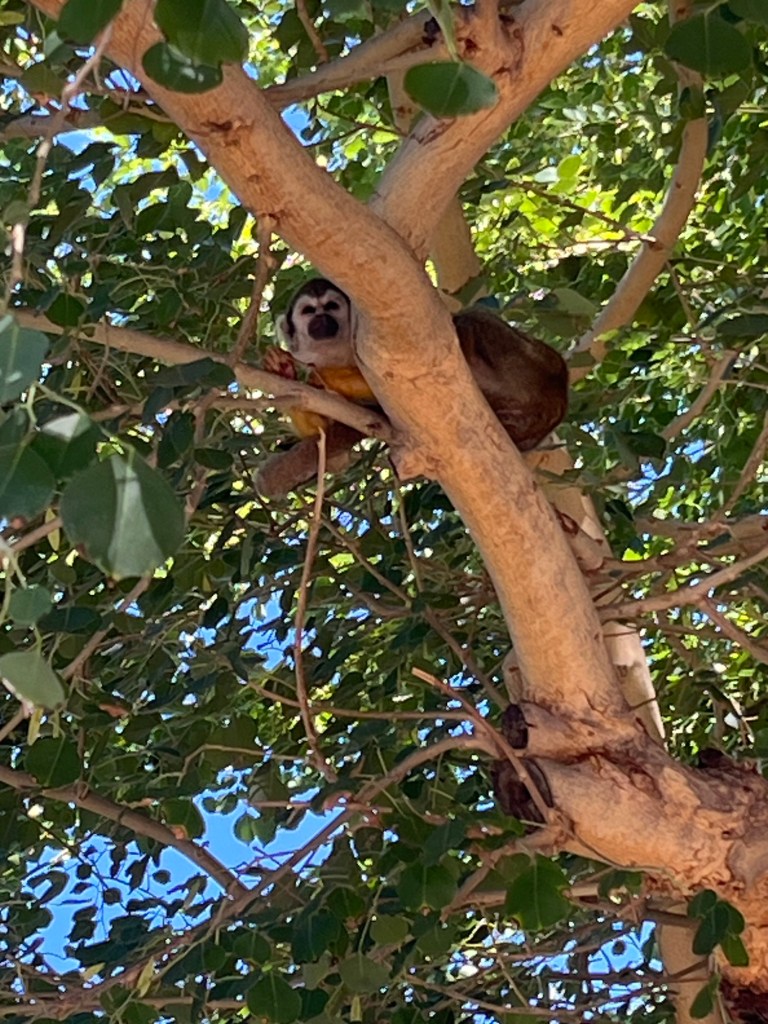
All in all, not our best day ever at a zoo. For the money, it is not even a good value. And yet…. I would go again. Given a chance to support wildlife conservation and to take a walk in a beautiful space, I will always go.
-
Eating Our Way Through Tokyo: Travel Goals
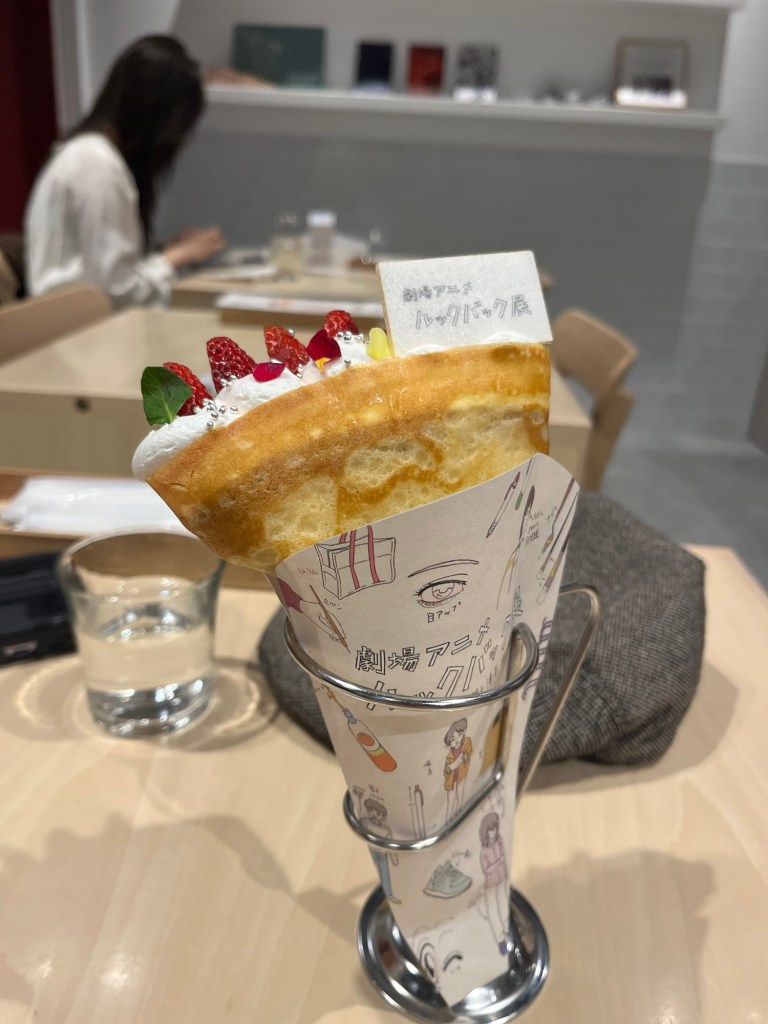
Tokyo is known as a foodie destination. We are simple people and one of us is more meatasaurus than foodie. So alas, no Michelin stars. Instead, we seek out the unusual and the common. I love to find the places where ordinary people flock to eat. I grew up eating in country diners where pick up trucks lined the parking lots. A general rule of thumb when traveling was to look where all the cars parked. If the lot was crowded, it was worth a try. It is still a good rule.
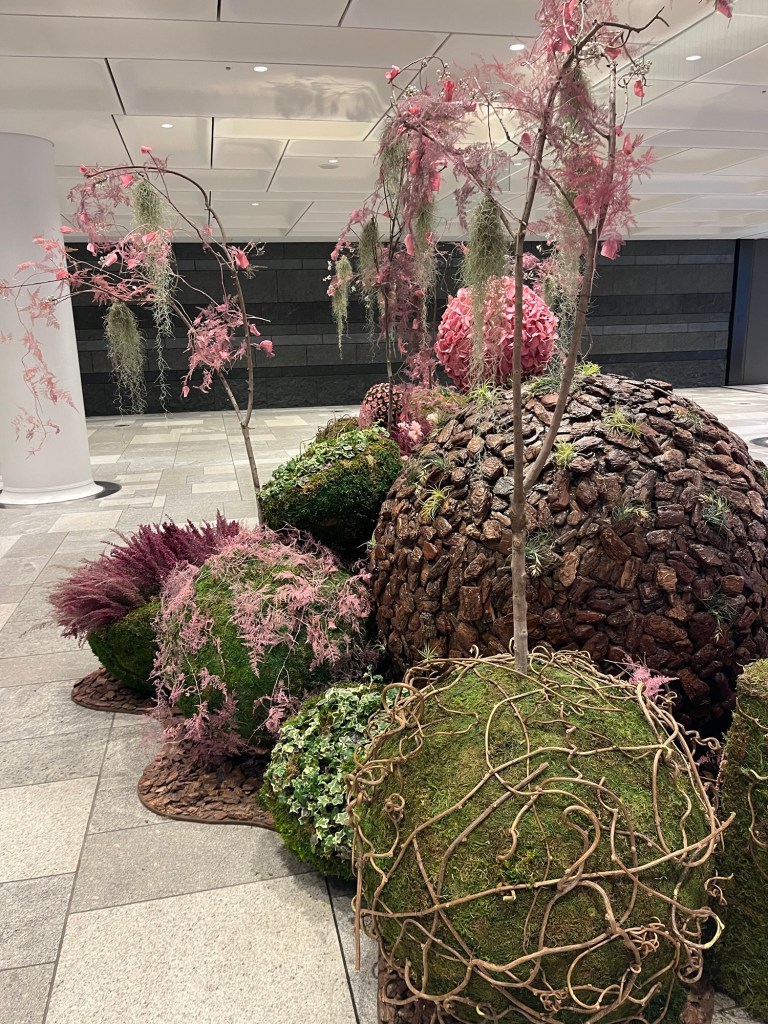
So this trip we ate in office buildings where we stood in line for amazing Thai food. We waited to have crepes filled with fruit and brownies. One crepe even boasted a filling of cheesecake. Definitely not high brow, but also undeniably delicious. Dozens of local standing in line for a taste can’t be wrong.
We had coffee, pastry, and even cake out of vending machines in subway and train stations. They were surprisingly good purchases. (with the exception of the barley water I mistook for hot tea. It tasted like grass….and not in a good way.)
Eating local is a grand adventure. We laughed until I cried when I couldn’t figure out how to use a ticket vending machine to pay for our meal in a soba restaurant and accidentally ordered two extra meals. oops.
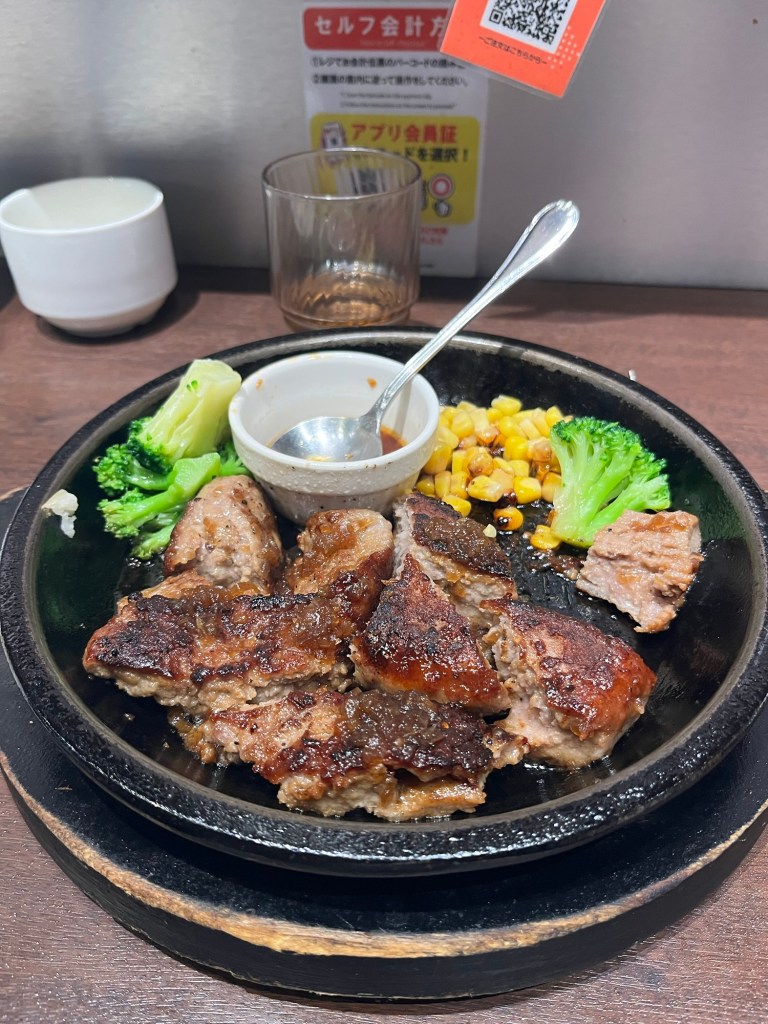
In a suburb, we decided to try the businessman’s steak lunch. As the lone woman in the restaurant, I looked around the space to see if there was some unwritten code. Apparently, the large cuts of meat attracts a certain crowd. They were all wearing giant bibs. Weird.
After we ordered and waited for a while bibs were delivered to our table. We kept talking. The cook came out of the kitchen and marched to our table. “You put on. I bring meat!”, he said forcefully. My son’s eyebrows shot up in surprise.
Yikes! We put on, because wanted him to bring meat. When our food comes we understand. The plates are red hot iron. The meat cooks in front of us and the sauce they use to baste the meat flies in every direction. Soon our bibs are covered. The men in my life were very happy with the choice. While I don’t love meat, so was I. It was a cultural experience.
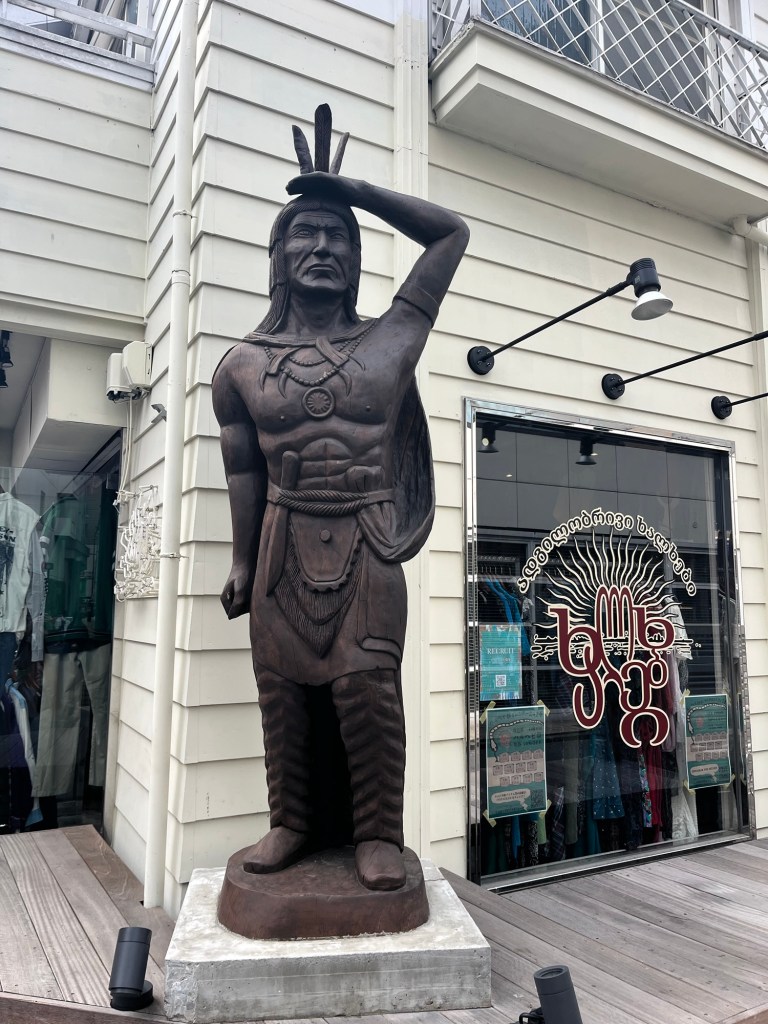
Sometimes we ate traditional food with a view. I can say I ate rice and looked over a lake beneath the iconic Mount Fuji. I was entertained by cigar store Indians, a replica of the Statue of Liberty, and even Godzilla himself as I dined. I ate burgers, dumplings, seaweed, and fish eggs.
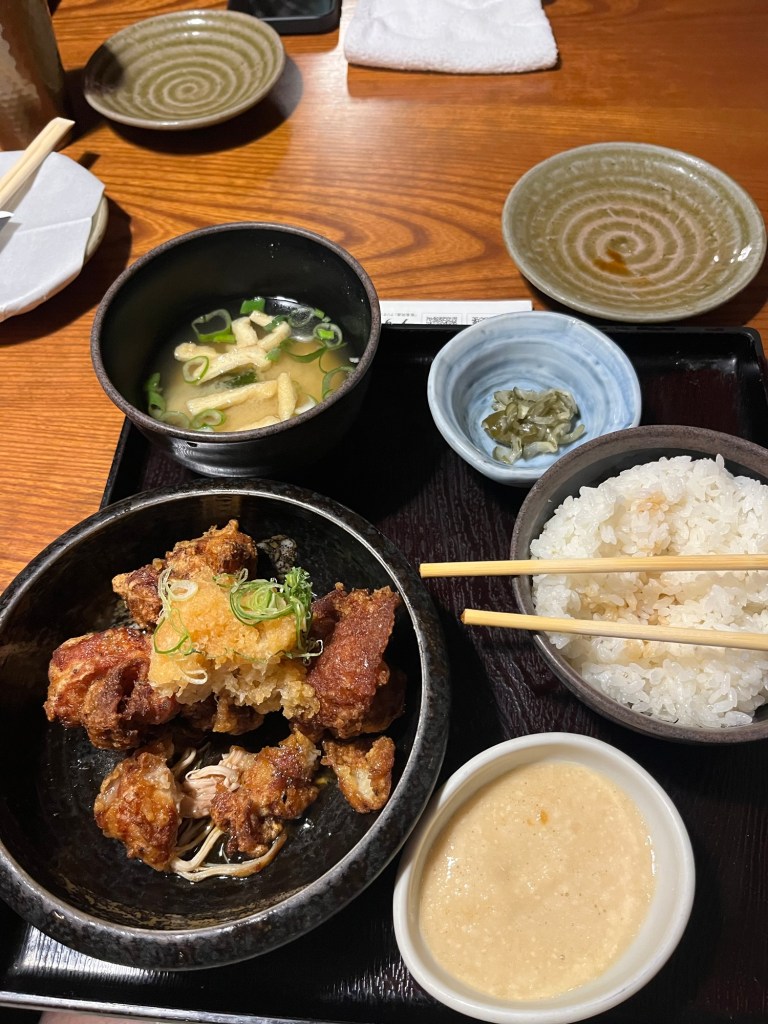
But most days, in the best sense of the phrase, we ate simple traditional meals. This included a miso soup, a main meat or noodle dish, a bowl of rice, and some pickled vegetables. Filling and unassuming. Just the way we like to travel.
Prisoner of Hopes
 Prisoner of Hopes