-
Shibuya Surprises: Travel Goals Japan
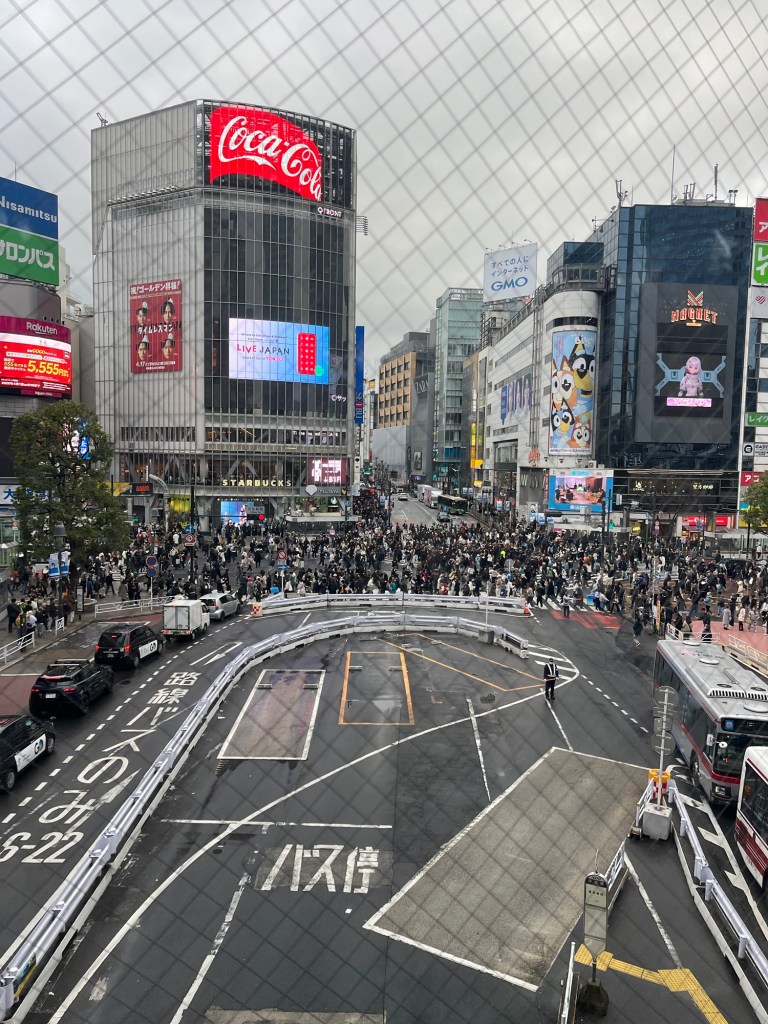
This morning I get up very early and get my work done. I am still stuck in another time zone and an early riser, which is convenient when you try to work remotely from the far ends of the Earth and still have time for play.
Eventually, the number one son wakes up and tells me he wants to visit Shibuya to see the infamous Shibuya crossing and to do a little shopping. My husband and I are happy to tag along. (This is our son’s long promised college graduation trip….that he has postponed for almost a decade.) Whatever he decides is fine by us.
The bus and the trains are deceptively quiet today. We must be later than the normal rush. But as we surface near Shibuya crossing in the rain, I see thousands of people amassed and waiting to cross the road. Every direction crosses all at once at the scramble light. And it is truly a scramble. I pull my hat down tight and set off into the fray. It seems important to choose my direction and fix my sight on a landmark building or electronic billboard. I have to walk with purpose or risk getting swept up into the crowd.
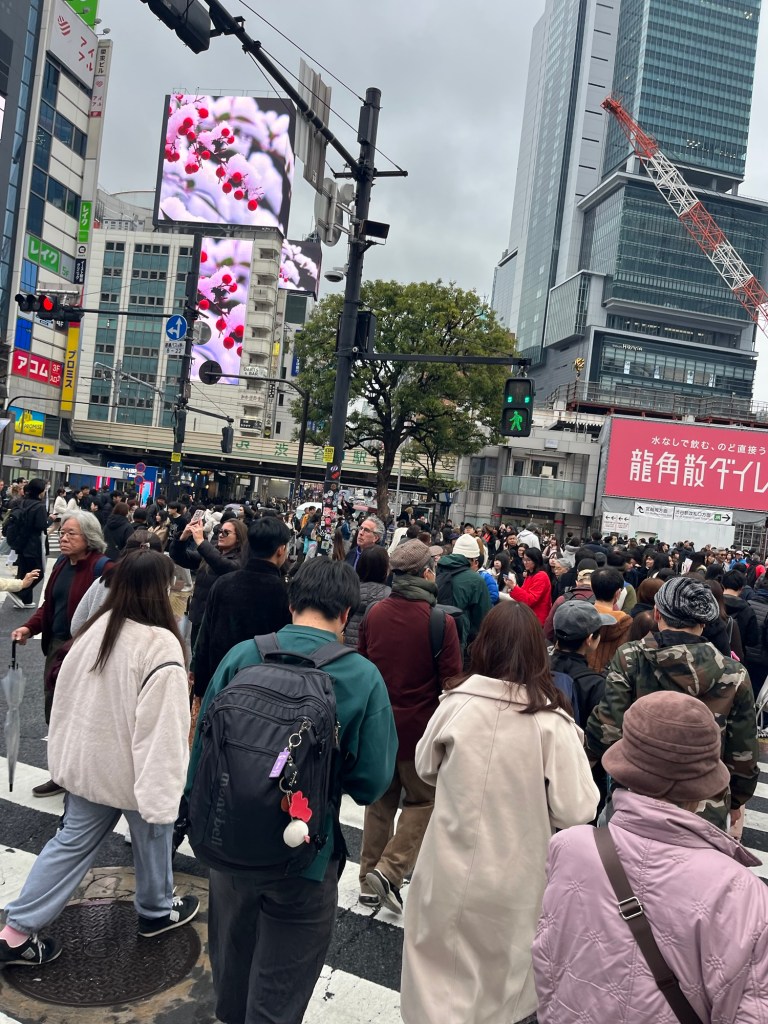
I make it to the other side, but now the question is where to safely stop to find my fellow travelers that won’t cause a traffic jam or I risk losing them in the crowd. It is a good thing that my son is tall and gives off a Viking vibe. He is easy to spot. My husband is also within site. Whew!
My husband tells me he is a little disoriented. At home, he says he finds me by looking for my long dark hair. In this crowd of Japanese women with beautiful long dark hair, that distinction is not helpful. I tell him just to look for the chubby girl. He wisely does not reply.
We head indoors to escape the heavy rainfall. The first mall is entirely dedicated to the Japanese fashion trend called of Kawaii culture (cuteness). Everything is pastel colors, ruffles, lace, and exaggerated innocence combined with lingerie. I am told distinct styles include Sweet Lolita, Jirai Kei (landmine style), and Maid cosplay. I see school girl outfits, little Bo peep themes, and any variety of clothing I don’t understand as every day wear. And yet I am in a multi-story mall that sells nothing but kawaii couture ….. and I am surrounded by consumers who are spending hundreds on clothing to wear to work and school that makes them look like a cross between a French maid and a student at Hogwarts. Some things I am not meant to understand. You go girls. But this is not for me.
We visit electronics stores and upscale retail shops. In one mall we find a space that carries traditional items from each Japanese province. We even find a haute couture pop up in which a Japanese celebrity is having a photo shoot. I am not cool enough to know who he is, but the international paparazzi certainly do.
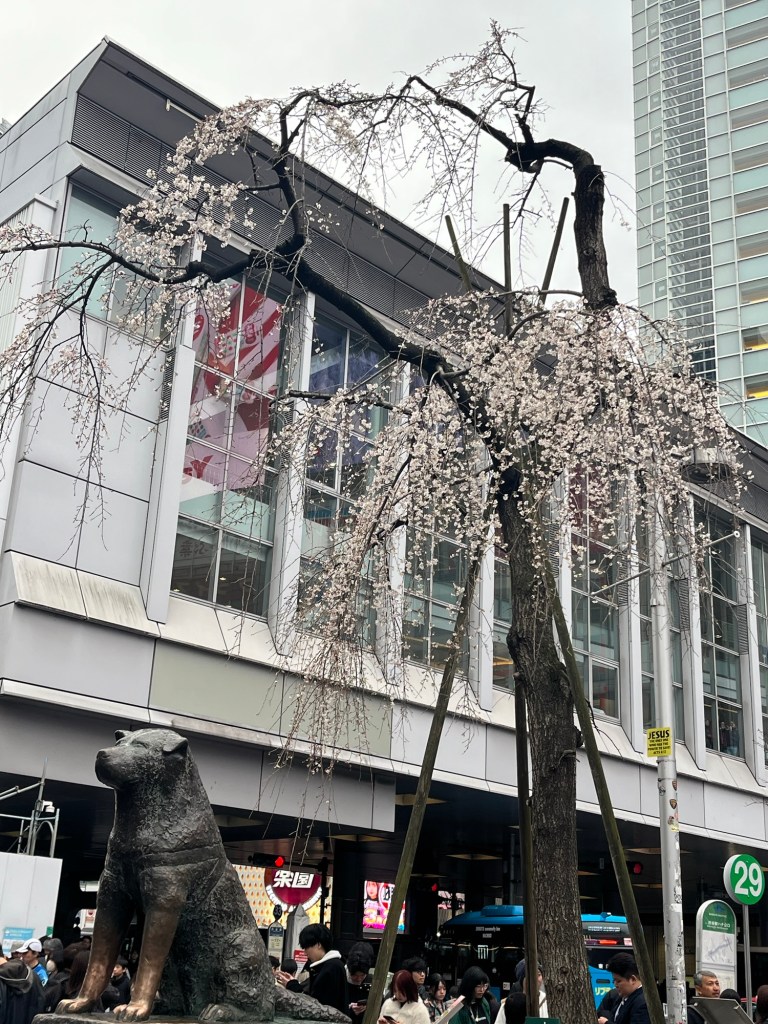
I decide that we need to find the corner where Hachiko, the loyal dog is immortalized. Hachiko went with his owner to Shibuya station every day and would return in his own to meet the train for his return. When his owner died. Hachiko would return to the station each day and wait until the last train left looking for his owner. This went on for years making him a national icon of loyalty. Today, hundreds crowd around his statue taking selfies.
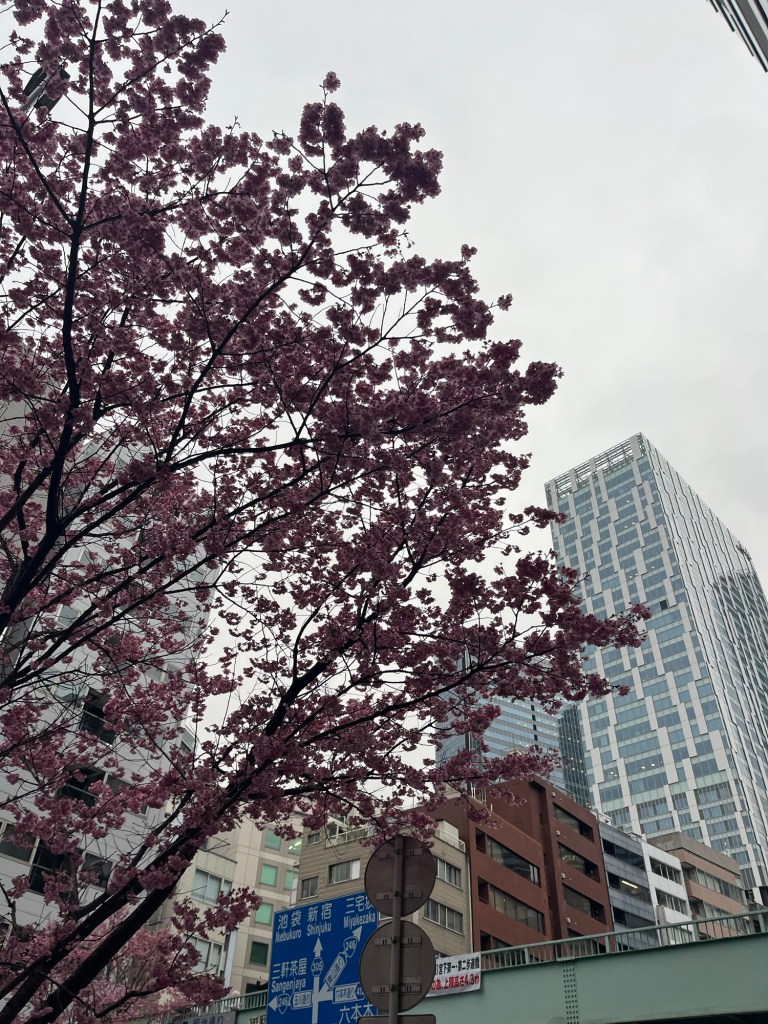
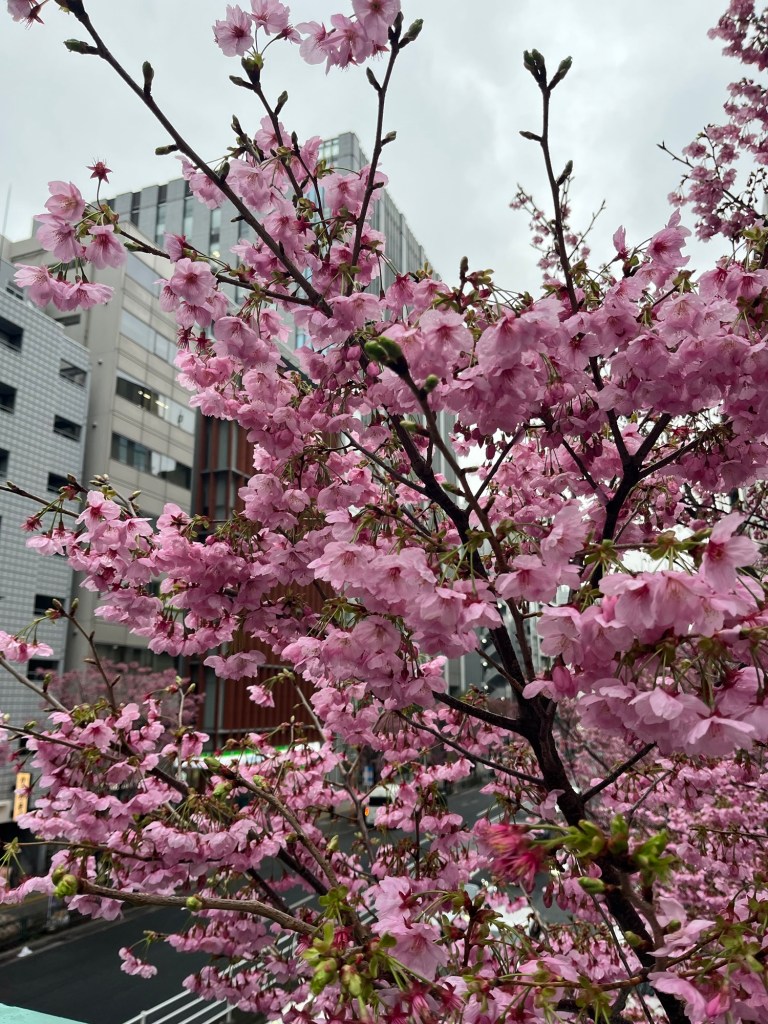
Just a few blocks away, the cherry blossoms are in early full bloom. They are glorious! We take photos like the Sakura struck tourists that we are. A lovely local man takes our pictures and strikes up a conversation and we are having a great time until…..he asks where we are from. We tell him the U.S. He gives a look that someone might get if you said you had a terminal illness. He abruptly hands me back my camera, says good luck, and literally disappears. It is really sad and sobering to see how quickly the country has slipped in international public opinion.
We travel to make connections and increase understanding and yet this is our new reality. People don’t know what to do. Neither do we. My analysis is a lot like Shibuya crossing. I don’t control what gets the green lights. I can see the chaos. I feel like a small spec in the swirling motion and I just do the best I can to navigate myself correctly while being as considerate of others I can. And deep down, I know which lines I will not cross and which corners I am willing to go against the crowd to reach. And finally, I know when it is time to go home and rest.
-
Verde to Tonto: Rural Road Trip
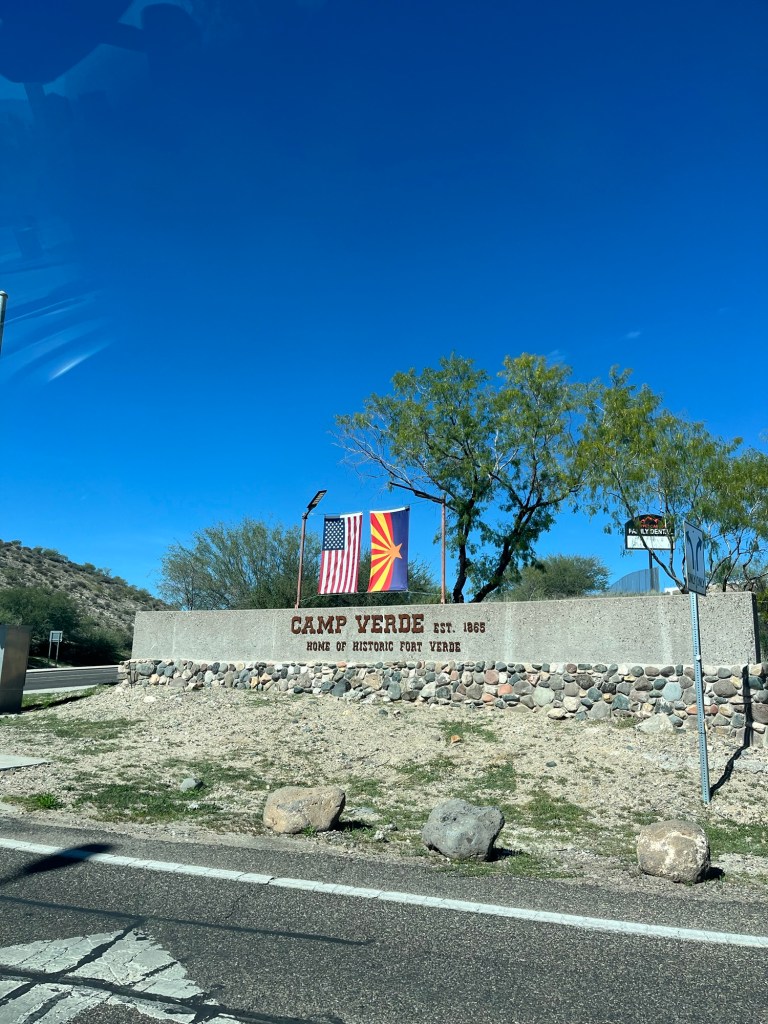
I wouldn’t call us aimless. But we have no plan other than to enjoy this beautiful weekend. The weather is perfect. Blue skies. Cool breeze. And we have a whole day ahead of us to enjoy whatever we can.
Our first stop is historic Camp Verde. It was a U.S. army outpost in the American West circa 1800’s. Conjure images of virtually any John Wayne movie and you can imagine the buildings and uniforms (interestingly, we learned that the yellow neckerchiefs were never part of the cavalry uniform….they just looked good on the big screen).
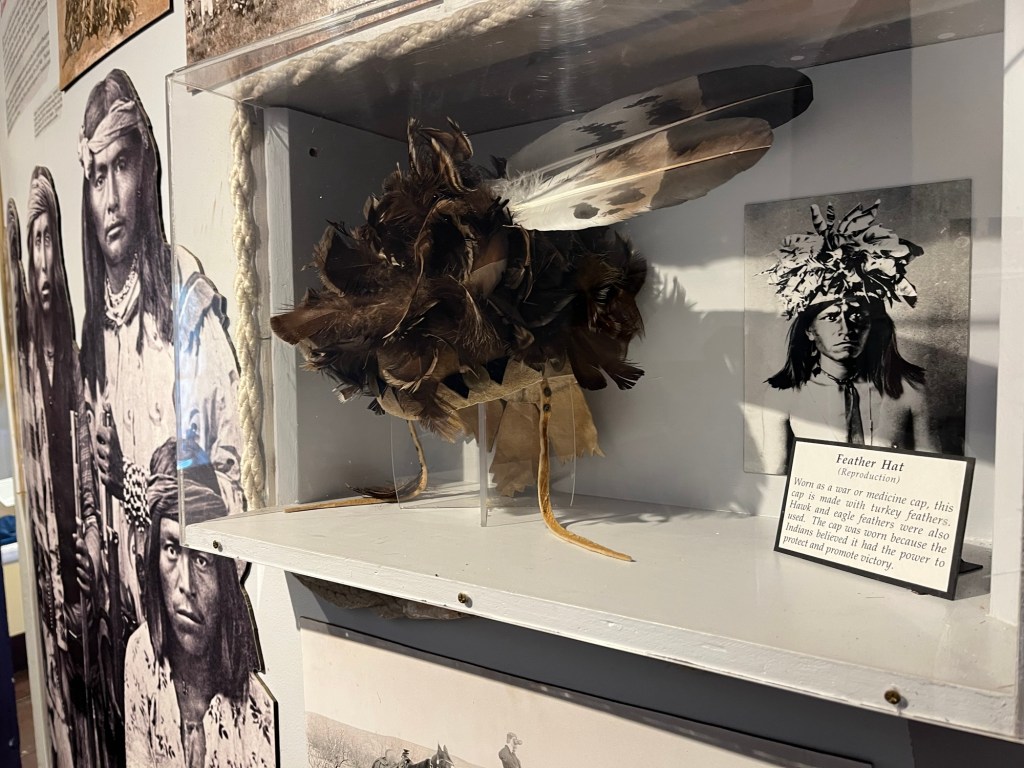
There are only a few buildings left at the historical park, but they were furnished with period decor and had a recorded narration. In the visitors center they had a great display on the Indian scouts. It is a tale of natives who helped the army and then were betrayed by men who believed the only good Indian was a dead Indian. It was an interesting stop and a cautionary tale.
After a long walk across the parade grounds to the bathroom building we find out we need a key. So we walk all the way to the visitor center to get a key so that we can walk back to the bathroom. Think about walking an entire football field twice and then turning around and doing it again and again. You get the idea. There has to be a better plan, but at least we get our exercise. Still shaking my head at the craziness and a little relieved that no one was having a bathroom emergency, we left the historical park and headed to town.
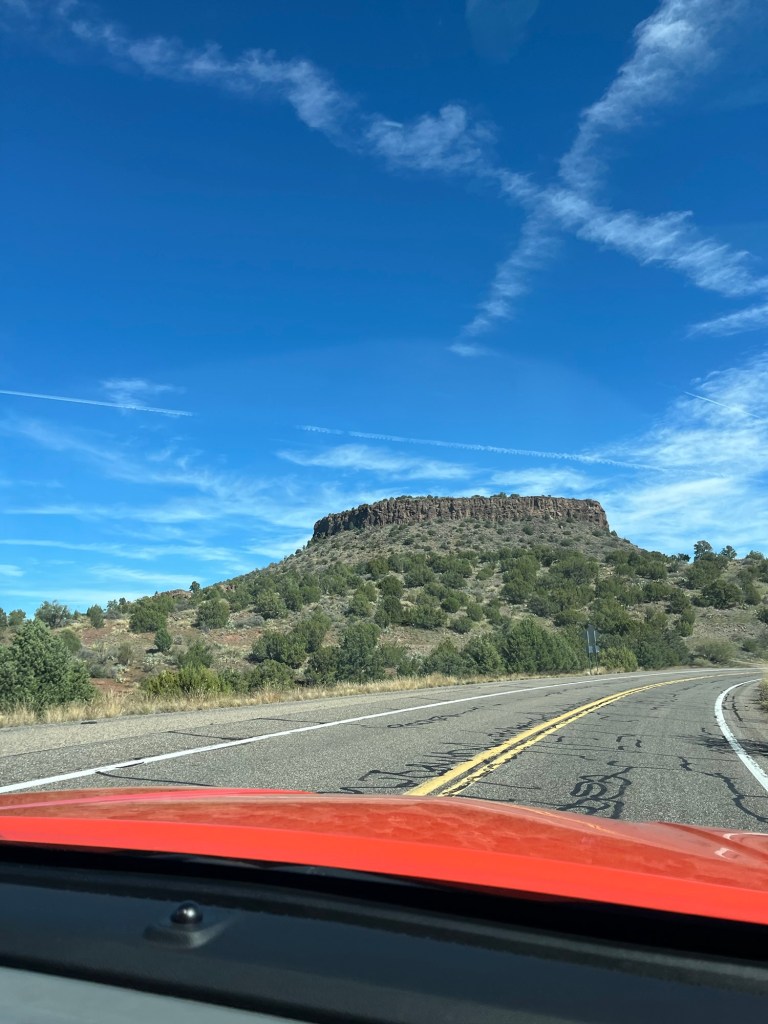
We find a few antique shops in Camp Verde but it is too beautiful to be indoors. Instead, we turn the big orange truck east toward the Tonto National Forest. There isn’t much traffic (or anything else) out here. But it is a spectacular weekend drive. The views from the road of mesas, canyons, and endless sky make the drive worthwhile.
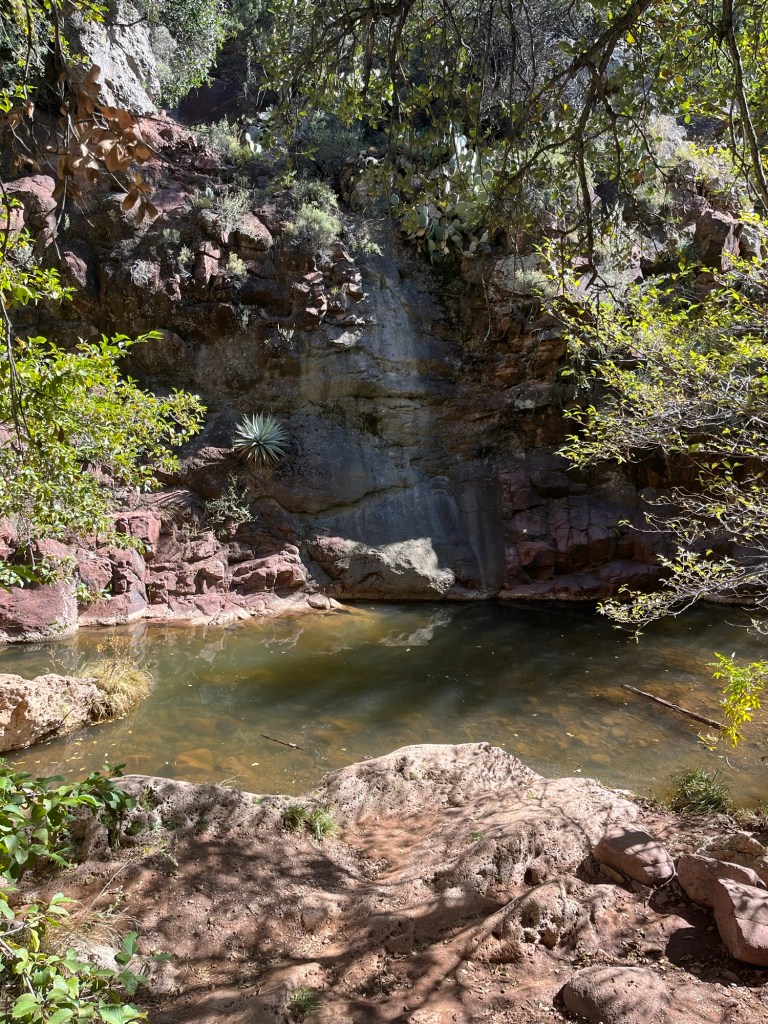
Eventually we see signs for Tonto Natural Bridge National Forest. We turn onto the access road and hit our first traffic jam. It seems to take forever to inch our way to the fee booth. By the unexpected traffic we decide it will either be spectacular or it will be a crowded mess.
Once in the parking lot, we try to follow the map to the viewing area. We can’t see a thing, but must be standing on the natural bridge. The map is confusing and there is no signage or landmarks. We take a trail to the right and find ourselves amid boulders. I did not wear rock climbing boots. I will need to go to the car for my hiking gear if we are going to scramble.
We decide to go back up to the top of the trail and turn left. There is a trail map and signage. This is definitely more promising. And so we hike. I still haven’t changed out of my flimsy cute shoes (essentially ballet flats ……don’t judge me, the truck is a long way away). We descend into a deep canyon. Down and down we go. A mile in and I am hoping we actually find the natural bridge, because by the time we walk out of here I know the husband isn’t going to want to explore another trail. A river appears and we follow it toward the mountain.
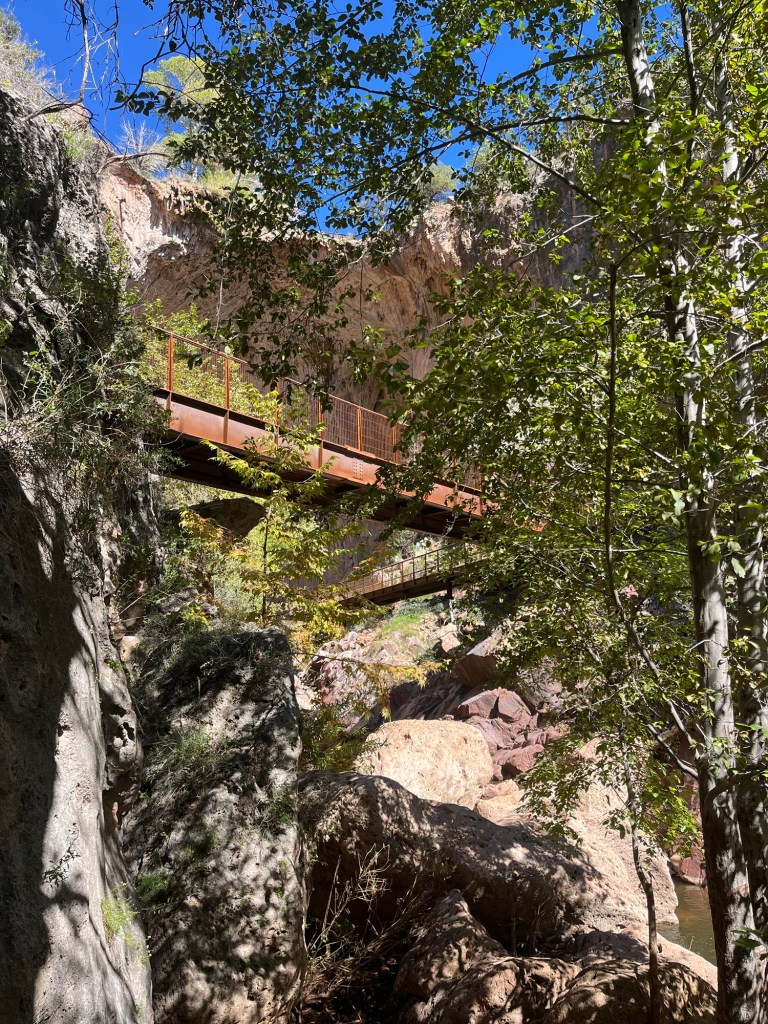
Now we are climbing stairs. My husband is mumbling about climbing down a mountain only to go up a steep staircase. There is a footbridge over the river. As we leave the footbridge we can see what looks like a giant cave. A waterfall cascades from the opening into the river below. We also see all the people that created the traffic jams, but we haven’t seen since. Dozens of people sit in a seating area and dozens more are scrambling over rocks down deeper in the tunnel.
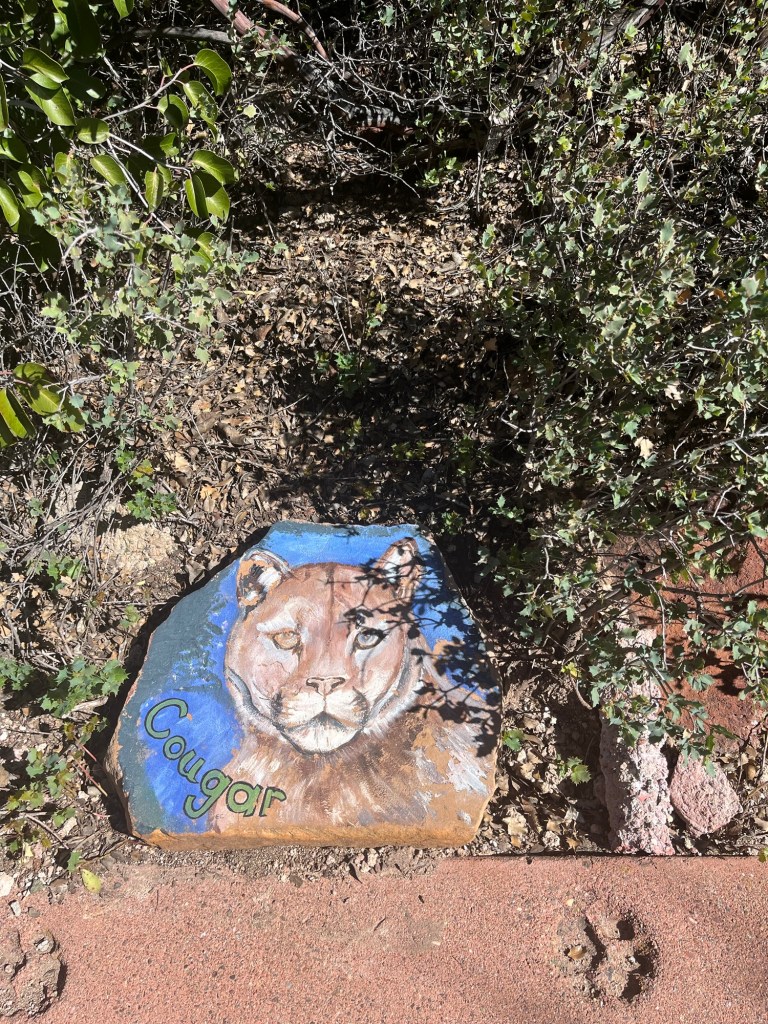
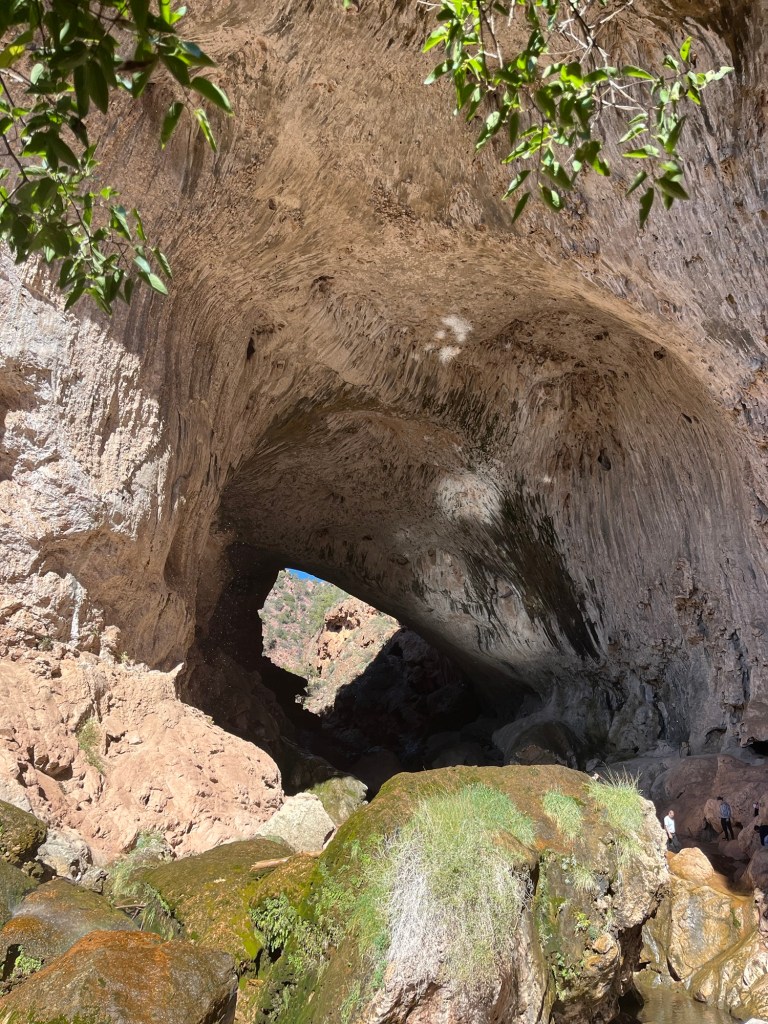
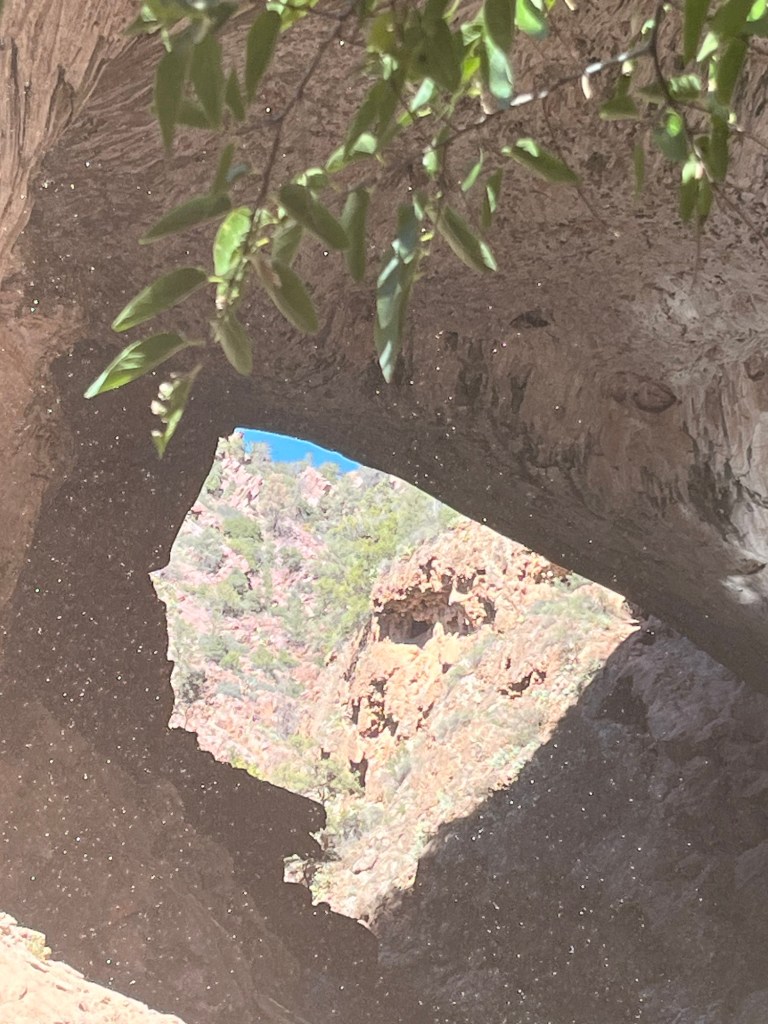
As it turns out, if we had taken the scramble from the first trail we would have been under the natural bridge and eventually ended up here. I have no idea how long the trail stretches across the boulders. It looks more strenuous than I am prepared for. Once we enter the opening, we can see that this is indeed a natural bridge and not a cave. It is massive and beautiful. Pictures do not show the size. I feel very, very small in its shadow.
Despite its beauty, I can only stare at rock for so long. Eventually, we make the long walk back out of the canyon. The trail is steep and rocky. My flat shoes are still a poor choice for rocks, but I am making it work. We pause to let people coming down the trail pass and to catch our breath. A couple asks us if there really is a natural bridge somewhere. We affirm they are almost there. It seems we aren’t the only ones that find the park map confusing.
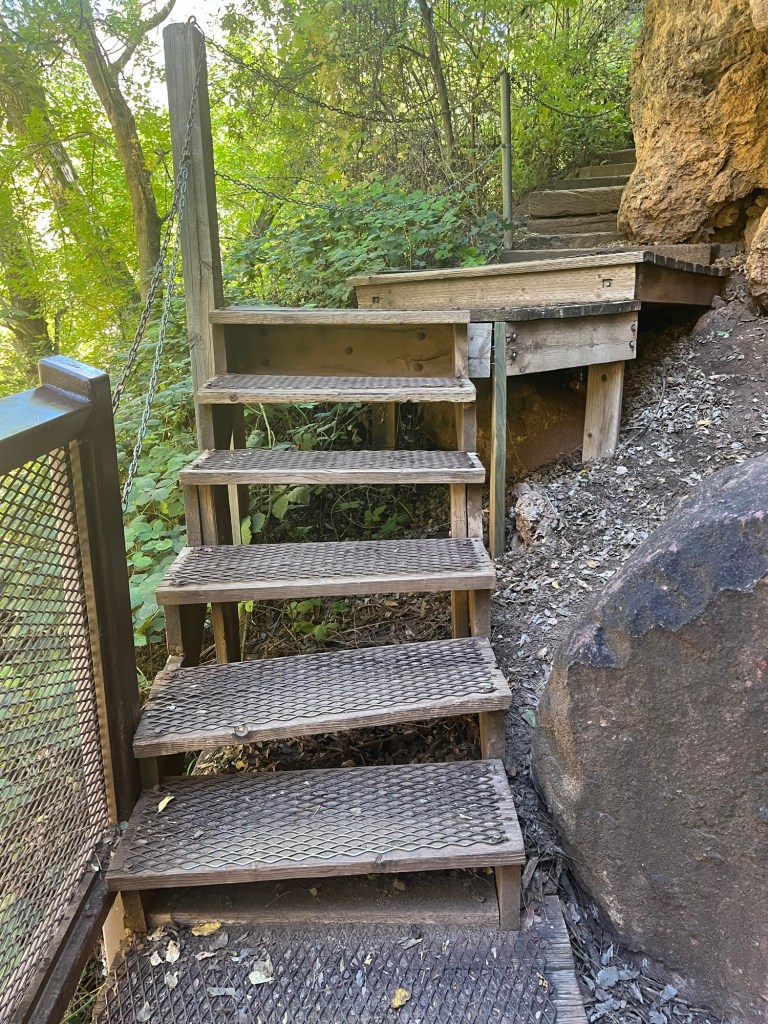
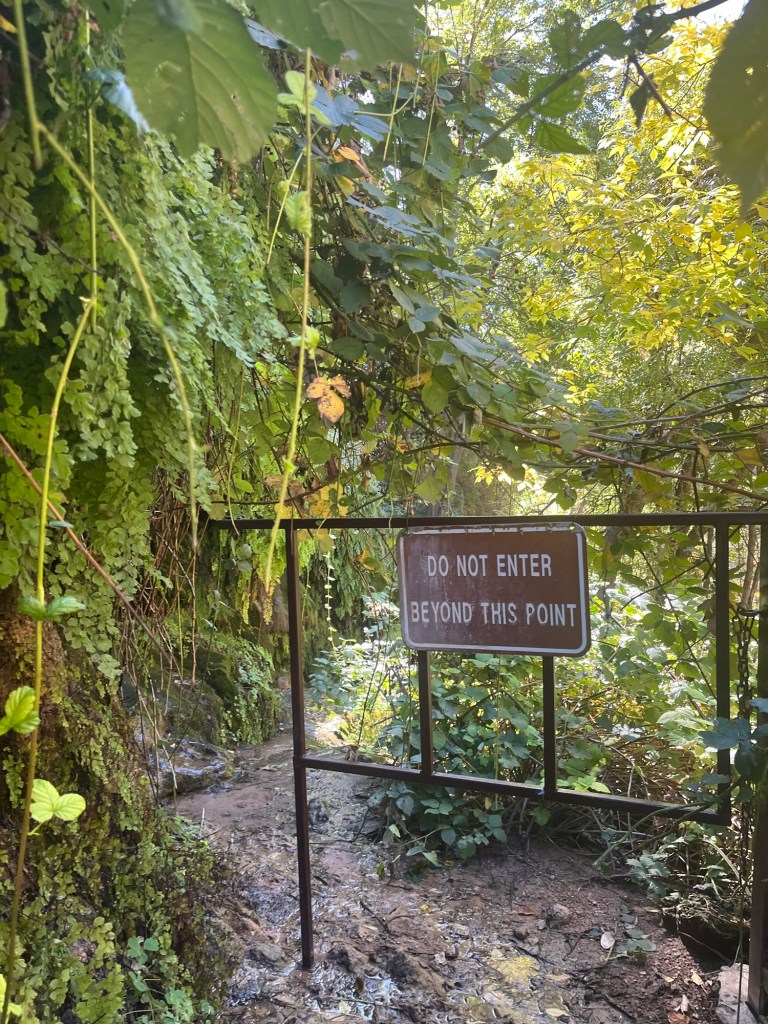
We picnic in the park. A cheese sandwich and some chips never taste quite as good as they do after a hike in the woods. With peach juice dripping from my chin and fingers, I decide to solo hike through the forest along the river trail between the mountains. The bees find me and keep me company as I navigate steeps steps down into the canyon. Eventually I encounter a barrier. The trail is closed due to rock slides so I must exit the way I came in. Now I head up the hundreds of stairs. Great cardio…..at least that is what I tell myself. If it doesn’t kill me, it will make me stronger?
I am tired when I reach the truck and so we say goodbye to Tonto. It is a great stop that I really didn’t know about until today. It is the best kind of discovery.
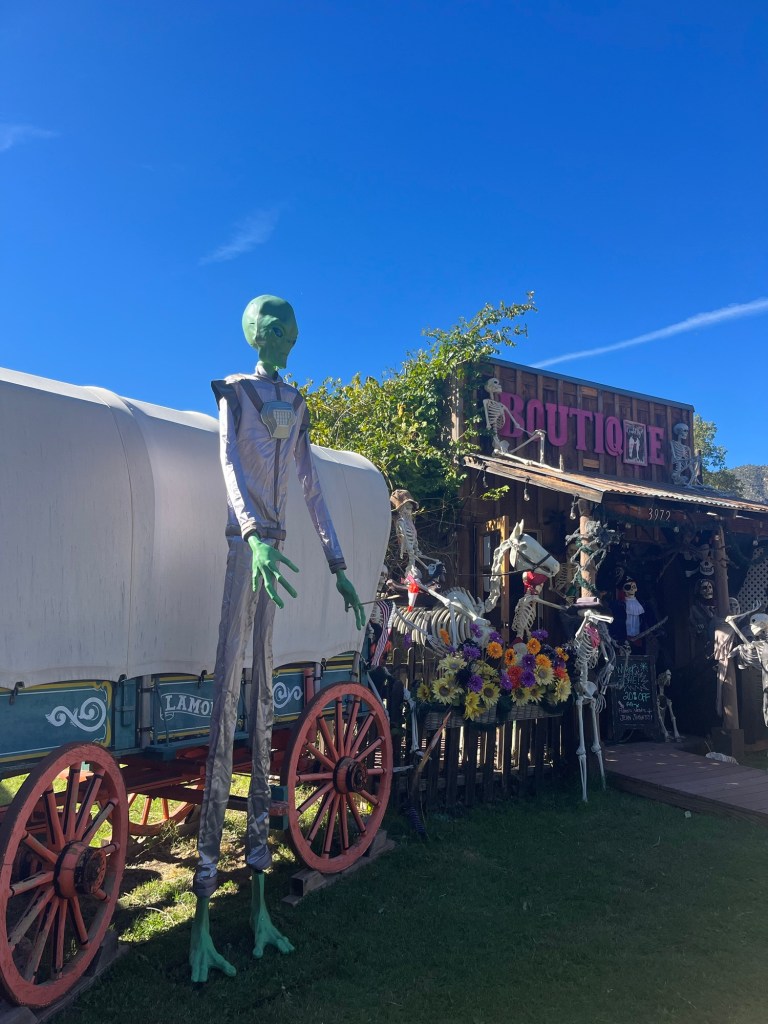
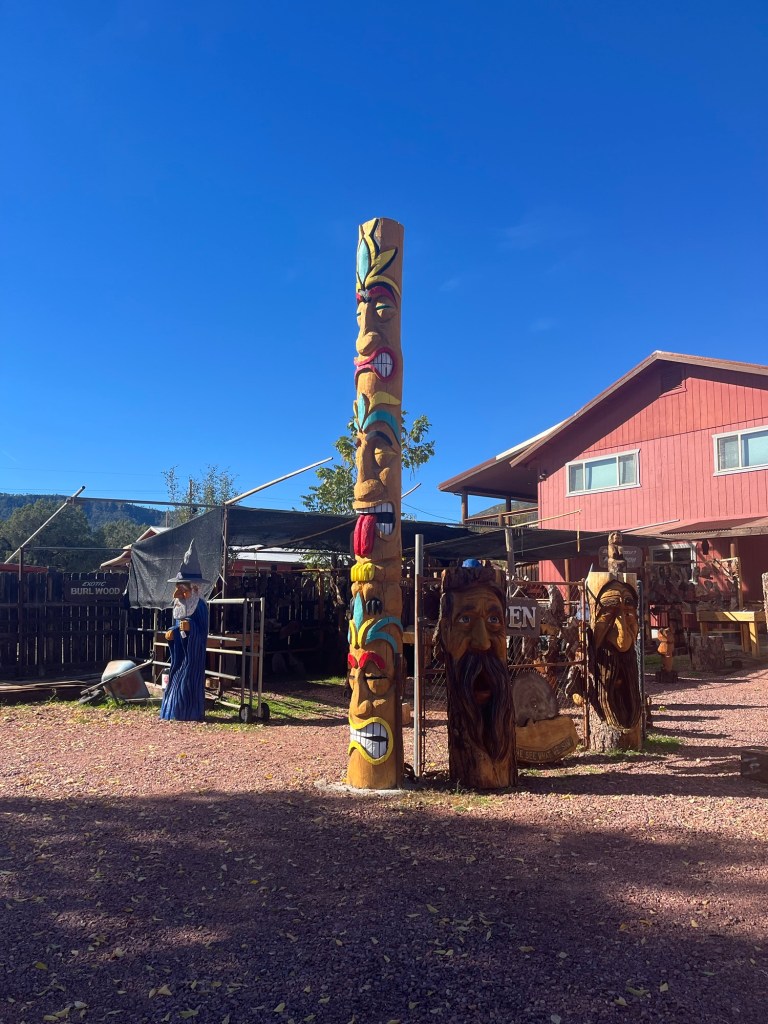
A person we met earlier in the trip mentioned he was from Pine, AZ. He talked about the beauty of the place, the forest, the elk. I have never heard of it, yet suddenly here we are in Pine. Weird. It catches my attention. It would be hard not to. The town practically screams at us to stop. There are aliens and totem poles and ice cream and kettle corn. Small shops are jumbled in clusters under the trees.
We end our day wondering through the eclectic buildings and striking up conversations with the cast of characters who run them. It is oozing small town charm or maybe just kitsch. With a few dollars less in our pockets and a few treasures tucked in our bags, we turn the big orange truck back toward verde river. Big orange will thankfully make better time than the cowboys on horseback from my Western movie childhood. We will be back in the rv by dinner time.
And that is how you turn an aimless day into memorable….
-
Animal Cafe Takes My Stress Away: Travel Goals Japan
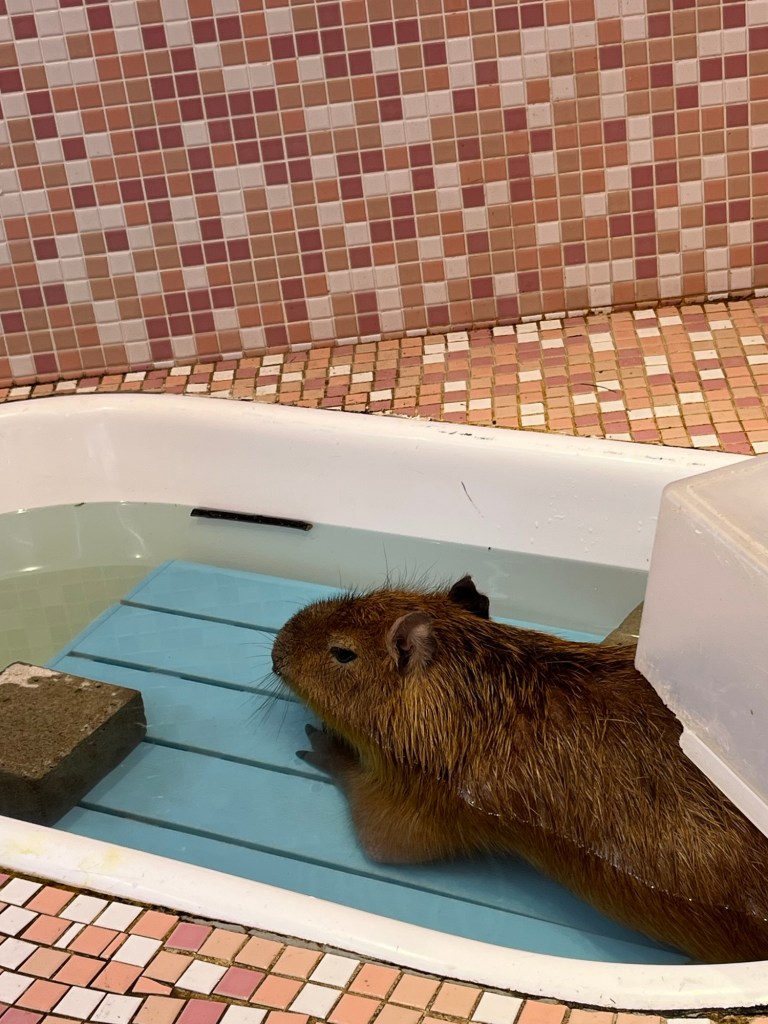
In Japan, for about $15.00 you can spend an hour having unlimited tea, coffee, and soft drinks while cozying up to wildlife of your choice. There are puppy cafes, cat cafes, pig cafes, capybara cafes….the choices are limitless. After passing dozens of these anima cafes, the number one son and I decided we needed to see what it was all about. We opted for a multi-pet cafe.
I went in skeptical. This can’t be good for the pets. Can it? Being handled by endless people, day after day can’t be anything but stressful. And yet….Honestly, I loved it.
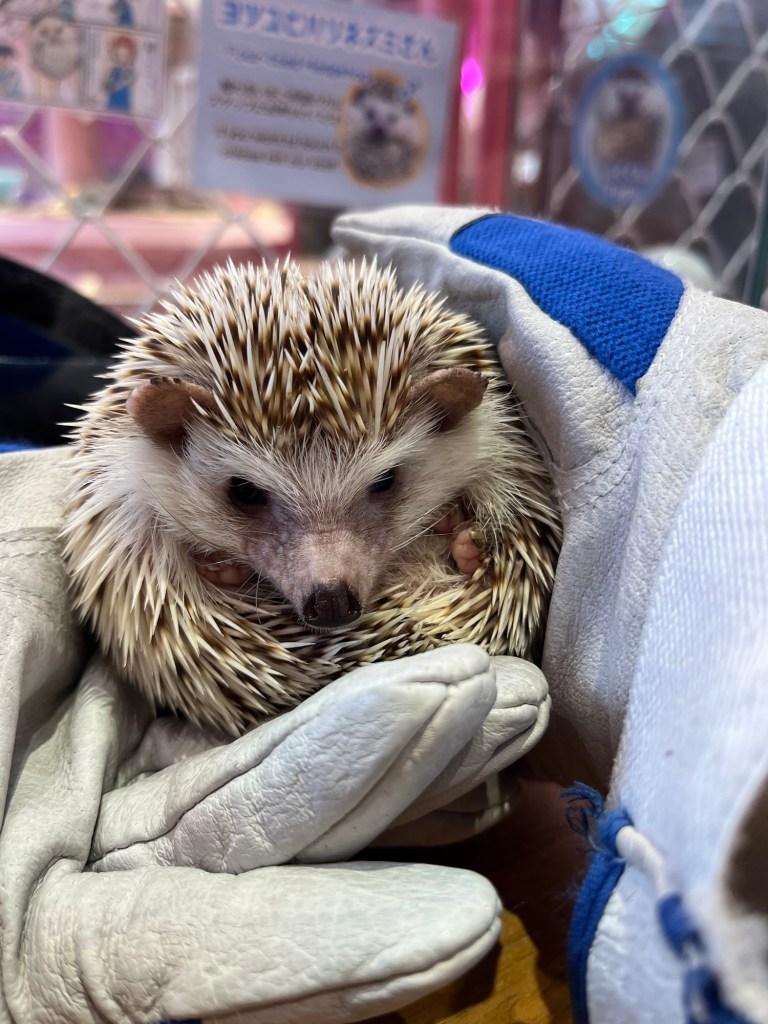
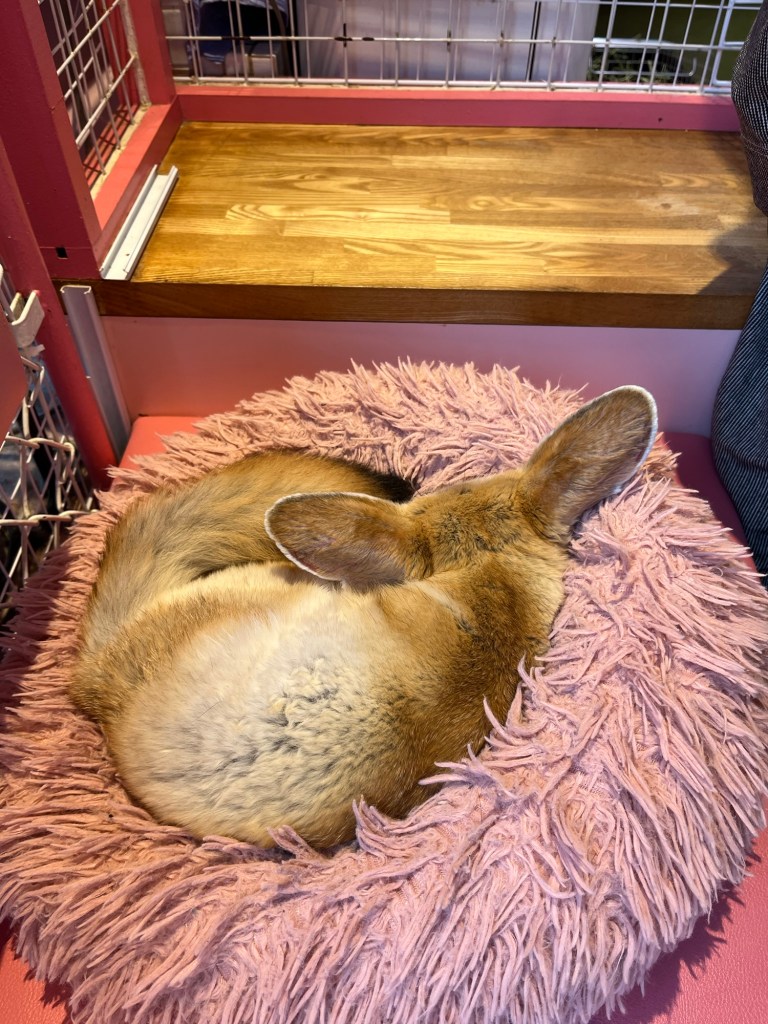
The animals snoozed. They ran in circles. They approached the people (who were limited by entry times). They ignored everyone in off limits areas where they could go if they didn’t want to be handled. The workers treated the animals like children and they responded with playful abandon.
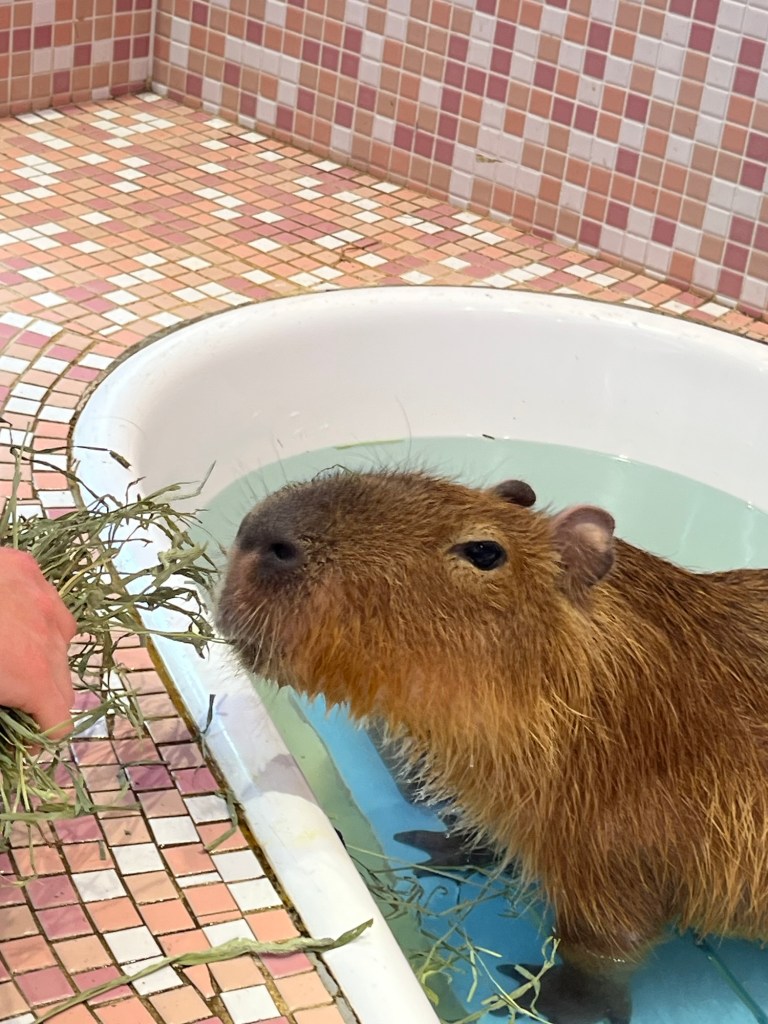
And so reluctantly, I began to appreciate the experience. When else will I pet a relaxed fennec fox or feed a bathing capybara? Donning gloves, I fell in love with a hedgehog who only wanted to cuddle in my outstretched hands.
The meerkats wanted to burrow in blankets or the keepers overalls. The ferrets ran around an indoor obstacle course. Overwhelmed, I sat down and let the workers decide which animals needed my attention.
I am amused when Number one son let his meerkat escape his lap and make a made dash toward the ferrets. Alas, he was apprehended before he could crash the ferret’s party. But he was unpaused in his enthusiasm.
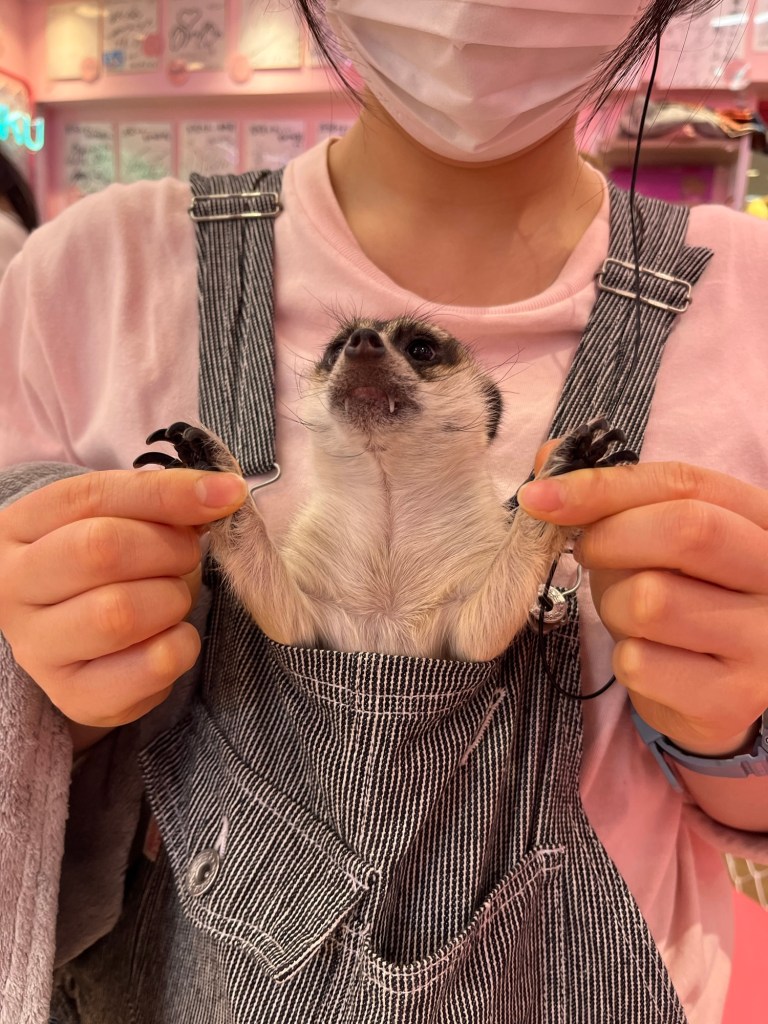
Between cups of hot tea, we played and laughed like children. It is good to connect with living creatures. It is good to remember that stewardship matters. It is good to laugh out of pure joy in the moment. I still understand all the ways that an animal cafe can go wrong…but on this day, every thing seemed exactly right.
-
Meiji Morning: Travel Goals
This morning I wake up with the sun. It is a mystery to me how my internal clock always knows sunrise. Even on the other side of the globe, I’m up at the first hint of dawn. Last night we arrived in Tokyo after nineteen hours of travel. Unsurprisingly, the boys are still fast asleep. I should be, instead I am doing my best to quietly find my way around a strange new kitchen and somehow make coffee.
Despite not having a coffee maker and having cups the size of thimbles (I exaggerate, but not by much), I finally get enough instant coffee in my system to function. While I wait on my husband and my eldest child to awaken, I spend my time trying to figure out our public transportation options and to find a low key interesting destination that will ease our way into life in Tokyo.
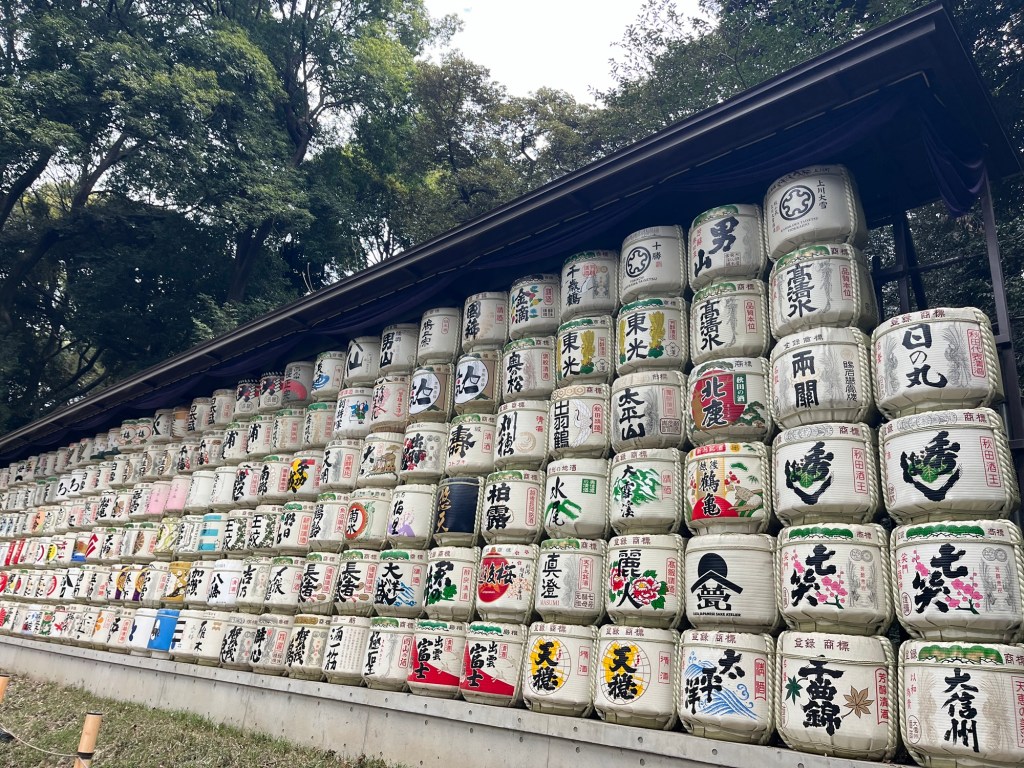
Once my guys are awake and fed, we head to the bus stop at the end of the street. It looks like we can take bus 32 or 33 to the train station and save ourselves a long walk each day. I use Google Maps to navigate because I have no idea where I am going and the bus driver doesn’t speak English. The bus stop signs are in Japanese. The Google Translate camera isn’t great with the scrolling messages on the bus message boards, but Google Maps is showing our location in real time. Thankfully, occasionally we get a brief visual of the stops using the alphabet instead of Japanese characters. I can work with that. I chuckle because all the recorded bus messages are in Japanese, except for one that tells me to “please hold on tight” as if to say buckle up buttercup you are in Japan.
We exit the bus at the stop that Google suggests. We need to find Shinjuku Station (perhaps the largest train station in the world), but there is no station in sight. We follow a sign to an under ground complex. Still no station. We walk with the crowd, but are going the wrong way. Sweet baby Jesus, I need to find this station or my travel mates may not let me hear the end of it. Of course, they can always help navigate.
Eventually, my husband finds a sign and we find the station. We discover that Google Maps is often confused in multi story structures (especially if you are two or more layers underground). But perhaps we have cracked a code and solved the how to get to the station from the house issue. Next time we will ignore Google and ride one more stop to the main station.
Next we have to find the JR Yamanote train line. It turns out to be easier than I thought. We are only going two stops to Harijuku so we don’t care that the train car is crowded and that we have to stand. Our destination is the Meiji Jingu Temple park.
One look at the large park full of trees and the guys want to eat before we head into the sprawling temple complex. Apparently they have traveled with me before and see this as their last chance for sustenance before I hike them to death. We walk around the street in front of the train station, but the many choices make us even more confused. We look up menus online (because they are in English) and google the address. Then we walk in circles. Oh wait, the restaurant is likely underground….maybe we learned something this morning….maybe. Yes! We find the restaurant, but as we enter we are shooed outside before we can get in the door. I am confused and trying to decide where to go next when the hostess comes to get us. Apparently the restaurant is small and etiquette dictates you wait in a line outside until they ready your table. We apparently still have a lot to learn.
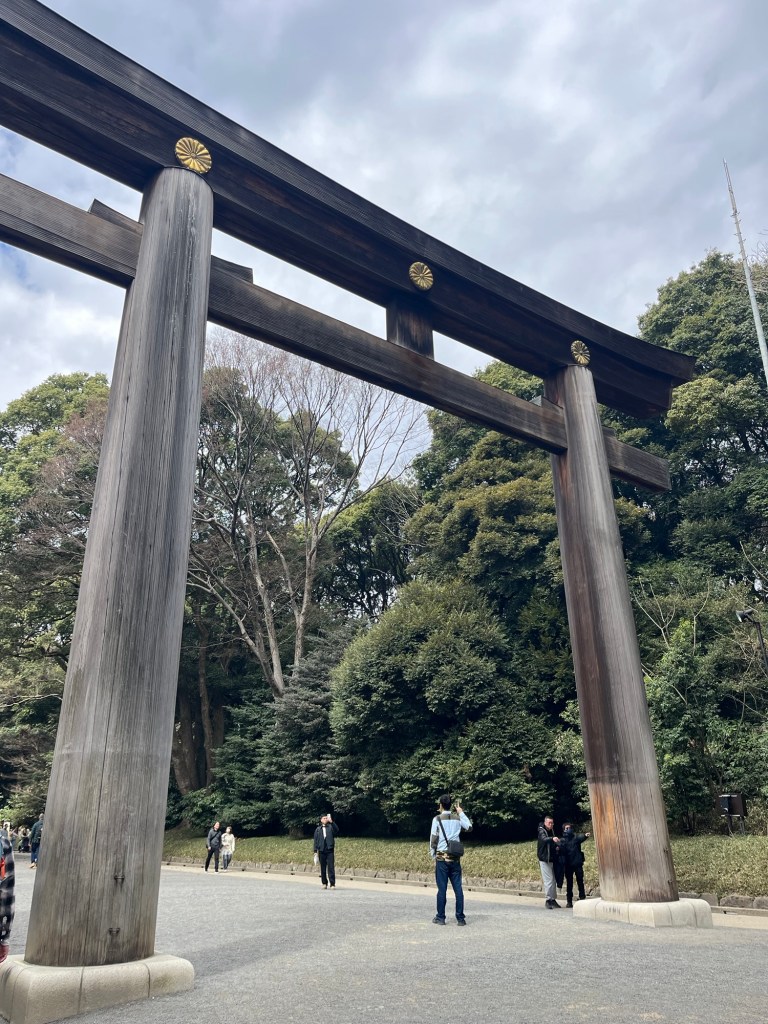
Full of noodles and happy to conquer the park, we head across the street. I am in love as soon as I see the first giant wooden Tori gate. I know the temple was built for the Meiji Emperor early in the last century but the gate feels ancient and timeless. Trees line the walk and I feel I have entered another world.
I convince my crew to visit the Empress Garden first. My husband recoils at the word garden, but my number one son is happy with the choice. I love sharing this place with him. He has been interested in Japan since he was a child. Perhaps he will enjoy some things my husband will not (sushi, tea houses, gardens…). It is nice when someone shares your enthusiasm. Of course they will bond over baseball, Godzilla, and the endless electronics stores that will come later I’m sure. Then I will be the reluctant follower. We balance.
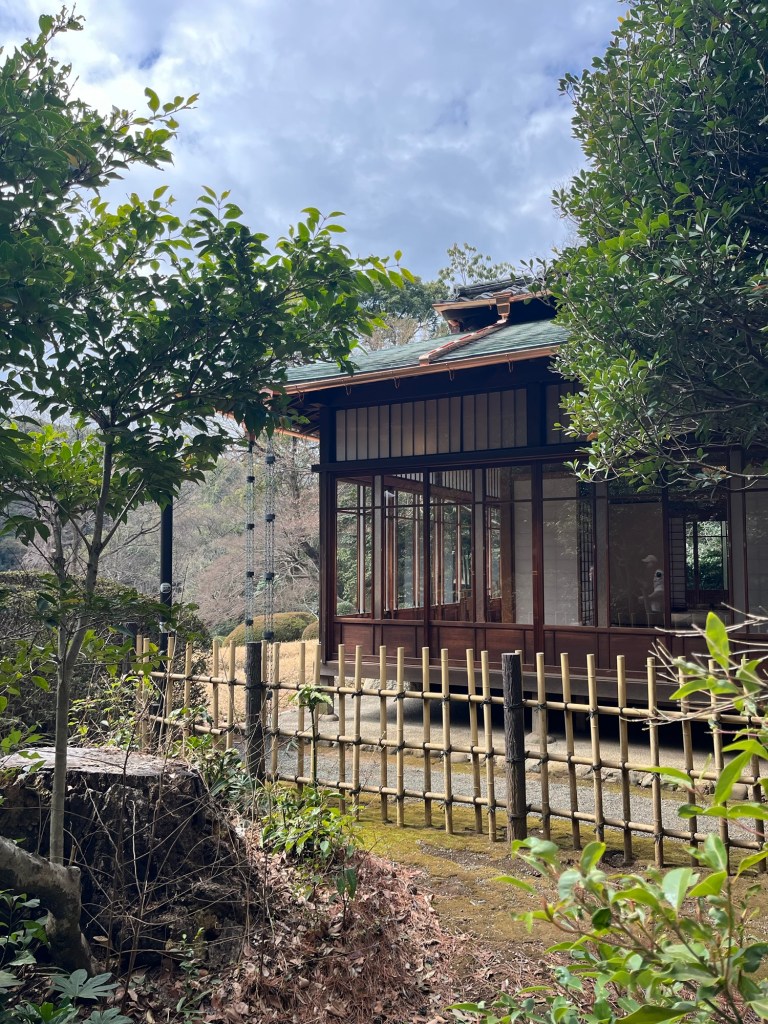
The garden is serene with a traditional rest house. It is beautiful but understated. The lake is dry and the spring is not flowing. It is an unfortunate circumstance for the gardeners who are doing their best to work around the situation. I bet it is stunning when the water flows freely.
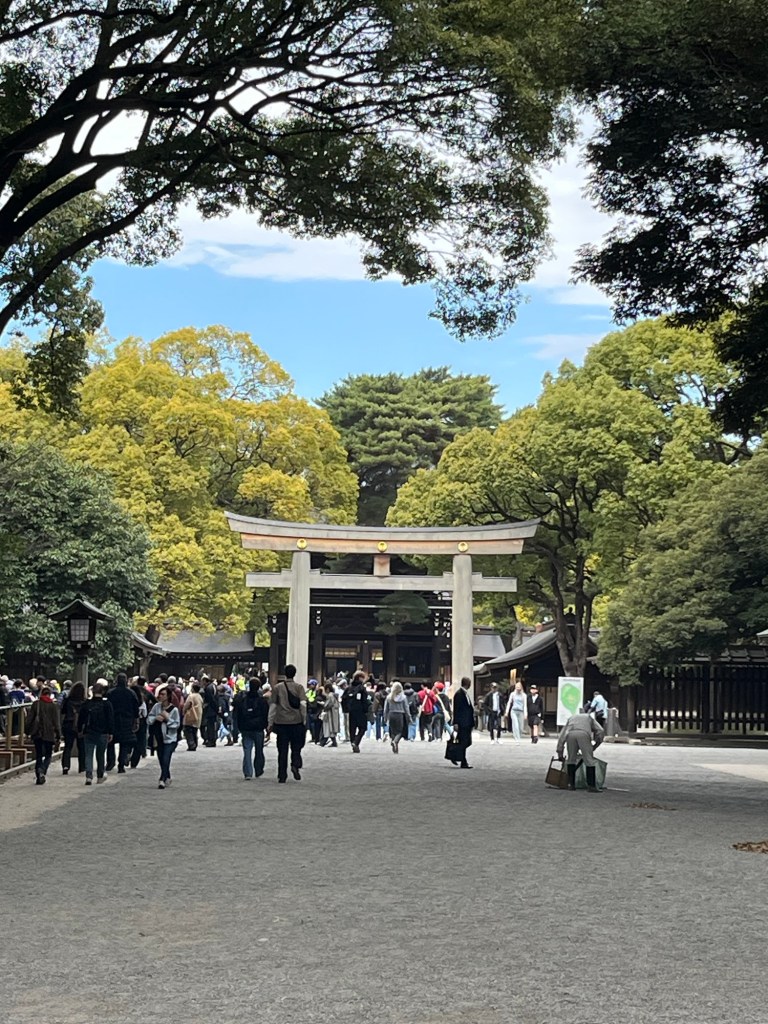
We walk on. The blue sky and the multi shades of green trees are a perfect setting. We stop at the purification fountain. There are directions in English. To enter the temple we must put our right hand under the fountain and take water to pour over our left hand. Then we must take water in our right hand and touch to our lips. Then we must bow at the Torii gate before crossing into the temple. I want to be respectful so I hope I do it correctly.
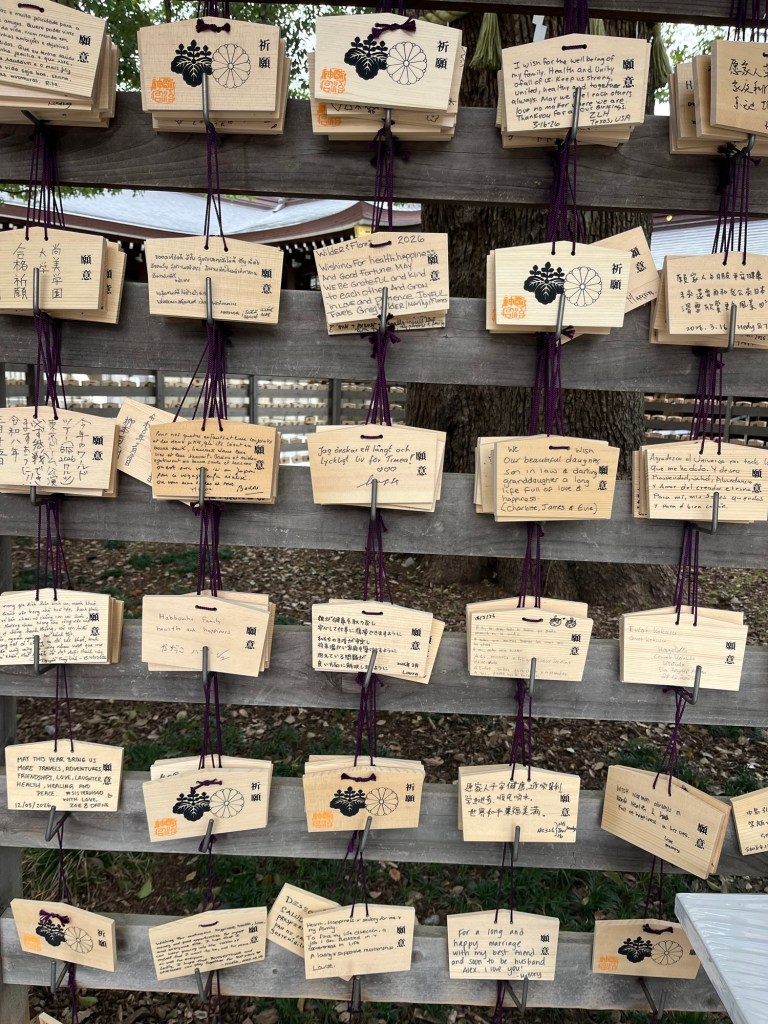
Inside there are multiple places to buy good luck charms and prayer cards. I take an offered peice of paper, write my request, and then place a prayer for peace in the world into the container to be added to the multitude of prayers said by the priests today. The world needs them and the Lord hears the cries of the needy.
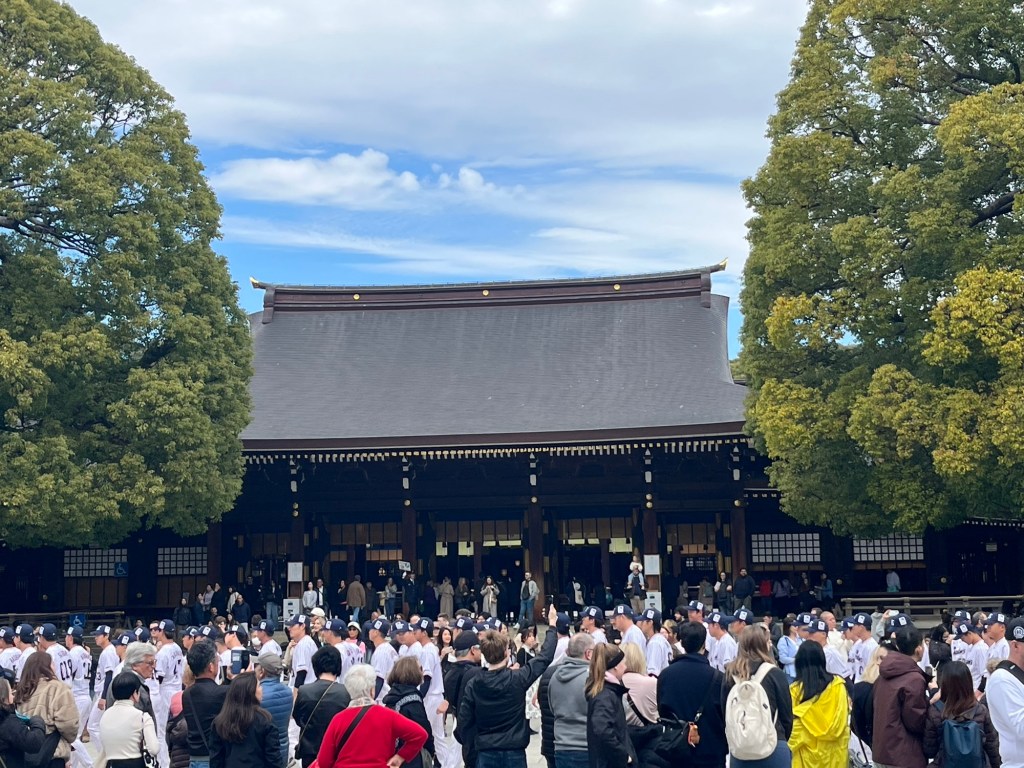
Suddenly, the path is blocked. A crowd has gathered. I am not sure what is going on. We tiptoe to a see beyond the wall of people. My son, who is very tall, tells me that the monks are leading in a procession of baseball players. We find out it is the blessing of the team that marks the beginning of the season. People have turned out to witness the blessing and to offer their own prayers for good fortune. It is special to watch. I think about opening day at home in St. Louis. We just have Clydesdales. This is feels more serious.
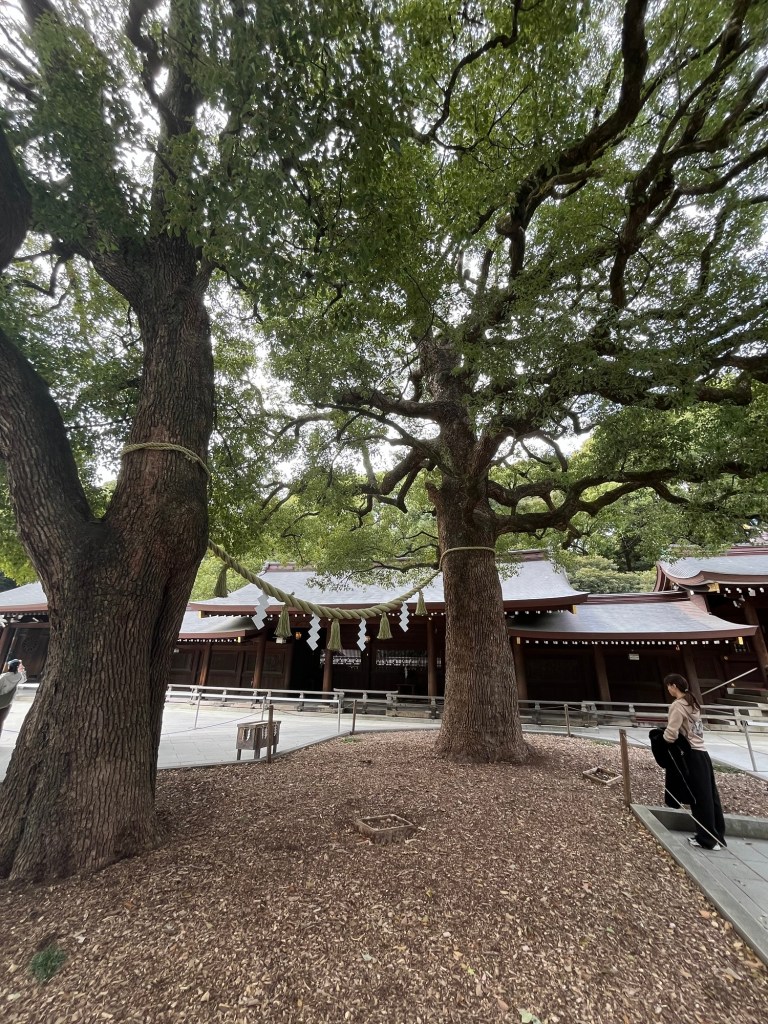
Eventually the crowd thins. I am taken in by the simple beauty of the place. I am drawn to the “marriage” trees whose ropes and tassels symbolize the sacred. Couples and individuals pause to pray. So do I. It is as good a place as any to give thanks for my marriage and my partner of several decades. We aren’t perfect, but we are doing our best and I am thankful.
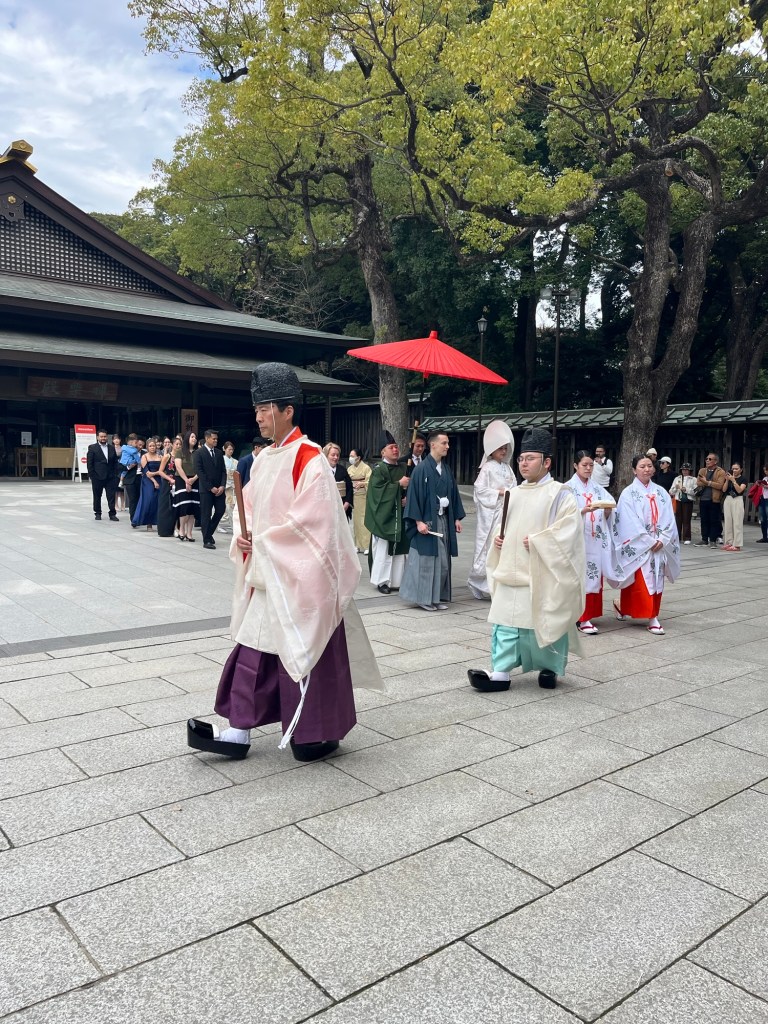
Just as we are leaving this beautiful space and I am thinking about marriage….how wonderful and how hard it can be….. A guard orders us to stand back behind a line. He pushes everyone back and then further back. We of course comply without knowing why. Within a minute, a traditional wedding procession takes shape. The bride is beautiful in her white kimono and large hat. The groom is smiling. They are covered by a large red umbrella, a symbol of shelter. The priests lead the procession into the temple. The guests follow. I hope they stop at the marriage tree and take a few seconds to understand the importance of roots and grounding. I hope they are as fortunate as we have been.
Japan is off to a great start. I am reminded that the conditions of life are not always convenient and can sometimes feel overwhelming. But if you choose wisely, you will find a partner to travel with who won’t really mind if you are up with the sun or sleeping in. They will co-navigate or at least understand that you are never really lost if you are together. They will laugh with you when the universe tells you to “hold on tight”. Pick the right travel partner and all of life is one crazy adventure after another. It has been a magical Meiji morning. I can’t wait to see what happens next.
-
Campground Halloween Fun: Rural Road Trips
Part of the fun of camping is meeting other campers. It happens while taking a walk, doing laundry, or buy firewood. Conversations happen naturally between people who love the outdoors. But Halloween camping gives us a great opportunity to participate in a community ritual and connect with a whole new crowd. Here at Verde River Resort (Camp Verde, AZ) most of our fellow rvers are either snow birds or families who come every year for the Halloween spectacular.
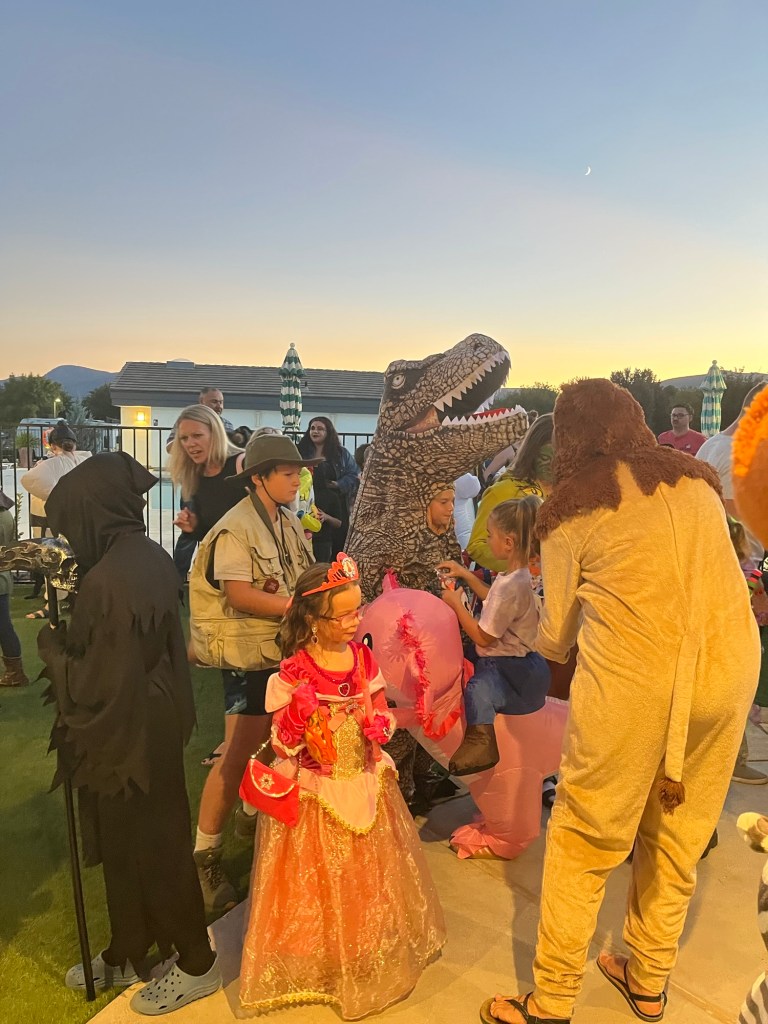
Campsites are elaborately decorated with lights, cut out figures, and blow up monsters. Everyone seems to be wearing a custom. My tiny witches hat, that I tucked in the rv on a whim, isn’t a blip on the radar. These folks are Halloween professionals.
The resort hosts a monster meatloaf dinner. We line up for giant slabs of home cooked comfort with sides of mashed potatoes, corn and rolls. Sitting at round tables with strangers who act like we are old friends, we tell stories and watch the costumed crowd line up for a best dressed contest.
I am quickly slipping into a carb coma, but I make my pick ahead of the judges. There are teenage siblings who steal my heart. The boy is Bob Ross with signature hair and paintbrush in hand. His sister is a happy little tree complete with picture frame. It is too cute for words and perhaps the most creative homemade costume I have ever seen.
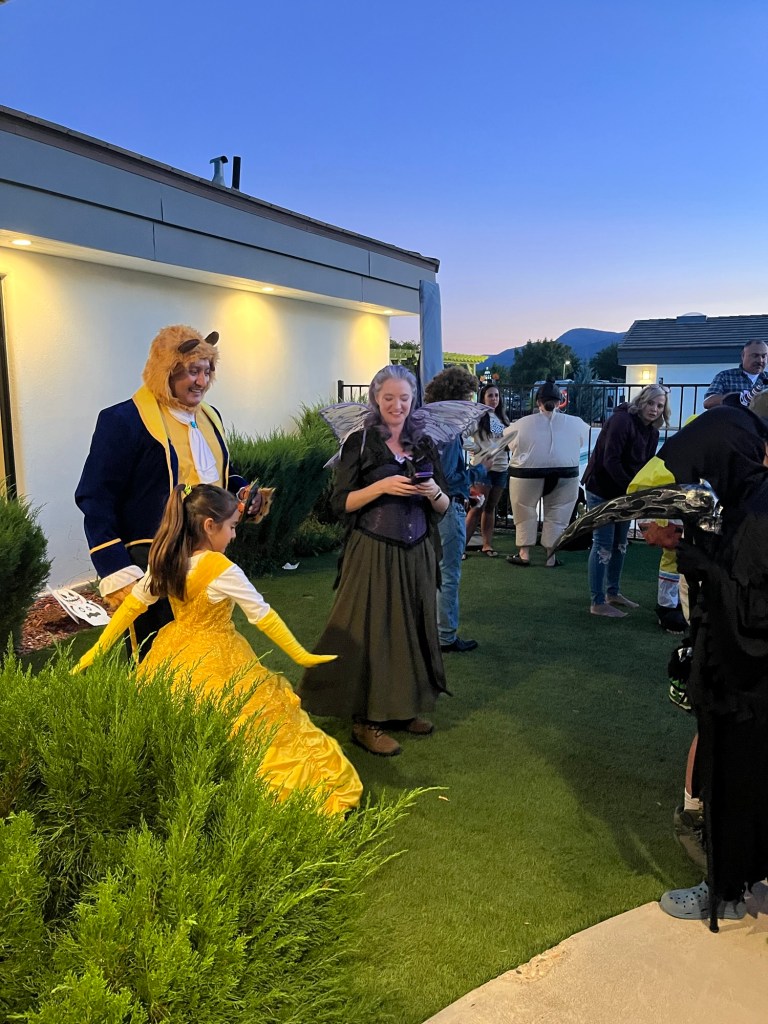
I also notice a princess parade. In between the Ariels and Elsas, there are dinosaurs and even a sumo wrestler. Belle (age four) comes prancing onto the patio stage. Her father has dressed as the Beast. It is clear to me that he thinks his daughter is definitely the “Belle” of the evening. The interactions are too sweet, I can’t help but smile.
After dinner, the crowd walks across the park on a trick or treat parade. I am thankful I remembered to set out a bowl of treats at our sight. No need to rush.
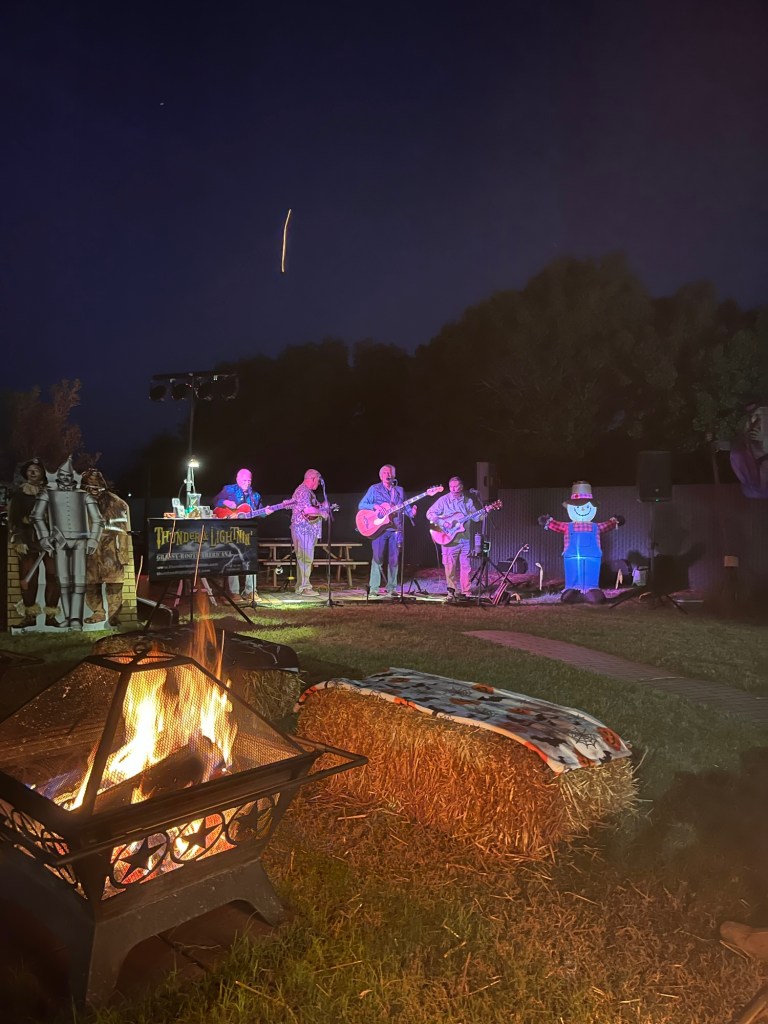
We finish our desert and eventually follow the crowd. The resort has set up hay bale in a meadow. There are fire pits and blankets. They have s’mores and hot chocolate. But my evening is officially spectacular when I realize they have also hired a live cowboy band. And, the band is great. Dance music fills the night air. I have a fire, a blanket, starlight and my love beside me.
Some nights are meant to be celebrations. It is always a great time when communities slow down, enjoy each other’s company, and appreciate simple pleasures. I am happy to be here dancing in the firelight.
Happy Halloween! Sincerely,
One Happy Camper
-
Home Sweet Tokyo: Travel Goals
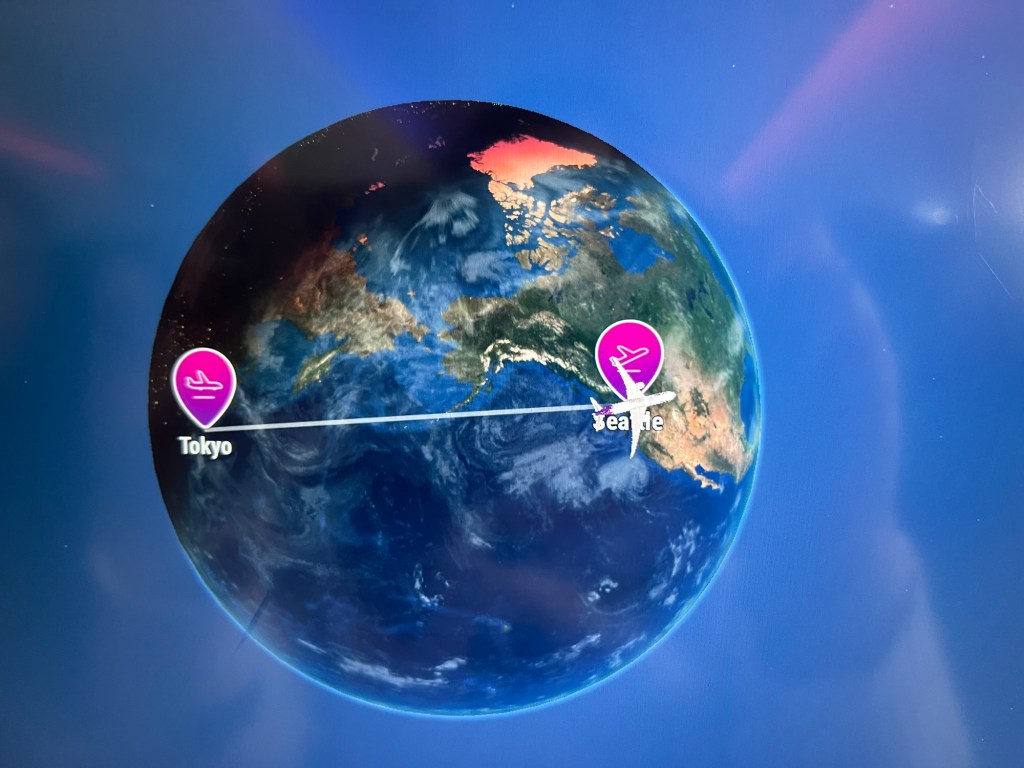
We are off on another adventure. Today we spent fifteen hours in flight and six more in airports. We lost a whole day by crossing the international date line. I am tired and also excited as we land in Japan.
I don’t speak the language and I can’t even read the alphabet (characters?). But I am finally in Japan. Entry is easy enough as I filled out the online forms before leaving Seattle which allowed me to bypass most of the lines. I scan my passport and nod at the border guard as he waves me through. I have arrived.
Armed with Google Translate and a voucher for a Japan Rail pass, we head for the train station office. After exchanging some currency, we finally find the office where we pick up train tickets that will work on almost any train. Just to be safe, we also purchase a Suica card that can be used on most everything else like local buses and subway lines.
The express train takes us from Narita airport to Shinjuku station (by some estimates the busiest rail station in the world). The train is quiet, comfortable and efficient. It still takes about 1.5 hours to reach the station. I am a bit overwhelmed. It is late. I am tired.
We have the address of the home we rented for our month in Japan. The address is in Japanese. I can’t read it. I do a have a pin on Google Maps so I see where to go. But I am honestly in no mood to navigate public transportation, dark streets, confusing walkways tonight. I see a taxi stand. Perhaps a driver will be more efficient. He will be able to read Japanese.
Within fifteen minutes, we are home. Our landlord has put out a sign for us at the gate. We try to tip the driver. He seems insulted. I guess we will need to read about tipping etiquette tomorrow.
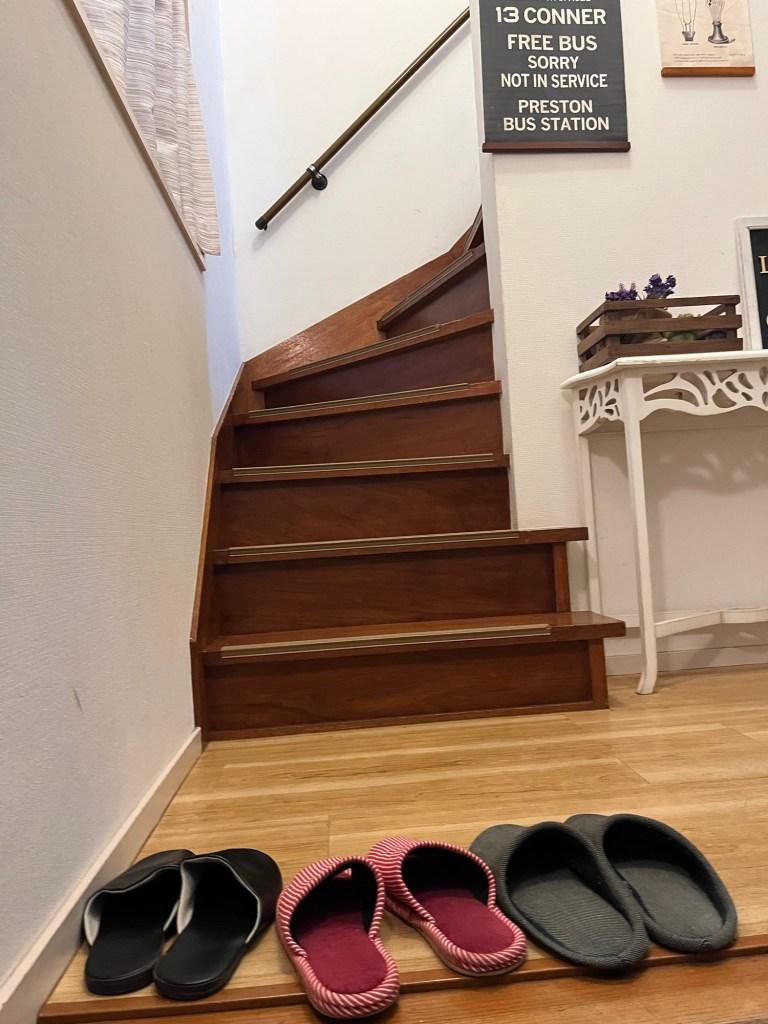
Right now I just want to unpack, take a hot bath, and get some sleep. We have slippers at the door, a gentle reminder to leave our outside shoes on the brick entryway. I slip into the smallest pair and head into the house.
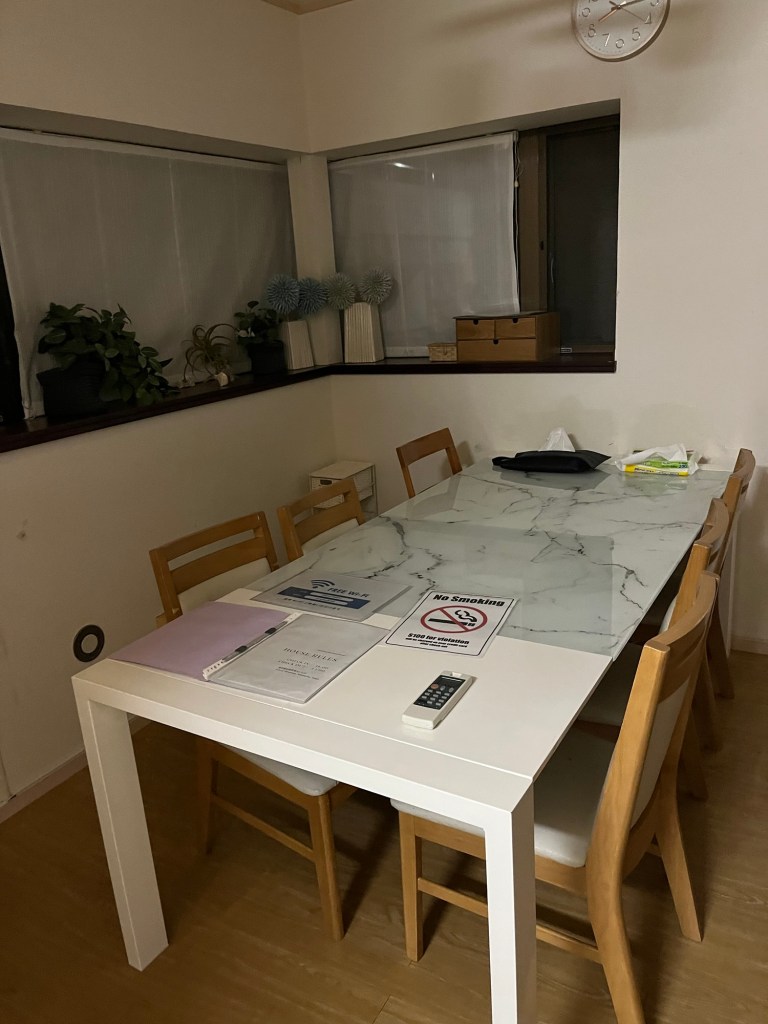
There is a large table for eating and working. These are the only chairs in the house. Living room seating is on the floor on traditional mats. My body can’t think about that right now. I have kink from the long flight.
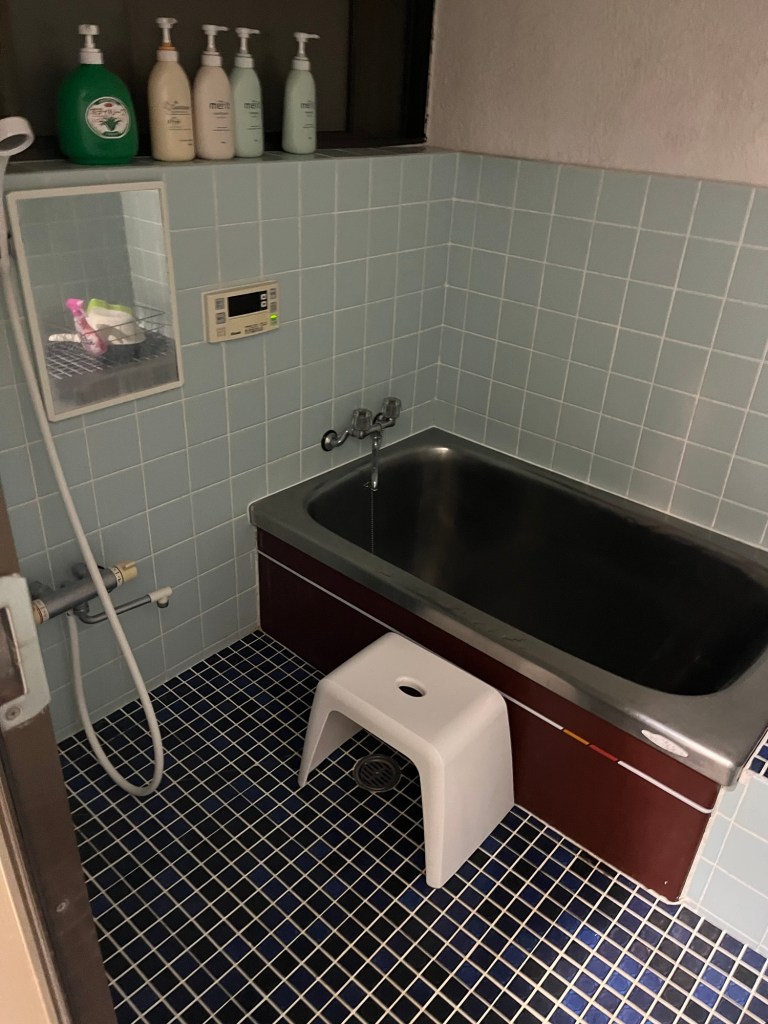
There is a shower for washing and a deep tub for soaking. I need the soaking in the hottest water I can stand. But first, I look for the toilet. It is nestled in its own small room under the stairs. The seat is heated. It has a variety of water jets, also heated. It has a sound machine. It may be my new favorite thing. (I am not overstating this.)
We need to get settled. There are four beds. One is in the living room. It may have to be the couch. The rest are in separate large rooms up the steep stairs.
Our son picks a room. We pick a room. We leave the room with large windows looking into the entry way as our luggage and dressing room. This house will be a cozy nest. I am pleased.
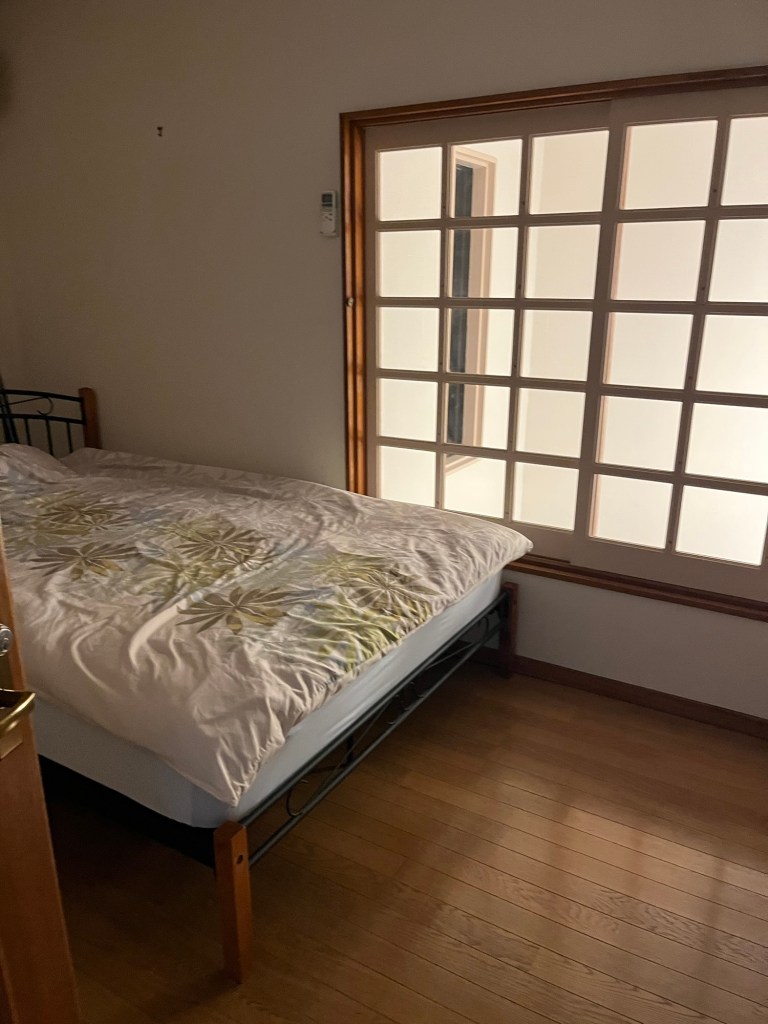
The boys head out to find a snack and a few groceries for breakfast at the convenience store down the street. I step into the hot soaking bath and then head up to bed. We have done well. The house is just what we hoped for, a normal everyday home. We always want to live as local as possible, I have no idea how to use most things in the house, but there is plenty of time to learn. We are home. Home sweet Tokyo.
-
Gold King Ghost Town: Rural Road Trip
Occasionally you regret almost immediately your choice of adventure. I’m sad to say, today was one of those days. I was enticed by advertising. Signs along the highway teased us with promises of the King gold mine. It was just up the road a bit higher on the mountain from Jerome. I love a good mine tour, so I thought why not.
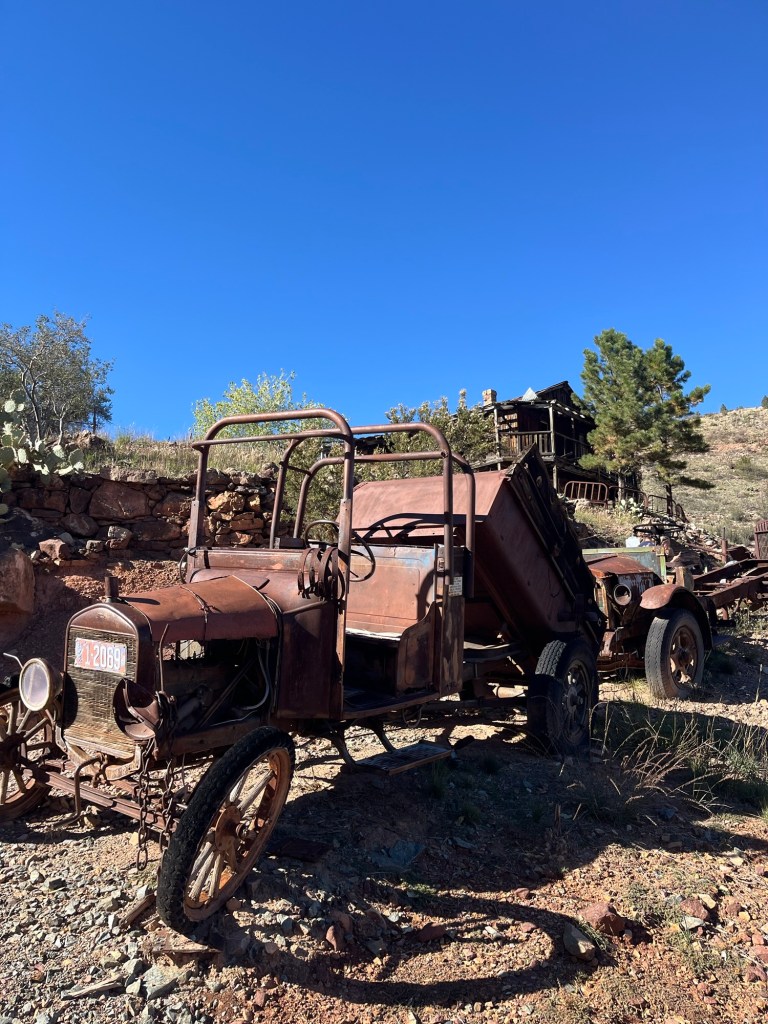
The acres of junk, excuse me, …antique vehicles should have been our first clue. We drove past dozens upon dozens of rust buckets to get to the parking lot. But, there plenty of cars of other tourists who couldn’t resist the draw of a mine.
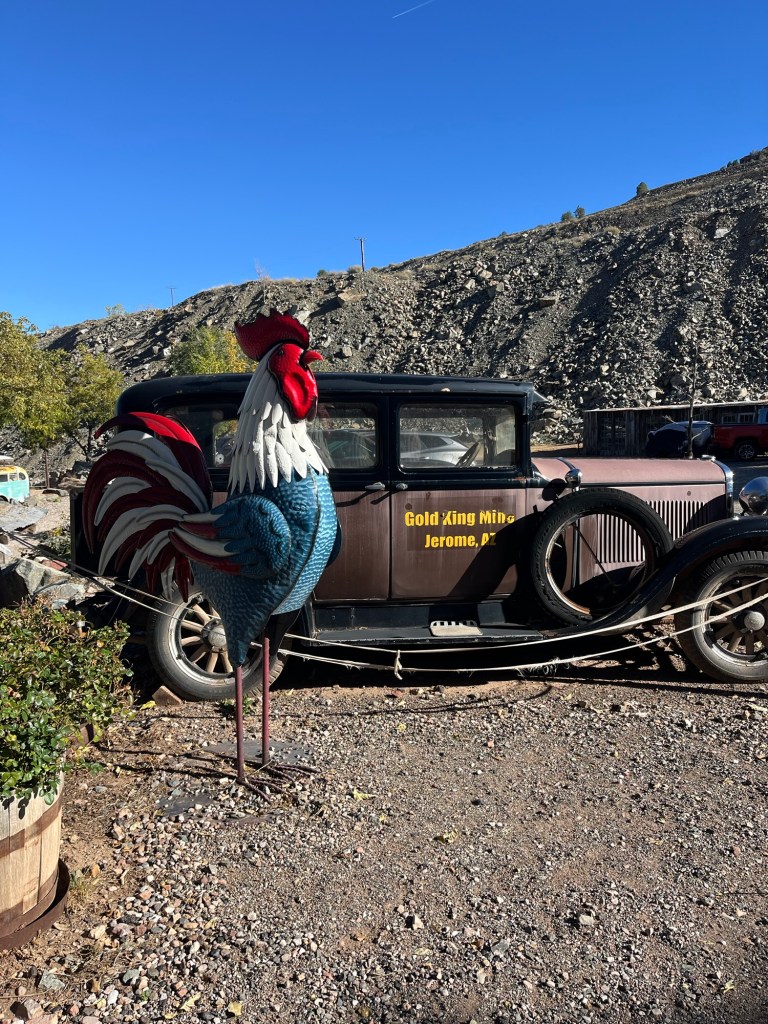
Except, after we paid and entered the fee area we realized there was no mine. Instead there was acres of junk. Determined to make the best of it, we found a route through plywood shacks full of abandoned goods. There was a fence made of horseshoes, rusted buckets, gun barrels, oil cans and pretty much any discarded tool you could think of.
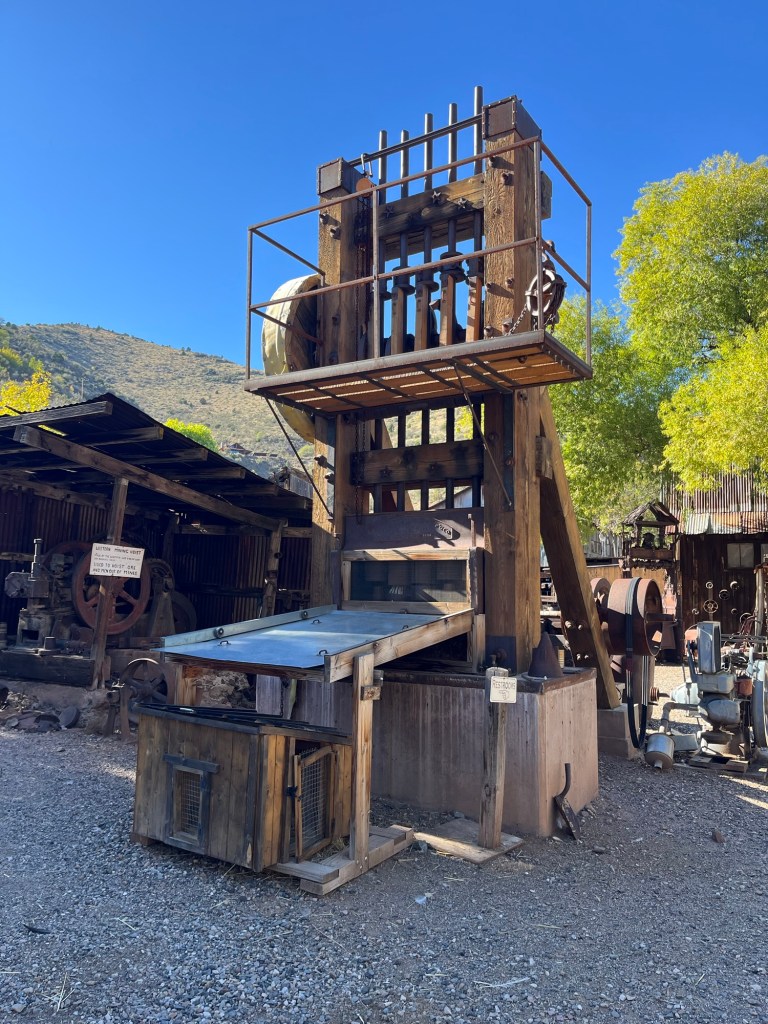
There was an abandoned house, but you couldn’t go in and signs in the yard warn of rattlesnakes. A barn held some better preserved pickup trucks. There was a barber pole, and an outhouse with a mannequin that screamed at you when you opened the door. I was excited to see a mine shaft, but quickly realized it is a fake walkway that only goes a few feet behind a shed.
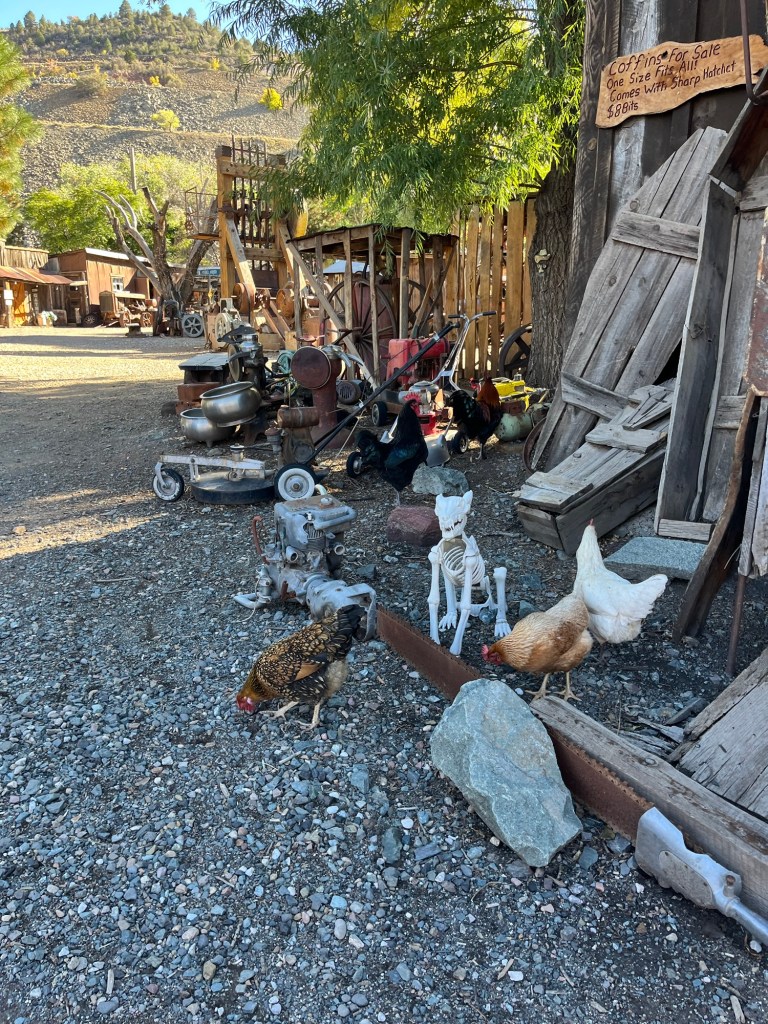
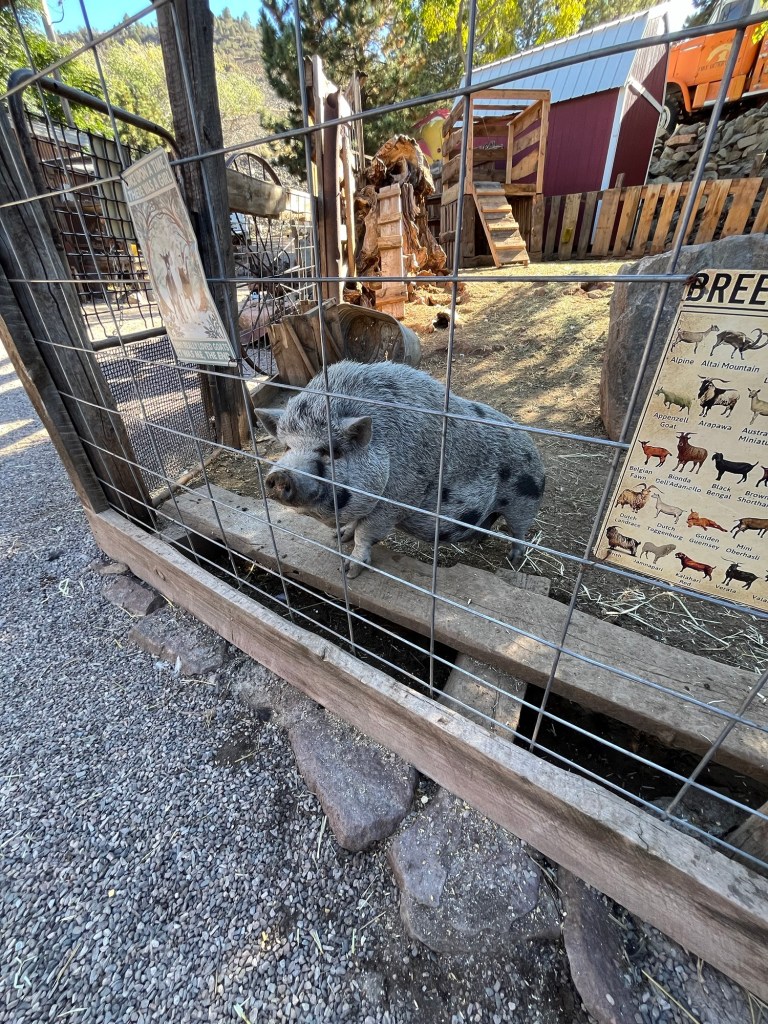
But there were also chickens, turkeys, rabbits, and pigs. At least the petting zoo was fun. The rock pile was not appealing to me, but some people were snapping pictures like they have never seen rocks. Of course I was taking photos too. After all, we paid our money to get in. There must be something to see, right?
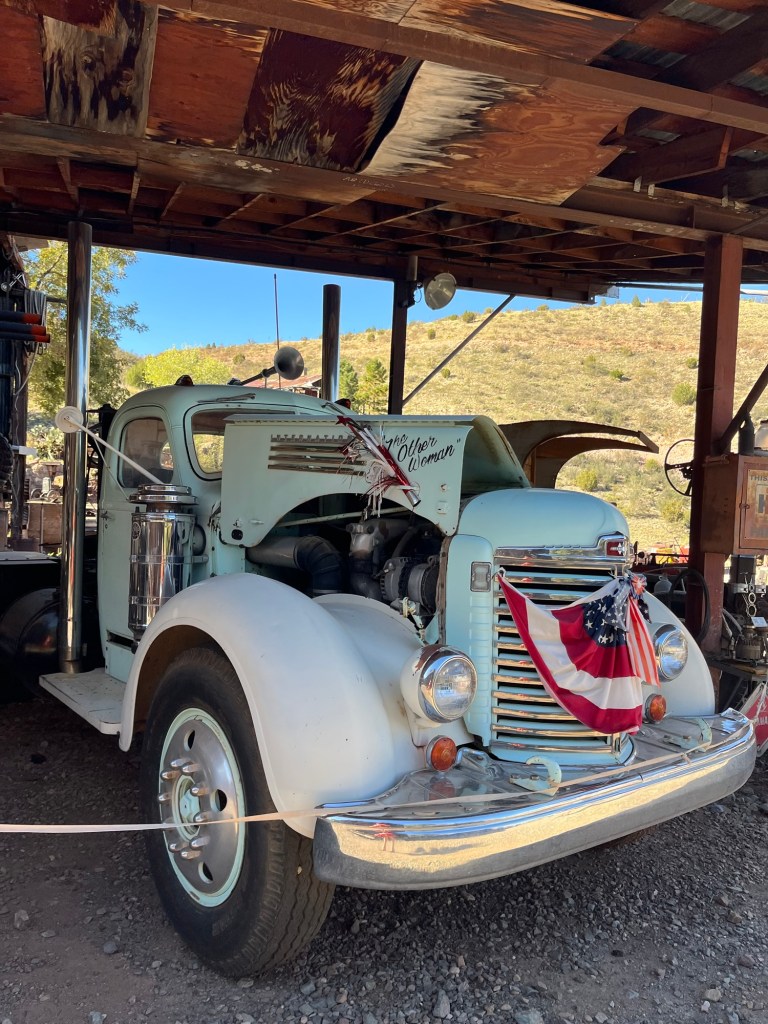
After making as much lemonade as possible from this lemon of a stop we decide to go. We walk by their prize truck, festooned in patriotic bunting. I hope the shed doesn’t collapse on it. Or me for that matter. The gold king mine has turned out to be nothing but tarnished brass.
-
Jerome: Rural Road Trips Arizona
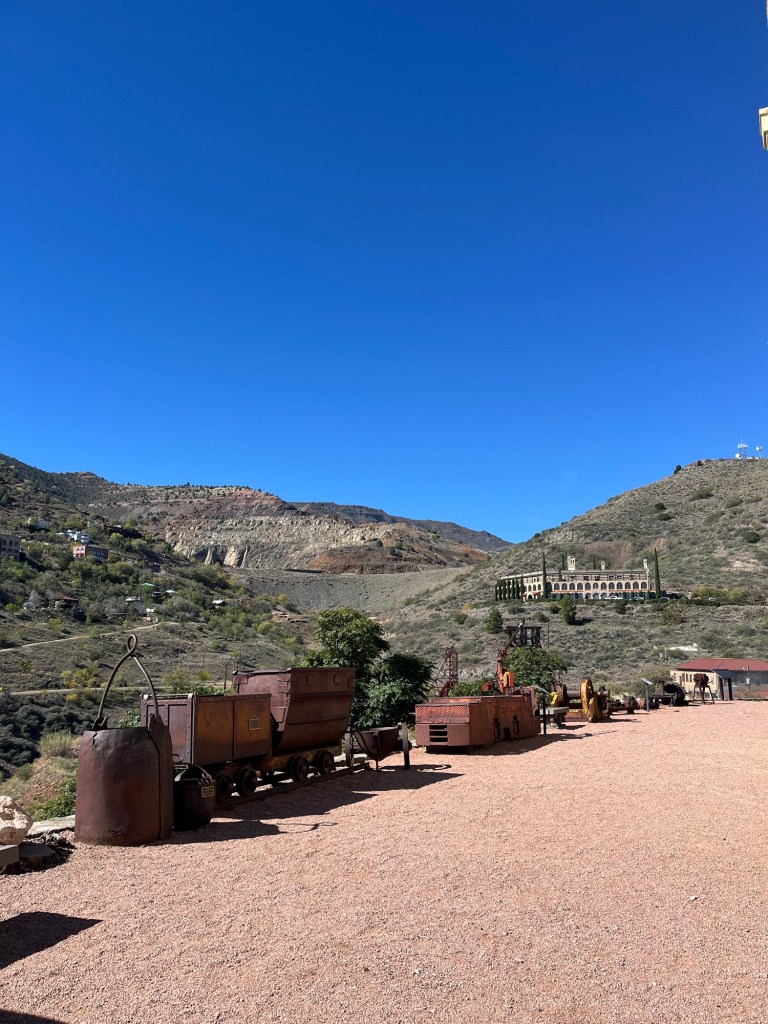
Jerome is a little city with a big past and tenacious residents. It is built on a steep hillside. Some might call it a mountain. It once was the center of a mining empire. Today it is best known as a ghost town. There are only dozens of people who call it home.
I drive up the hairpin turns and follow the road at the sign for the Jerome historic site. The building is the former mansion of the owners of the mine. Today it operates as part of the Arizona parks system. The road is narrow with steep drop offs. I am almost convinced that I took a wrong turn when we finally reach a parking lot.
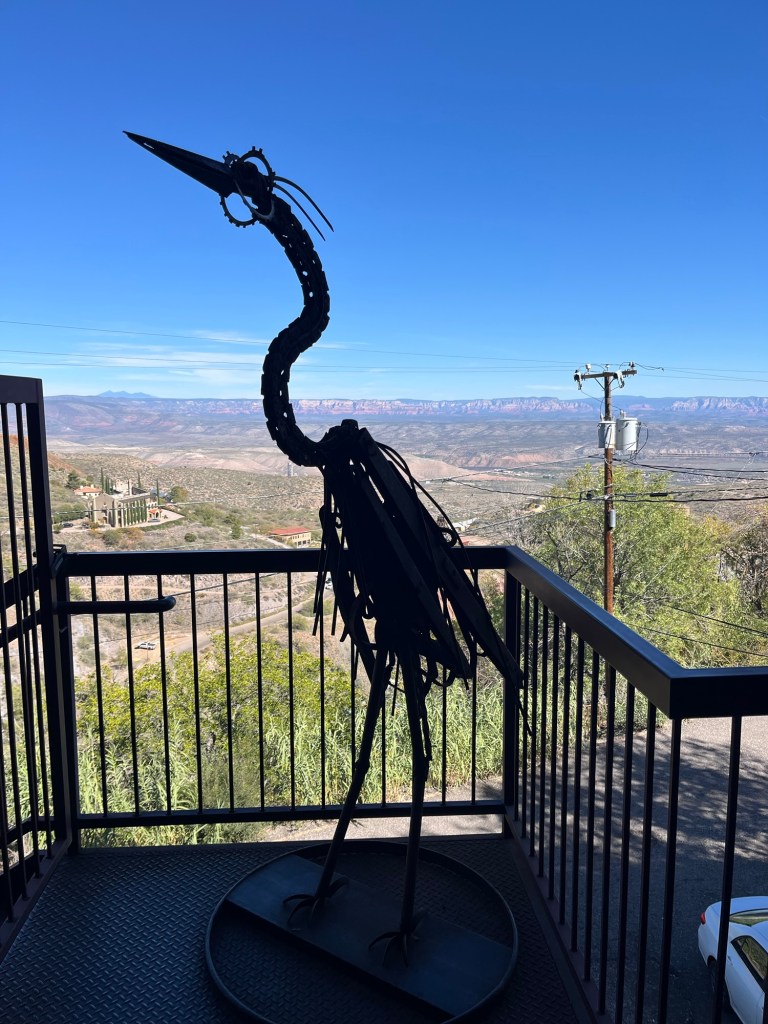
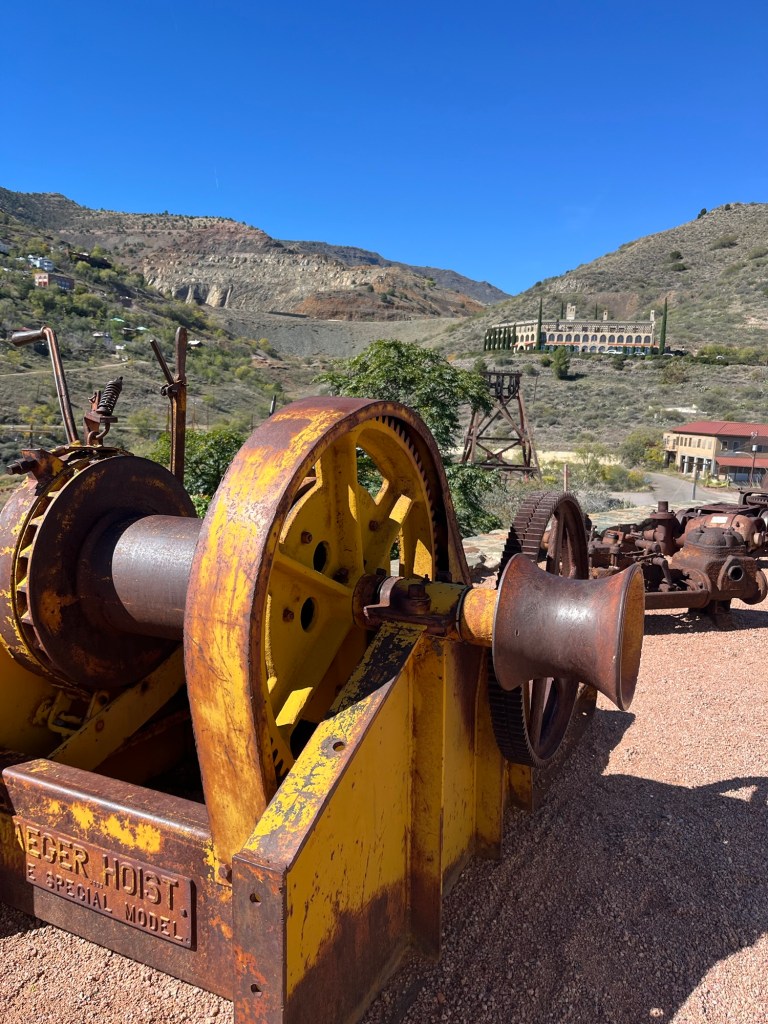
The site houses lots of mining equipment and plenty of photos and information about the mines. Unfortunately, you can’t actually tour a mine. But we learn lots of interesting things….Like how houses have regularly slid off the hillside and how fire has ravaged the town on more than one occasion. I enjoy the displays, and feel I know just a little bit more about Jerome.
After the museum, we head out for town. The streets are terraced and one way. It is too steep for anything else. There are signs explaining that oversized vehicles must bypass downtown. A semi is getting ticketed for trying to make it through anyway and causing a traffic meltdown.
Today there are absolutely no parking spaces. Jerome bills itself as a haunted town. It is Halloween weekend, and in Jerome this means festivals and an evening ball. Everyone with a costume or haunted mansion dreams is here. We aren’t sure what our excuse is. We were just in the neighborhood. Despite second guessing our decision to visit, we finally take the last parking space in the last parking lot in town.
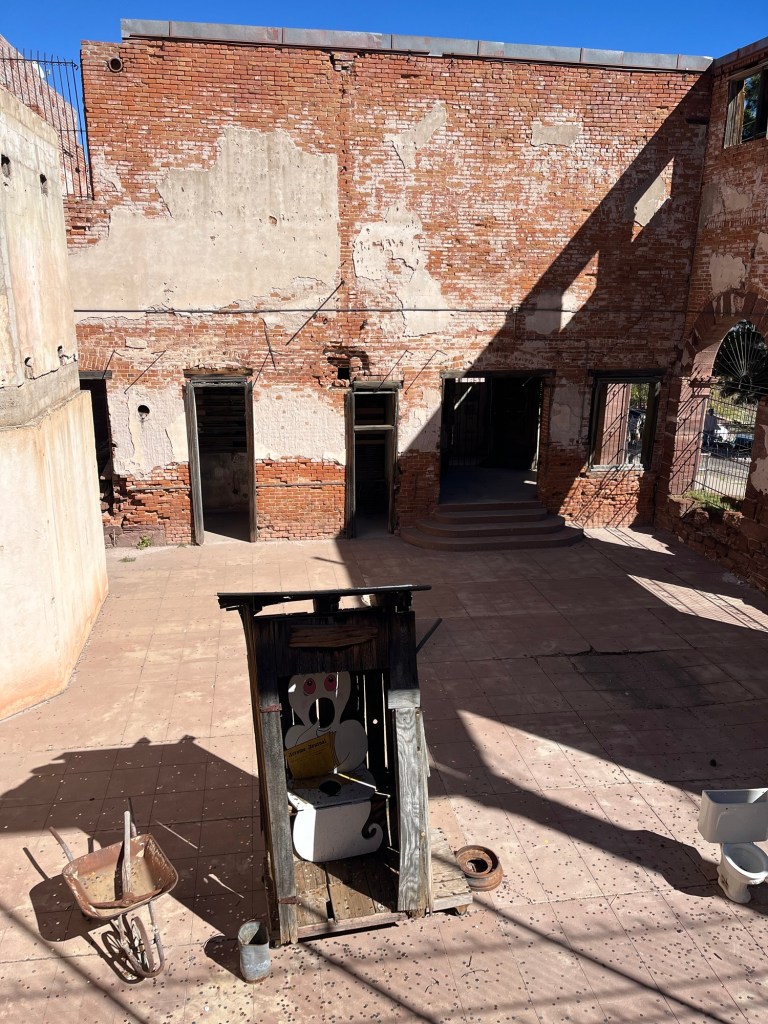
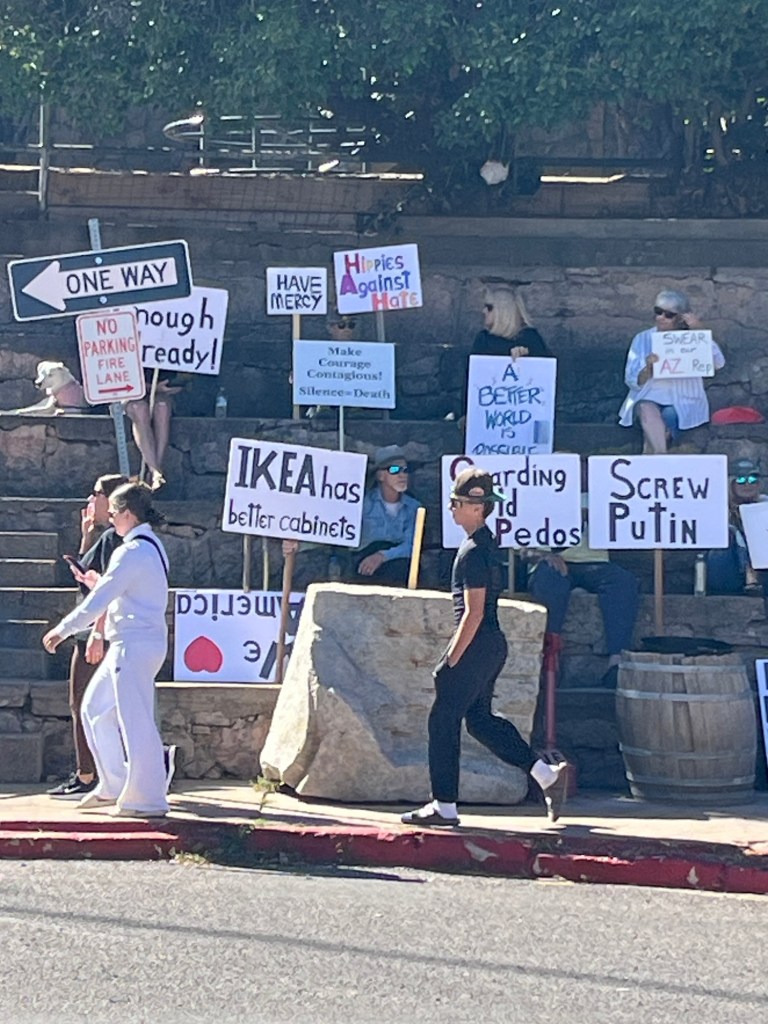
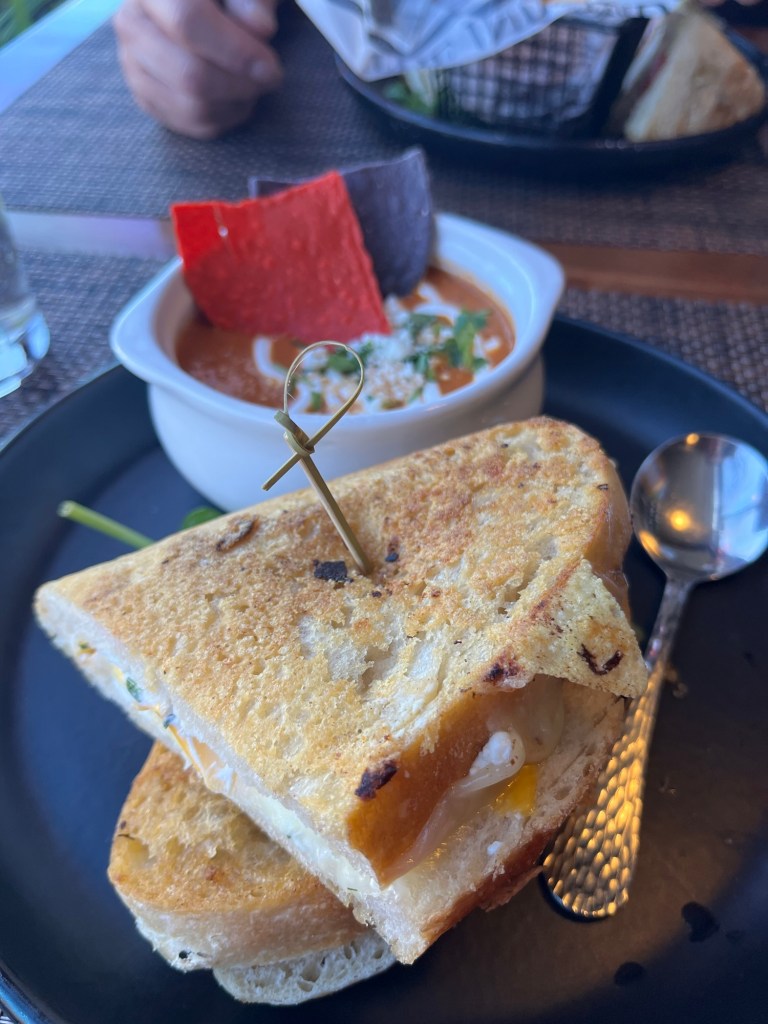
For the next two or three hours, I browse shops. We run across a protest on the corner that lets us know the people of Jerome have strong views. We eat a delicious lunch in while sitting in a former bank vault. And we watch people try to throw coins into a toilet bowl sitting in a vacant lot. I am still not sure what that is about.
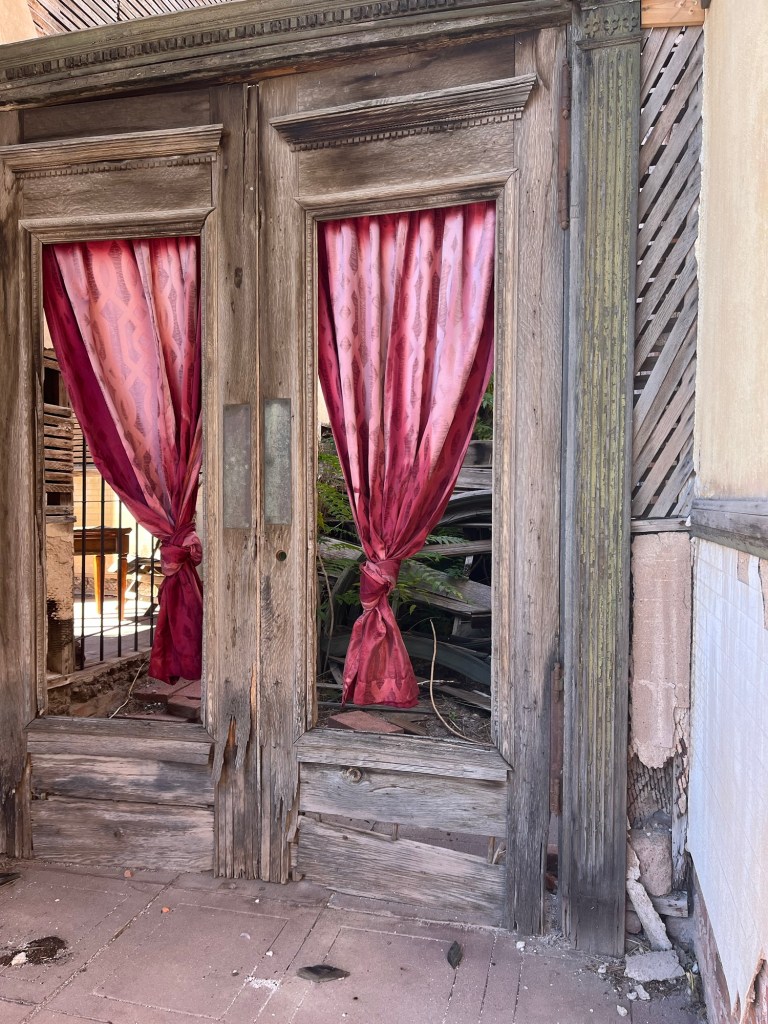
This is a destination that I truthfully enjoyed. It is not on my “you really have to visit list”. But if you are in central Arizona with time to kill, Jerome is a pleasant diversion. There isn’t much to do except enjoy the scenery, shop, and eat. In fact, you might say Jerome is a tourist trap. I prefer to think in more optimistic ways. It is town that celebrates. It is a town of artists and hangers on. It is a town that reinvents itself in order to survive.
-
Pink Jeep Tour: Rural Road Trip
We pile into the pink jeep with six strangers. Our driver seems a little crazy….in a mostly good way. He navigates the heavy Sedona traffic like he has done the route hundreds of times. So far so good. He tells stories as he drives. He finds them funny and entertaining. I find them hard to follow and don’t get the punch lines. This could be a long tour.
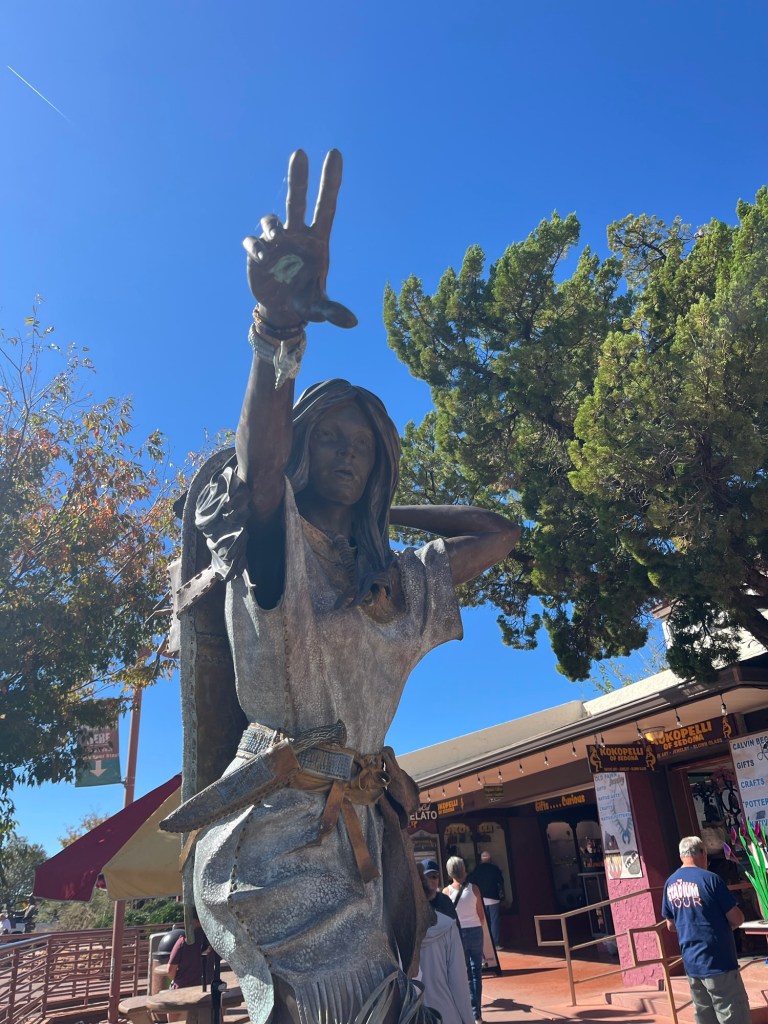
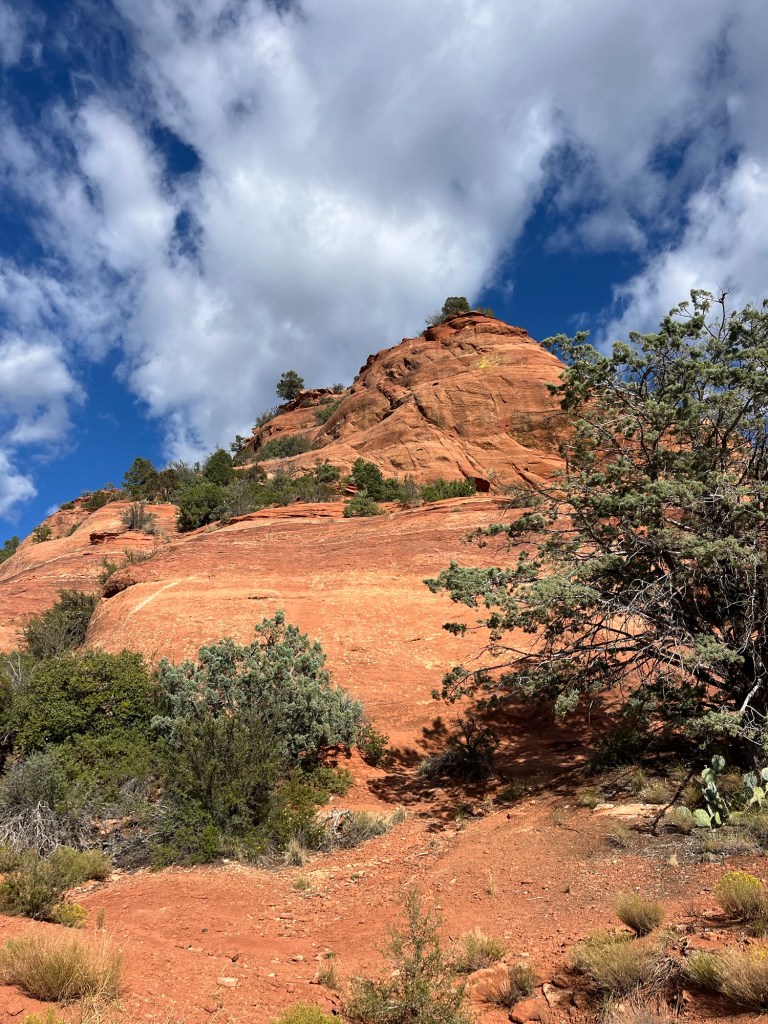
Eventually, we turn off the main road. We are now driving on a cow path. The rocks stick up wildly from the surface. I can’t believe we are driving over the large road obstacles. The jeep bumps and climbs over boulders. How can we not get a flat tire? We bounce and bump along for miles. The driver laughs with glee and I jolt wildly from side to side
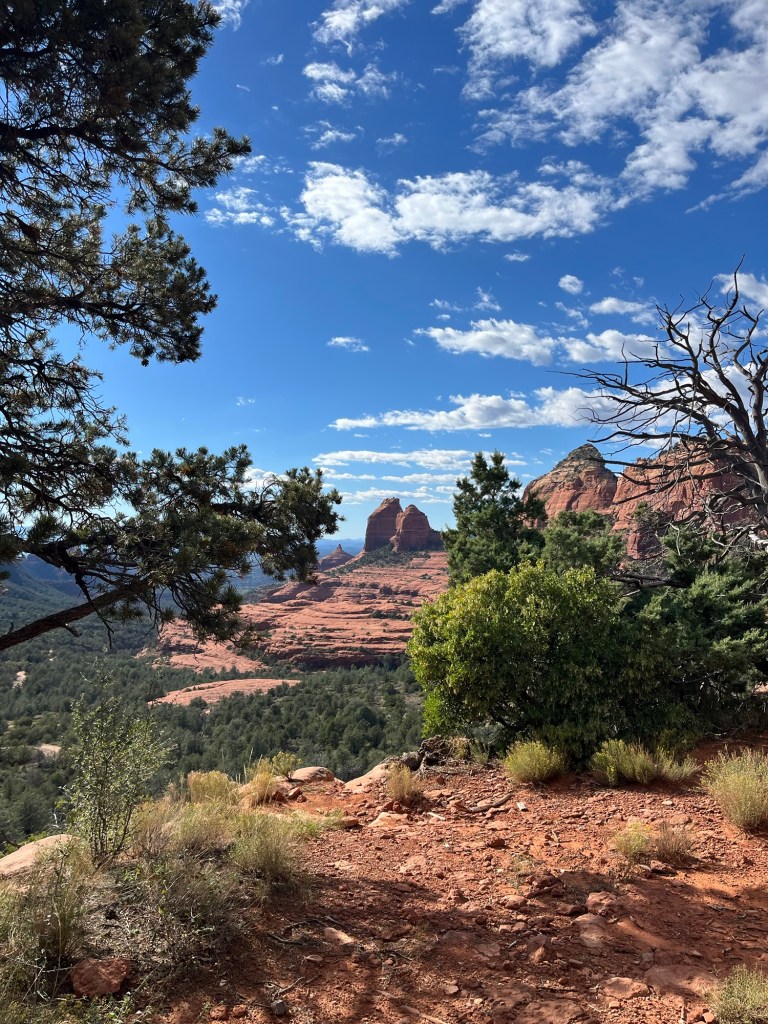
The scenery is otherworldly. I forget about the bumps. Look at those mesas. The red rock against blue sky is breathtaking. At some point we pass a couple taking wedding photos along the road. We shout our congratulations. At a turn in the road we pass a guy who has parked his brand new pickup truck in a pull out. Our driver stops to take his picture. He laughs and says that google said he could use this road so he thought he would try it. I think he is crazy.
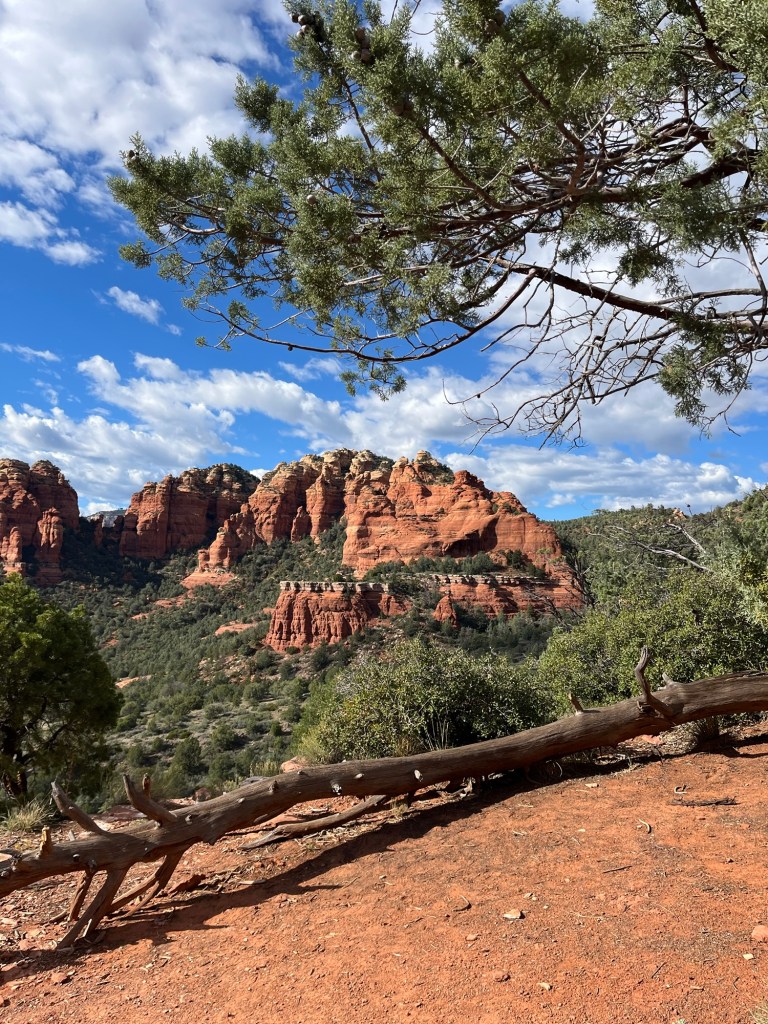
We finally stop at a breathtaking overlook. We look down into the canyon from above. Our guide tells us the rock formations are called Apache member. He uses up half of the water we are carrying trying to show us how the rocks were formed over time. Sort of interesting, but what if I get thirsty?
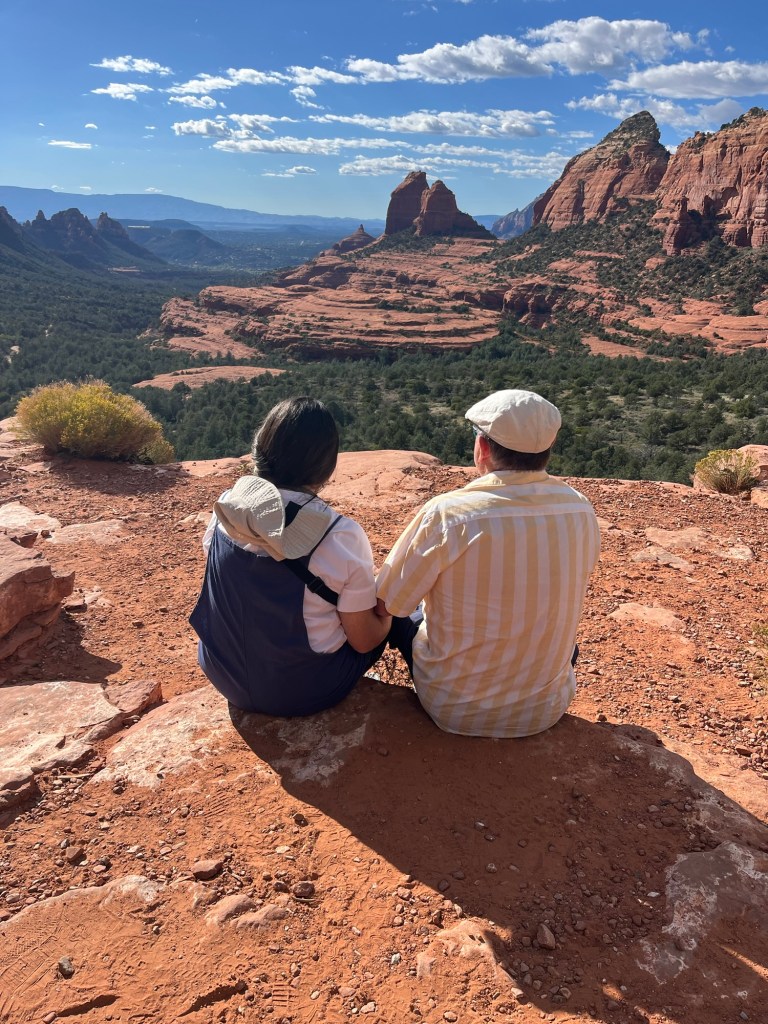
The driver signals that it is time to go. I find myself wishing I wasn’t on a tour. (This happens almost every time I am on a tour.) I want to sit here bit longer. I want to wander the trails. I want to lose myself in birdsong. But, I don’t want to have to walk myself back to civilization…..and this pink jeep is leaving.
-
Safari In The USA: Rural Road Trip
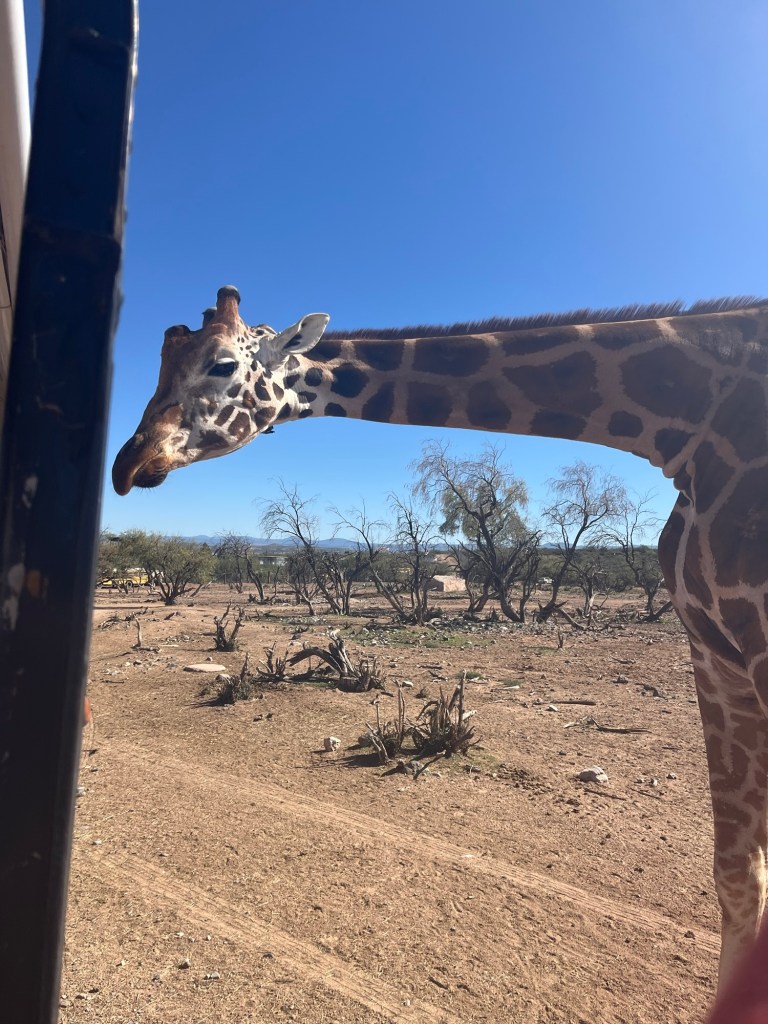
I am going out on Safari! Our bus just arrived to take us to the bush country of Afri…… make that Arizona. Somewhere between Camp Verde and Cottonwood Arizona is the Out Of Africa Wildlife park. It is a crazy place.
A few minutes ago I stepped out of my car. Now I am boarding a bus and being handed bamboo shoots to hand feed giraffes out the windows of an old school bus. Only in America.
My husband lets the giraffe eat the bamboo as he holds it between his teeth. Yuck! Have you seen a giraffe tongue? It is not a pretty sight.
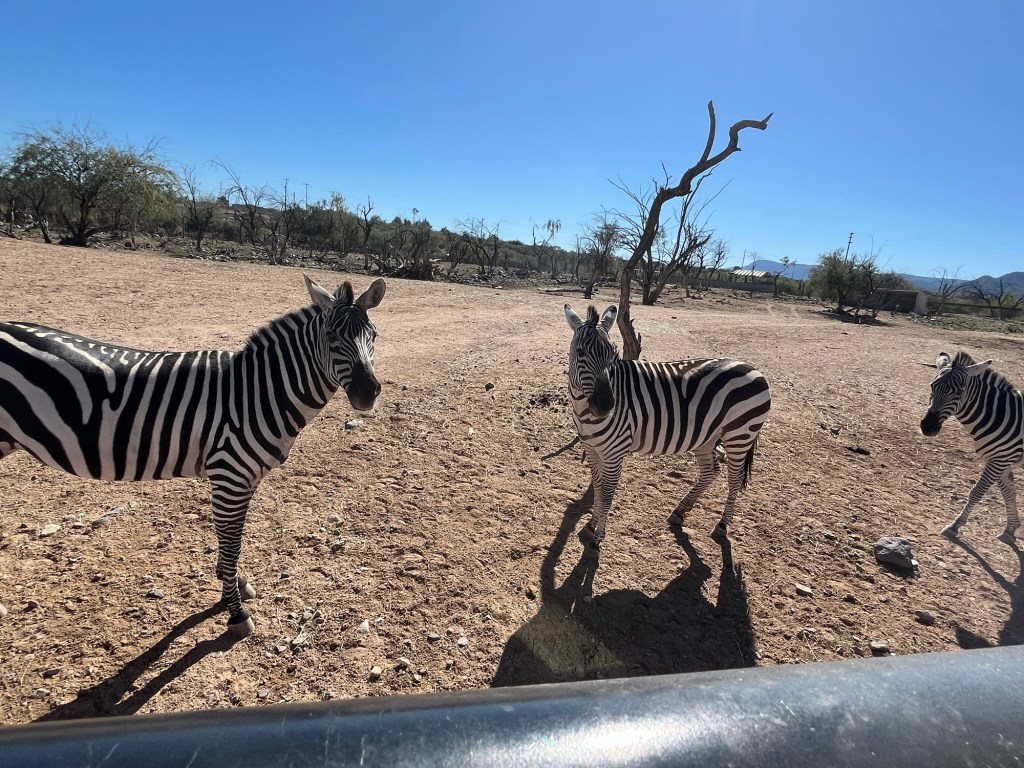
The zebras are clearly jealous and demand their treats of biscuits before they will clear the way for the bus. Water buffalo can’t be bothered to get up as the bus rolls by. The driver informs us that they are responsible for world production of mozzarella cheese. Who knew?
The watusi cattle chase us with their giant horns. They want whatever snacks are up for grabs. We clear the windows as they sneak ever closer to the bus.
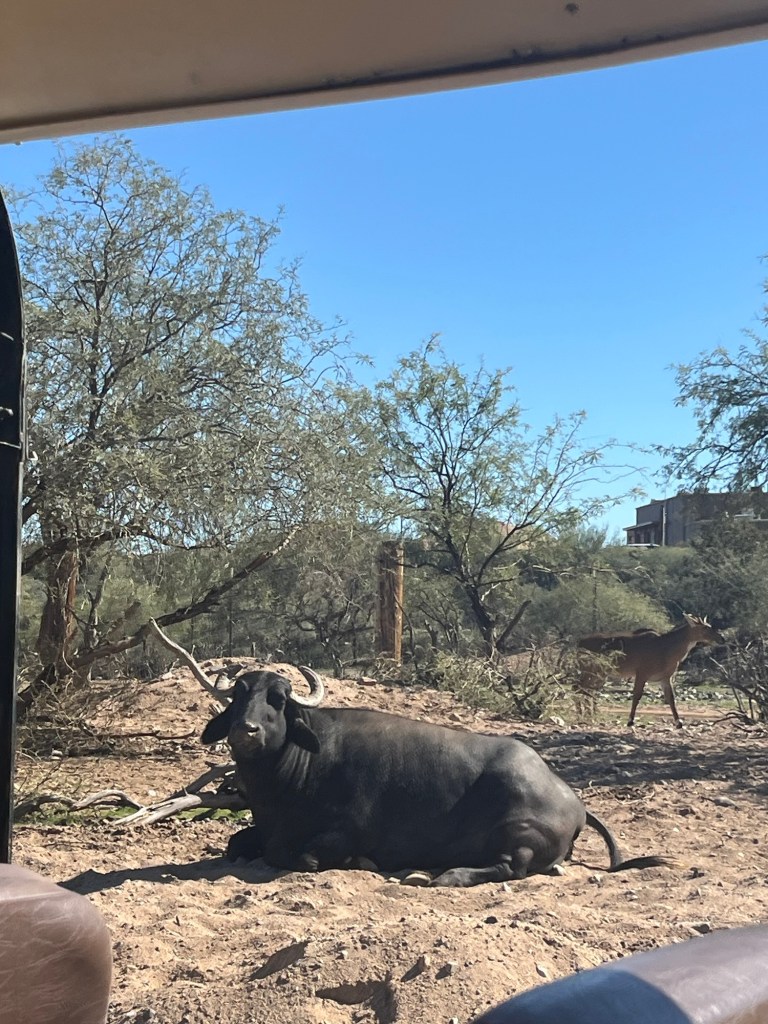
We drive around in a large loop. The animals follow us. They know the driver has a secret stash of goodies. They also know how to beg. I don’t remember this happening in Africa. (Of course I do remember getting chased by a crazed ostrich…but that is a story for another day.) My point is that the animals here behave more like spoiled pets.
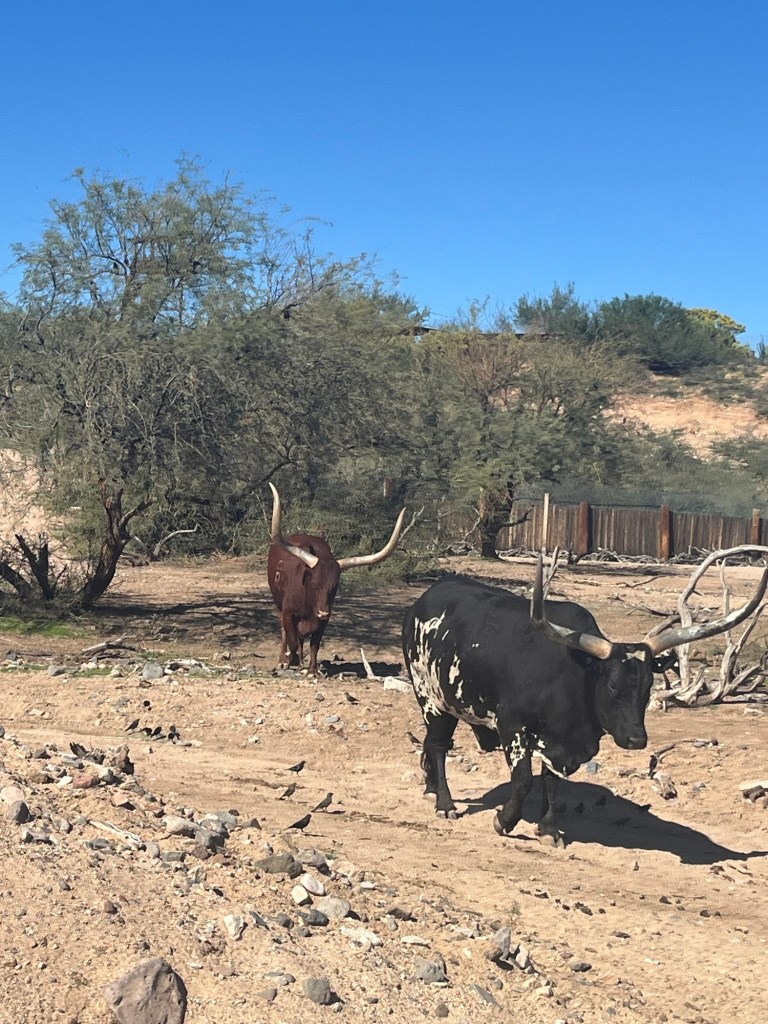
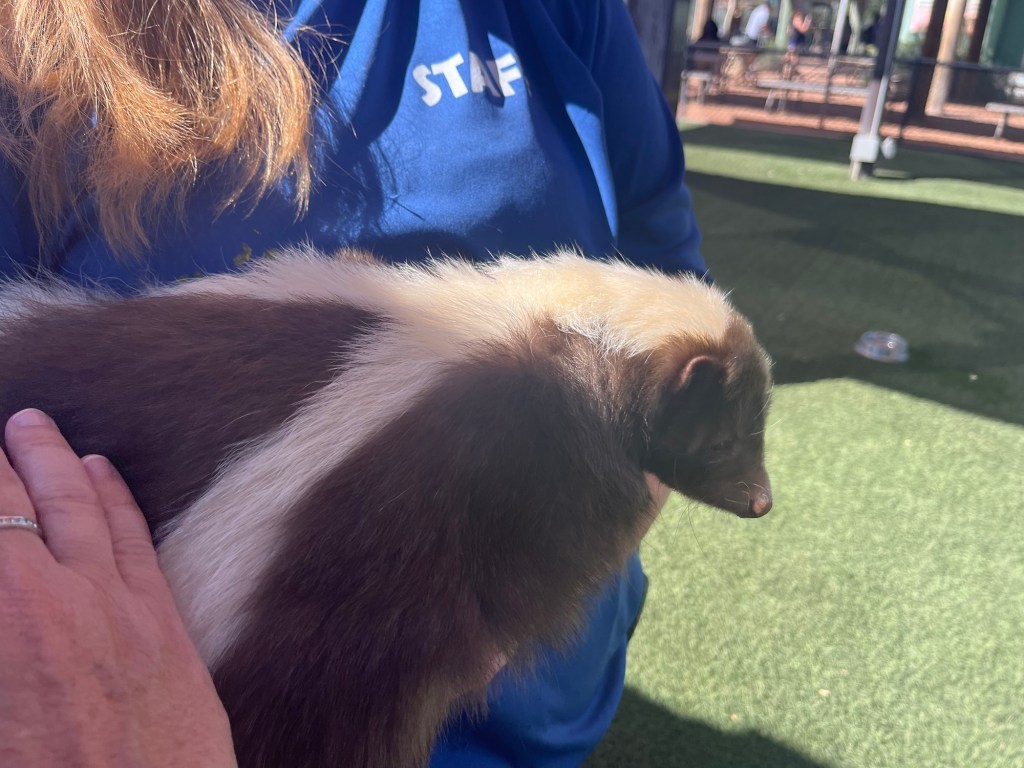
All too soon, the ride is over. We now have to walk the grounds. There are large hills. There are also colorful birds, reptiles, and monkeys. A lazy porcupine greets us from his box. We even met a skunk. She wanders around us like a puppy. Her scent sacs have been removed so she is carefree and playful. Someone raised her as a pet and then abandoned her. I can honestly say that cuddling a skunk was not on my bingo card for today. But since we are here.
Next we watch the staff exercise the big cats by letting them chase them in a large cage. It is billed as a show, but I find it mildly disturbing. College age kids run with toys on large sticks. The tigers attack the toys. The kids let go of the stick. A new kid runs out with a toy to distract the tiger every few minutes. The tiger lets go of the toy in order to go after the new plaything and the cycle repeats. Over a hundred people sit with me in this arena as we hope someone isn’t mauled.
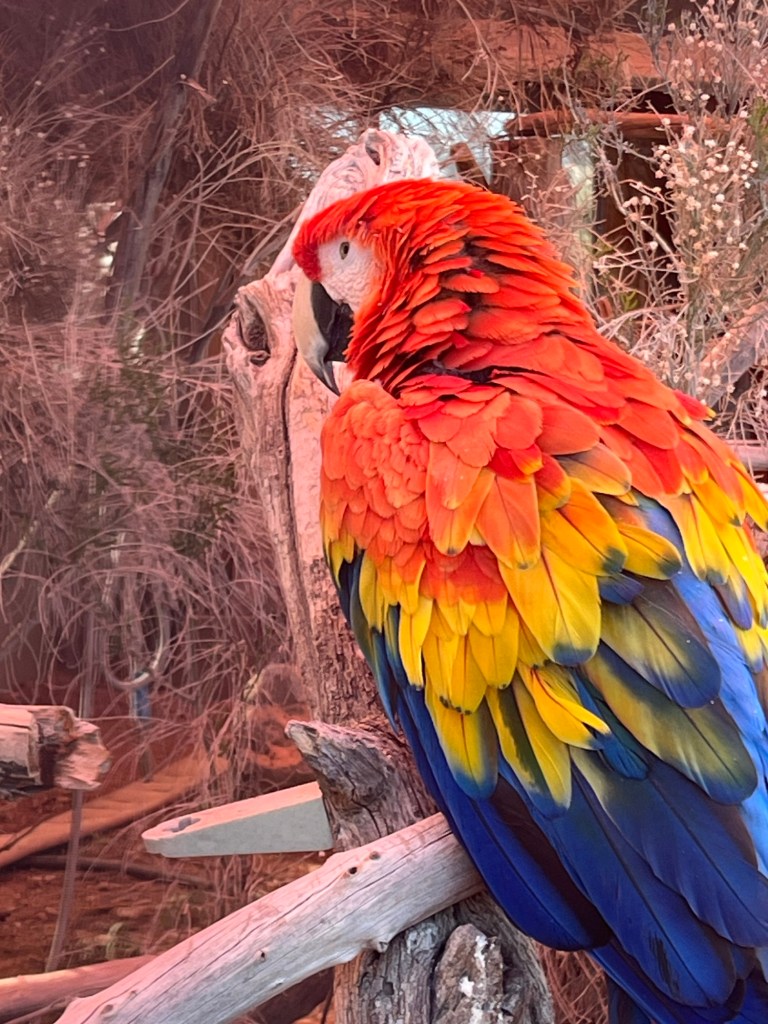
After all that big cat action, I need to take it down a notch. Parrots and lorikeets will have to do. The warthogs are on high alert for their dinner. And I realize so am I. Somehow we have managed to play away the entire day. As we walk our way “out of Africa” we look for elusive big horn sheep. They are along the fence trying to figure out how to become part of the safari circuit. Word on the street…that is where people throw food at you….
Prisoner of Hopes
 Prisoner of Hopes